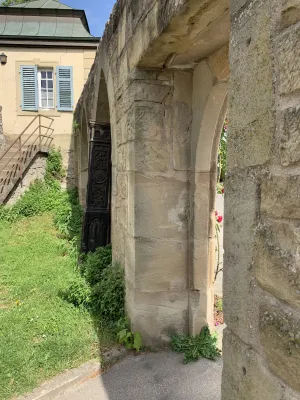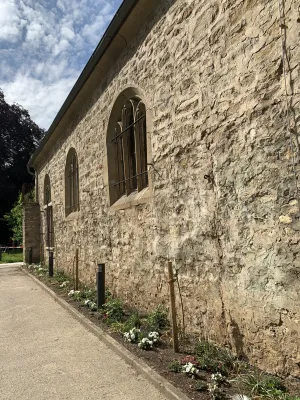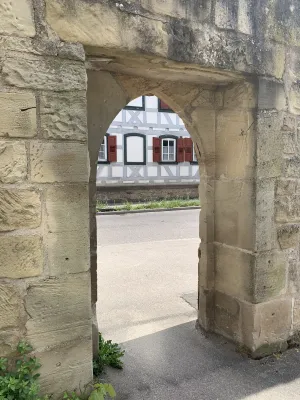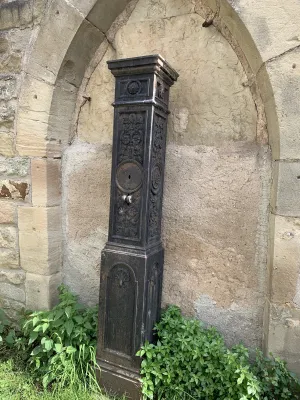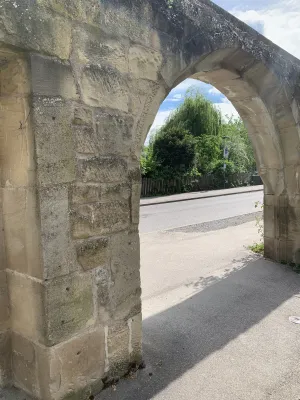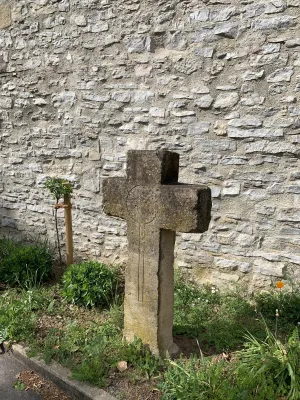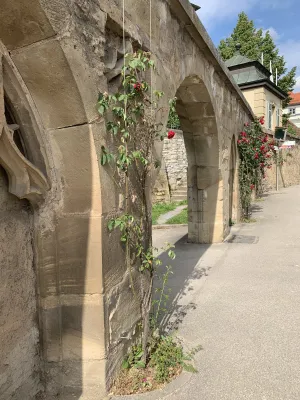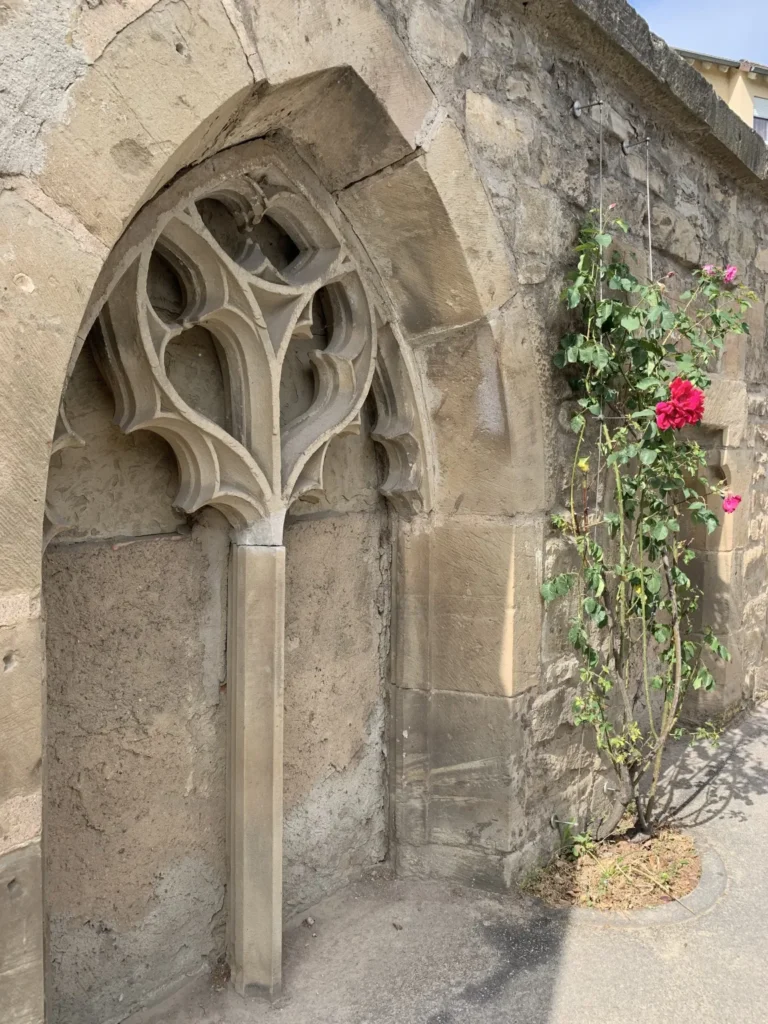
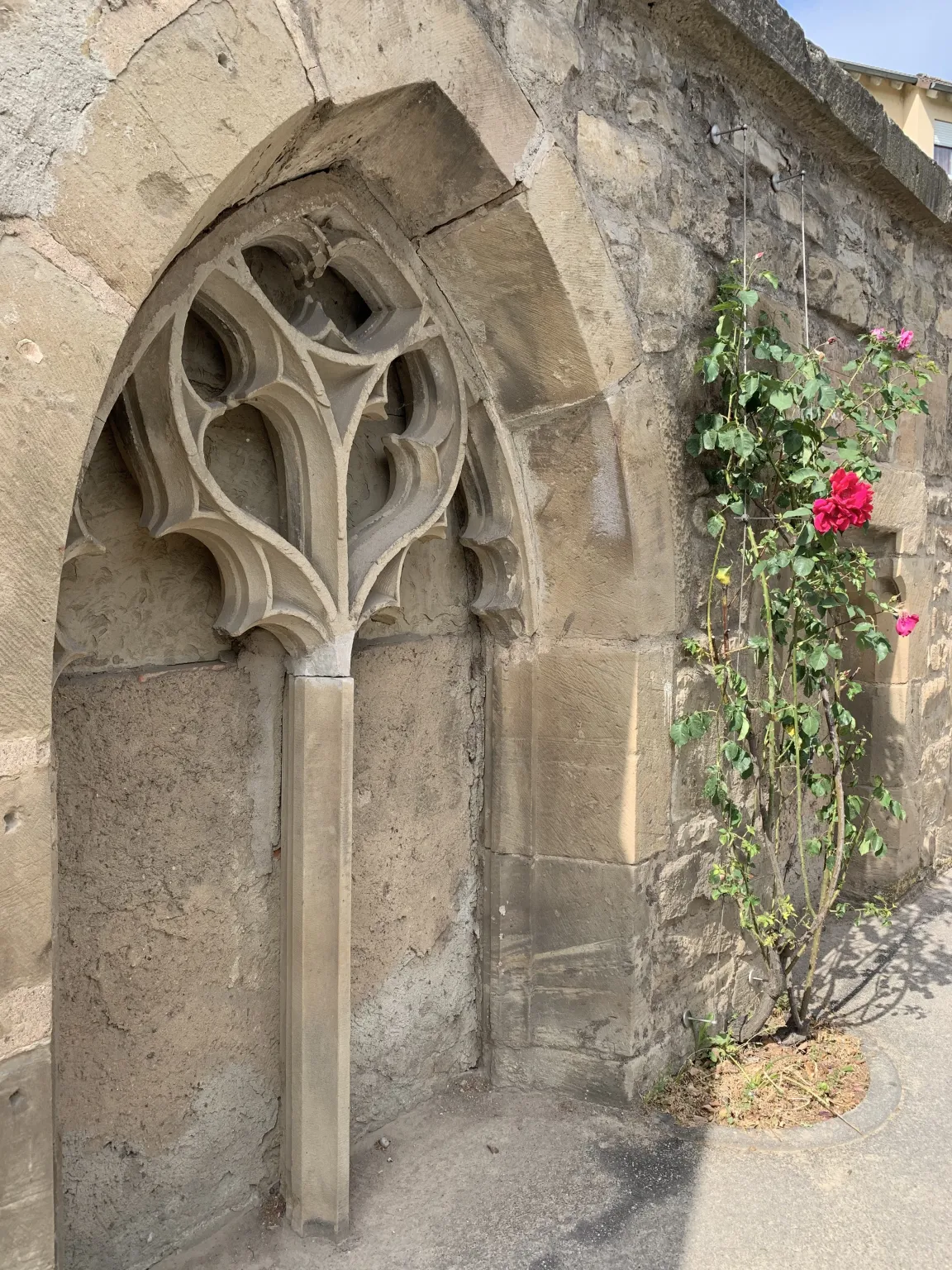
A special collection of stones, an ancient lapidarium, is located in the historic monastery courtyard of the town of Lauffen am Neckar. I entered this monastery courtyard through one of the archways in the old surrounding wall. The site was once home to a nunnery until it was dissolved by Christoph von Württemberg in 1553. After that, the property was secularized and continued to be used as a monastery courtyard. Today, the monastery courtyard belongs to the Hölderlinhaus Lauffen museum complex. This is because the famous poet Friedrich Hölderlin was born in Lauffen in 1770 and his father, Heinrich Friedrich Hölderlin, was the monastery steward there in the second half of the 18th century. In addition to the rebuilt monastery church and a Hölderlin memorial, the monastery courtyard also houses an ancient lapidarium. In the historic monastery courtyard, in front of the old monastery walls, there are 13 boundary stones from the 13th to 18th centuries, which were used to mark the boundaries between two places in the Middle Ages. Four of these are smaller field boundary stones that separated individual legal districts such as manorial, monastery, and church properties from others. I discovered the “markings” carved into the sides of the boundary stones, always pointing in the direction of the respective boundary. The groove at the top of the stones indicated the course of the boundary. Unfortunately, many boundary stones have been lost due to land consolidation, but some stones can still be found in place, such as at Kaywald on the boundary between Kirchheim and Lauffen. I found the penitential cross with a carved “baking peel” particularly impressive and somewhat creepy. It bears witness to a serious dispute between two women who killed each other with a “baking peel” while baking the parish fair cake. The original medieval stone carvings are well worth seeing and were of great importance at the time. Today, these stones, which at first glance appear so inconspicuous, provide insights into a long-forgotten era.