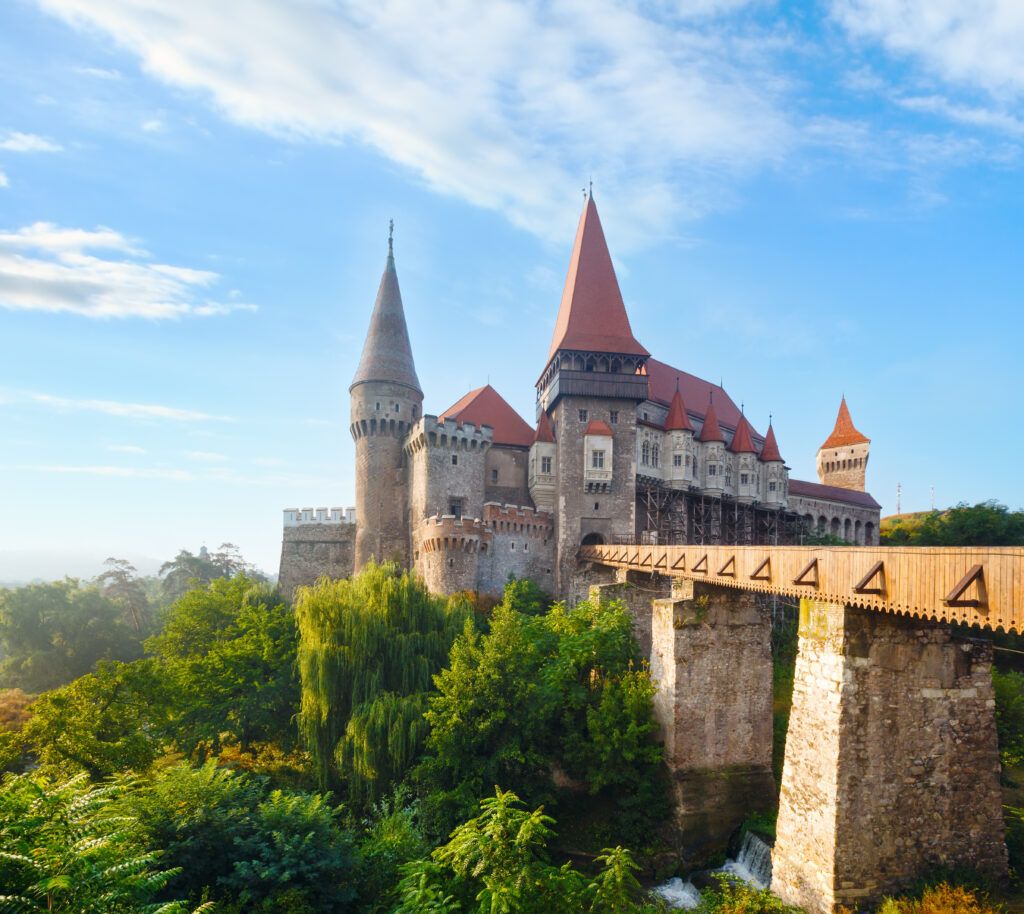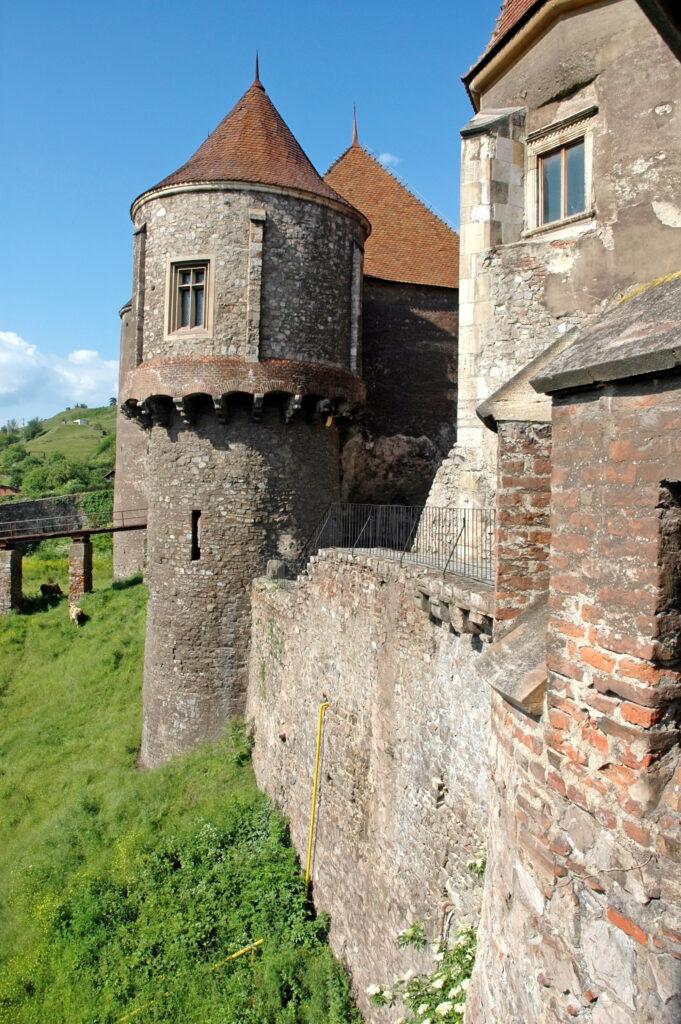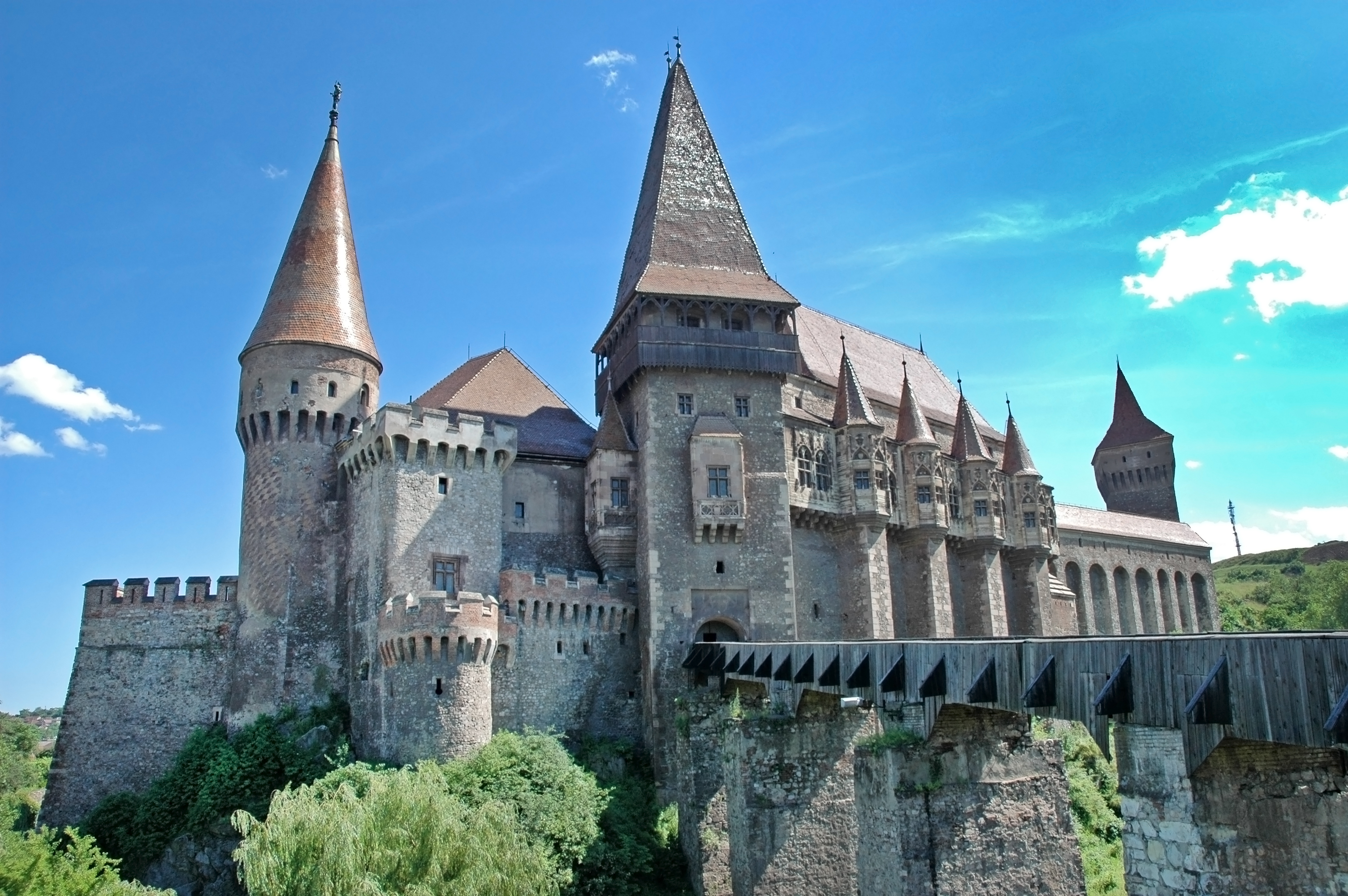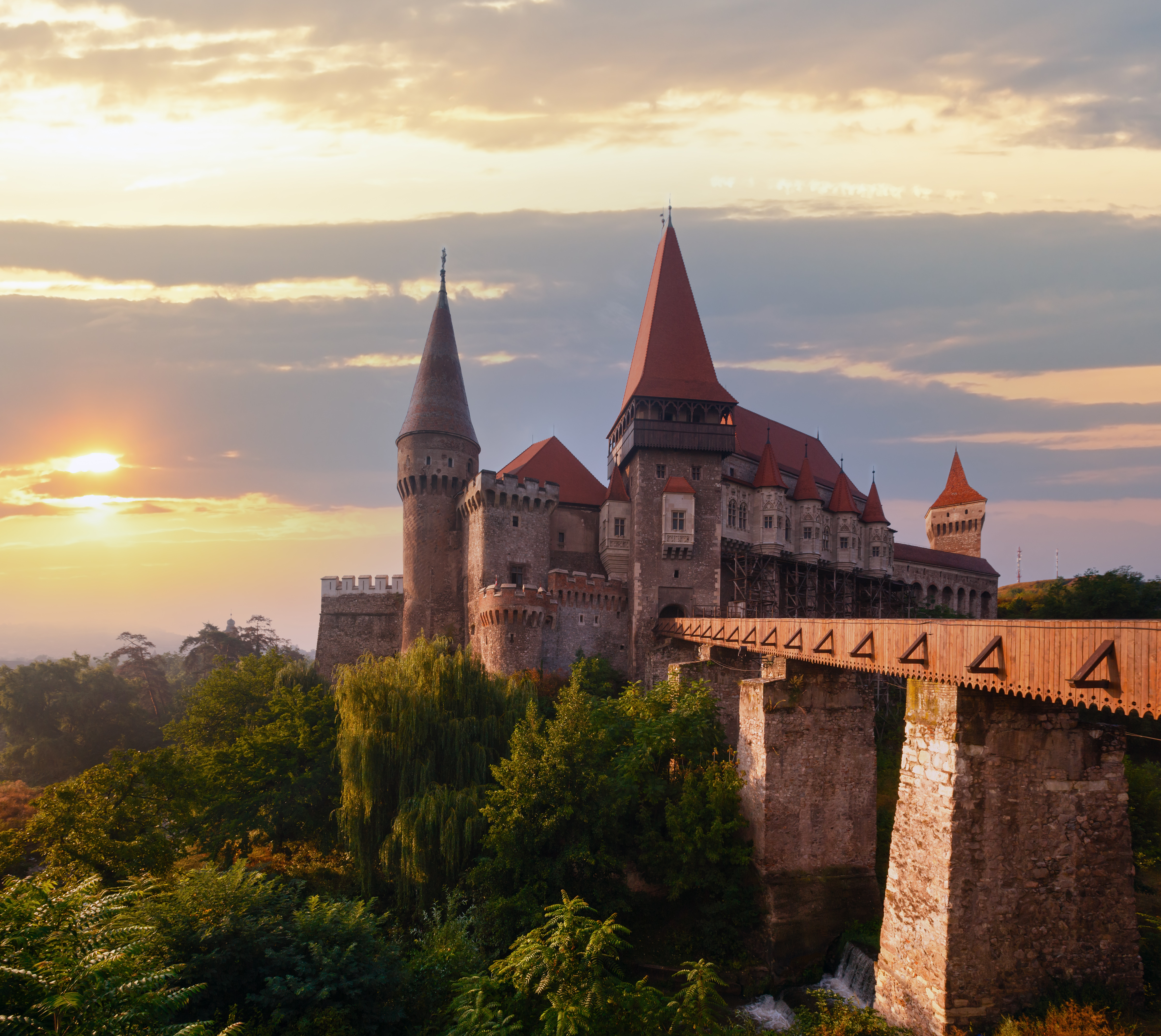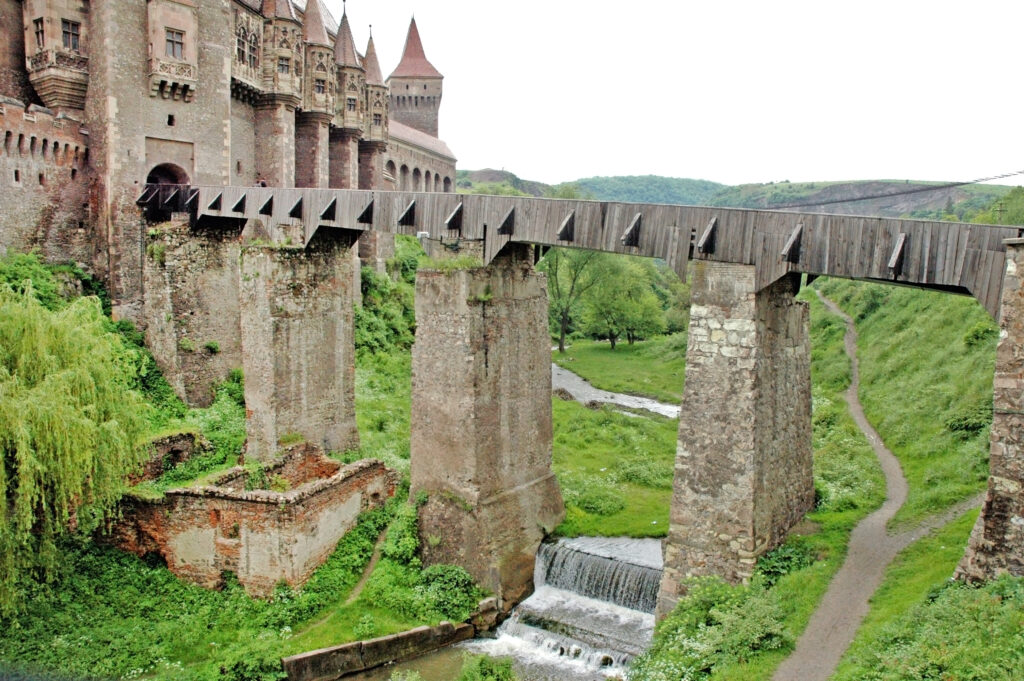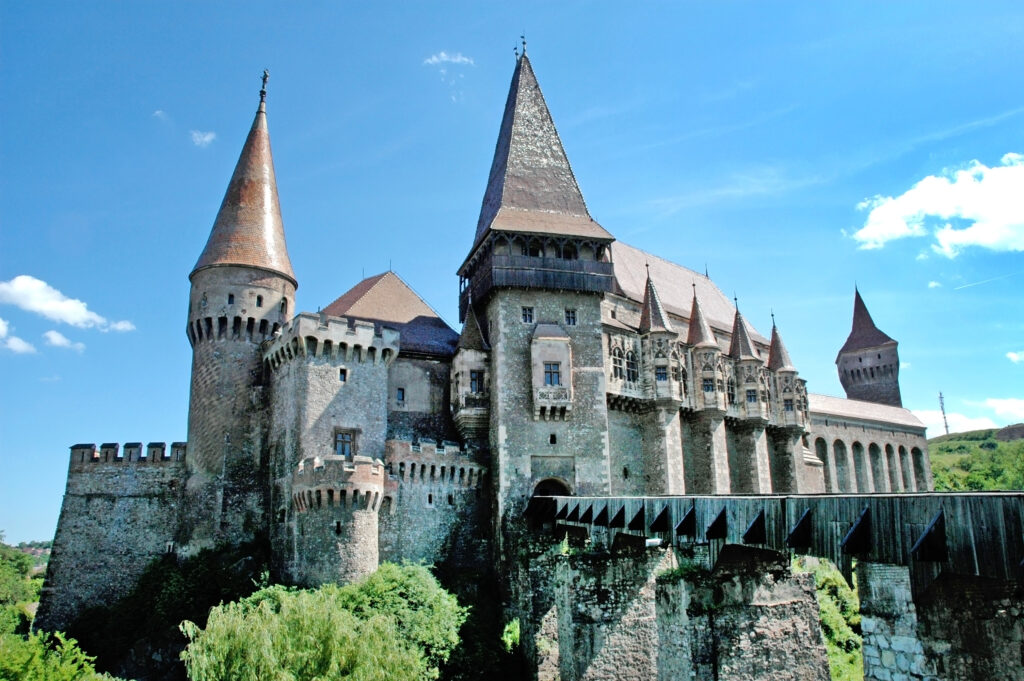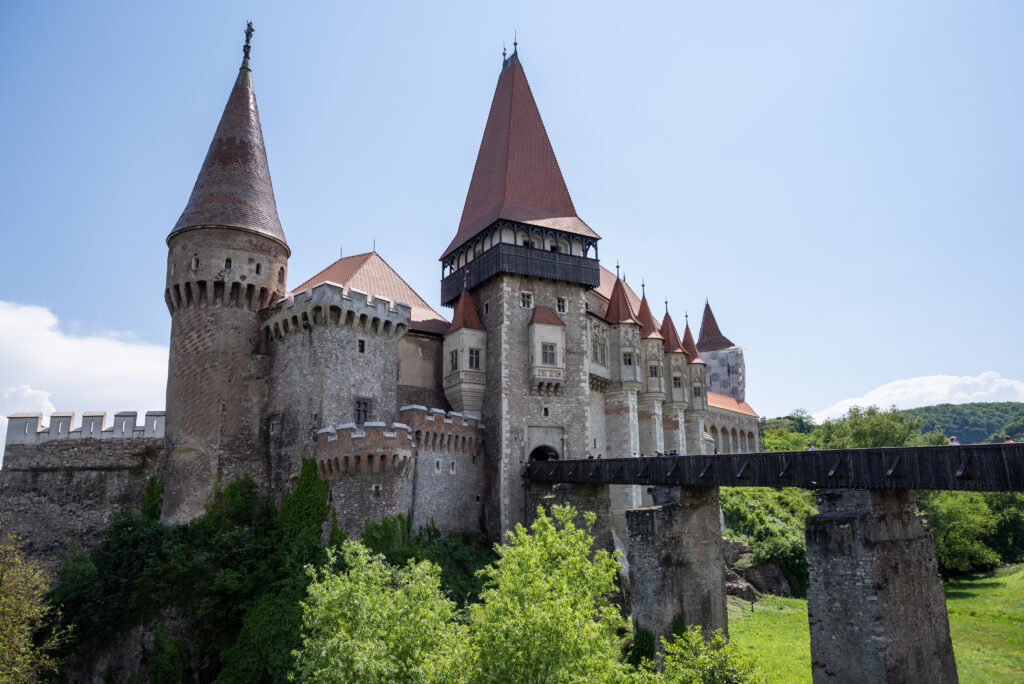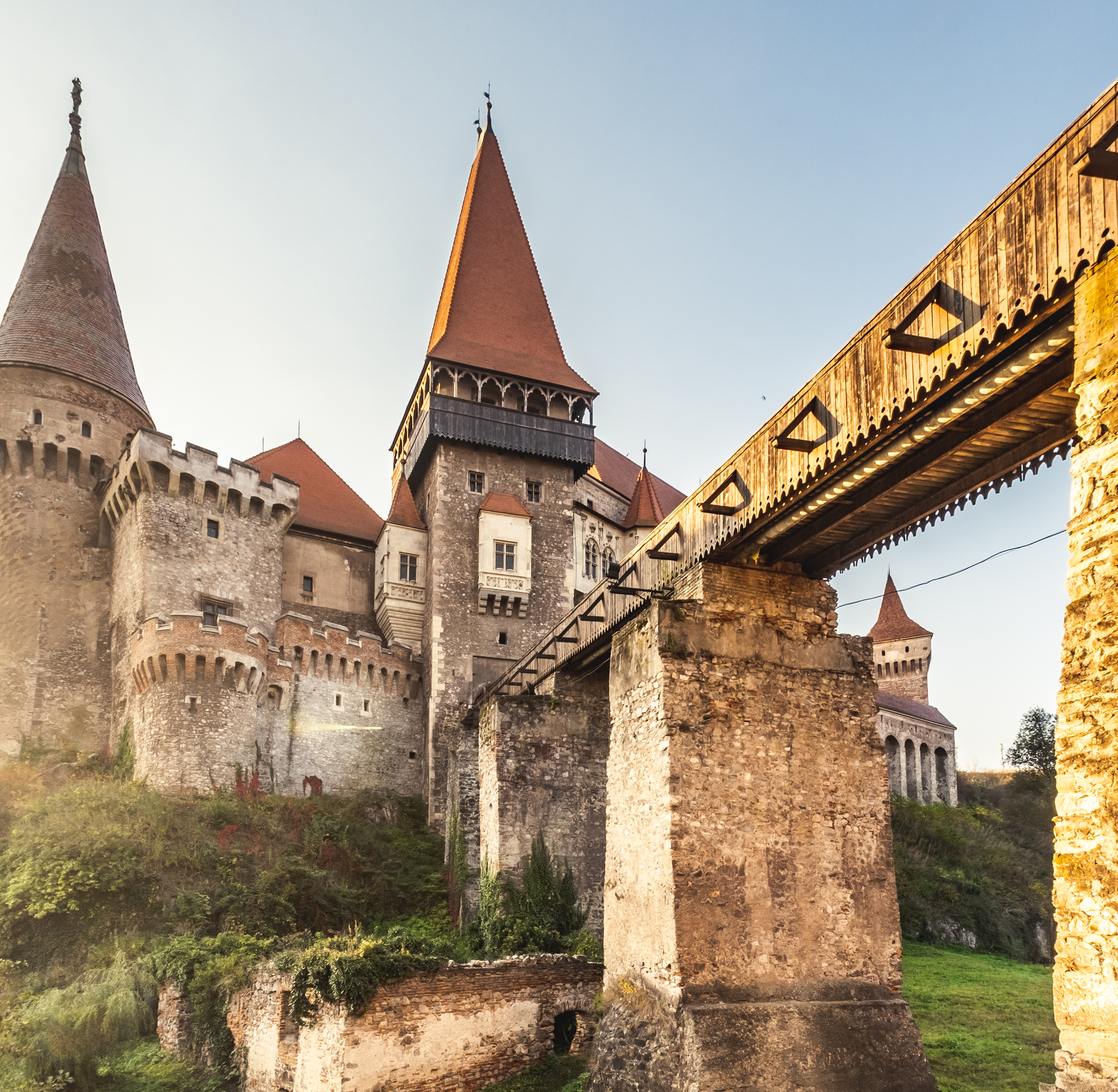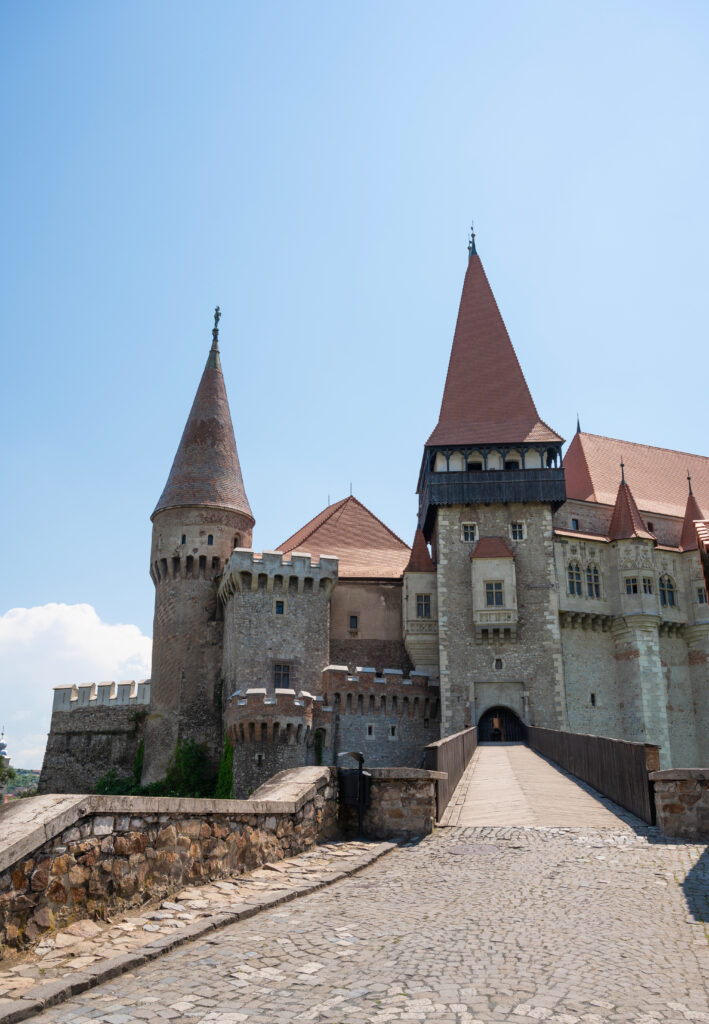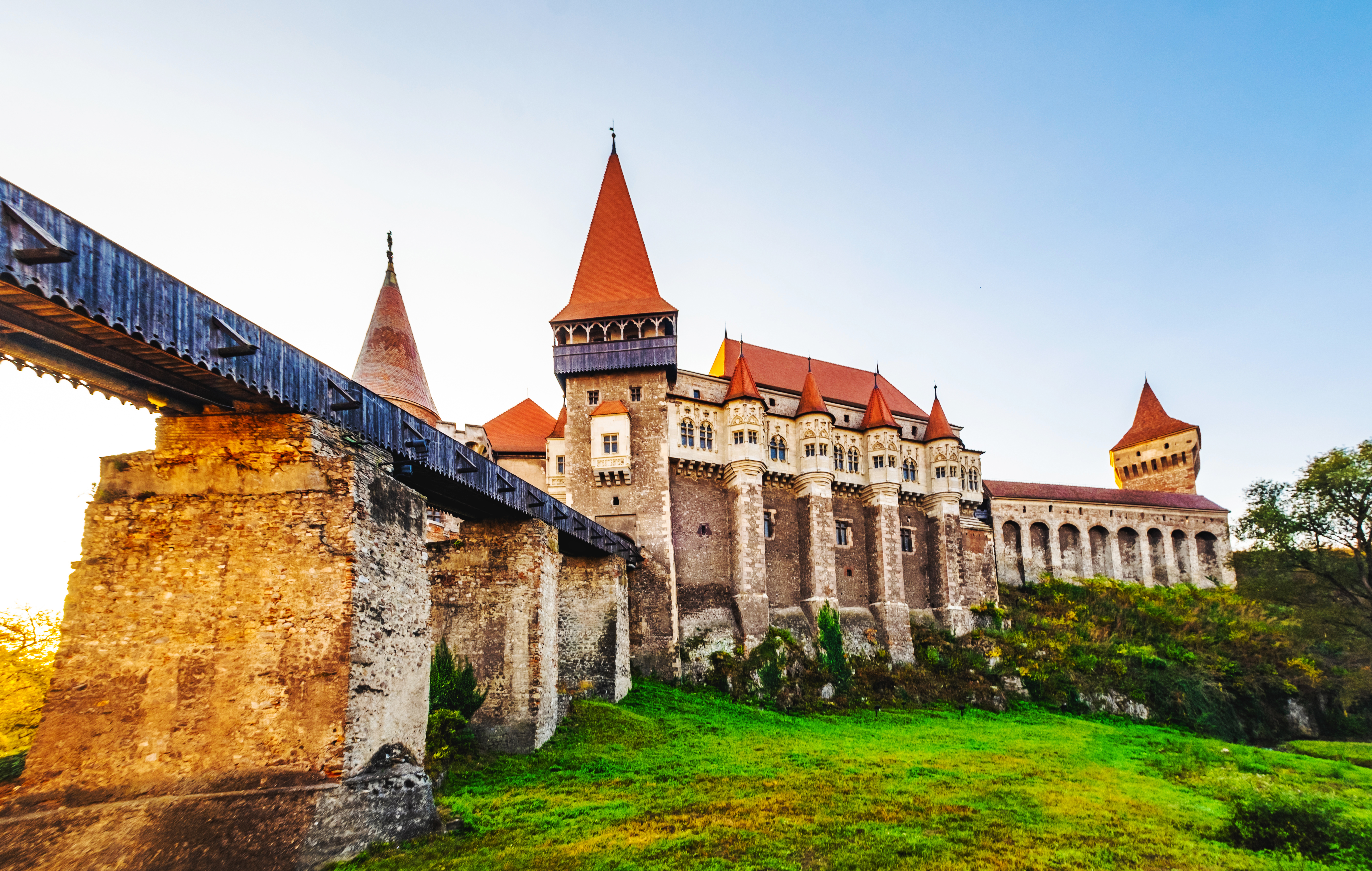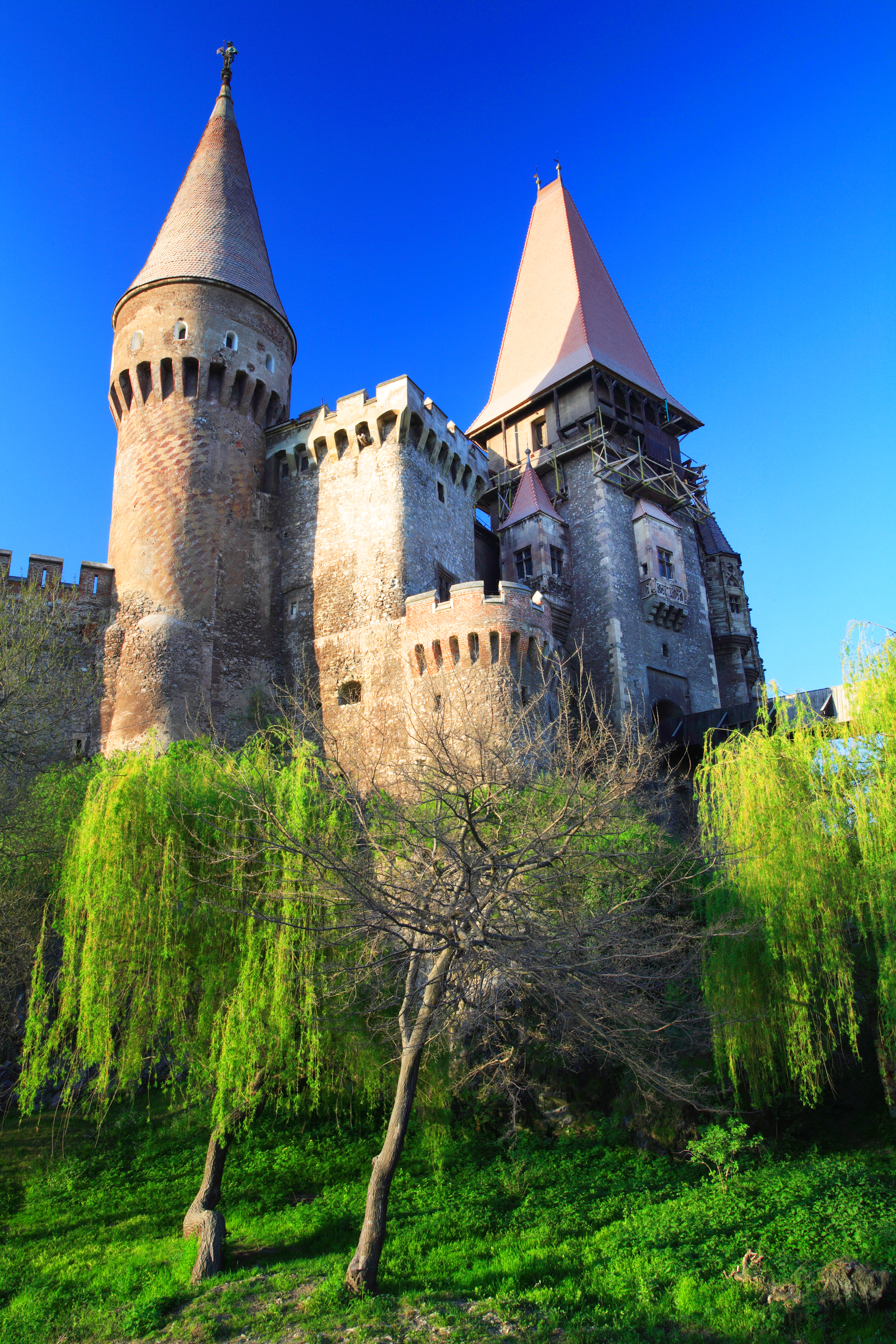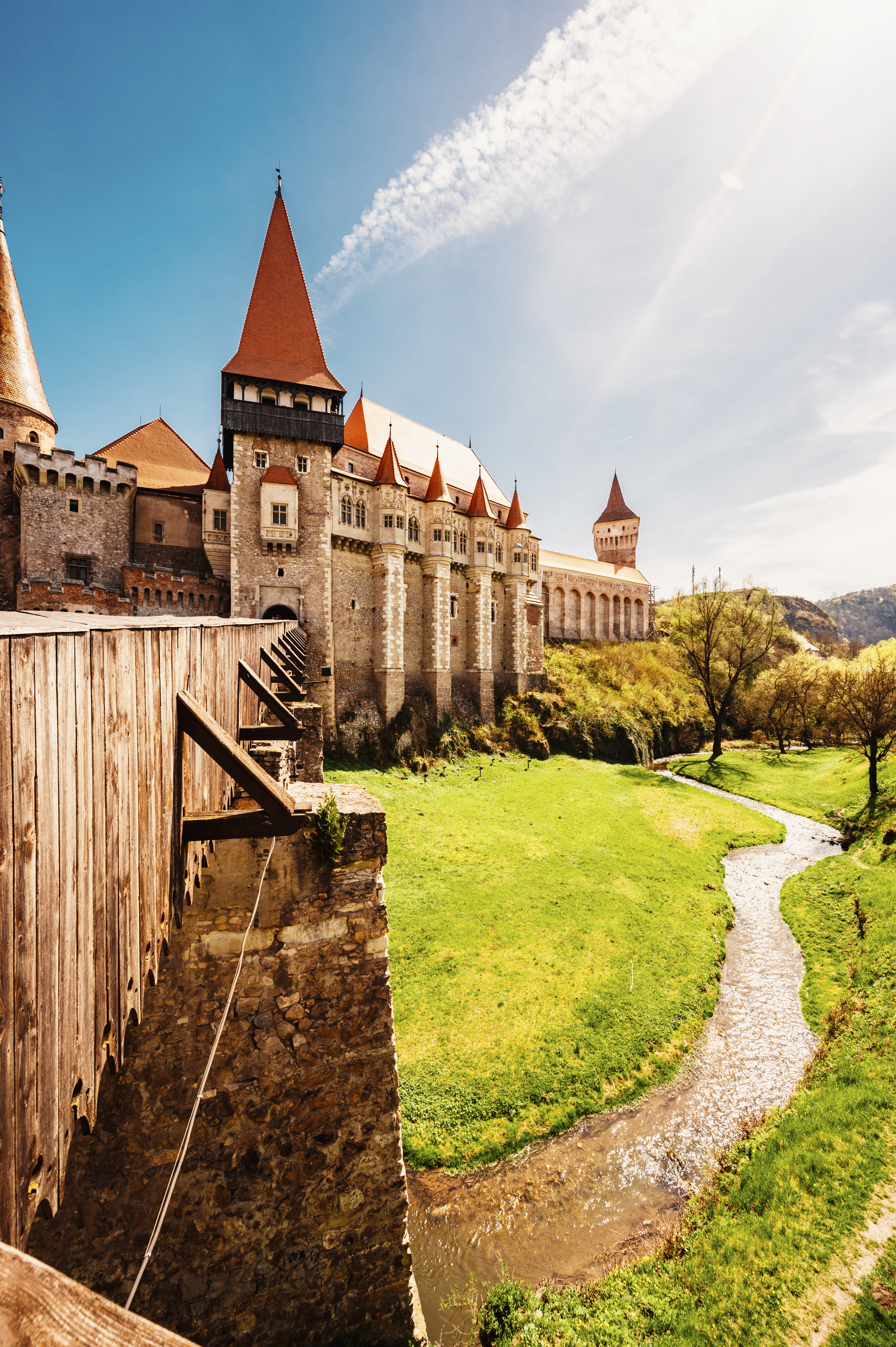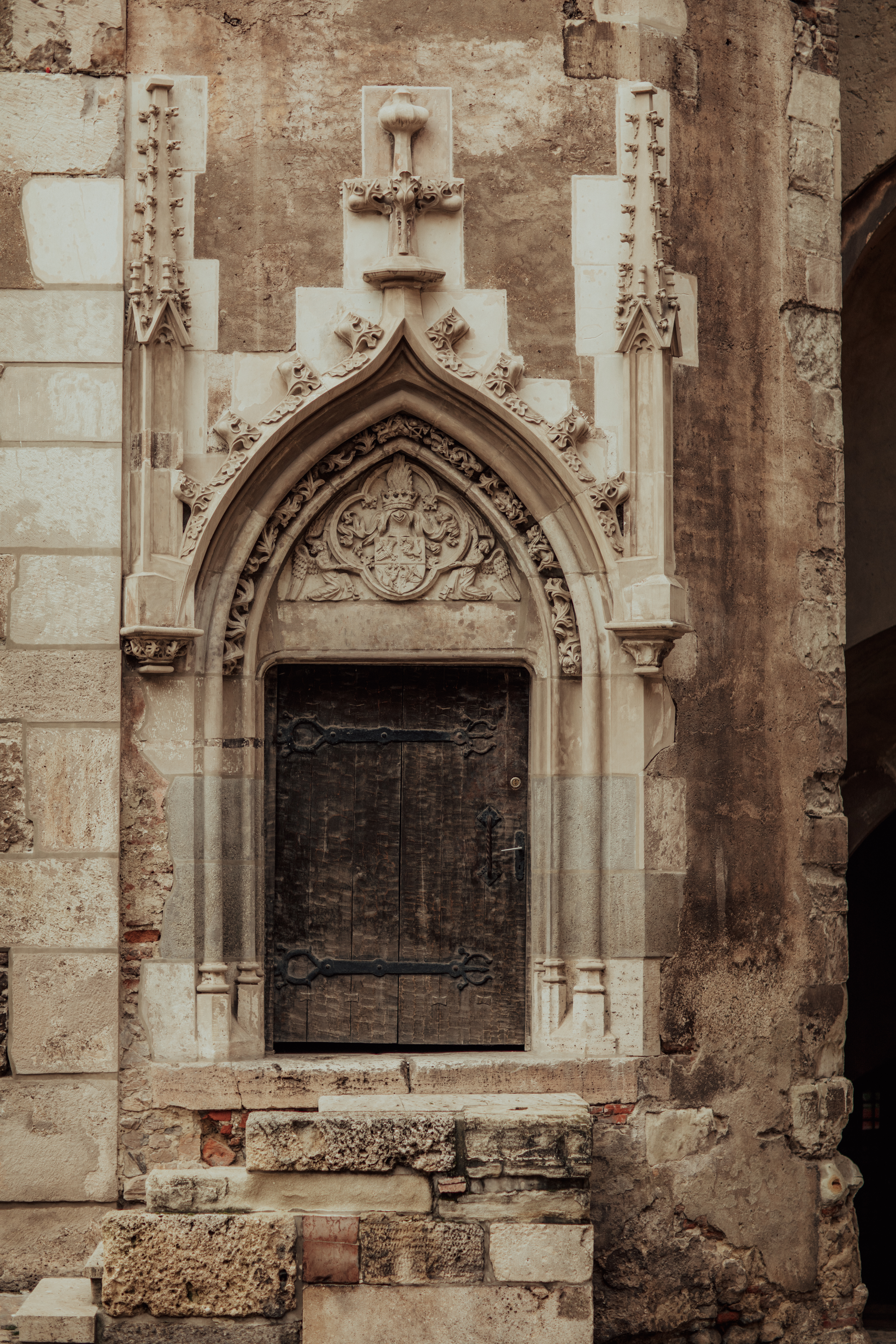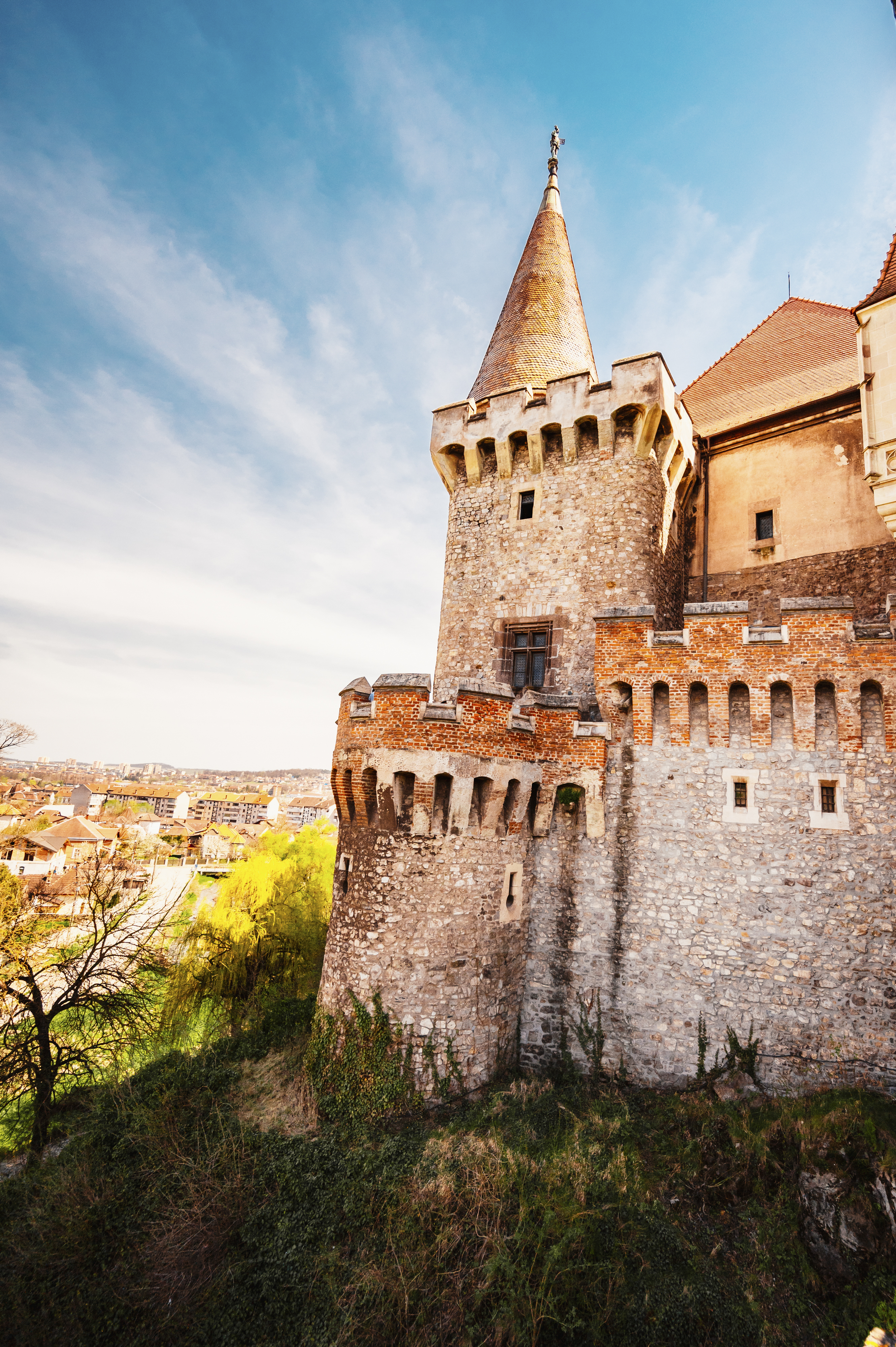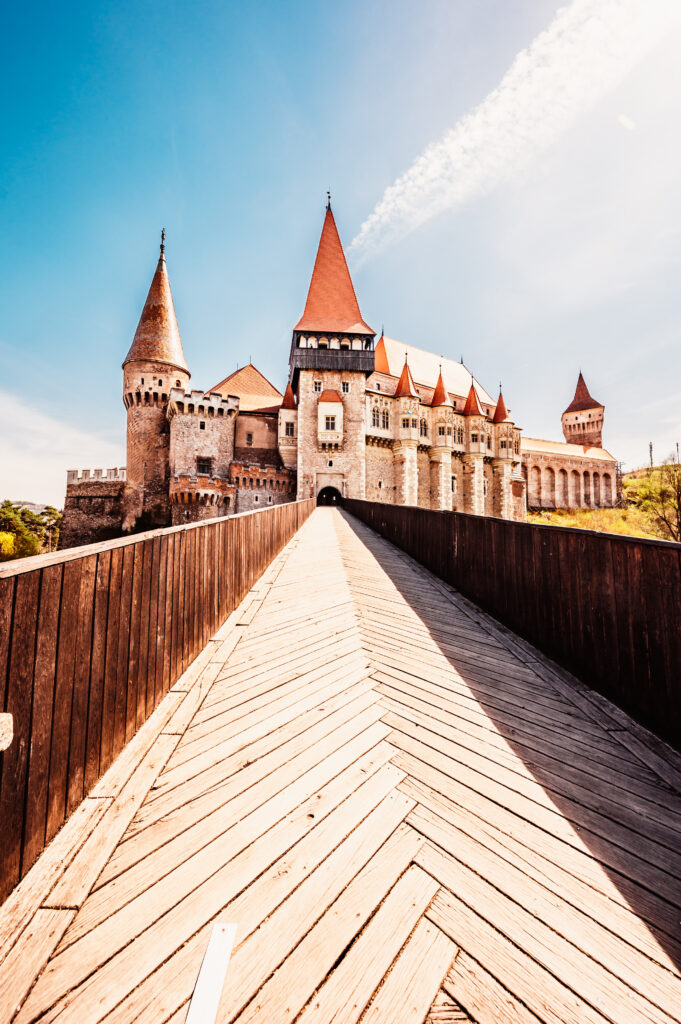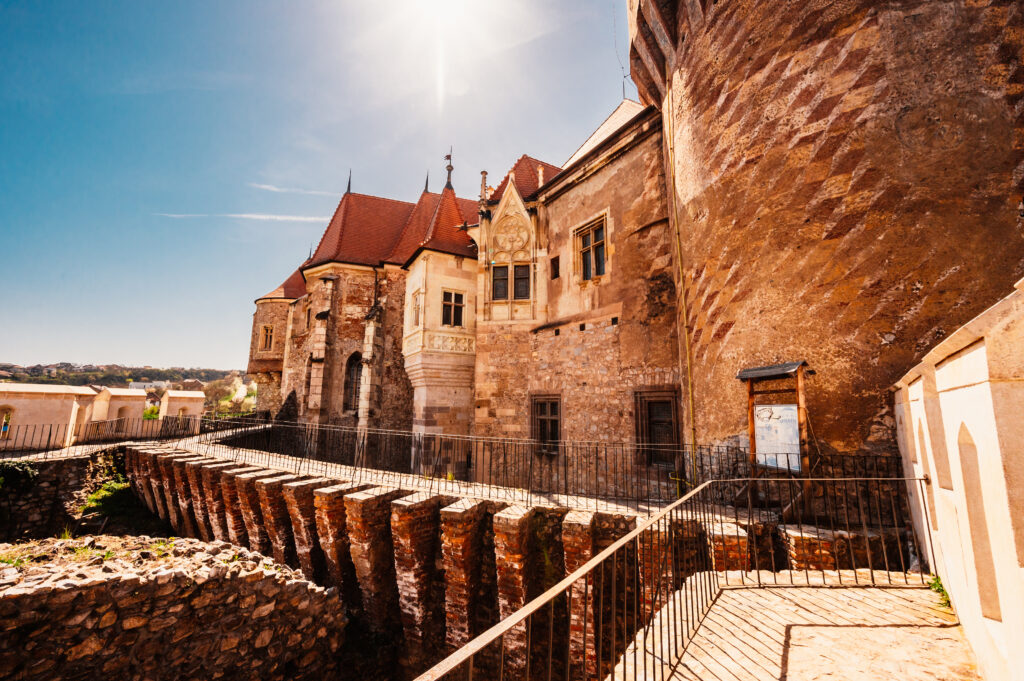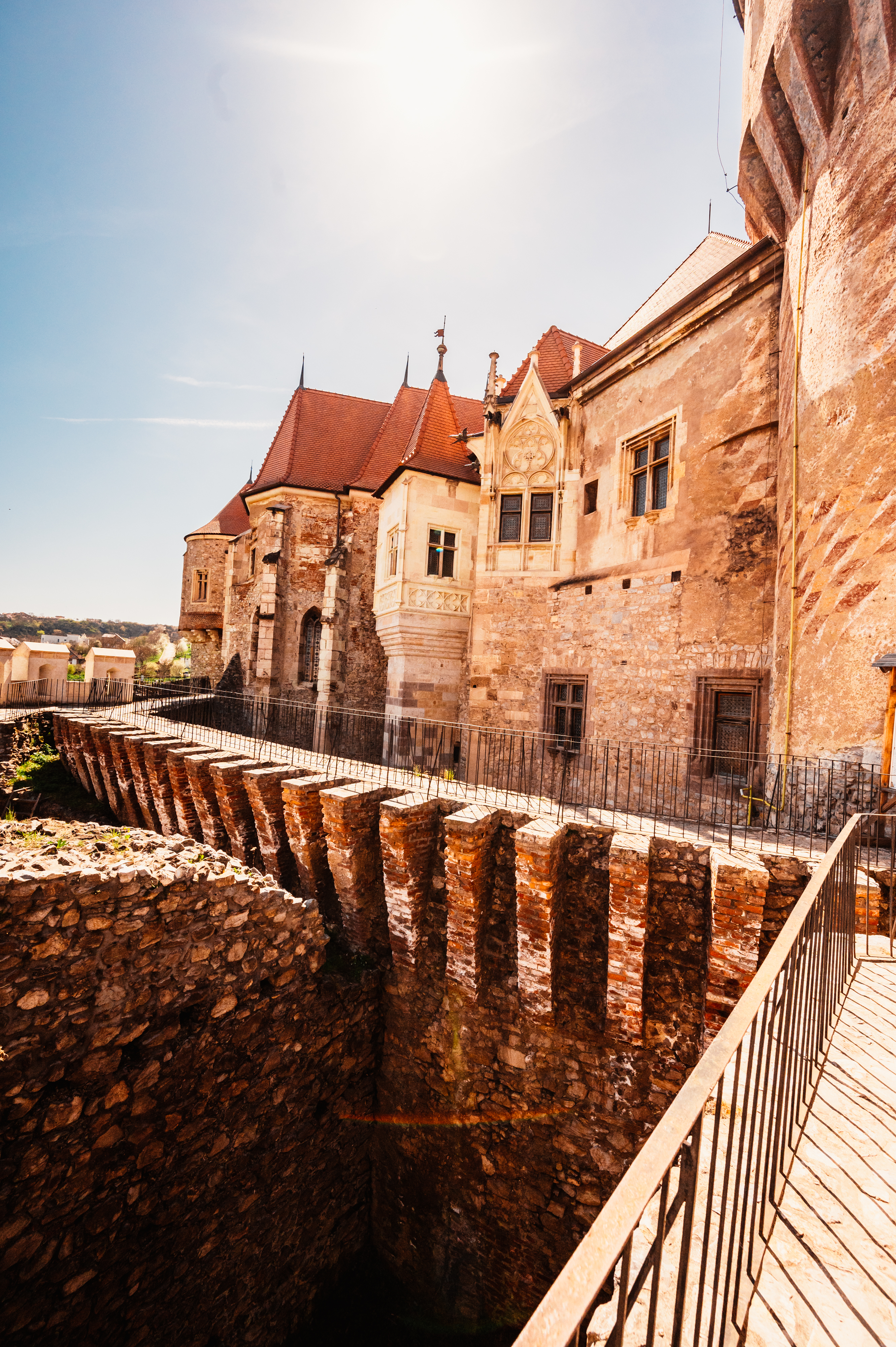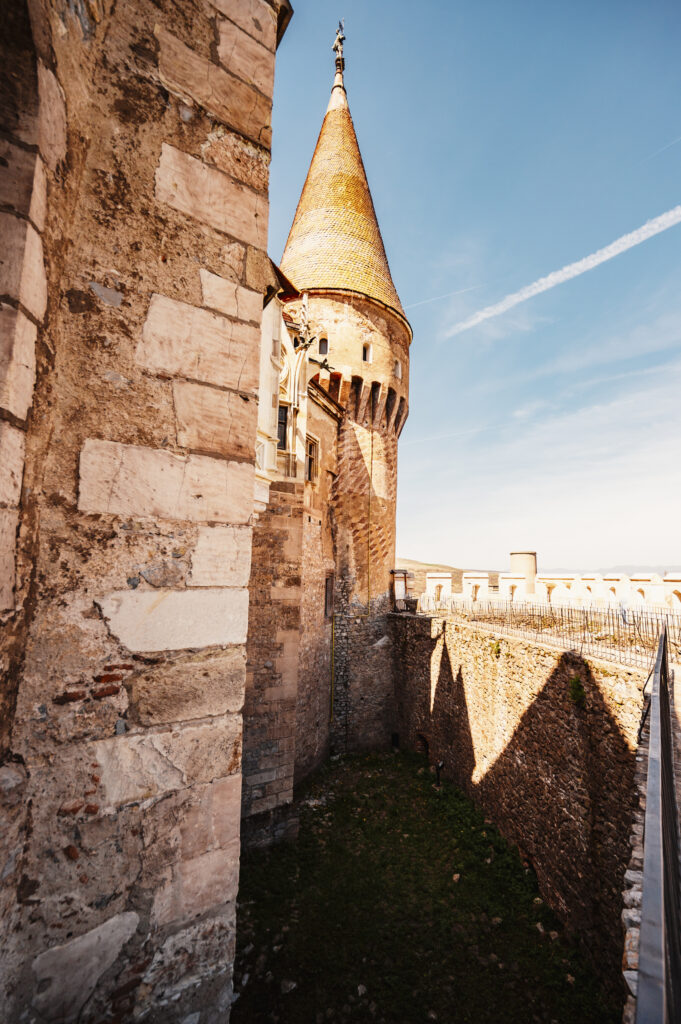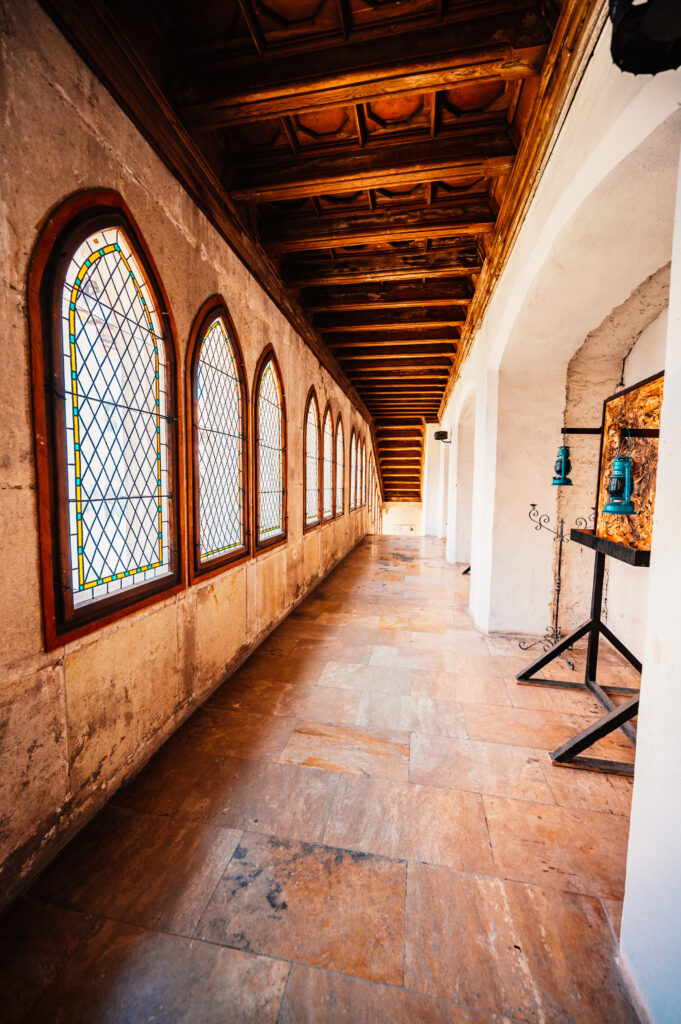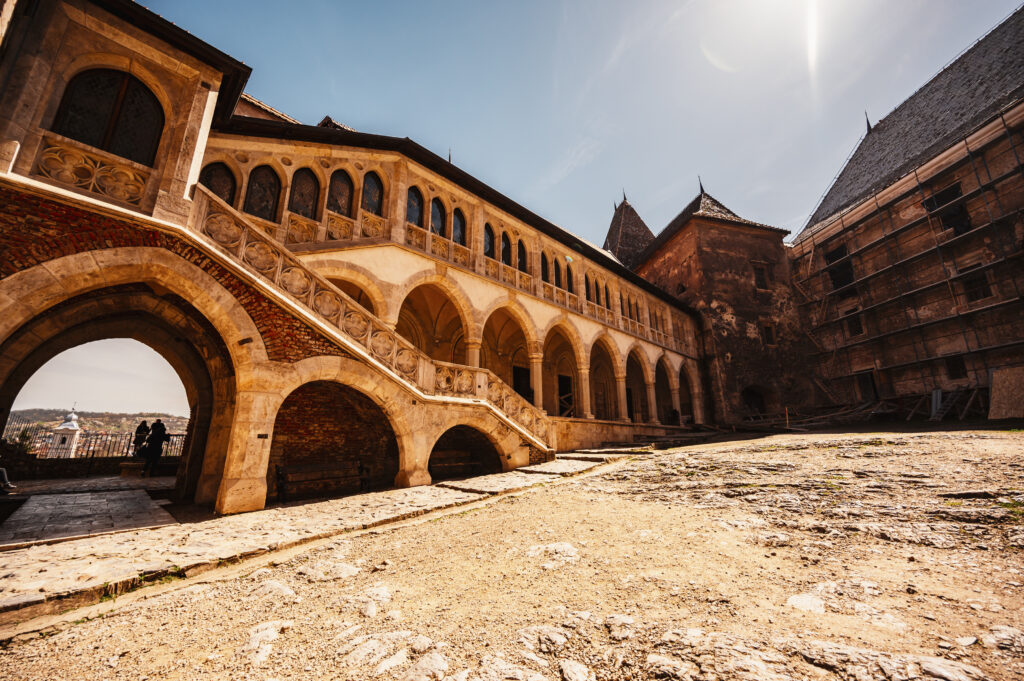
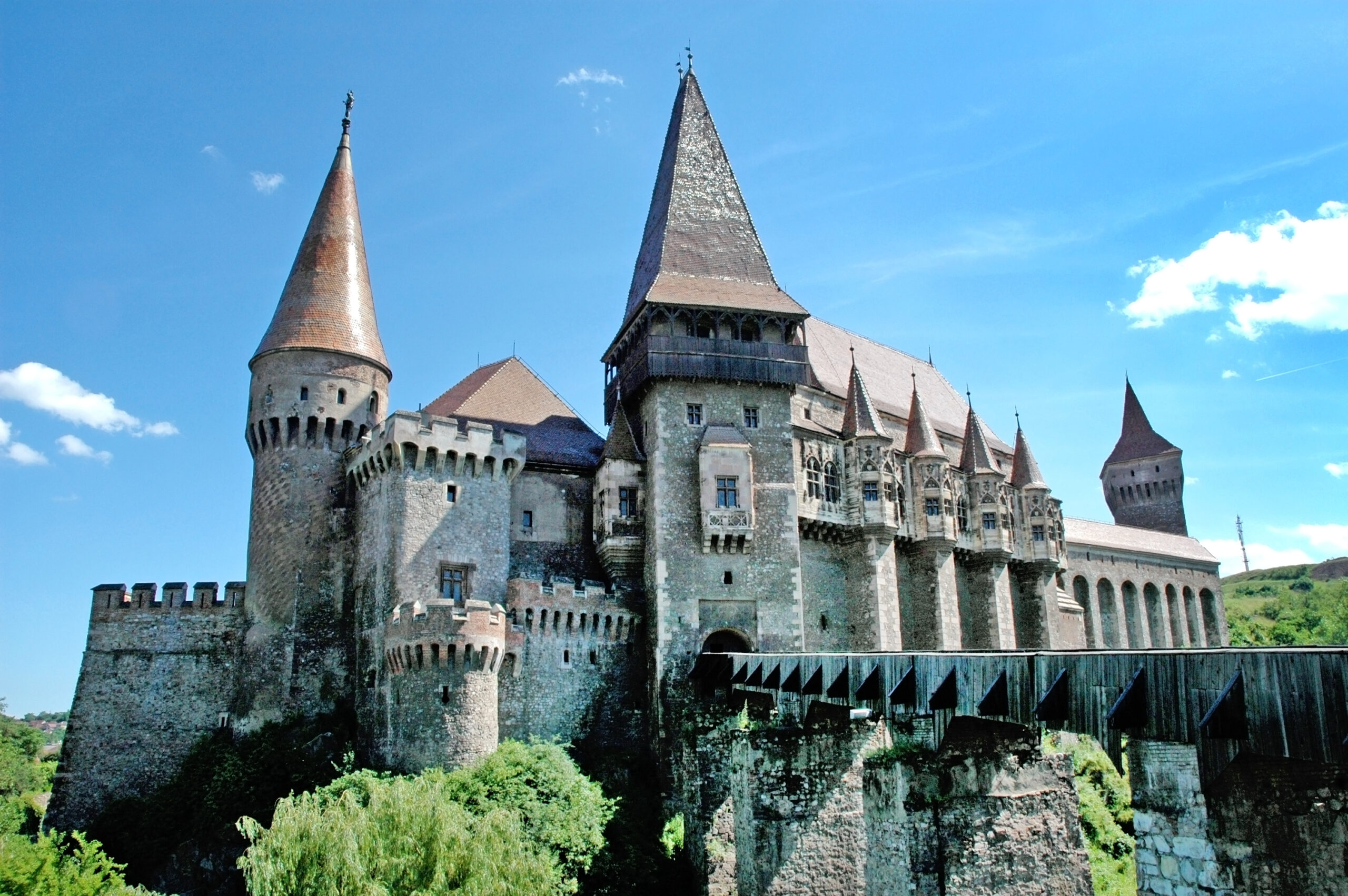
A glimpse into centuries of history – With its historic past and impressive architecture, Hunedoara Castle, also known as Iron Market Castle or Castelul Corvinilor, is not only a protected monument in Romania, but also a source of fascinating legends and myths. Nestled in the limestone cliffs in the southwestern part of the city of Hunedoara, the castle rises majestically, telling stories of power, intrigue, and heroic battles.
The origins of Hunedoara Castle date back to the 14th century, when it was built on the remains of an ancient fortress.
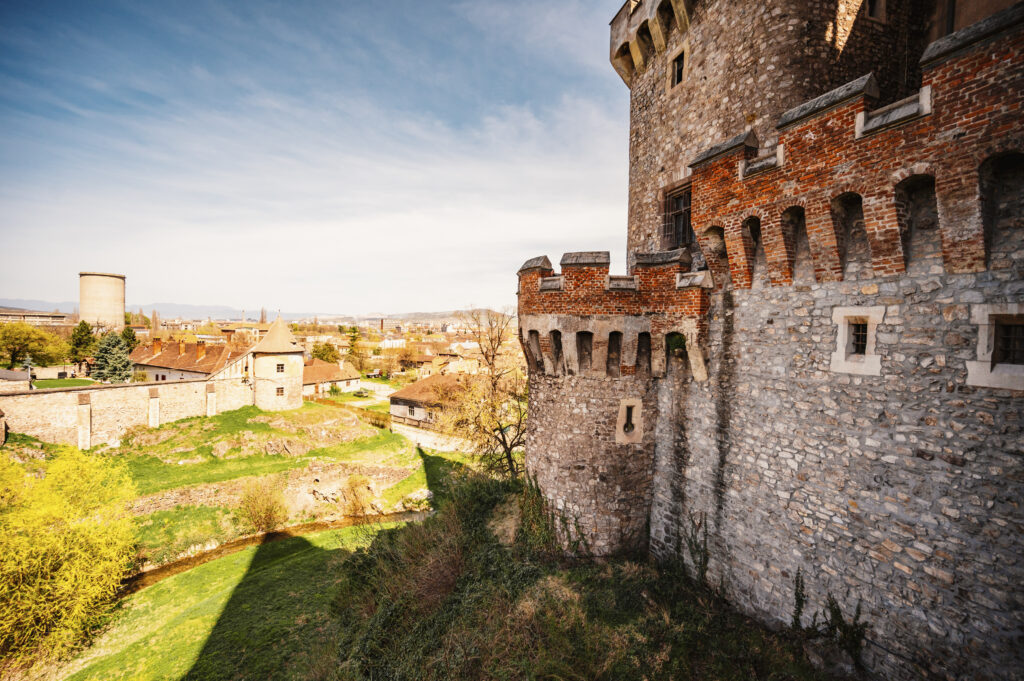
The most important figure in the early history of the castle was Johann Hunyadi, a Hungarian statesman and military commander who, after 1440, initiated the transformation of the existing fortress into the ancestral castle of the Hunyadi noble family. His vision was to create a powerful and impregnable fortress that also reflected the architectural style of his time.
With this ambitious reconstruction, Hunyadi laid the foundation for the numerous extensions that the castle would undergo in the following centuries.
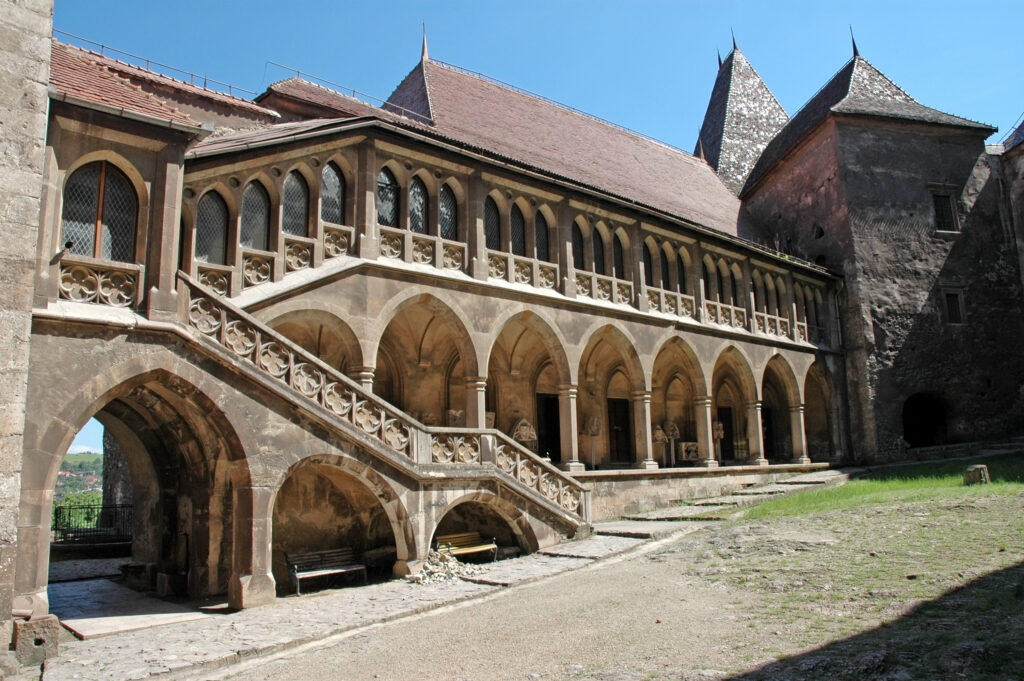
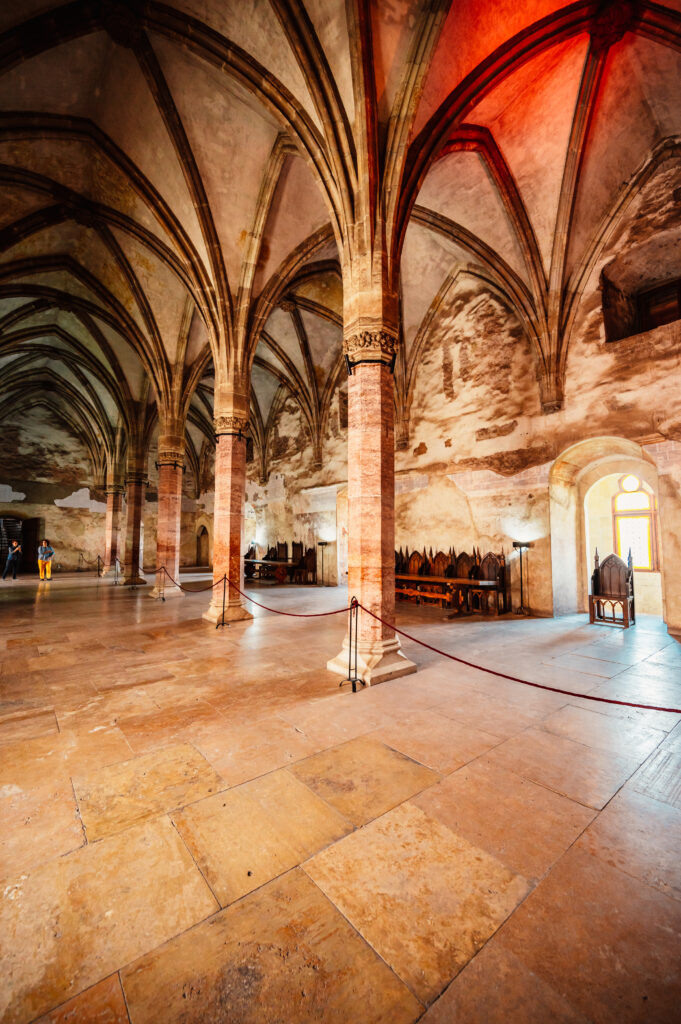
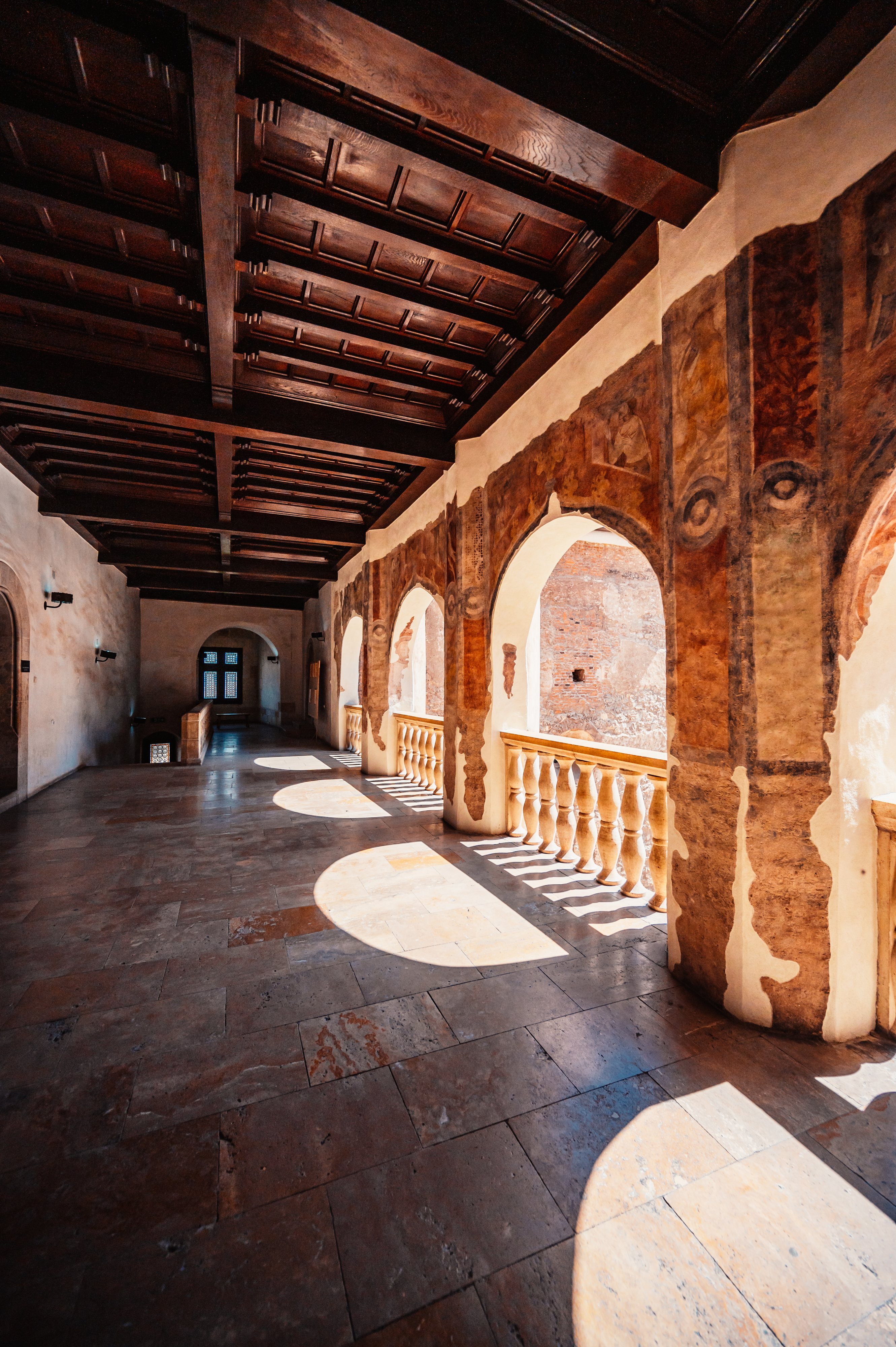
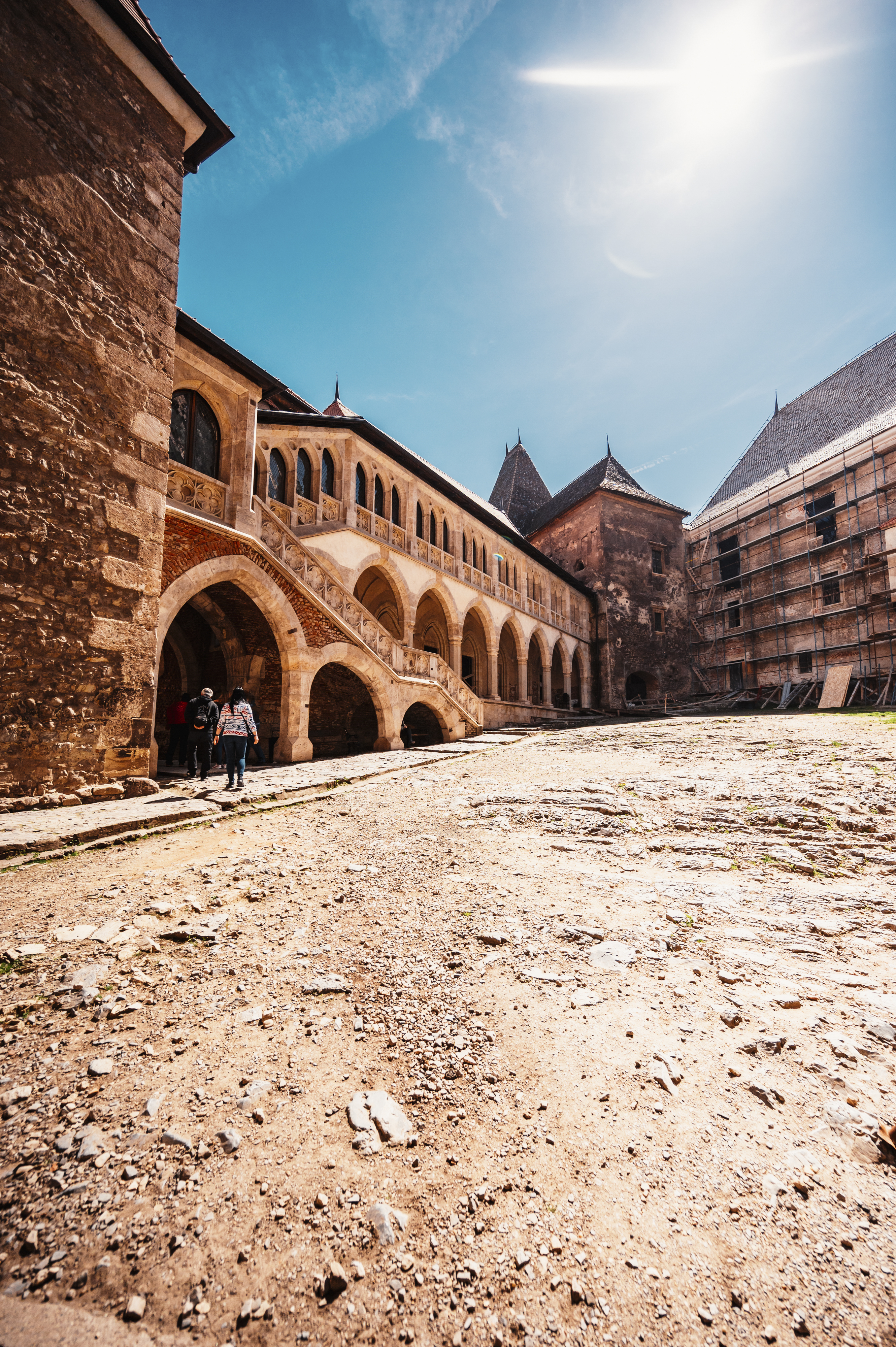
The scene of historical events – After Johann’s death, his son Matthias Corvinus took control of the castle and continued the construction work. As King of Hungary, Matthias Corvinus brought with him a period of prosperity and architectural embellishment. Under his reign, Renaissance elements were added to complement the Gothic appearance of the castle. The magnificent Knights’ Hall, the Matia Loggia, and the elaborate frescoes that can still be admired in the castle today bear witness to this glorious period.
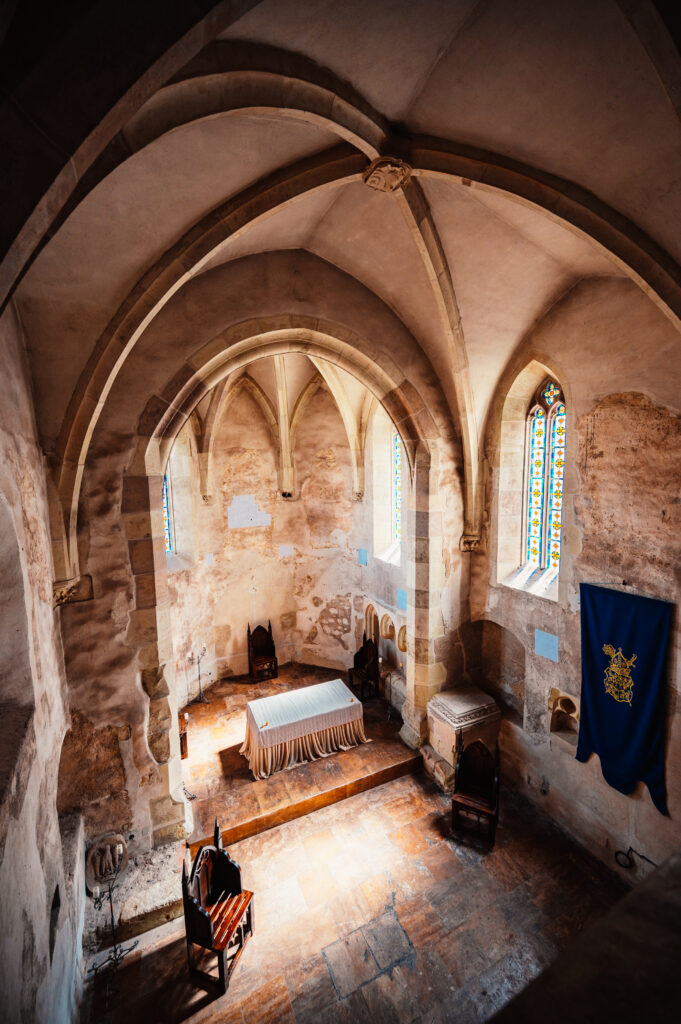
The castle remained in the possession of the Hunyadi family and their descendants, but due to marriages, inheritances, and political intrigues, it changed hands frequently. At the beginning of the 17th century, Prince Gábor Bethlen renovated the castle again. He added military structures and altered the chapel, consolidating the castle’s function as a fortress and noble residence.
Legends and myths surround its walls – Hunedoara Castle is not only known for its architectural beauty and historical significance, but also for the numerous legends and myths that surround it. One of the most famous stories is the sad legend of the castle well. According to legend, the 28-meter-deep well in the castle courtyard was dug by three Turkish prisoners who were promised freedom if they found water. After 15 years of hard work, they found water, but instead of freedom, they were given death. The inscription “You may have water, but you have no feelings,” which is said to be located near the well, testifies to the bitter disappointment of the prisoners. This emotionally charged story is often told by tour guides and holds a special attraction for visitors to the castle.
Another famous legend concerns the crow on the Hunyadi family coat of arms.
The crow with a golden ring in its beak symbolizes a remarkable episode in the life of Johann Hunyadi. According to legend, Johann was the illegitimate son of King Sigismund of Luxembourg. In recognition of his origins, he received a ring, which was stolen from him by a crow. Johann pursued the raven and retrieved the ring, whereupon the raven became the symbol of the family coat of arms.
Dracula and other dark stories – The stories about Vlad III Drăculea, known as Vlad the Impaler or “Dracula,” are also closely linked to Hunedoara Castle. It is said that Vlad sought refuge with Matthias Corvinus in 1462 after fleeing from the Ottomans.
However, he was later betrayed and imprisoned in Visegrád Castle and possibly also temporarily in Hunedoara Castle. Although Vlad was not the owner of the castle, it is often considered one of the many fortresses that served as a model for Dracula’s castle, especially in Western popular culture.
The castle through the ages – Over the centuries, the castle has been rebuilt and restored several times, further enriching its architectural and historical significance.
Of particular note are the renovations carried out in the 19th century by architects such as Ferenc Schulcz and Imre Steindl. This work revived the Gothic elements and led to a significant cultural renaissance of the castle.
The most recent restoration projects, based on the research of historian and architect Oliver Velescu, have contributed significantly to the preservation of the castle for future generations. Thanks to these efforts, Hunedoara Castle is now open to the public not only as an example of historical architecture, but also as a living museum.
Famous venue for films and events – Its unique atmosphere and majestic beauty have made Hunedoara Castle a sought-after location for films and television productions. International productions such as “The Nun” and “Nosferatu the Vampire,” as well as music videos such as Kelly Clarkson’s “Don’t Waste Your Time,” have used the castle as a backdrop. The castle regularly hosts medieval festivals and events that commemorate the region’s rich cultural heritage.
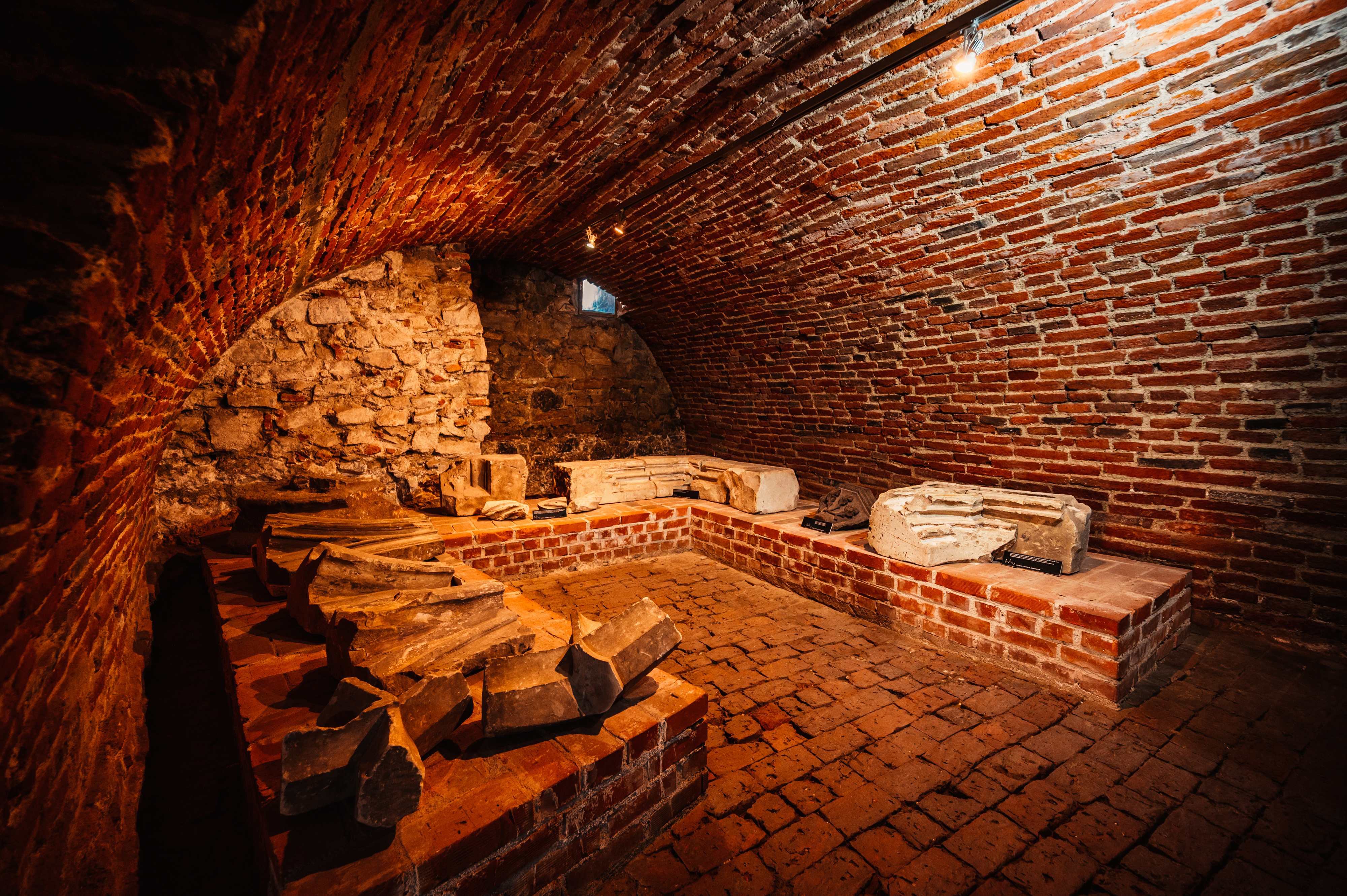
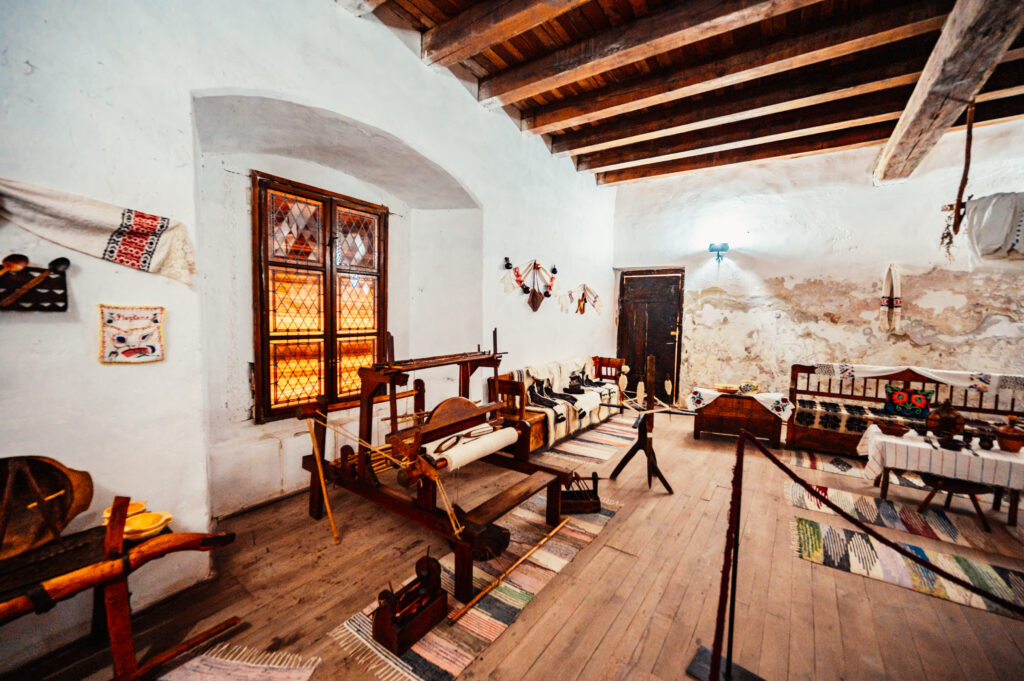
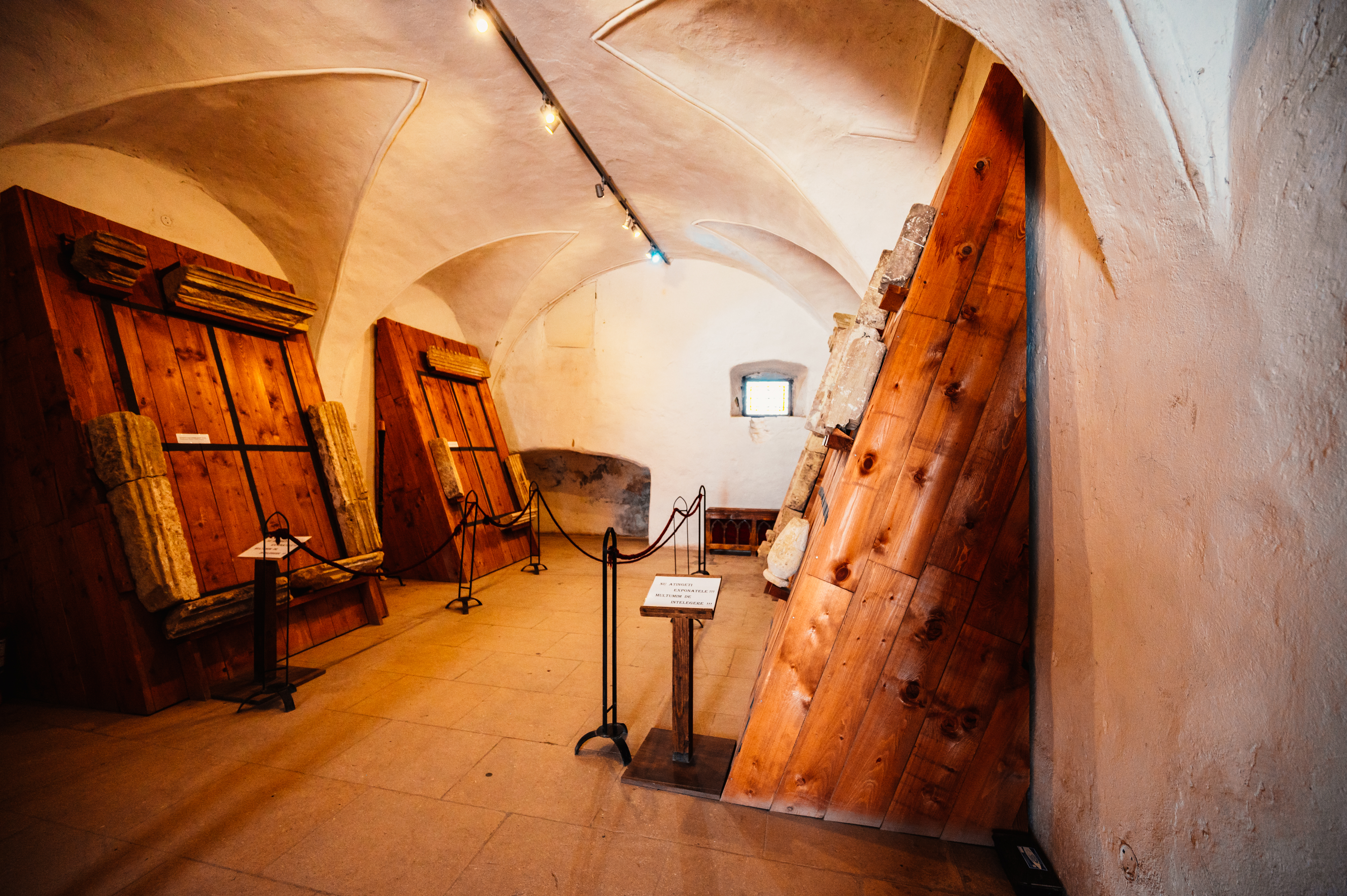
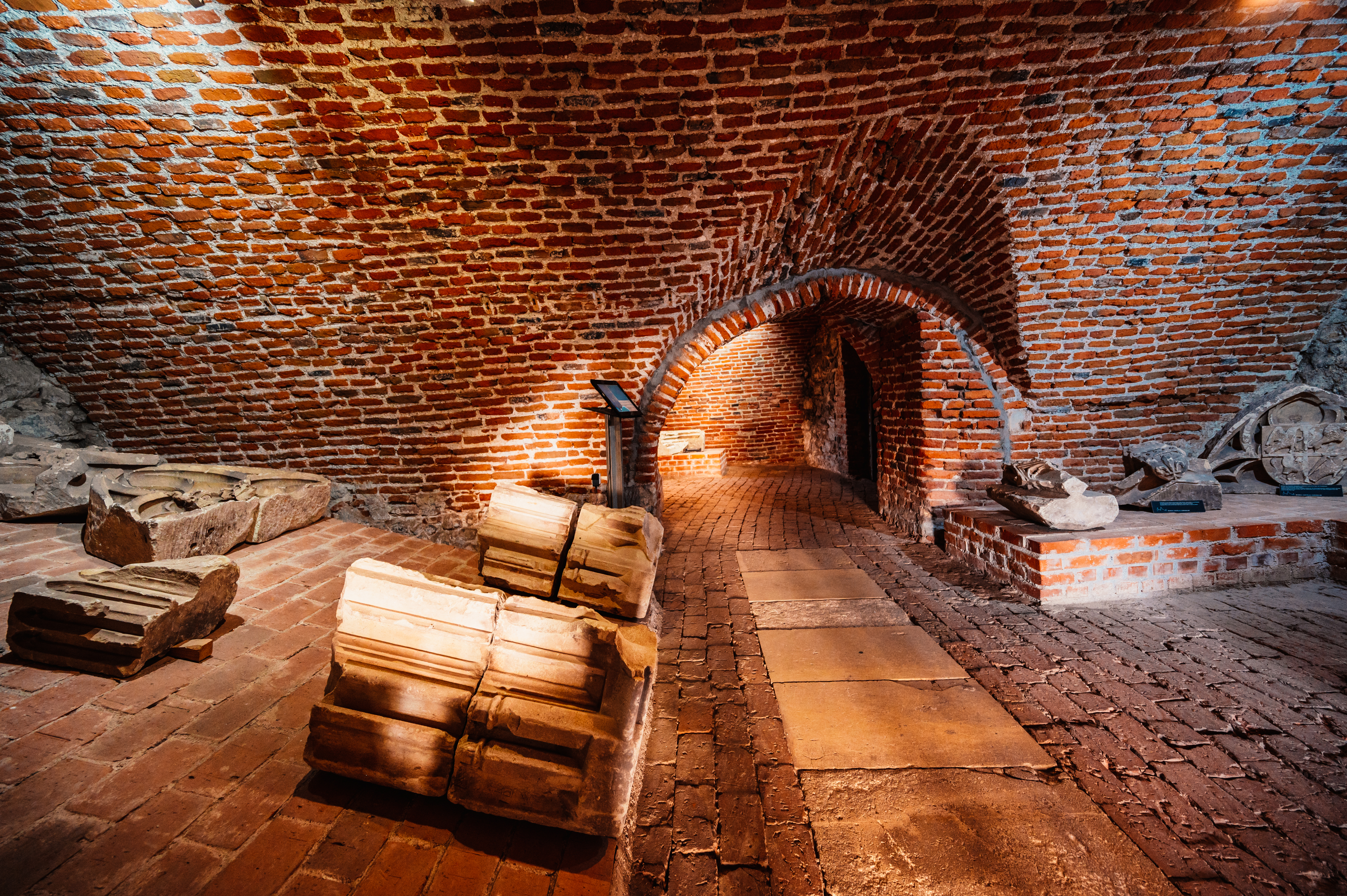
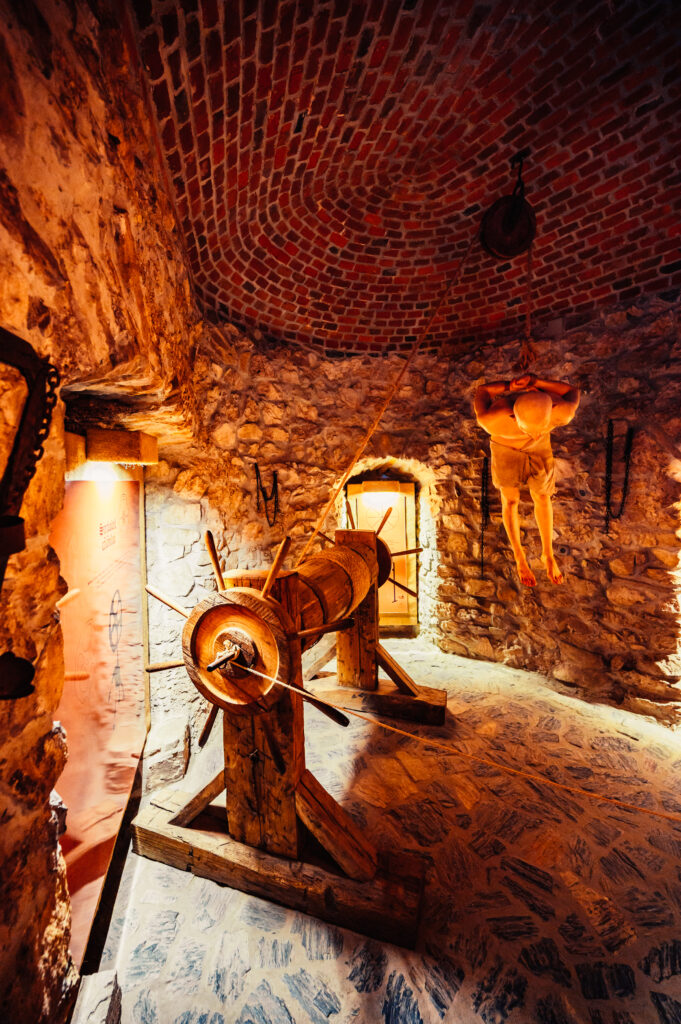
In addition to film productions and events, the castle also offers a variety of guided tours and walking tours for visitors. Opened in 1974, the castle museum houses an impressive collection of medieval artifacts, archaeological finds, and decorative art. CORVINIANA, a series of publications by the museum, documents these treasures and research on the history of the castle.
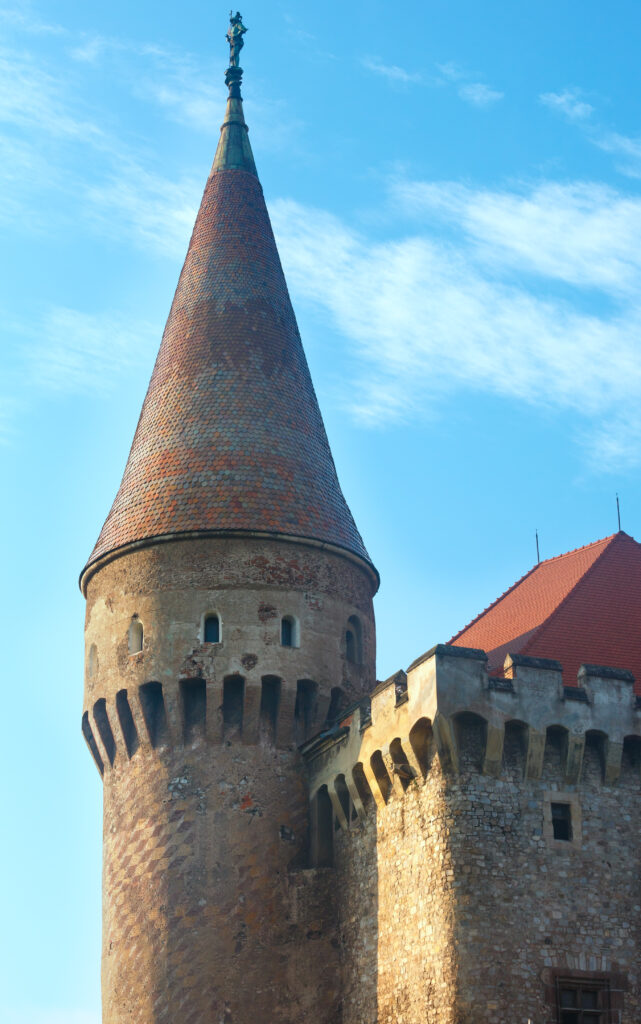
A unique combination of architecture and history – Hunedoara Castle remains a masterpiece of secular Gothic architecture, reminiscent of 15th-century French castles. Its strong defenses, ornate towers, and impressive residential wings make it an outstanding example of European fortress architecture. The combination of different architectural styles that have developed over the centuries gives the castle its distinctive appearance.
Amidst this architectural splendor, the legends and myths that make Hunedoara Castle one of the most fascinating and mystical places in Europe live on.
Whether through romantic tales, tragic legends, or historical accounts, the castle walls continue to whisper stories from the past, captivating curious visitors.
Hunedoara Castle is not only a monument to times gone by, but also a living witness to the historical and cultural diversity of Transylvania, waiting to be discovered and experienced by new generations.