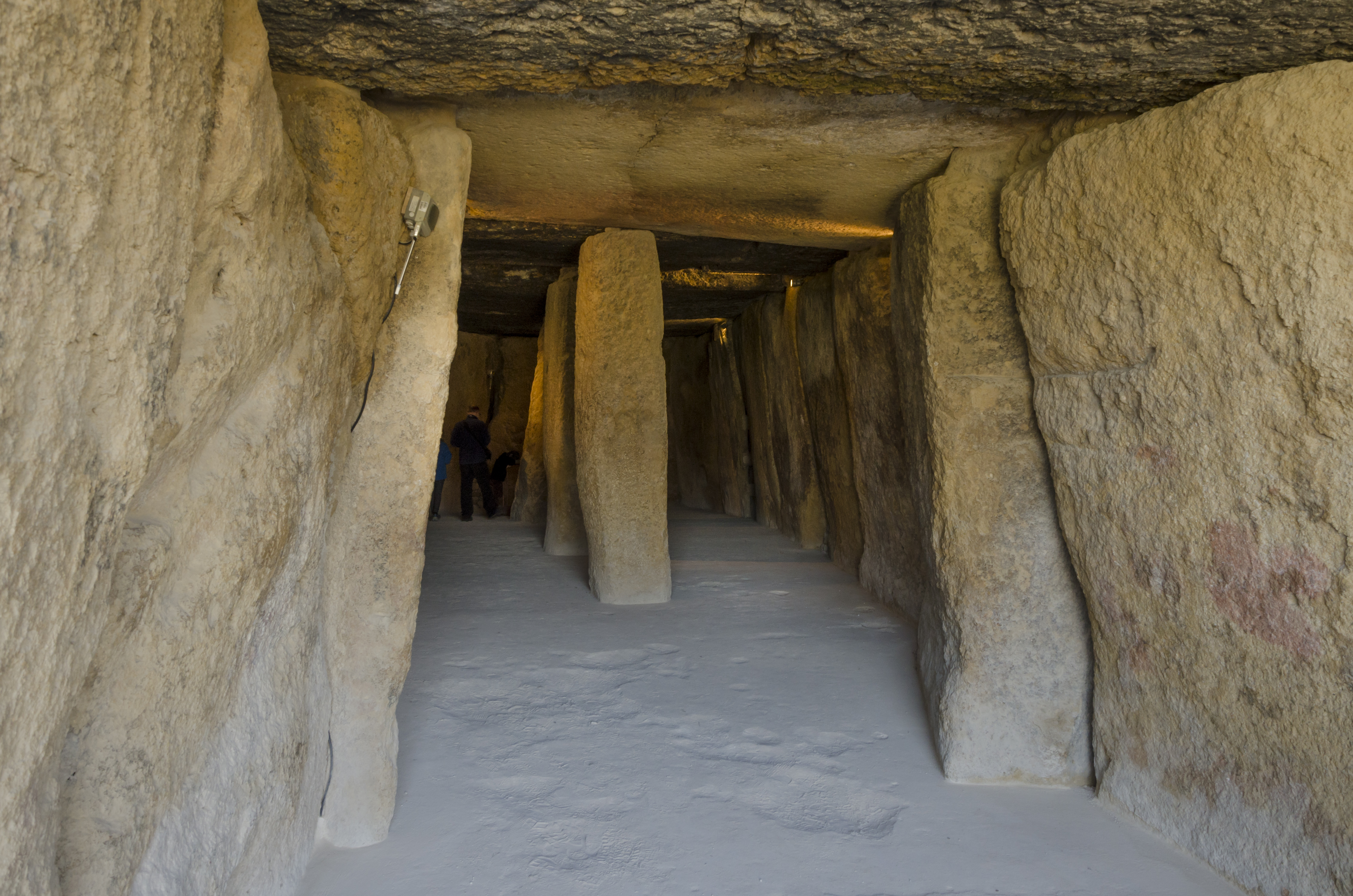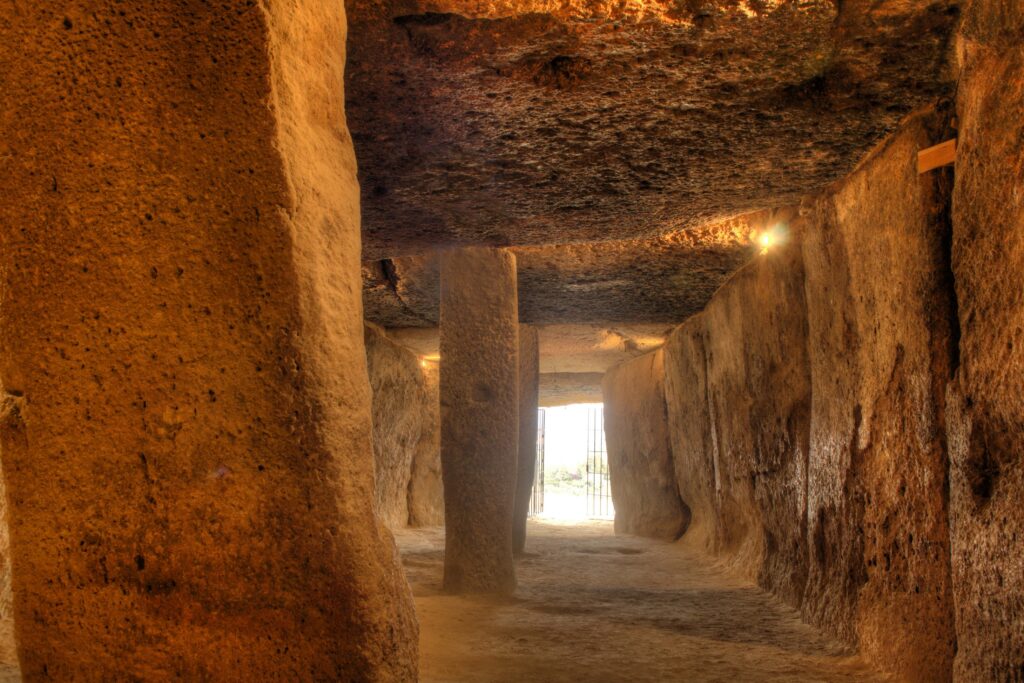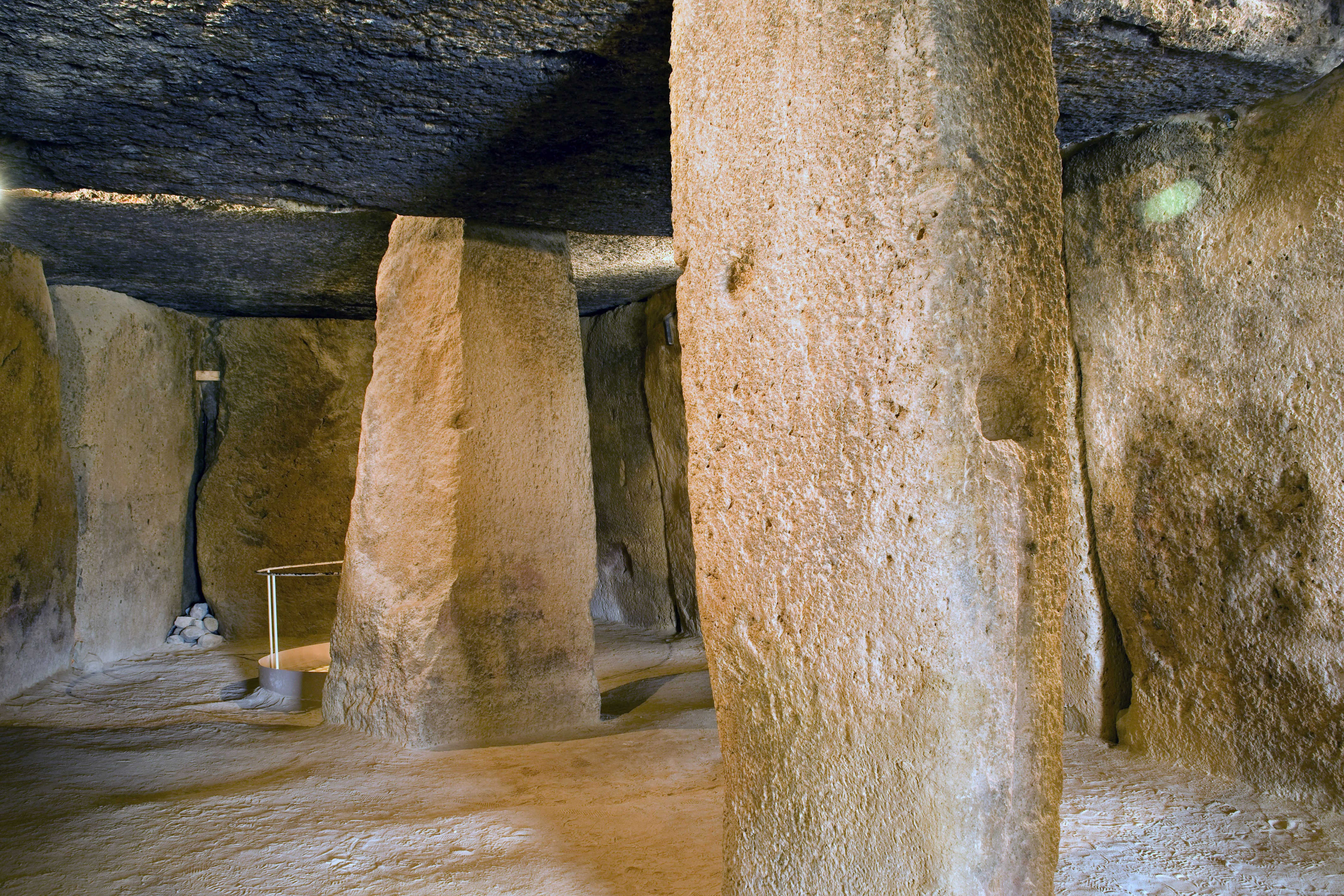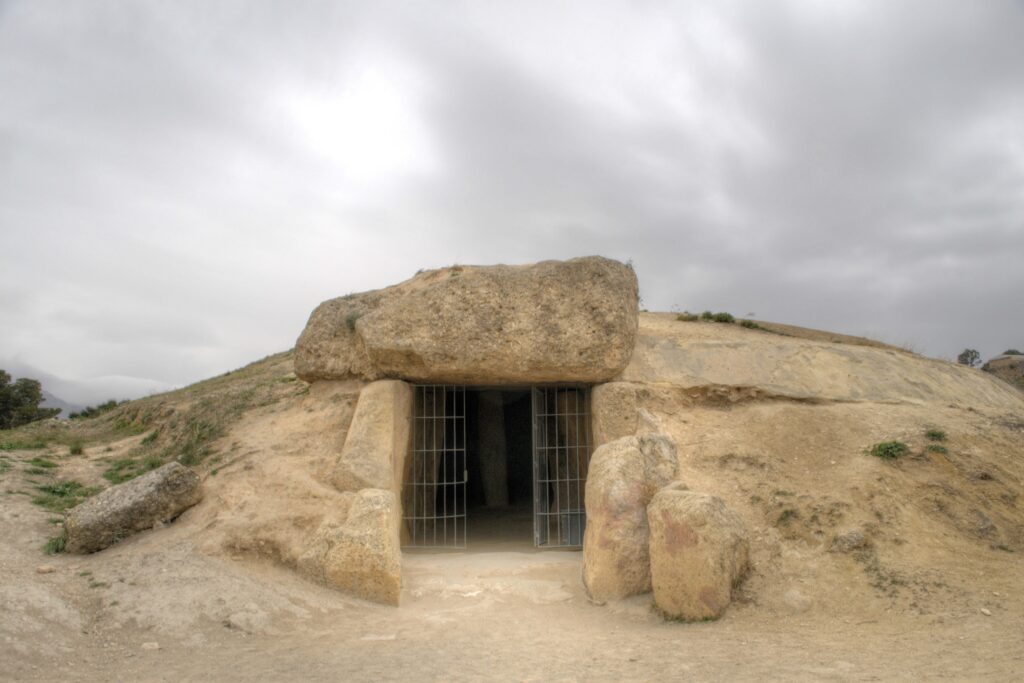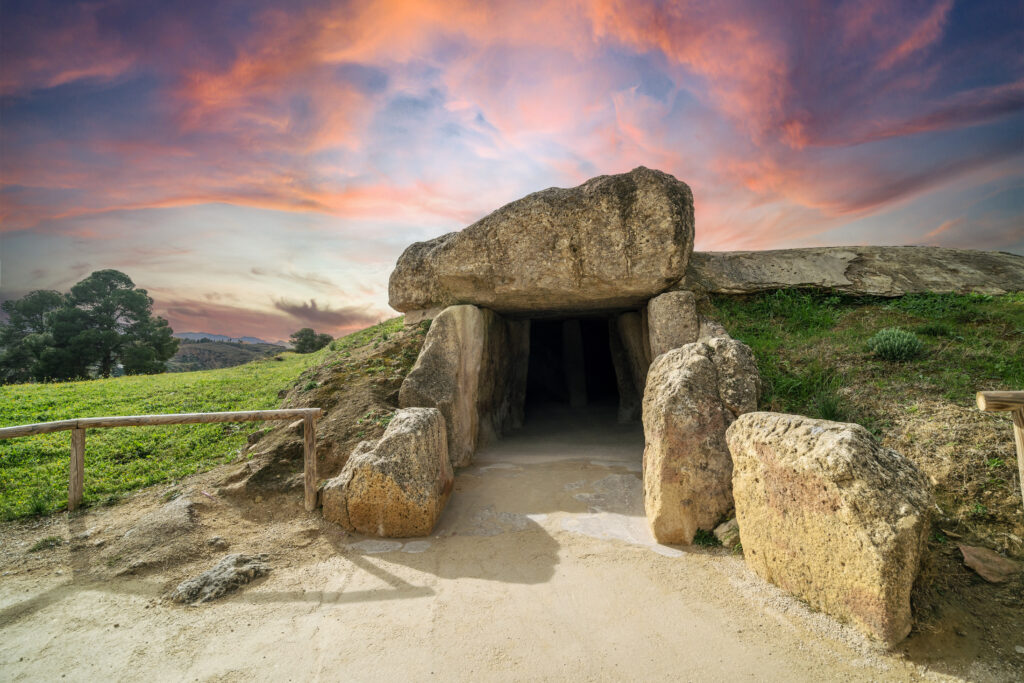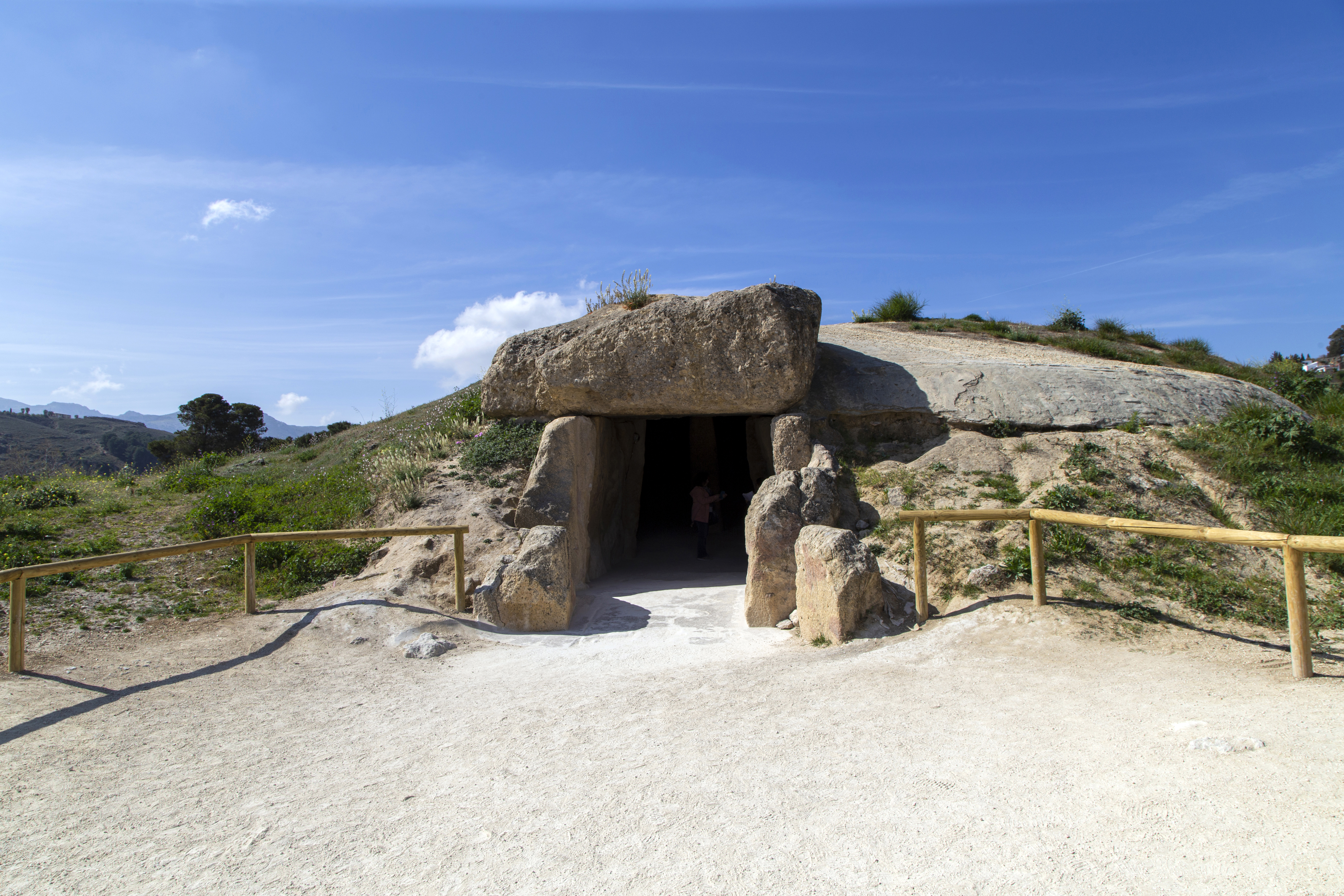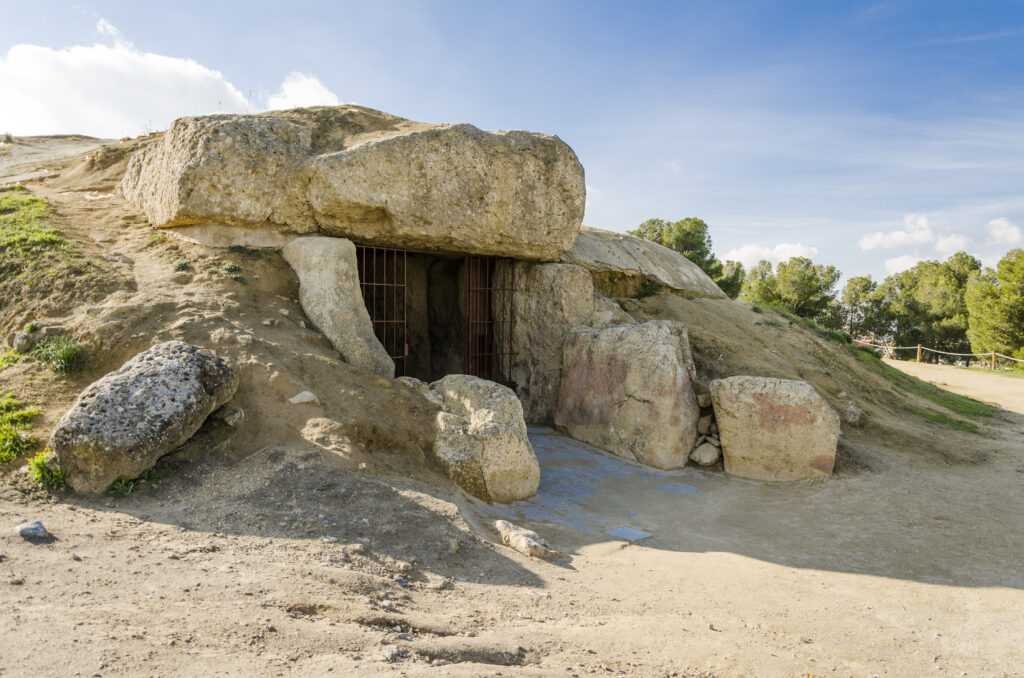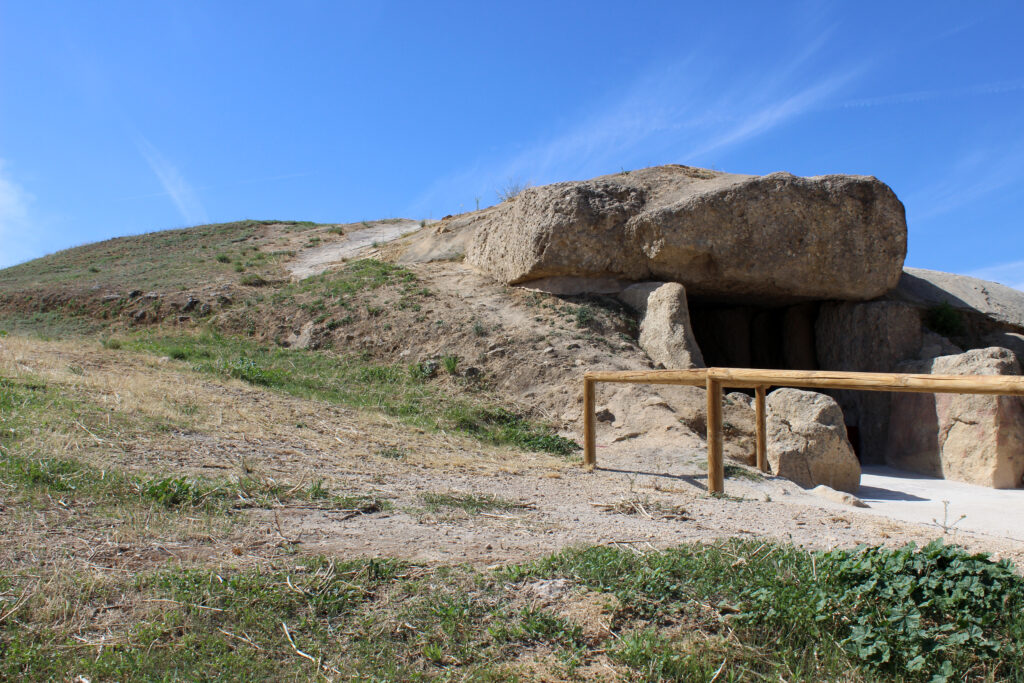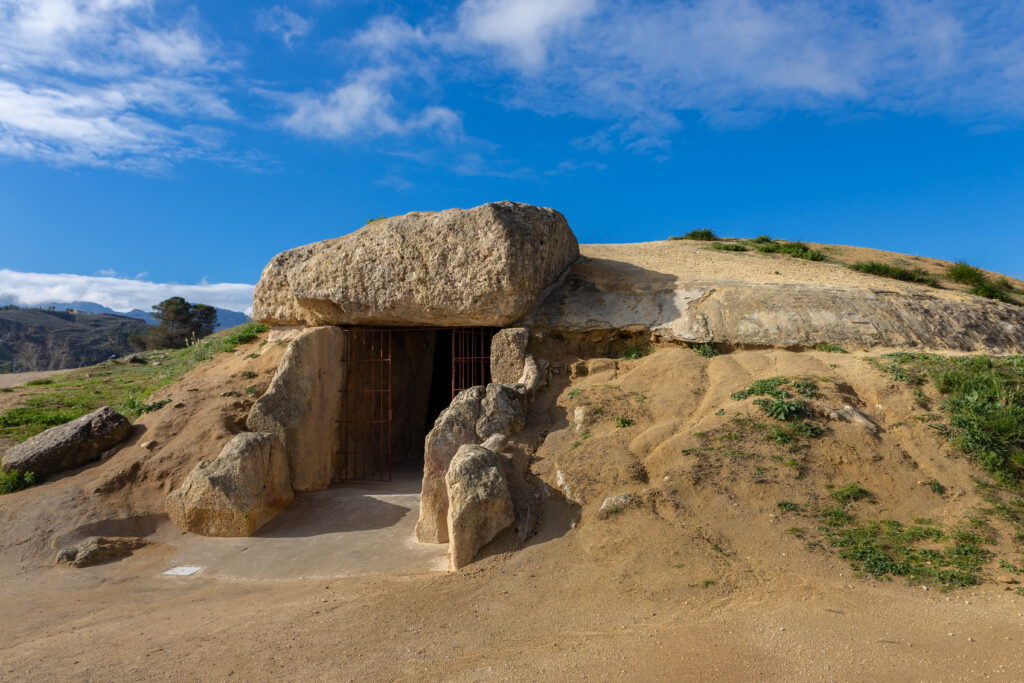
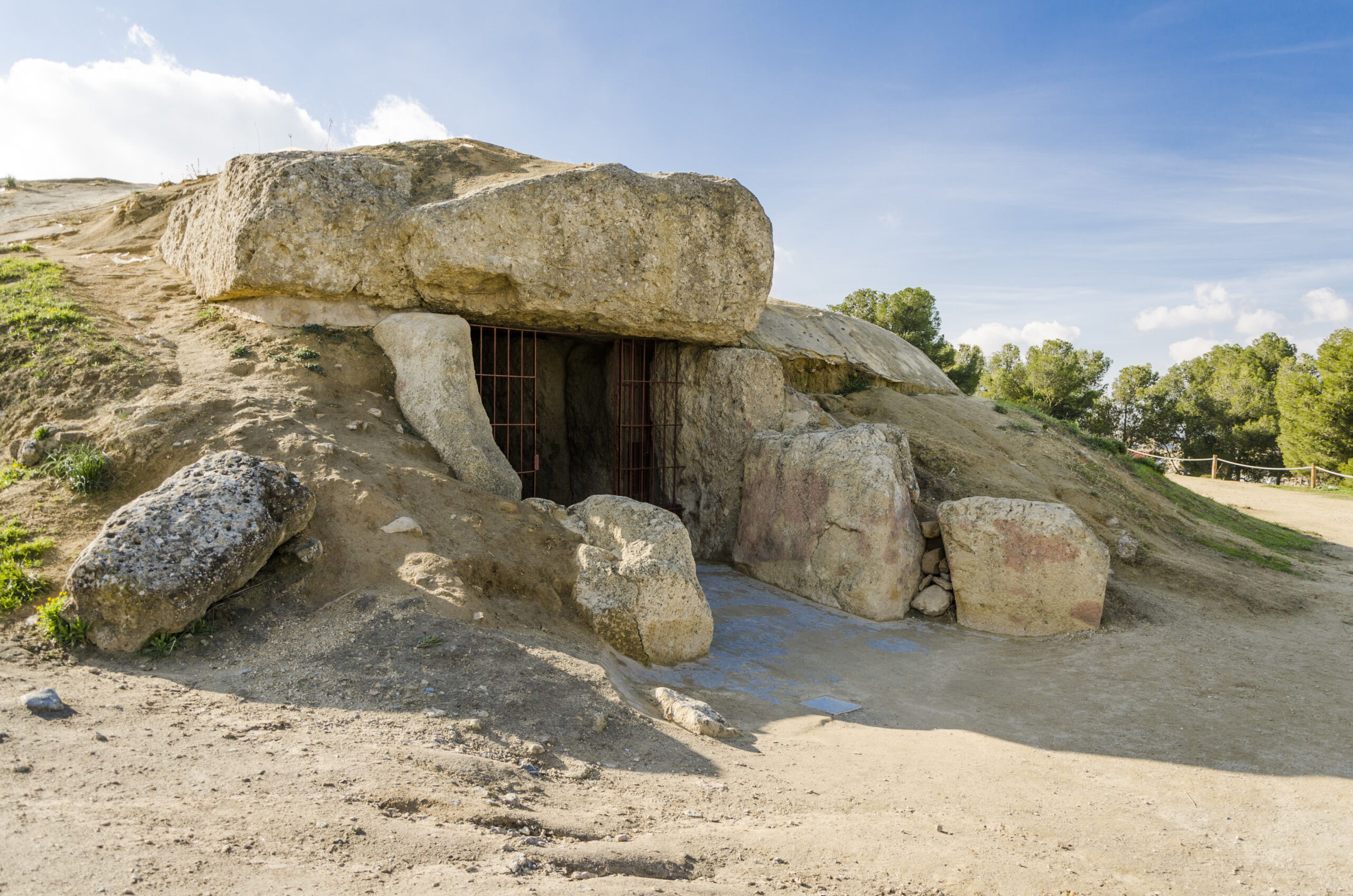
In the picturesque landscape of Andalusia, not far from the modern city of Antequera, stands a monument of antiquity that fascinates archaeologists and historians alike: the Menga dolmen. This ancient stone tomb tells a story that goes back thousands of years and is interwoven with myths and mysteries. The Menga dolmen is not only a relic of antiquity, but also a silent testimony to a civilization whose beliefs and architecture remain a mystery to this day.
The Menga dolmens are among the largest megalithic structures in Europe and are over 5,000 years old. Their construction is dated to the middle of the third millennium BC, a time when people began to observe the stars and align their rituals with the cosmos. This huge burial site consists of enormous stone slabs that were assembled in a way that would be impressive even with today’s technology. Each stone weighs several tons, and the methods used to transport and arrange them are one of the many unsolved mysteries of this place.
Previous theories assumed that huge workforces were used to build these colossal structures, but recent research suggests that the number of workers was smaller than originally thought. Instead, the construction may have been carried out by a well-organized community that used specialized techniques to create these impressive structures. However, the exact method has been lost in the mists of time, leading to a variety of speculations ranging from engineering knowledge to divine inspiration to extraterrestrial assistance.
Another fascinating mystery of the Menga dolmens lies in their astronomical orientation. Unlike many other megalithic monuments, which are aligned with the sun or stars, the Menga dolmens face the Peña de los Enamorados, a striking mountain that resembles a reclining human profile. This unusual orientation has led to numerous interpretations. Some researchers believe that this mountain had special spiritual significance for the builders and may have been considered the seat of a god or ancestral spirit.
In the surrounding myths, this mountain is often associated with tragic love stories, giving it an additional mystical aura. An ancient legend tells of a Moorish prince and a Christian maiden who, persecuted for their forbidden love, jumped to their deaths together from the cliffs. This romantic, albeit tragic, myth has inspired generations over the centuries and contributes to the cultural significance of the site.
Archaeological finds near the dolmen suggest that it served not only as a burial site, but also as an important place for ritual gatherings and spiritual ceremonies. Ceramic and stone artifacts discovered during excavations point to a complex society that was both skilled in craftsmanship and ritualized. These artifacts offer insight into the religious life of the prehistoric inhabitants, which was characterized by nature worship and ancestor worship. Today, the Menga dolmen attracts not only tourists but also scientists from all over the world who are trying to unravel the mysteries of these ancient stones.
Conferences on prehistoric astronomy, archaeology, and anthropology are held here annually. The site offers a unique opportunity to bridge the past and the present and to study the development of religion, society, and architecture.
The Menga dolmen, together with the dolmens of Viera and El Romeral, was declared a World Heritage Site by UNESCO in 2016. This recognition reflects not only their historical and cultural value, but also the urgent need to preserve these sites for future generations. Progressive urbanization and climate change pose a serious threat to the preservation of these unique monuments.
In addition to these scientific and cultural aspects, the Menga dolmens also have a significant emotional and spiritual impact on many visitors. It is often reported that upon entering the burial chambers, one feels a sense of awe and connection to one’s ancestors. This emotional resonance, coupled with the majestic presence of the dolmens, creates a profound experience that goes far beyond mere admiration of ancient architecture.
The Menga dolmens appear repeatedly in modern pop culture. From mystical novels to documentaries, they inspire artists and creatives who are drawn to their mysterious history. They are a symbol of the unknown, of forgotten wisdom, and of humanity’s eternal desire to unravel the mysteries of the universe.
In summary, the Menga dolmens are much more than just a historical structure. They are a living testimony to the determination, creativity, and spirituality of our ancestors. As we continue to explore their secrets, one truth remains unchanged: the Menga dolmens invite us to explore the connection between humanity and the eternal, reminding us of the ancient questions about our existence and our origins. In a world marked by rapid change, they offer a constant, silent presence and a gateway to the past, reminding us that some mysteries should perhaps never be fully solved in order to preserve their magic.