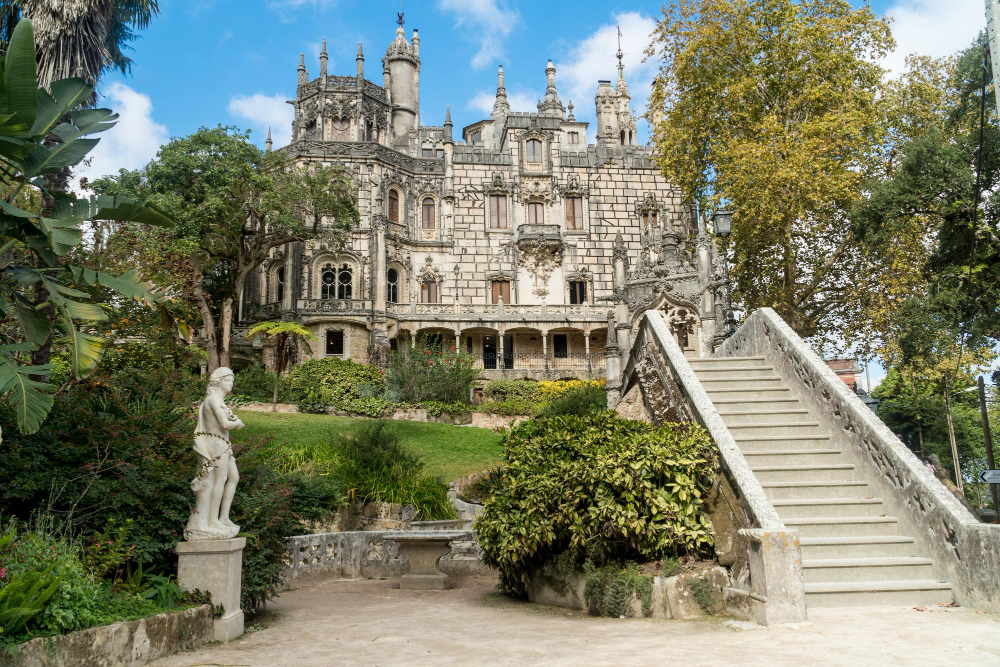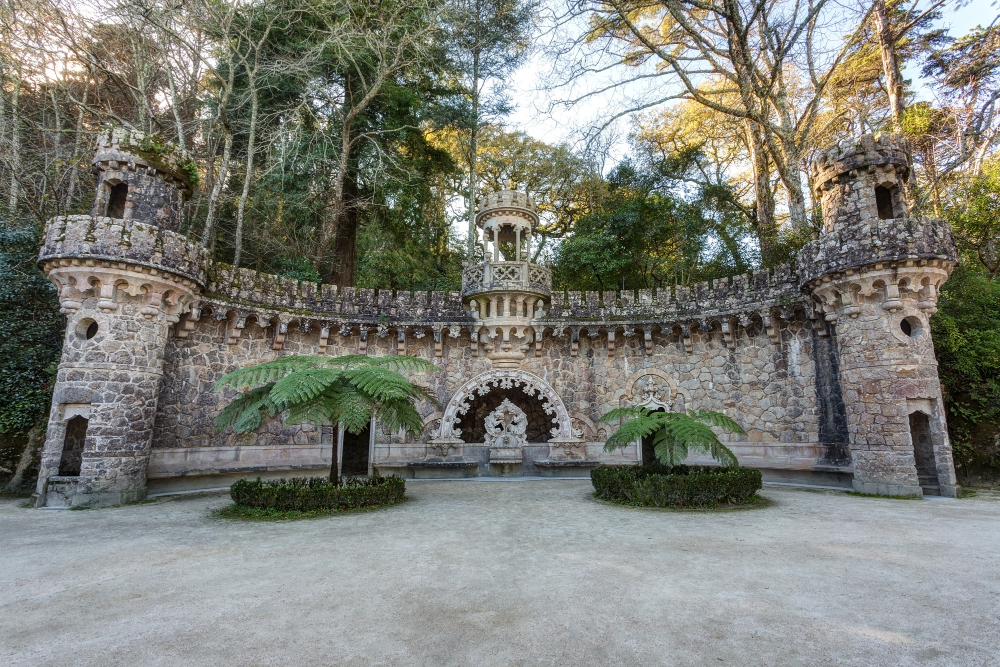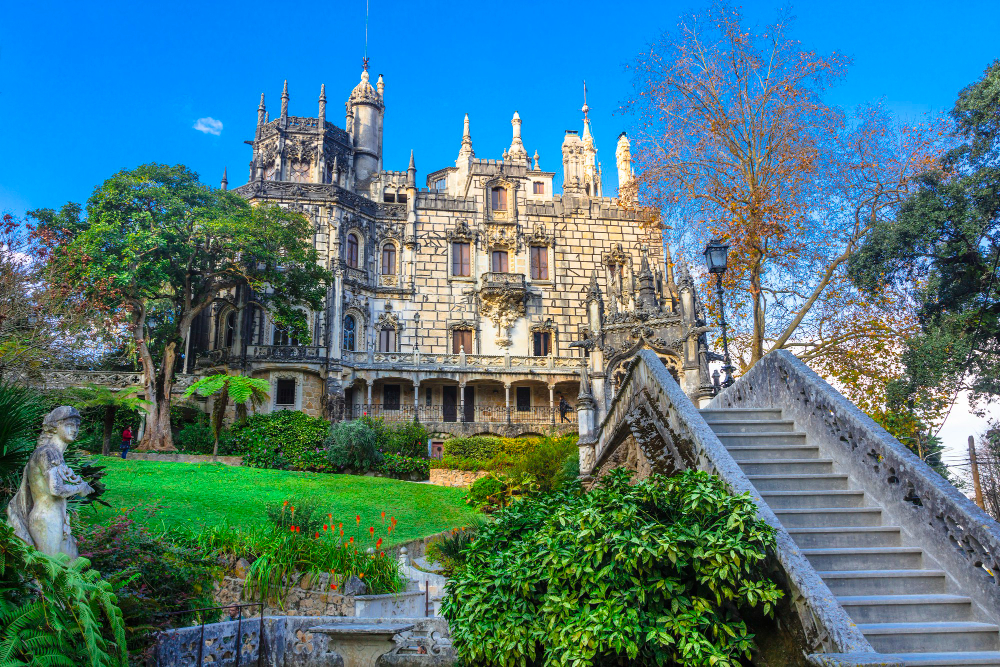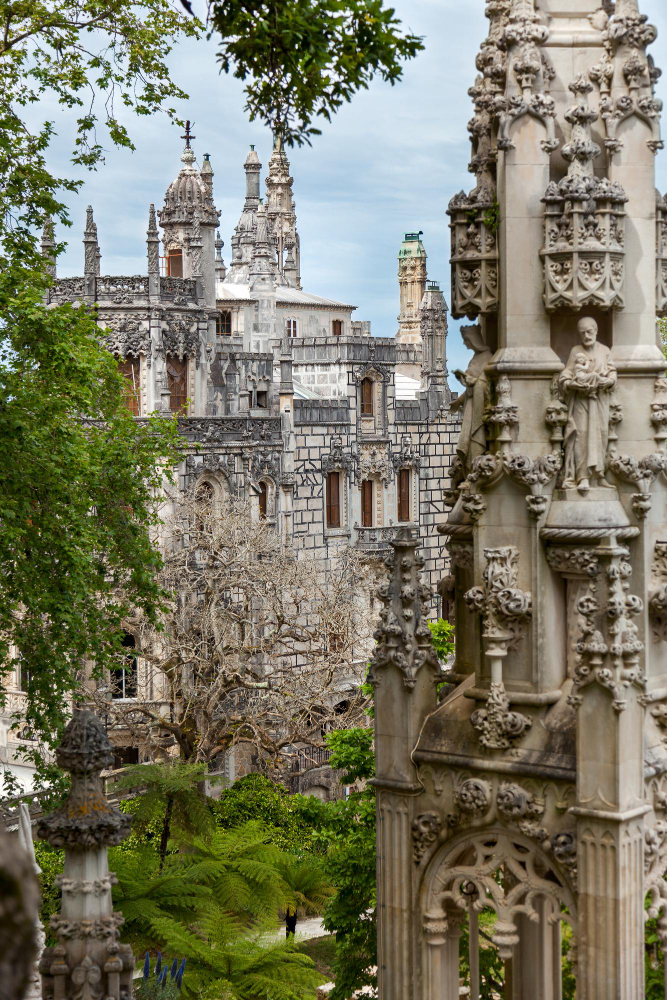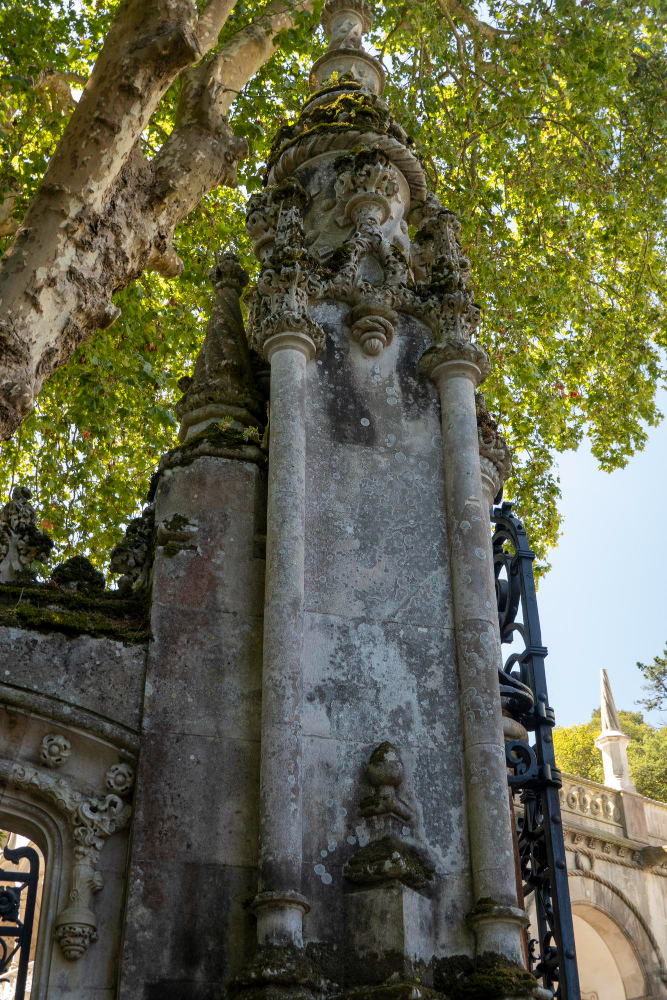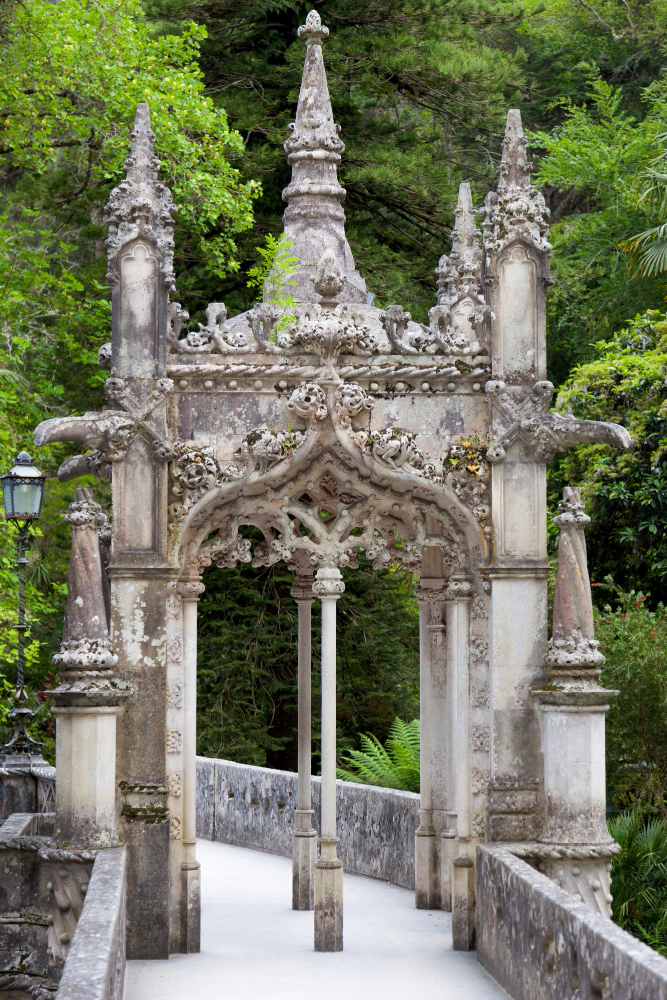
In the heart of picturesque Sintra, not far from the historic centre, lies one of Portugal’s most fascinating heritage sites: the Quinta da Regaleira. This extraordinary quinta – a magnificent estate featuring a romantic palace and extensive grounds filled with mystical structures – attracts visitors from all over the world, not only for its artistic beauty but also for the mysterious symbolism and myriad legends that surround it. Since 1995, the Quinta da Regaleira has been part of the UNESCO World Heritage Site ‘Cultural Landscape of Sintra’ and is one of the region’s most significant tourist attractions.
The history of a unique estate – The grounds of the Quinta da Regaleira look back on an eventful past. Originally, in the 19th century, it belonged to the Monteiro de Almeida family, who were known as wealthy merchants from Porto. In 1892, the land was sold for 25,000 reis to António Augusto Carvalho Monteiro – a man with a passion for art, mythology, philosophy and the occult. Monteiro, also known as ‘Monteiro the Millionaire’, dreamt of creating an estate that would bring together all his interests and ideals. To realise this visionary project, Monteiro brought the Italian architect Luigi Manini on board. Between 1904 and 1910, a complex was created that captivates with its unusual blend of architectural styles: Gothic, Renaissance, Manueline motifs and elements of Romanticism merge to form an enigmatic total work of art. Yet the Quinta is not merely a luxurious country estate – it was imbued with numerous symbolic meanings deeply rooted in secret societies such as the Knights Templar, Freemasonry, alchemy and the Rosicrucians. Following Monteiro’s death, the Quinta changed hands several times, including ownership by the Waldemar d’Orey family, who used the estate as their family home until 1987, and subsequently by the Japanese Aoki Corporation. It was not until 1997 that the municipality of Sintra acquired the Quinta and initiated extensive restoration work. Since 1998, the Quinta da Regaleira has been open to the public and has since developed into a cultural centre.
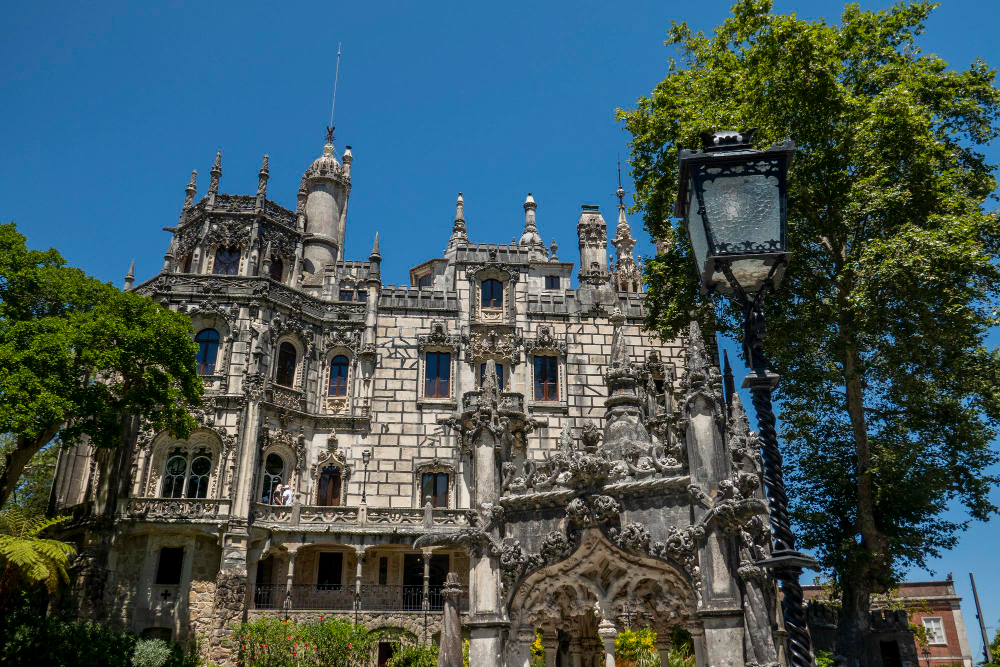
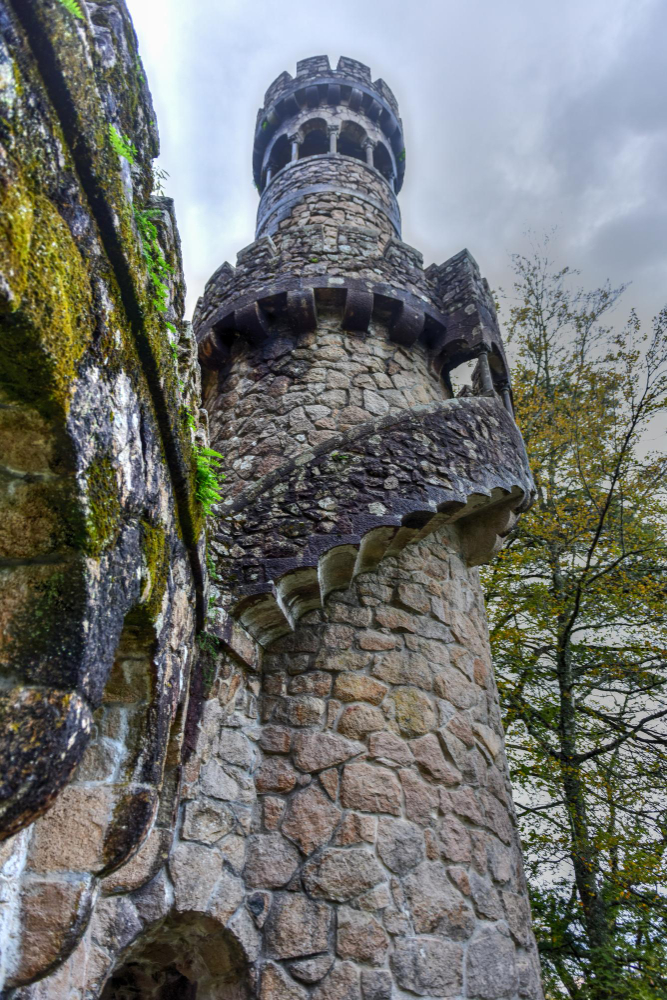
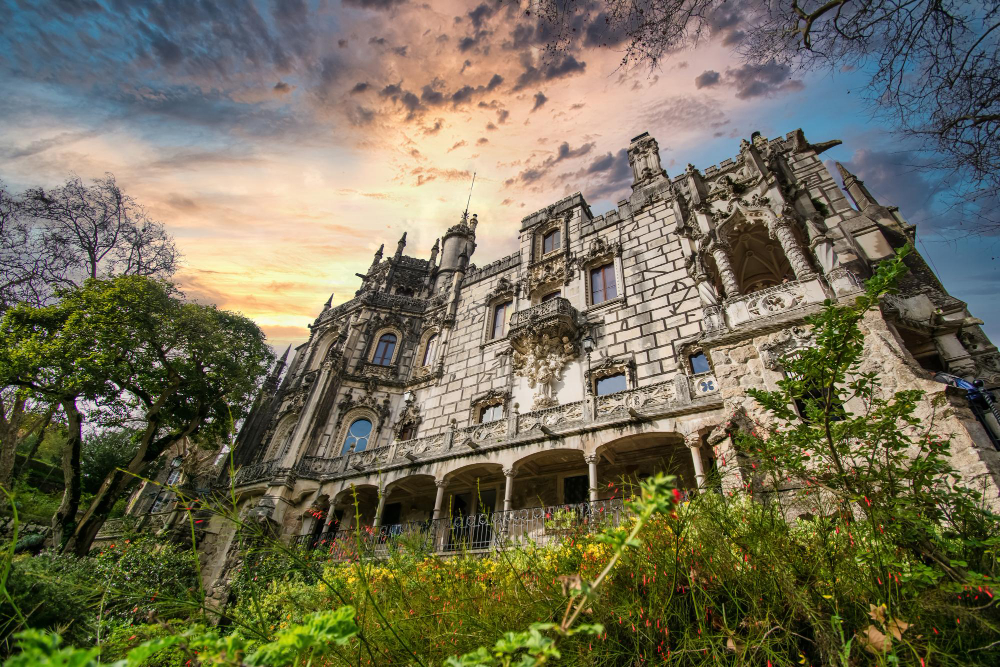
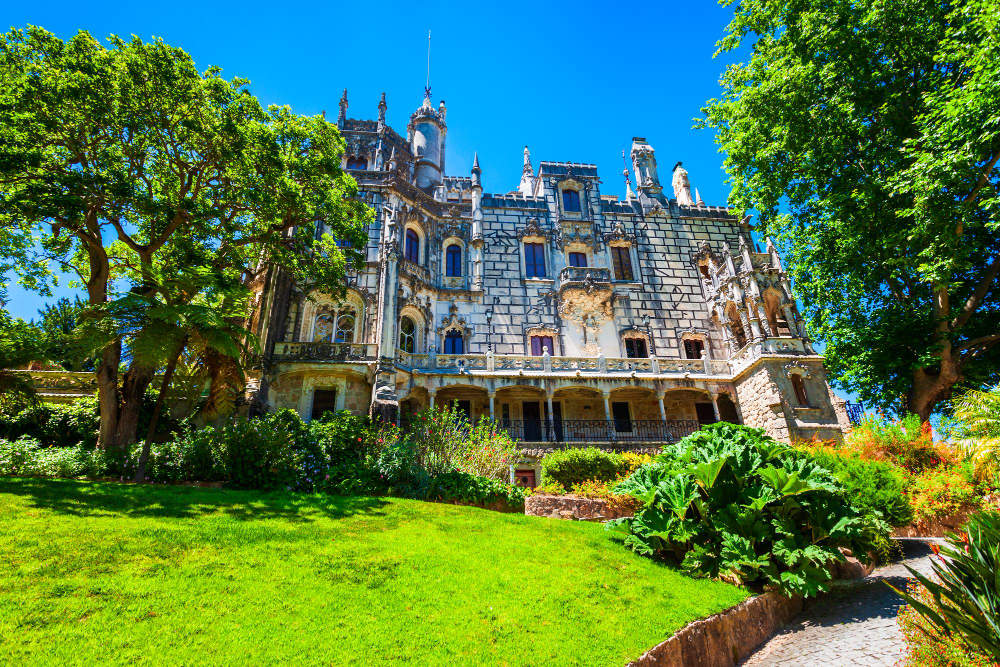
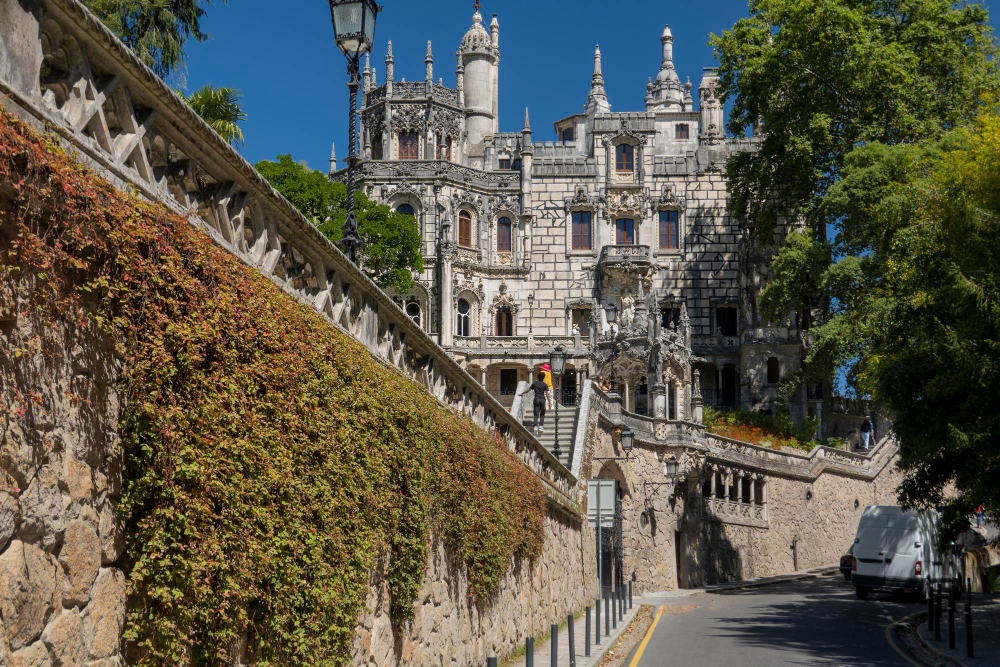
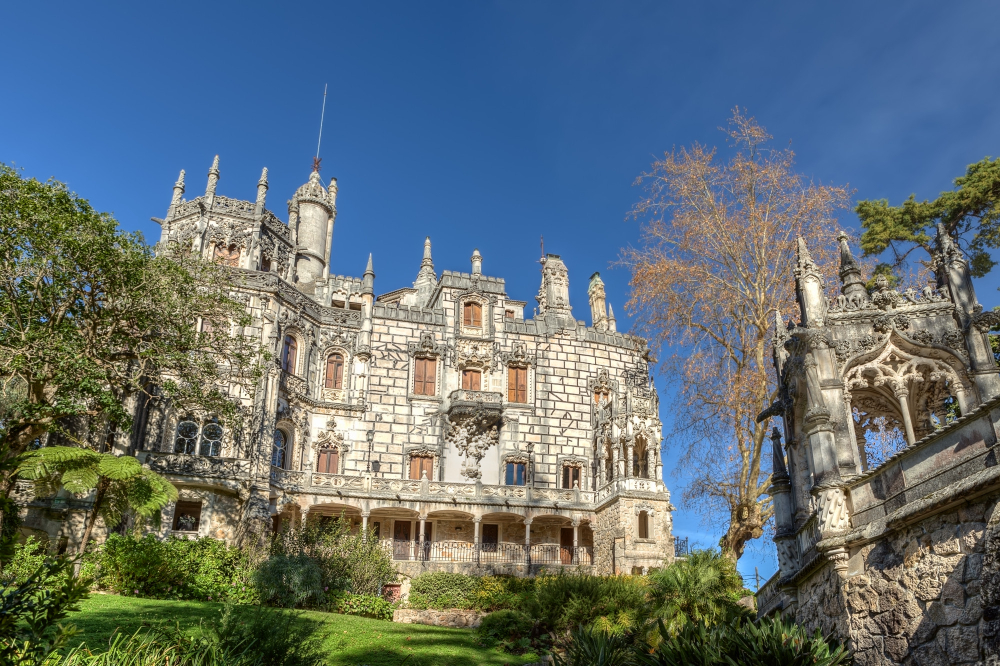
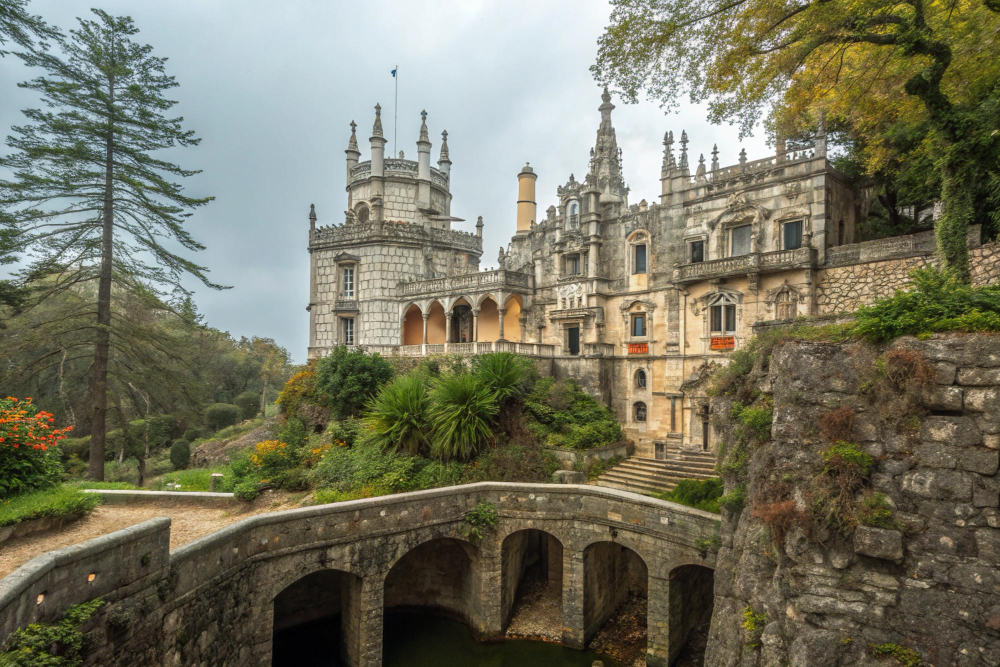
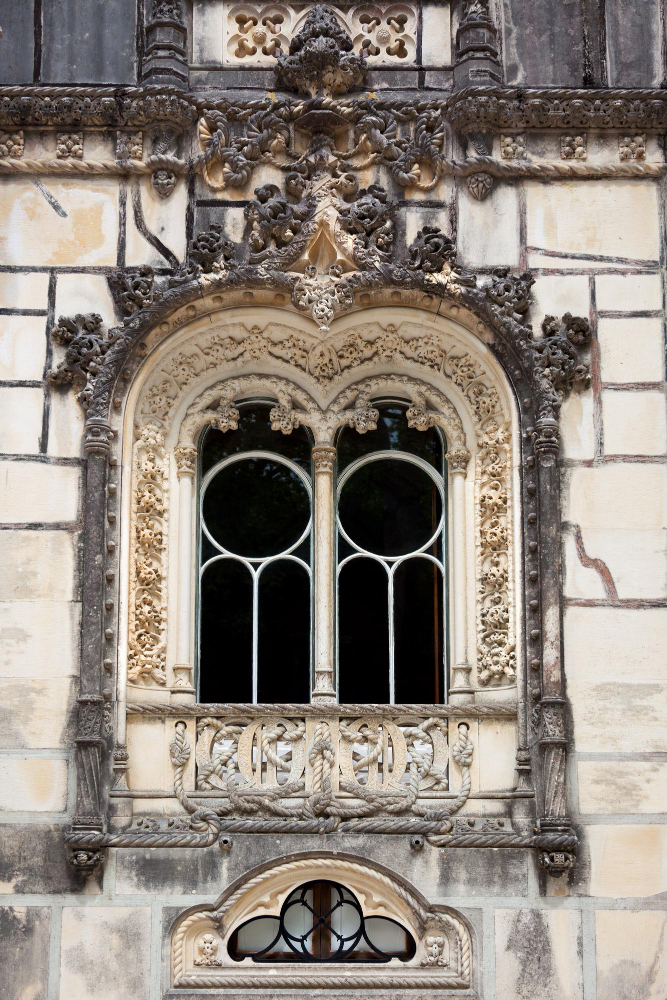
The Palace: An architectural puzzle full of details – The Palácio da Regaleira forms the heart of the estate. Its imposing façade captivates visitors with its Gothic turrets, ornate gargoyles and a striking octagonal keep. The interior spans five storeys: from sumptuous reception halls and an elegant dining room to private studies and servants’ quarters in the cellar – every detail is artfully crafted. The numerous references to Portuguese history and the Age of Discovery are particularly striking, for example in the form of Manueline symbols on towers and fireplaces. Carvalho Monteiro’s interest in the history of Portugal is reflected here, as is his desire to forge a link between architecture and symbolism. The palace was formerly known as the ‘Palace of the Millionaire Monteiro’ and thus embodies the fusion of wealth and esotericism.
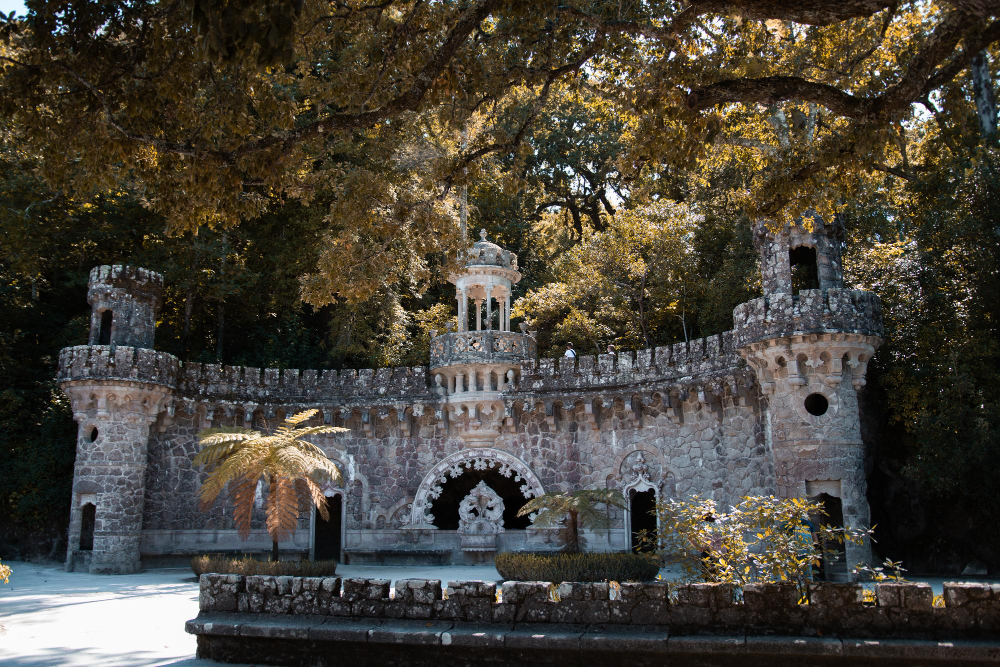
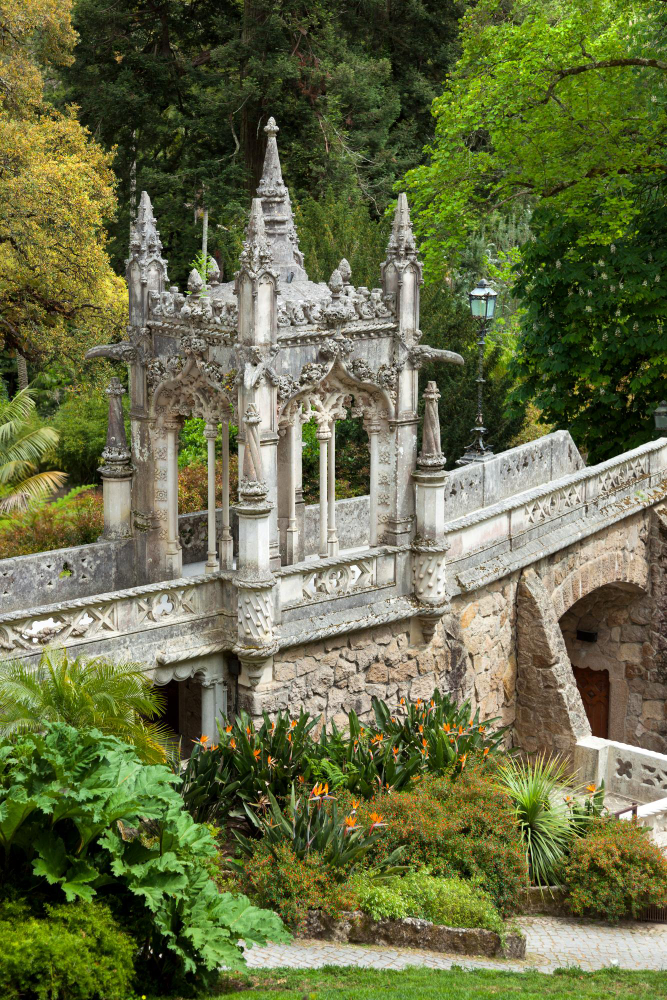
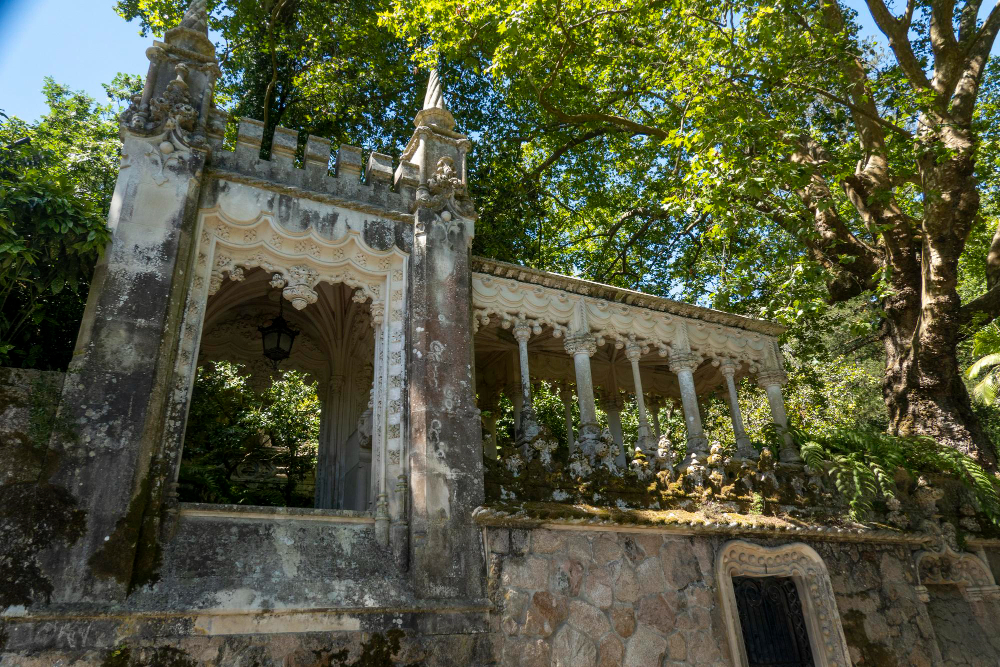
The Chapel: Spiritual Splendour in Miniature – Directly in front of the palace lies the small but impressive chapel of the Quinta da Regaleira. Its architectural style is strongly reminiscent of the adjoining palace. Inside, visitors are greeted by richly decorated frescoes depicting saints such as Teresa of Ávila and Saint Anthony. Particularly noteworthy is the chapel’s floor, which is adorned with depictions of the armillary sphere – a reference to the Portuguese seafarers and their global discoveries – as well as the Cross of the Order of Christ. The chapel comprises several storeys and presents a harmonious blend of religious iconography and mystical symbolism. In this way, the building unites faith and esoteric knowledge, reflecting Monteiro’s personal spiritual quest.
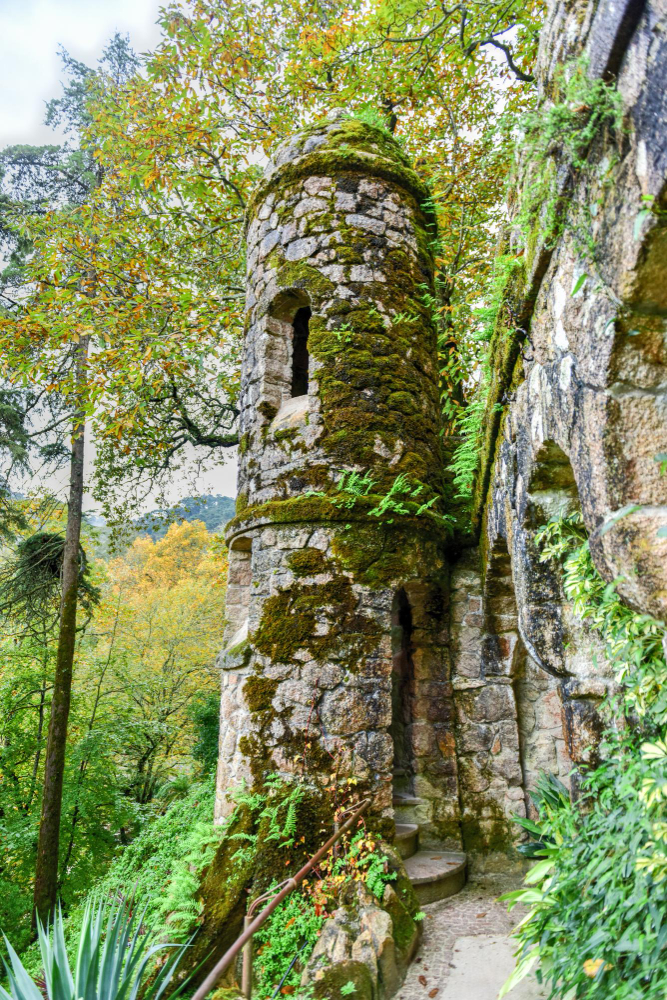
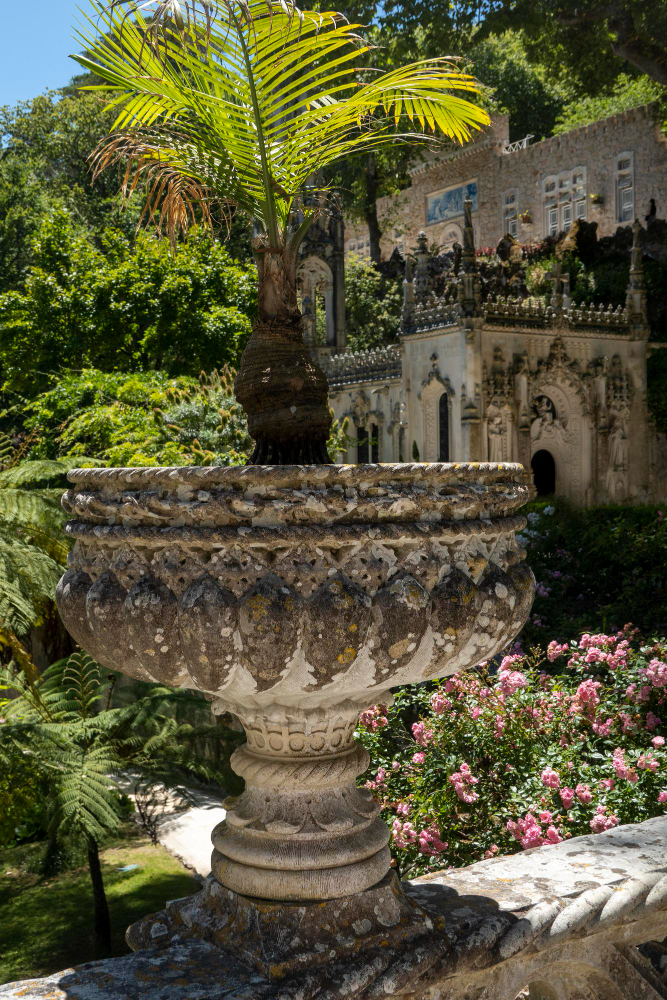
The Park: A Garden Full of Mysteries and Symbolism – The park at Quinta da Regaleira covers around four hectares, its paths and avenues forming true works of art amidst lush vegetation. Whilst the lower part of the garden has been carefully arranged and maintained, the upper section reveals a wilder, almost untamed natural landscape – a reflection of Monteiro’s penchant for primitivism. The grounds captivate visitors with a multitude of whimsical structures: artificial lakes, grottoes, fountains, pavilions and terraces. Some of these structures are adorned with mystical symbols that allude to various occult traditions. Particularly noteworthy is the variety of benches and resting places, which are always positioned so that visitors can enjoy special sightlines and perspectives.
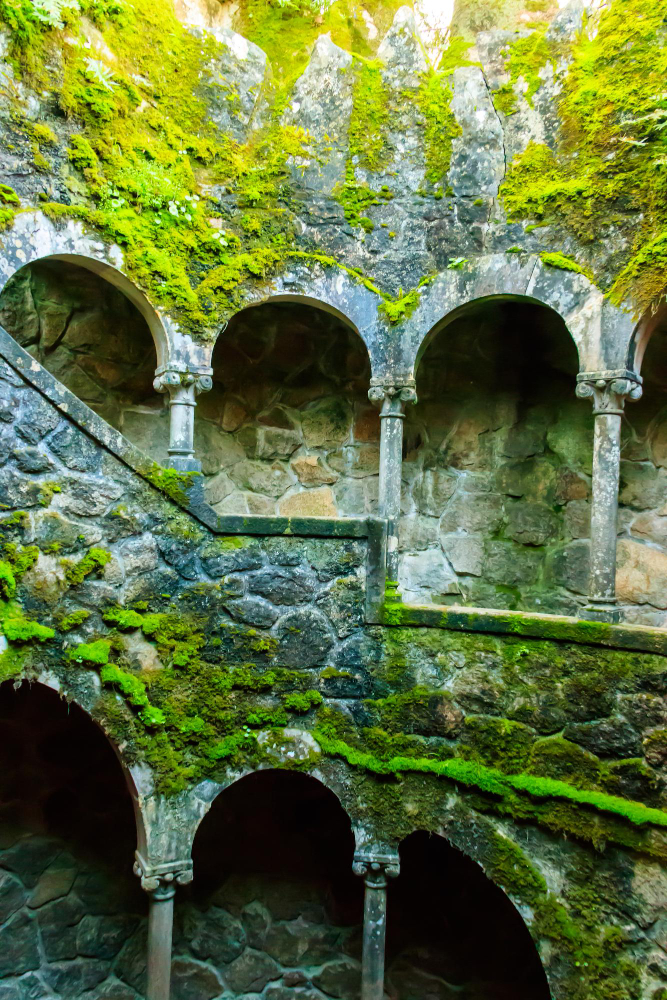
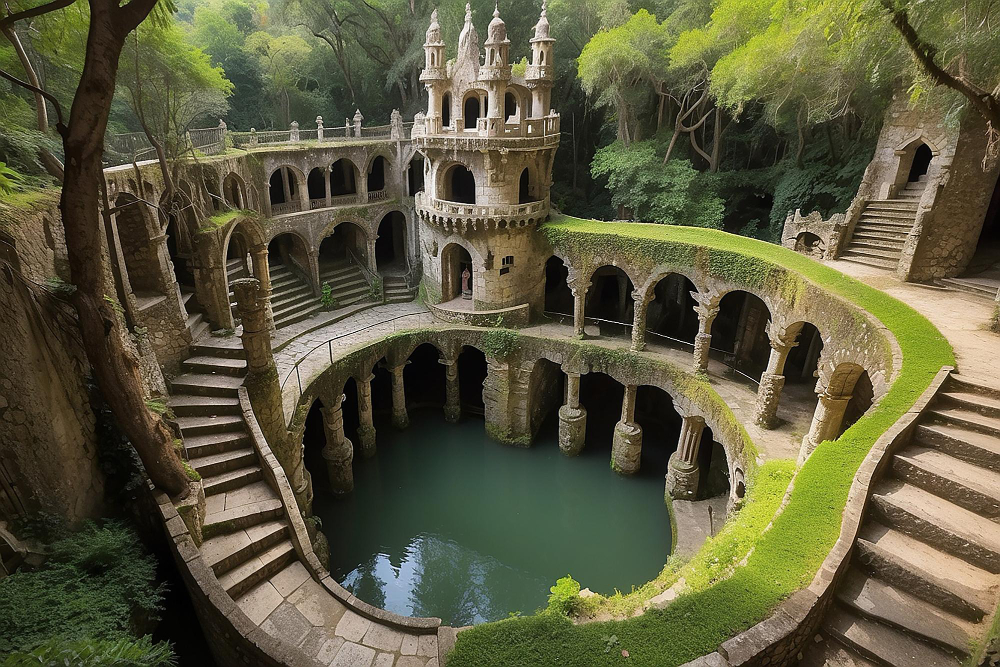
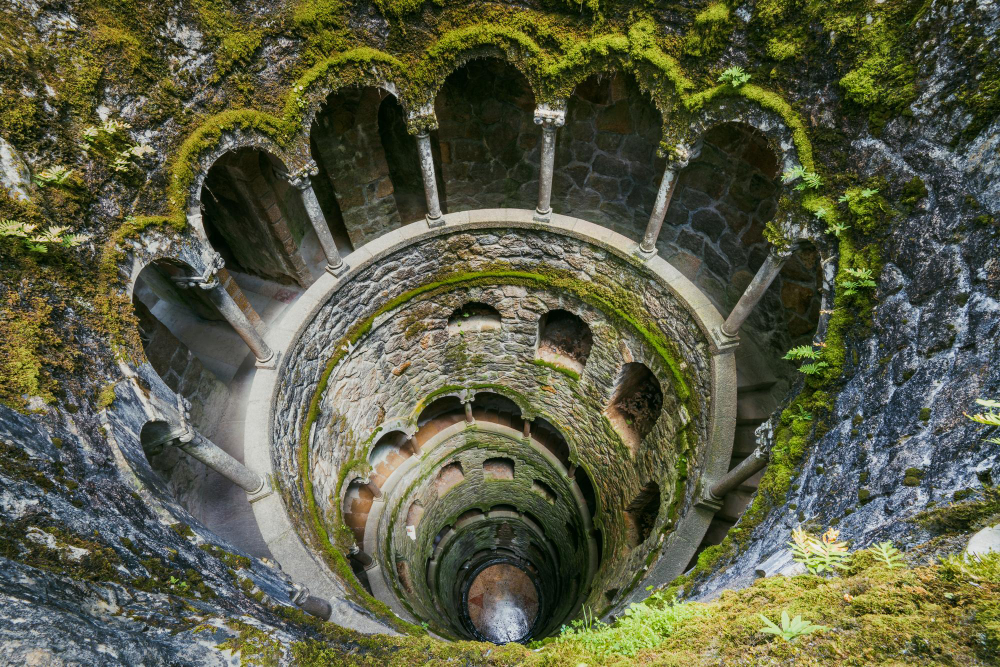
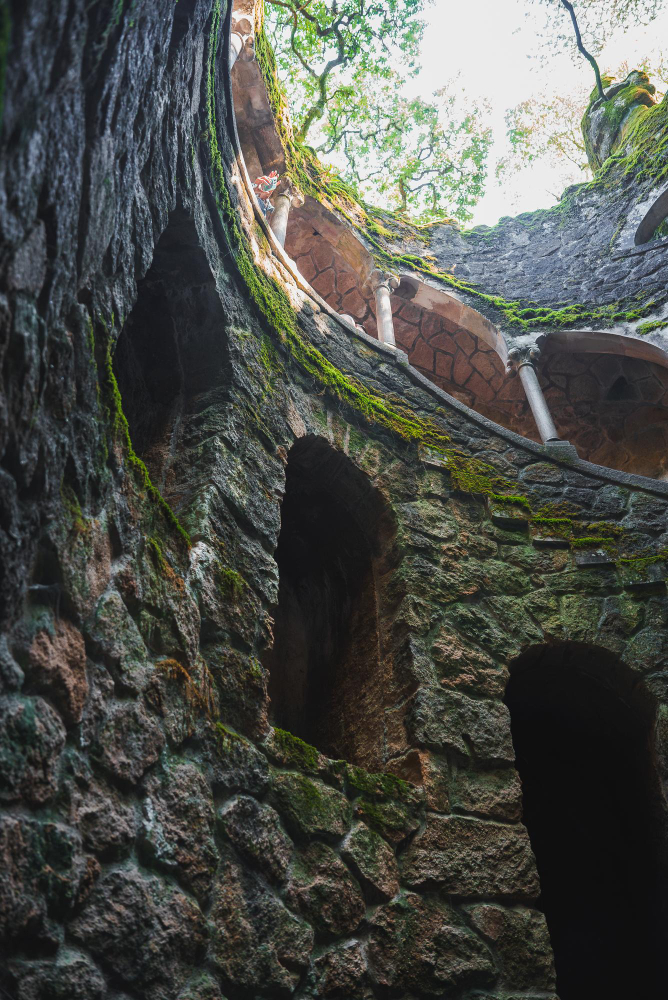
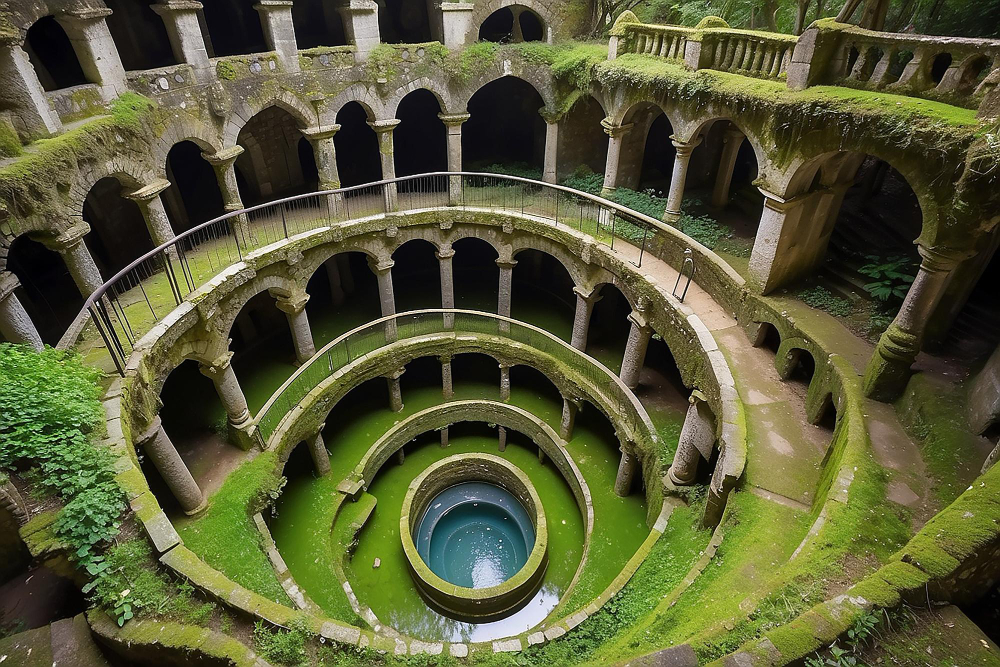
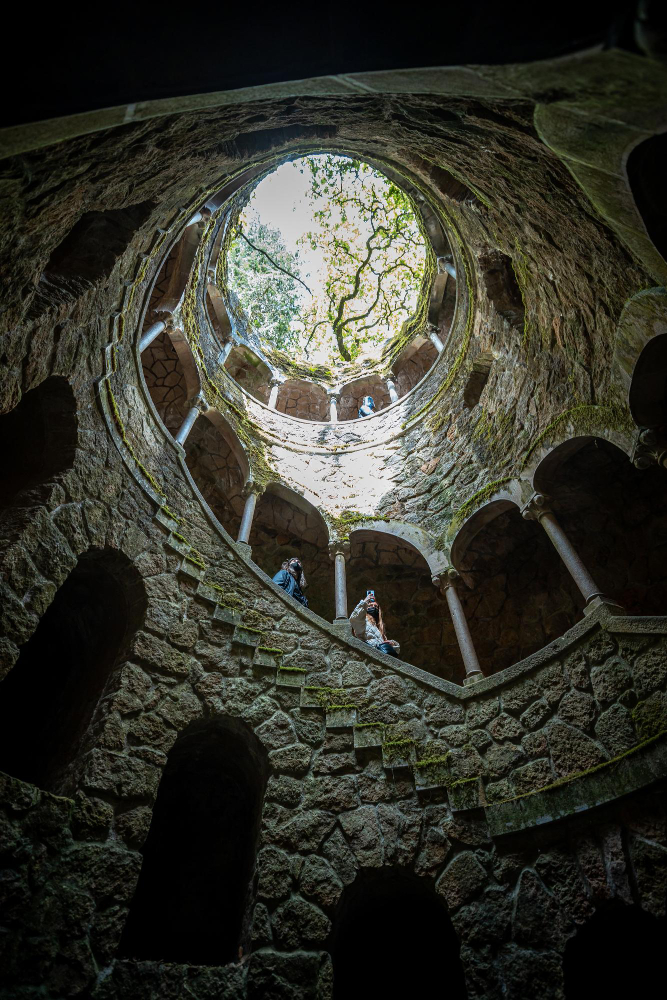
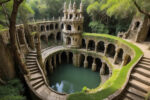
The Initiation Wells – Gates to the Underworld of Mysteries – Within the park are two so-called ‘initiation wells’ or ‘inverted towers’ – unusual shaft structures with spiral staircases that wind deep into the earth. These wells were never used for drawing water, but presumably served as a setting for ritual ceremonies. The larger of the two shafts features a 27-metre-deep spiral staircase with 23 niches, which are interpreted symbolically: the nine levels of the staircase could, for example, represent the nine founding members of the Order of the Templars or be an allusion to Dante Alighieri’s Inferno and its nine circles of hell. At the foot of the well lies a stone compass adorned with a cross of the Order of Christ. Experts suspect that such symbols suggest Monteiro may have drawn on the traditions of the Templars, Rosicrucians and Freemasons, or been inspired by them. Historians believe that initiation rituals took place in these fountains, during which candidates, blindfolded and armed with a sword, descended the stairs only to have to find their way through an underground labyrinth towards the light and the chapel – an allegory for spiritual rebirth and enlightenment. The smaller ‘Unfinished Well’, on the other hand, features tiered circular platforms whose significance remains a mystery.
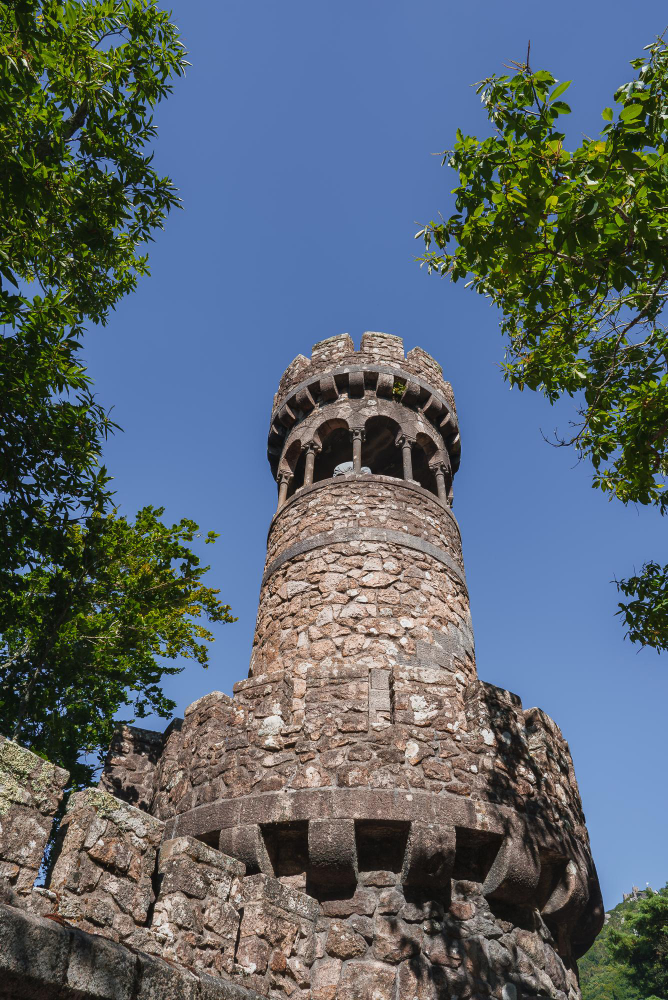
Underground tunnels – the labyrinth of secrets – A network of tunnels winds its way beneath the estate, with several access points, such as through grottoes, the chapel or hidden entrances by ponds and in caves such as Leda’s Cave beneath the Regaleira Tower. These underground passages connect various areas of the Quinta, including the initiation fountains. They serve as a further element of symbolism – the transition from the visible to hidden worlds, from the profane to the sacred. Today, visitors can explore some sections of this labyrinth and experience the special atmosphere of a place that represents a complex interweaving of ritual, mysticism and architecture.
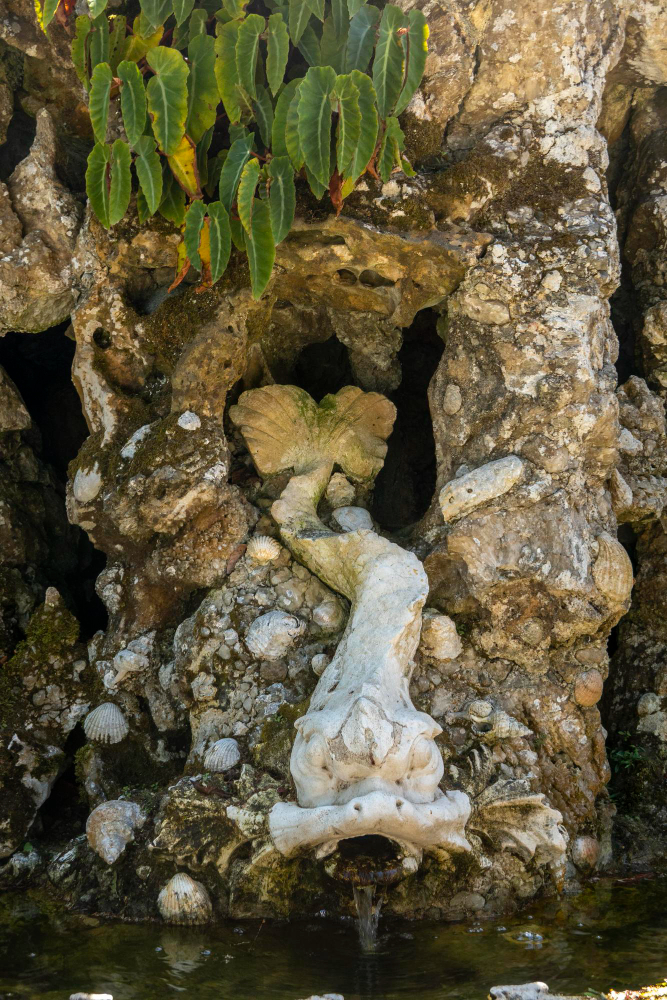
Water Features: Lakes, Fountains and the Sunken Aquarium – Water plays a central role at Quinta da Regaleira. Two artificial lakes, numerous fountains and the extraordinary feature known as the Aquarium bear witness to Monteiro’s love of nature and attention to detail. The Aquarium is artfully embedded within a large rock and was once a significant natural feature of the Quinta. Today, however, this feature is out of use and in urgent need of restoration. Nevertheless, the bodies of water amidst the garden landscape convey the impression of a fairy-tale world, in which natural elements and human craftsmanship merge in a magical way.
A place full of stories and inspiration – Quinta da Regaleira is far more than a historic estate or a tourist destination. It is a place where history, art and myth come together in a unique way. The combination of rich symbolism, mysterious structures and hidden messages stimulates reflection and invites visitors to immerse themselves in the fascinating world of bygone eras. Sintra itself, with its numerous palaces and castles, provides the perfect backdrop for Quinta da Regaleira. Together with nearby residences such as the Pena Palace, Quinta do Relógio and Monserrate, it tells the story of Portugal in an enchanting and unforgettable way.
The Quinta da Regaleira is a living monument full of secrets, not all of which are revealed on a first visit. The interplay of magnificent architecture, artfully designed landscaping and mystical symbolism makes it an incomparable experience that impressively blends history and myth. Anyone who embarks on a journey into this world will discover not only a jewel of Sintra, but also a gateway to the hidden dimensions of human imagination and spirituality.