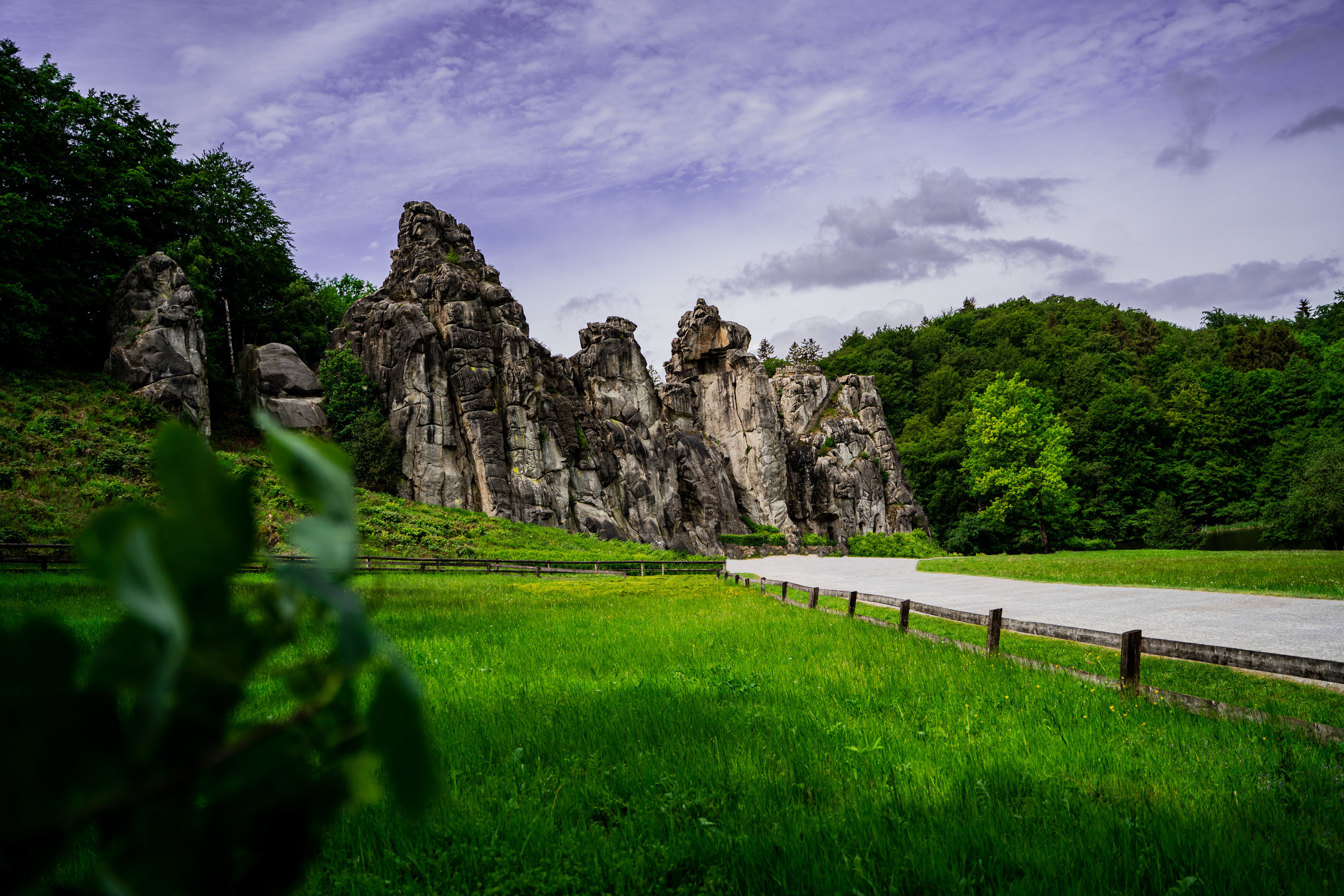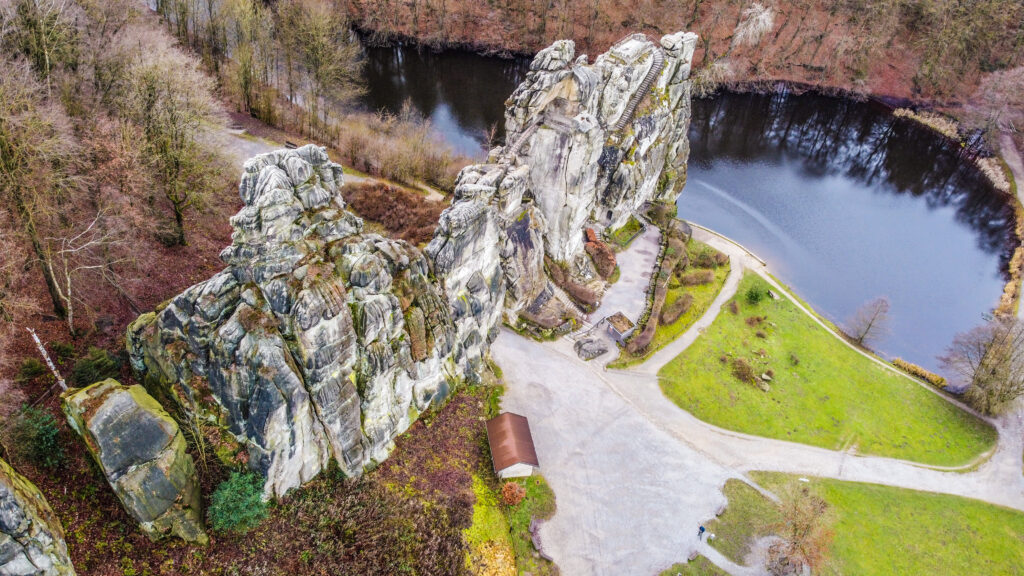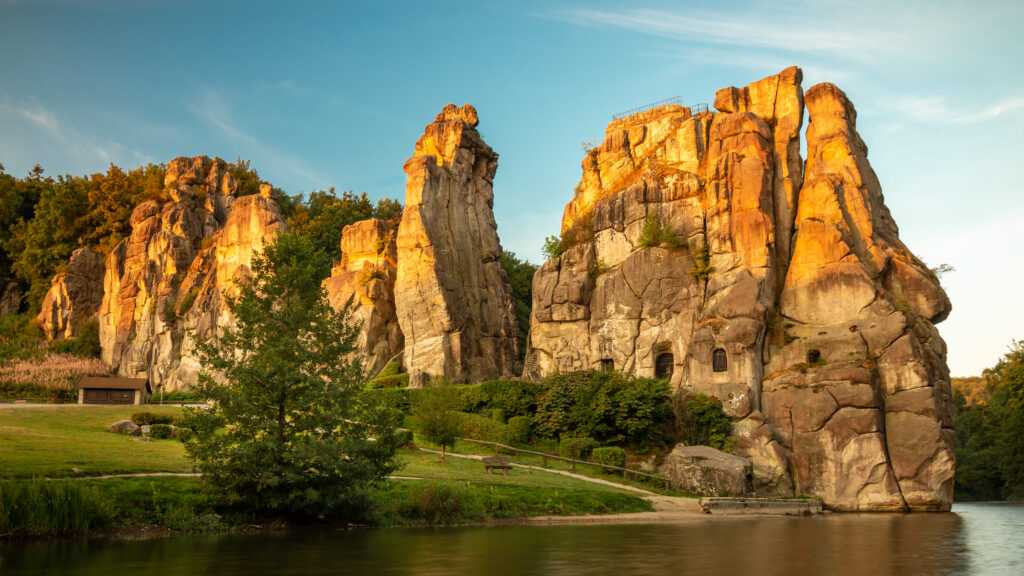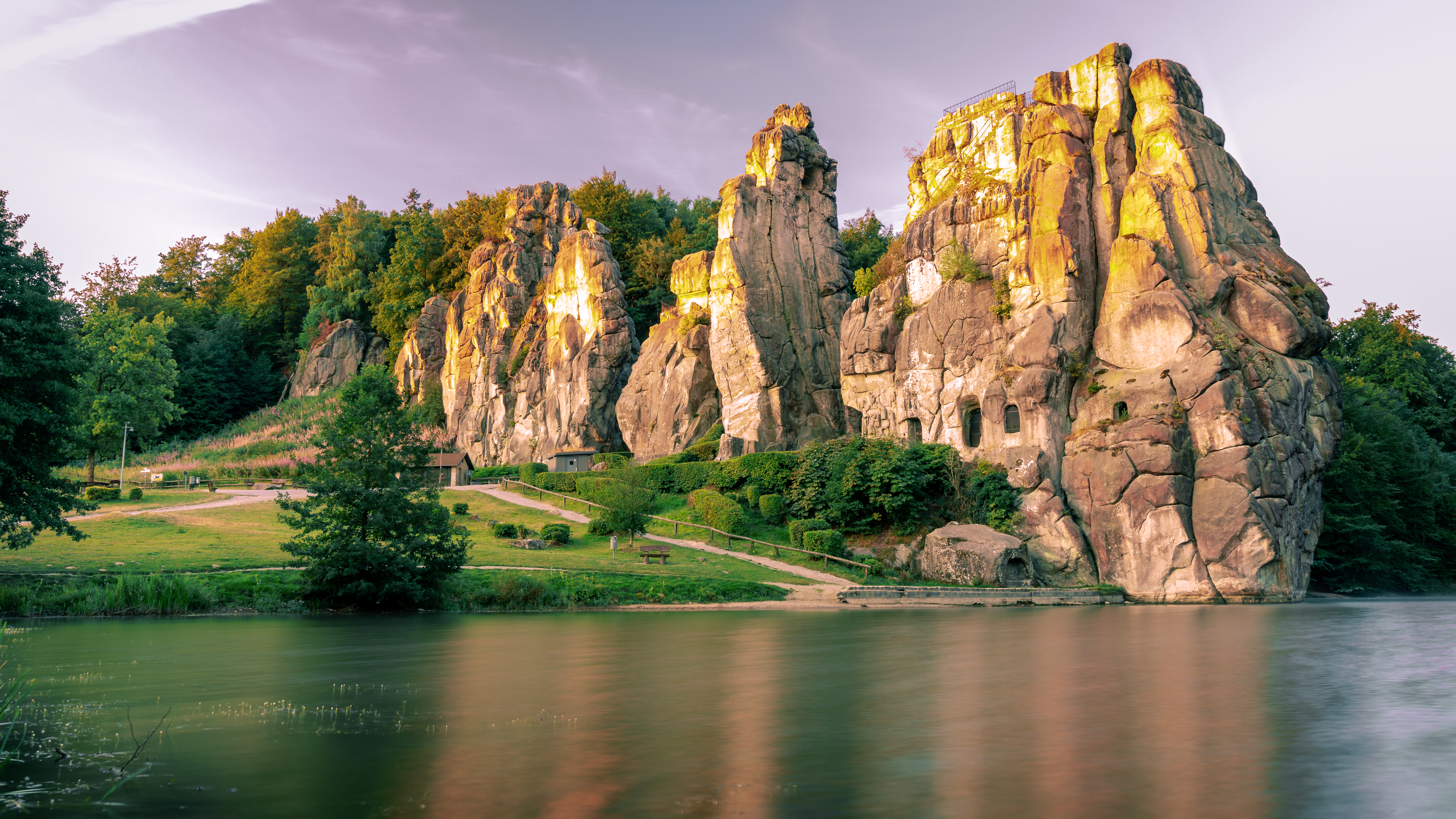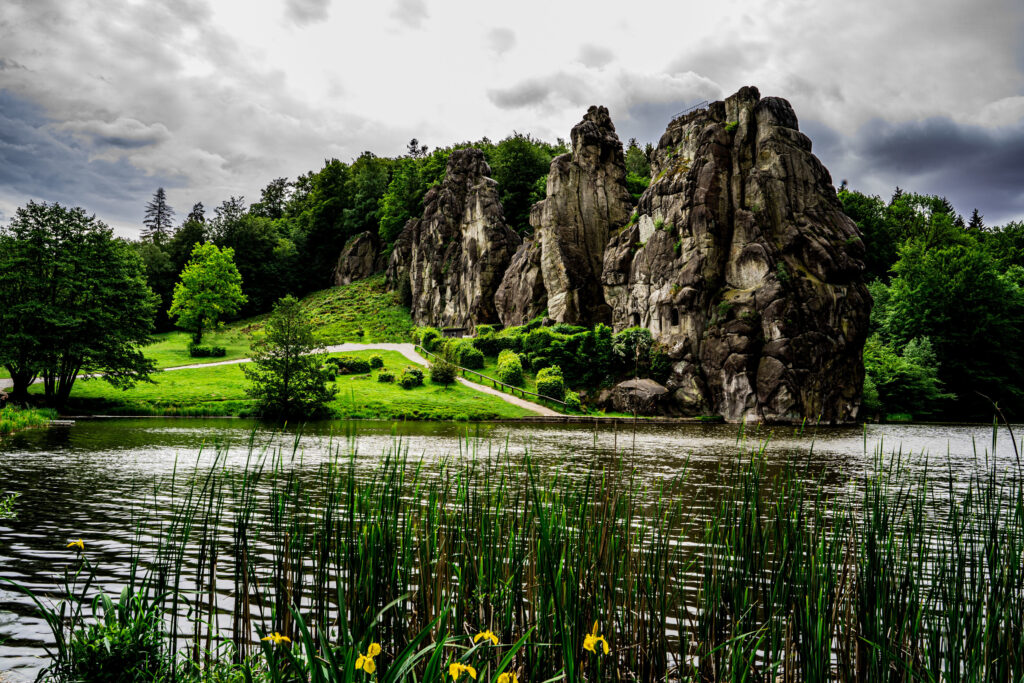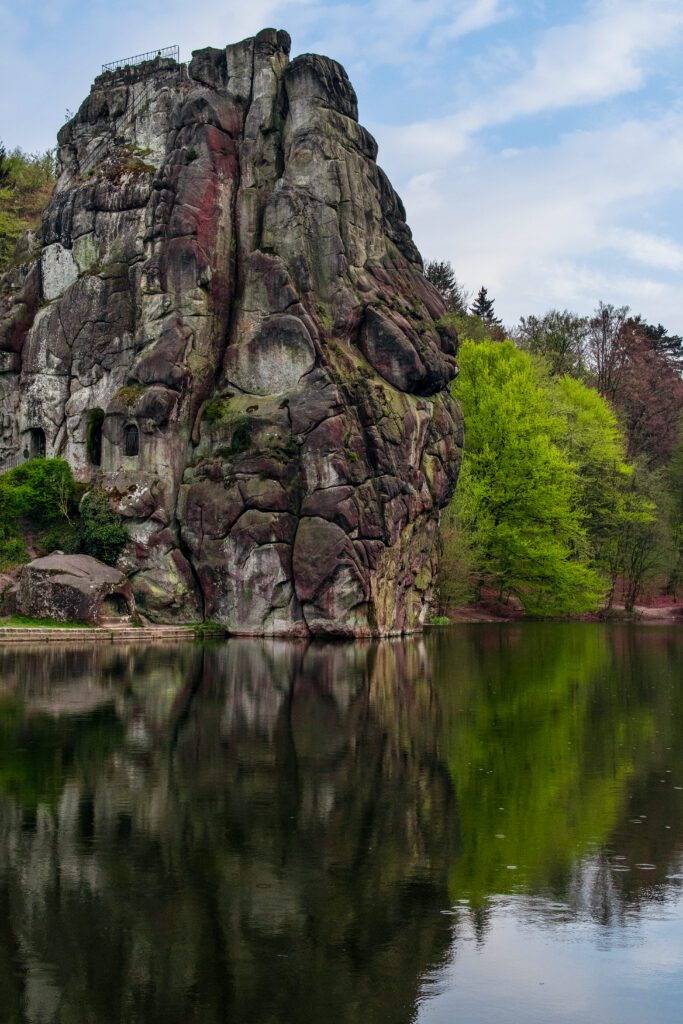
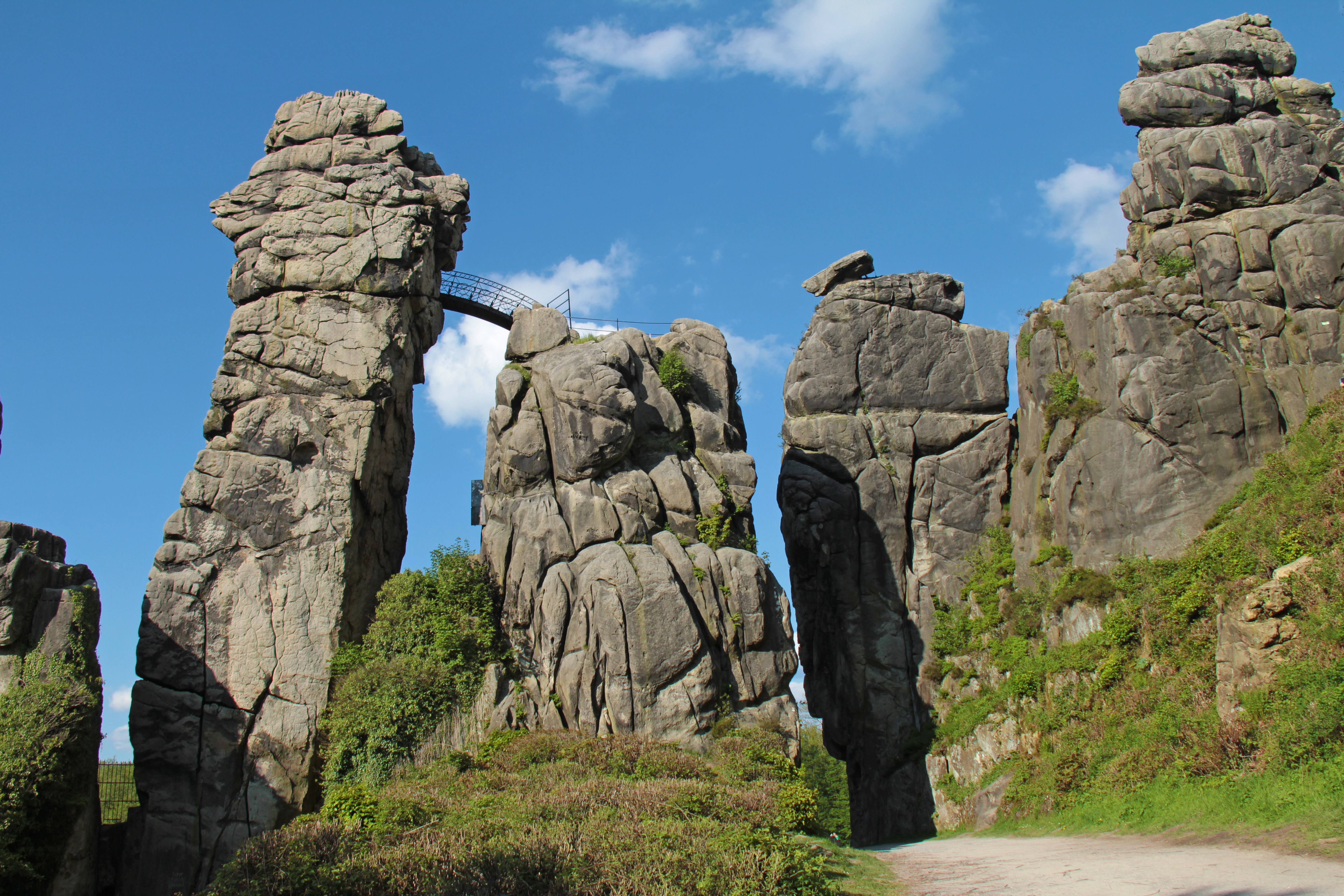
The Externsteine in the Teutoburg Forest are much more than just an impressive rock formation. They are a place that has been shrouded in myths and legends for centuries and is often compared to the famous Stonehenge in England. The Externsteine owe their appeal to historians, archaeologists, and esotericists to a multitude of stories and theories that make them one of the most mysterious places in Germany.
Even at first glance, it is clear that these sandstone rocks, which are up to 40 meters high, radiate something special. The rock needles, which rise abruptly from the surrounding forest, seem to have been placed there by the hand of a giant. But it is not only the external appearance of the Externsteine that fascinates; it is above all the numerous legends and historical references that make this place so unique.
The relief “The Descent from the Cross” – A central element of the Externsteine is the relief known as “The Descent from the Cross.” It was created between the 9th and 12th centuries and depicts the descent of Christ from the cross. This work of art is one of the most important early medieval sculptures north of the Alps and holds numerous secrets. Some researchers suspect that it played a role in mysterious rituals, while others see it as a clue to hidden treasures or knowledge.
A sacred place of worship? – Many theories surround the question of whether the Externsteine were already used as a place of worship in pre-Christian times. Archaeological finds indicate that the site was already a center of ritual activity more than 5,000 years ago. The inclination of some of the rocks and their alignment with the summer solstice are strongly reminiscent of similar prehistoric sites around the world and fuel speculation about their possible use as an astronomical observatory or religious center.
The pentagram and secret symbols – One of the most fascinating legends says that the Externsteine were used by witches and druids. This story is fueled by the discovery of strange symbols and signs on the rocks. The best known is the so-called “pentagram,” a pentagram-like symbol that is said to offer protection from evil spirits. Runes and other mysterious inscriptions have also been found on the rocks, the meaning of which is still not fully understood today.
A center of Germanic mythology? Some historians believe that the Externsteine were a sacred site for the Germanic peoples. They point to the proximity to other important sites such as the Battle of Varus and see the rocks as a place that may have been used for sacred rituals. The so-called Irminsul also plays a role here – a central cult object of the Germanic religion, which according to some theories may have originally stood at the Externsteine.
Christian transformation and pagan resistance – With the Christianization of Central Europe, the site took on new significance. Missionaries and Christian rulers sought to suppress pagan cults and integrate the Externsteine into ecclesiastical structures. Charlemagne himself is said to have ordered the site to be desecrated and Christian symbols to be affixed. Nevertheless, many people remained faithful to their old customs, and the Externsteine retained their aura of mystery and sanctity.
The Nazis and the mystification of the Externsteine – The National Socialists quickly recognized the propaganda potential of the Externsteine and attempted to use them for their ideological purposes. Heinrich Himmler and the SS attached great importance to the connection to Germanic mythology and saw the Externsteine as a central place of Aryan origin. Archaeological expeditions and esoteric research were intended to support the thesis that the Externsteine were a particularly sacred Germanic site. This appropriation led to further legends and even greater mystification.
Modern myths and spiritual pilgrimage site – Today, the Externsteine are a popular destination for tourists and esotericists. Numerous spiritual groups, including followers of the Neo-Germanic movement, Druidism, and other esotericists, come here to perform rituals and feel the special energy of the place. The fascination with the Externsteine remains unbroken, and every year numerous events on a wide variety of spiritual and historical topics take place here.
Science and research – Despite all the myths and legends, scientific discourse about the Externsteine remains lively. Archaeologists and historians continue their investigations to unravel the true history of this unique place. Modern techniques such as laser scanning and geophysical methods are providing new insights and could help answer some of the open questions.
A look into the future – The Externsteine will continue to be a place of fascination and research. Whether as a tourist attraction, spiritual center, or historical mystery, they captivate people. Perhaps future generations will be able to unravel the remaining secrets and understand the full significance of this place. Until then, however, one thing remains certain: the Externsteine will continue to whisper their stories and inspire us to reflect on the mysteries of history and our own spiritual path.
Thus, the Externsteine remain not only a relic of times past, but a living part of our culture, connecting the past and the future and inspiring new discoveries.