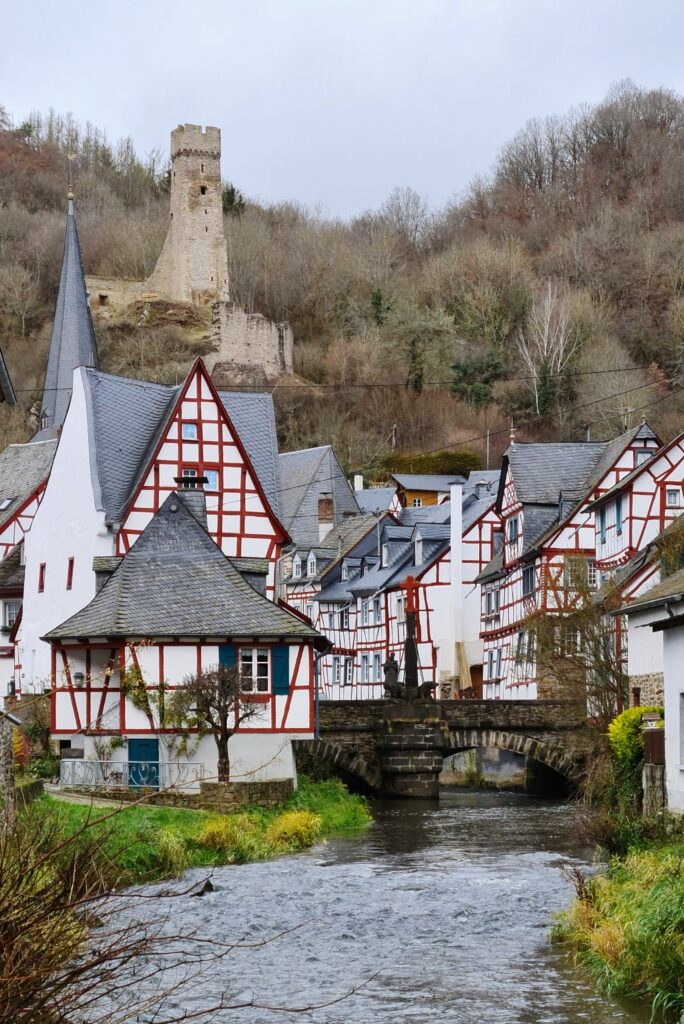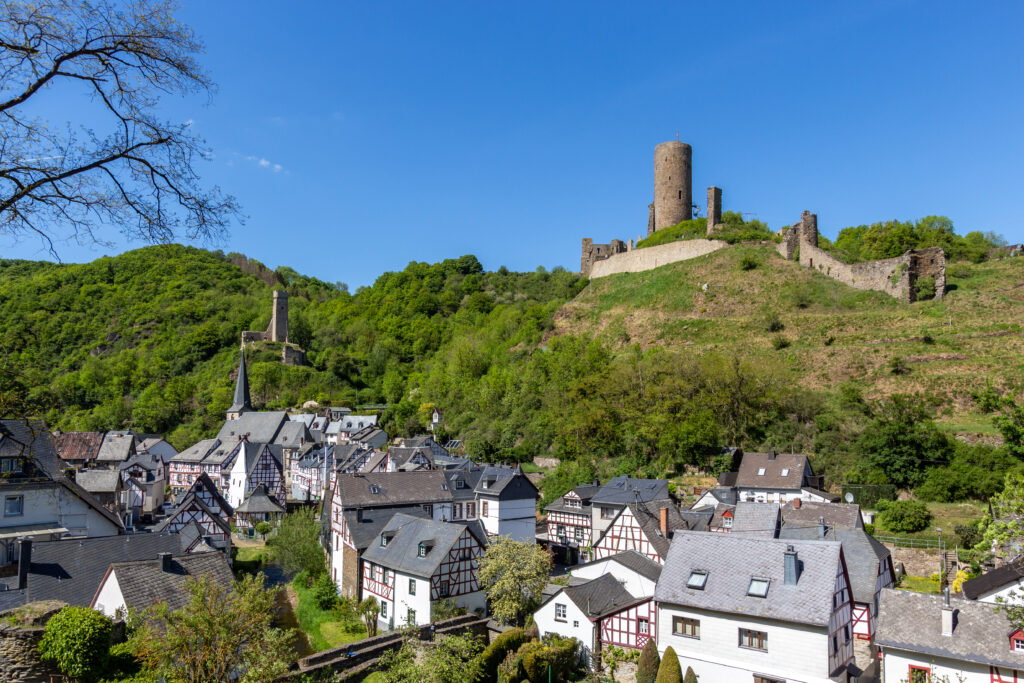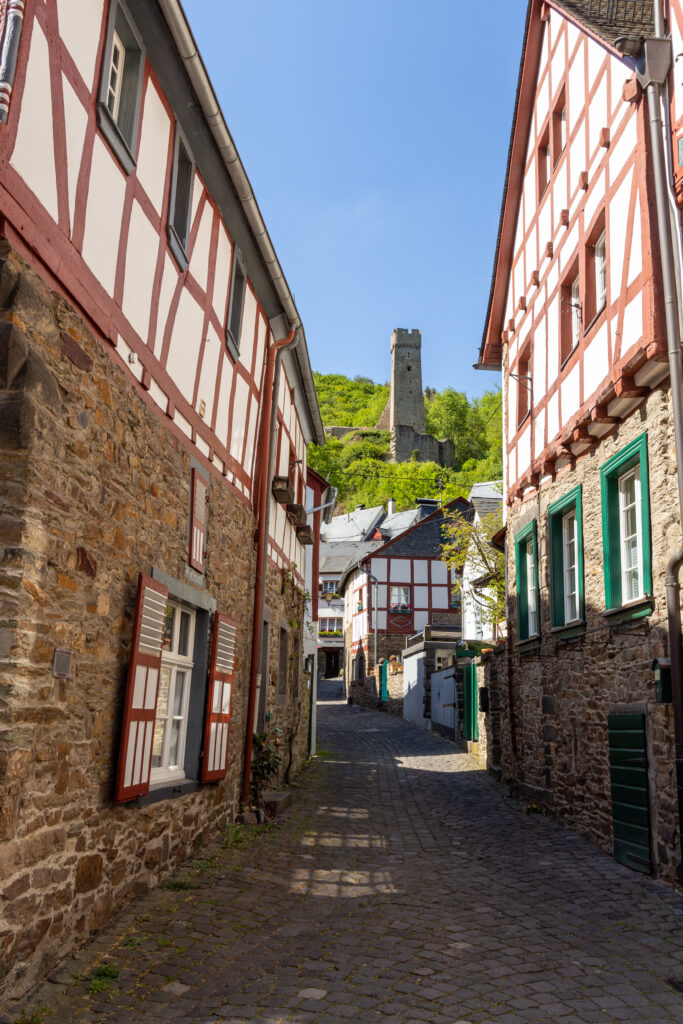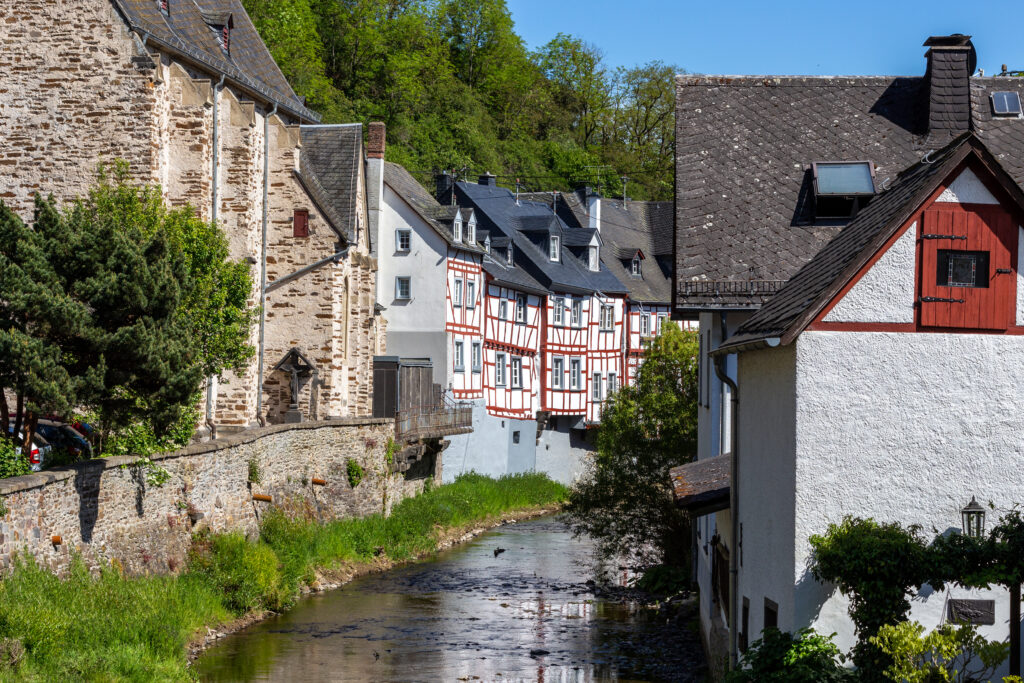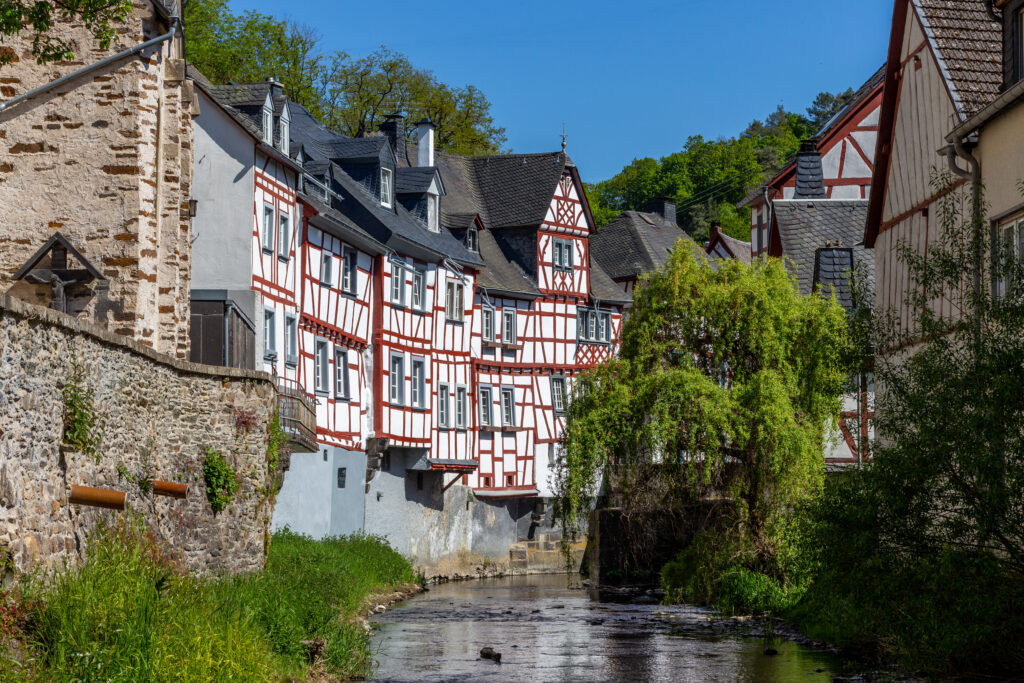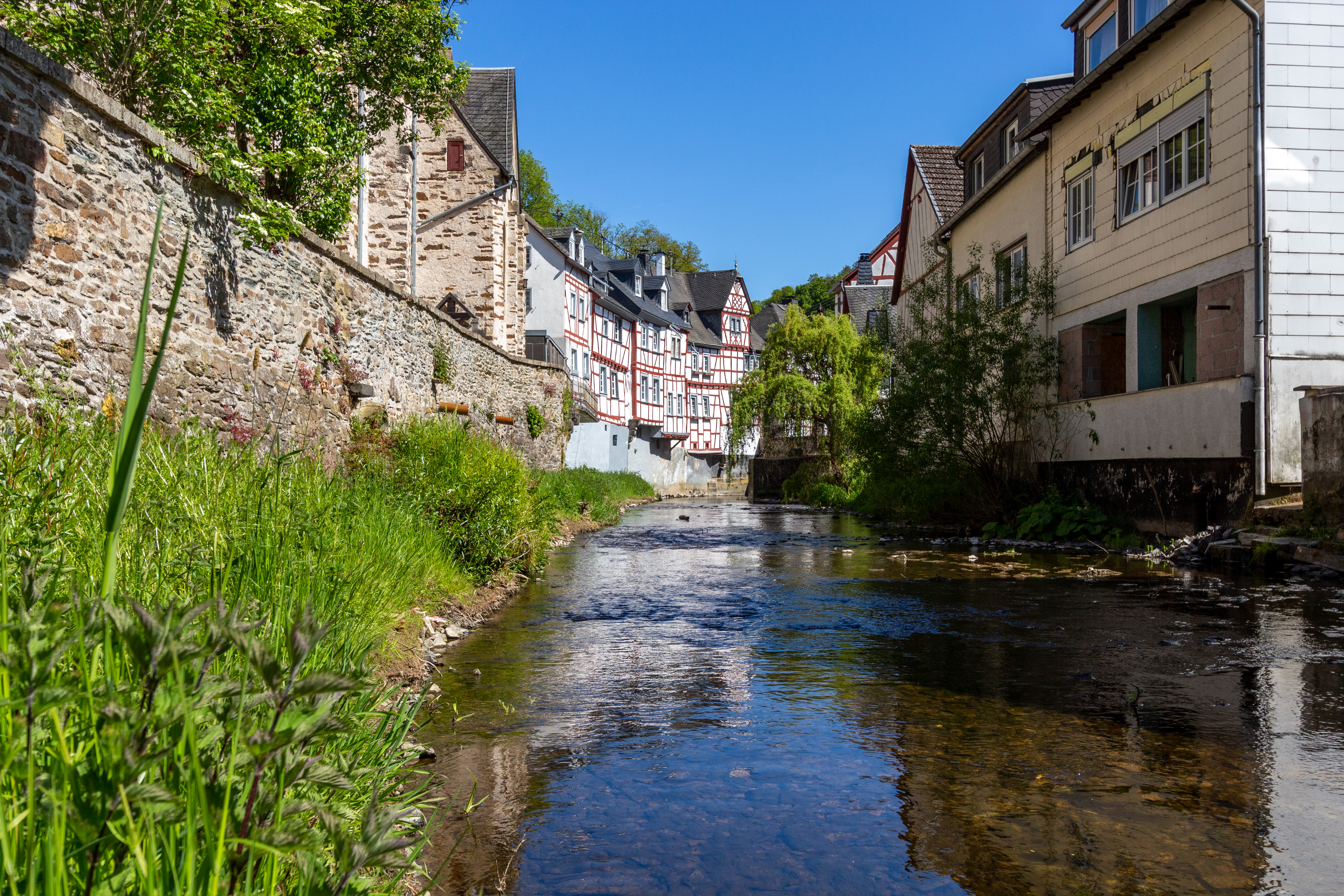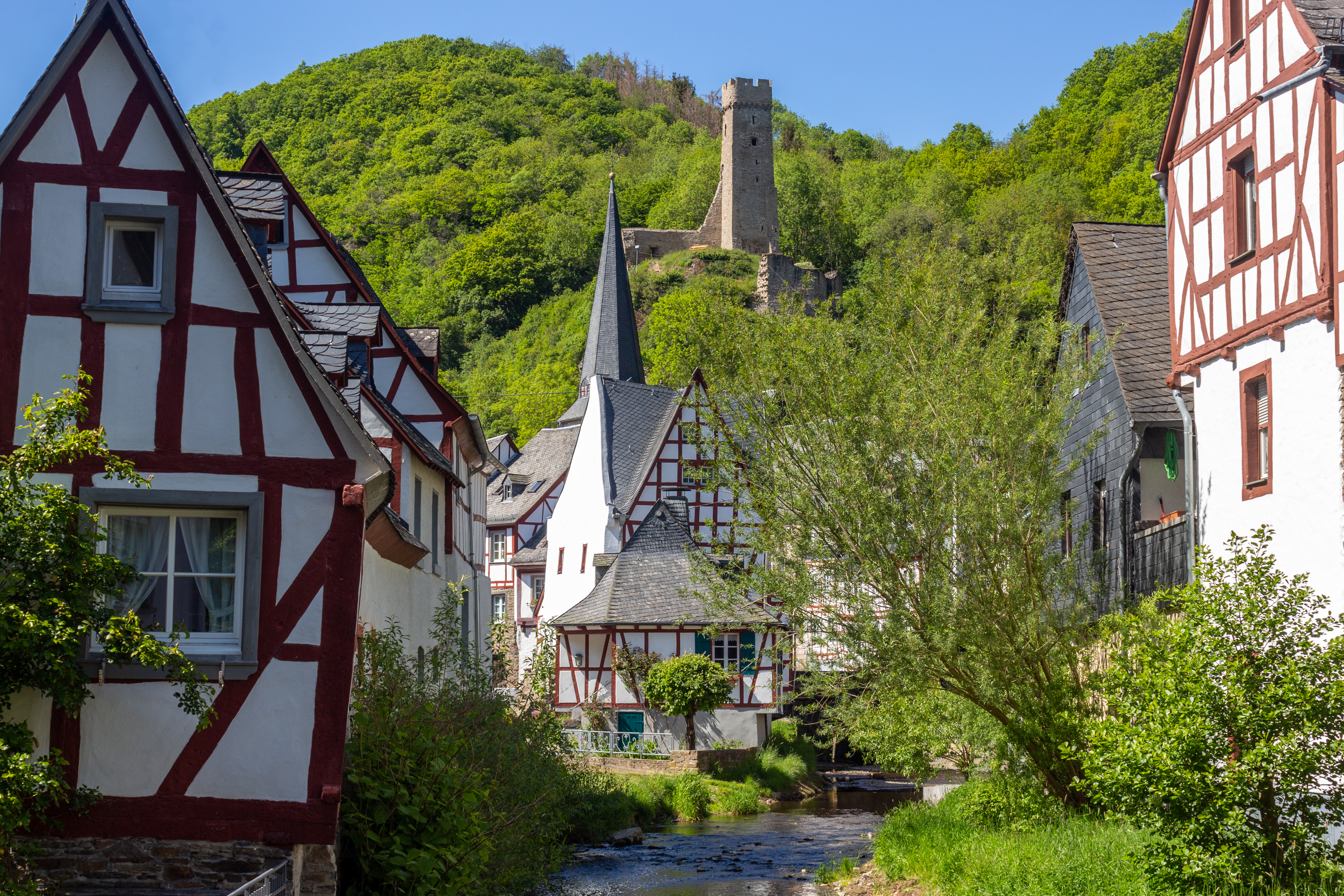
Nestled in the picturesque valley of Elz, in the Rhineland-Palatinate region, lies the enchanting village of Monreal. Overlooking this historical hamlet are the haunting ruins of Löwenburg and Philippsburg, remnants of a bygone era. The oldest settlement traces here date back to pre-Christian times, but the village makes its first official appearance in records from 1193, referred to then as “Cunisberch” (Kings Mountain). By the early 13th century, the Counts of Virneburg, driven by ambition and strategy, extended their influence to the small settlement, adopting the French name “Monroial,” which eventually evolved into the modern name Monreal.
Around 1220, Hermann III of Virneburg embarked on an audacious endeavor—the construction of a grand castle. Despite lacking both the necessary permissions and rightful ownership of the land, he pursued his ambitions undeterred. The lands belonged to the Mertloch estate under the jurisdiction of the Archbishop of Trier, whose brother Philip of Virneburg handled secular affairs there. The need for political advancement urged Hermann to take this drastic step. His ancestral seat at Virneburg was too remote from the economic heartlands, whereas Monreal bordered the Middle Rhine Basin, a region rich in agricultural and volcanic resources. Hermann’s gamble paid off; he retained his castle and was later granted dominion over the entire high jurisdiction of the small Pellenz area by the Count Palatine of the Rhine. The Virneburgs continued to favor Monreal; by 1306, they secured town and market rights, establishing a weekly market every Monday.
Monreal lay within the domain of the Archbishopric of Trier, yet the Virneburg Counts maintained strong ties with the Archbishopric of Cologne, leading to frequent conflicts between Monreal and Trier. The Virneburg dynasty dwindled in 1545, and Trier seized control, appointing its own administrators to the castle. The newly formed Amt Monreal was subsequently subordinated to the Oberamt Mayen.
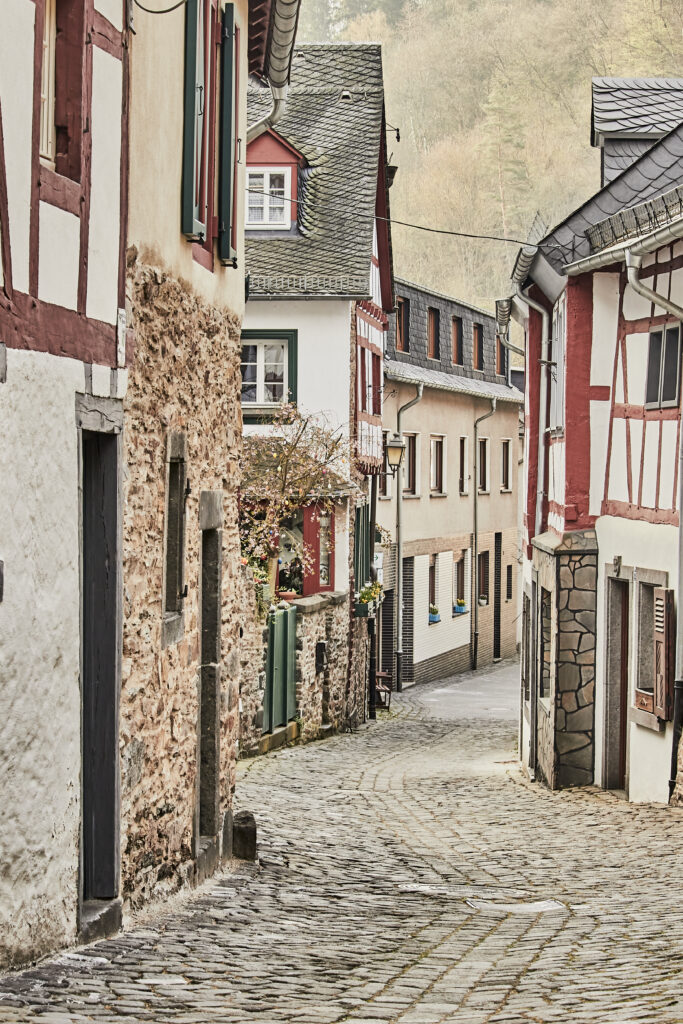
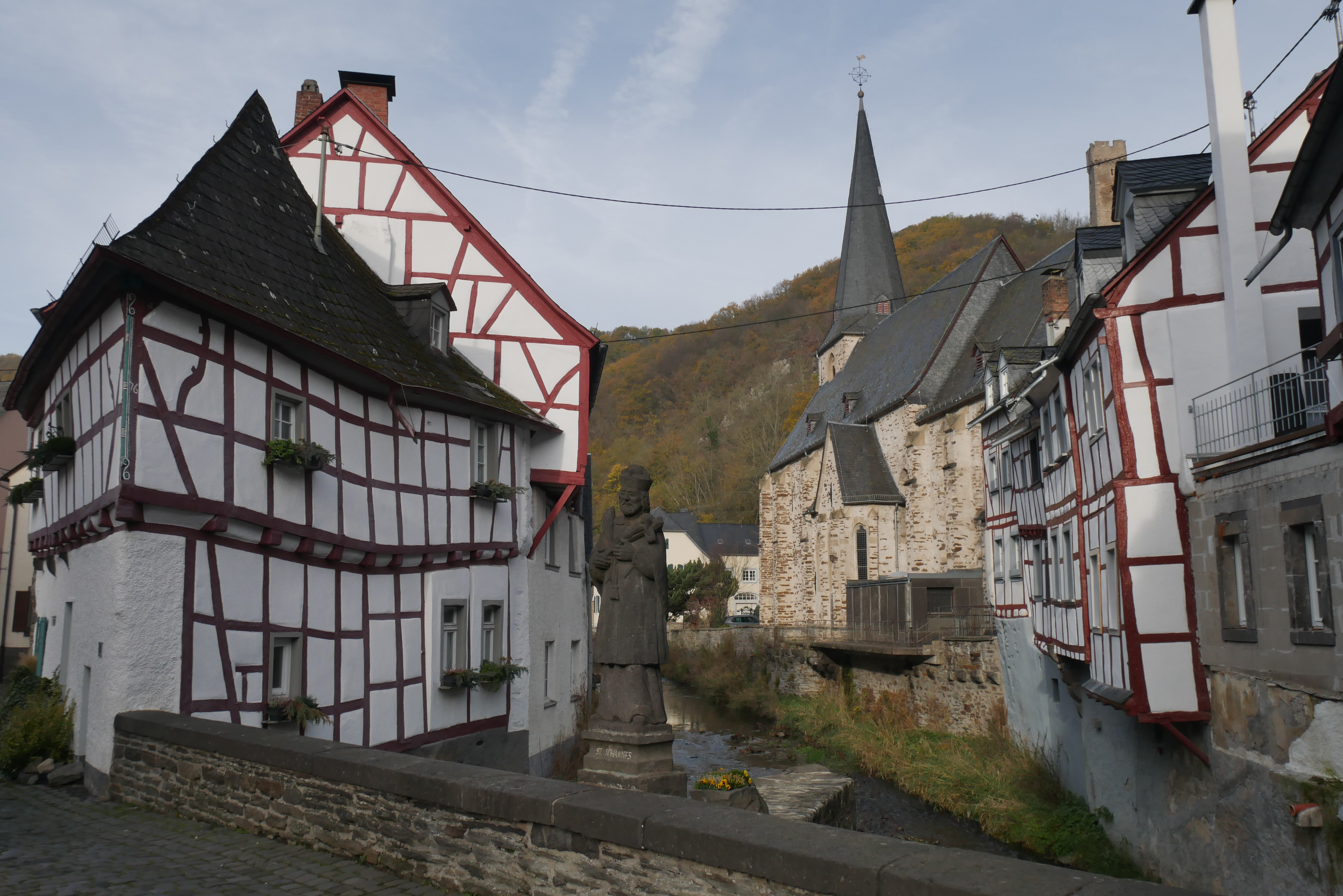
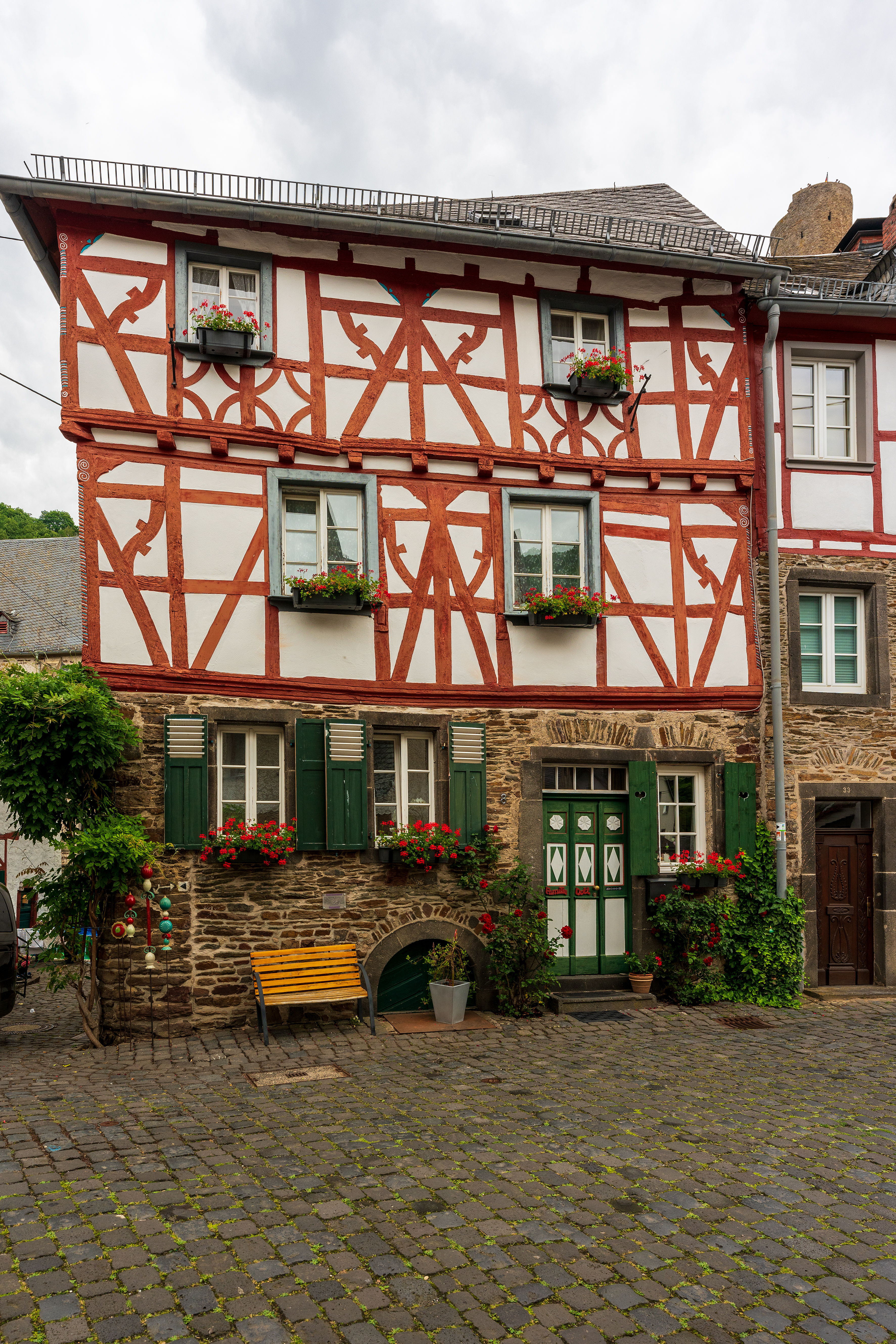
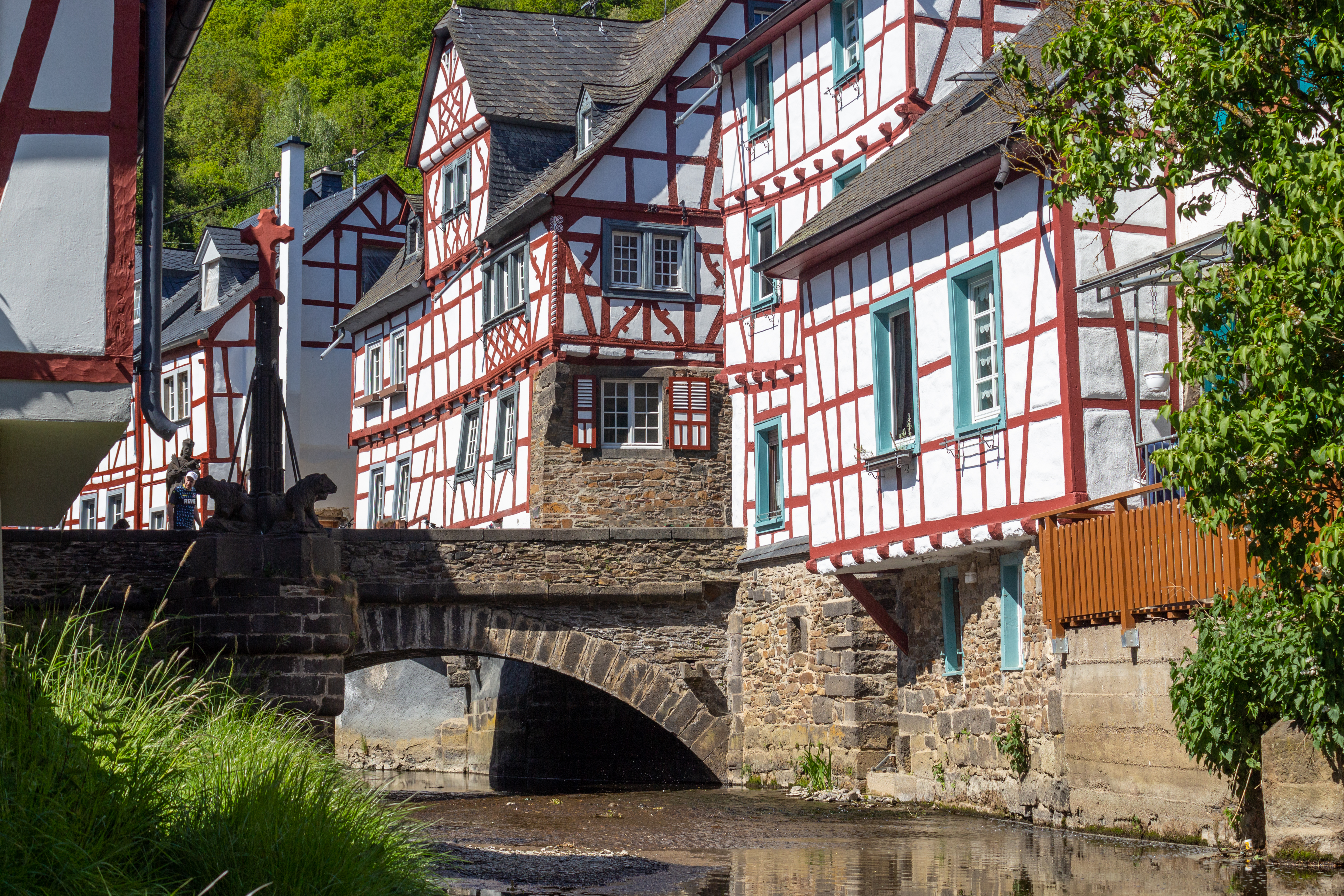
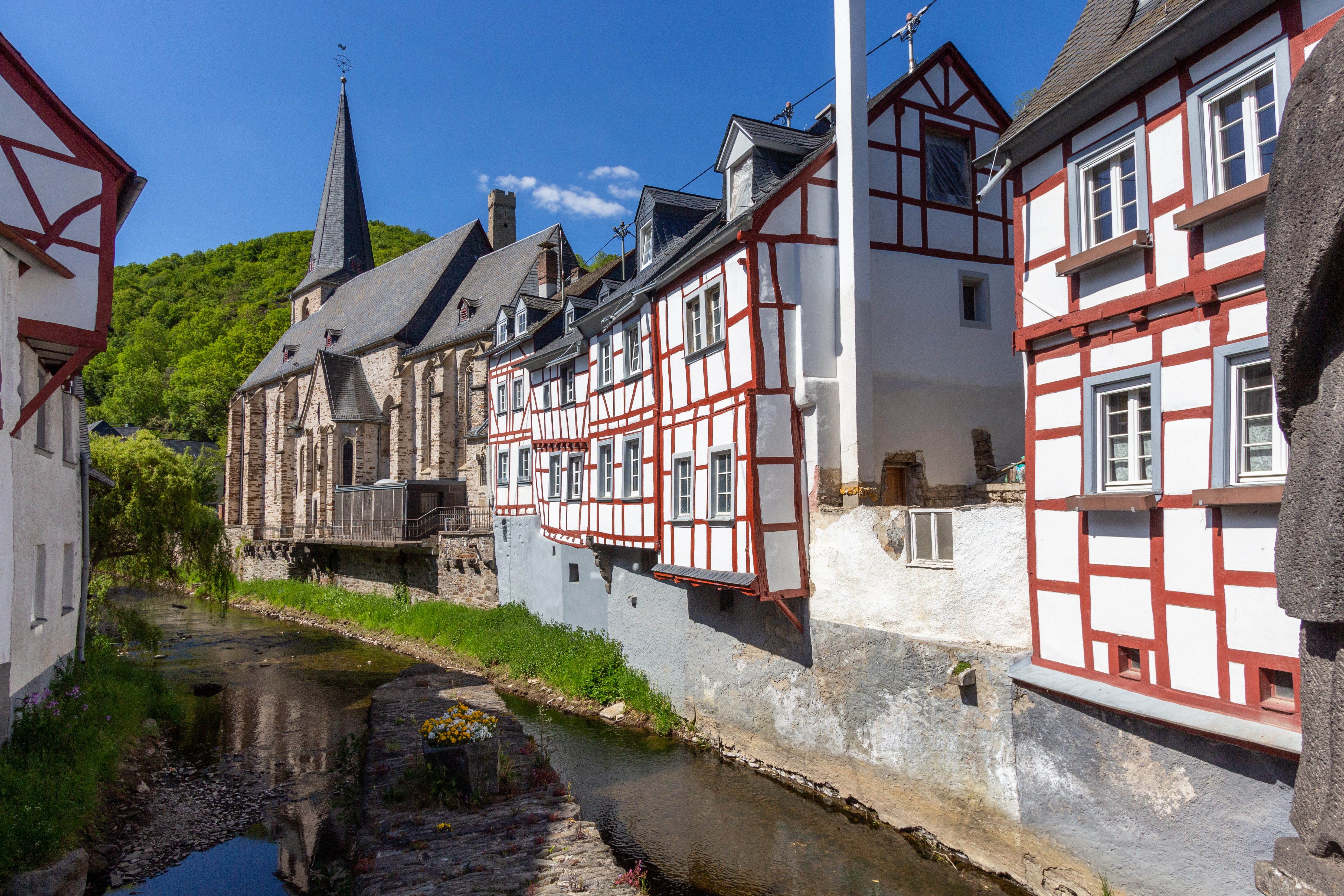
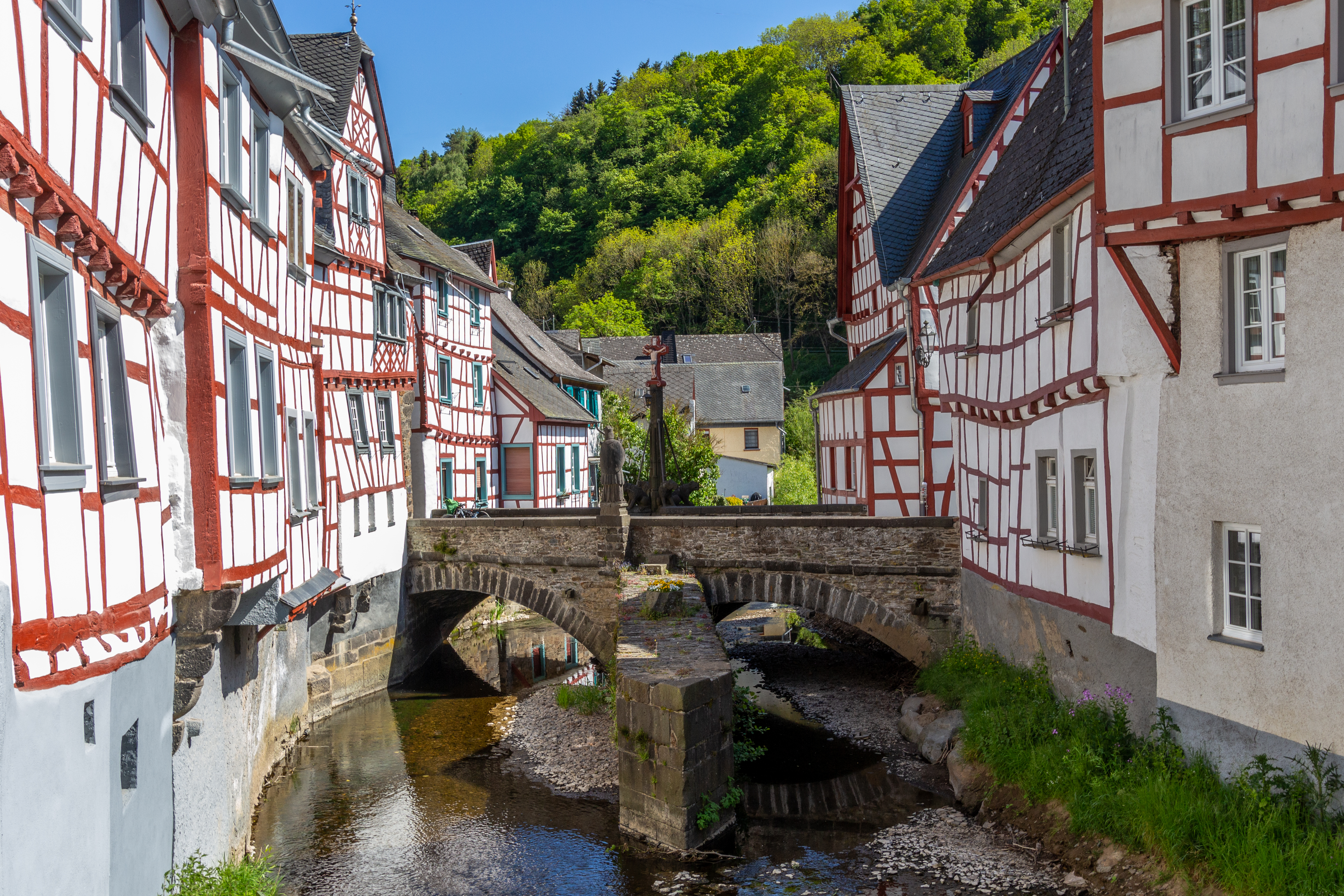
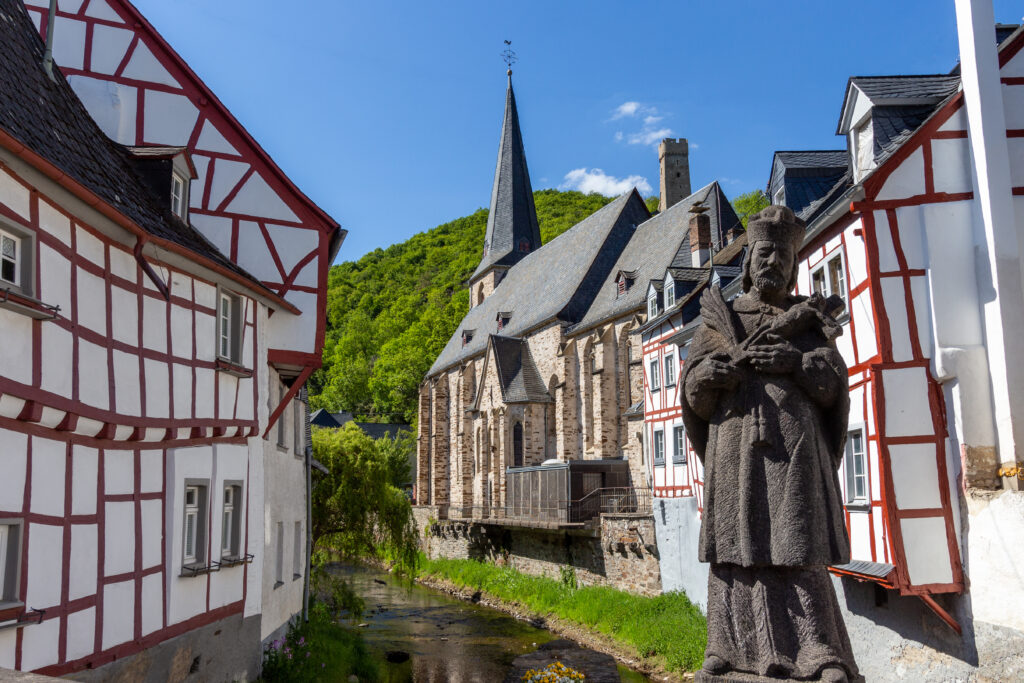
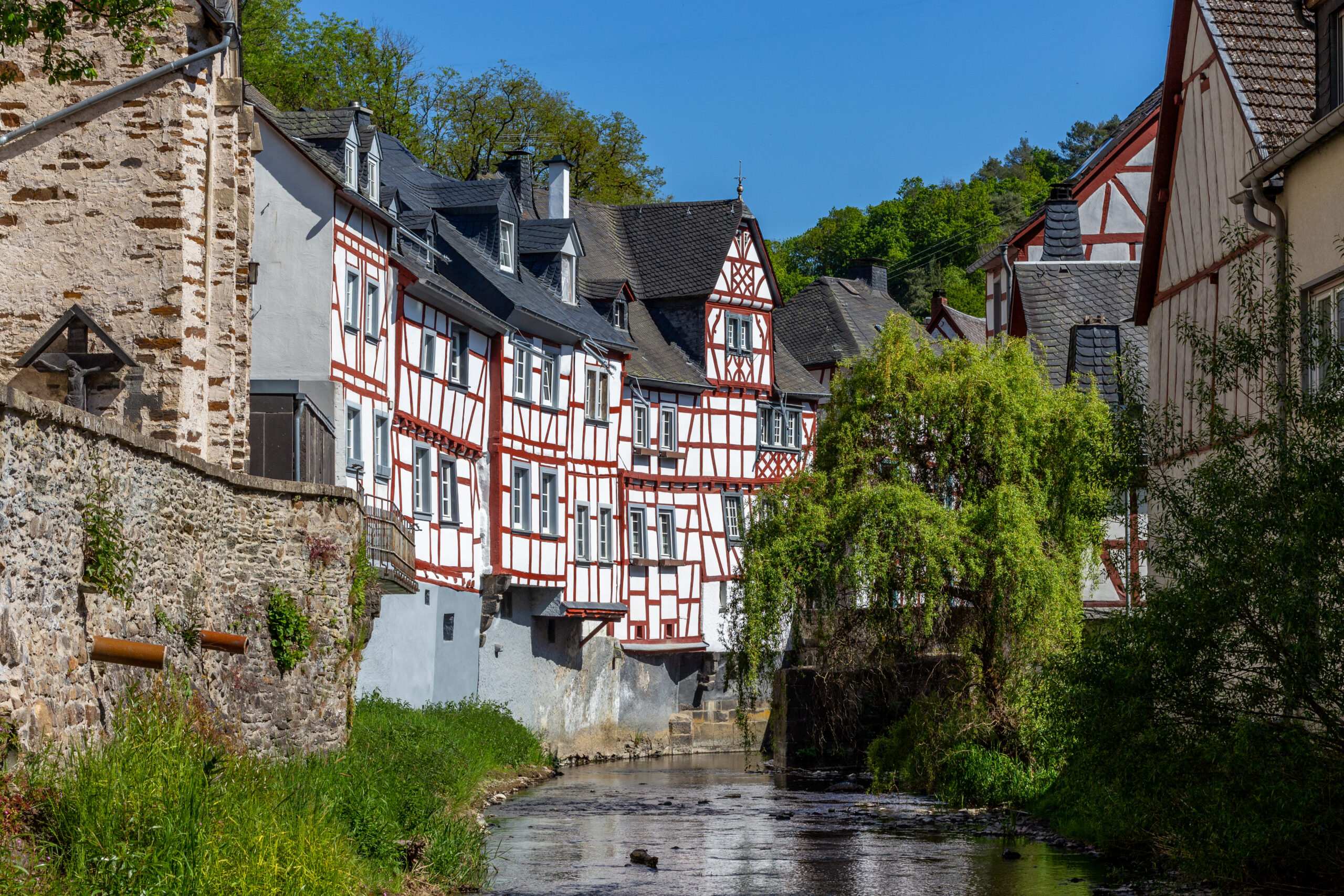
The village, along with its two castles, faced devastation during the Thirty Years’ War by Swedish forces in 1632 and again in 1689 during the War of the Palatine Succession by French troops. Despite the turmoil, Monreal witnessed the rise of a significant textile industry post-30 Years’ War, driven by wool from the expansive sheep herds of the Eifel. Timber-framed houses and stone structures still stand today, bearing testament to the prosperity once enjoyed by Monreal’s textile makers.
However, the latter half of the 19th century brought a decline in textile production, unable to withstand fierce international competition. Monreal fell into poverty as a result. It wasn’t until the 1930s that the village saw a revival, sparked by an appreciation for the romantic allure of the Eifel region. The grand constructions of the former clothiers now form an idyllic village center. One notable artifact of late Gothic craftsmanship can be found on Monreal’s middle Elz bridge—the Lion Monument. Originally stationed outside the great castle, this monument, with its four lions guarding the entrance, led to the castle being dubbed “Löwenburg.”
Intriguingly, the Monnerjahn family traced their surname’s origins back to Monreal through old church registers, linking their heritage to this storied village. Today, efforts are made to bring Monreal’s rich history to visitors. In 2003/2004, informational plaques were installed at various historic buildings, detailing their history and usage.
The tale of Monreal is one of strategic ambition, ruinous wars, economic booms, and subsequent declines—yet this village has continually risen from the ashes. Its scenic beauty, steeped in legends and historical significance, continues to captivate and educate those who traverse its ancient streets, providing a living canvas where history and the present merge seamlessly.