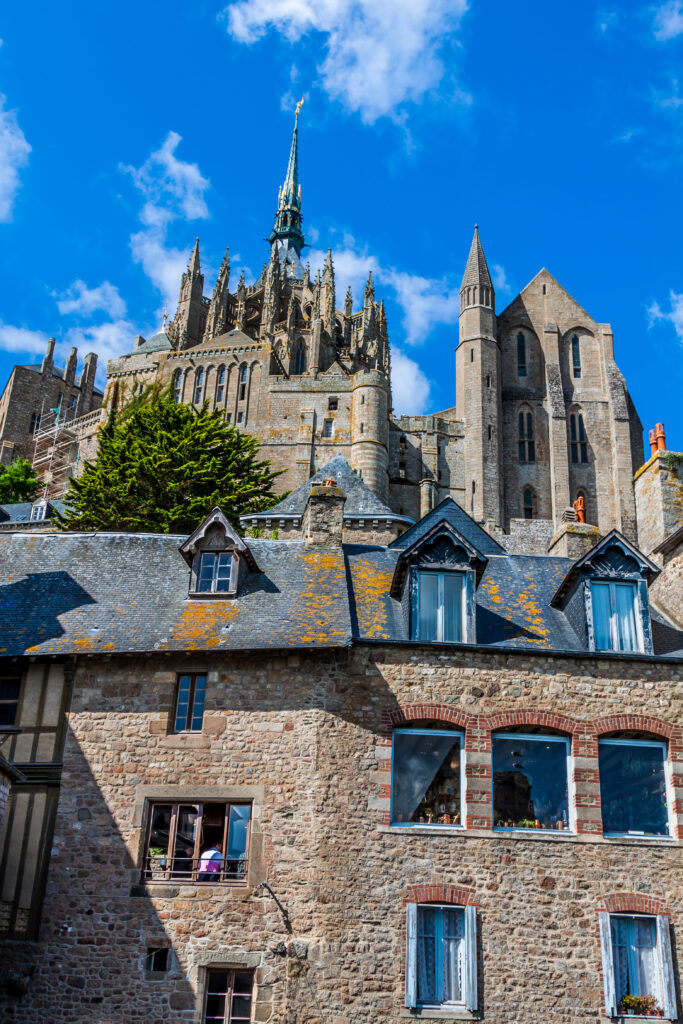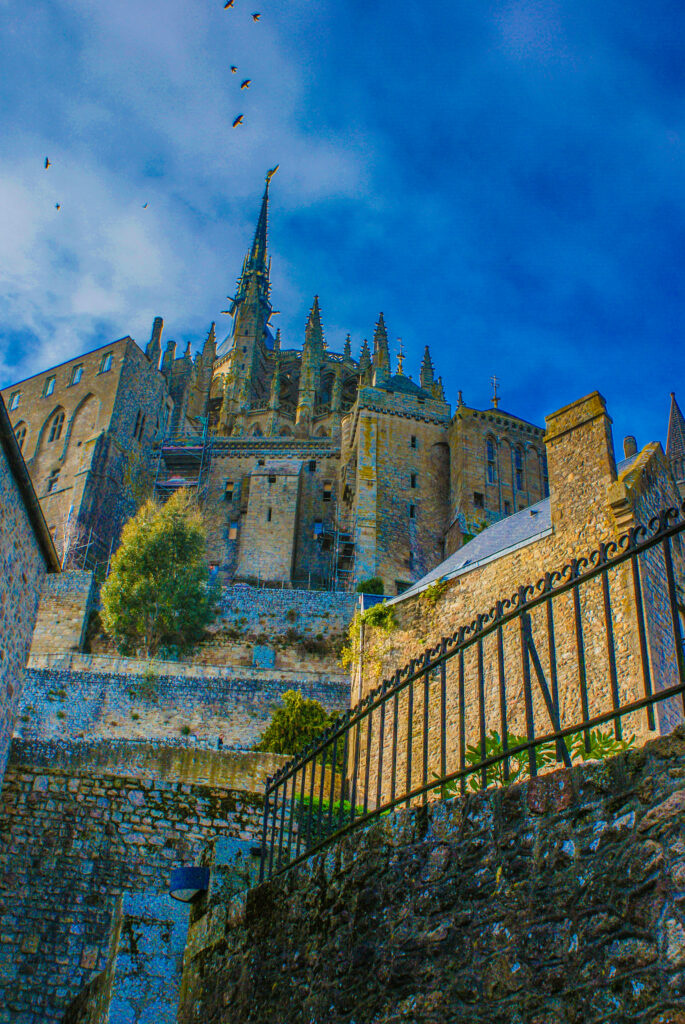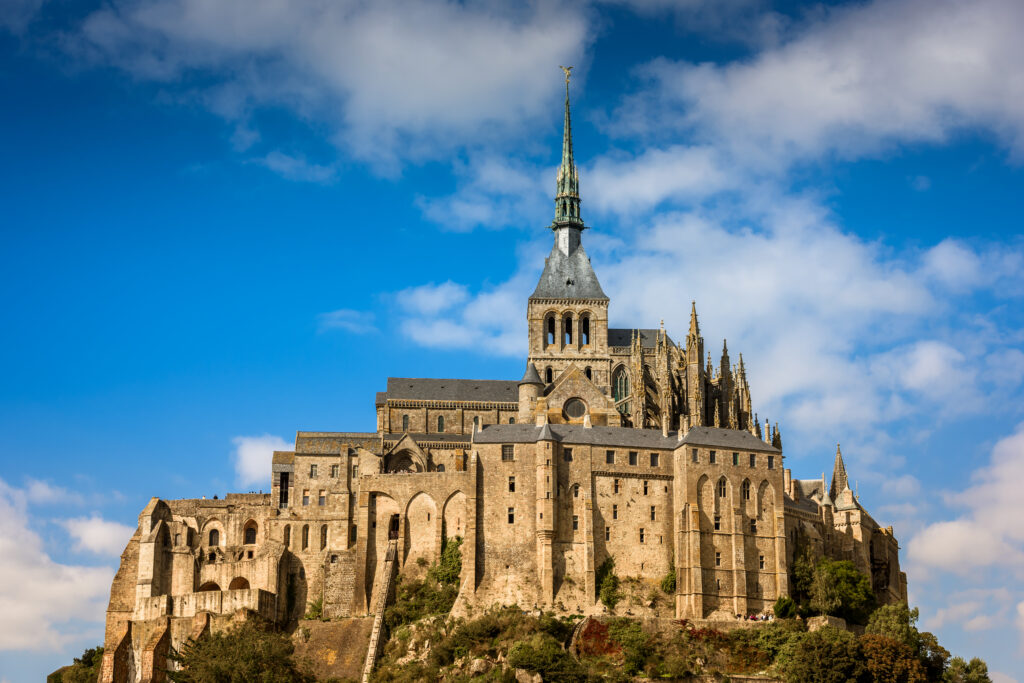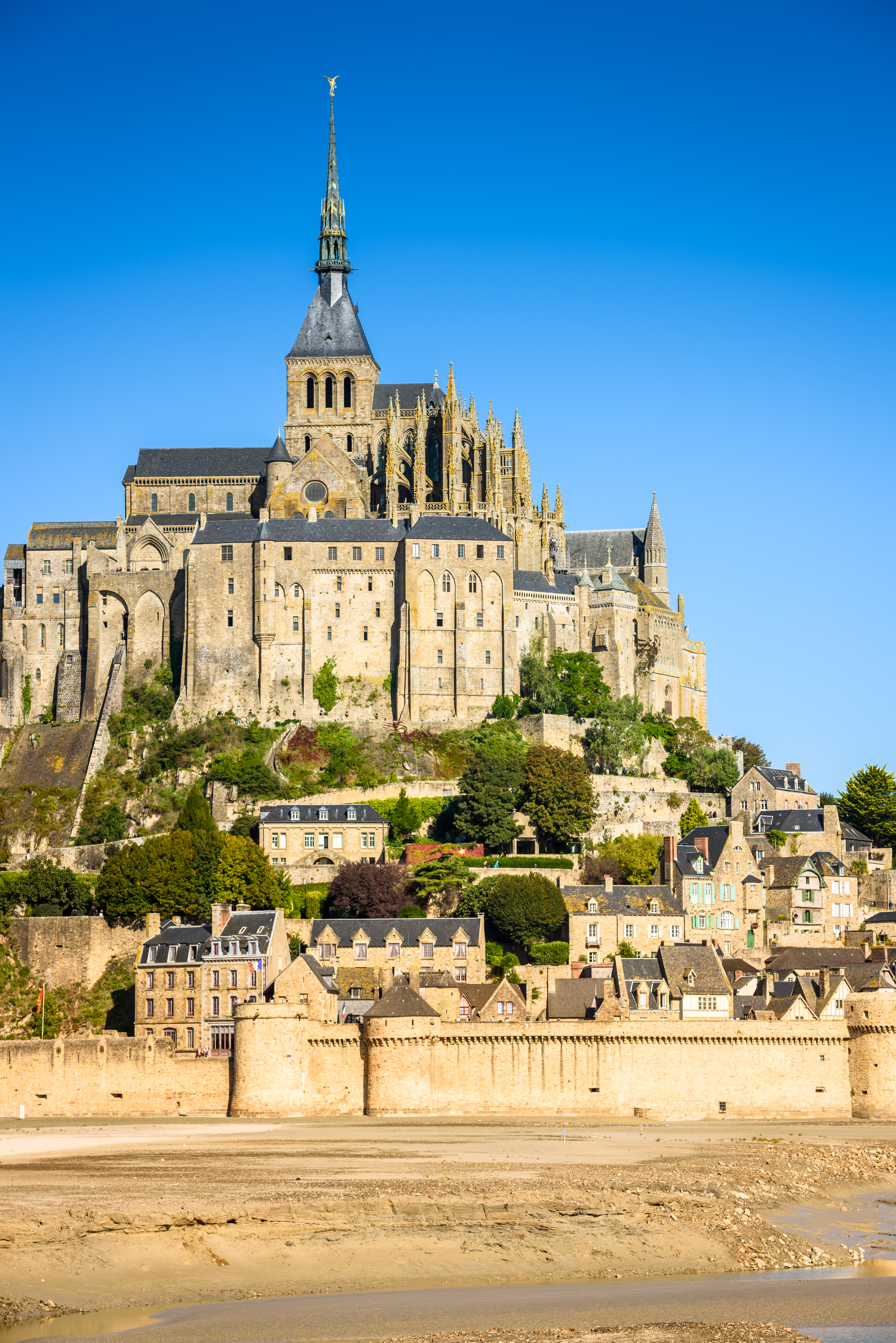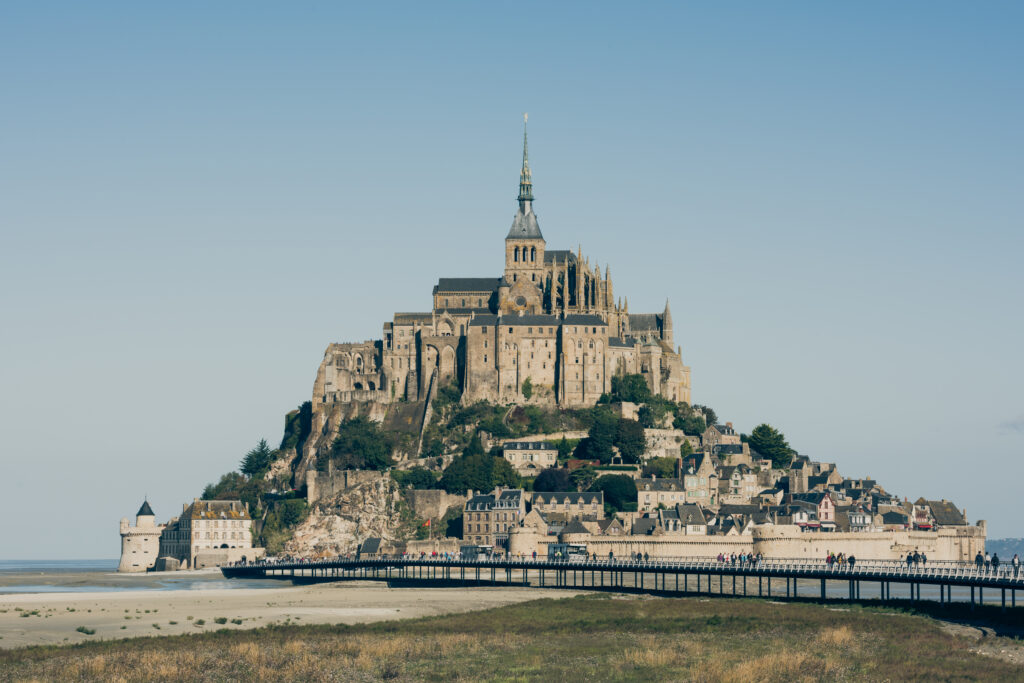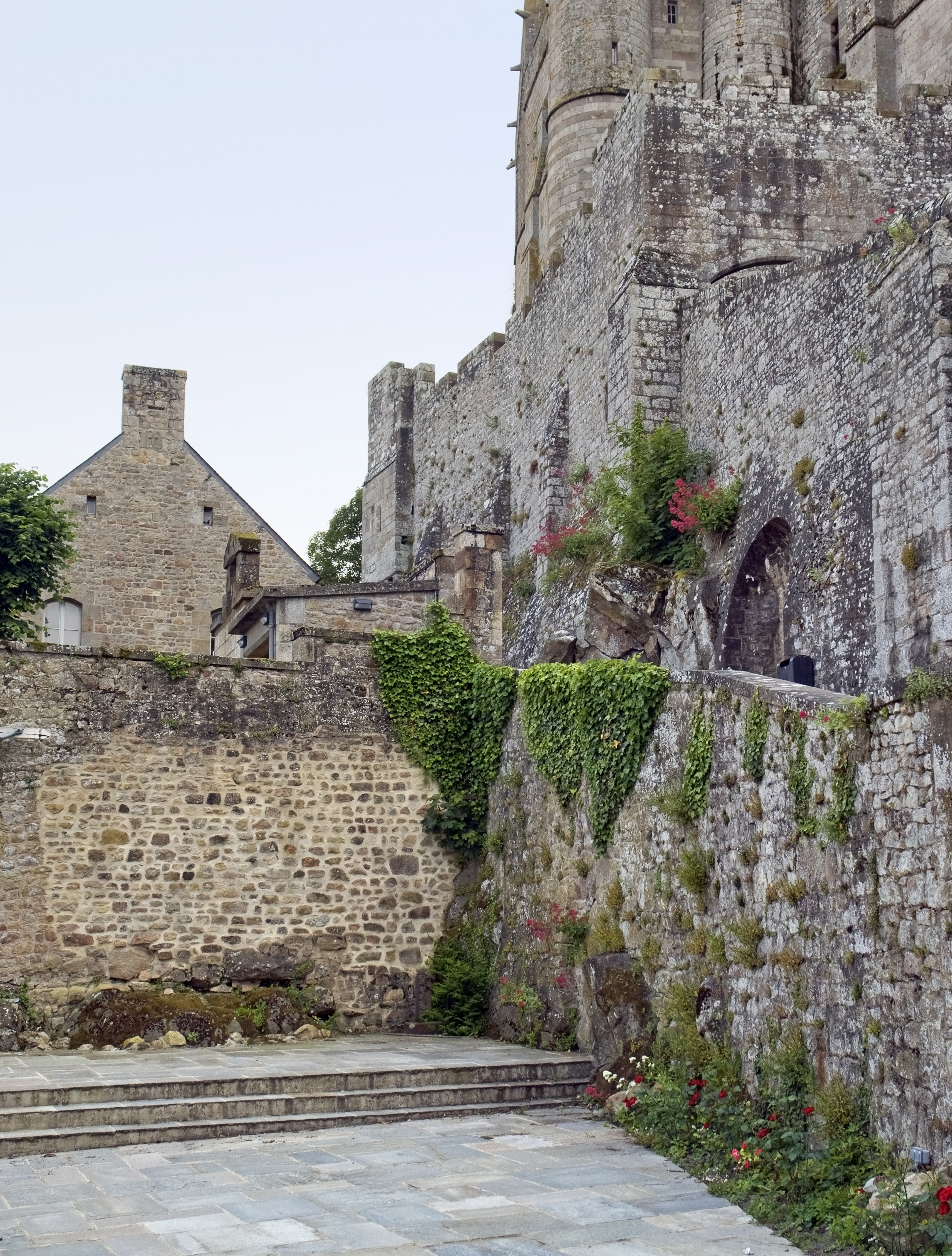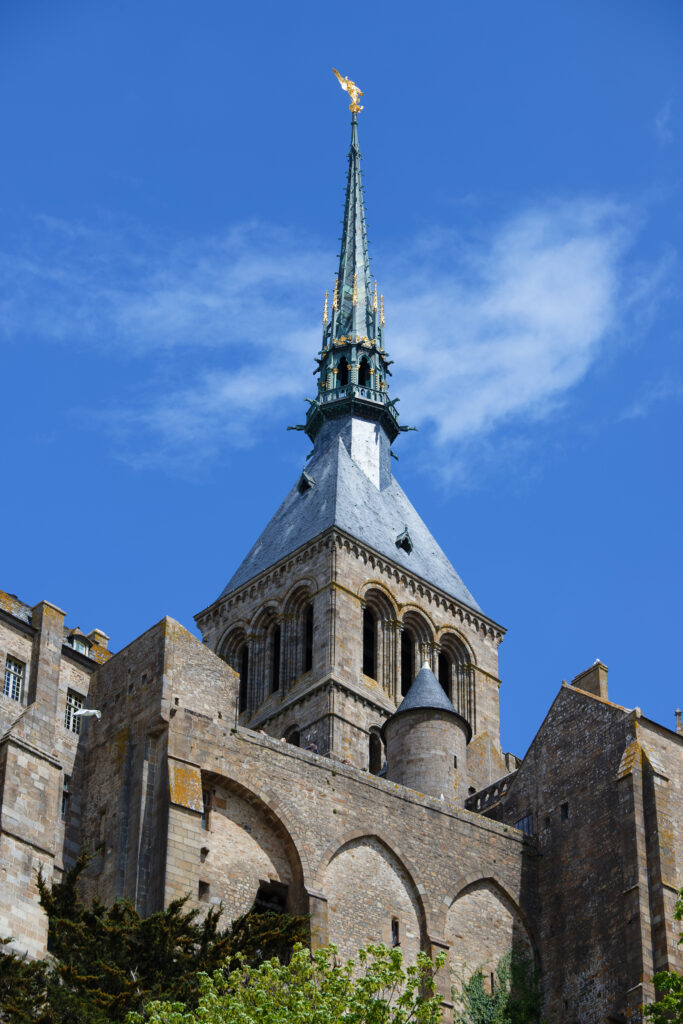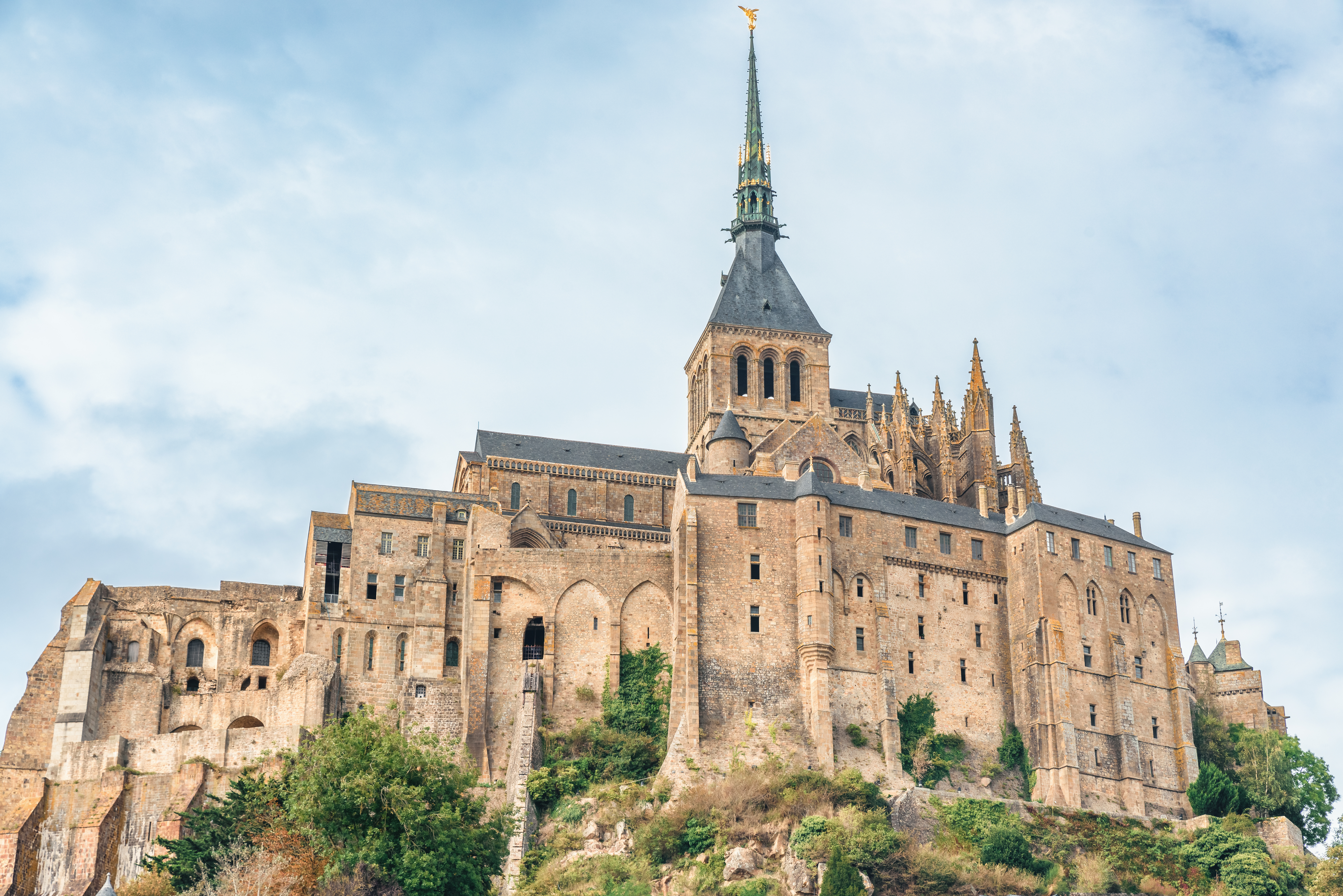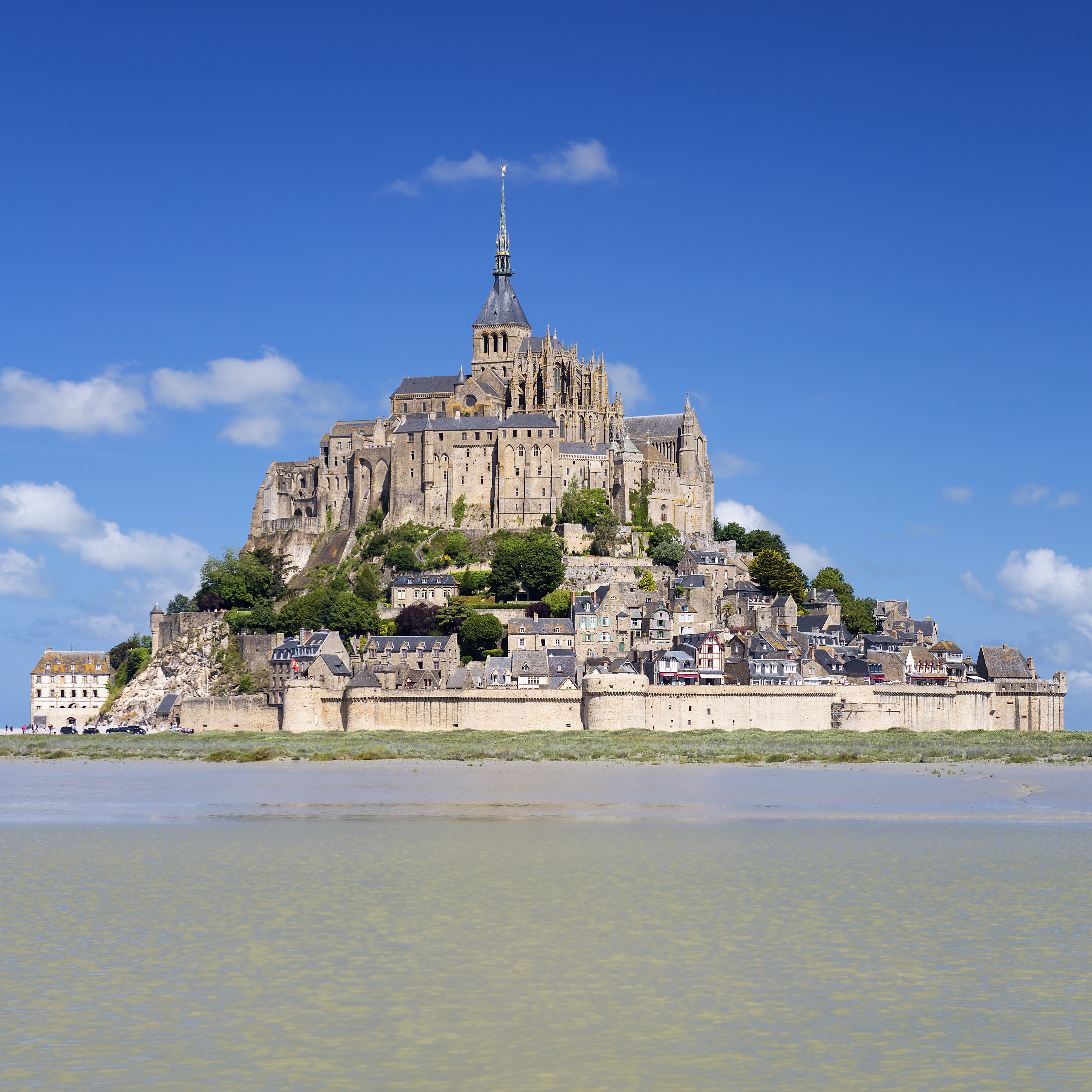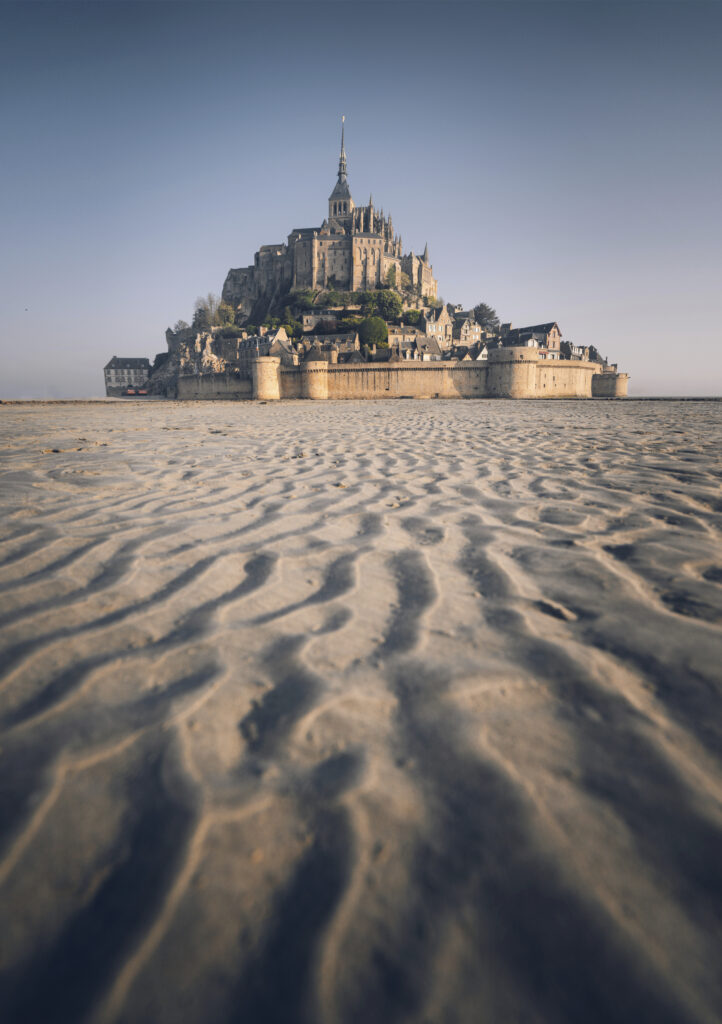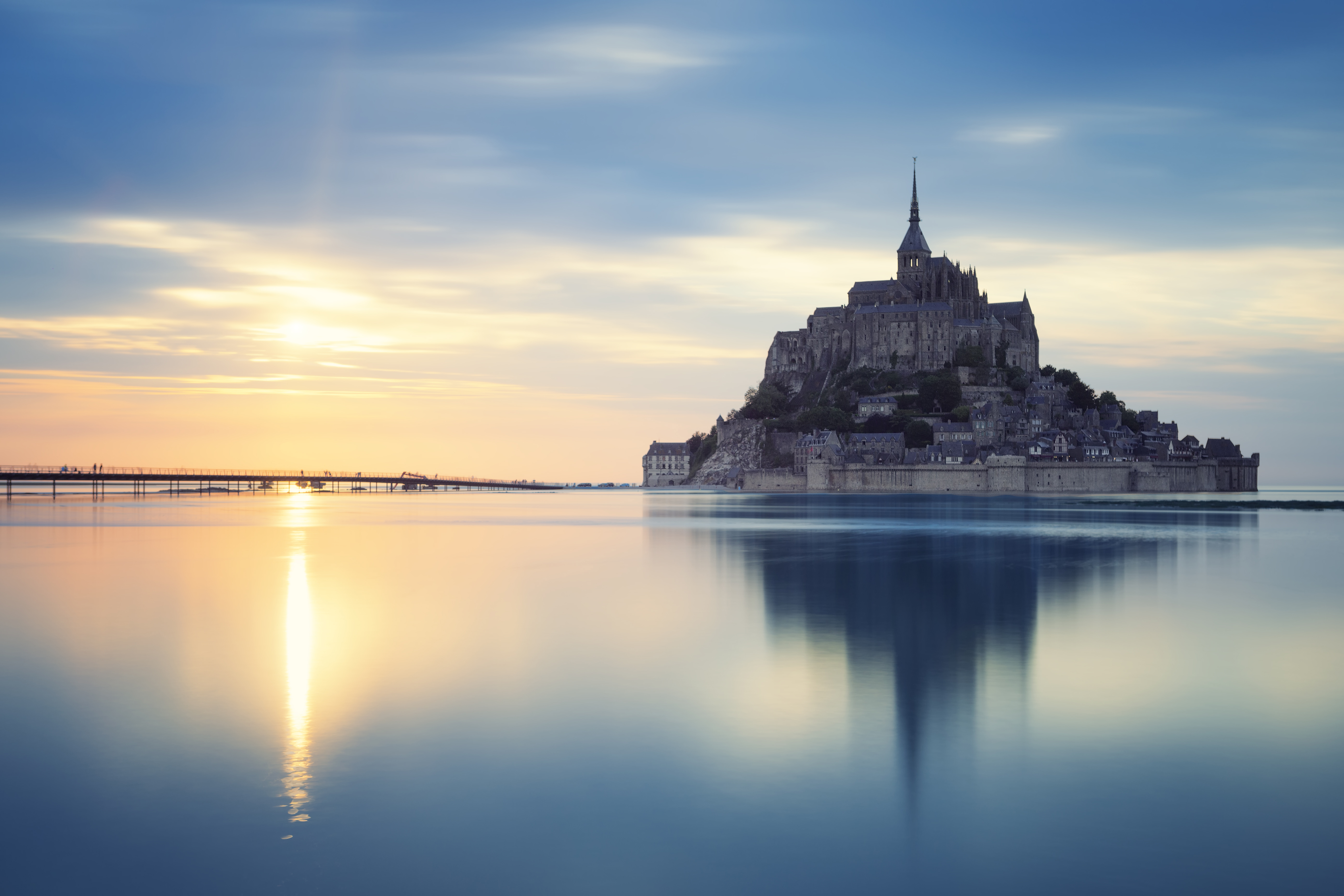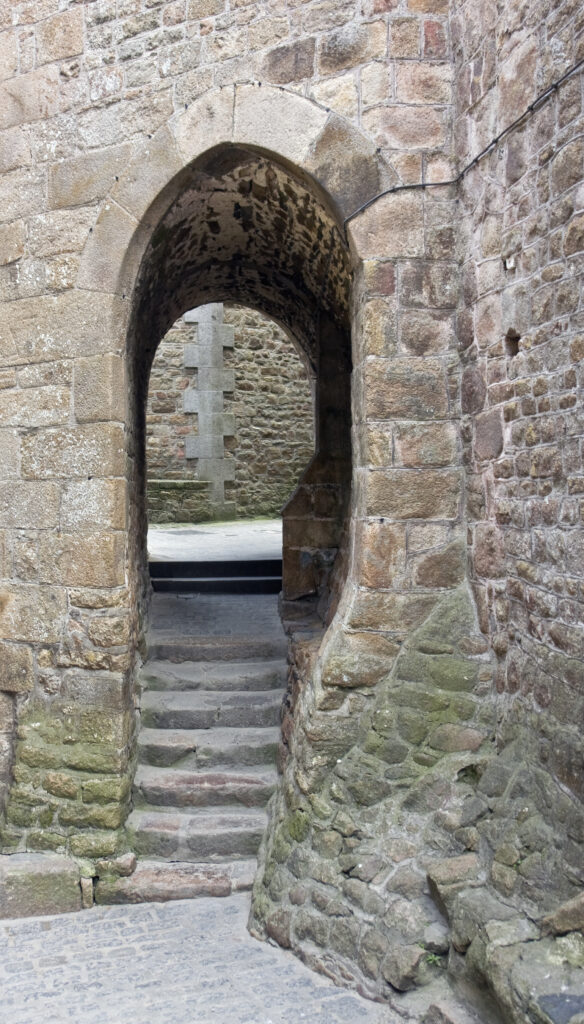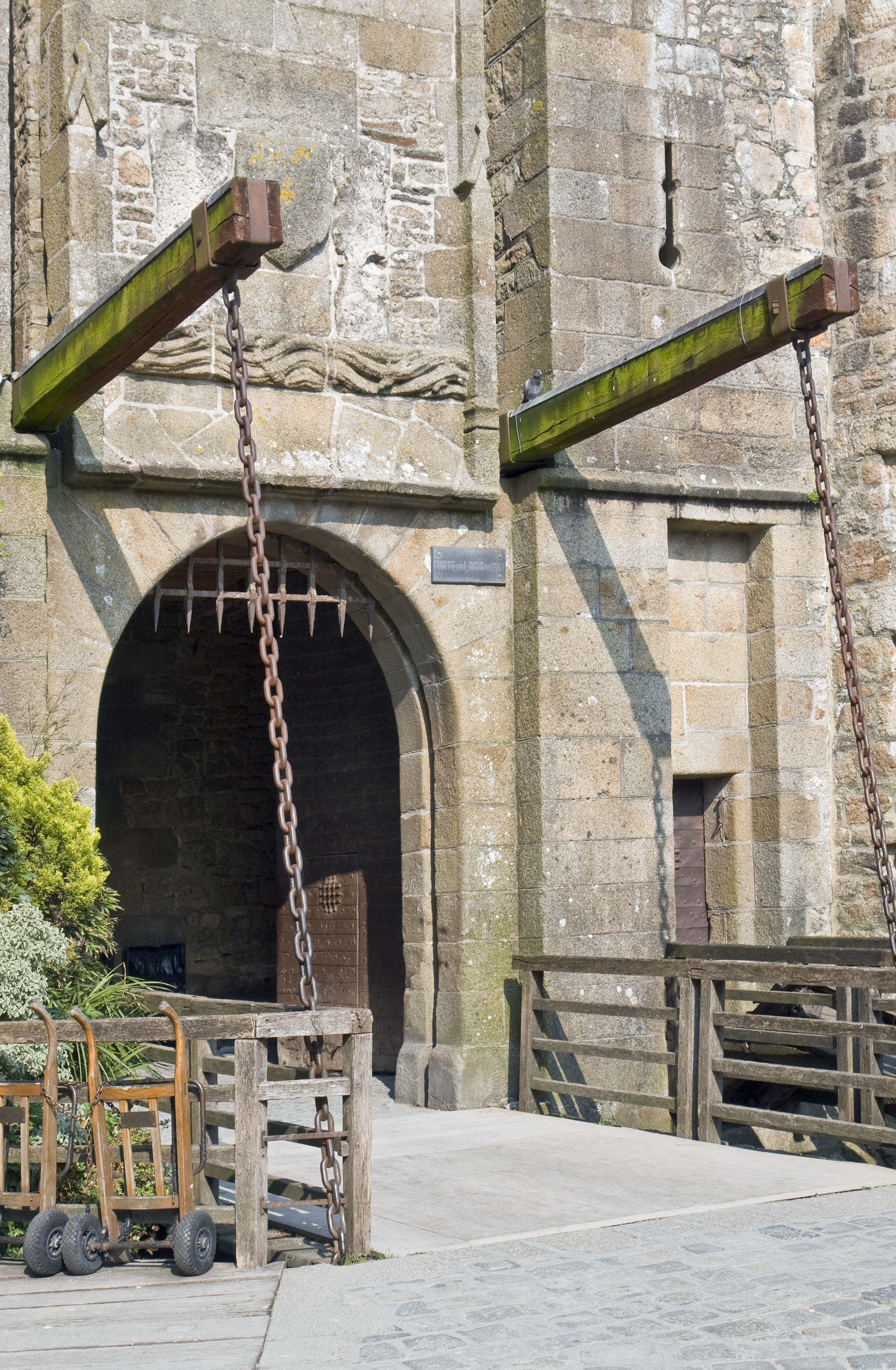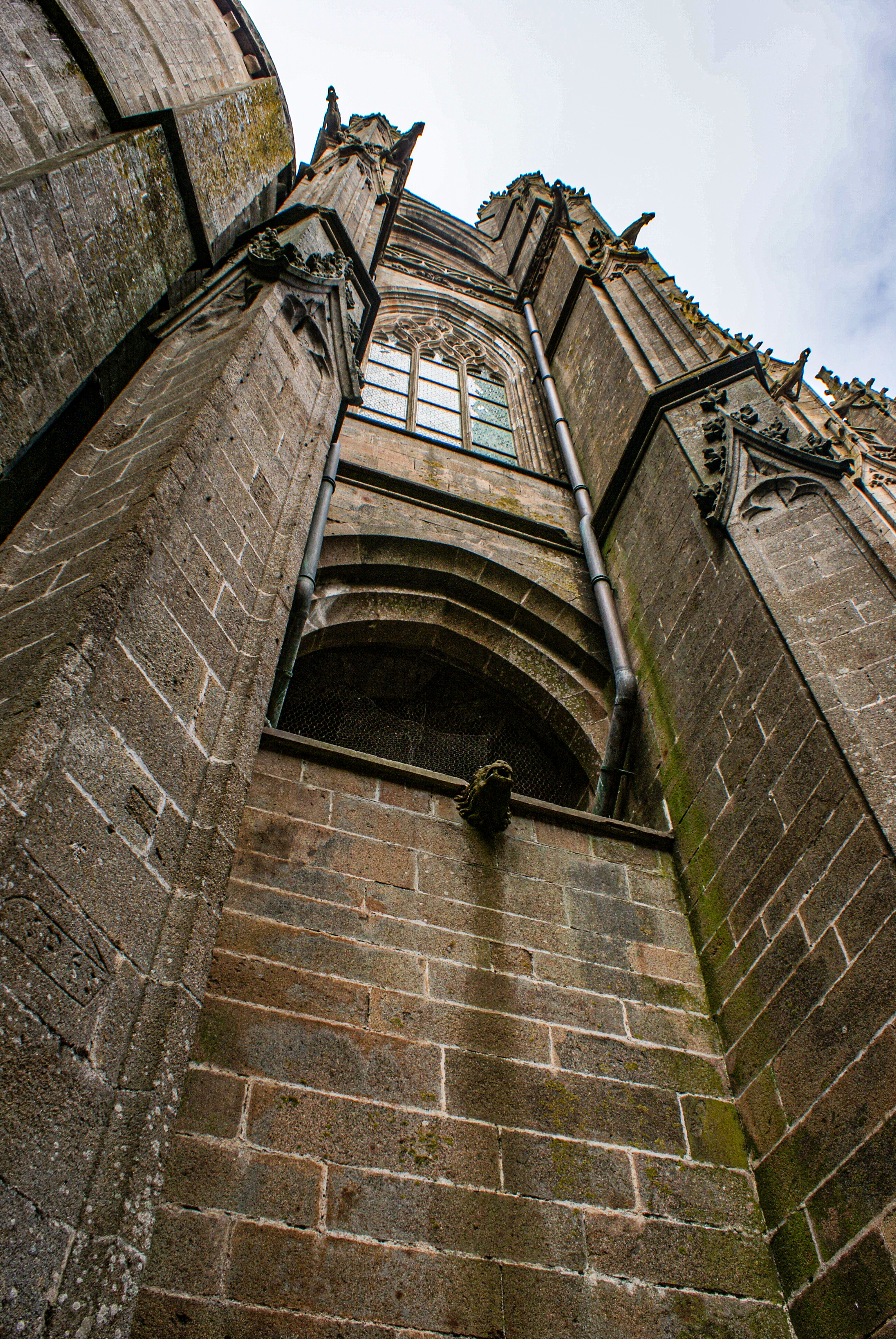
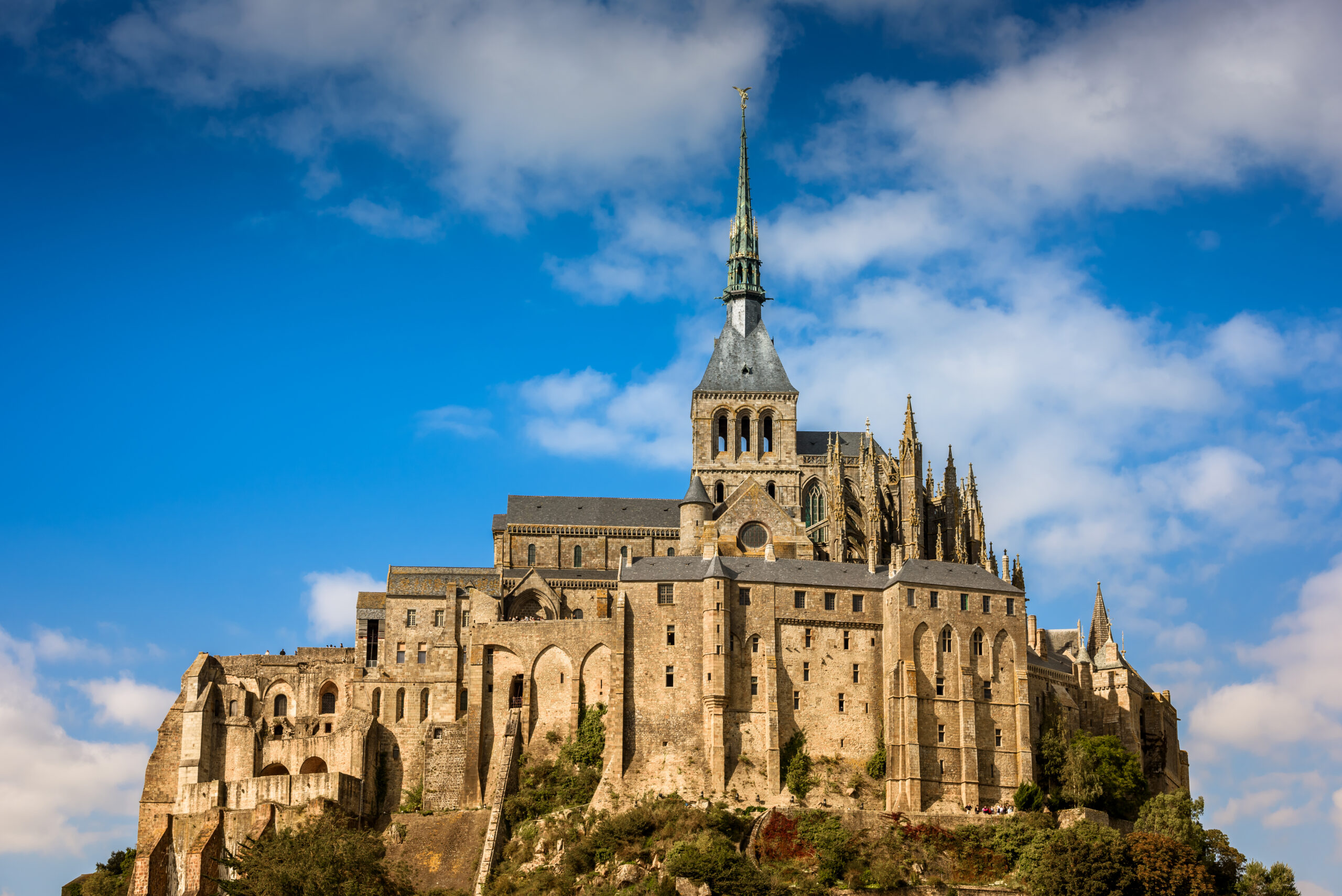
With a history as rich as the tides that wash over its rocky walls, Mont-Saint-Michel rises majestically from the waters of the bay, just one kilometer off the coast of Normandy. This small but incredible marvel attracts millions of visitors every year and offers a fascinating journey through time and legend.
The birthplace of a holy vision – According to legend, in 708, the Archangel Michael appeared to Bishop Aubert of Avranches and instructed him to build a church on the rocky island. After Aubert initially ignored the divine request, he experienced a miracle: the angel is said to have burned a hole in his skull with his finger to make his will clear. This dramatic story is symbolized by Aubert’s skull, which is now kept in the Church of St-Gervais-et-St-Protais in Avranches and is medically interpreted as a brain cyst caused by trepanation.
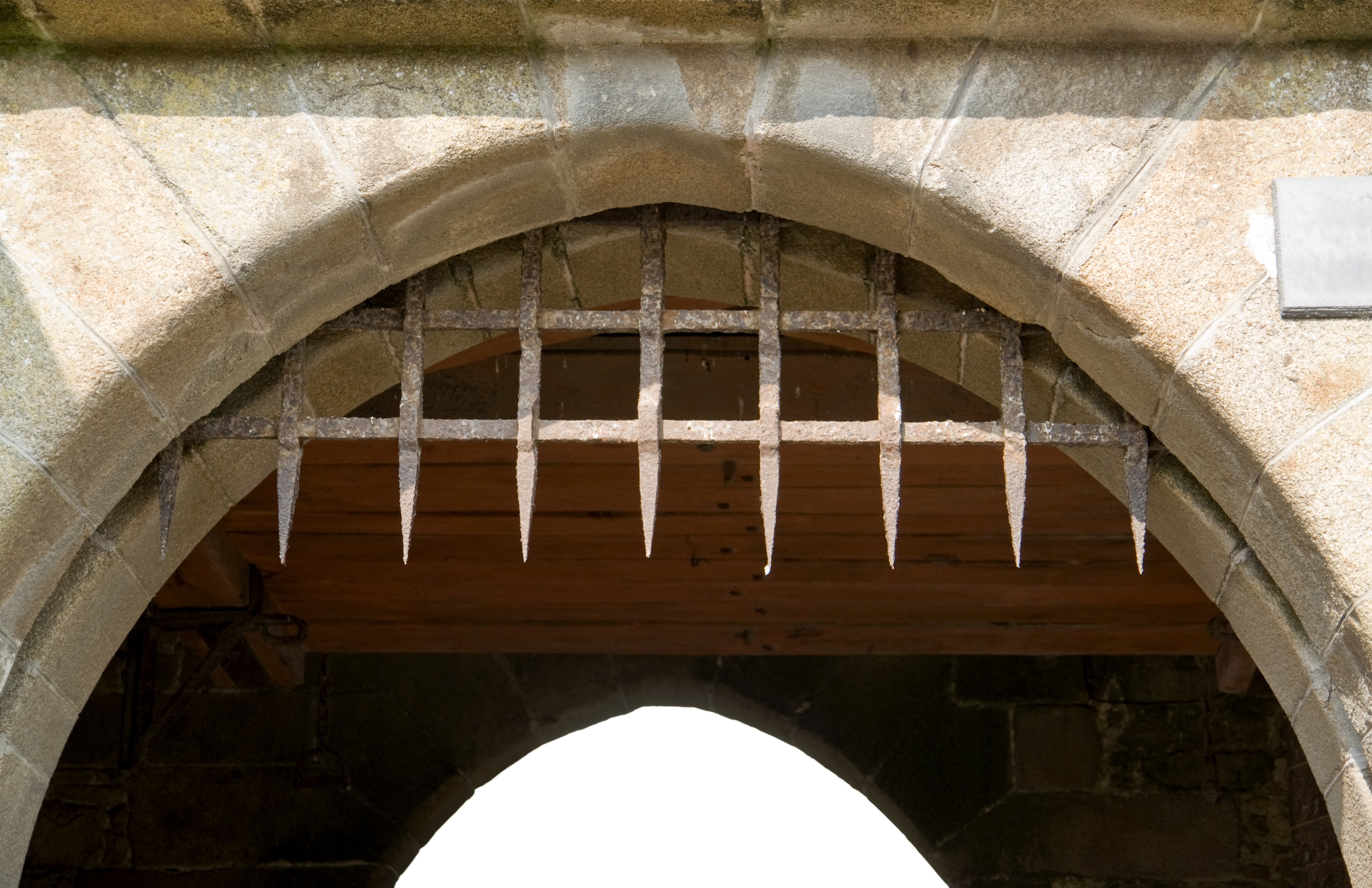
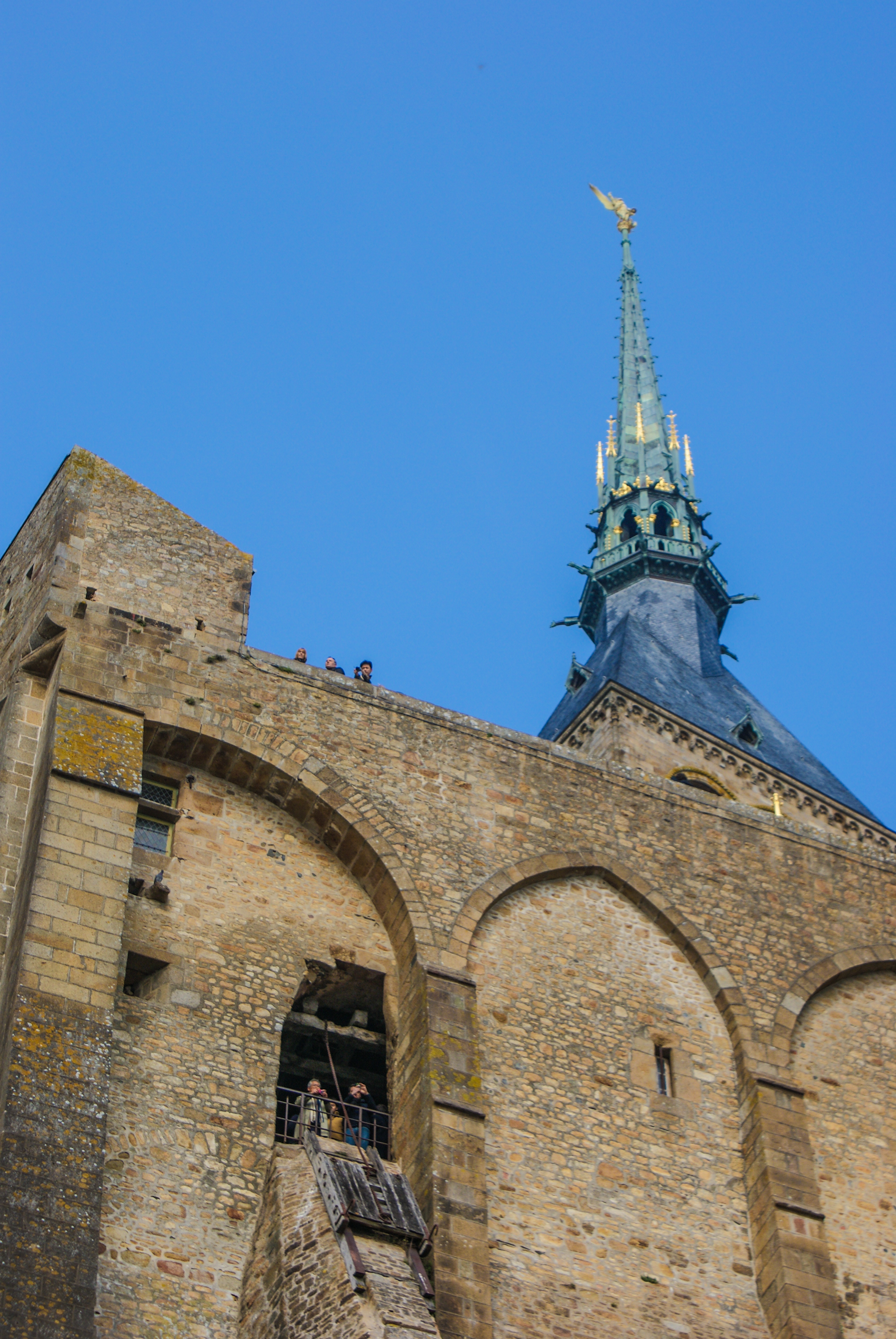
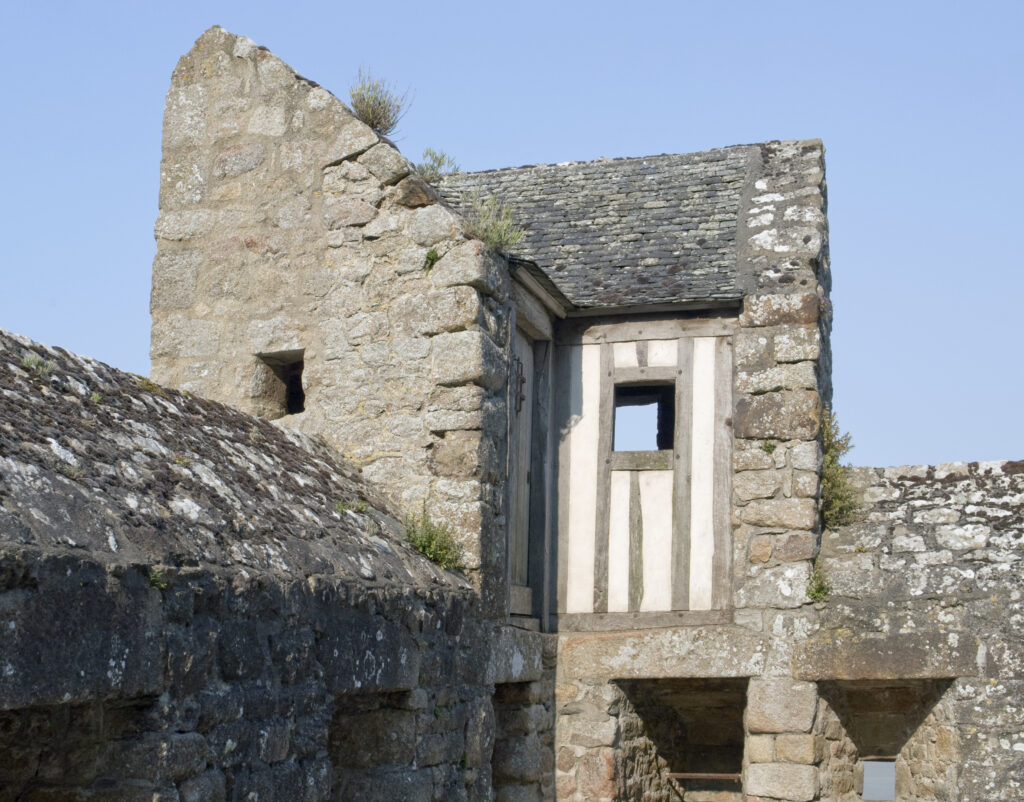
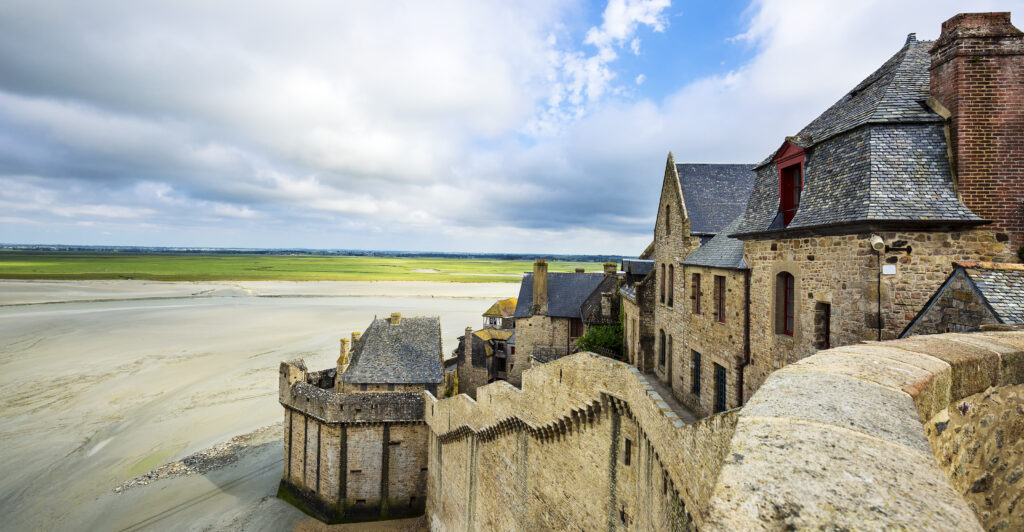
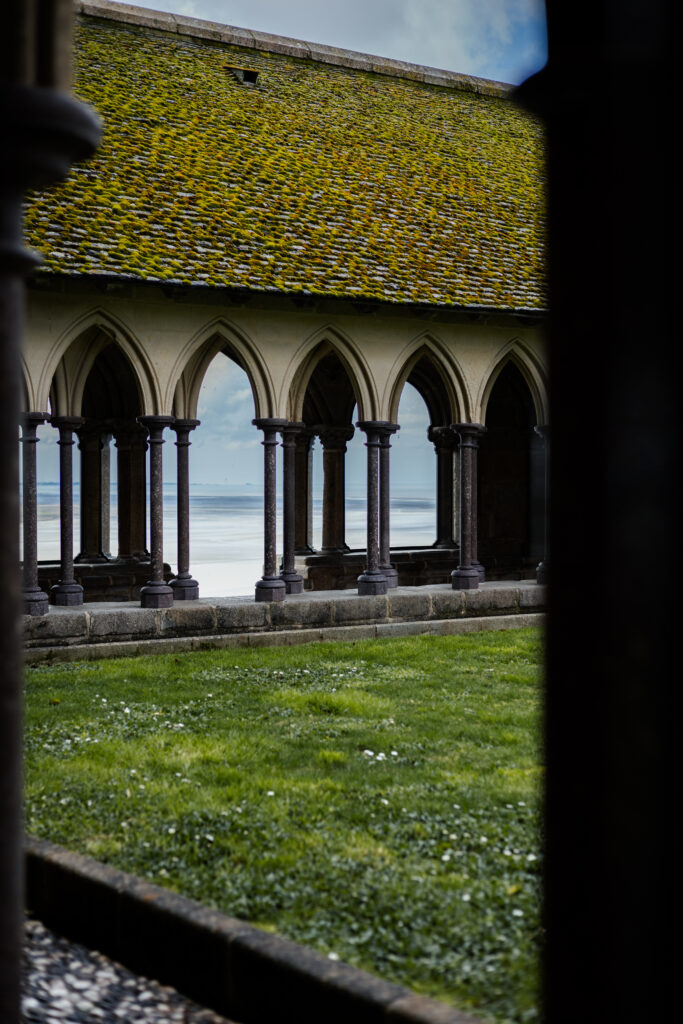
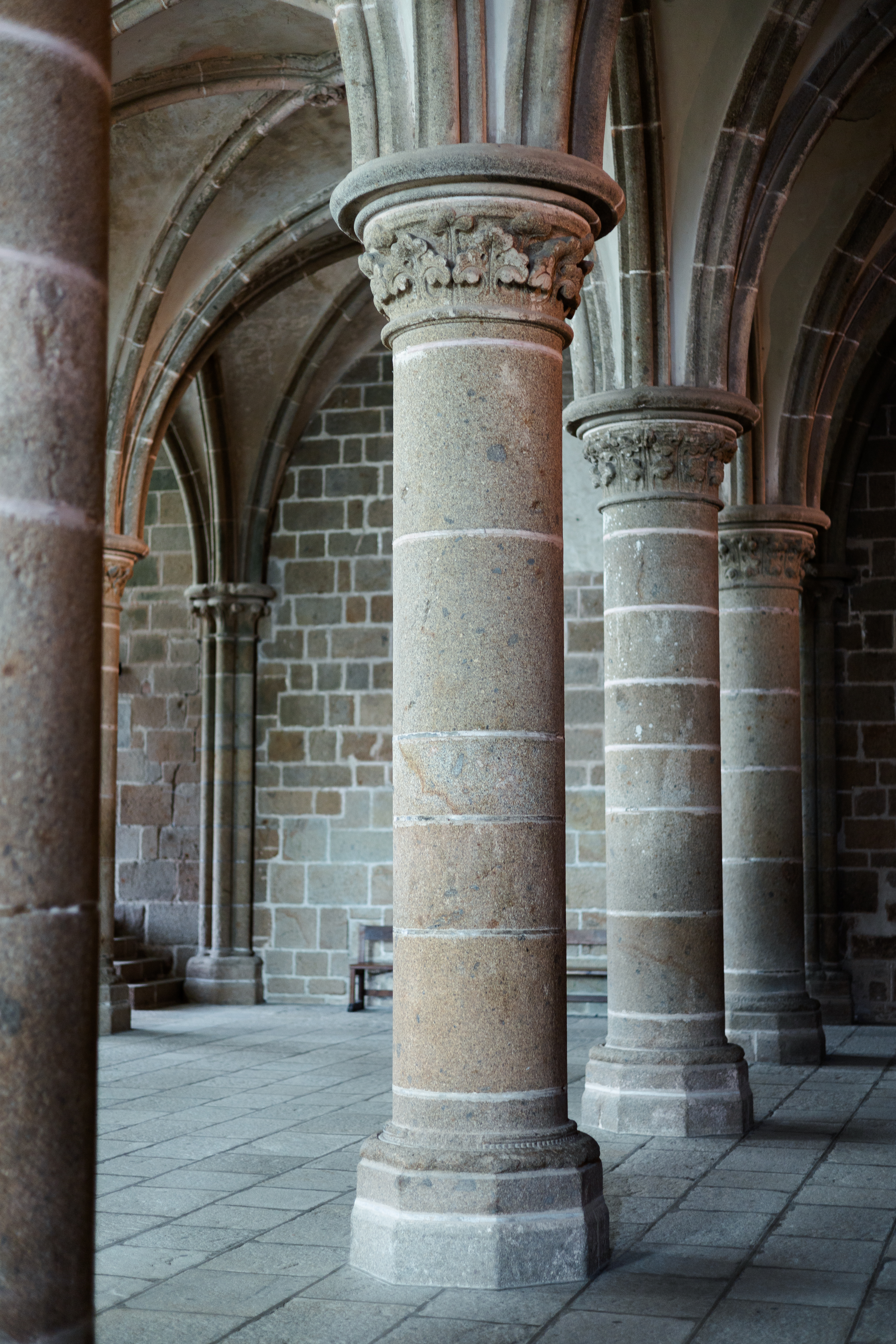
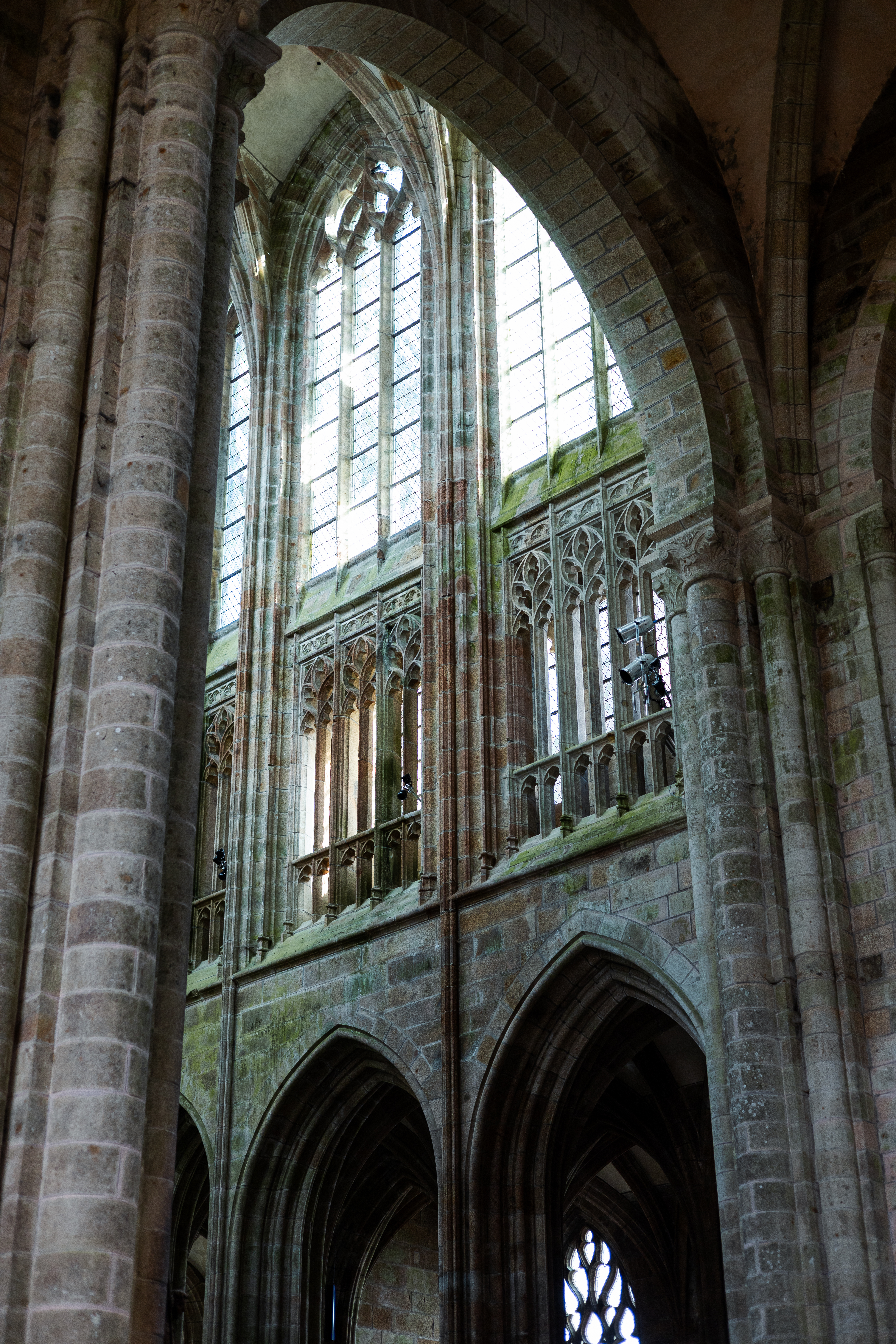
From spiritual refuge to fortress – What began as a modest religious institution was transformed over the centuries into an imposing abbey in the Norman architectural style. The Benedictine monks who brought life to the monastery from 965 onwards made the place not only a center of faith but also an important pilgrimage site. The region’s turbulent history, including constant threats from Vikings and political instability, reinforced the strategic importance of Mont-Saint-Michel. In the 13th century, French King Philippe Auguste financed the expansion of the abbey in the Gothic style, known as “La Merveille.” Despite being sealed off during the Hundred Years’ War, the fortress withstood English attacks and remained a symbol of unshakable faith and architecture.
A dark chapter: from monastery to prison – With the advent of the Reformation and the French Revolution, Mont-Saint-Michel entered a period of decline. In 1790, the Benedictines left the monastery and the abbey was converted into a notorious prison. During this dark era, which lasted until 1863, up to 18,000 prisoners were held here, turning the once glorious site into a symbol of human cruelty.
Resurrection through Romanticism – In the 19th century, artists and writers, inspired by Romanticism, rediscovered Mont-Saint-Michel. Victor Hugo, a prominent advocate for the preservation of historical monuments, played a key role in its restoration and return to former glory. In 1874, Mont Saint-Michel was officially declared a national monument, and thanks to extensive restoration work, the mountain once again rose to become a European cultural heritage site. The bridge connecting the Mont to the mainland was also restored and now serves as a modern and environmentally friendly link that takes into account the natural tidal cycles of the bay. Dietmar Feichtinger’s innovative design includes a stilt bridge that counteracts silting and makes Mont-Saint-Michel a completely isolated island once again.
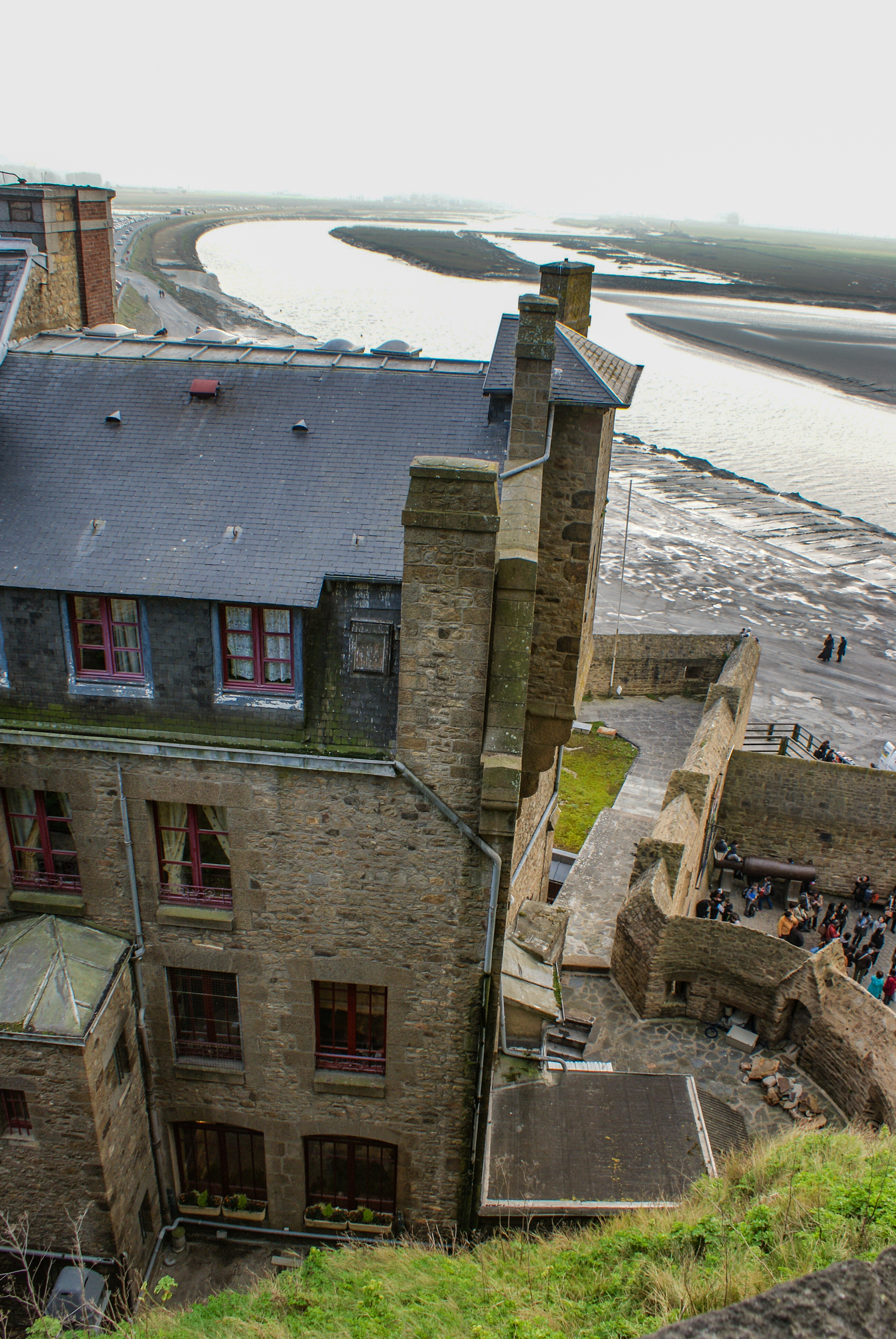
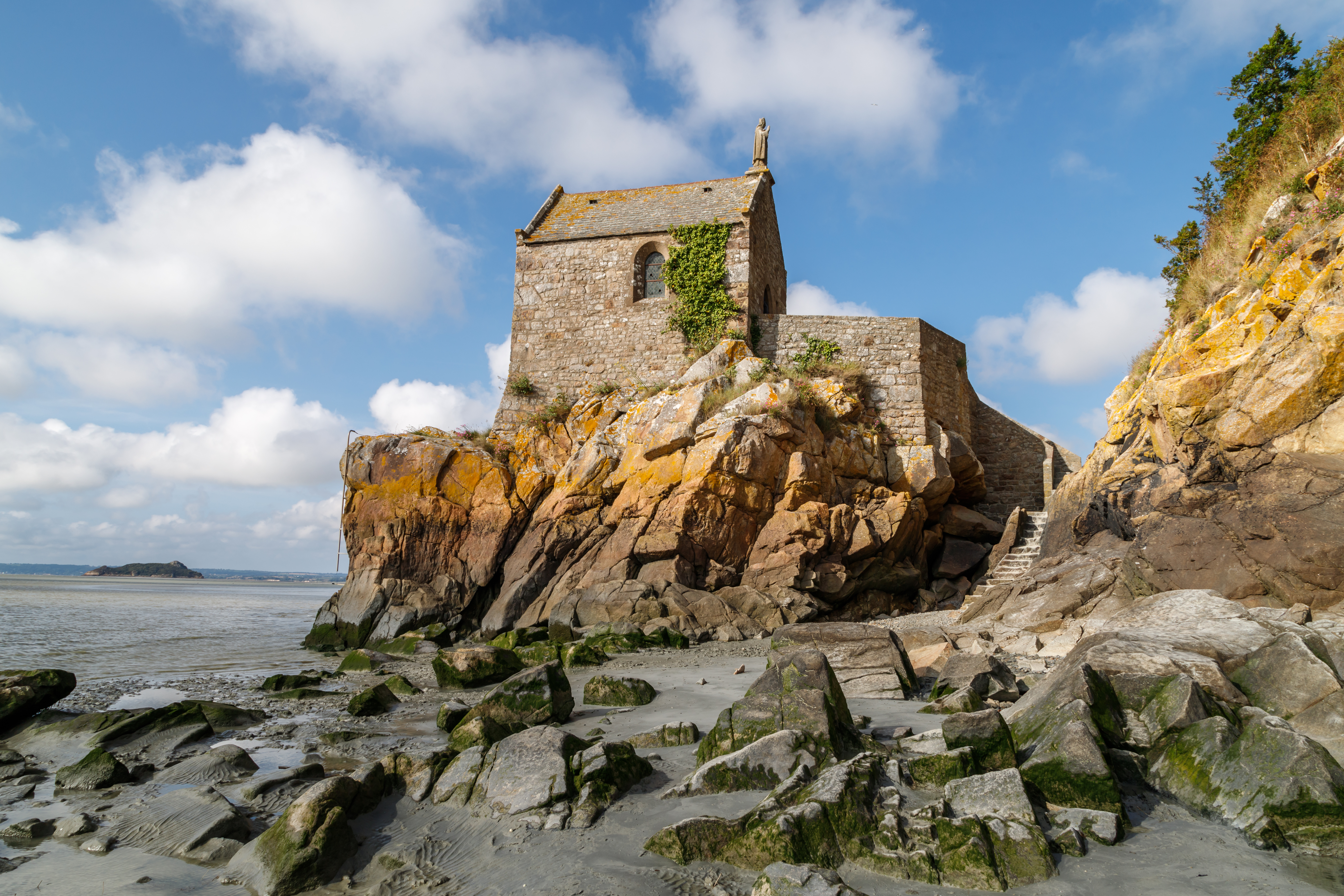
Tides of legend – Mont-Saint-Michel impresses not only with its architecture, but also with its dramatic location. The tidal forces in its surroundings are impressive, reaching differences of up to 14 meters. This force of nature inspired medieval pilgrims, who referred to the mountain as “Mont-Saint-Michel au péril de la mer,” meaning “Mont-Saint-Michel in the dangers of the sea.” Only at low tide could they venture across the dangerous mudflats, which made the place seem even more mystical. Today, guided mudflat walks are a popular way for visitors to experience the natural splendor of the bay. However, the path remains dangerous, and the services of experienced guides are essential to navigate the treacherous water currents and quicksand.
A living heritage – Despite its turbulent history, Mont-Saint-Michel is now a thriving tourist destination and spiritual center. Religious communities have been living on the mountain again since 1966, and since 2022, pilgrim services have been taken over by the Community of Saint Martin. In 2023, the village of Le Mont-Saint-Michel was added to the list of Villages Patrimoines, further cementing its status as a cultural gem. Every year, around 3.5 million visitors from all over the world flock to the Mont, fascinated by its historical complexity, architectural splendor, and breathtaking natural setting. Mont-Saint-Michel remains an incomparable example of how myth, history, and nature are intertwined, serving as a timeless reminder of the power of faith and perseverance.
Mont-Saint-Michel is more than just a destination; it is a symbol of change and constancy. From its mystical origins to its role in political power games to its cultural renaissance, this rock in the sea has inspired generations and continues to do so today. Its silhouette on the horizon reminds us that legends are not only found in old books, but also manifest themselves before our eyes if we have the courage to discover them.