The castle in Münster: a demonstration of power by the prince-bishops
November 5, 2025
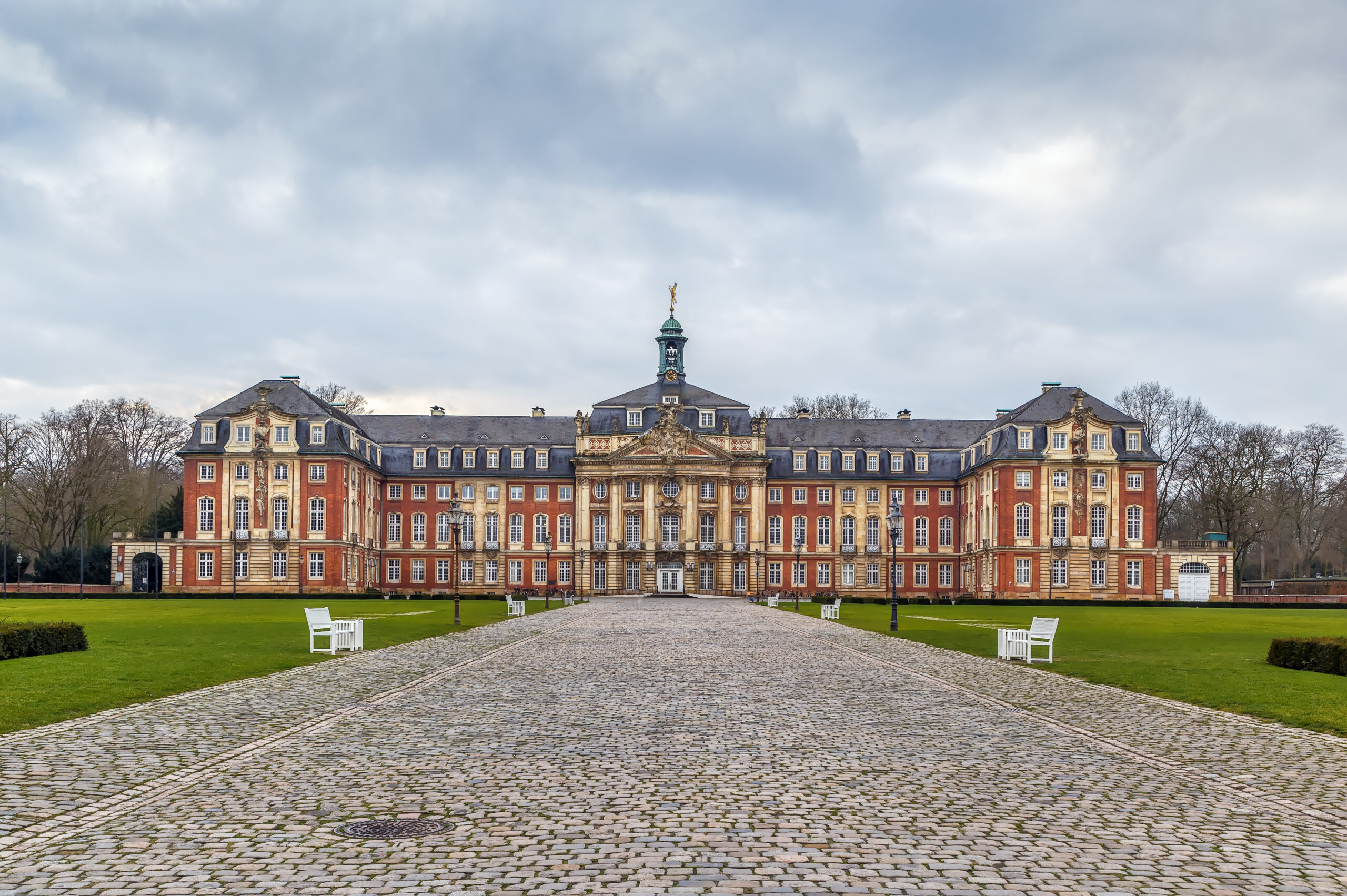
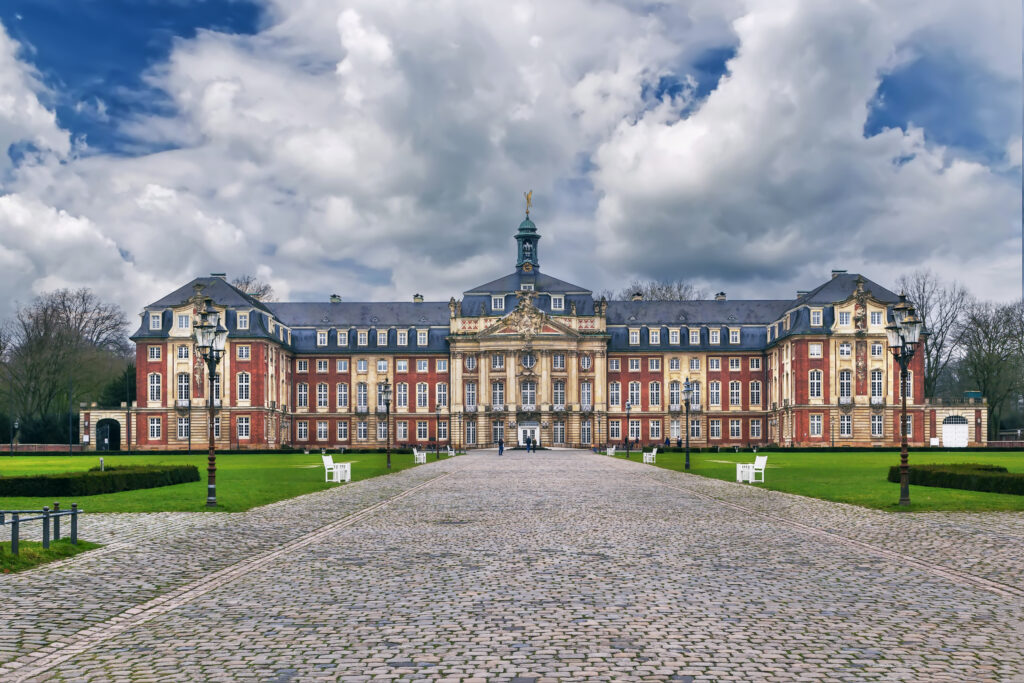
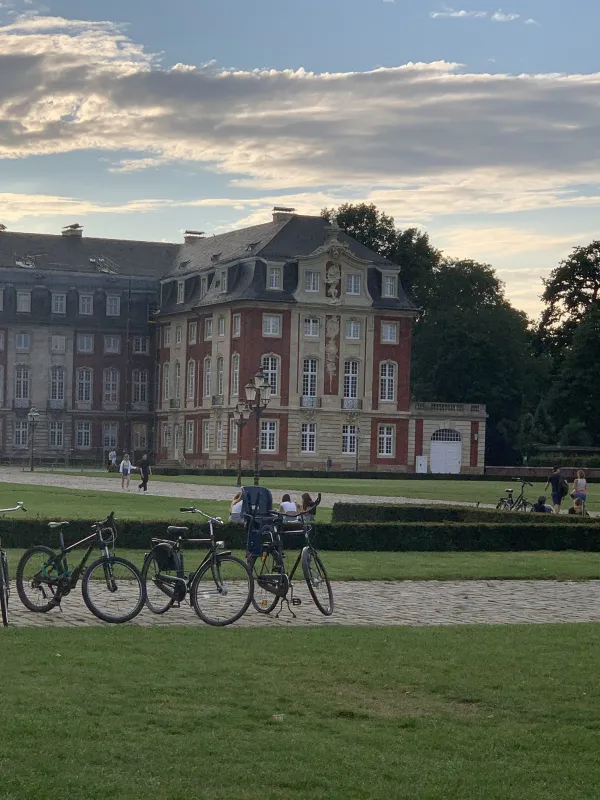
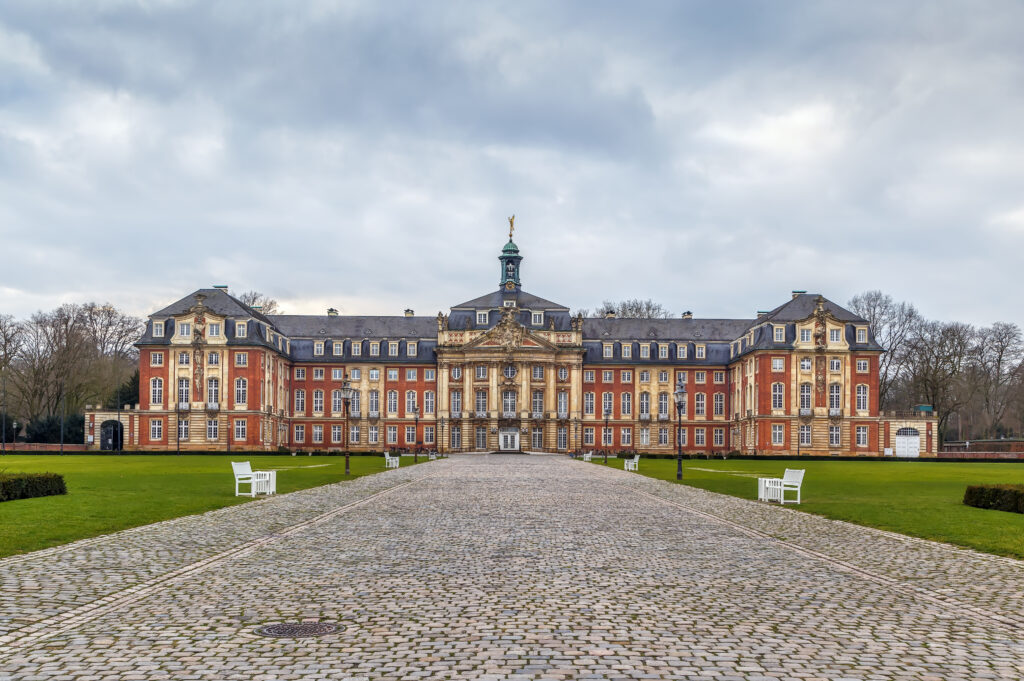
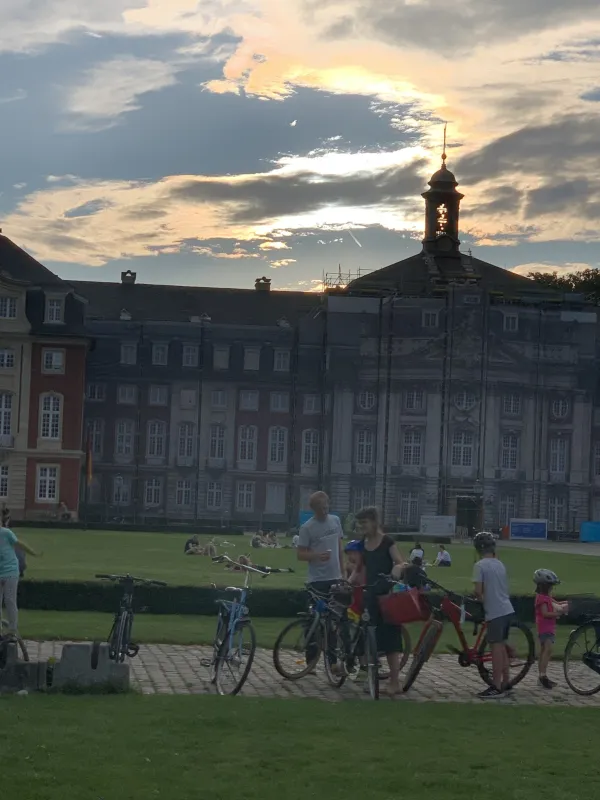
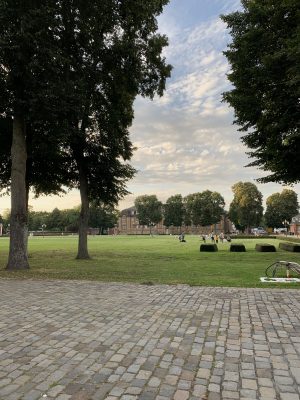
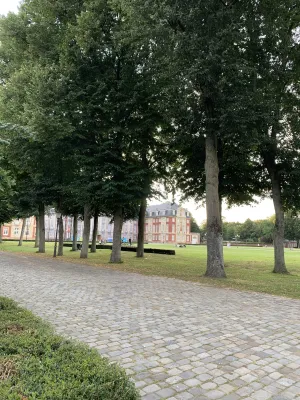
Since 1954, the landmark and seat of the University of Münster has been the Prince-Bishop’s Castle in Münster, which was built in the Baroque style from Baumberger sandstone as a three-winged complex according to the plans of Johann Conrad Schlaun on behalf of Prince-Bishop Maximilian Friedrich von Königsegg-Rothenfels. As Johann Conrad Schlaun died only a few years after the foundation stone was laid in 1767, Wilhelm Ferdinand Lipper completed the castle in 1787, whose interiors were once designed in the early classicist style. The prince-bishopric in Münster has a long tradition. It all began with the fall of Henry the Lion in 1180 and the break-up of the Duchy of Saxony, which led to the bishops of Münster becoming prince-bishops. They were thus sovereign rulers who were answerable only to the emperor and exercised both spiritual and secular power. The prince-bishopric did not come to an end until 1806 with the demise of the Holy Roman Empire of the German Nation. After the Prussians occupied the Münsterland region in 1802, the prince-bishops’ castle was occupied by the civil governor, Baron vom und zum Stein, and the military commander-in-chief, General Blücher. During World War II, it was bombed on Palm Sunday 1945 and burned down to its outer walls. Reconstruction took place from 1947 to 1953. Although the original exterior appearance was retained, the interior was altered for Wilhelms University. A total of 50,000 roof tiles, 800 tons of cement, 150 tons of lime, 1,000 square meters of glass, and 1.9 million bricks were used for the reconstruction. The cost was 2.5 million Reichsmarks. Particularly impressive is the central pavilion with its mansard roof, crowned by a bell tower with a gilded statue of Nike, the goddess of victory, as a weather vane on its lantern. The front facing the city, with its rich sculptural decoration featuring signs of the zodiac and images of the months, which correspond to a sequence of planets on the rear created by Joseph Ignatius Feill, is also fascinating. Also worth seeing are the cavalier houses that border the castle square to the promenade and the coach house built by Lipper in 1774. The former prince-bishop’s residence, with its mix of building materials—light Baumberger sandstone for the base and pilasters and red brick for the façade, known as the Westphalian symphony—built on the site of a former early Baroque citadel, is one of Münster’s sights that gave me interesting insights into the history of the city.
University of Münster is a public university located in the city of Munster, North Rhine-Westphalia in Germany.University of Münster is a public university located in the city of Munster, North Rhine-Westphalia in Germany.
Welcome to my journey through creativity and discovery!
My name is Isabella Mueller, and I invite you to explore the fascinating creative universes I create through my blogs. Since 2020, I have been dedicating my passion to telling captivating stories that are mysterious, historical, and emotional. My goal is not only to entertain, but also to inspire reflection and awaken the spirit of discovery in each of us.
At isabellas.blog, the suspense of crime stories is combined with exciting travel tips. Imagine wandering through the picturesque streets of a new city, uncovering dark secrets hidden in the shadows of its history. Every piece on my blog is designed to make the heart of every crime fiction fan beat faster while sparking curiosity about unknown places. Here, you are invited to experience the thrill of the unknown and the beauty of our world—a perfect combination for all adventure seekers!
My second blog, akteq.com, is all about true, unsolved crime stories. Under the motto “akteQ: Cold Case Stories,” I reveal the eerie and often tragic stories behind unsolved cases. Together, we can explore the mysteries of the past and delve deep into the human psyche. What really happened? Who were the people behind these mysterious events? In this blog, I invite you to ask questions and find the answers that often remain hidden in the dark.
You can find another exciting chapter in my blogging career at thecastles.org. Here, I embark on an enchanting journey through the history of castles and palaces. Pause for a moment as you discover the stories hidden within the walls of these ancient structures. “Explore the enchantment, discover the history – your journey begins at thecastles.org!” These words are more than just a slogan; they are an invitation to anyone who wants to combine history and magic. Be inspired by the impressive stories and the fascination of bygone eras!
But that's not all! At kripo.org, you'll find a comprehensive online magazine for real criminal cases. Immerse yourself in the world of crime, learn about the real stories behind the headlines and the people who are involved in solving them.
With criminal.energy, I take you on a journey through the gripping stories of true crimes in which villains are hunted, caught, and convicted. The search for justice and the confrontation with the unknown are at the center of it all.
TrueCrime Blog 187.news takes you into the depths of crime. And for those who want to travel the world, wanderlust.plus offers the opportunity to explore the world, one adventure at a time. It's all about the love of exploration and the joy of discovering new cultures and landscapes.
Finally, truecrime.ch invites you to discover the dark side of Switzerland and Europe: true crimes, true stories.
Let's discover together the stories that shape the world around us. I look forward to accompanying you on this exciting journey and hope you will share many unforgettable moments with me!
We use cookies to ensure that we give you the best experience on our website. If you continue to use this site we will assume that you are happy with it.