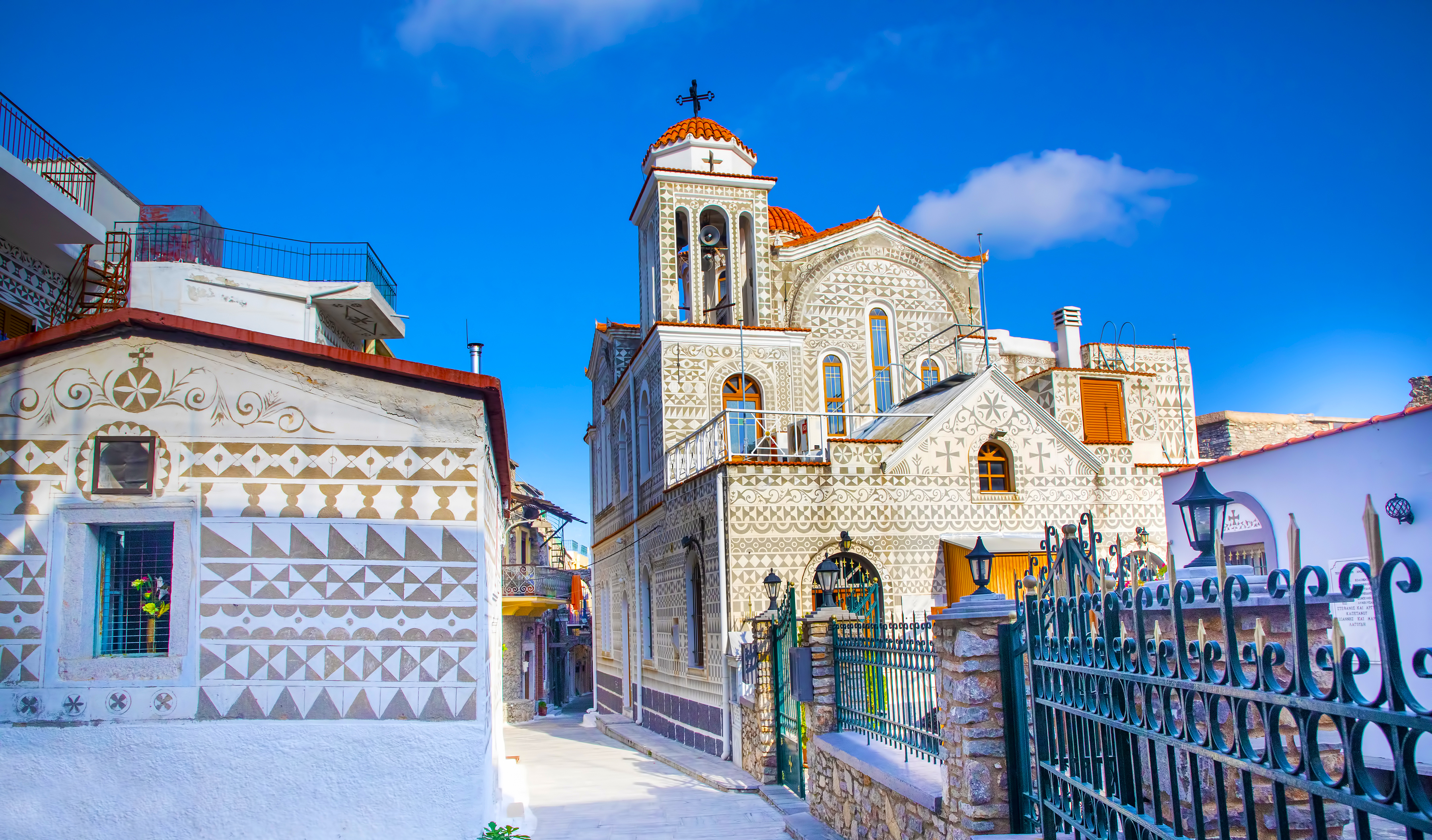
Nestled on the picturesque island of Chios in Greece, the village of Pyrgi is a testament to history, culture, and architectural mastery. Famous for its intricately decorated facades, Pyrgi offers a fascinating glimpse into a bygone era and captures the imagination of locals and visitors alike.
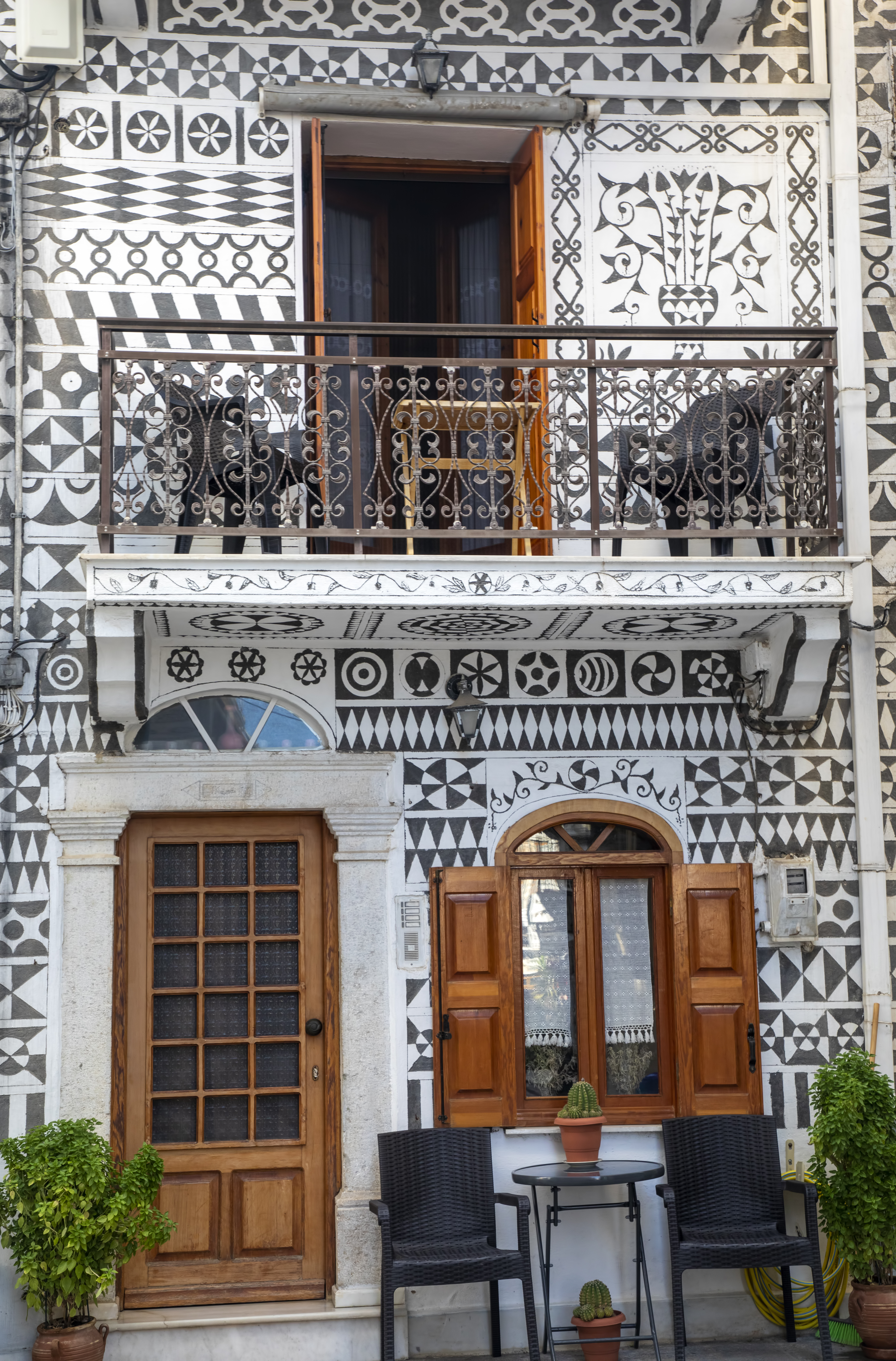
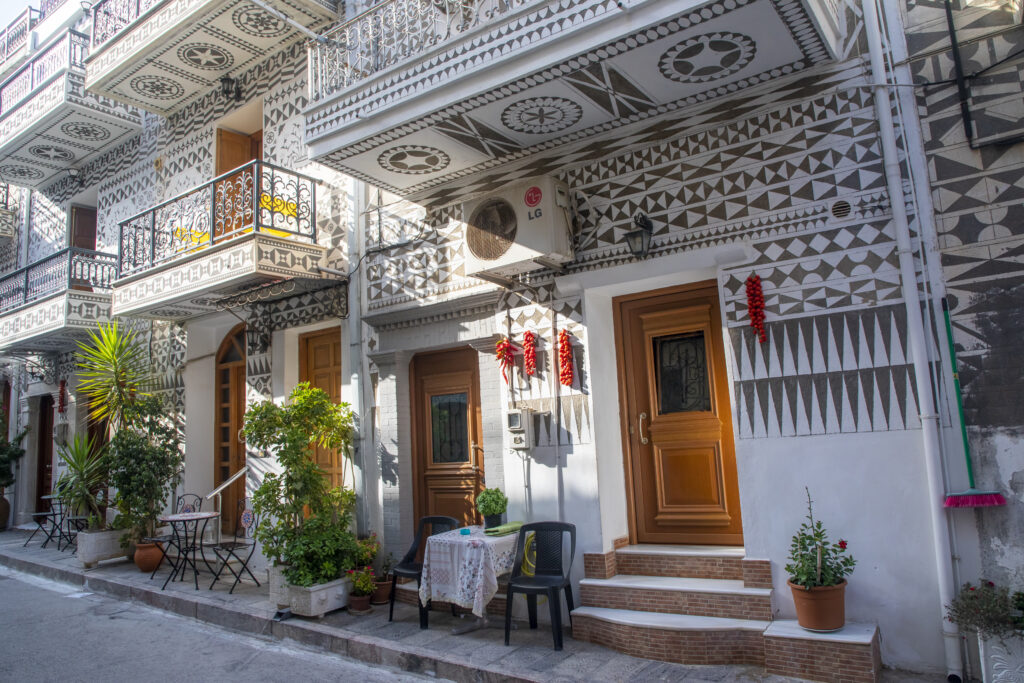
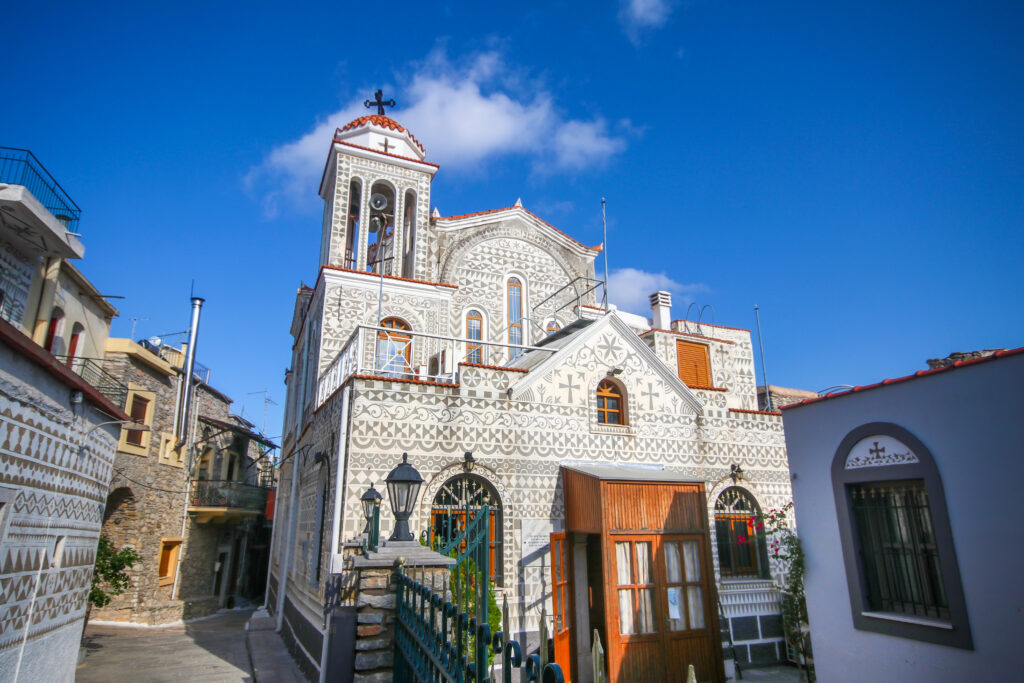
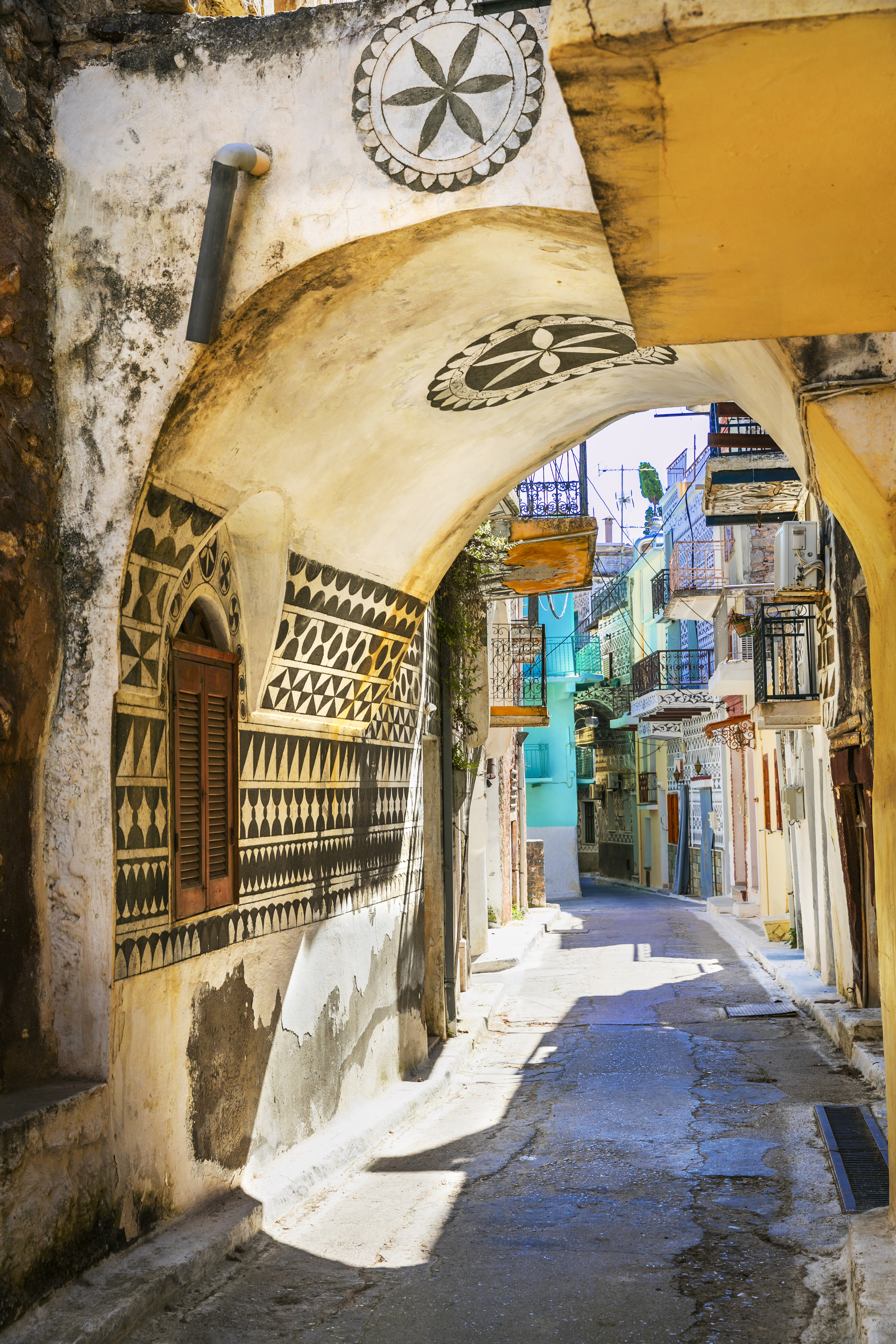
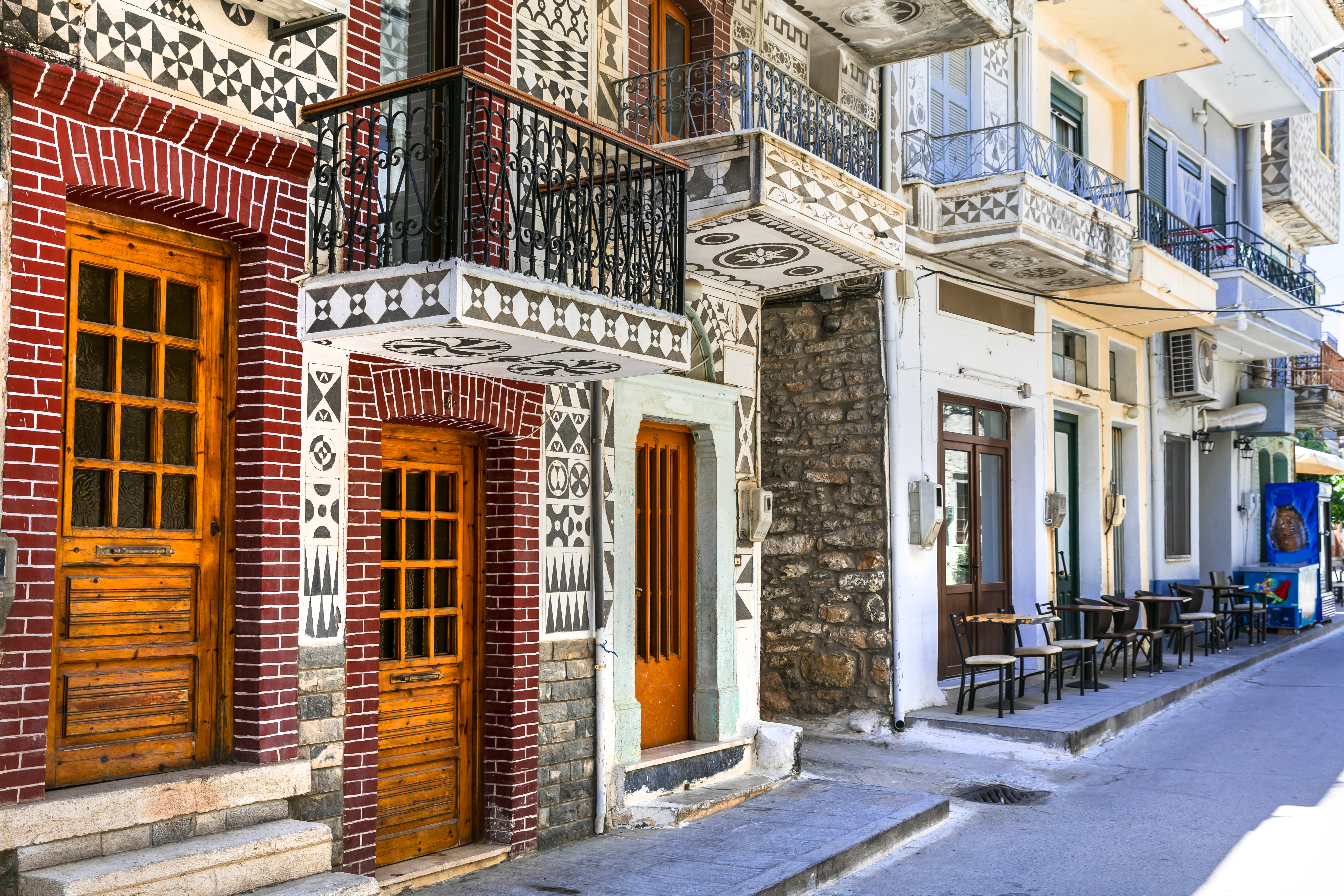
A visual symphony: The art of Xysta – Pyrgi is undoubtedly known for its stunning black and white geometric patterns, known as “Xysta.” These fascinating patterns adorn the facades of the houses, creating a visual spectacle that can be compared to an open-air gallery. The Xysta technique involves scraping away a layer of plaster to reveal intricate motifs underneath—a laborious process that has been passed down through generations. The resulting designs are as diverse as they are beautiful, with each house telling its own unique story through the language of geometry.
These ornate decorations are more than just aesthetic choices; they have deep cultural significance. The patterns often feature symbolic elements such as crosses, triangles, and stars, which are believed to offer protection from evil spirits. This belief in the protective power of art dates back to ancient traditions and links the physical beauty of the village to its spiritual essence.
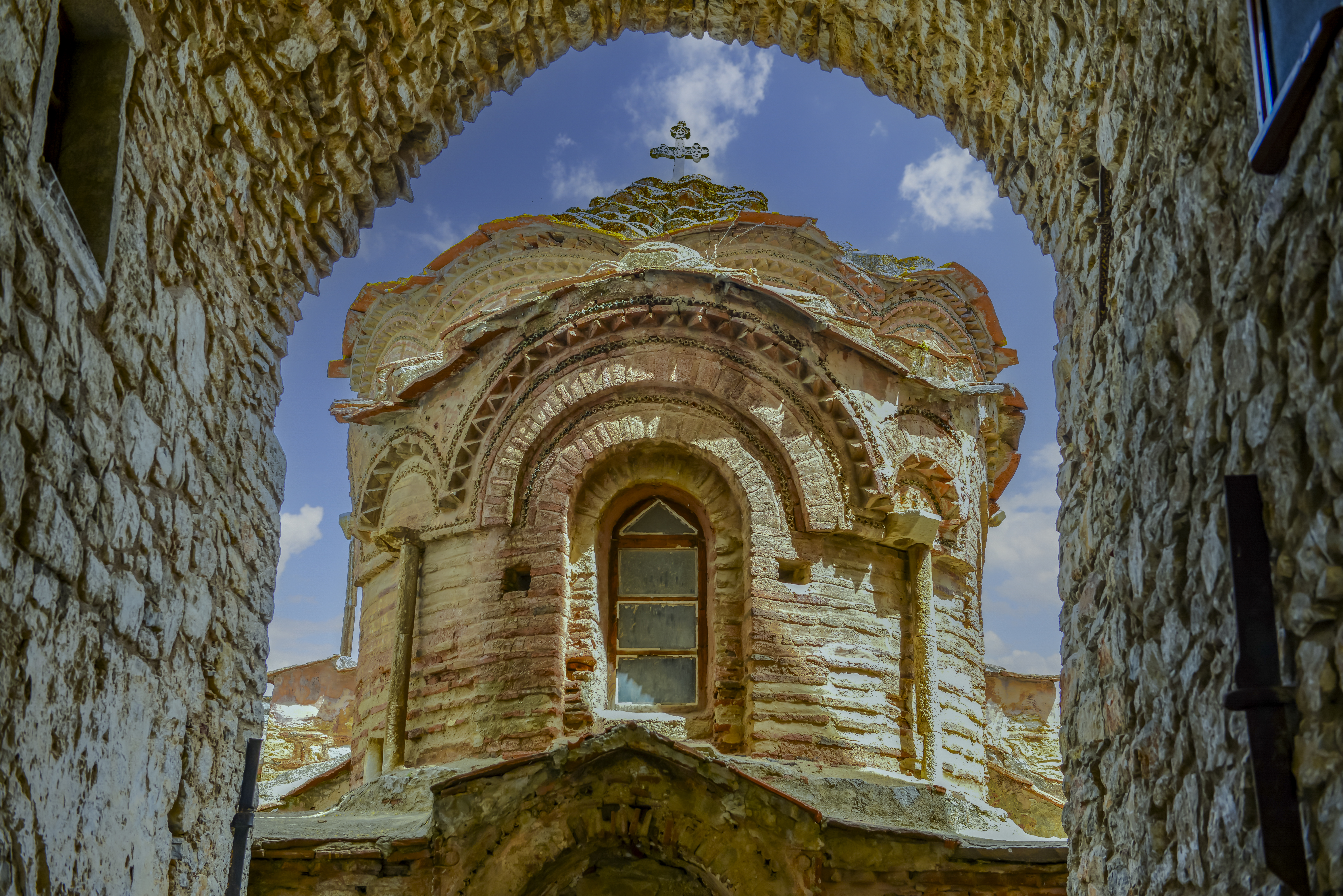
A living history: roots deep in antiquity – While the Xysta facades immediately catch the eye, Pyrgi’s history goes much deeper. The village dates back at least to the Middle Ages, when it was a bustling center of trade and commerce. There is evidence that Pyrgi was an important outpost during the Byzantine era, contributing to its rich historical diversity.
But Pyrgi’s roots go back even further into antiquity. According to legend, the village was once a sanctuary dedicated to the goddess Hera. The ancient ruins scattered throughout the region support these narratives and suggest that Pyrgi was a place of worship and reverence long before it took on its present form.
Legends and traditions: The mythical story – The legends surrounding Pyrgi are as vivid as its facades. One particularly captivating tale says that the village was the birthplace of the mythical hero Jason, leader of the Argonauts. According to local tradition, Jason began his epic quest for the Golden Fleece on the shores of Chios, giving Pyrgi a mythical stature.
Another fascinating legend tells of a hidden treasure buried beneath the village, guarded by spirits who protect it from discovery. These stories have been passed down through generations, blending history with myth and lending the village a mysterious aura.
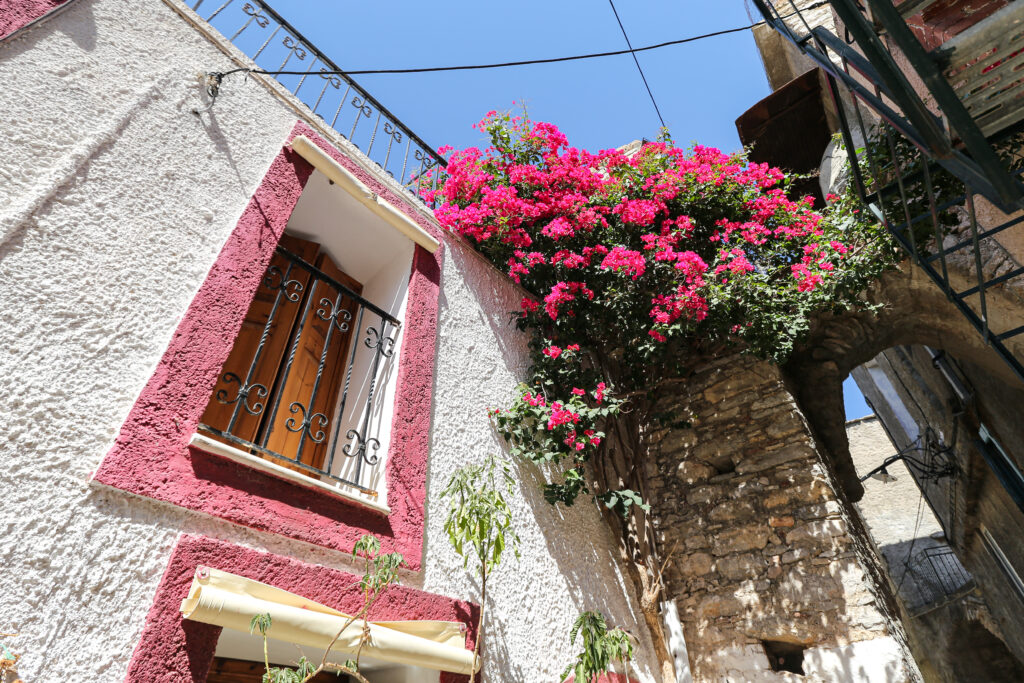
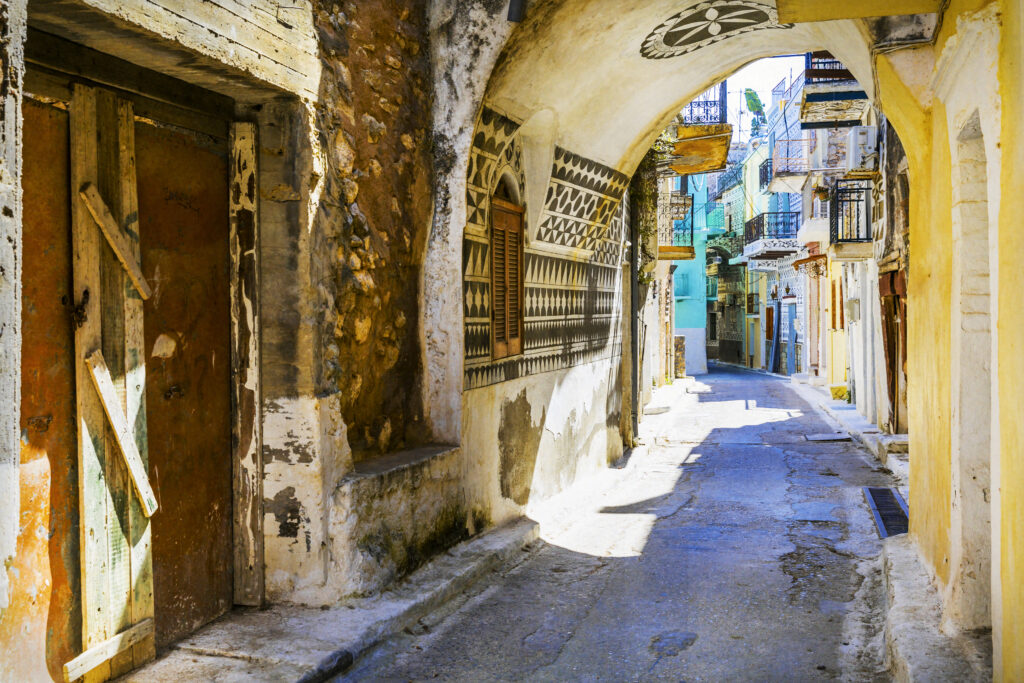
Architectural wonders: Beyond the Xysta – While the Xysta facades are the most striking feature, Pyrgi’s architecture offers other attractions. The village’s layout is a labyrinthine maze of narrow streets and alleys, which served to confuse and deter intruders. This defensive strategy provides insight into the region’s turbulent history, in which piracy and warfare were a constant threat.
Many of the houses feature fortified towers, another indication of the need to defend the village. These towers served as lookout points and places of refuge in times of attack and are a testament to the ingenuity and resilience of the inhabitants of Pyrgi.
Cultural festivals: A celebration of life – Pyrgi is not just a static relic of the past, but a thriving community that passionately celebrates its heritage. The village hosts numerous festivals throughout the year, each offering a vibrant insight into local traditions and customs. The most notable of these is the festival in honor of Saint George. This multi-day celebration of music, dance, and feasting transforms the village into a lively carnival of color and sound.
Another significant event is the Mastichochoria Festival, which celebrates the mastic tree, a species native to Chios that is of great importance to the local economy.
The festival includes demonstrations of the mastic harvest, culinary presentations, and traditional crafts, offering a comprehensive insight into the agricultural practices that have shaped the village for centuries.
The quest for knowledge: modern explorations – In recent years, Pyrgi has attracted the attention of scientists and researchers from all over the world. Archaeological excavations have unearthed artifacts that shed light on the village’s ancient past, while ethnographic studies have documented its unique cultural practices. These academic endeavors have only added to the fascination surrounding Pyrgi and confirmed its status as a living museum where history, art, and life converge.
One such discovery is a collection of ancient manuscripts found in a hidden niche in one of the village’s old churches. Written in both Greek and Latin, these texts include religious hymns, medical treatises, and even recipes, offering a rare glimpse into the daily lives of Pyrgi’s medieval inhabitants.
Embracing the future: a united community – Despite its ancient origins, Pyrgi is a village of the present. Modern amenities coexist harmoniously with historical landmarks, creating a unique blend of old and new. The local community is actively committed to preserving its heritage while embracing technological advances and a contemporary lifestyle.
Efforts to restore and preserve the Xysta facades are supported by both government initiatives and private donations, ensuring that future generations will also be able to admire their beauty. There are also educational programs that teach young craftsmen the Xysta technique, building a bridge between tradition and modernity.
The magnetic attraction: Pyrgi beckons – The appeal of Pyrgi is manifold: it is a place where history meets legend, art meets life, and the past meets the present. Its mysterious charm attracts visitors from all over the world, all eager to unravel its secrets and revel in its beauty.
Whether you are an artist seeking inspiration, a historian delving into the past, or a traveler in search of wonder, Pyrgi has something to offer everyone. It is a monument to human creativity, resilience, and the timeless search for meaning.
Ultimately, Pyrgi is not just a village, but a living, breathing tapestry of stories waiting to be told. Its streets whisper secrets, its facades sing ancient songs, and its inhabitants carry on the legacy of a place where myth and reality intertwine. So come to Pyrgi and lose yourself in this place where every corner holds a piece of history and every moment is a journey through time.
In Pyrgi, the past is never far away; it is engraved in every stone, every alleyway, and every heart, ready to be rediscovered by those who walk its historic paths.