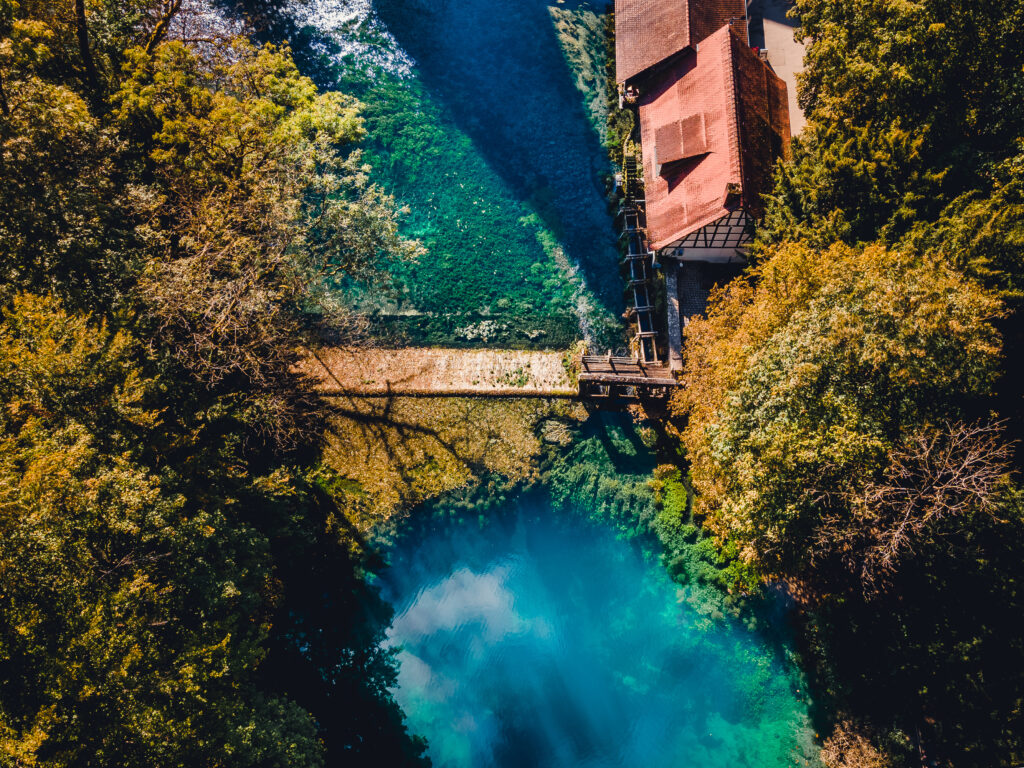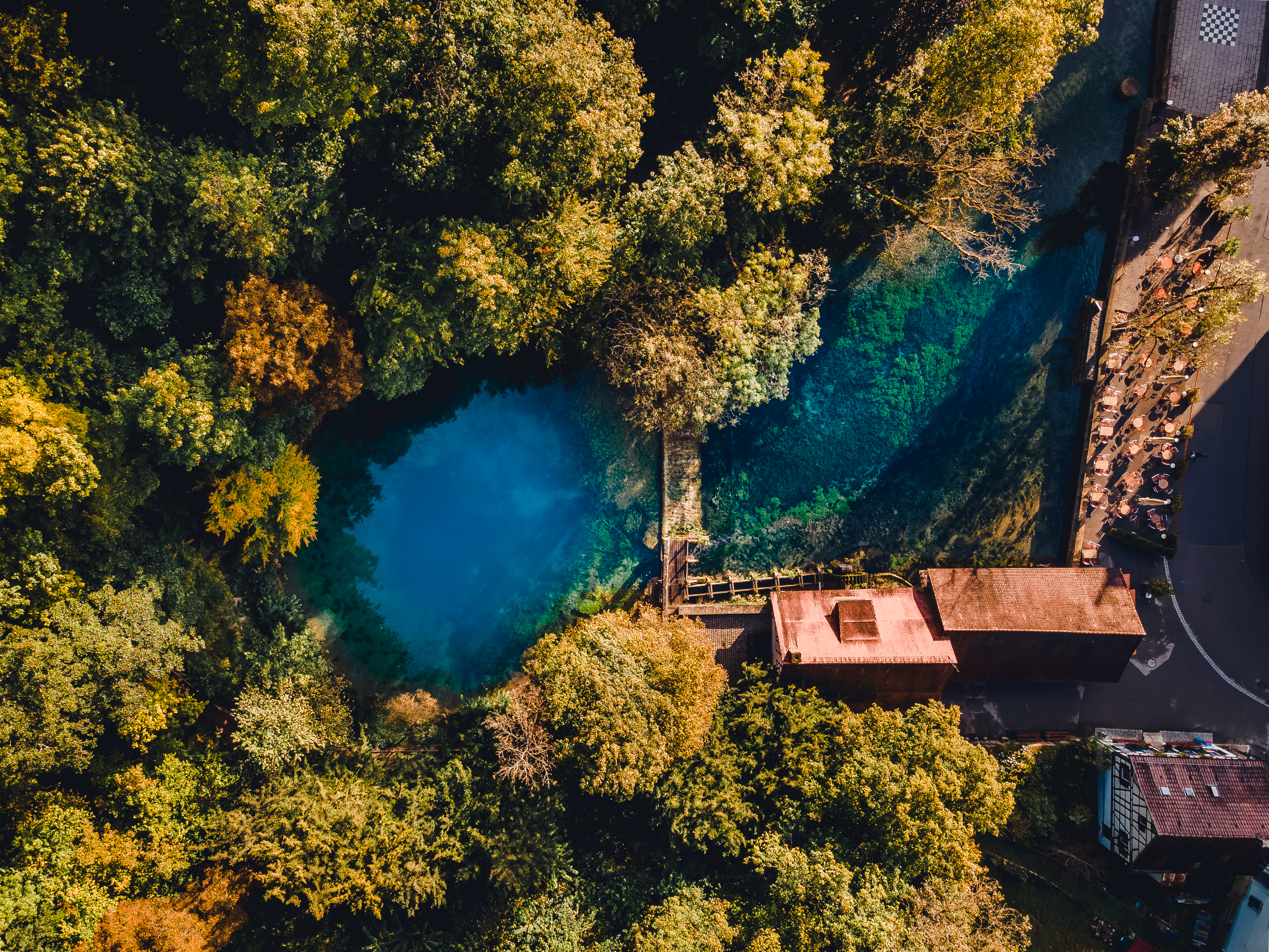
The mysterious “Blue Pot” fascinates not only geologists, but also tourists, myth lovers, and historians alike. It is not only a breathtaking natural monument, but also full of secrets, legends, and scientific curiosity. The Blue Pot is located on the eastern edge of the Swabian Alb in southern Germany, near the town of Blaubeuren, and is the source of the Blau River, which eventually flows into the Danube. However, what really sets this spring apart is its fascinating blue color and the countless secrets that lie beneath its surface.
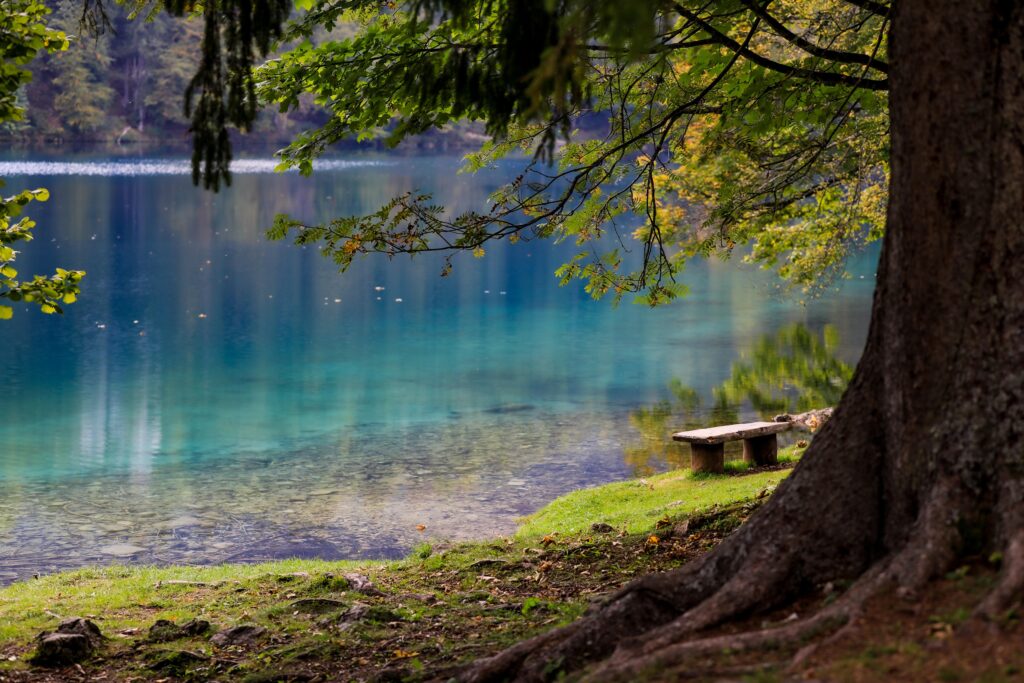
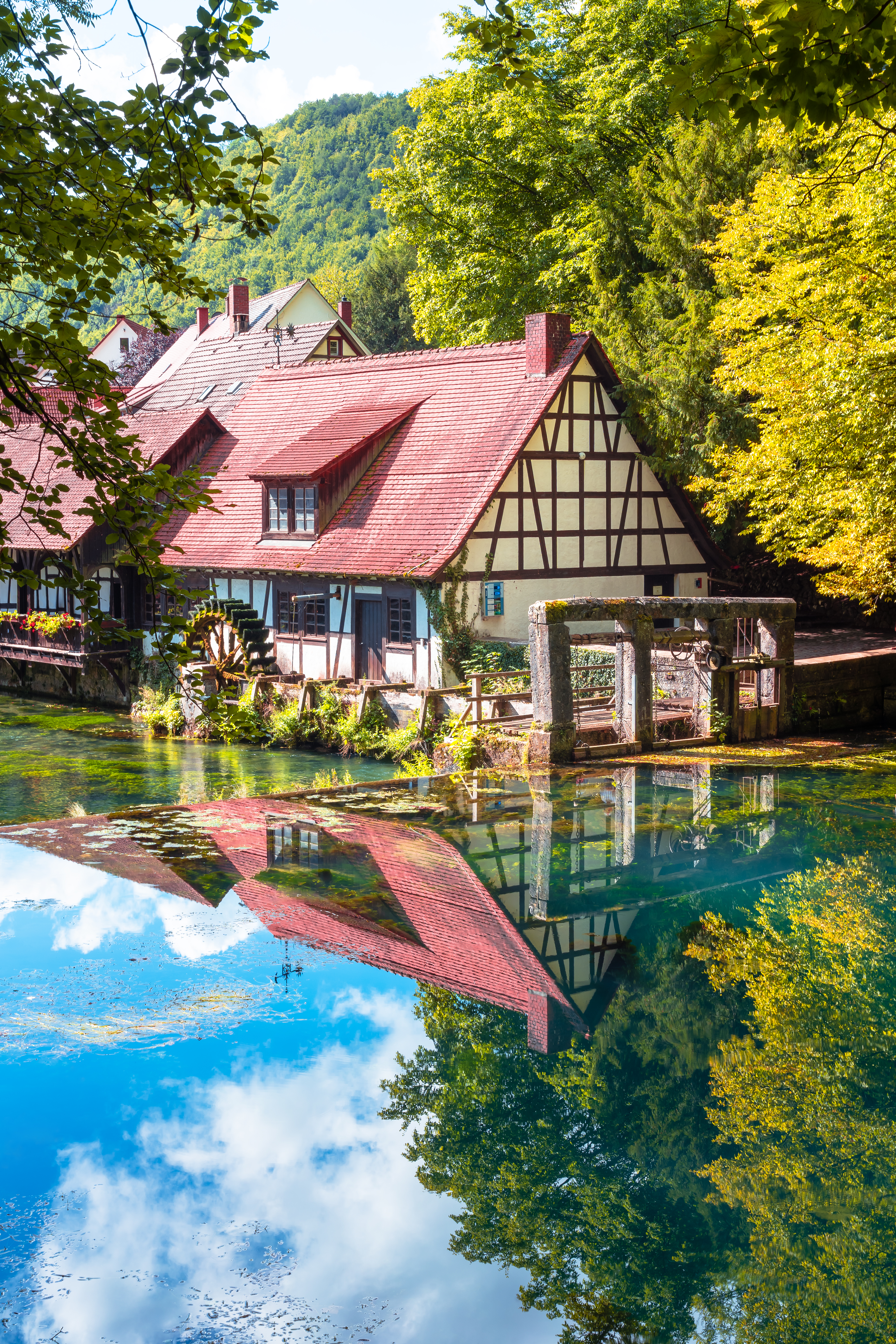
The amazing natural phenomenon – The bright blue color of the Blautopf is a spectacle that is influenced by different lighting conditions. This kaleidoscope of blue tones ranges from an ethereal turquoise to a deep cobalt blue. The spring owes its characteristic color to the clarity of its water and its depth, which causes the absorption of the red end of the light spectrum—an interplay of physics and natural beauty.
With a diameter of about 40 meters at the surface and a depth of about 21 meters, this bell-shaped pool was created by thousands of years of water erosion. It is Germany’s second-largest karst spring, with a water discharge rate that varies between just 250 liters per second during dry periods and an astonishing 32,670 liters per second during heavy rainfall.
The labyrinth below: Blue Cave and Vetter Cave – The Blautopf is not only captivating for its above-ground attractions, but is also the gateway to a vast underground realm. The Blue Cave cave system, which also includes the Blautopf Cave and the Vetter Cave, extends deep beneath the Swabian Alps and requires thorough exploration. For decades, cave divers with sophisticated equipment have ventured into these depths and discovered new chambers and passages.
In September 2006, cave explorers Jochen Malmann and Andreas Kücha discovered the Apocalypse, a huge dry chamber within the Blue Cave.
Measuring 170 meters long and 50 meters wide and high, this discovery offered an unprecedented insight into the size and complexity of the cave network. Such discoveries underscore the potential for even more hidden wonders awaiting future explorers.
Human interactions: triumphs and tragedies – Human interaction with the Blue Cave is as steeped in history as the natural history itself. The first documented helmet diver explored its depths in 1880, and since then, numerous expeditions have attempted to map its waters. However, the pursuit of knowledge was not without danger. Several tragic accidents involving amateur divers led to strict regulations that now only allow highly qualified cave divers with special permits to dive.
The last fatal accident occurred in 2003, when a member of researcher Jochen Hasenmayer’s team sadly lost his life. These tragedies underscore the perils of exploration and the respect that such endeavors require.
Legends and traditions: The enchanted water – Legends surround the Blautopf with an aura of enchantment. One of the best known is the story of the Beautiful Lau, a beautiful mermaid who was banished to the Blautopf by her husband, the Danube merman, because she could not laugh and only bore him stillborn children. She was doomed to remain there until she laughed five times, which she finally managed to do with the help of a local innkeeper, allowing her to give birth to a living child and regain her freedom.
Another bizarre belief was that the blue color came from the daily disposal of a barrel of ink into the spring. Local folklore also considered the Blautopf to be bottomless, which was further perpetuated by stories of weights used to measure its depth being stolen by a mischievous mermaid.
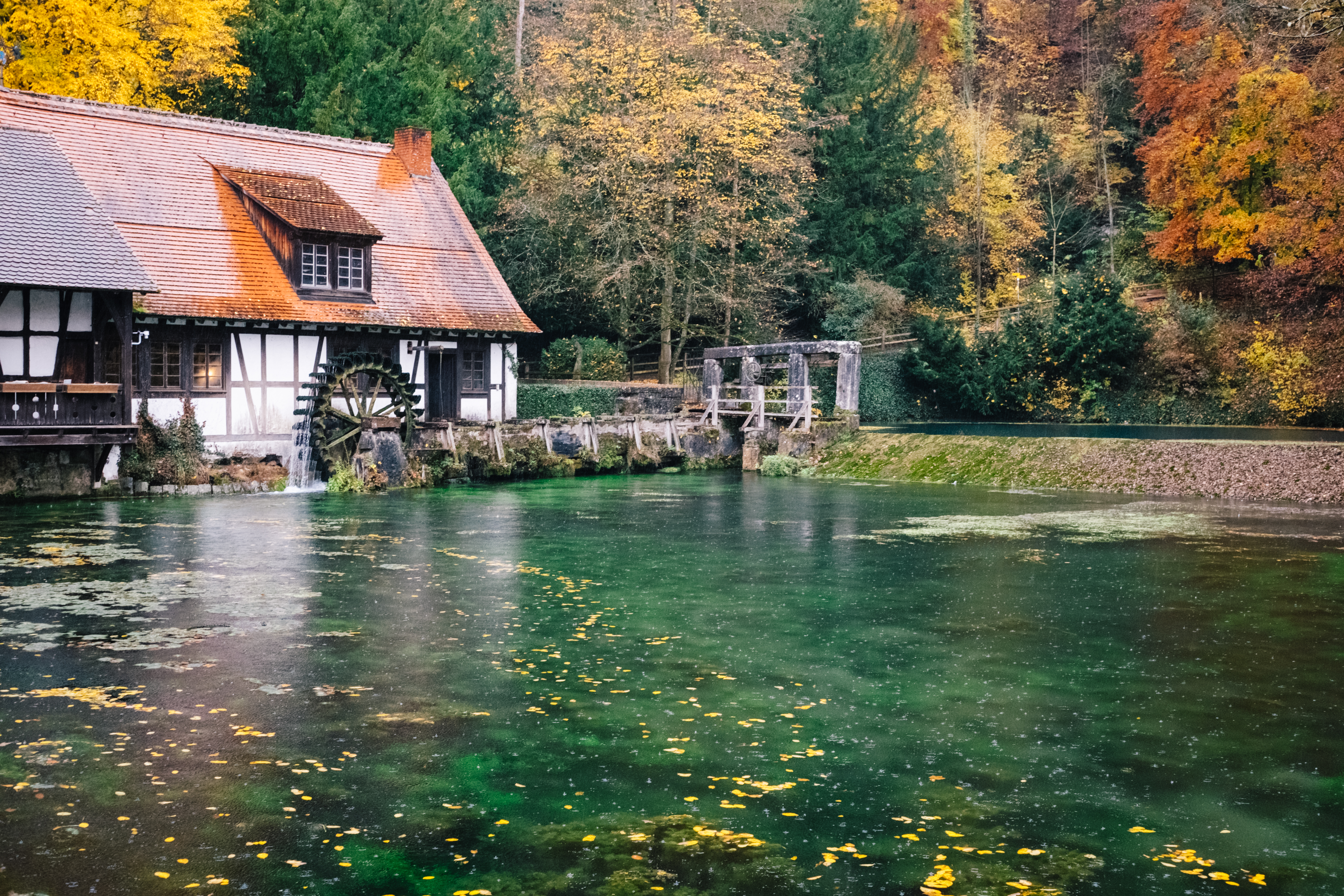
Industrial heritage: The hammer mill – Next to the Blautopf stands the historic Blautopf House, which once housed a smithy and weapons factory. In 1804, Abraham Friedrich was granted permission to build a hammer mill powered by the water from the spring. This facility operated in its original form until 1889, before being converted into a mechanical workshop, which remained in operation until 1956.
The Blautopf House subsequently fell into disrepair and was used as a storage room until the early 1960s, when efforts were made to restore the hammer mill and put it back into operation. Today, visitors can experience the traditional operation of this industrial relic, which adds another facet to the rich history of the Blautopf.
Recognition and tourism – Recognized since 2019 as an important geotope and part of the UNESCO Swabian Alb Geopark, the Blautopf attracts between 300,000 and 500,000 visitors annually.
Its easy accessibility via the Danube Cycle Path makes it a popular stopover for cyclists. Its picturesque beauty, combined with the fascinating appeal of its myths and the thrill of its underwater caves, ensure that the Blautopf remains a lasting symbol of natural wonders and human curiosity.
The Blautopf is not just a geographical feature, but a fusion of natural wonders, historical aspirations, and cultural narratives. Its striking blue water is a testament to nature’s artistry, while the extensive cave systems beneath challenge our understanding and invite continued exploration. The stories and legends lend the place a magical quality and make it a source of human imagination. Whether you are drawn to its scientific significance or its mythical stories, the Blue Pool is a beacon of mystery and beauty that forever captivates those who gaze into its azure depths.