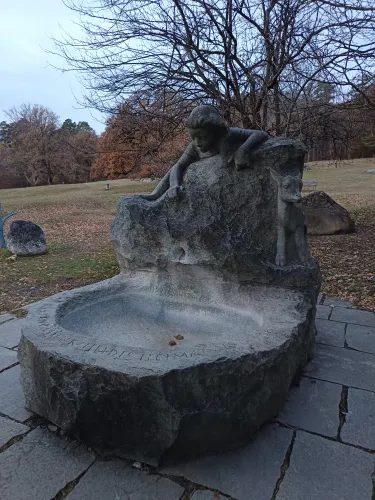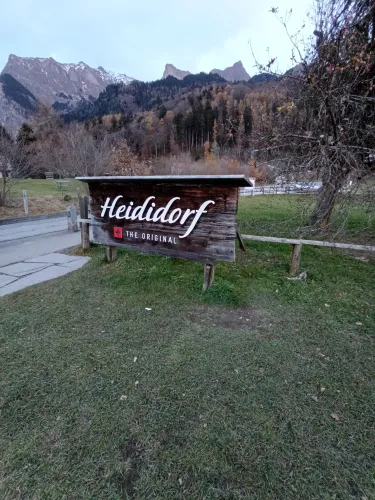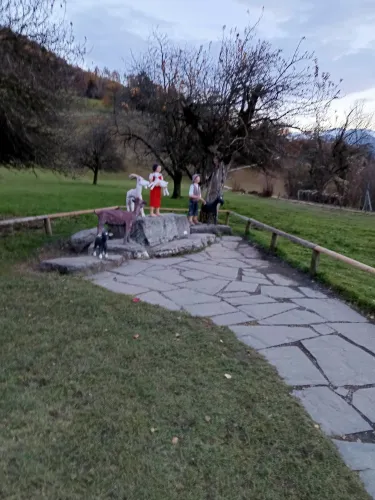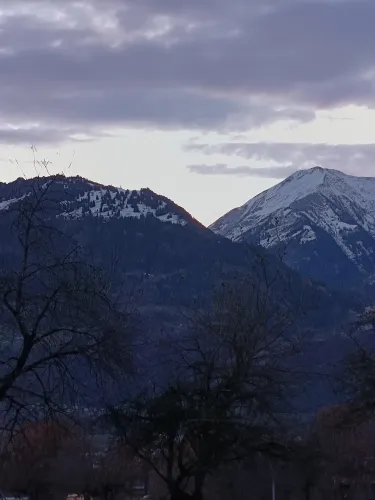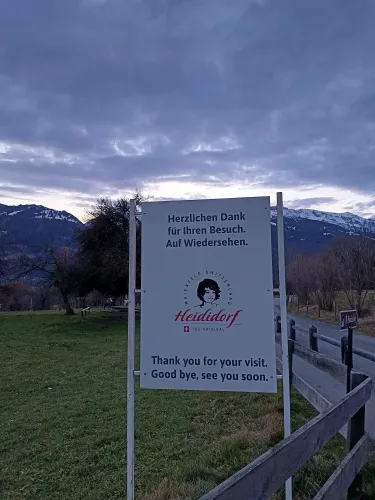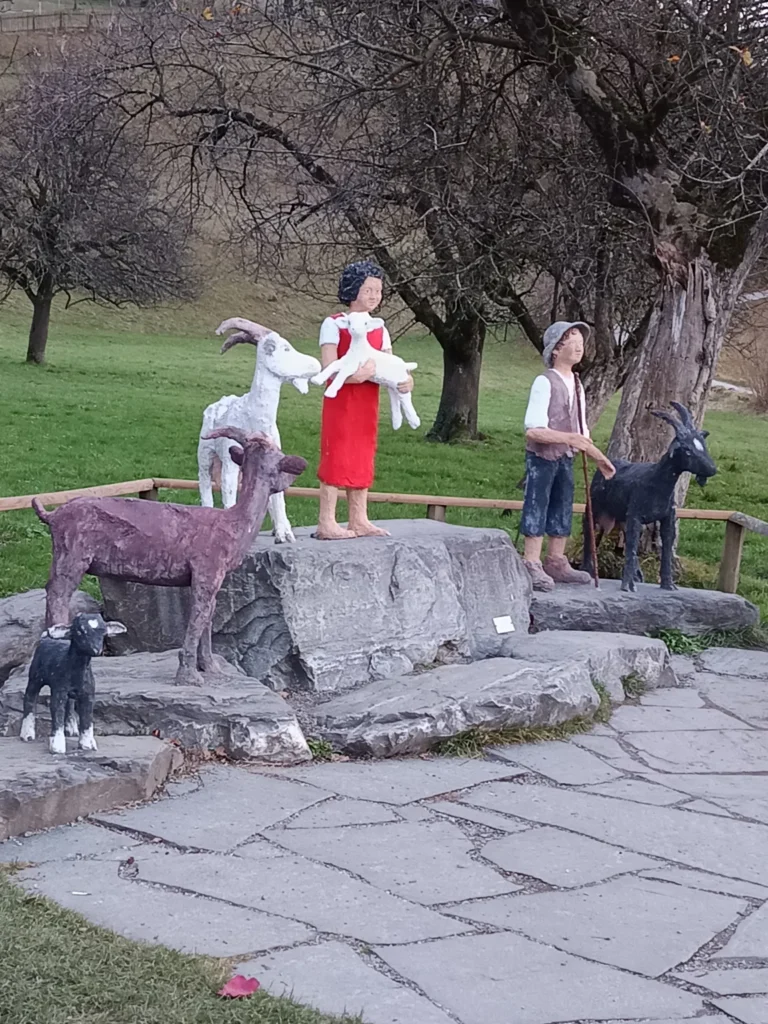
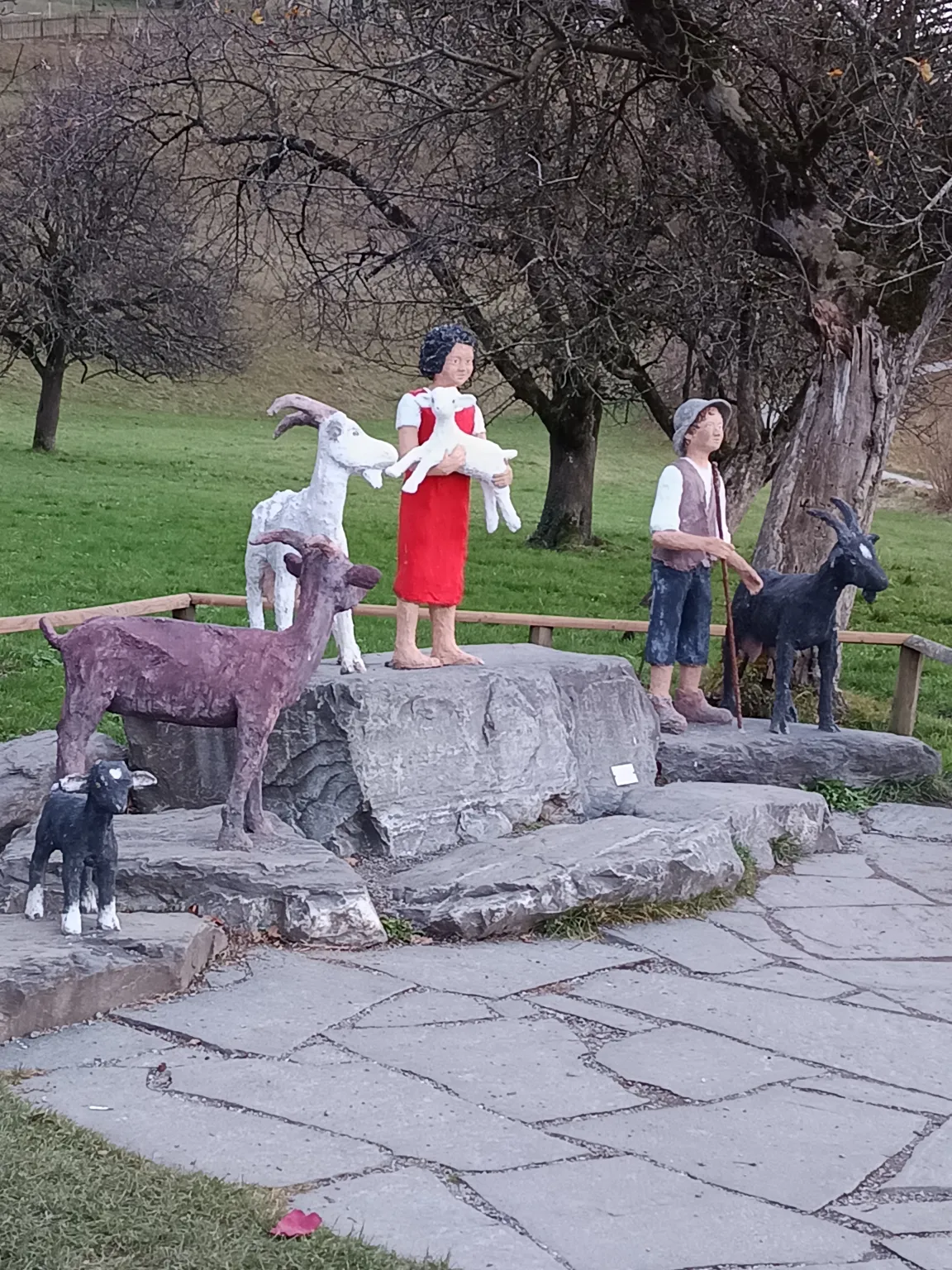
Nestled amid the impressive Alps, where peaks tower into the sky and valleys are filled with colorful flowers, lies Heidi’s village, a place that seems like a living painting. Here, where time seems to stand still, the story of Heidi comes to life. Every house, every meadow, and every stone tells of the friendship and innocence of a girl who has captured the hearts of people all over the world.
The heart of this magical village is the 300-year-old Heidi House. It stands there as if it had been created by the stories themselves. Its wooden beams reveal the stories of life in the mountains and invite everyone to immerse themselves in the year 1880. The scent of freshly baked bread wafts through the air as the sun gently tickles the snow-capped peaks. This is where Alpöhi, a sprightly old man, lives with his grandchild Heidi. Together, they master the challenges of winter while the world outside is covered in deep snow. Heidi, with a smile that shines like sunshine after a thunderstorm, learns not only to read and write here, but also the values of life. These are respect, charity, and the importance of nature.
In the warm months, the scenery changes. The alpine hut, surrounded by lush pastures and countless colorful flowers, becomes the home of Heidi and Peter the goatherd. In this peaceful environment, Heidi finds not only a loving home, but also a freedom that seemed unattainable in the city. In the morning, when the dew still glistens on the grass, she accompanies Peter and his lovable goats to the pasture. She jumps barefoot across the meadows, laughing and playing, while gradually taking on responsibility for the animals. Here she learns what it means to be part of a larger whole.
The town hall stable, another important location in Heidi’s village, is home to Peter the Goatherd’s herd of goats and the faithful horse that pulls the carriage. The lively scraping of the animals and the quiet neighing of the horse create a lively backdrop. There is always something to discover in the stable, be it fresh hay or the little secrets of country life. Here you can feel the bond between humans and animals, which is rooted in the simple but fulfilling way of life of the villagers.
But the world is not just an idyll. As winter approaches, life in the village changes. Heidi attends the village school, a simple building in the town hall, where she meets other children. With curiosity and an open heart, she takes part in everyday school life, which is characterized by playing, learning, and sharing dreams with her classmates. In these moments, her imagination and her longing for adventures in the big world grow, but the roots of her homeland remain deeply anchored in her heart.
The exhibition “Johanna Spyri’s Heidi World” in the village brings visitors closer to the soul of the storyteller and the significance of her works. Here, the stories live on and inspire generations of people who want to immerse themselves in the magical world of Heidi. Particularly touching are the exhibitions about the creation of the story, the challenges Johanna Spyri had to overcome in her life, and the love she poured into her writing. This inspiration is nourished by the forest, the mountains, nature, and the people around her, who are all part of Heidi’s story.
The cycle of the seasons symbolizes the flow of life in the village. While the cold breeze of winter seeks the warmth of the living rooms, the first flowers bloom in spring and life returns to the valleys. The community comes together to celebrate what unites them and to pass on the legend of Heidi and her grandfather. On quiet nights, when the moon rises over the mountains, the villagers can hear the stories that have been passed down from generation to generation. Stories of friendship, family, and the unchanging magic of nature.
Thus, Heidi’s village is not just a place on the map, but a feeling, a vibrant part of Swiss culture that remains timeless. Here, visitors experience the harmony of the human soul with nature and the power of a story that touches hearts around the world. In this village, every flower, every stone, and every breath is part of a narrative that never quite ends. For as long as the mountains stand and the goats leap across the pastures, the magic of Heidi will live on. When I visited the village, the Heidi song immediately came to mind. “Heidi, Heidi, your world is the mountains.” The cult song “Heidi” is not just an anime theme song, but a real piece of German history. Written for the German dubbed version of the anime “Heidi, das Alpenmädchen” (Heidi, the Alpine Girl), the song was released by the pop duo Gitti and Erika in 1977. It’s hard to believe that it’s been over four decades since then! During that time, the song has become one of the most famous and popular German-language songs of all time. The song “Heidi” was composed especially for the broadcast of the series on German television, which found its way to ZDF three years after the original Japanese version from 1974. A completely new soundtrack was created to delight viewers. While all the music for the series was written by the talented composer Gert Wilden, the theme song features a melody by Christian Bruhn. The enchanting lyrics were written by Andrea Wagner and Wolfgang Weinzierl, giving the song a nostalgic, memorable touch. Sisters Brigitte Goetz and Erika Bruhn, better known as Gitti and Erika, were the voices behind this hit. Their singing is so fresh and cheerful that it immediately spreads good cheer. Both began their careers in the 1970s and have made a name for themselves during their careers. Interestingly, Erika was married to composer Christian Bruhn, which is a nice connection to the music and the creation of the song. The German-language version of “Heidi” was broadcast on ZDF from September 18, 1977, to September 14, 1978. During this time, it captured the hearts of many viewers. The song exuded a lightheartedness that perfectly matched the plot of the series, which tells the adventures of the little girl Heidi in the Swiss Alps. This simplicity and the catchy melody ensured that “Heidi” quickly became a catchy tune. The song has accompanied many generations over the decades. Whether at children’s parties or simply when singing together, there is hardly anyone who cannot sing along to the chorus. The combination of loving lyrics and beautiful melody has made the song timeless. In addition to its popularity on television, “Heidi” has also influenced pop culture. It has been revisited time and again in various formats, whether in cover versions or adaptations for other media. Even today, more than 40 years after its release, the song enjoys great popularity, whether in nostalgic retrospectives or among new generations discovering the series. The character of Heidi herself has become a symbol of freedom, closeness to nature, and the carefree nature of childhood. “Heidi” as a song perfectly conveys these elements in the world of music and thus remains an integral part of German culture. In summary, “Heidi” is more than just a song. It is a piece of nostalgia that awakens memories and delights the soul. Whether through its loving lyrics, memorable melody, or the powerful voices of sisters Gitti and Erika, this song will always hold a special place in people’s hearts. It shows how music connects generations and tells colorful stories that never go out of style. In a world that is constantly changing, “Heidi” remains a firm anchor in German music history.