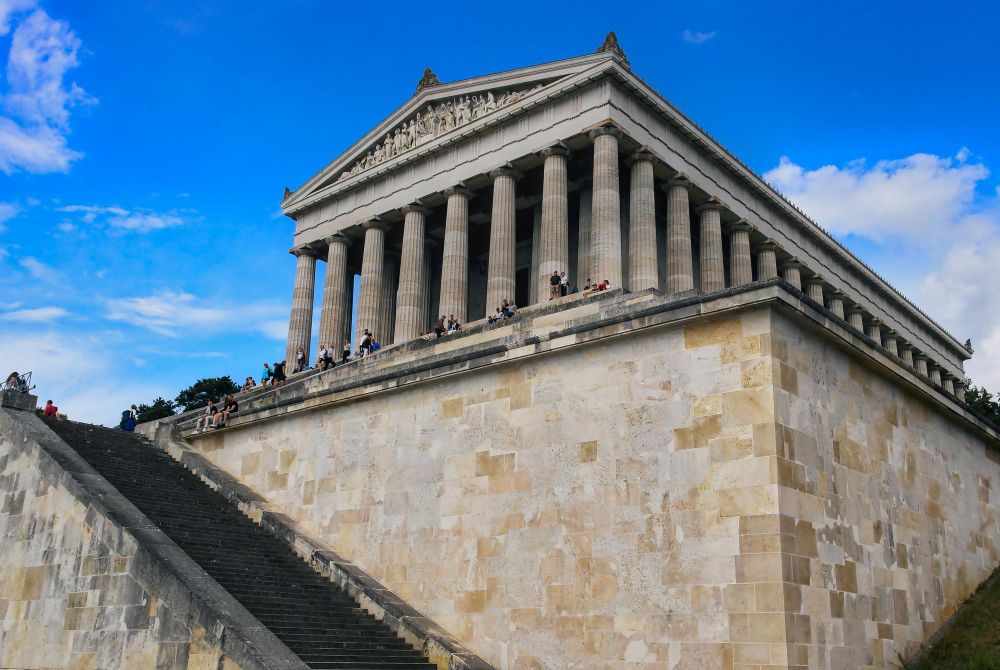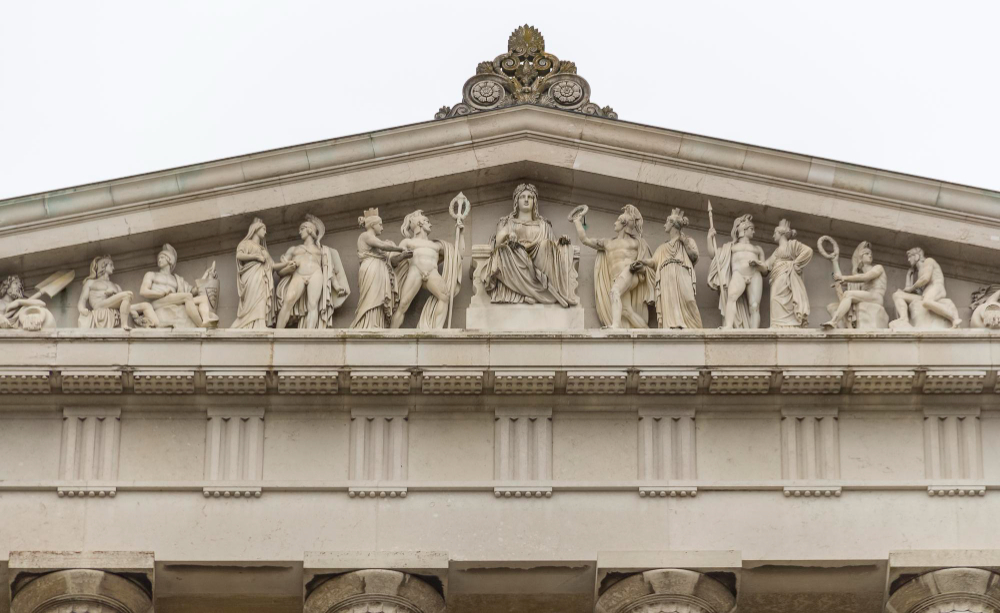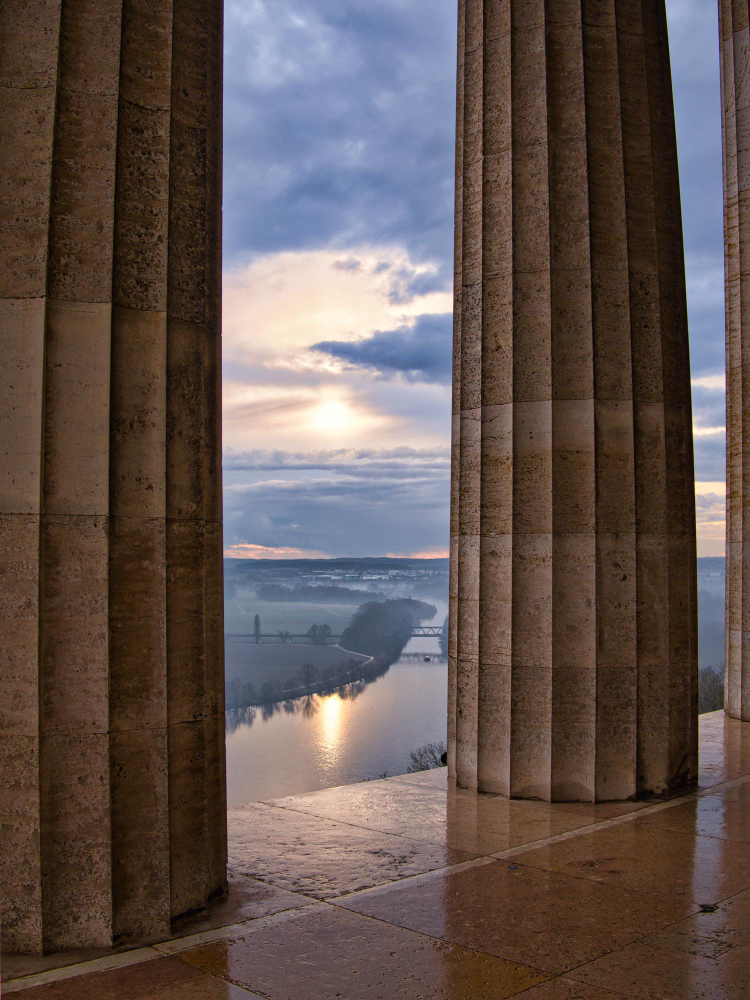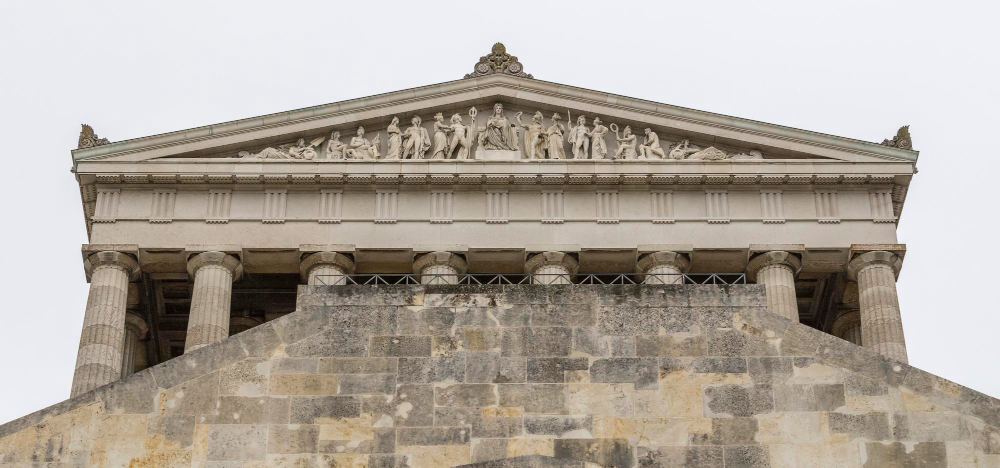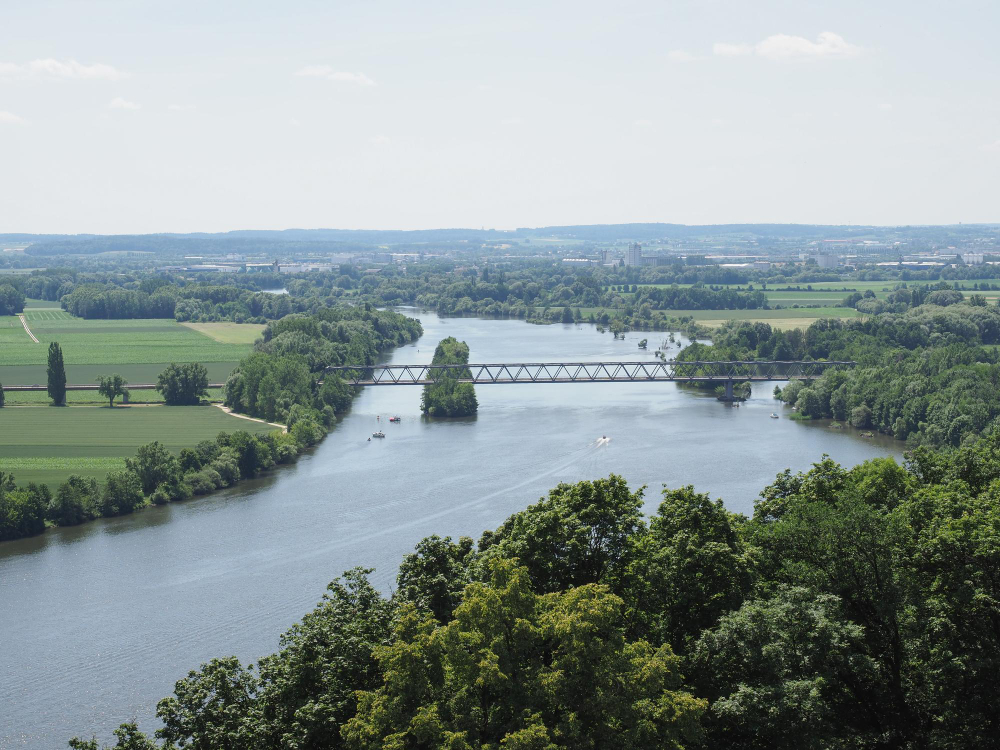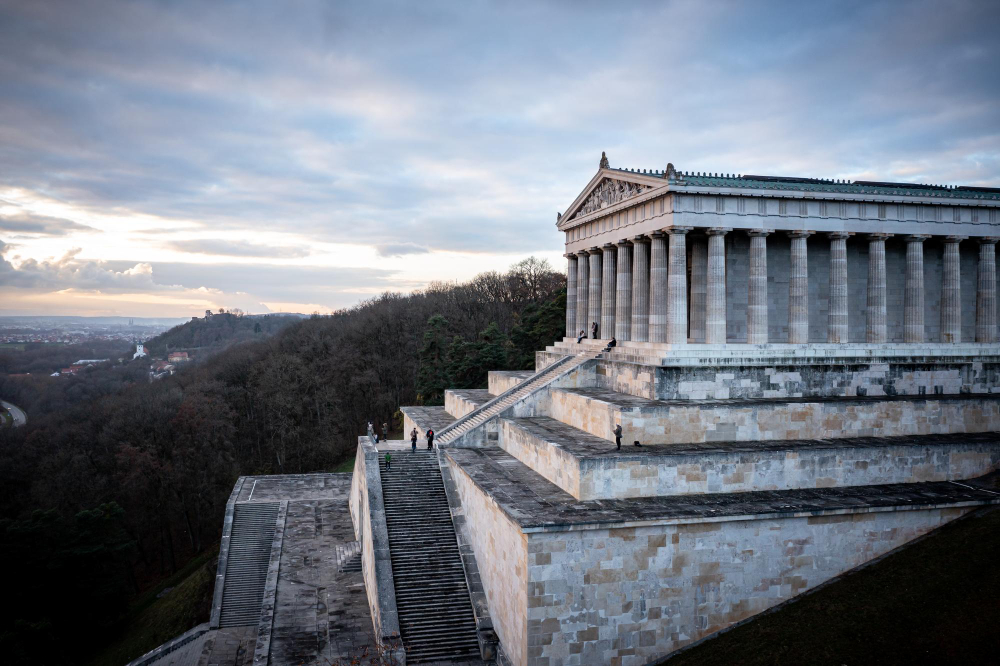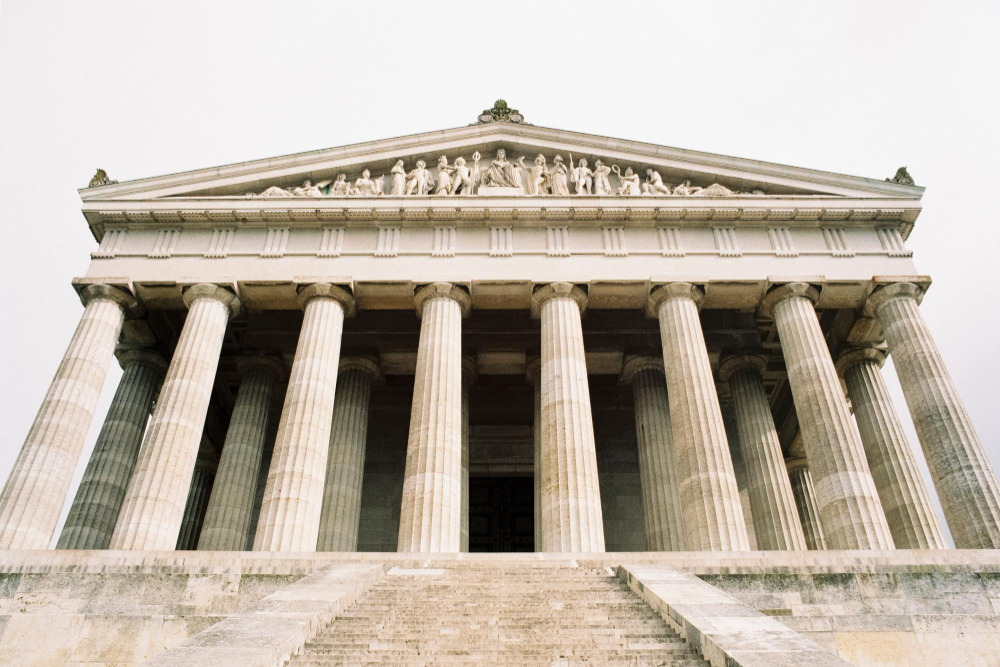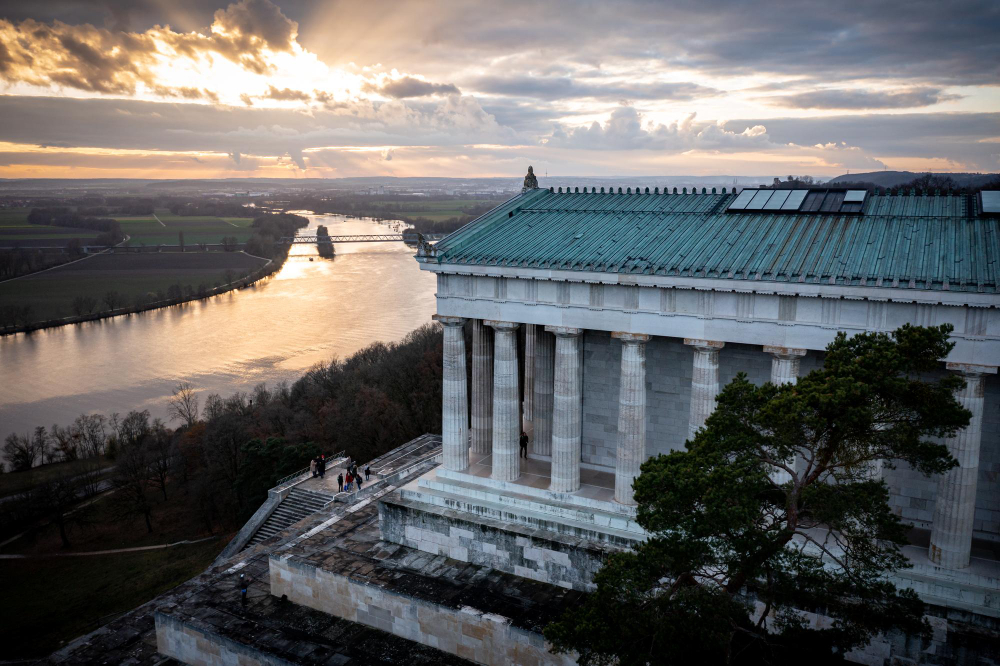
High above the picturesque Danube landscape rises a magnificent structure that towers majestically over the river even from a great distance: the Walhalla. This architectural masterpiece in Donaustauf near Regensburg is reminiscent of the ancient temples of Greece and serves as a venerable hall of fame for outstanding figures from the German-speaking and German-cultural world. But the Walhalla is more than just a monument—it is a symbol of the enduring celebration of great achievements in art, science, and politics.
The name Walhalla itself originates from Norse mythology, though in this case it does not refer to a legendary heavenly realm of warriors, but rather to a temple of remembrance and recognition. King Ludwig I of Bavaria was the visionary behind this gigantic project. At the beginning of his reign, he decided to erect a monument that would honor the greatest minds and inventors from the German-speaking world. Construction of the Walhalla began in 1830 and was completed twelve years later, in 1842.
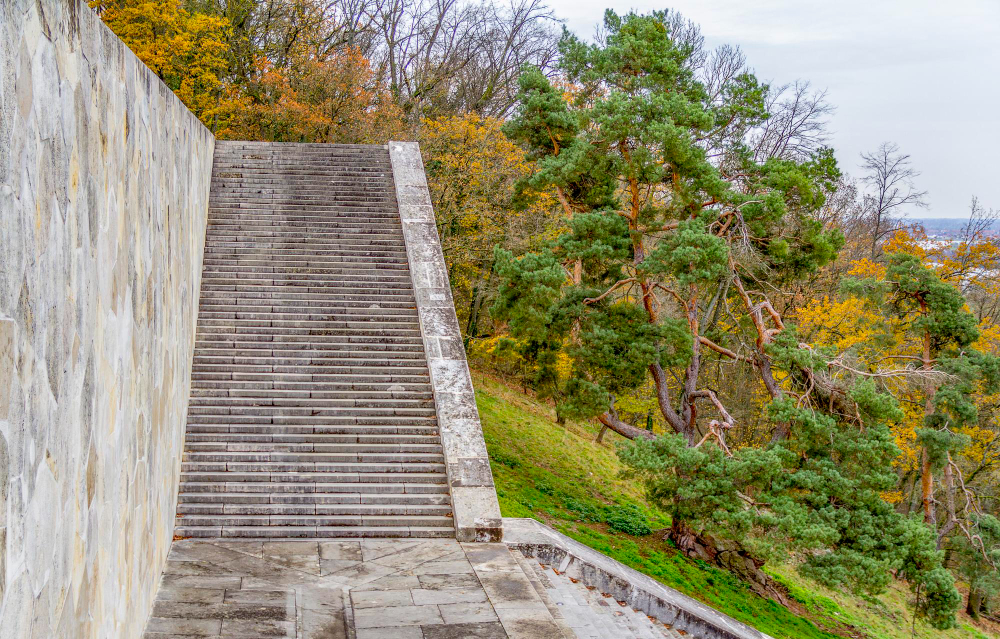
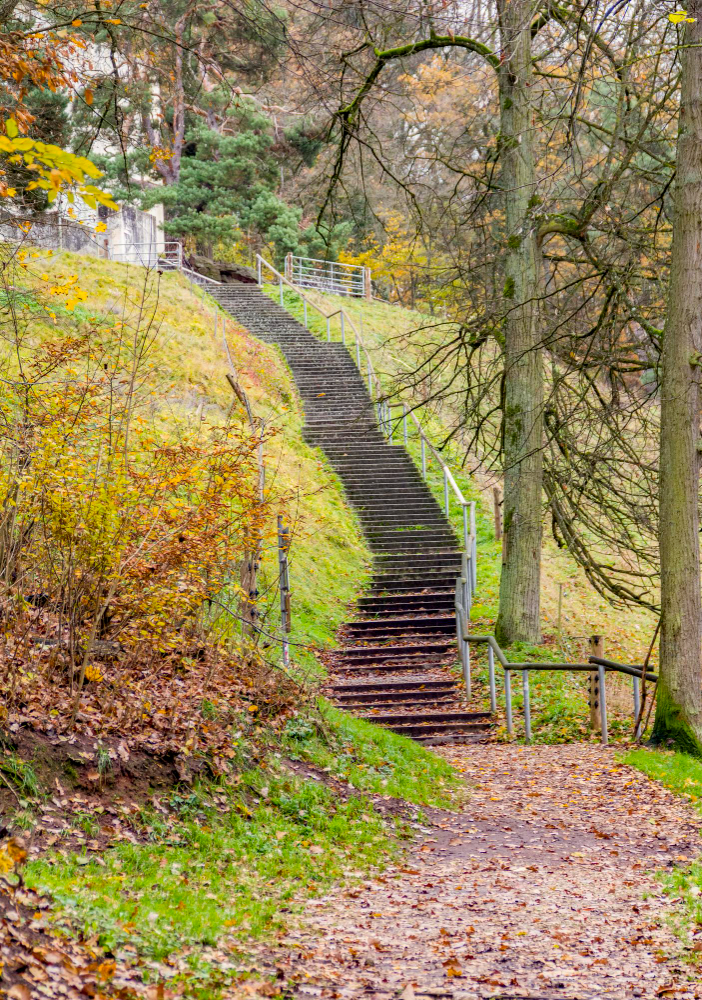
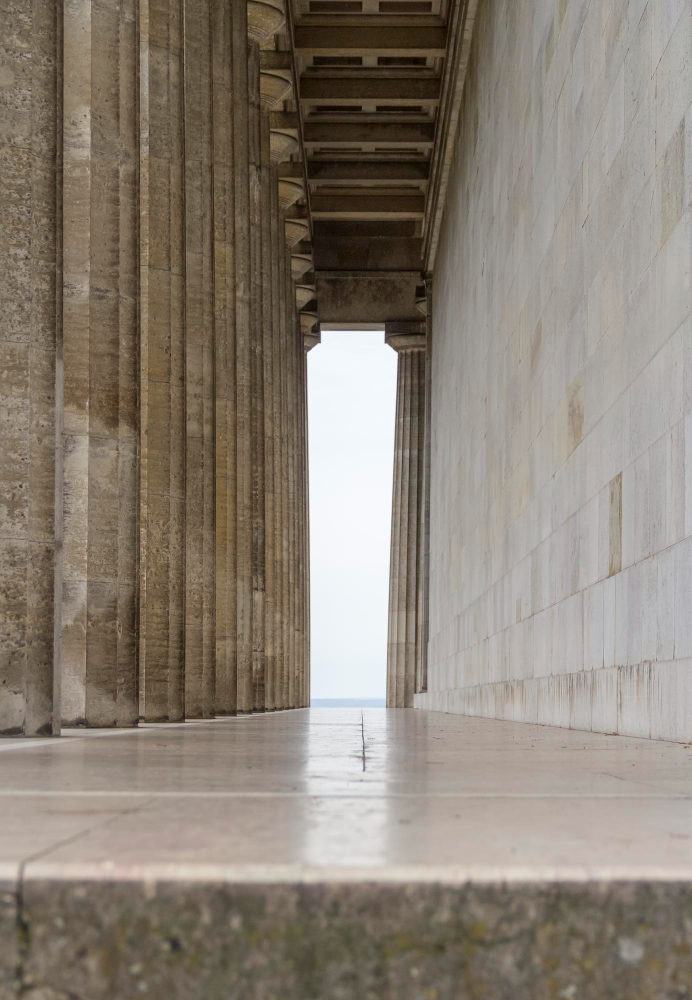
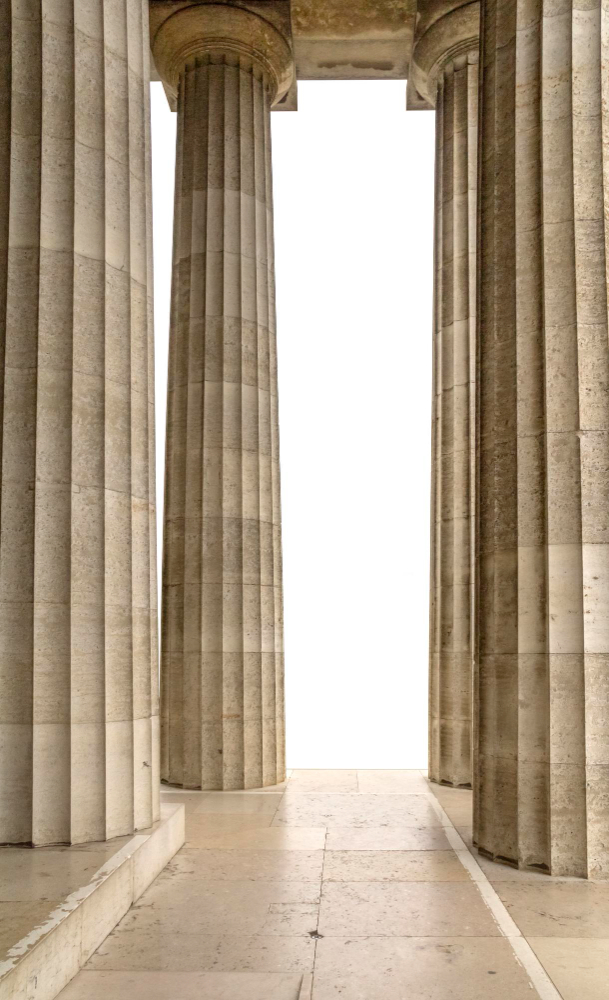
Arriving at the foot of the Walhalla is an experience in itself—a steep staircase with 358 steps leads up to the temple’s entrance. As visitors climb, an impressive panorama unfolds before their eyes. Below, the Danube winds peacefully through green fields and forests, while the silhouette of the building grows ever more imposing. The neoclassical style of the Walhalla, designed by the renowned architect Leo von Klenze, reflects the elegance and power of ancient architecture and is particularly inspired by the Parthenon on the Acropolis in Athens.
Inside the Walhalla are more than 130 marble busts and commemorative plaques. These honor men and women who have distinguished themselves through outstanding achievements. From the reformer Martin Luther to the composers Johann Sebastian Bach and Ludwig van Beethoven, and on to female icons such as Sophie Scholl—the Walhalla is a time capsule of German cultural history.
Not only historical figures but also modern role models are inducted into the Hall of Fame to convey a living picture of ongoing cultural development.
In addition to the originally planned busts, there are now also commemorative plaques for individuals of whom no portraits exist or whose influence was conveyed exclusively through their writings.
These additions demonstrate that the Walhalla remains a living monument that is constantly evolving and growing to reflect the diversity of intellectual and cultural achievements.
Not to be forgotten are the fascinating stories of the figures immortalized here. Each of these individuals has contributed in their own way to shaping society. For example, Otto von Bismarck, a prominent statesman of the 19th century, brought about the unification of the German Empire and promoted political stability, laying the foundation for modern Germany. Equally fascinating is the story of Sophie Scholl, who, as a member of the “White Rose” resistance group in Nazi Germany, risked her life to stand up for freedom and justice.
The Walhalla itself has witnessed significant historical events over the years. For instance, the building played a symbolic role during both world wars: in times of war, it became a symbol of hope and the enduring nature of German culture. After World War II and the division of Germany, the Walhalla temporarily lost some of its significance, but with reunification, it experienced a renaissance as a cultural monument that today unites all Germans.
Today, the Walhalla attracts thousands of visitors from around the world every year. Through educational events and special guided tours, interested visitors have the opportunity to gain deeper insights into the lives and works of the honored figures. They can not only view the stories behind the busts but also experience them. It is also frequently used for festive events that fill its majestic space with even more life.
Nevertheless, the future of the Walhalla rests not only on its historical significance but also on the continuous induction of new figures and the modernization of its presentation.
There are ongoing discussions about who should be the next to be inducted into its venerable halls. The most recent additions reflect societal values and open up space for debates on inclusion and diversity in German remembrance culture.
Furthermore, the question arises as to how the building can maintain its appeal in the future—in a digital world where information is available at all times. Interactive technologies and multimedia exhibitions could contribute to this. A modernized presentation could attract younger generations and bridge the gap between the past and the present.
In conclusion, it must be noted that the Walhalla is more than just a museum—it is a living testament to cultural identity and historical consciousness. It challenges us to engage with our history and honor the achievements of the past, while simultaneously acknowledging and honoring the heroes of today and tomorrow. With every new face immortalized in the marble busts of the Walhalla, the eternal bond between generations and humanity’s ceaseless pursuit of knowledge, freedom, and progress are strengthened.
Thus, the Walhalla remains not only a temple of the immortals, but a place of constant inspiration and reflection, high above the gently flowing Danube, ready to write further chapters in the endless history of humanity.