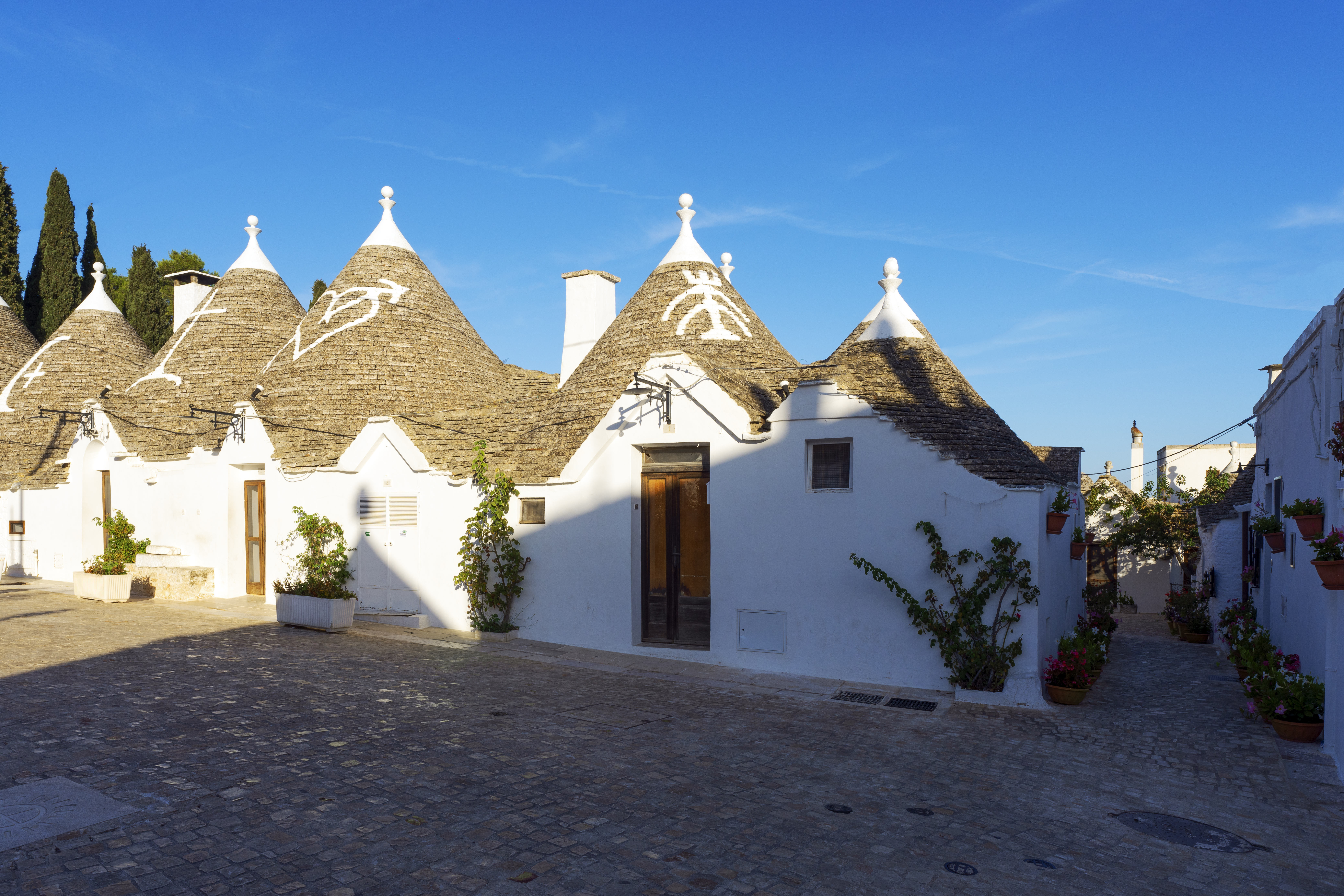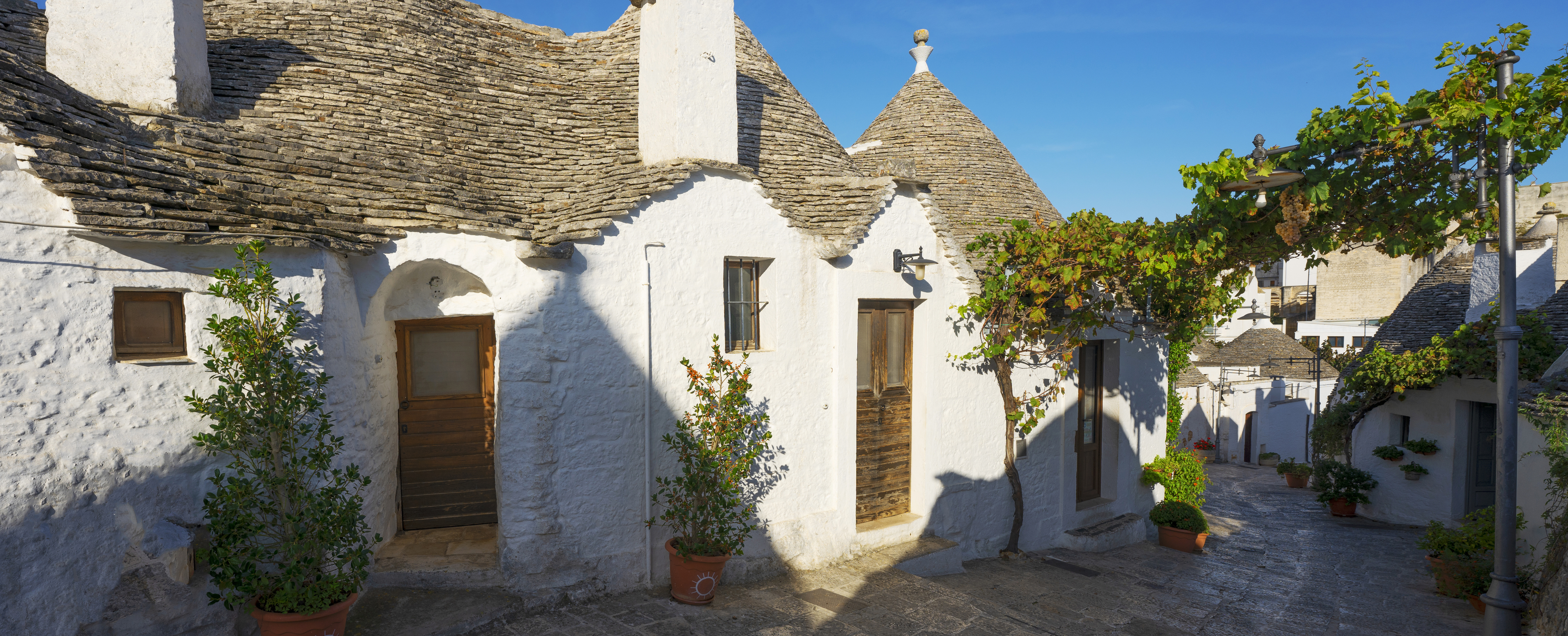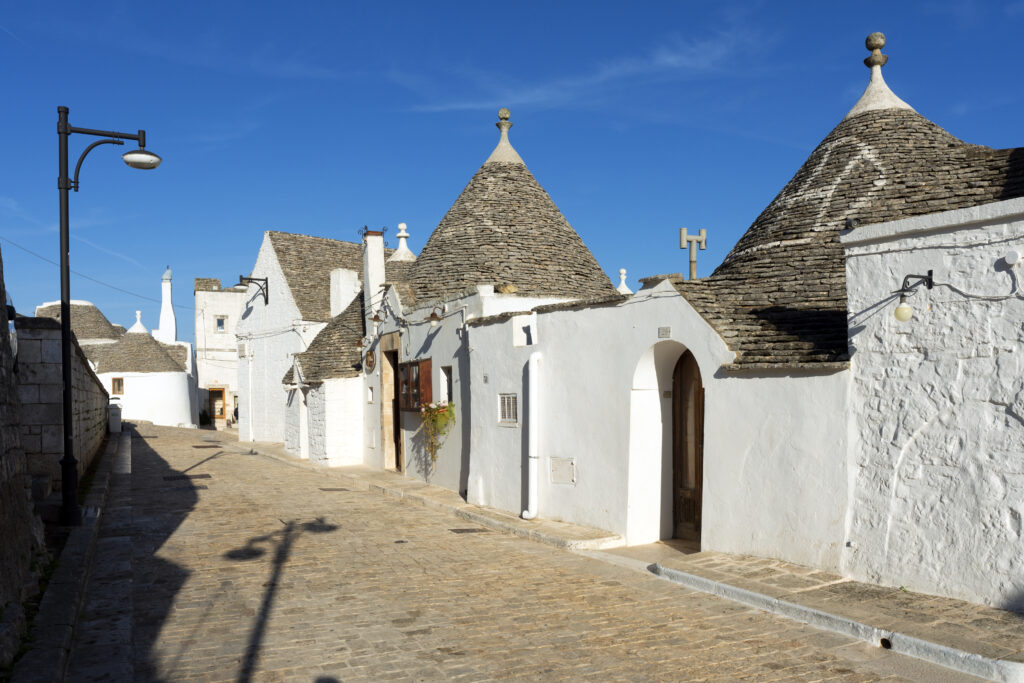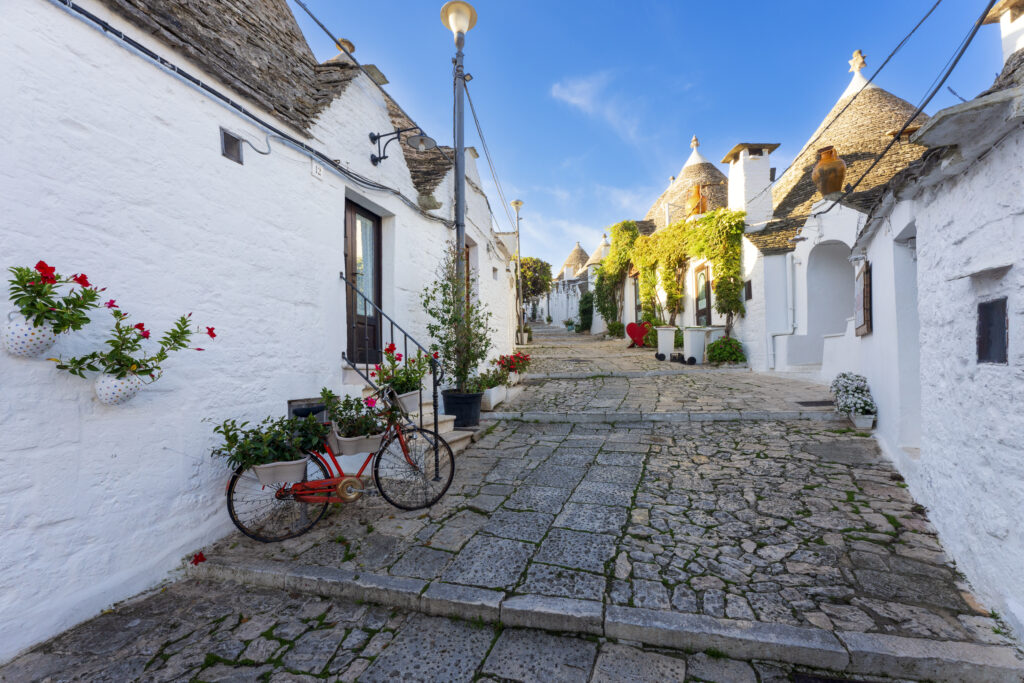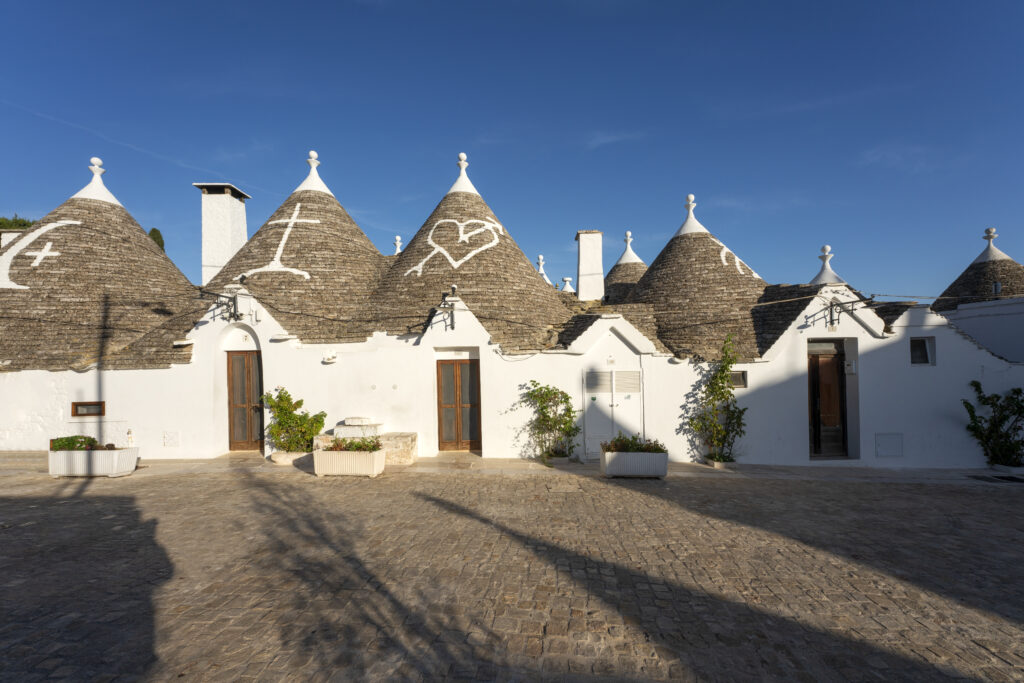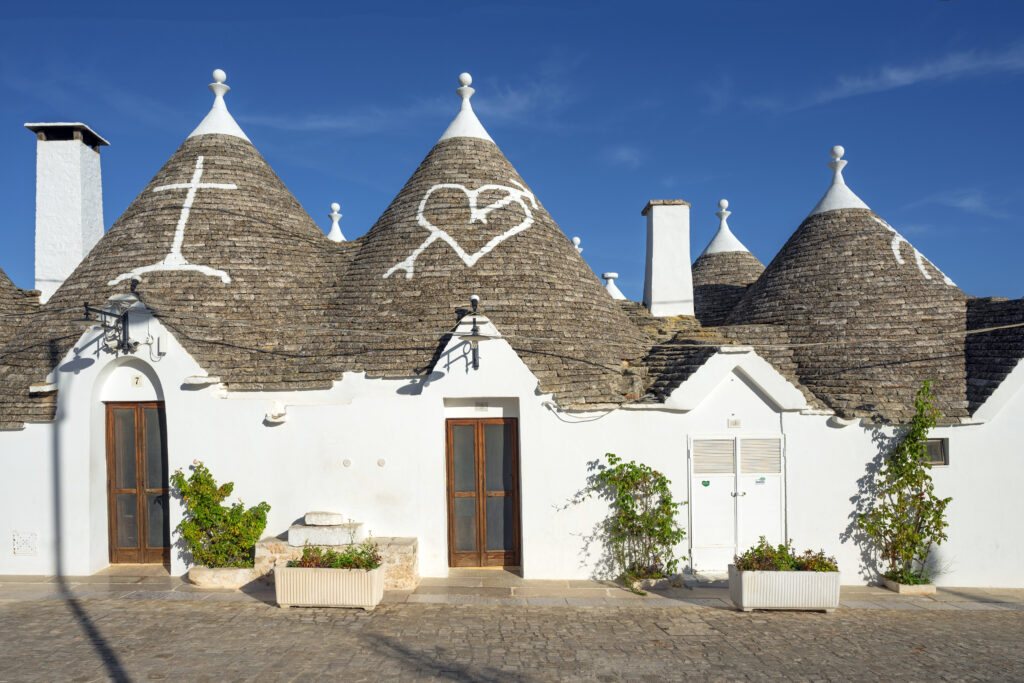
Alberobello, a picturesque town in the heart of Apulia, has been enchanting visitors for centuries with its unique trulli houses. These whitewashed round buildings with their characteristic cone-shaped roofs seem to come straight out of a fairy tale book and could just as well be the dwellings of fairies and goblins. But what lies behind these mystical buildings? Let’s dive into the history and legends of this fascinating town.
The origins of the trulli can be traced back to the 14th century. The construction of these extraordinary houses arose out of necessity: at a time when high taxes were levied on new buildings, people were looking for a way to avoid these levies. The solution was as ingenious as it was clever: they built their houses without mortar. This meant that the buildings could be quickly and easily dismantled in the event of a tax inspection and then rebuilt later. As pragmatic as this technique was, it gave the trulli their distinctive and mysterious appearance.
The word “trullo” comes from the Latin term “turris” and means tower or cone. In fact, the characteristic roofs of the trulli are reminiscent of medieval towers proudly rising into the sky. The white limestone walls, which remain cool in the hot Apulian summer, form a striking contrast to the gray stone roofs and create an atmosphere that is both soothing and magical.
It is believed that the first settlers of Alberobello adopted the technique of dry stone walling from the ancient Messapians, a people who once lived in this region. However, the trulli were not only practical, but also symbols of cohesion and community. Each family participated in the construction of their own house, and close-knit neighborhoods developed where everyone knew everyone else. This sense of belonging still characterizes Alberobello today.
A particularly fascinating legend says that the trulli were built by elves who came to Alberobello on a balmy summer night. These magical beings wanted to help the people and built the houses as safe havens where the inhabitants could feel protected from evil spirits and the forces of nature. In fact, many of the trulli are painted with mysterious symbols—suns, crosses, and hearts—which are said to ward off evil and bring good luck. Whether you believe in these legends or not, one thing is certain: the trulli exude a mysterious magic that is hard to deny.
In addition to its architectural wonders, Alberobello has a rich history closely linked to the creation and development of the trulli. In the 17th century, Alberobello was ruled by the Counts of Conversano from the House of Acquaviva. It was Giovanni Girolamo II Acquaviva who promoted the construction of the first trulli district. He recognized the clever construction technique and supported it in order to accommodate population growth while circumventing the high tax demands of the Kingdom of Naples.
The town itself was officially founded in 1797 when King Ferdinand IV of Bourbon, impressed by the unique charm and efficiency of Alberobello, declared it a “royal town.”
From then on, the town began its steady rise to its current importance. Today, it is a UNESCO World Heritage Site and attracts thousands of visitors from all over the world every year.
But Alberobello is more than just an open-air museum. It is a living testament to human ingenuity and community spirit. In the narrow, cobbled streets lined with trulli, you will find small craft shops where ancient techniques are still practiced, cozy cafes where locals and tourists alike stop for a bite to eat, and traditional trattorias offering the true flavors of Puglia.
A walk through Alberobello is like a journey through time. You can feel the breath of centuries past as you stroll past the ancient stones and listen to the stories and myths of your ancestors. Particularly impressive is the Rione Monti district, the largest trulli district with more than a thousand of these unique buildings. Here, it’s easy to imagine that a fairy could jump out from behind every corner to show you the way.
No less impressive is the so-called “Trullo Sovrano.” This two-story house is the largest and most magnificent of its kind and now houses a museum that provides insights into the lives of the Trulli inhabitants. Here you can learn how people once organized themselves, what tools they used, and what their everyday life was like—a fascinating insight into a bygone era that can still be felt today.
A trip to Alberobello would not be complete without a visit to the Basilica dei Santi Cosma e Damiano, the patron saints of the city. This impressive church combines elements of Baroque and Classicism in its architecture and is further proof of Alberobello’s rich cultural history.
And then there are the festivals that mark the year in Alberobello. Particularly noteworthy is the patron saint’s festival, which takes place every September in honor of Saints Cosmas and Damian. Then the whole of Alberobello is illuminated with lights, and there are processions, music, dancing, and culinary delicacies – a true homage to the joie de vivre and hospitality of the people.
Alberobello is much more than just a tourist attraction. It is a place where history comes alive, a place where you can feel the breath of centuries. Once you have entered this enchanting little town, you will never forget the magic of the trulli and will always want to return to this fairytale world.