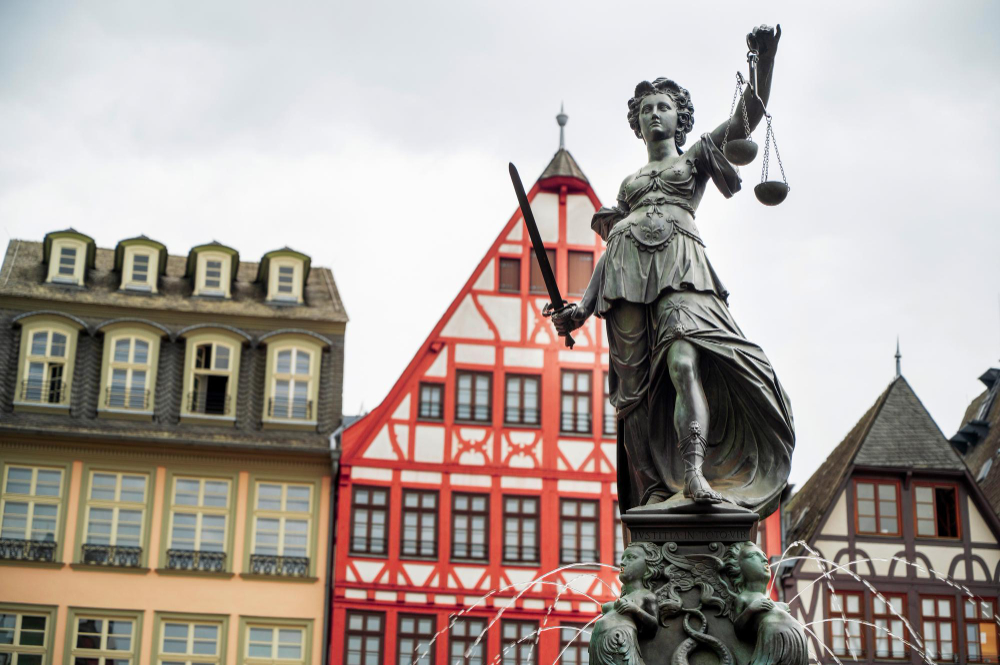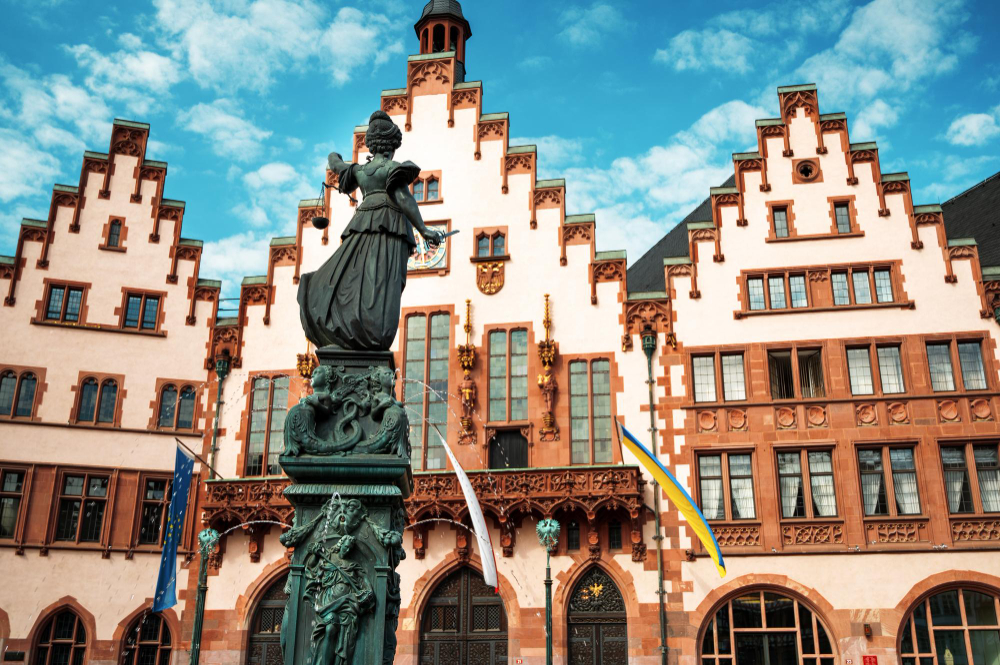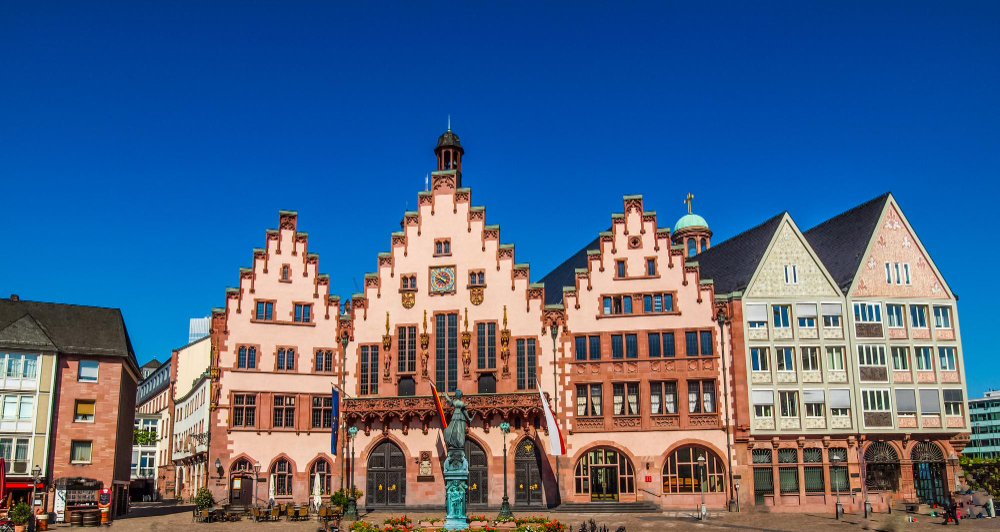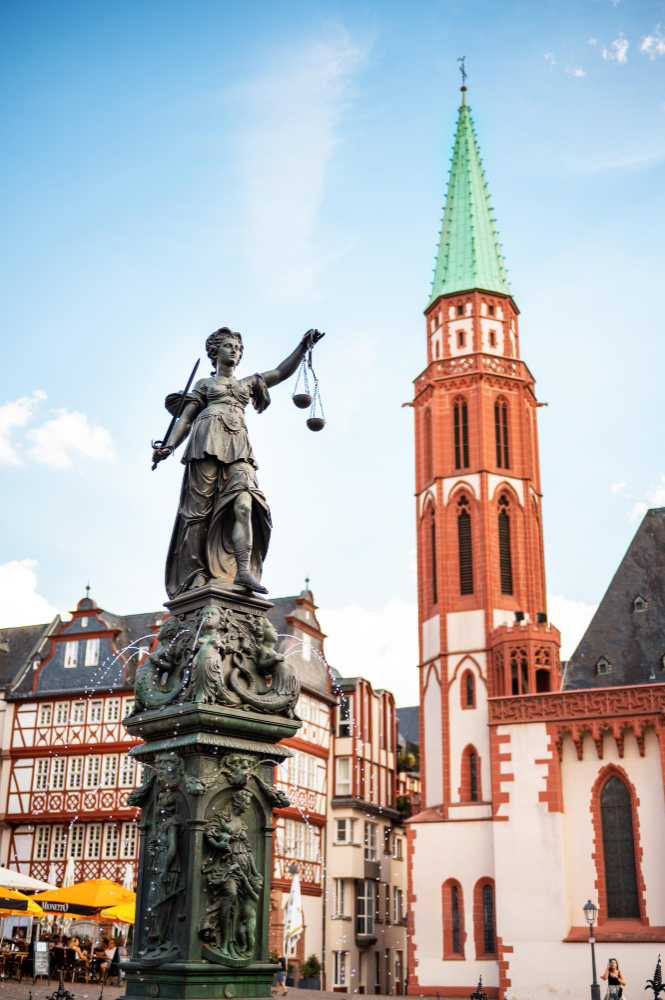
At first glance, the Römerberg—Frankfurt am Main’s famous town hall square—appears to be the peaceful heart of the Old Town, adorned with half-timbered houses, magnificent gables, and the imposing Old St. Nicholas Church. But behind the picturesque façade lies a history marked by both glory and suffering. This is no ordinary town square—it is a place where power struggles have been waged for centuries, where glorious imperial coronations and cruel book burnings took place, and where both triumphant soccer celebrations and social unrest have found their place. Anyone who thinks the Römerberg is merely a backdrop for the Christmas market or Ironman Germany is way off the mark. This square is a living stage where history was written—and not always a pleasant one.
An unassuming name with a dark past – When we speak of the Römerberg, many people first think of City Hall, the “Haus zum Römer.” Its history dates back to the 15th century, when it became the seat of the city council. Yet the name “Römer” is not directly linked to antiquity, but rather to a merchant’s house whose name is now synonymous with the political heart of Frankfurt. The eastern part of the Römerberg itself, nicknamed “Samstagsberg,” exudes a mysterious aura. The origins of an ancient folk ritual may lie hidden here, for as early as the Carolingian period, public court hearings took place here, often accompanied by gruesome executions. A fountain, marked at the time by a red flag, was likely also the site of nocturnal rituals on Walpurgis Night—a festival where the boundaries between celebration and magic blurred.
From the Splendor of the Emperors to the Shadows of War – Between 1562 and 1792, the Römerberg was the site of the magnificent coronations of the emperors of the Holy Roman Empire. The celebrations were opulent: the newly crowned emperor dined in the Kaisersaal of City Hall, while outside on the square the Ochsenküche was set up—a gigantic barbecue feast for the people. Window seats in the surrounding houses were highly sought after and were rented out by their owners for large sums of money. But with the end of the empire, the Römerberg lost this glamorous role and fell into a sort of slumber. The houses fell into disrepair, and although their medieval charm fascinated many people, they were considered backward in the up-and-coming Frankfurt of the 19th century. In the 20th century, things grew even darker. On May 10, 1933, a terrible fire raged on the Römerberg—the Nazis had organized a book burning, a symbolic act of their brutal ideology. Writers such as Heinrich Heine and Stefan Zweig fell victim to a new form of censorship that sought to eradicate not only words but also people. Today, a bronze memorial plaque serves as a reminder that this square was once marked by flames and hatred.
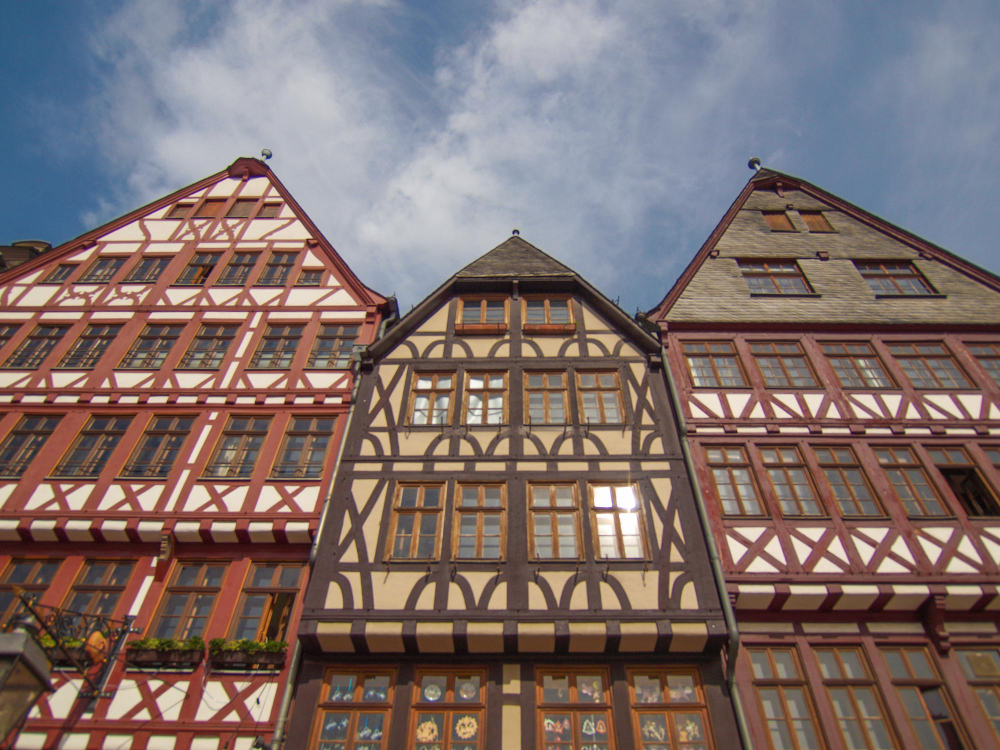
War and Reconstruction: The Scars of History – However, the Römerberg suffered its worst wounds during World War II. During the air raid on Frankfurt on March 22, 1944, the entire Old Town was engulfed by a firestorm. Hardly more than rubble and ashes remained of the magnificent half-timbered houses. Yet surprisingly, the underground vaulted cellars—which had been connected since 1940—protected many people from the inferno. They found refuge in these stone bowels of the city and escaped the destruction via an underground escape route. After the war, the lengthy reconstruction of the Römerberg began. In the 1950s, the initial decision was to erect modern buildings, but these failed to restore the square’s character. It wasn’t until the early 1980s that the decision was made to faithfully reconstruct the eastern row of houses on the square. This was no easy task. Historical photographs and drawings served as models, but much had to be creatively supplemented. The result was a row of half-timbered houses that are now among Frankfurt’s most popular photo subjects.
The houses tell their own story – A particularly interesting feature of the Römerberg are its buildings, which are fascinating not only architecturally but also historically. The “Großer und Kleiner Engel” house, originally built in 1562, once served as a currency exchange. Its half-timbered structure had to be completely rebuilt after the war and today represents an artistic interpretation of the lost original. Next to it stands the “Goldene Greif,” once a pharmacy, today a symbol of the art of reconstruction: with a plastered facade and slate gable. The “Schwarze Stern,” a Renaissance building from 1610, is perhaps the most impressive structure on the east side. Originally adorned with painted, diamond-shaped decorative elements, it was reconstructed with great attention to detail. This former commercial hub reflects the economic significance of the Römerberg: from the Frankfurt fairs of the Middle Ages through to the modern era, the square has always been a central hub of business life.
A Square Between Celebration and Protest – Today, the Römerberg is once again a gathering place, yet it bears unmistakable traces of its past. It is used equally for festive events such as the world-famous Christmas market or the victory celebrations of German soccer teams, and serves as a stage for political rallies. In 1963, U.S. President John F. Kennedy delivered a speech here before 150,000 people, a symbol of the bond between Germany and the U.S. The Römerberg Festival of the 1930s, during which plays were performed under the open sky, also attests to the cultural significance of this place. But if you look closely, you will realize: The Römerberg is not just a place of joy. It remains a memorial, a place that reminds us how fragile the balance between splendor and darkness is. The book burning of 1933, the inferno of 1944, and the long period of reconstruction show that no city in the world is free from its dark sides. The Römerberg has learned to live with this—and therein lies its enduring strength.