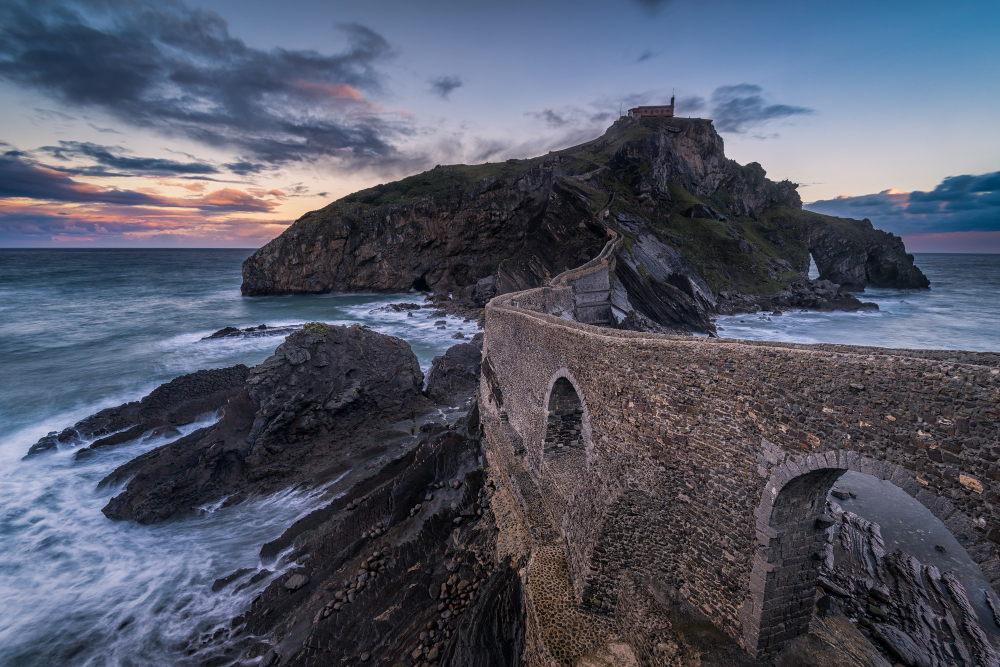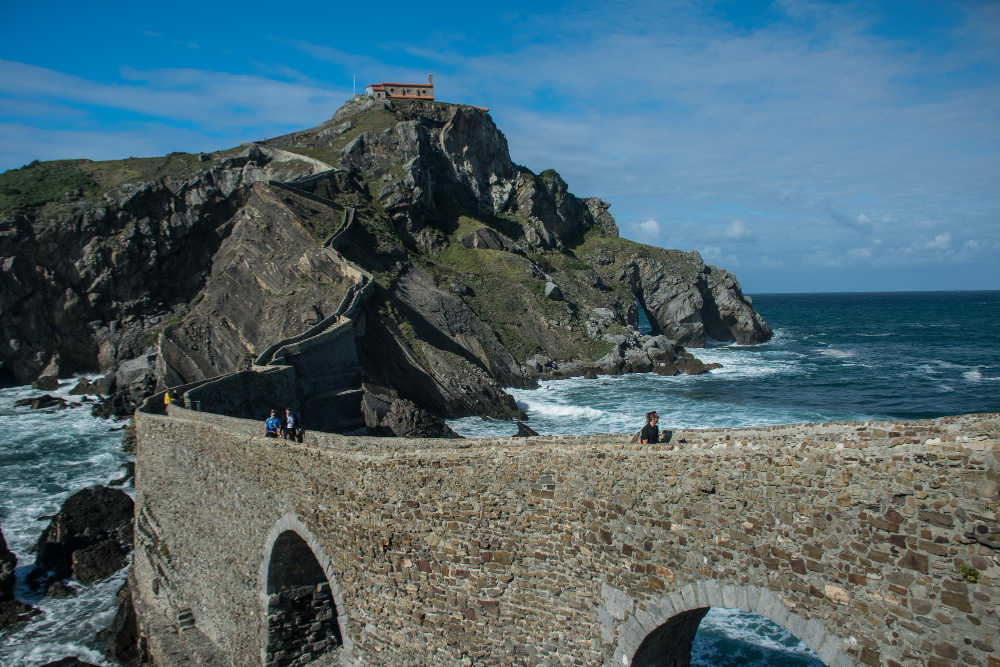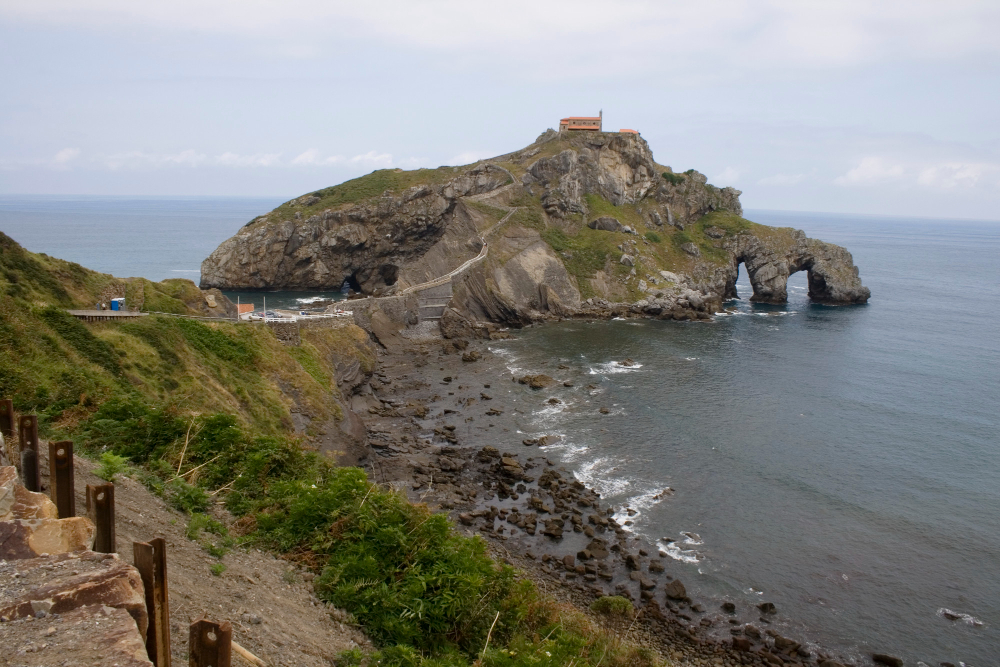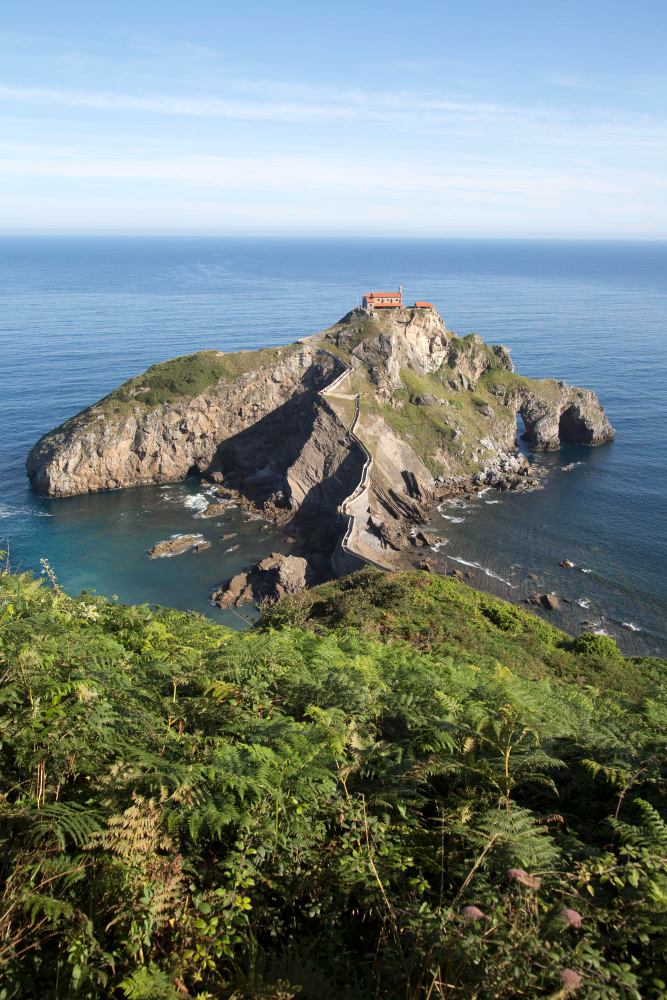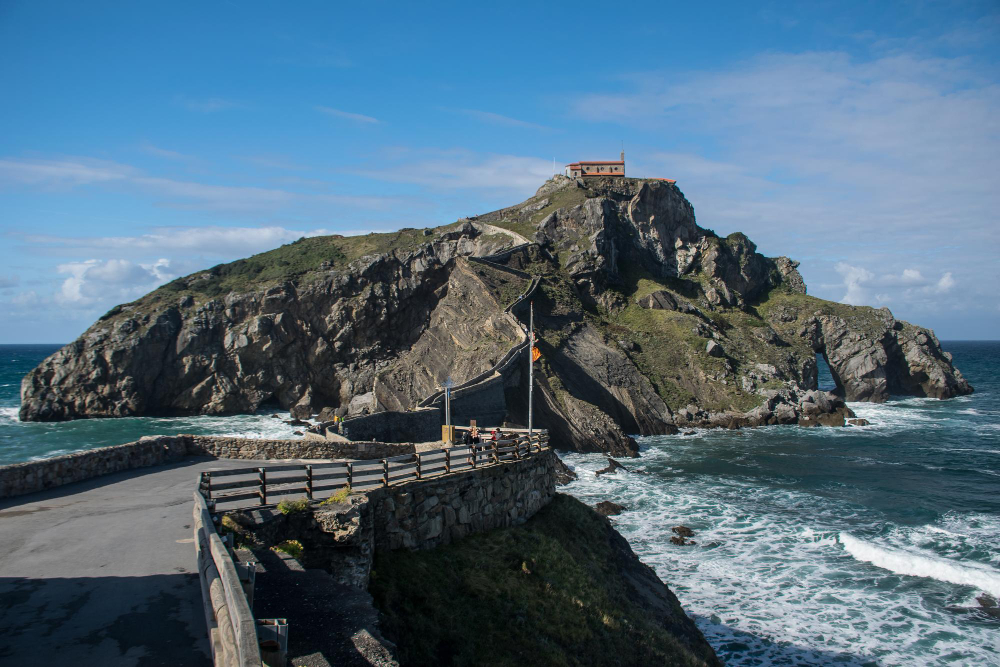
Situated on the rugged Atlantic coast of the Basque Country, Gaztelugatxe rises majestically from the sea. A small island brimming with stories, myths and natural beauty. This jewel of the Bay of Biscay, nestled between the towns of Bermeo and Bakio, is a popular destination for adventurers, history buffs and nature lovers alike. The name Gaztelugatxe, which can be interpreted either as ‘rock castle’ or ‘inaccessible fortress’, already hints at the mystical character of this place.
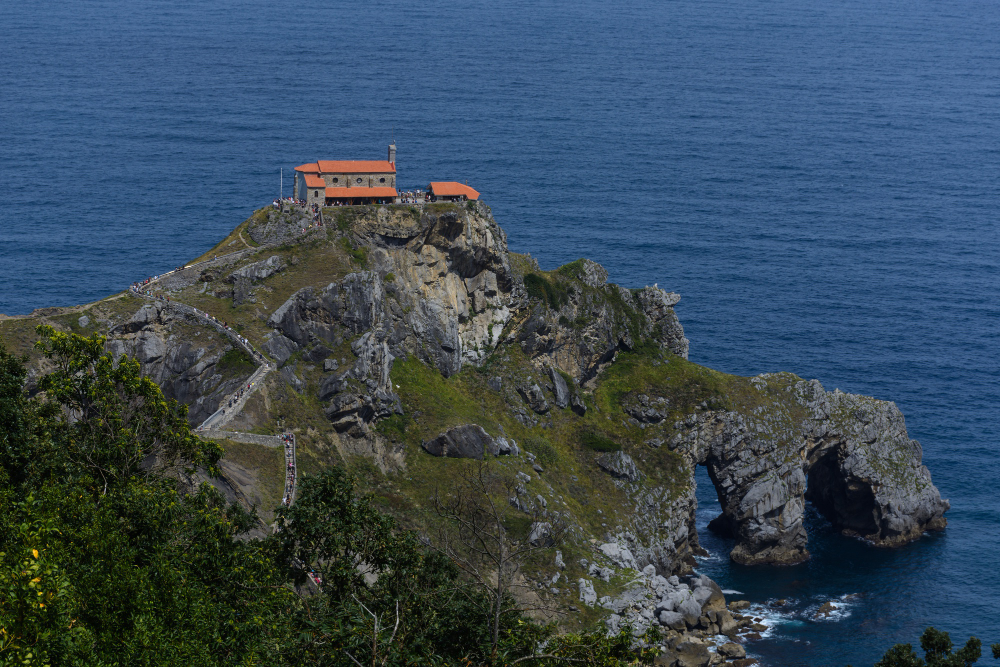
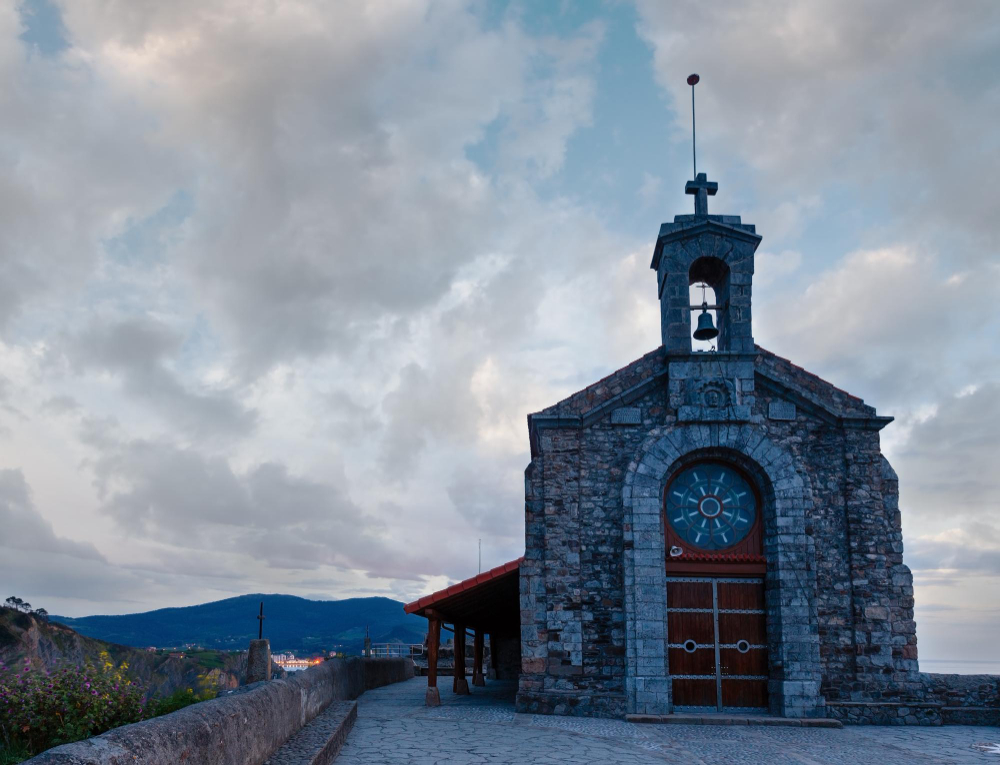
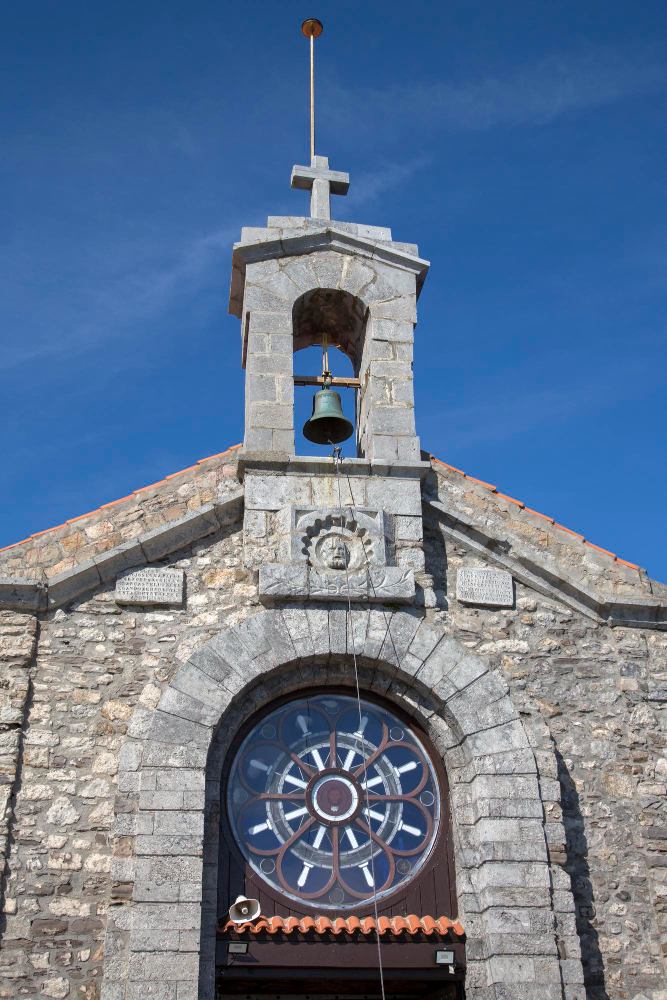
A journey through history – The origins of Gaztelugatxe date back to the 9th century, as archaeological finds attest. However, the island’s current centrepiece, a small chapel known as Gaztelugatxeko Doniene (or San Juan de Gaztelugatxe), was not built until 1980. The original chapel fell victim to a devastating fire in 1978, which destroyed part of its historic structure. The new building, however, was constructed modelled on the old church and has since served as a place of pilgrimage and a popular vantage point. The history of Gaztelugatxe is marked by battles, drama and legends. In 1334, the island was the scene of a conflict between the Lord of Biscay, Juan Núñez III de Lara, and Alfonso XI, King of Castile. In the 16th century, the island was repeatedly targeted by enemy attacks. In 1593, the notorious privateer Francis Drake plundered the island, followed the next year by the Huguenots from La Rochelle, who, according to reports, threw the chapel’s caretaker at the time into the sea. During the Spanish Civil War in 1937, the Battle of Cape Machichaco took place near Gaztelugatxe, in which the island’s proximity to the sea and its strategic position played a key role. These events of war have left their mark on the island’s history and mystique, which visitors can still sense to this day.
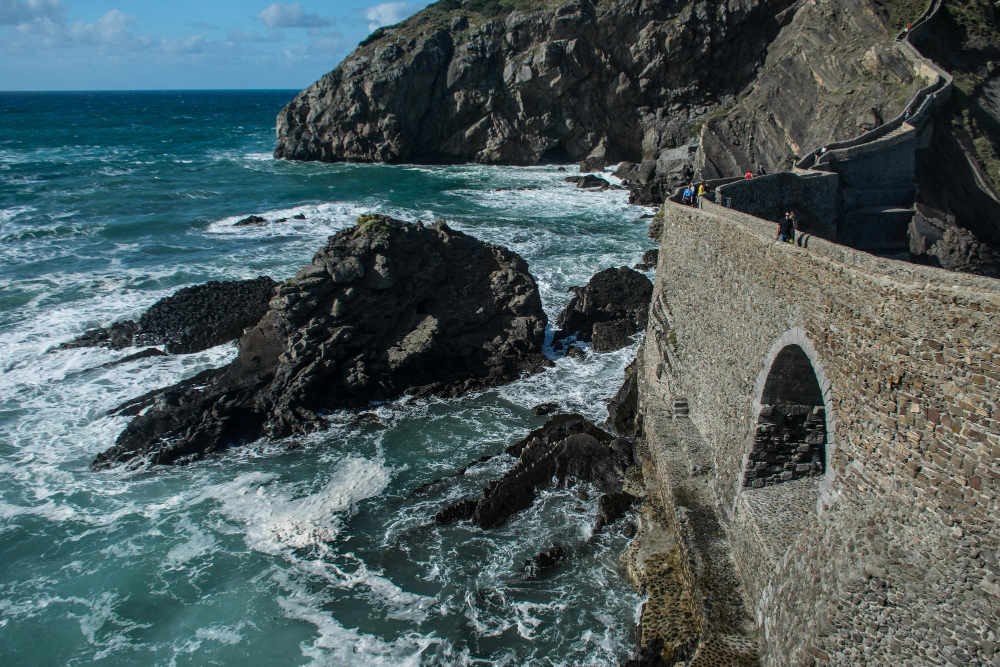
Natural wonders and biodiversity – In addition to its historical significance, Gaztelugatxe is particularly impressive for its breathtaking natural beauty. Together with the neighbouring island of Aketx, it forms a protected marine biotope stretching along the coast from Bakio to Cape Matxitxako. This region is a paradise for seabirds, which find refuge on the unspoilt island of Aketx. On Gaztelugatxe itself, birds such as northern gannets, cormorants and gulls nest. The rough Atlantic Ocean, which relentlessly pounds against the rocky coast, has carved arches, tunnels and caves into the rock over thousands of years. These natural formations make Gaztelugatxe a remarkable sight that fascinates both walkers and photographers alike. Despite the often stormy weather, the surrounding natural landscape creates a unique atmosphere that is hard to find anywhere else in the world.
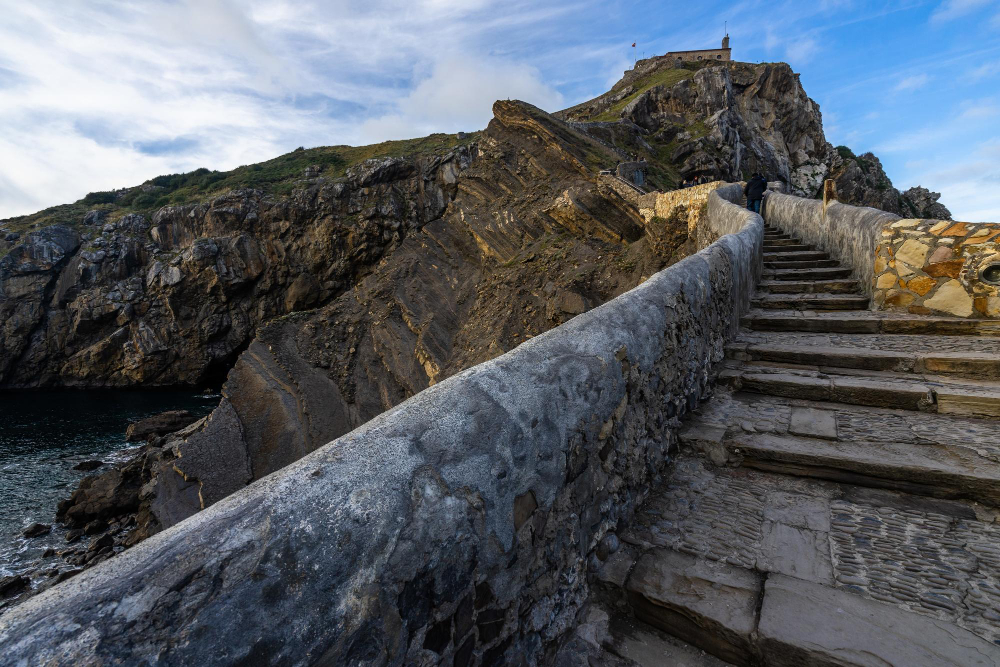
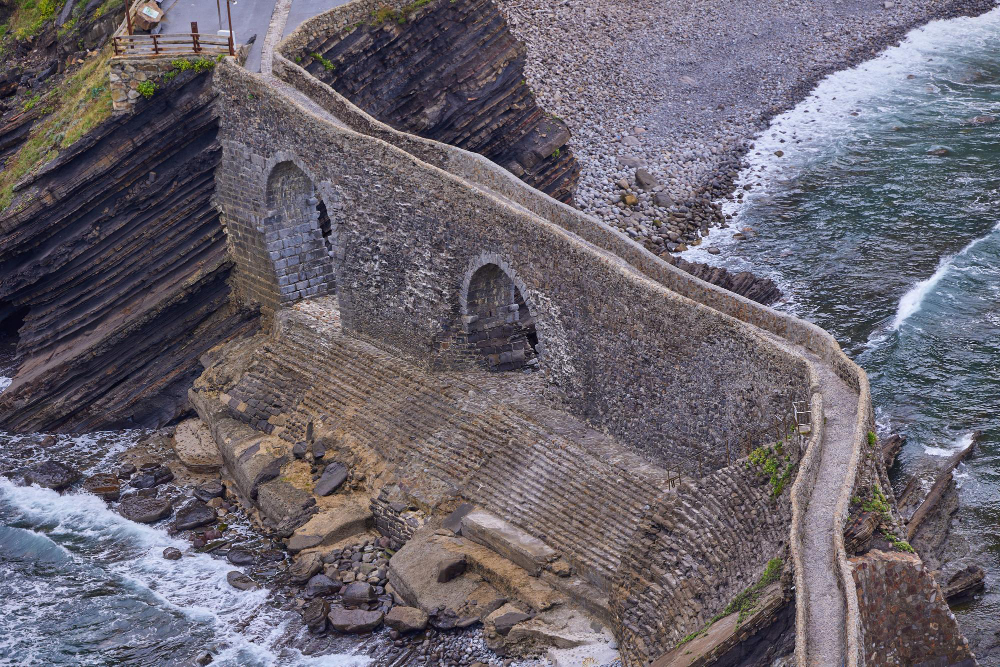
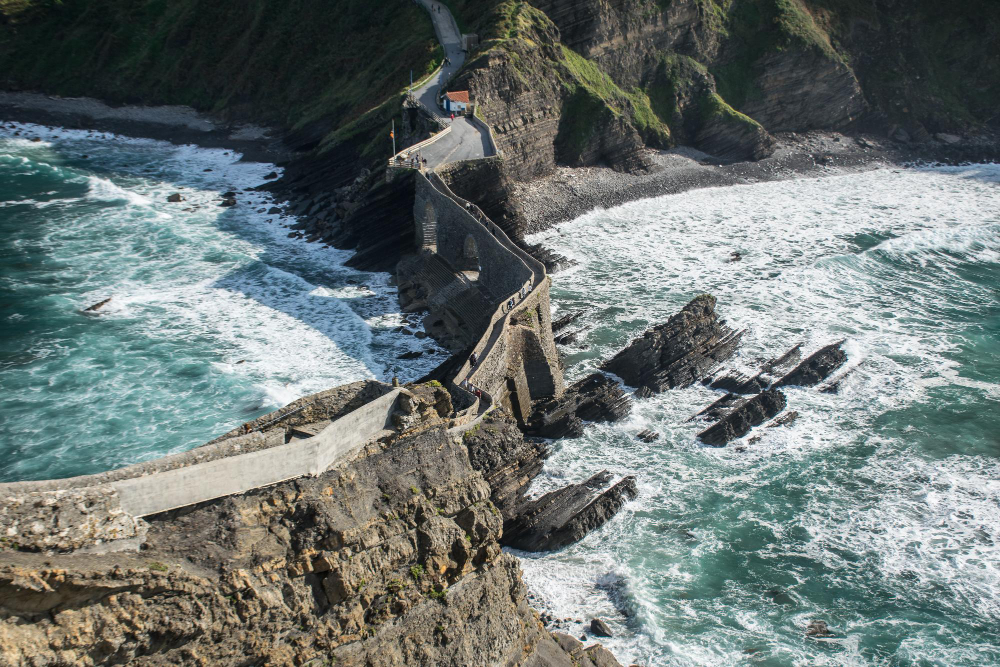
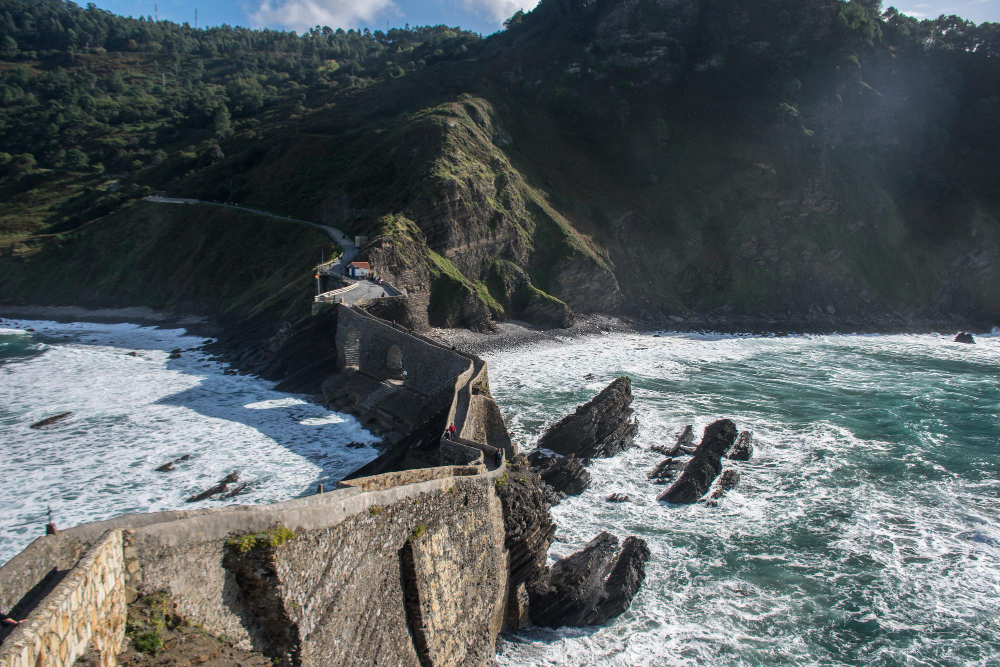
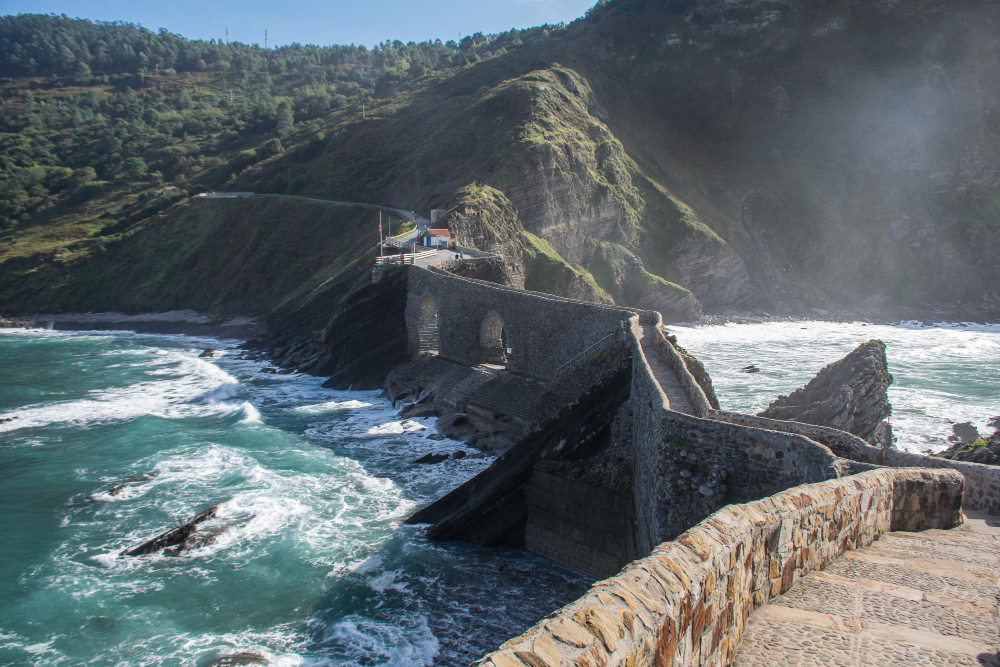
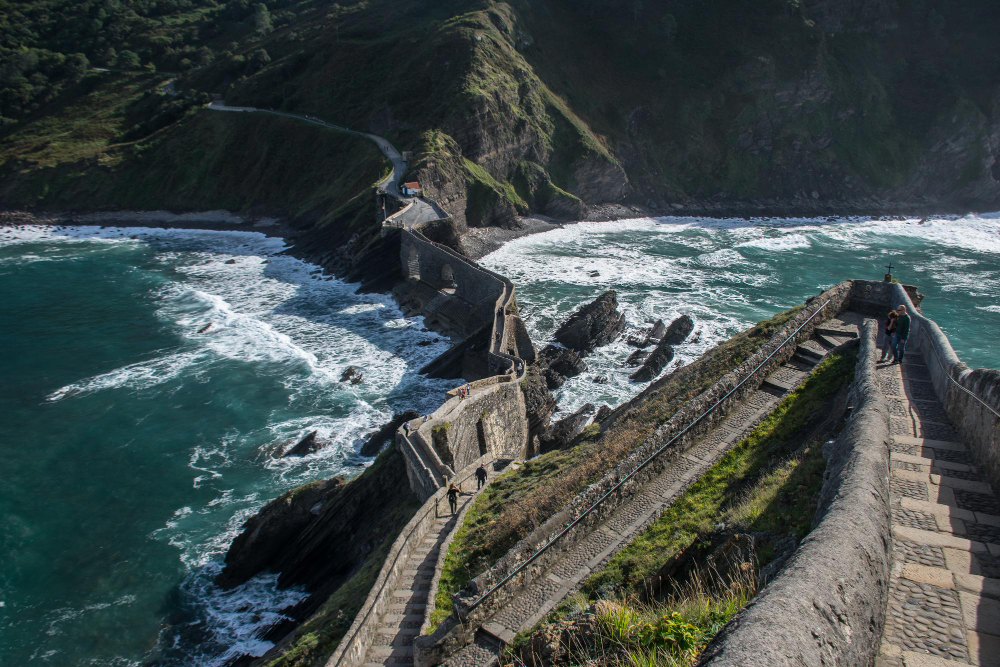
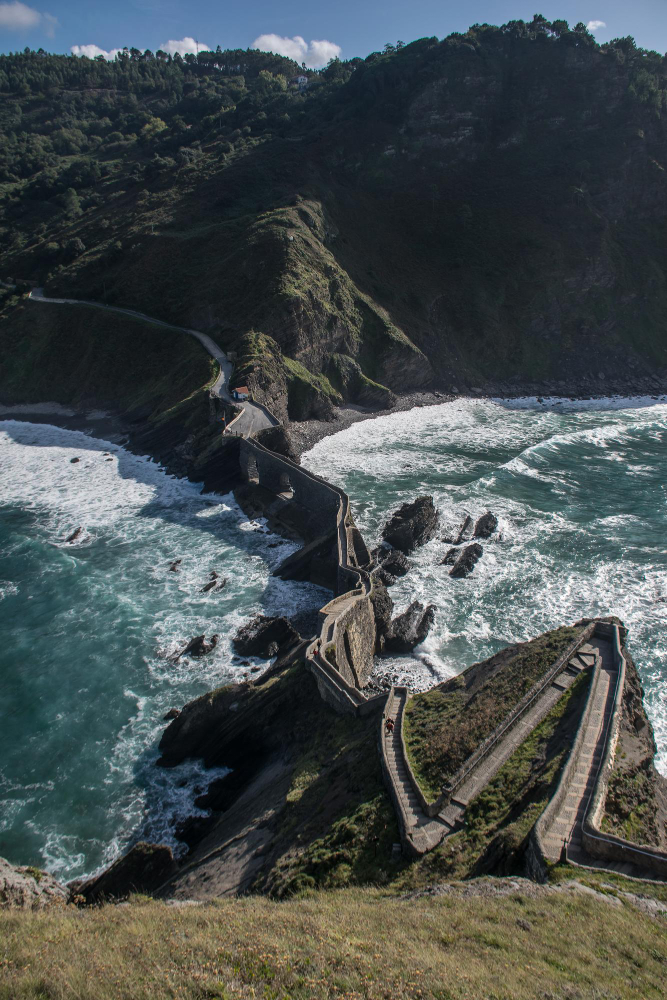
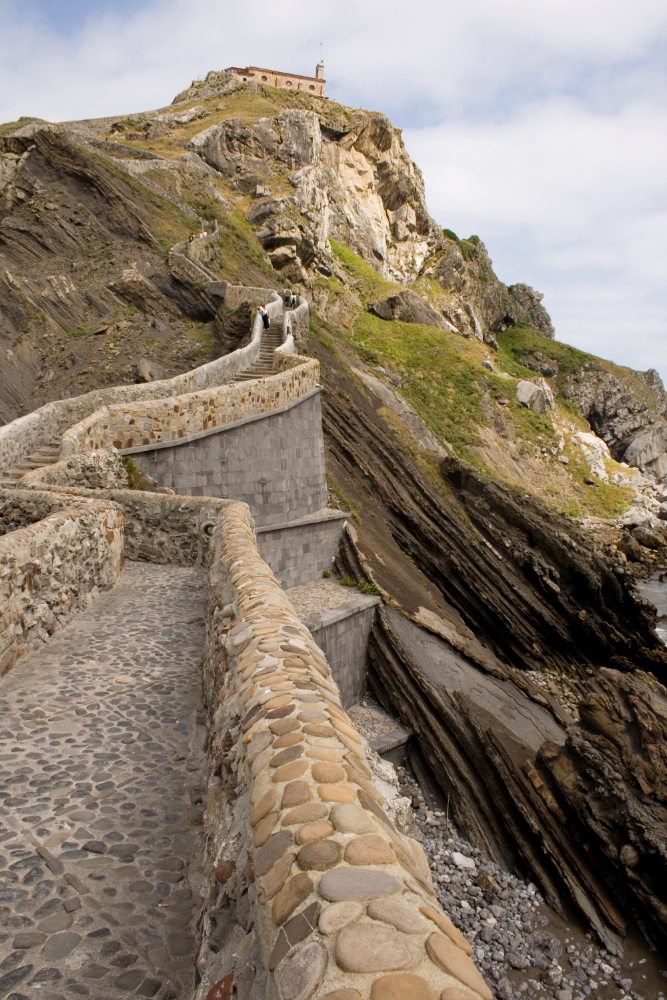
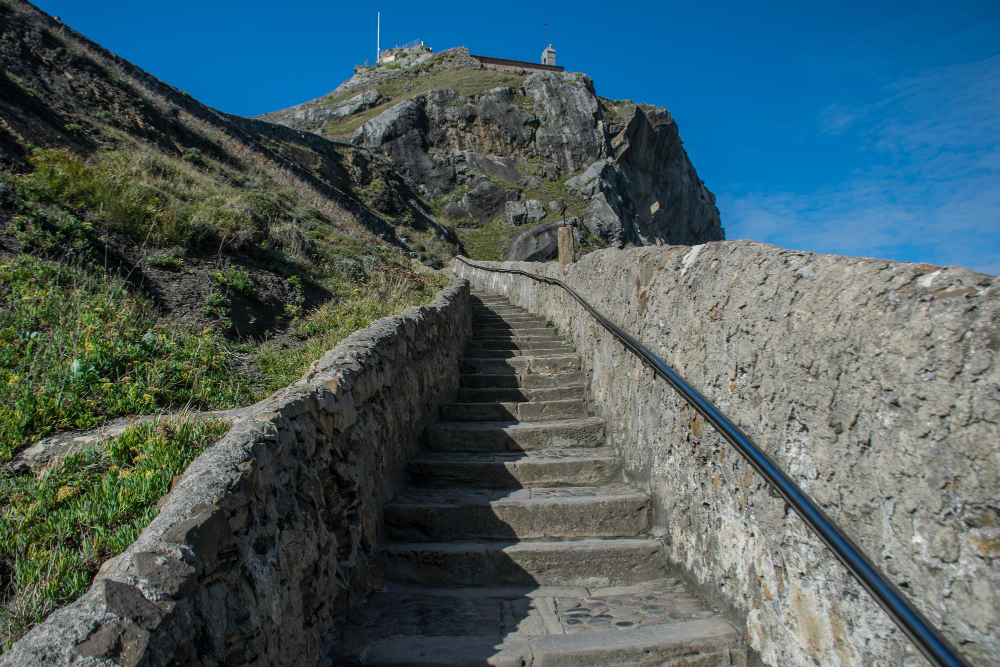
A challenge for pilgrims and walkers – The climb to the chapel is not for the faint-hearted. The 241 steps leading from the mainland up to the chapel via a narrow footbridge and steep paths present a physical challenge. But the effort is rewarded with a spectacular view. Once at the top, visitors are greeted by a panorama of the Bay of Biscay that is second to none – the foaming sea, the jagged cliffs and the gusting winds create a sense of freedom and transcendence. A special tradition awaits all those who reach the chapel: the ringing of the bell. According to Basque custom, every visitor is allowed to ring the bell three times and make a wish. It is said that this wish will come true. However, bird conservationists are concerned, as the loud ringing of the bell may disturb the birds nesting in the surrounding area. Nevertheless, this custom remains a highlight for many tourists and pilgrims. For those seeking a break from the wind and the physical exertion, a small shelter near the chapel offers refuge and a magnificent view of the sea. This spot is a particularly popular place for picnics in summer.
A source of inspiration for art and media – Gaztelugatxe has inspired not only pilgrims and nature lovers, but also artists and filmmakers. Between July and October 2016, the island was used as a filming location for the seventh series of the hit HBO series Game of Thrones. In the series, Gaztelugatxe served as the backdrop for Dragonstone, the home of the Targaryen family. Although the castle on the island was digitally added, fans will instantly recognise the island’s distinctive staircases and dramatic backdrop. This appearance brought Gaztelugatxe worldwide fame and attracted numerous new visitors from all over the world who wanted to experience the magical world of Westeros at first hand.
Practical information for visitors – Getting to Gaztelugatxe is straightforward. From the nearby towns of Bermeo and Bakio, there are well-signposted roads and car parks that make access easy. However, it is recommended that you arrive early, particularly during the summer months, as it can get very busy. Comfortable walking shoes, weatherproof clothing and plenty of water are essential for tackling the 241 steps and the often windy climb. Nature lovers and history buffs will also enjoy exploring the surrounding region. The nearby Cape Matxitxako and the beaches of Bakio are ideal for further exploration. In addition, several local companies offer guided tours that shed light on the region’s history and geology.
A place full of mystery and magic – Gaztelugatxe is far more than just a photo opportunity or a filming location for a famous TV series. It is a place where nature and history converge, a place that captivates its visitors. The combination of dramatic scenery, a turbulent past and spiritual significance makes the island one of the most fascinating attractions in the Basque Country. Visitors can not only enjoy the beauty of nature here, but also immerse themselves in the region’s rich history and cultural traditions. Gaztelugatxe reminds us just how close the bond between humans and nature can be, and how this connection creates places that remain in our memories forever. The rocky castle of Gaztelugatxe is a unique retreat that combines adventure, culture and tranquillity – an absolute must-see for anyone wishing to travel and discover the Basque Country.