Jena, one of Thuringia’s liveliest cities, impresses not only with its rich history and cultural diversity, but also with its role as a major centre for science and innovation in Germany. Over the centuries, the city on the River Saale has developed from a small medieval settlement into a modern centre for research, education and technology. In this article, we take you on an exciting journey of discovery through Jena, shedding light on its historical background and scientific achievements, whilst offering insights into life in the city today.
Historical Roots and Urban Development – Jena’s history stretches far back: the town was first mentioned in a document in 1232. At that time, Jena was a small, walled settlement whose importance stemmed primarily from its location on key trade routes. Its geographical position on the River Saale and amidst fertile land facilitated early economic development. In the Middle Ages, Jena was also part of the Duchy of Saxe-Weimar and later the Grand Duchy of Saxe-Weimar-Eisenach – political affiliations that continue to shape the character of the city to this day. In the 17th century, Jena became famous above all for the Battle of Jena and Auerstedt in 1806, when Napoleon’s troops dealt a crushing defeat to the Prussian army. This historic event is an important milestone, as it was not only significant in military terms but also ushered in far-reaching political and social changes in Prussia and Germany.
Academic Heritage and the University of Jena – What sets Jena apart on a global scale is its long tradition as a city of learning. The Friedrich Schiller University was founded here as early as 1558 and, with around 18,000 students, is now one of Germany’s most prestigious universities. The university is named after the famous German poet Friedrich Schiller, who himself spent some time working in Jena. Particularly in the 19th and early 20th centuries, Jena developed into a centre for German philosophy, literature and the natural sciences. Eminent figures such as Johann Gottlieb Fichte, Georg Wilhelm Friedrich Hegel, Friedrich Wilhelm Joseph Schelling and the physicist Ernst Abbe were active here. The latter revolutionised optics and microscopy and played a key role in the development of the Carl Zeiss works, which remain a flagship of the city to this day.
Carl Zeiss, Ernst Abbe and the Industrial Revolution – The Carl Zeiss company, founded in 1846, made Jena a world-leading centre for optics and precision engineering. Under the leadership of Ernst Abbe, who was not only an engineer but also a social reformer, the company became a pioneer of modern labour and social structures. Abbe’s innovations, including the Abbe converging lens, strengthened Jena’s position as a high-tech hub. The influence of Carl Zeiss and Ernst Abbe extended far beyond technical innovations: among other things, Abbe introduced health and safety legislation and established social facilities for employees – an early example of corporate social responsibility. Today, the Carl Zeiss Foundation is based in Jena and is one of the region’s largest employers. Numerous subsidiaries and research institutes underscore the great importance of the optics and photonics industry to the city.
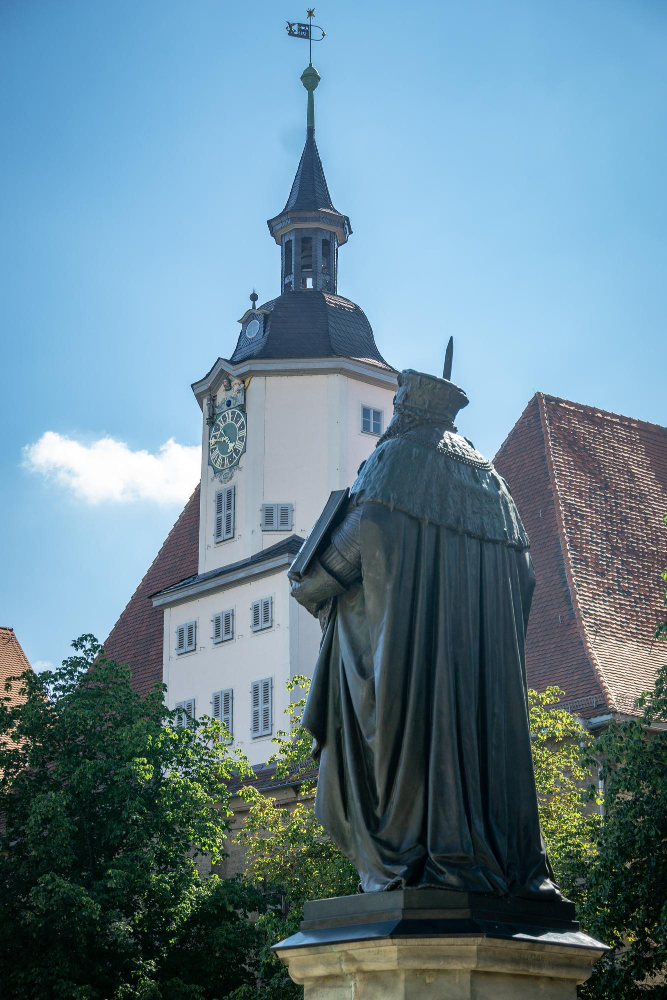
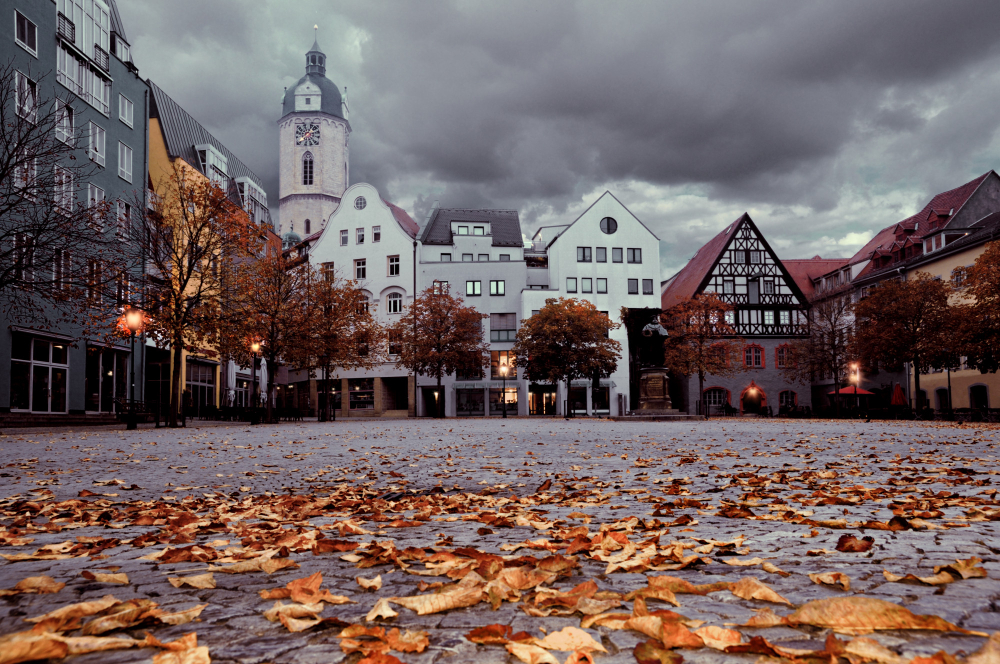
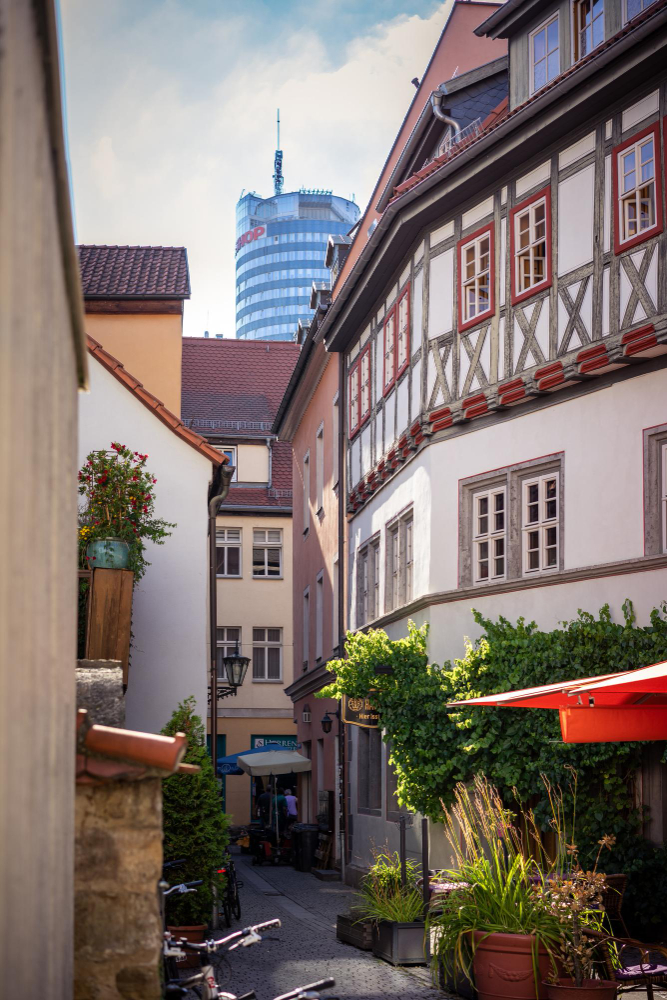
Cultural Life and Urban Diversity – In addition to its scientific significance, Jena also offers a vibrant cultural scene. The city centre, with its historic market square, impressive town hall and numerous half-timbered houses, invites visitors to stroll and explore. Museums such as the Jena City Museum, the Phyletic Museum and the Optical Museum document the various facets of the city’s history and scientific development. Jena is also characterised by its diverse cultural scene: theatre, concerts, festivals and art exhibitions enrich the daily lives of residents and visitors alike. The Carl Zeiss Jena Festival and the Jena International Film Festival are just two examples of events that enhance the city’s cultural profile. Furthermore, Jena thrives on the lively exchange between students and researchers, who create a vibrant and open atmosphere.
Urban Life and Sustainability – Over the past few decades, Jena has consistently pursued sustainable urban development. With its well-developed local transport network, numerous cycle paths and green spaces, Jena is committed to environmentally friendly mobility and a high quality of life. The Saale floodplains provide a local recreational area and harmoniously connect nature and the city. The city administration is also committed to climate protection: Energy-efficient projects, sustainable construction schemes and targeted support for renewable energy make Jena a model city when it comes to sustainability. At the same time, the city is growing steadily: new development areas and the modernisation of existing neighbourhoods ensure that living, working and leisure can be optimally integrated.
Science and Research Today – Today, Jena is a vibrant centre of science with international appeal. In addition to the university, numerous non-university institutes are based here, including the Leibniz Institute for Natural Product Research and Infection Biology (Hans Knöll Institute) and the Fraunhofer Institute for Applied Optics and Precision Engineering (IOF). These institutes conduct research into forward-looking topics such as biotechnology, optics, materials science and health technologies. There is a particular focus on linking basic research with applied innovation. Collaboration between the worlds of science, business and politics provides lasting support for Jena as a centre of innovation. Start-ups and young companies benefit from this strong network and contribute to the region’s economic dynamism.
Jena today – A city with a future – The combination of historical significance, scientific excellence and urban quality of life makes Jena a fascinating city. With a population of around 110,000, it combines the charm of a small town steeped in tradition with the advantages of modern infrastructure and an international atmosphere. At the same time, the city faces challenges such as demographic change and the integration of new population groups, but is tackling these with innovative approaches. The younger generation in particular shapes Jena’s cityscape, which is reflected in the diverse range of educational, cultural and leisure activities on offer.
Jena is far more than just a university town in Thuringia. Through the fusion of history, science and economic innovation, the city tells a fascinating story that extends into the present and shapes the future. Visitors to Jena discover not only buildings and museums, but also a vibrant place where research, culture and a zest for life go hand in hand. Whether following in the footsteps of the poets and thinkers of the past, visiting the laboratories of futurists, or strolling through the city’s bustling streets – Jena offers a wealth of opportunities to discover, explore and be amazed.