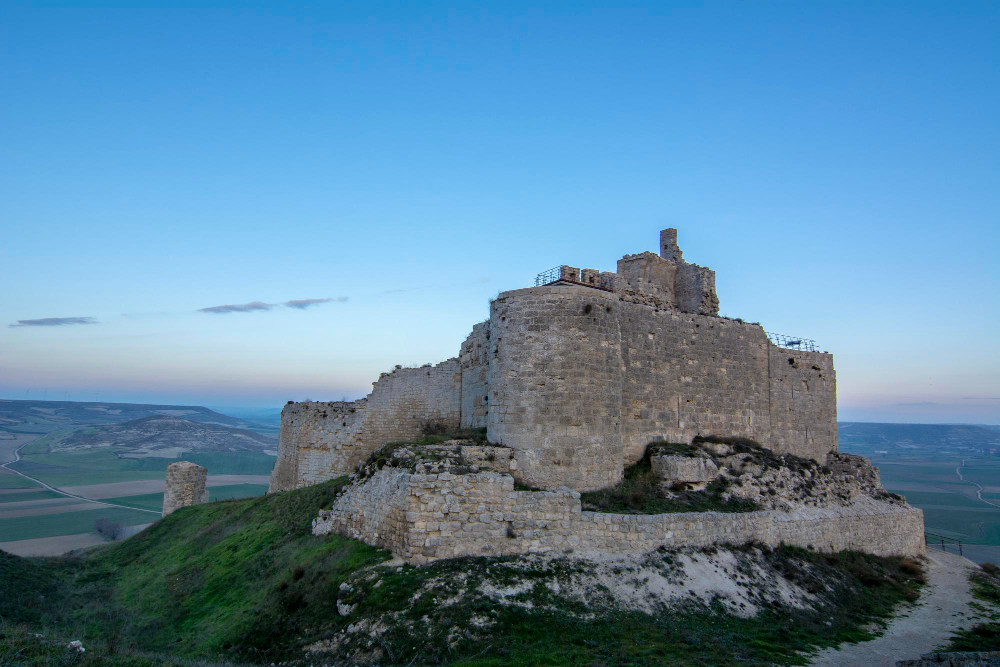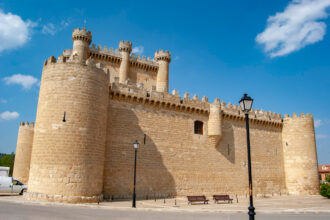
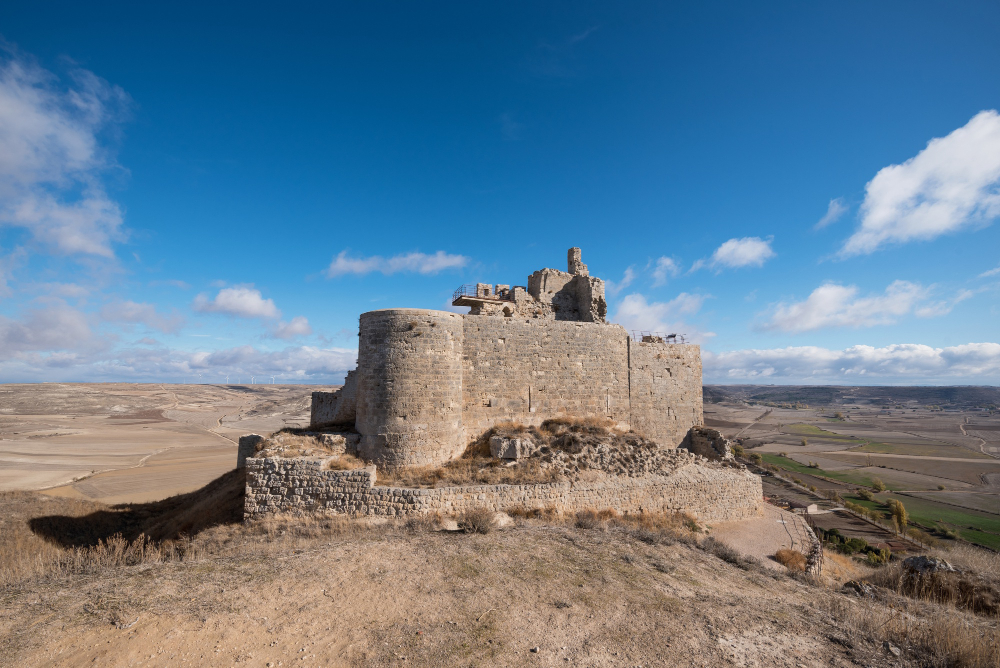
Perched high on an imposing hill stands the Castillo de Castrojeriz, a medieval fortress that has stood as a silent witness to countless historical events over the centuries. The mighty walls of this impressive structure whisper tales of glory, power, betrayal and resistance. The castle is situated in the Spanish province of Burgos and rises majestically in the municipality of Castrojeriz – an important stop on the famous Way of St James, which attracts pilgrims from all over the world. But how did this fortress come to be known today as a testament to a fascinating era? In this article, we delve deep into the eventful past of the Castillo.
Origins and Construction History: A Castle for Eternity – The origins of the Castillo de Castrojeriz date back to the 8th century. Despite uncertainties regarding the exact date of construction, it is believed that the fortress was built between the years 750 and 800. Some sources even attribute its origins to the legendary general Julius Caesar, lending the castle an air of myth. Although this claim cannot be definitively proven, it does add to the magic and fascination that surrounds this structure. The strategic location of the Castillo on a hill 900 metres high was no coincidence. Owing to its inaccessible position, it was built as a military defence against enemy attacks from various directions – from both Northern European and African troops. These included historical groups such as the Arabs, the Celts, the Visigoths and, later, the Christians. The fortress played a central role, particularly during the conflicts between Christian and Moorish troops in the 8th and 9th centuries. However, the structure was intended not only to provide protection, but also to demonstrate the power and influence of the rulers of the time. The massive stone walls and robust construction bear witness to masterful engineering that was able to withstand the challenges of the era.
A scene of military conflicts and political intrigues – The history of the Castillo is marked by constant fighting and significant historical turning points. In 882, the fortress underwent its first major reconstruction. Munio Núñez, a famous captain of the so-called ‘Foramontanos’, oversaw a comprehensive restoration of the building after it had previously been destroyed by Arab troops. This renovation, which took place largely under the rule of the Kingdom of Asturias, laid the foundations for the Castillo’s subsequent incorporation into the Kingdom of Castile in 1131.
The passage of time brought not only military challenges but also tragic personal fates. A particularly grim chapter in the castle’s history unfolded in 1358, when Leonor, Queen of Aragon, was held captive in the castle and eventually beheaded. Her execution was the result of political intrigues and power struggles within her family, which had forced her to flee to Castile. This cruel event underscores the castle’s significance not only as a defensive structure but also as a scene of royal conflicts and betrayal.
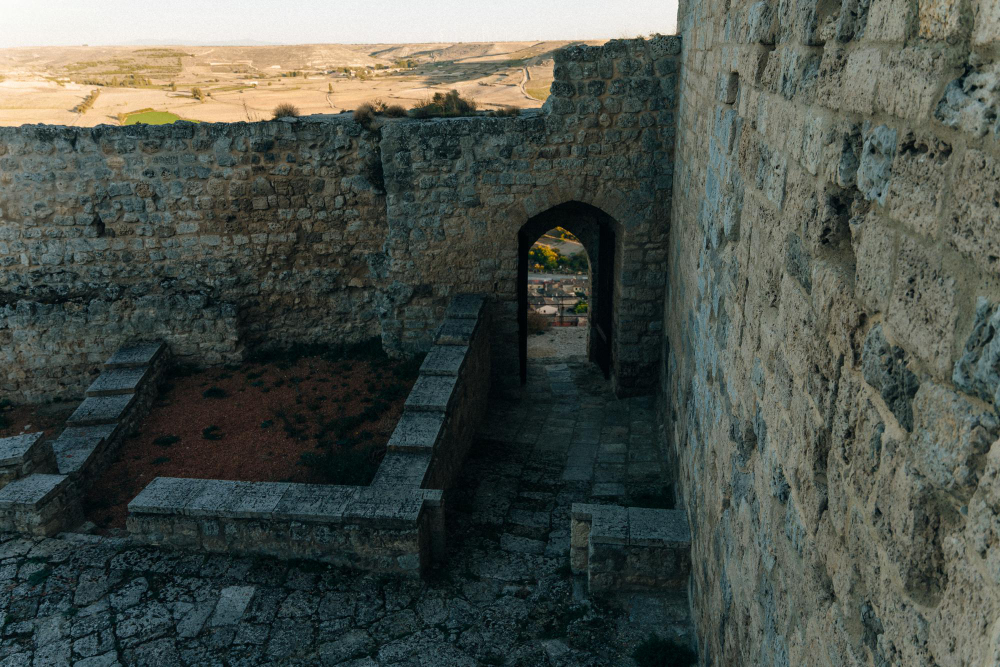
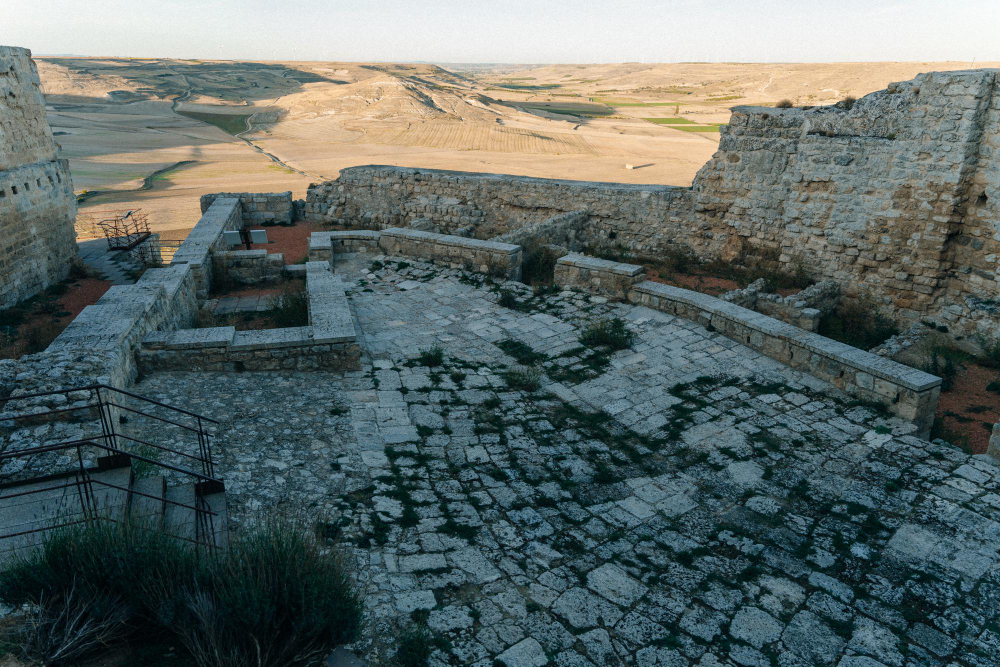
### Architecture: A masterpiece of medieval architecture – The construction of the Castillo de Castrojeriz is impressive for its robustness and functionality. The structure was built mainly from limestone blocks, lime mortar and clay – materials capable of withstanding the region’s harsh climatic conditions. It was deliberately designed to withstand attacks and natural disasters, such as the devastating Lisbon earthquake of 1755. Particularly noteworthy are the massive outer walls, which are three metres thick and seven metres high. They are fitted with loopholes that once gave the defenders a strategic advantage. Two watchtowers on opposite sides of the hill provided a perfect vantage point over the surrounding area. The fortress also included a courtyard which served as a training ground for soldiers. Excavations have revealed that the castle once covered a large area approximately one kilometre in length. Within these walls were not only military installations, but also churches, two monasteries, seven hospitals and several inns.
Decline and Restoration: Its Current Appearance – Over time, the Castillo de Castrojeriz lost its military significance and gradually fell into oblivion. The ravages of time and the effects of natural disasters took their toll: the once-mighty walls now lie largely in ruins, and many parts of the structure no longer exist. Nevertheless, the main structure has remained intact, and some remains – such as the foundations of the vaults and the castle’s former tower – offer a fascinating insight into the fortress’s original splendour. As part of modern restoration projects, the structure has been partially stabilised to ensure its preservation. Historians and architects are working to preserve the castle’s cultural heritage and make it accessible to future generations. As a result, visitors can still wander amongst the stone ruins today and embark on a journey back in time to its fascinating past.
Significance for the Way of St James and the region – The Castillo de Castrojeriz is strategically situated on one of the most important stages of the Way of St James, which attracts thousands of pilgrims from all over the world every year. The castle is not only an architectural gem, but also symbolises the region’s long history and cultural significance. Surrounded by a picturesque village where time seems to stand still, the castle offers a unique setting for anyone seeking a deeper understanding of Spanish history.
A testament to times gone by – The Castillo de Castrojeriz is far more than just a collection of old stones – it is a living historical monument that tells of the highs and lows of human history. The legends surrounding Julius Caesar and tragic tales such as that of Doña Leonor lend the fortress a mysterious aura that fascinates history buffs and curious travellers alike. Visitors to this castle walk in the footsteps of kings, warriors and pilgrims, discovering a part of Europe of great historical significance. Although the ravages of time have left their mark on the walls, the Castillo de Castrojeriz remains a symbol of perseverance and resilience in the face of life’s adversities. Its imposing setting and the stories surrounding its past make it a must-see on any journey through northern Spain. One might almost think that the ancient stones whisper their secrets to visitors – stories that remain unforgettable and enrich our understanding of history.