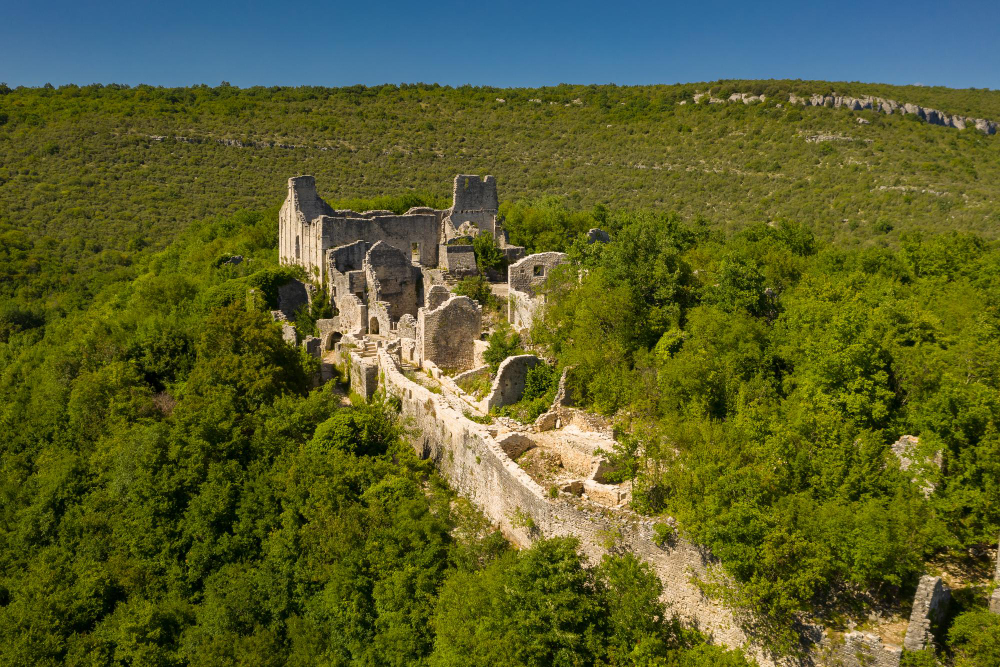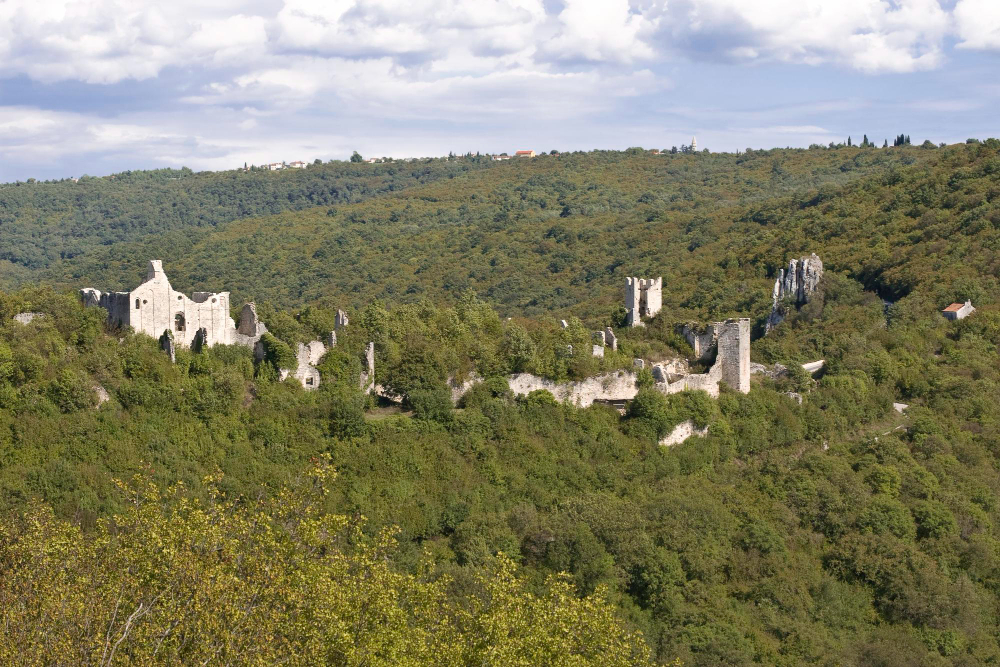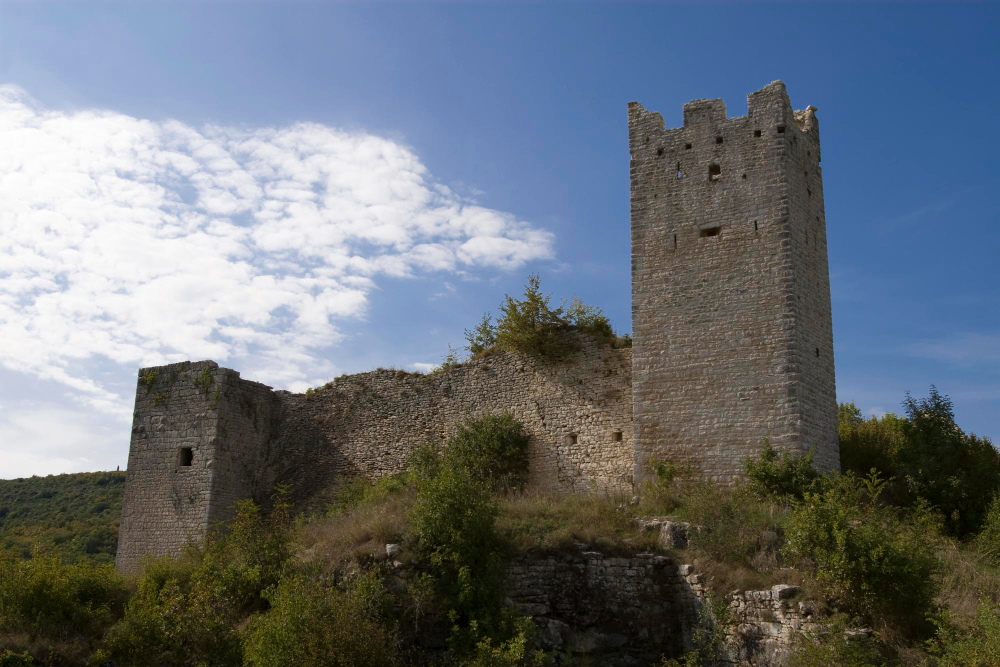
High above the Draga Valley, surrounded by the rugged beauty of the Istrian Peninsula, lies a silent witness to centuries past: Dvigrad. Once a thriving medieval trading center of strategic importance, today only crumbling walls and stone towers bear witness to the settlement’s former vitality. The name “Duecastelli,” meaning “two castles” in English, refers to the town’s origins—a fusion of the sacred and the secular that evolved into a fortress-like settlement. But how did this place come to lose its inhabitants and be regarded today as a “spiritual ruin”? A fascinating journey through the history and legends of Dvigrad takes us to one of the most intriguing corners of Croatia.
The Origins – From Prehistoric Settlement to Fortress – The history of Dvigrad begins long before the arrival of the Romans and Croats. Archaeological findings suggest that the Illyrians inhabited this area as far back as antiquity. The location above the Draga Valley was strategically advantageous: here, one could not only control trade routes but also find protection from external enemies. Later, the Romans utilized the area and left traces of their architecture and culture. In the 7th century, Croats eventually migrated to the region and laid the foundation for the medieval settlement. The name Dvigrad, derived from “Duo Castra,” recalls the two castles that once dominated the region. Starting from these fortifications, an increasingly important settlement grew. In the High Middle Ages, Dvigrad reached a population of about 1,000 and became a center of trade and defense. The symbiotic architecture of castles, residential buildings, and churches that emerged here continues to make Dvigrad unique to this day.
Conquests, Plundering, and Epidemics—The Decline of Dvigrad – Dvigrad’s medieval history is marked by conflicts and catastrophes. The town was first mentioned in a document in 879, when the Carolingians and Ottonians were consolidating their control over the region. However, its strategic location quickly made Dvigrad a target for enemy attacks. In 1345, the Genoese admiral Paganin Doria sacked the settlement during the war between Genoa and Venice. A few decades later, in 1383, the Venetians retaliated and laid waste to the town in turn. These shifting power struggles left deep scars on the lives of the inhabitants and on the town’s walls. In the 16th century, Dvigrad then fell prey to an even more cruel enemy—disease. Epidemics such as the plague and malaria spread and decimated the population. Poor sanitary conditions and the town’s isolated location facilitated the spread of disease. By 1631, most of the residents had left Dvigrad or had died. Only three families held out until around 1650, but by 1714 at the latest, the settlement was finally abandoned. Nature began to reclaim its space, and the buildings slowly fell into ruin.
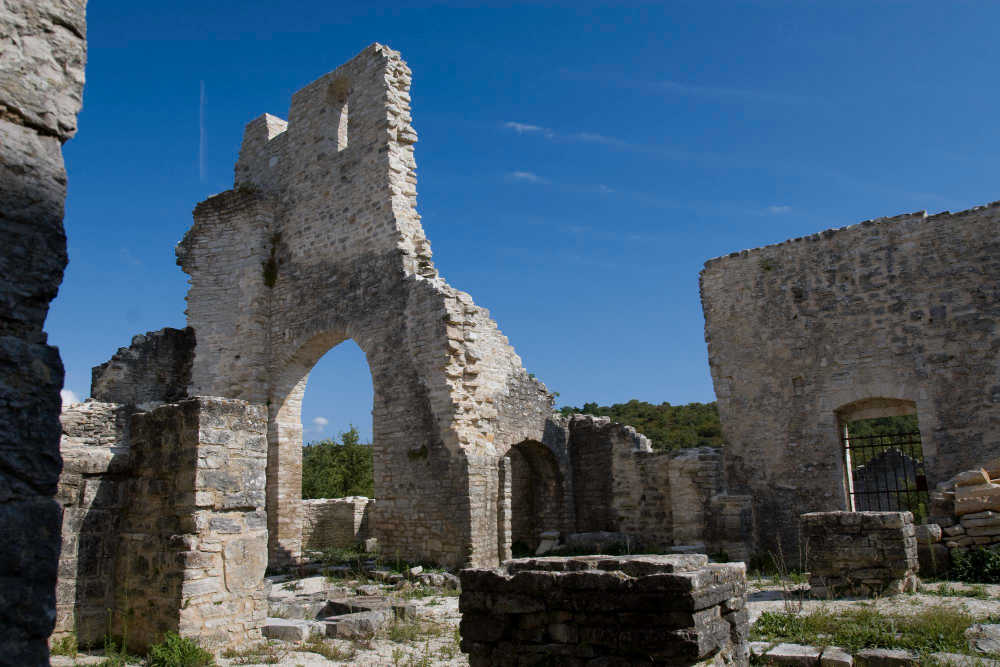
A Legend Awakens – The Secret of Dvigrad – Like any historical site, Dvigrad is shrouded in legends and myths. One of the best-known stories concerns the ancient Church of St. Sophia, considered the best-preserved structure in the ruined town. It is said that this church was a sacred place that once housed a mysterious treasure. But the curse of the treasure is said to have befallen those who tried to steal it. Thus, the church is said to harbor the spirits of those who met their end within the walls of Dvigrad. Even today, the mystical atmosphere of the ruins attracts many visitors seeking answers to the mysteries of the past.
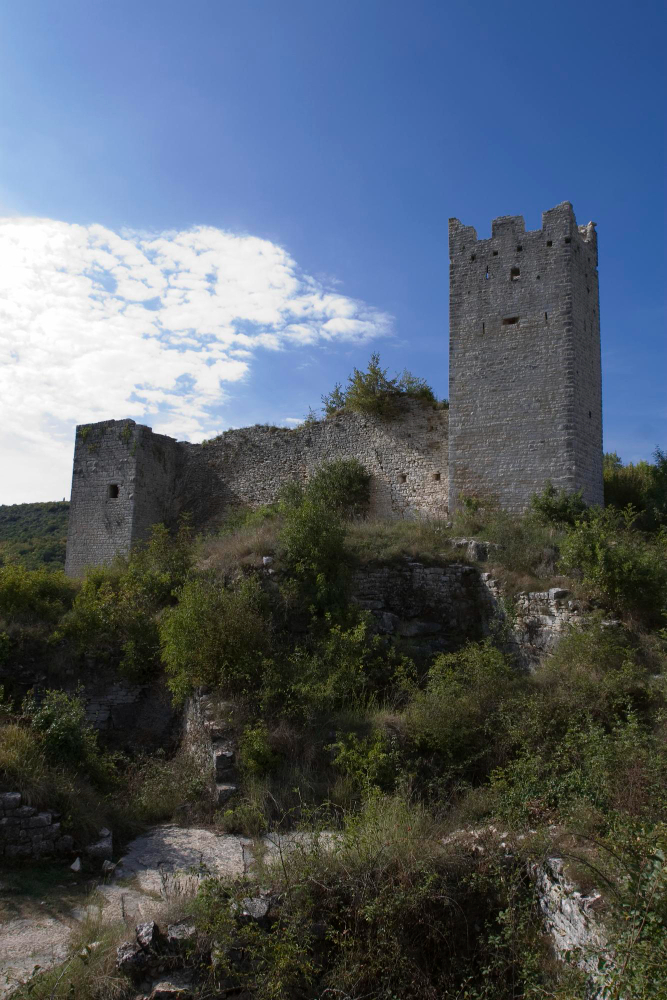
The Rediscovery – Dvigrad as a Tourist and Archaeological Highlight – Although Dvigrad has been abandoned for centuries, the ruined city was never completely forgotten. In 1997, Croatian authorities designated the area a cultural heritage site, and initial measures to preserve the historic site were initiated. Between 2001 and 2005, archaeologists conducted extensive excavations that unearthed numerous artifacts offering insights into medieval life. From pottery shards to coins and tools, these finds tell the story of a thriving community that persevered despite all challenges. Dvigrad Castle, which towers centrally over the complex, remains the heart of the ruined village to this day. Its massive stone walls and towers are impressive even in their dilapidated state. Historians believe that the architecture of the castle and its adjacent buildings is atypical for the region and may have been inspired by other European influences. Dvigrad is therefore not only a monument to local history but also a melting pot of cultural influences.
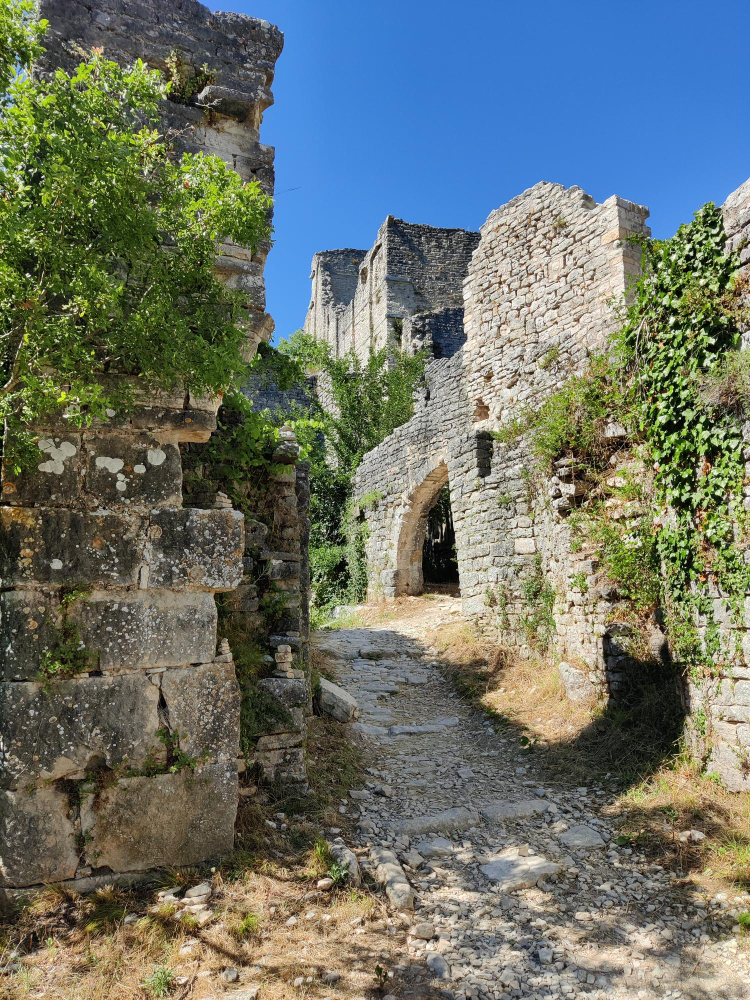
Conservation Efforts and Looking to the Future – Despite its great historical value, Dvigrad remains a site at risk. Centuries of neglect have severely damaged the ruins, and preservation requires significant financial and human resources. However, since its inclusion in the “Project List for the Restoration of Shared Cultural Heritage in Southeast Europe,” conservation efforts have been ongoing. Researchers and restorers are working together to secure the remaining structures and make them accessible to the public. Today, Dvigrad is a popular destination for tourists, historians, and archaeologists. Especially during the summer months, the narrow paths through the ruins fill with visitors who come to enjoy the mystical atmosphere and learn more about its eventful past. Guided tours and events, offered regularly, help preserve Dvigrad as a cultural treasure of Croatia.
A Silent Witness to Our Past – Dvigrad is not only a fascinating relic of bygone eras but also a memorial. The ruined city reminds us of how fragile even the most powerful communities can be when conflict and disease overtake life. At the same time, it shows us the resilience of human history—for although the people have gone, the walls of Dvigrad continue to tell their story. The ruins of Dvigrad invite us to rediscover the past and, at the same time, to reflect on the future of historic sites. With its unique combination of sacred and secular structures, its eventful history, and its mystical atmosphere, it will likely continue to fascinate visitors from all over the world for years to come. Anyone who has experienced the silence of this place can literally feel the voices of the past echoing from the walls—an irresistible call to anyone interested in history and legends.