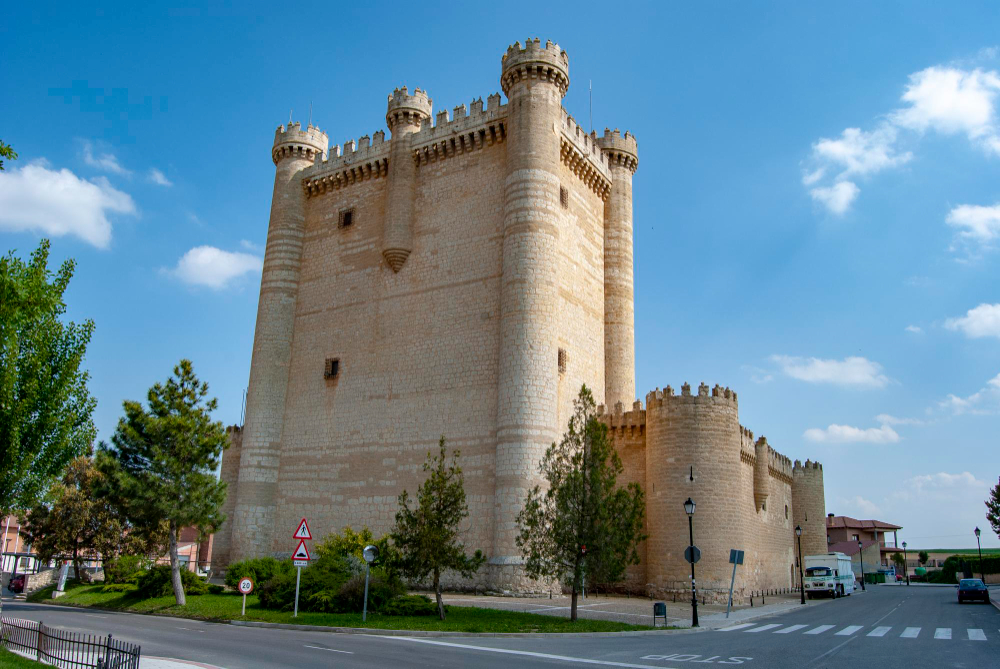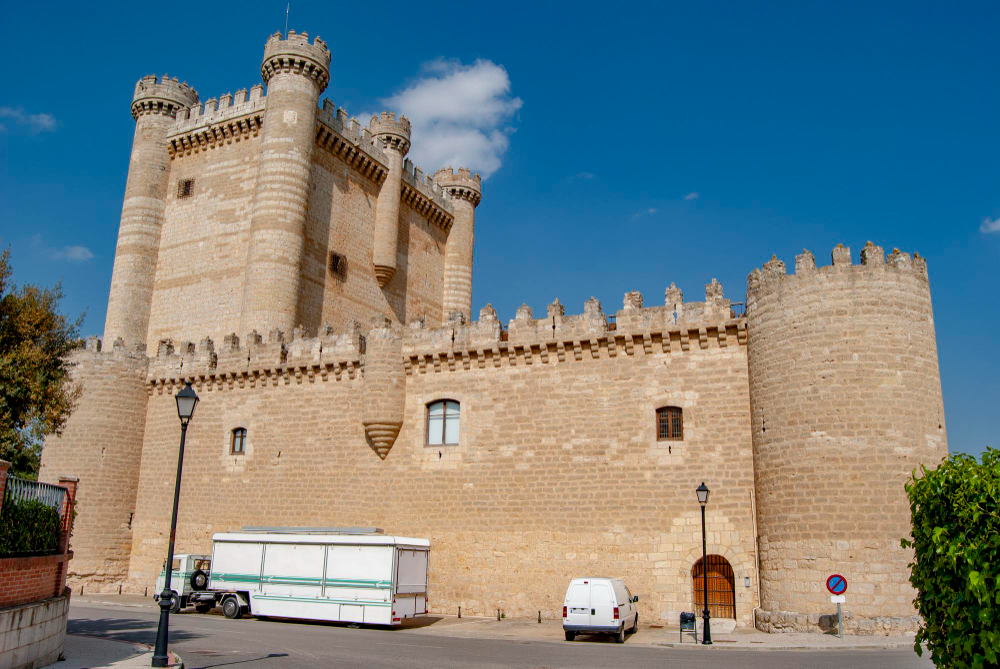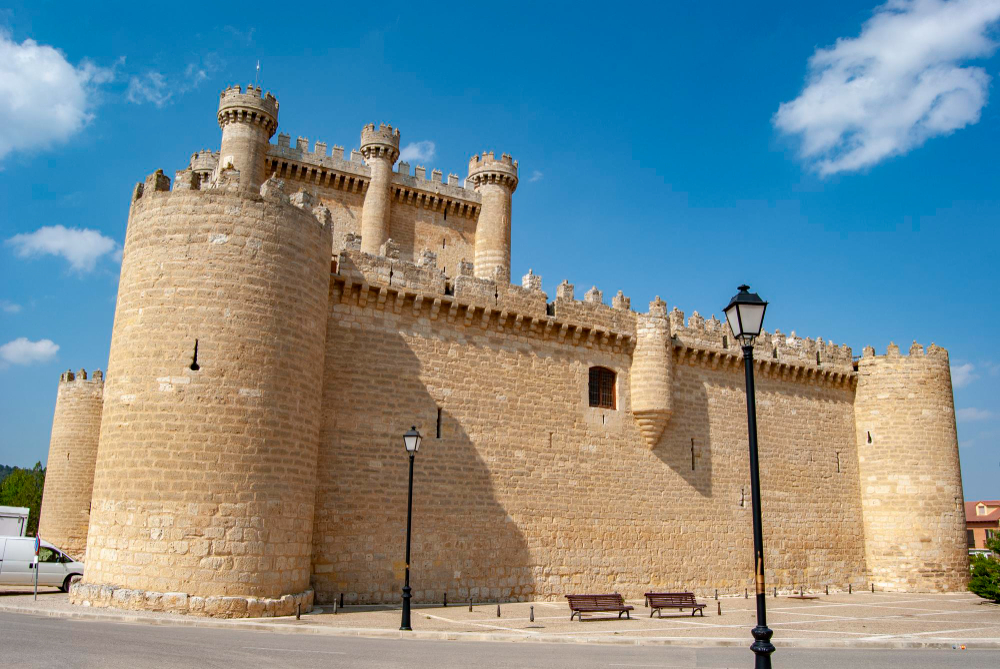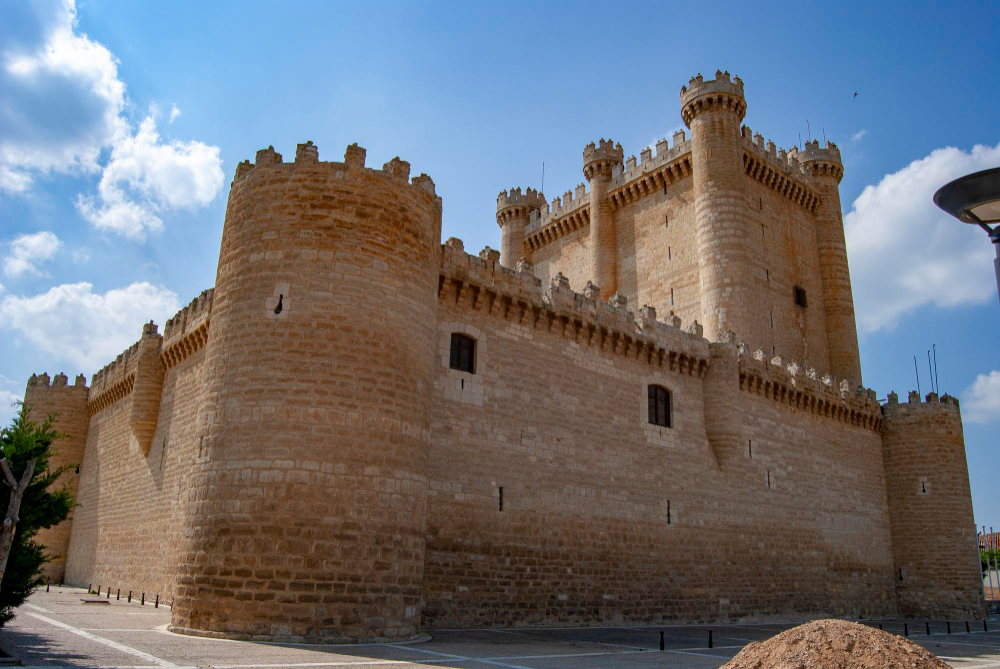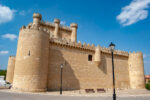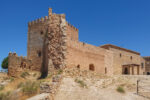
In the heart of Spain, just six kilometres from the bustling city of Valladolid, stands the imposing Castillo de Fuensaldaña. This majestic structure, a landmark of the Castile and León region, tells a story deeply interwoven with the intrigues of the Middle Ages, the turmoil of dynastic conflicts and the modern challenges of heritage conservation. Its stone façade captivates visitors not only through its architectural splendour, but also through the layers of history and legend that have accumulated over the centuries.
From its 13th-century beginnings to a medieval stronghold – The castle’s roots stretch back to the 13th century, yet the form admired today did not take shape until the mid-15th century. At that time, the Iberian Peninsula was undergoing a period of upheaval: the Reconquista was at its height, and the Christian royal court was consolidating its power against Muslim rulers. It was during this period that Fuensaldaña took on its characteristic form as a fortified stronghold, skilfully combining military functionality with a sense of grandeur. One of the notable aspects of its construction was the use of captive Moors, as historical sources attest. These people, once adversaries and ‘people of a different faith’, were forced to help build the stone walls under harsh conditions – a symbol of the political circumstances of the time, but also a testament to the complex social dynamics.
The Shadow of Betrayal and the History of the Vivero Family – Closely linked to the castle is the story of Alonso Pérez de Vivero, an influential nobleman of the time who played a key role in driving the construction forward. His career ended tragically, as he fell victim to a conspiracy against Álvaro de Luna, the powerful favourite of King John II of Castile. Vivero’s assassination exemplifies the dangerous power games at court, which often culminated in bloody intrigues. Later, during the War of the Castilian Succession, the castle once again found itself at the centre of political turmoil. The Catholic Monarchs, Isabella and Ferdinand, seized the estate – effectively confiscating it – due to opposition from the Vivero family – a demonstration of royal power. However, it was returned to the Viveros as early as 1490. Interestingly, the Catholic Monarchs themselves spent their wedding night there in 1469, which lent the castle a romantic aura.
The Comuneros Revolt and other historical events – In 1521, Fuensaldaña became the scene of a significant historical event: the Comuneros Revolt. This uprising by commoners and the nobility against central royal authority was an early example of a popular revolt in Spain. The castle served as a strategic stronghold during the fighting, underlining its military importance. Over the centuries, the building changed hands several times and bore witness to numerous stories that reflect Spain’s political and social life.
From Decay to a Contemporary Political Stage – After centuries of varying uses, the castle faced the threat of disrepair in the 20th century. However, in 1983, Demetrio Madrid, then President of the Autonomous Community of Castile and León, decided to choose Fuensaldaña as the new seat of the regional Cortes. This political chapter breathed new life into the castle: it was transformed from a relic of bygone times into a vibrant centre of democratic decision-making. This phase lasted until 2007, when the Cortes moved to a modern building in Valladolid. Economically, the move was a setback for the province and the village community, which had long benefited from their proximity to the parliament. At the same time, a new challenge arose: how could the building be preserved for the future, made accessible and, at the same time, put to cultural use?
Renovation and Tourist Renaissance – Starting in 2011, extensive restoration work was undertaken, which primarily improved the building’s structural condition but also created the necessary infrastructure for visitors. At the end of 2012, Fuensaldaña opened its doors to the public – from then on, the castle was not only a historic monument but also a venue for weddings, conferences and cultural events. A particular highlight since 2015 has been the safe access to the tower roof. From there, visitors can enjoy a breathtaking view over the vast Castilian countryside and Valladolid. The combination of historical atmosphere and modern use is what makes the castle so appealing today.
Legends and cultural significance – Alongside its documented history, it is the legends and stories surrounding Fuensaldaña that bring the castle to life. Local lore tells of the ghosts of former inhabitants and hidden secrets within its walls. One anecdote in particular tells of the ghost of Alonso Pérez de Viveros, who is said to wander the halls – a reminder of betrayal and political intrigue. Furthermore, the castle is a symbol of regional identity that reflects the connection between the past and the present. For many residents of Castile, it represents a tangible link that keeps history alive whilst also opening up prospects for the future.
Fuensaldaña – more than just a castle – The Castillo de Fuensaldaña represents far more than just a historical landmark. It is a living testament to Spanish history, a place where the power struggles of the Middle Ages, the hopes of kings and the democratic spirit of the present converge. At the same time, its recent development demonstrates how important sustainable heritage conservation and adaptive reuse are for preserving cultural values and breathing new life into them. Anyone who steps inside its stone walls can feel the pulse of the centuries, sense the tensions between tradition and modernity, and immerse themselves in a world full of stories that extend far beyond the walls. Fuensaldaña invites us not only to preserve history, but to bring it to life – a fascinating experience for locals and visitors alike.