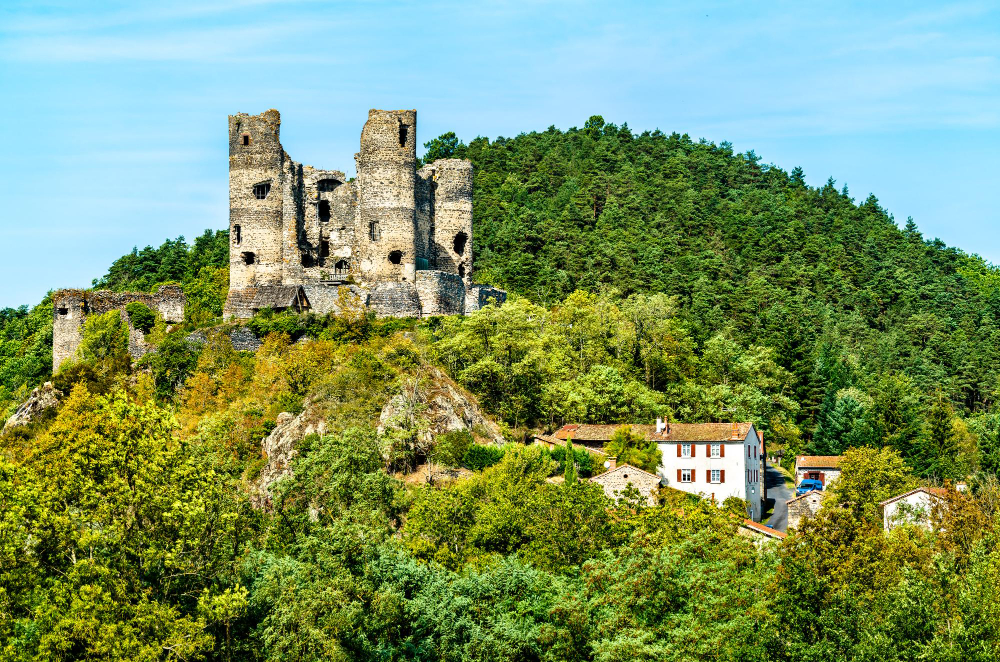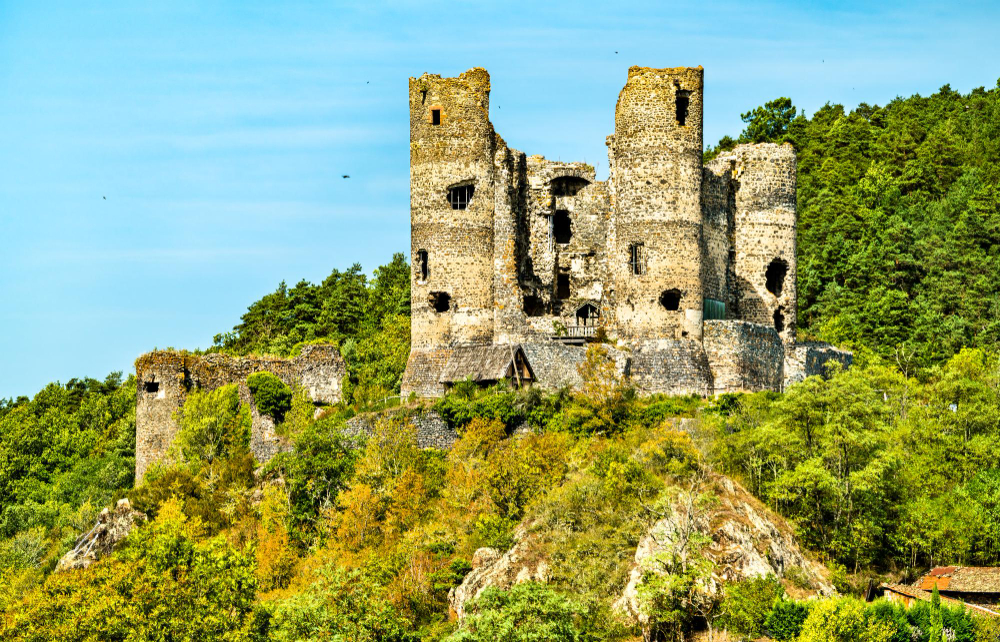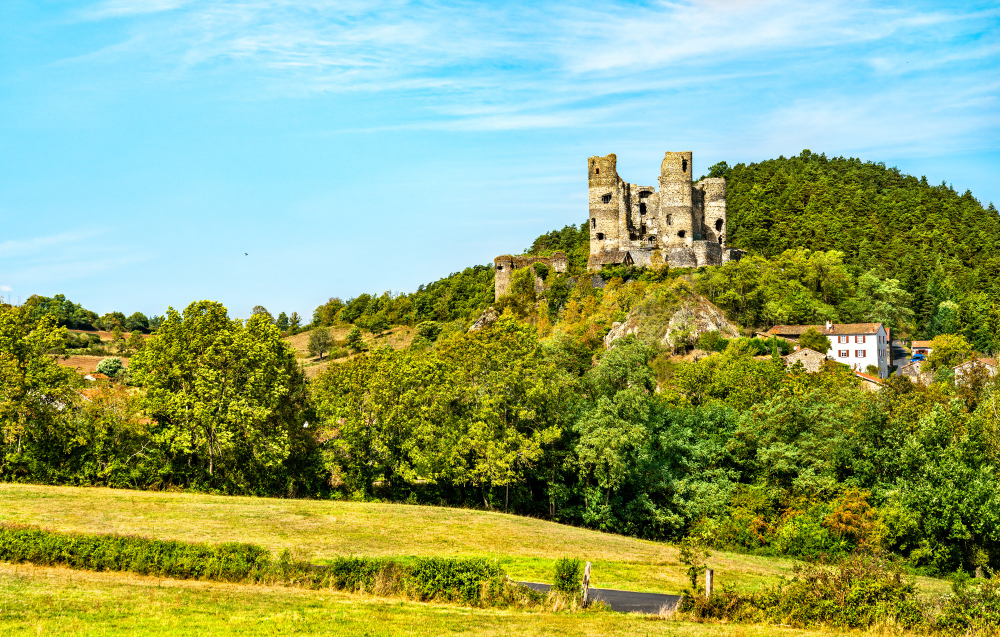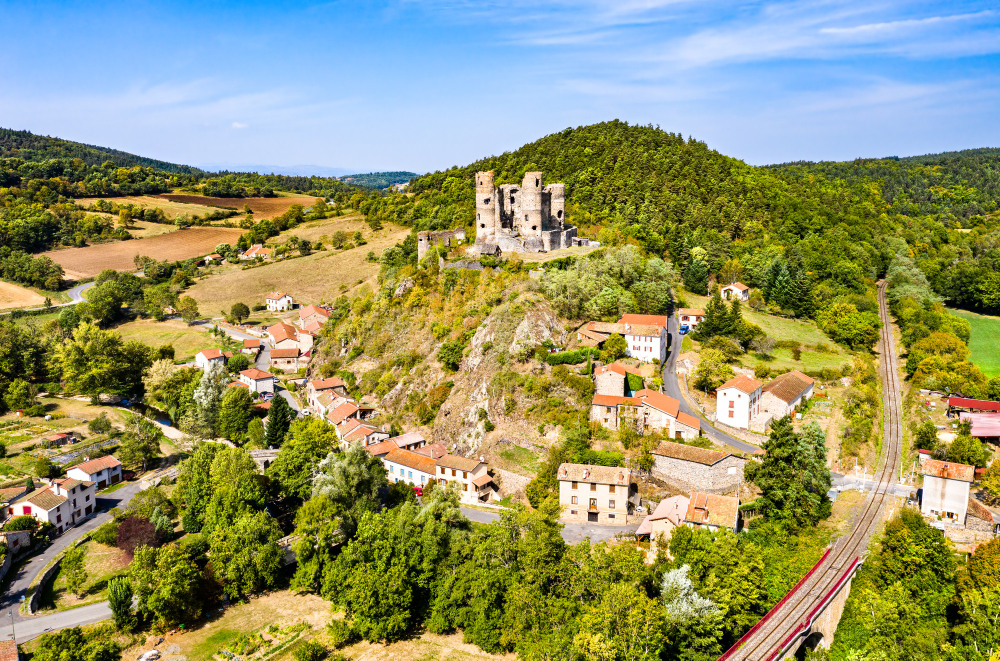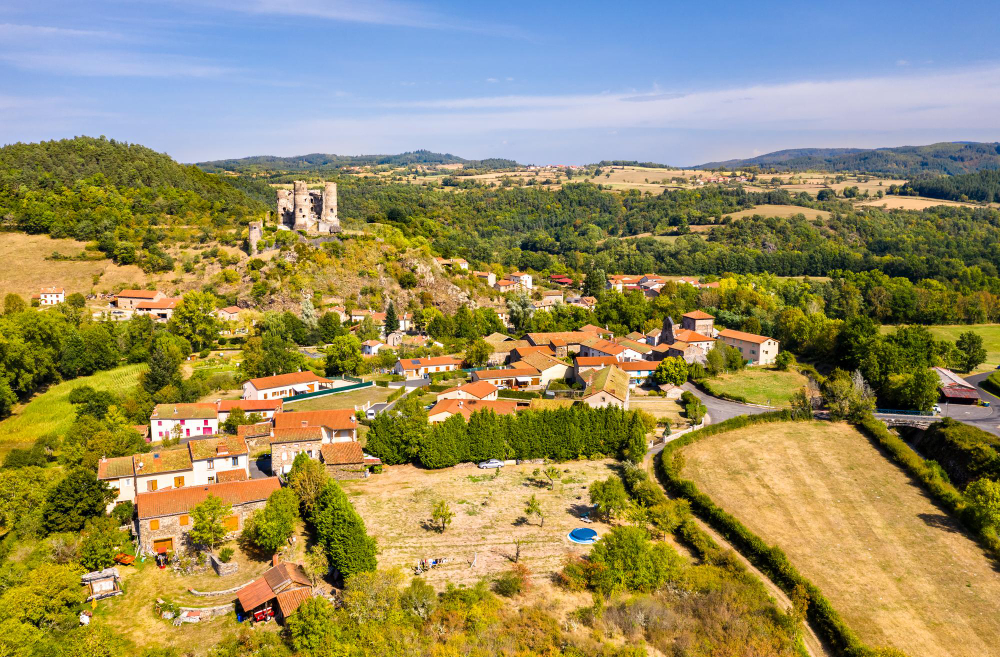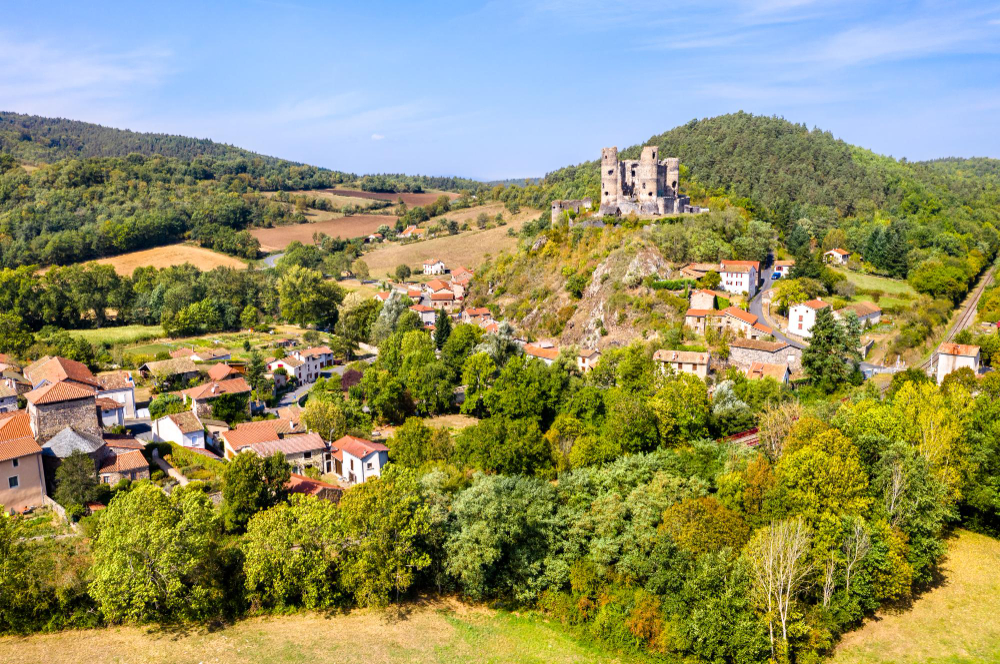
Nestled in the picturesque countryside of the Auvergne, the Château de Domeyrat rises majestically above the small village of Domeyrat in the Haute-Loire department in central France. This historic building, which has been classified as a ‘Monument historique’ by the French Ministry of Culture since 1983, tells a fascinating story of noble families, wars and changes over the centuries. In this article, we take you on a journey through time, exploring the eventful past of the Château de Domeyrat and taking a detailed look at its architecture and cultural significance.
First mention and early history – The origins of the Château de Domeyrat stretch far back in time. The castle was first mentioned in a register of vassals of Alphonse de Poitiers, compiled between 1250 and 1260. At that time, the estate was owned by the Papabeuf family, an influential noble family active in the region during the Middle Ages. However, like many other families of that era, the Papabeuf line was ravaged by the horrors of the Black Death – it is thought to have been wiped out during the pandemic outbreak of 1348. Following the decline of the Papabeuf dynasty, the château changed hands several times. Historians suspect that it was even abandoned for a time during the Hundred Years’ War (1337–1453). This turbulent period led to numerous châteaux and fortresses in France being either destroyed or rendered uninhabitable.
A new lord and the castle’s renovation – The year 1375 marked a significant turning point in the history of the Château de Domeyrat. Adhemar de Jori, whose name is recorded in historical documents, was appointed lord of the castle at this time. However, just a few years later, in 1387, another change took place: Pons de Langheac, Seneschal of the Auvergne region and a prominent nobleman of the time, took over the estate. His son succeeded him in 1421 and left a lasting mark on the château. It was particularly during the de Langheac family’s stewardship that the castle underwent extensive reconstruction. Pons de Langheac’s son is often regarded by historians as the ‘second builder’ of the complex, as he carried out far-reaching structural alterations. Indeed, opinions differ as to whether some parts of the present-day castle actually date from this period or from the original construction phase. The de Langheac family’s rule lasted until 1656, before the château finally passed into other hands.
The Decline and Rescue of the Château de Domeyrat – During the French Revolution (1789–1799) – a period that fundamentally altered or destroyed numerous aristocratic estates in France – the Château de Domeyrat began to fall into disrepair. The château was increasingly left to its own devices and, over the years, lost more and more of its former splendour. The lack of maintenance by successive owners led to parts of the complex being demolished. It was not until the 20th century that a glimmer of hope emerged for the château: in 1983, the Conseil général of Haute-Loire acquired the property and had it listed as a ‘Monument historique’. This placed the Château under state protection, ensuring that its architectural and historical heritage could be preserved. Today, the château is managed by the ‘Et Tant d’Arts…’ association, which organises medieval-themed events, thereby keeping the estate’s history alive.
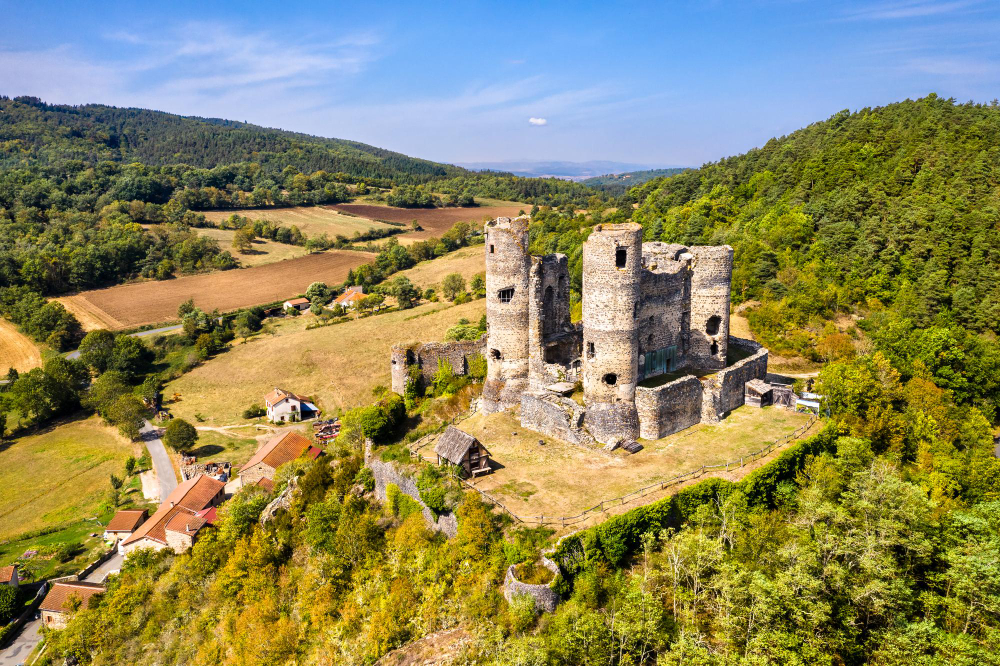
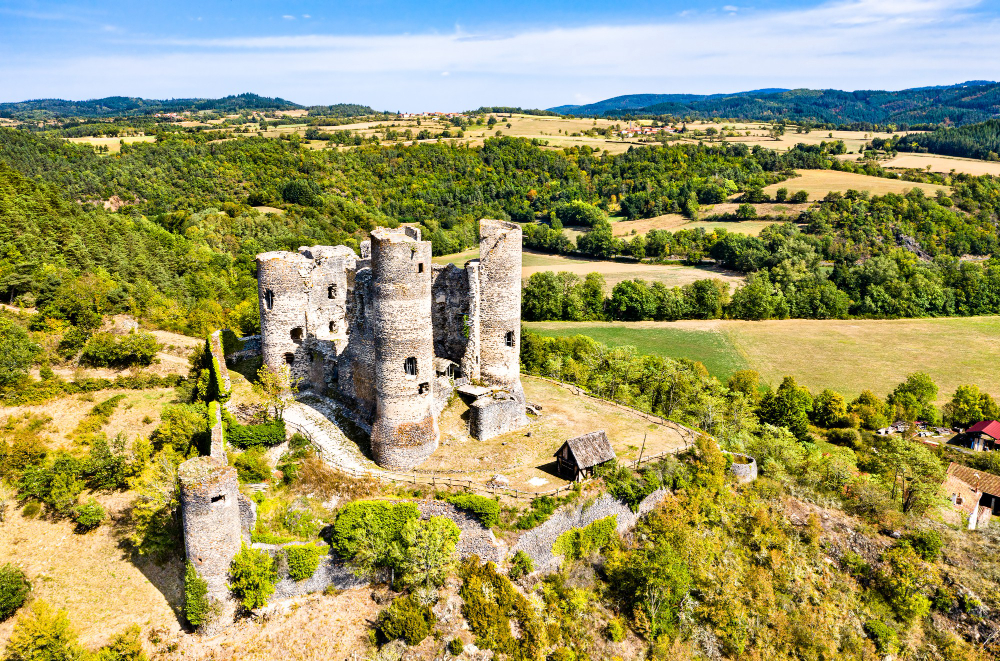
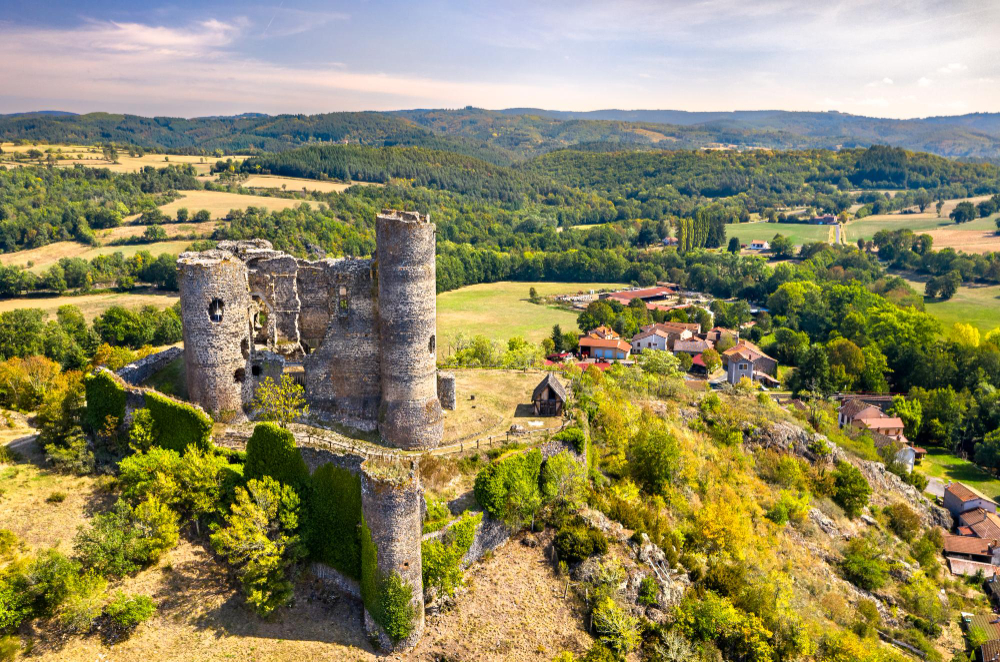
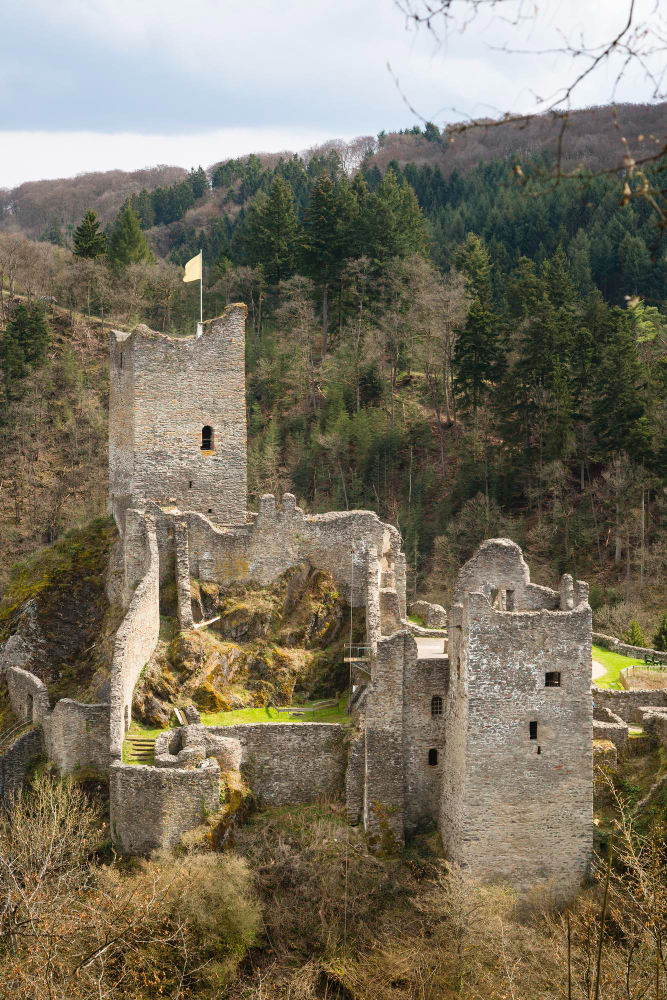
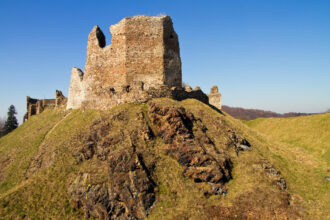
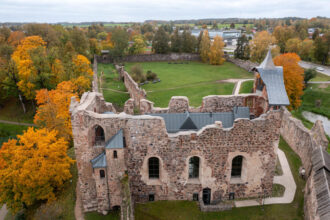
The architecture of the Château de Domeyrat: a fortress with character – The Château de Domeyrat is characterised by its strategic location on the slope of a small hill, from which it overlooks the village of Domeyrat and the Senouire Valley. This commanding position demonstrates that the building was originally designed not only as a residence but also as a defensive fortress. The castle’s architecture comprises two main areas: the inner fortifications consist of a rectangular layout reinforced by round towers at the corners. Within this protected area lie the castle’s main buildings, including the massive keep. Interestingly, the open courtyard typical of such structures is absent here, which emphasises the building’s compact design. This core is surrounded by a second outer curtain wall, which provided additional security. Particularly noteworthy are the decorative paintings that have been preserved in two of the corner towers. The north-west tower features hunting scenes from the 16th century, whilst the south-west tower is adorned with religious motifs, including a small chapel that once stood there. These ornate paintings offer a rare insight into Renaissance culture and the lifestyle of the castle’s inhabitants at that time.
The castle’s significance today – Today, the Château de Domeyrat is not only a testament to bygone eras, but also a place where history is actively brought to life. Thanks to initiatives by the managing organisation ‘Et Tant d’Arts…’, events are regularly held at the castle, allowing visitors to experience medieval life first-hand. Jousting tournaments, traditional music and dances, as well as educational workshops, are just some of the activities that allow visitors to take a journey back in time. The combination of historical heritage and modern leisure activities makes the Château de Domeyrat a popular destination for tourists and history enthusiasts alike. Thanks to the preservation of its architecture and the vivid way in which its history is brought to life, the castle is a valuable part of the cultural heritage of the Auvergne region.
The Château de Domeyrat is far more than just an old ruin. It is a symbol of France’s eventful history, marked by battles, changing ownership and cultural development. From its origins as the property of the Papabeuf family, through the renovation work carried out by the de Langheac family, to its near-total ruin during the Revolution – the château tells stories that still resonate today. Thanks to its careful restoration and its creative use as an event venue, this historic monument remains alive for future generations. A visit to the Château de Domeyrat is well worth it not only for those interested in architecture and history, but also for anyone wishing to experience the magic of times long past. With its imposing setting, ornate details and vibrant connection to the present day, this château is a unique place where history and legend converge.