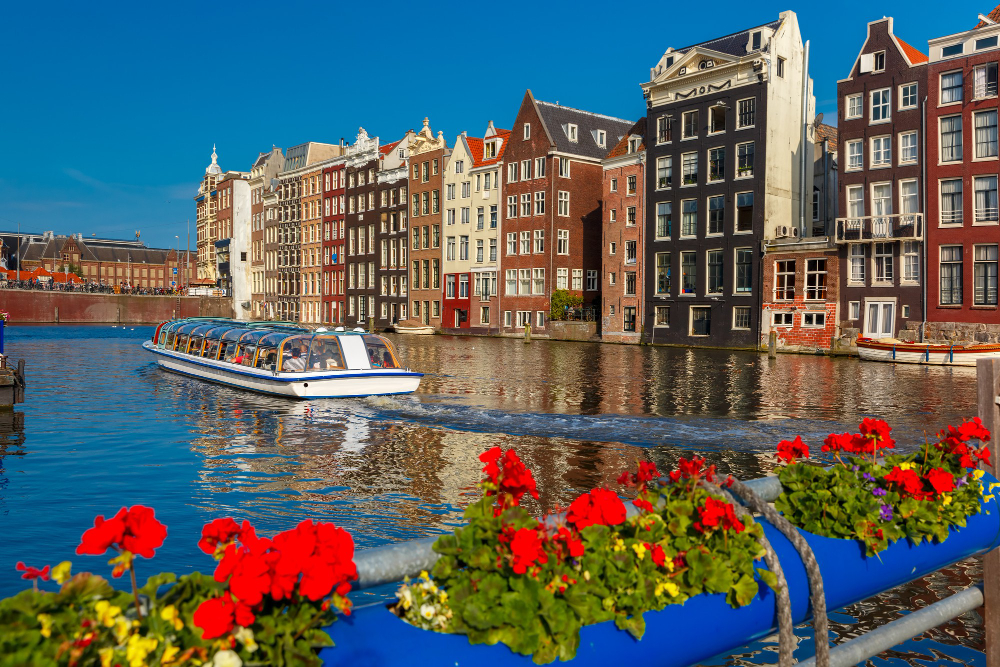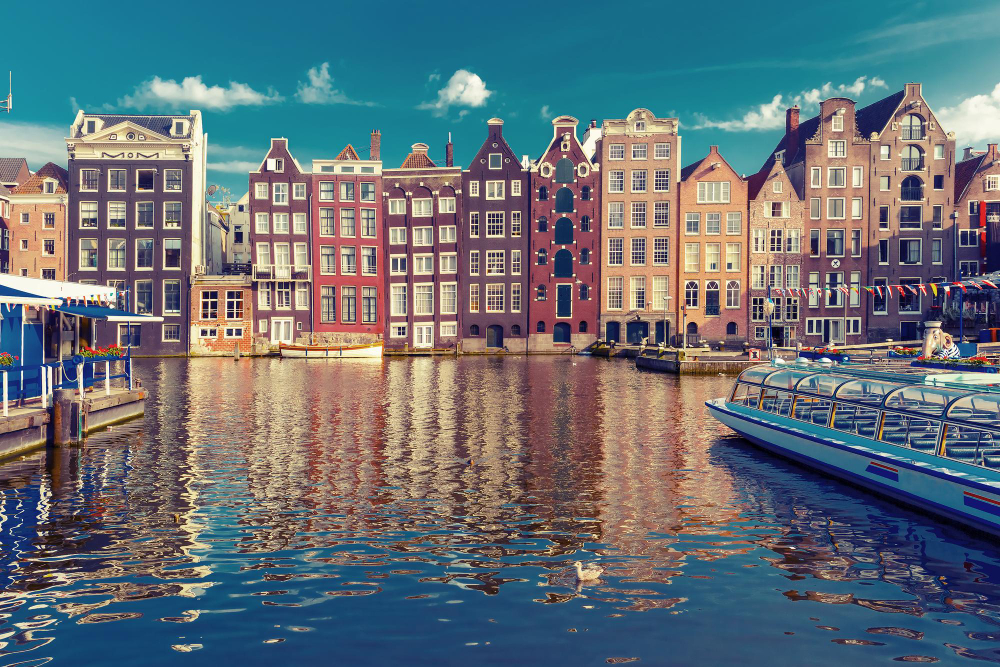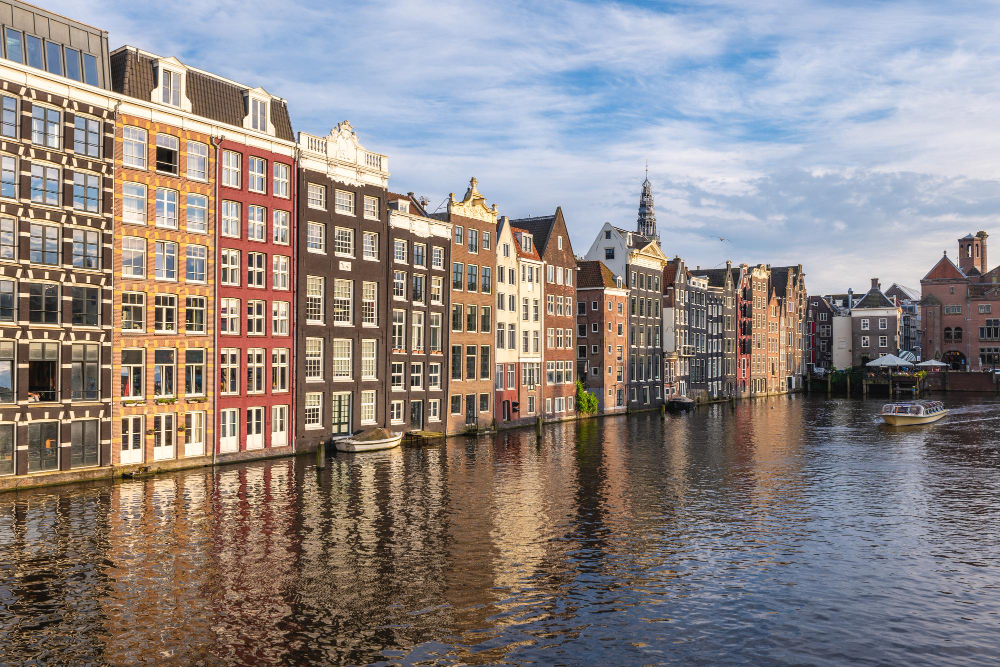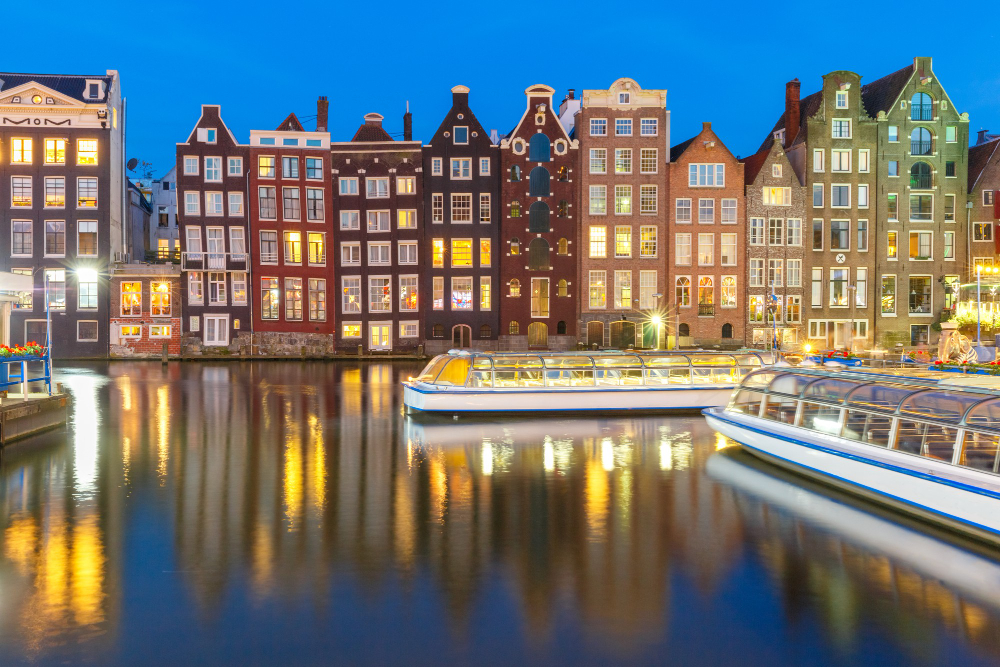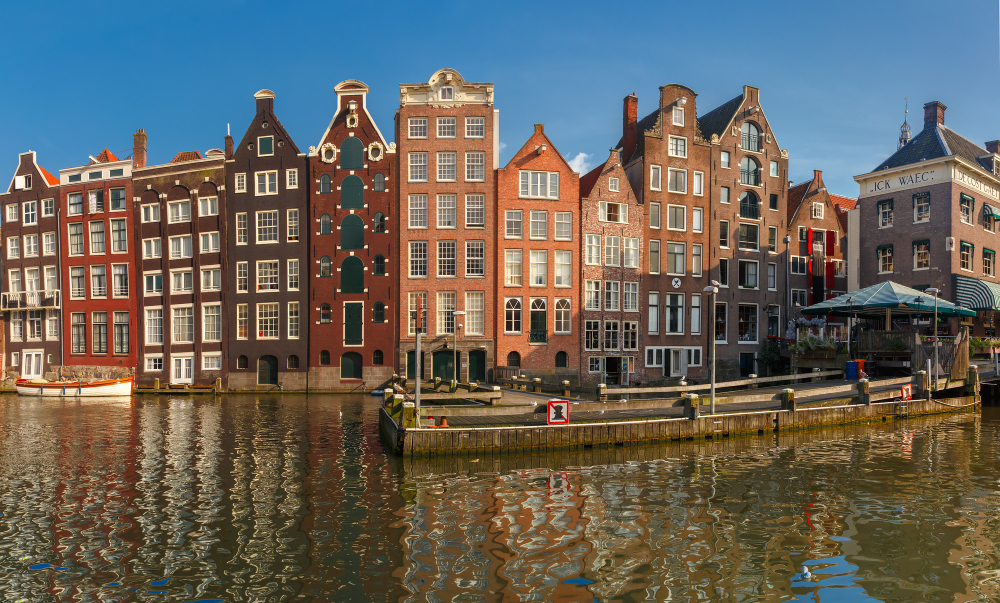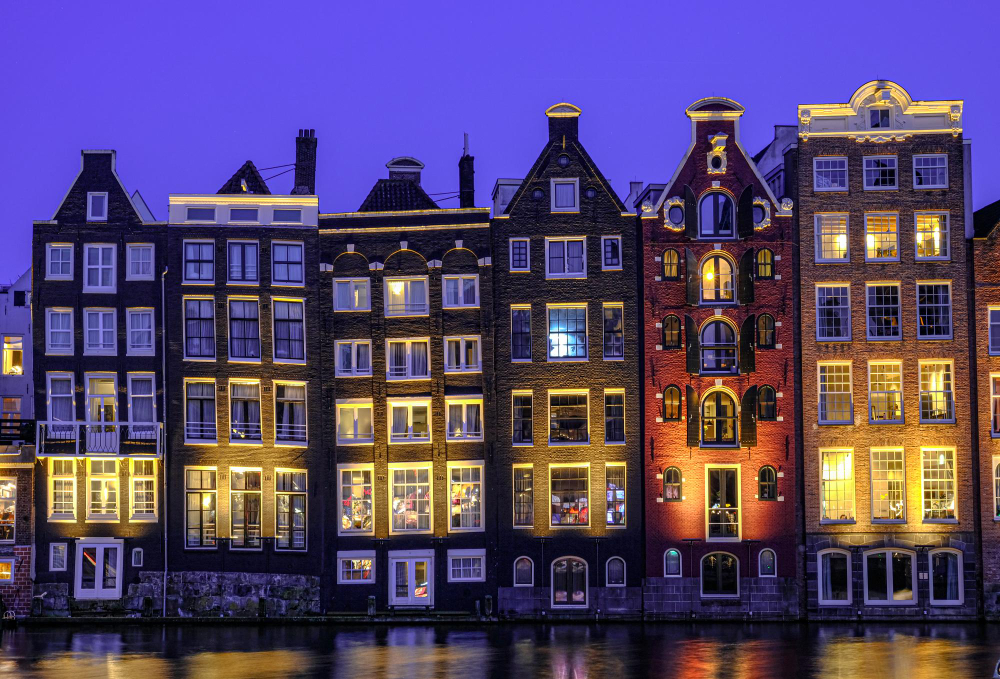
Amsterdam is a city of contrasts, canals, and history. It offers countless sights that are not only visually stunning but also tell fascinating stories. Among these highlights are the so-called “Dancing Houses,” a cluster of crooked 17th-century buildings situated directly on the Damrak Canal. Their slight tilt, as if they were in motion, has made them a landmark of the Dutch capital over the centuries. But what lies behind their crooked dance, and how did it come about? This article takes you on a journey through time and technology to uncover the secret of these charming structures.
A First Glance: The Leaning Beauty on the Damrak Canal – As tourists stroll through Amsterdam, the Dancing Houses draw their gaze almost magically. They stand in a tight row, like pearls on a string, and appear so characteristically crooked that one gets the impression they might collapse at any moment—or start dancing. Damrak, one of the main streets leading from the city center to the central station, is home to some of the most famous crooked houses. Their facades, with their characteristic gables, not only reflect the architectural style of the Golden Age but also tell the story of the challenges of building on a foundation as capricious as the city’s character itself.
The Shaky Ground: Amsterdam and Its Wooden Piles – To understand the phenomenon of the dancing houses, one must first consider the region’s geological conditions. Amsterdam lies below sea level and was built on marshy ground. This soft soil does not provide a stable foundation for massive structures. As a solution, builders in the 17th century dug deep holes and drove wooden piles, mostly made of oak, into the ground. These piles were intended to reach deep enough to rest on the solid layer of sand. The buildings that still characterize the old town today were erected on top of them. Despite this clever construction method, the wooden piles were not always reliable. Over the years, moisture and bacterial decay could compromise their stability. Additionally, the ground continued to sink in some places, causing the houses standing on it to lose their footing and tilt slightly. The result of this interplay between nature and craftsmanship is the famous dancing houses, whose tilt gives them their unmistakable charm.
Myth and Truth: Why do the houses really “dance”? – Numerous myths circulate about why the houses in Amsterdam are so crooked. One of the most popular stories claims that residents intentionally built crooked buildings to prevent rainwater from reaching the facades. The idea that the tilt serves purely aesthetic purposes and is an expression of creative freedom is also frequently cited. Upon closer inspection, however, this turns out to be nothing more than a legend. The actual reasons, as already explained, lie in the interplay of sinking ground and the transience of the wooden foundations. Nevertheless, there are numerous aspects of the construction method that underscore the houses’ uniqueness, such as the narrow facades and the tall design, which promised tax advantages. It is also noteworthy that, despite their tilt, the houses have remained surprisingly stable over the centuries. This is due, among other things, to the fact that many buildings were later secured through additional measures such as concrete reinforcements or new foundations.
The Connection to the City’s History – The history of the Dancing Houses is closely linked to Amsterdam’s heyday in the 17th century, an era also known as the “Golden Age.” During this time, Amsterdam developed into one of Europe’s most important trading centers. Merchants and entrepreneurs had imposing buildings constructed along the canals, which served as warehouses, residences, and shops. Space was at a premium back then, so many of the buildings were constructed on very narrow lots. To make the best use of the available space, they built upward, sometimes with overhanging facades. It is this narrow construction and the striking architectural details that make the houses look so unique today. In addition to practical considerations, aesthetic aspects naturally played a role as well. The characteristic gables, ranging from stepped gables to bell gables, were intended not only to support the functionality of the house—for example, when hoisting goods—but also to reflect the status of their owners. The Dancing Houses are thus not only a testament to architectural masterpieces but also a window into the social and economic structure of the Golden Age.
The Dancing Houses Today: A Magnet for Visitors from Around the World – Amsterdam’s Dancing Houses have long since become an attraction that delights visitors from all over the world. They not only offer an impressive sight but also serve as a symbol of the creativity and resilience that define this city. Numerous photos capture their slanted silhouettes, and the facades are often picturesquely reflected in the calm waters of the canals. The view is particularly popular at sunset, when the warm colors of the sky bathe the historic buildings in golden light. Today, many of the houses have been either restored or modernized and now house offices, hotels, or restaurants. Although they have been adapted to modern needs, their historic charm remains, and they continue to serve as a reminder of Amsterdam’s glorious past.
Beauty Emerges from Difficult Times – Amsterdam’s dancing houses are more than just crooked buildings—they are a symbol of humanity’s ability to overcome challenges. Despite adverse circumstances, the 17th-century builders created a city that is now considered one of the most beautiful in the world. The houses on Damrak tell stories of innovation, trade, and culture, reminding us that even seemingly imperfect things can have their own magic. The next time you stroll through Amsterdam and see the dancing houses, take a moment to admire the art and history inscribed in their crooked walls. They are a striking example of how architecture and nature can come together to form a harmonious, if unusual, whole. The Dancing Houses invite everyone to discover beauty in imperfection—a concept that inspires us far beyond the realm of architecture.