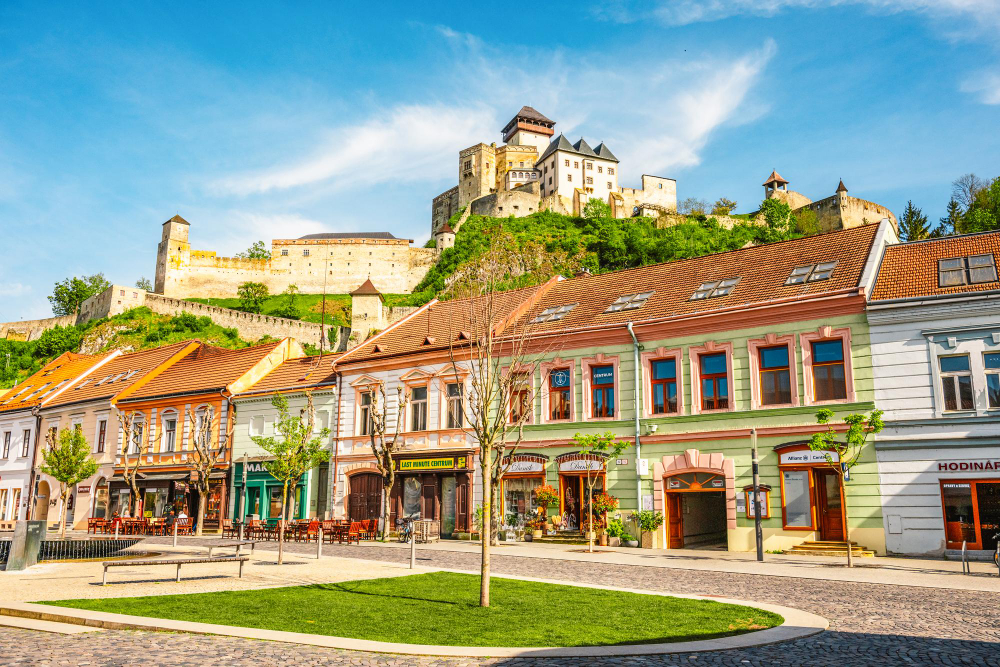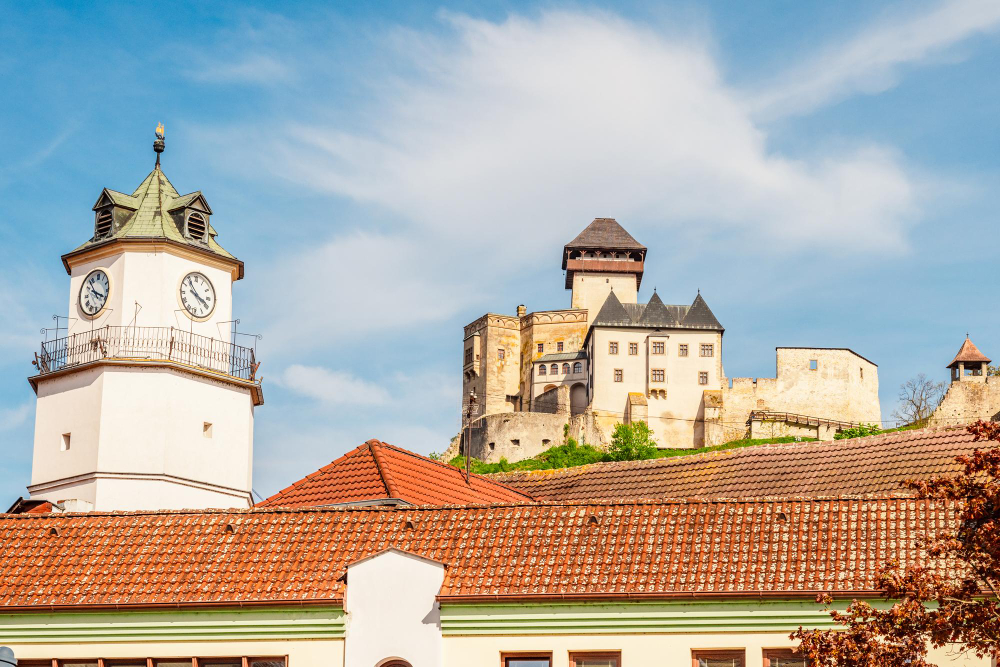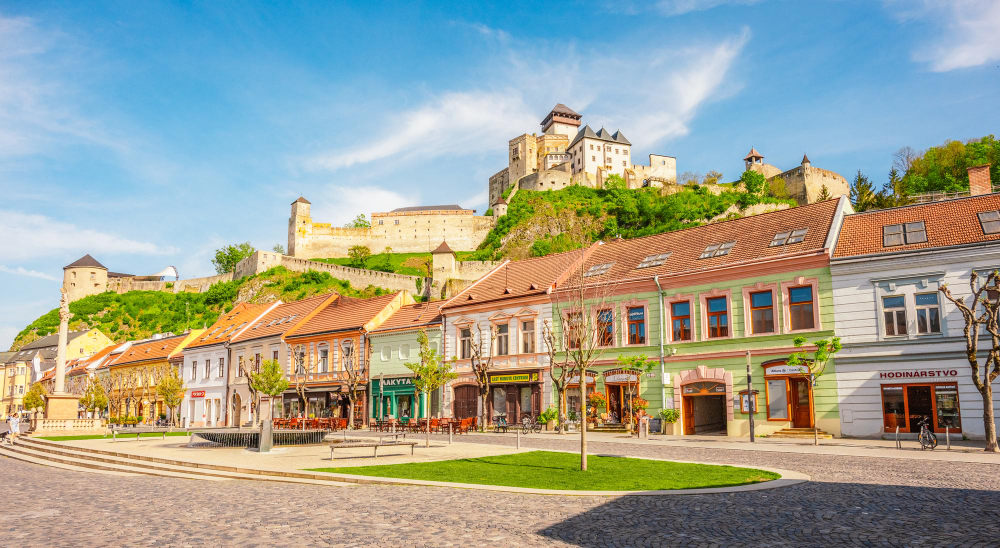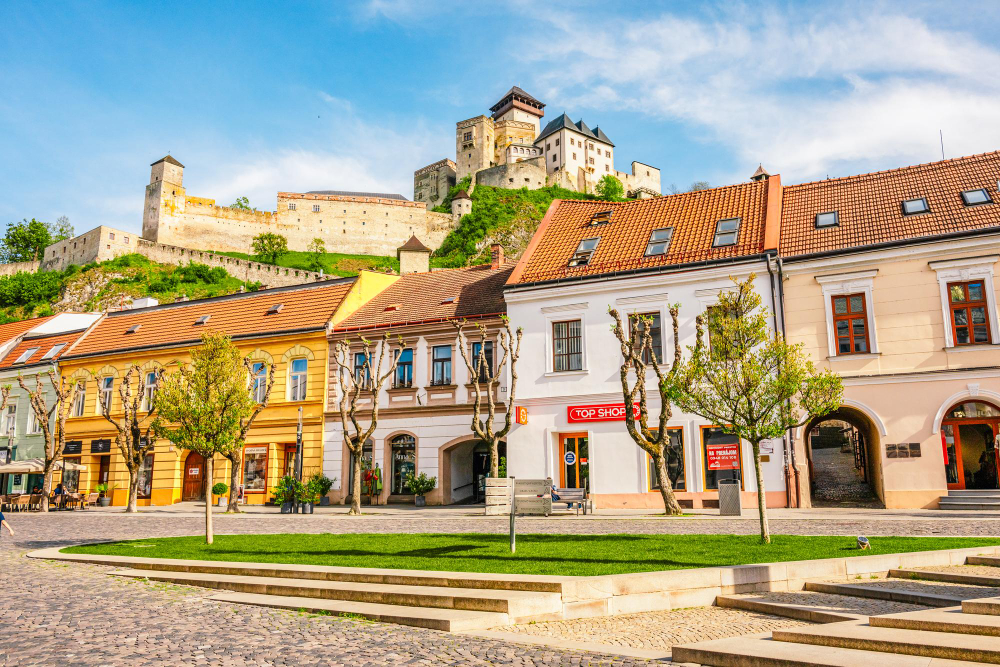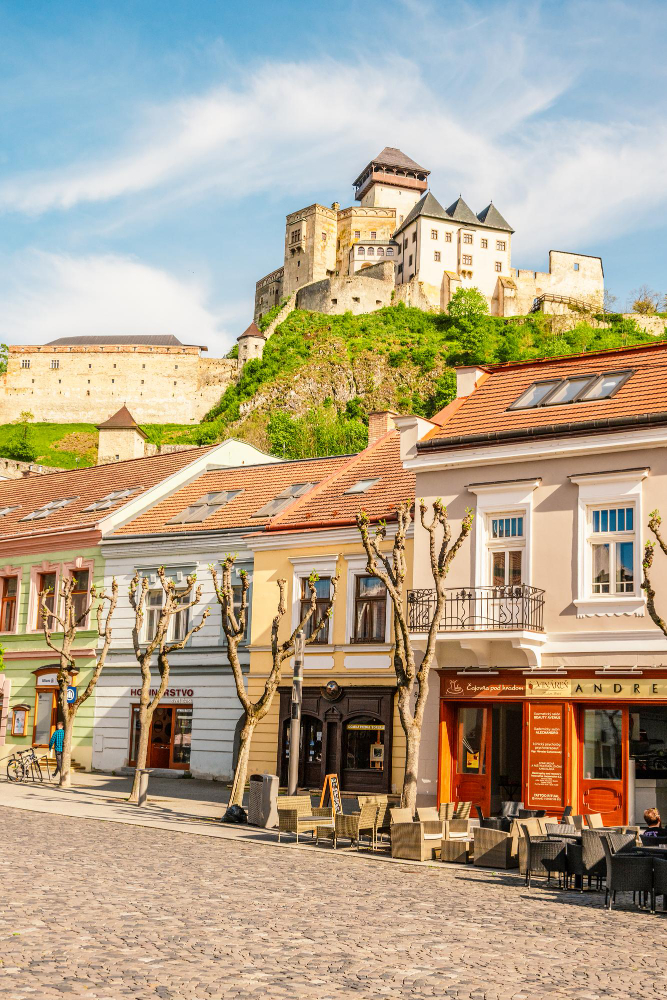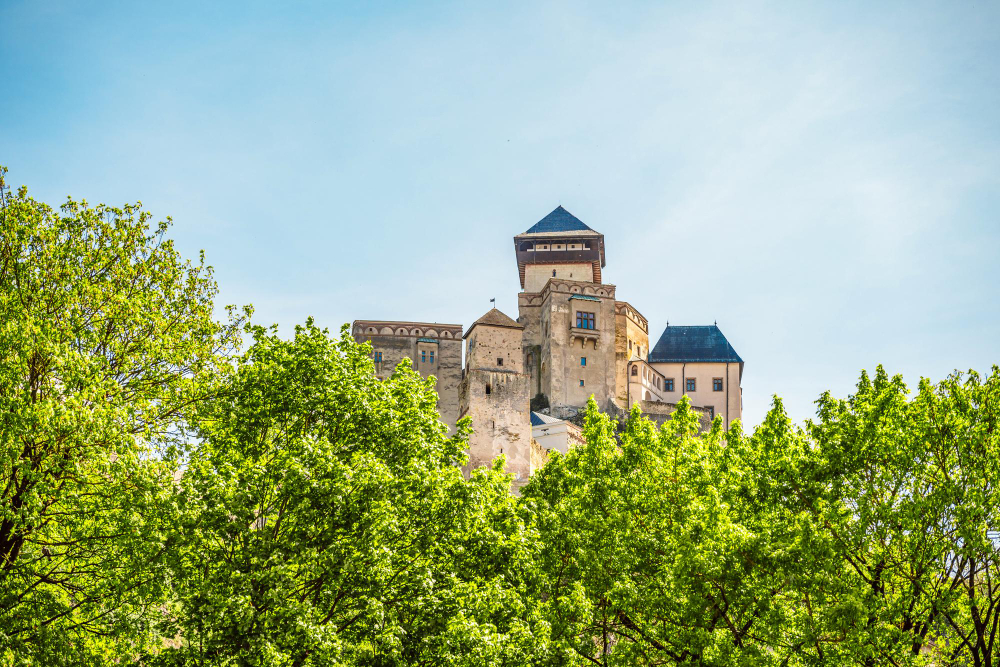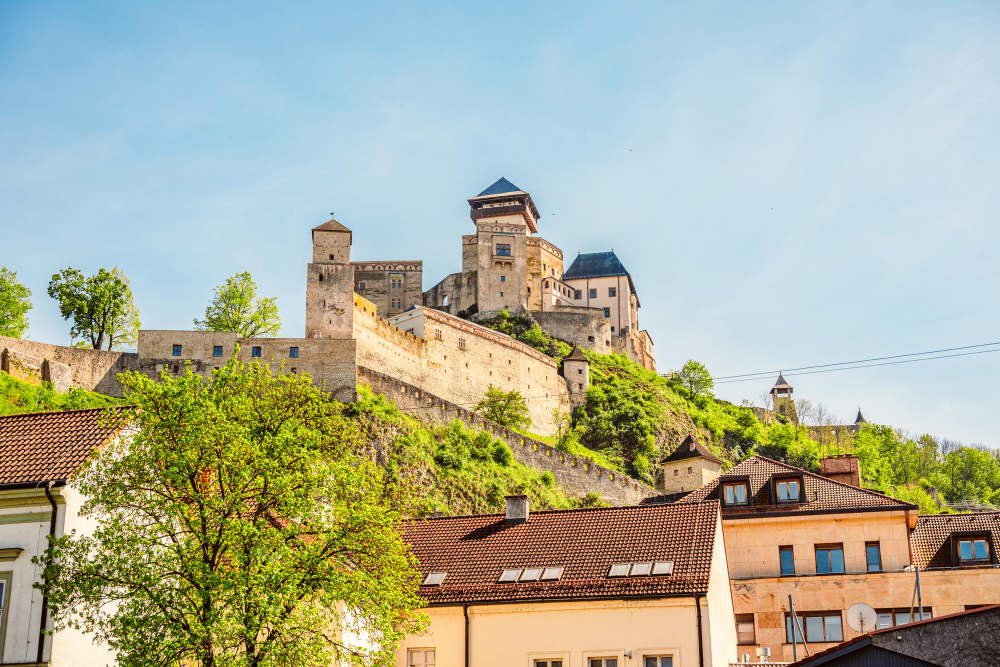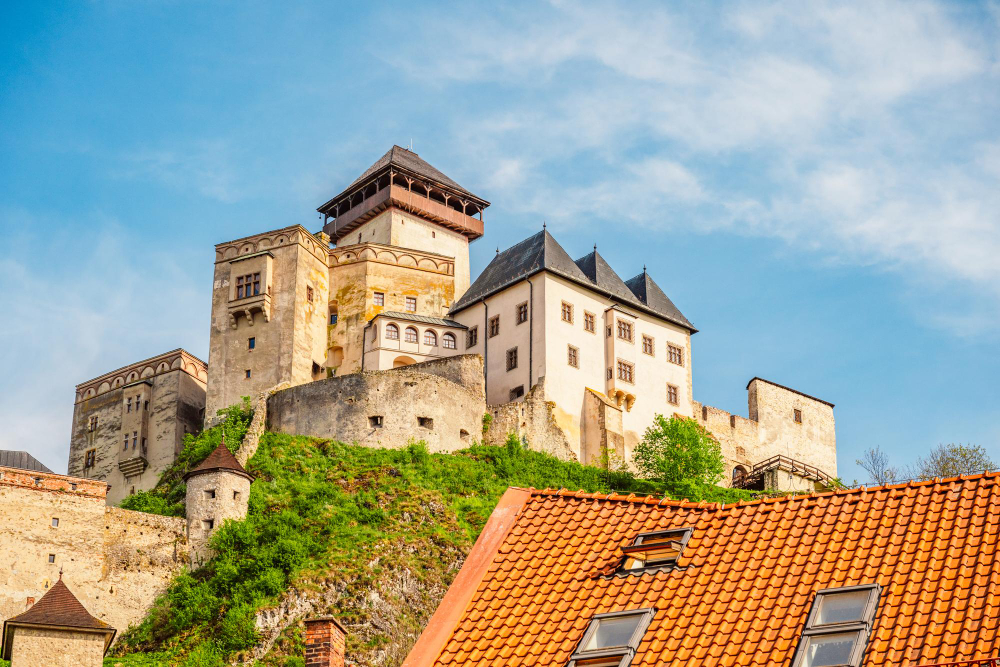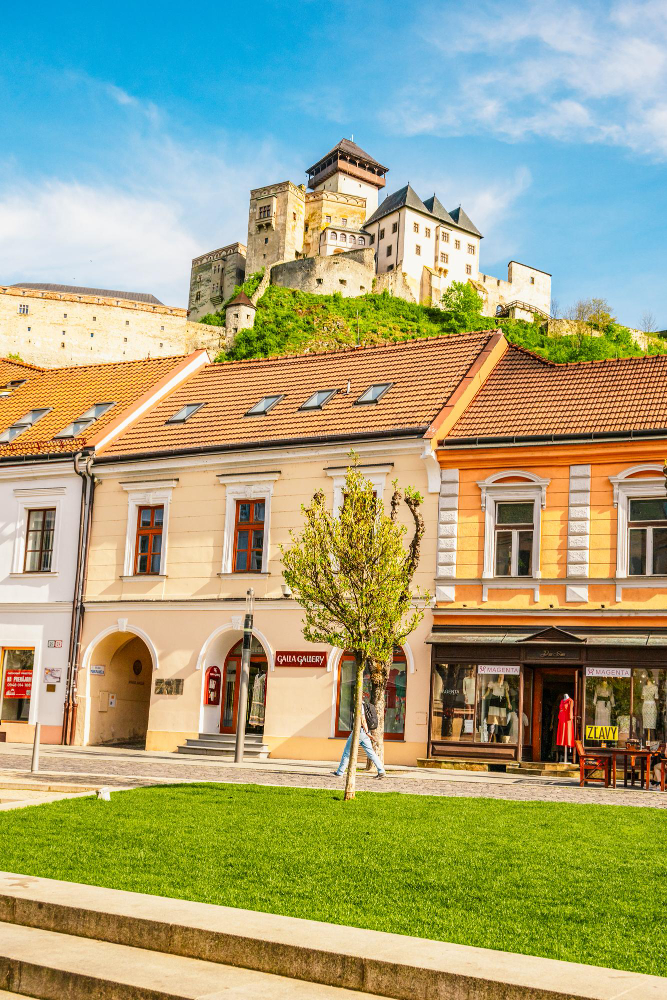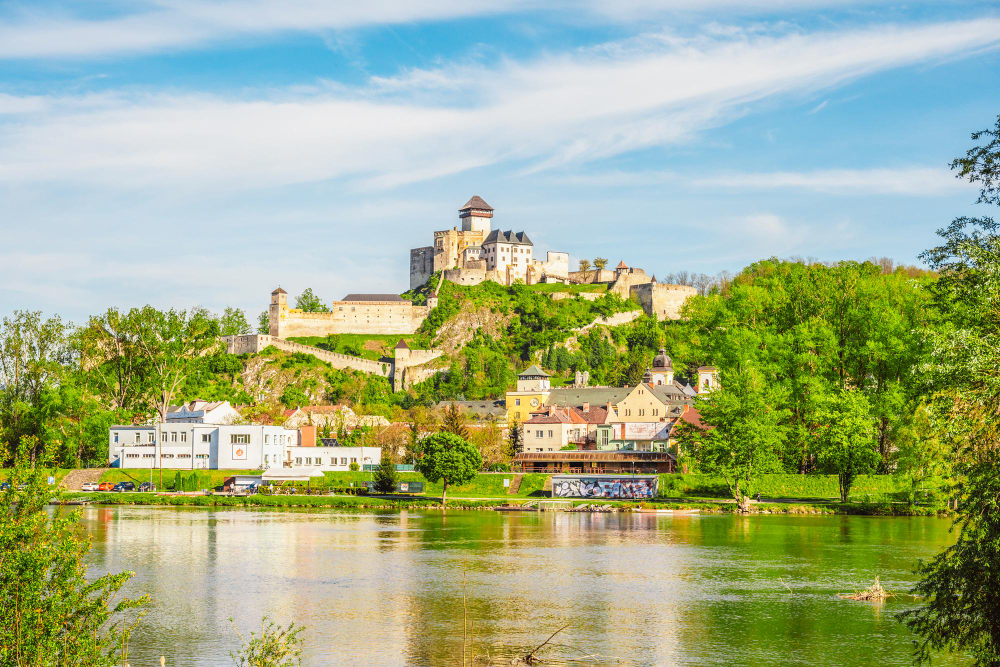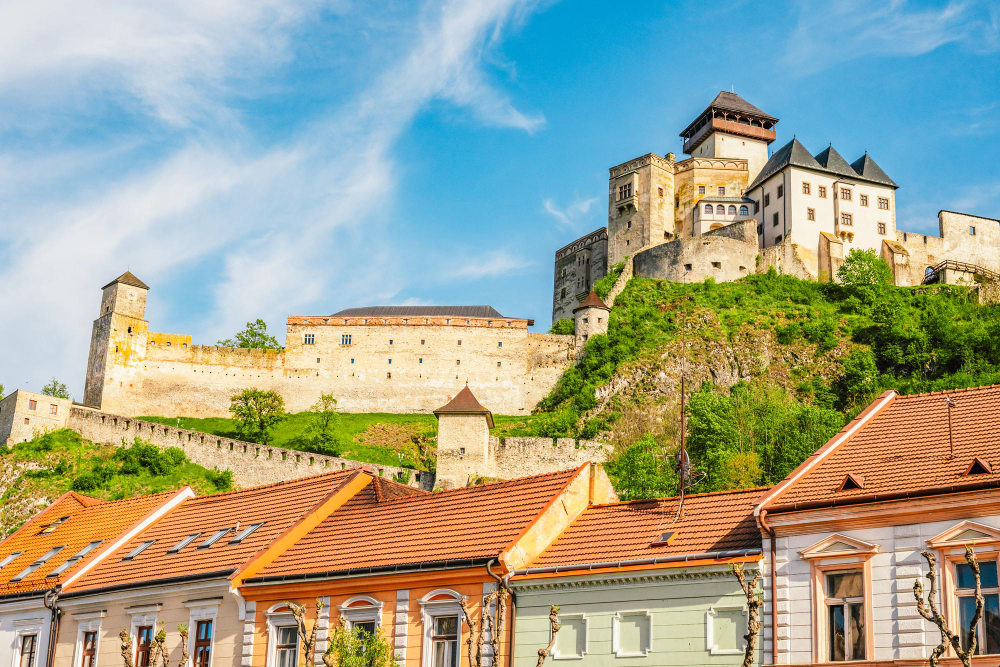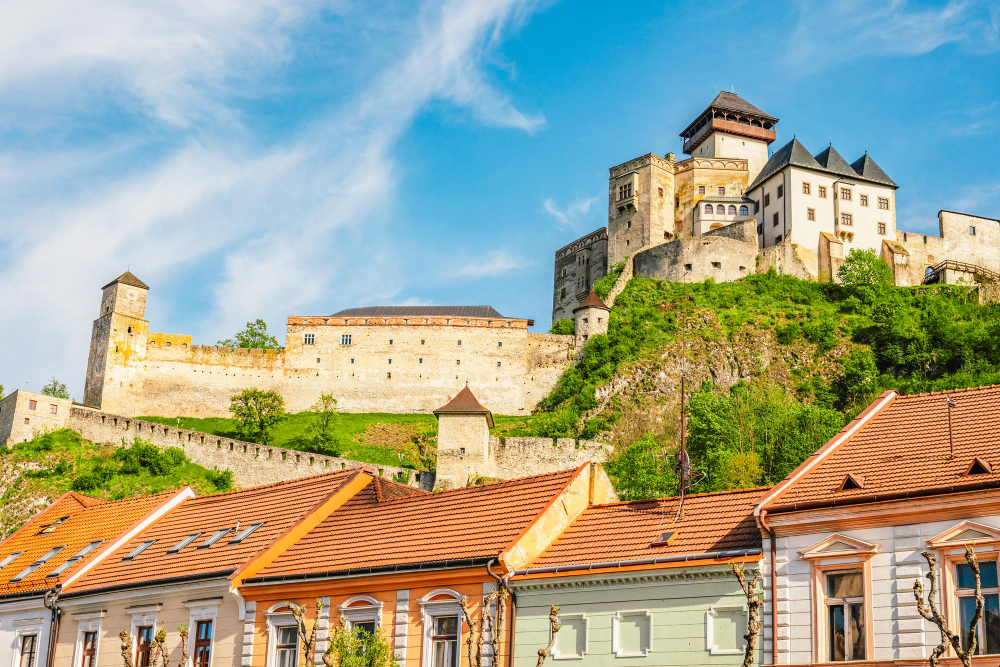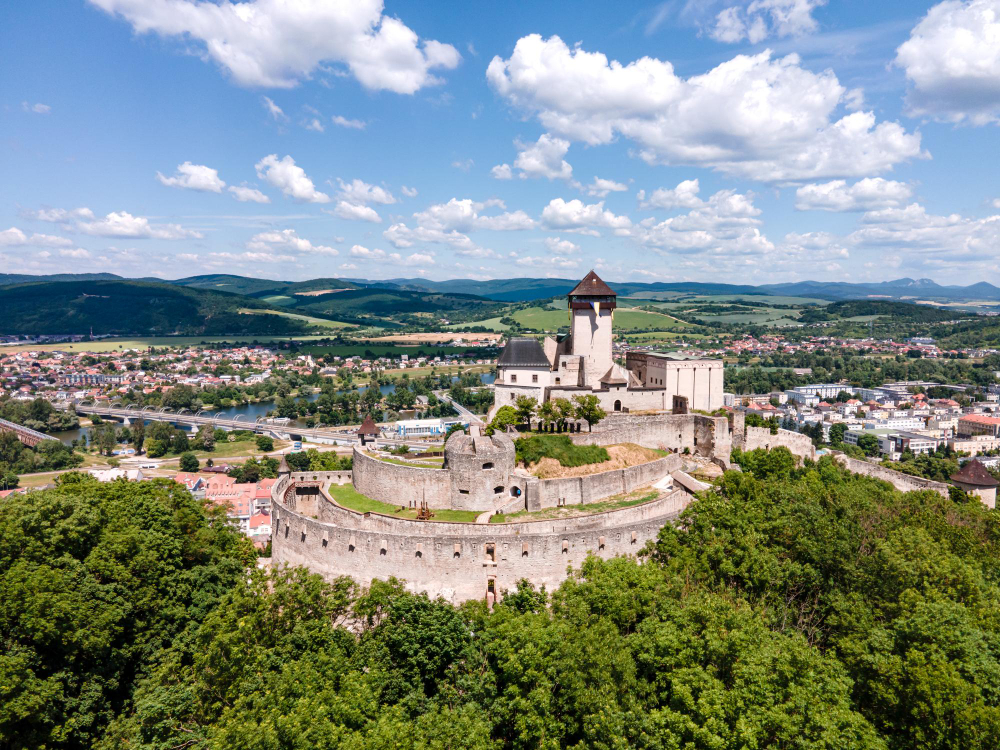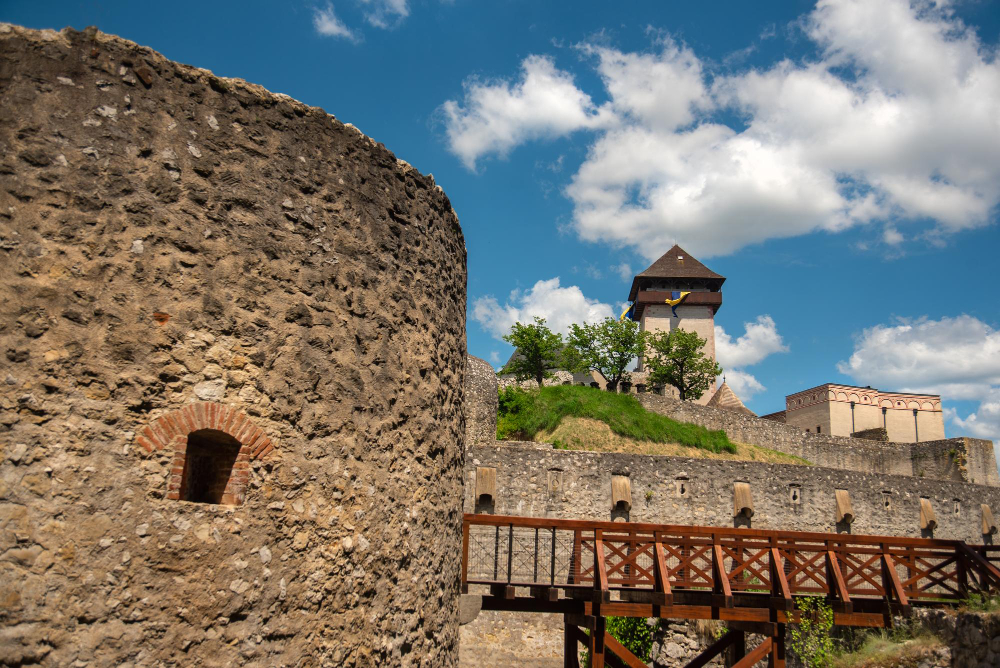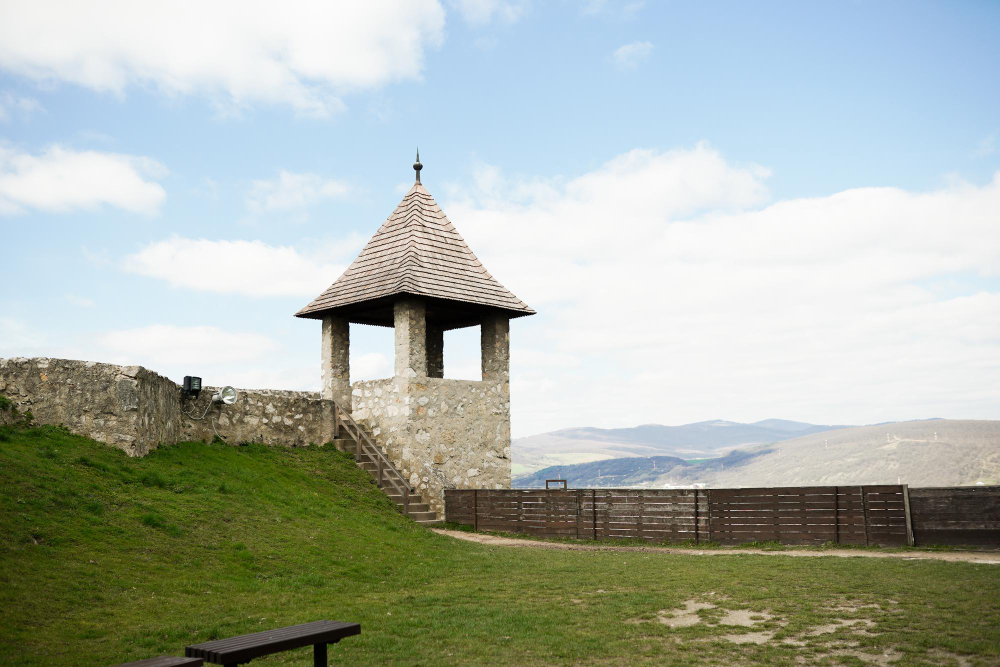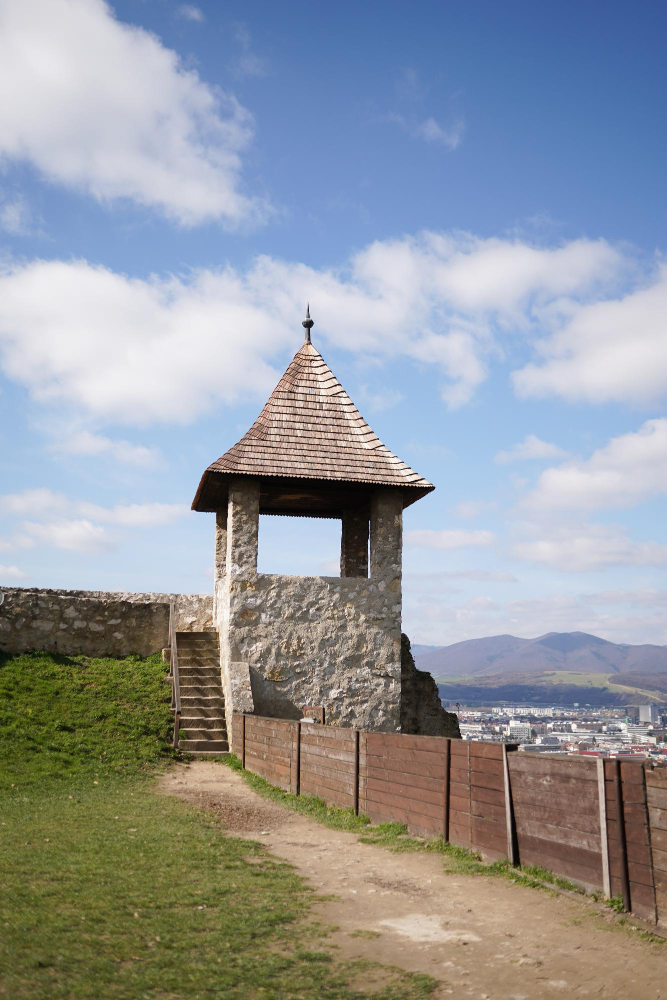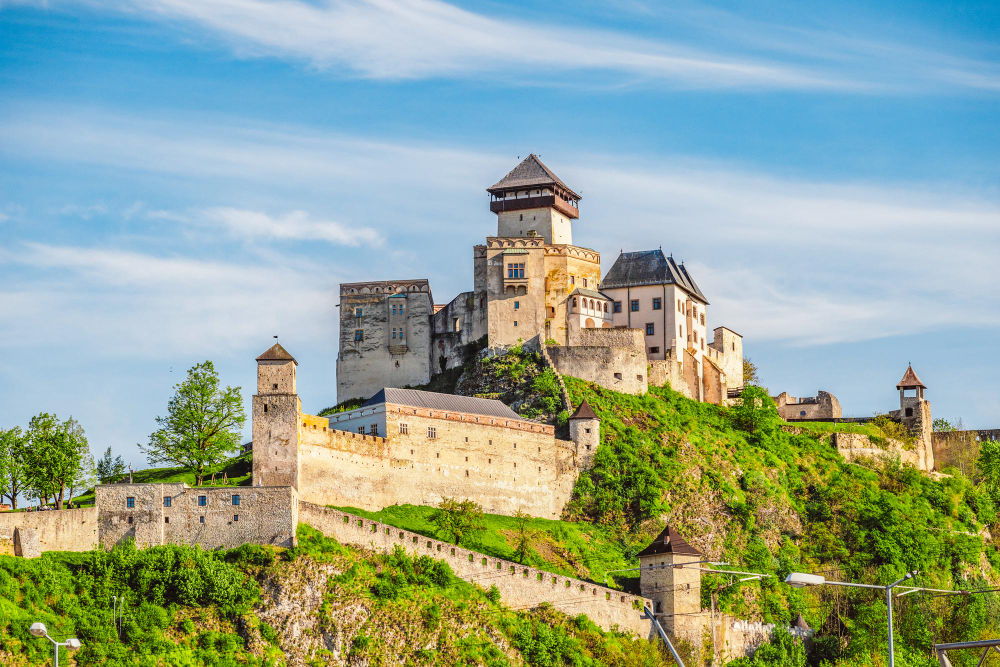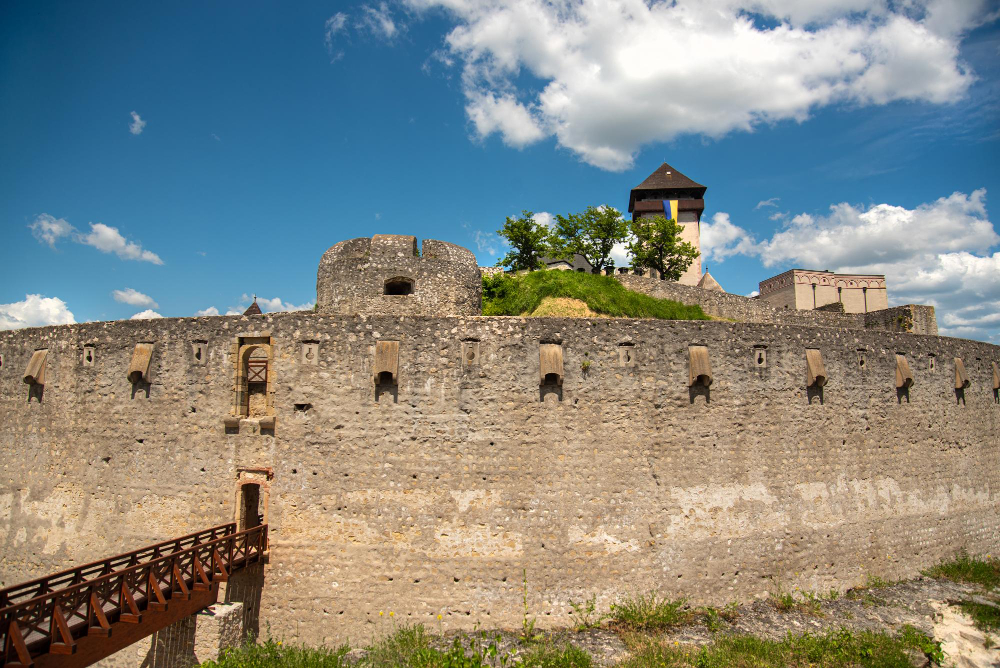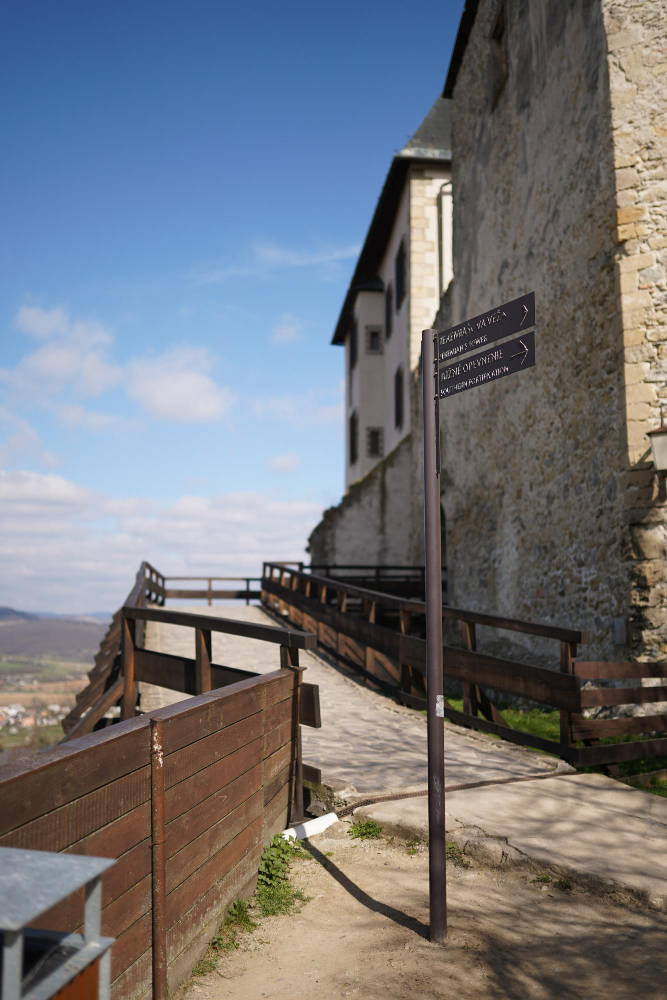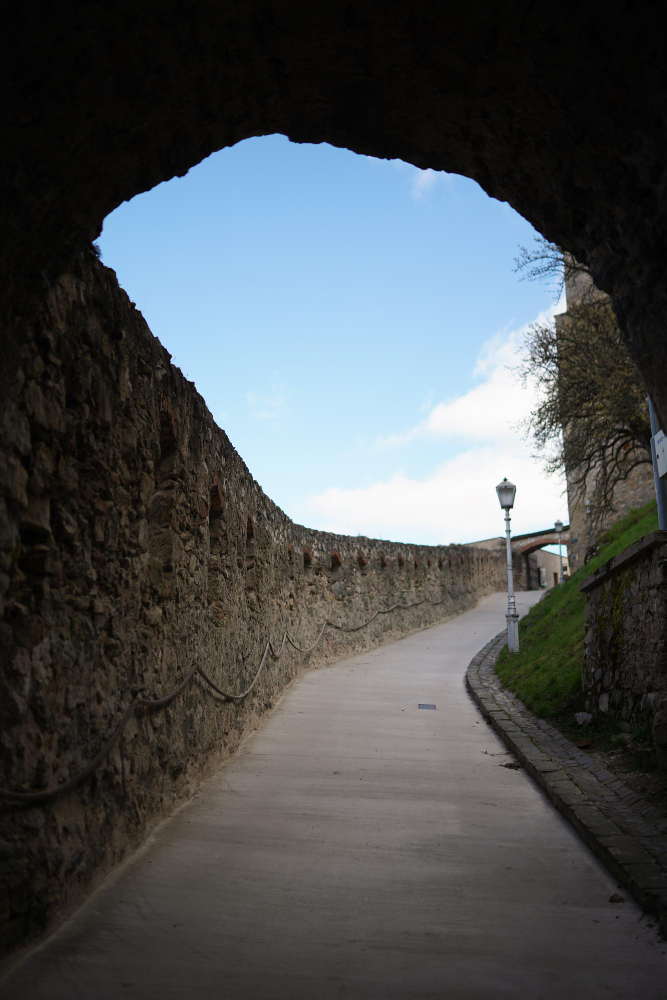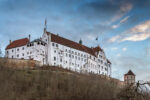
The imposing Trenčín Castle, perched high above the town of the same name in north-western Slovakia, stands as a testament to power, intrigue and romance. Surrounded by spectacular scenery and perched on a striking rock, the fortress tells a centuries-old story, marked by countless battles, notable figures and fascinating legends. Let yourself be transported into the world of this impressive castle and its bygone era.
The Beginnings of a Royal Fortress – The origins of Trenčín Castle date back to the 11th century, when the foundation stone for this monumental fortress was laid on the steep rock. Its strategic location made it an important defensive stronghold in the Kingdom of Hungary, particularly during periods of Turkish attacks. Consequently, it was continuously expanded to secure its position as a border fortress and county town. One of the defining figures in the castle’s history was Matthias Csák, also known as Matúš Čák of Trenčín. He acquired the fortress in 1302 and ruled from there over almost the whole of western and central Slovakia until his death in 1321. The legacy of his rule is still visible today: the mighty Matthias Tower, the Romanesque core of the fortress complex, was rebuilt and reinforced during his reign.
Historical Turning Points: Treaties and Changes of Ownership – A significant event in the castle’s history was the Treaty of Trenčín, which was concluded here on 24 August 1335. This diplomatic milestone marked the end of Polish claims to the Silesian duchies. The negotiations, involving the Bohemian King John of Luxembourg, his son Charles IV, the Polish King Casimir the Great and the Hungarian King Charles of Anjou, consolidated the region’s political stability. This agreement was later reaffirmed in 1372 by the Polish King Louis I. Over the centuries, the castle changed hands several times. As well as kings and high-ranking nobles, it was ruled by prominent families, including the Csáks, Zapolyas and Illésházys. Each era left its own architectural and cultural mark.
The Illésházy Era: Power and Legends – The Illésházy family played a prominent role in the castle’s history. For over 241 years, they shaped the estate both politically and culturally. Stephan I Illésházy, the first member of the family to bear this title, not only founded an art gallery but also left behind a fascinating legend: After angering Emperor Rudolf II, he fled secretly to Poland, visiting the castle beforehand to hide valuable objects there. Rumours of secret passages within the fortress began to circulate and persist to this day. In 1790, the castle fell victim to a devastating fire, and plans for a large-scale renovation under Johan Baptist Illésházy remained unfulfilled. The family’s last owner, Stephen II, finally sold the ruins to the Viennese banker Georg Sina in 1835.
Romance and Tragedy: The Fountain of Love – No story about Trenčín Castle would be complete without the famous legend of the ‘Fountain of Love’. According to legend, Stephen Zápolya once brought home a Turkish captive named Fatima. Fatima’s fiancé, Omar, offered everything he owned as a ransom for her – but the lord of the castle remained unyielding. Eventually, Omar promised to draw water from the barren rock, and after three years of hard labour, he created a well 80 metres deep. Although Omar kept his promise, he lamented the hardness of Zápolya’s heart, which was harder than the rock itself. Fatima was released, and Trenčín’s oldest inn, which still bears the name ‘Fatima’ to this day, commemorates this romantic yet tragic story.
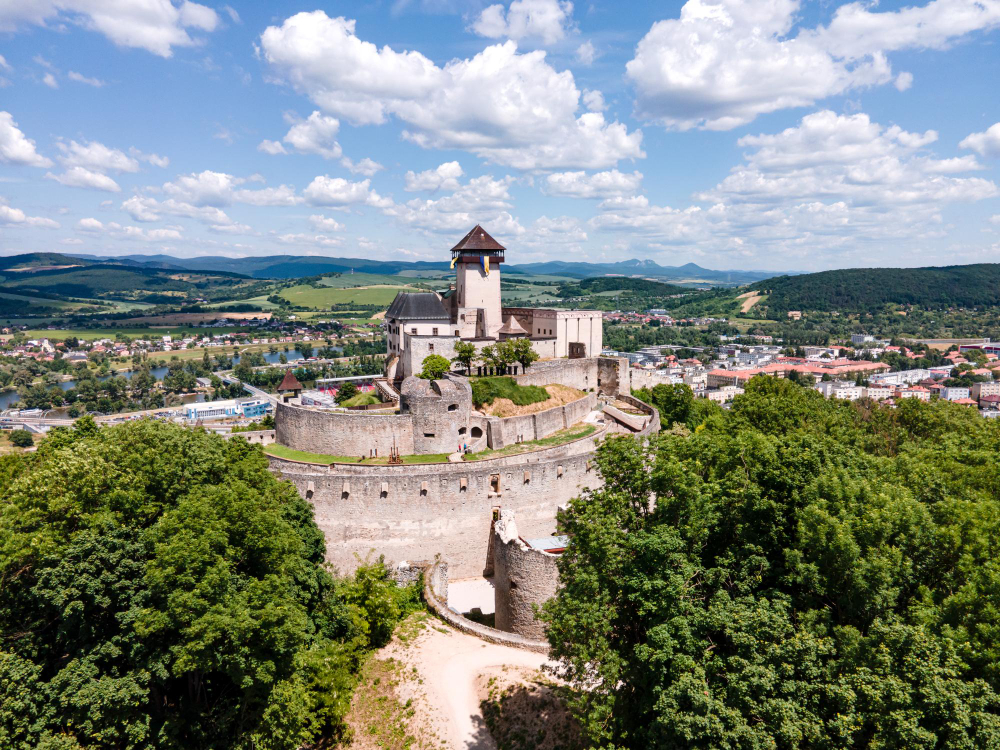
Architectural masterpieces and mysterious rooms – Today’s Trenčín Castle comprises a multitude of impressive structures, built over the centuries and combining various architectural styles. Among the most significant buildings are:
– Matthäus Tower: The oldest part of the castle, originally built in the Romanesque style and later remodelled in the Gothic style, now houses exhibitions and historical weapons.
– Barbara’s Palace: Built by King Sigismund of Luxembourg for his wife Barbara of Cilli, this is the castle’s largest palace.
– Rotunda: Unique with its four apses, it probably dates from the Great Moravian period and bears witness to the early settlement of the region.
– Zápolya Palace: Formerly the residential quarters of the nobility, it now houses a gallery of paintings by the Illésházy family.
– Hunger Tower: Originally intended as a watchtower, it served at times as a prison and, with its gloomy walls, instilled fear in visitors.
A place brimming with culture and life – Today, Trenčín Castle is a vibrant cultural centre and a popular destination for day trips. Visitors can not only explore the historic buildings but also take part in events such as medieval games, concerts and night-time guided tours. Particularly popular are the interactive exhibitions, which bring the past back to life, as well as the well-preserved paintings and weapons, which offer insights into the lives of the castle’s former inhabitants.
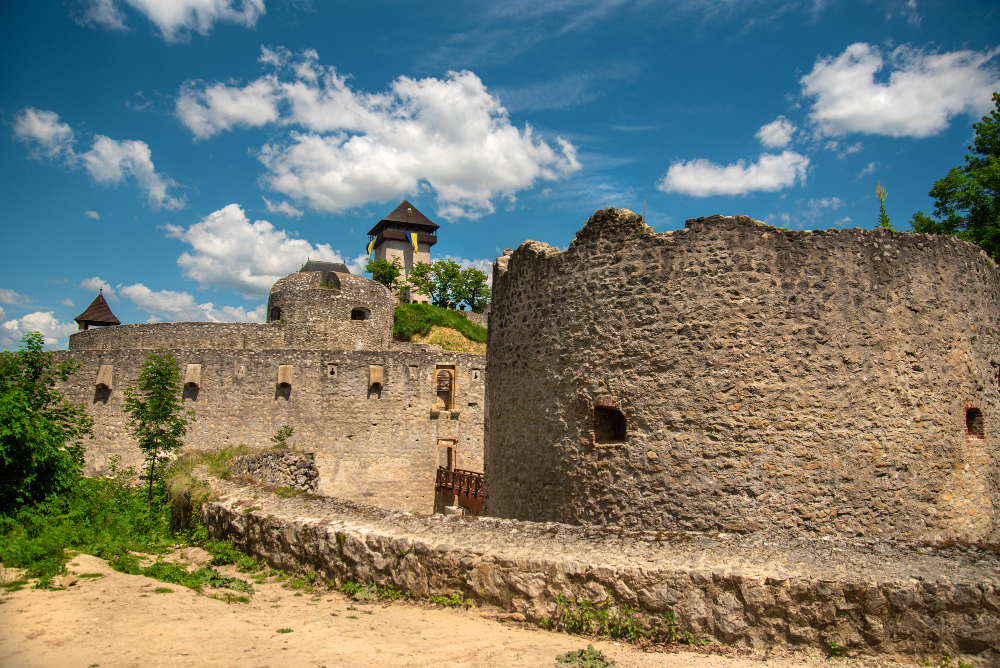
An impregnable fortress – Despite numerous sieges and attacks, Trenčín Castle remained undefeated over the centuries. Its defences, particularly the southern fortifications with their ingenious system of bastions and moats, are regarded as a masterpiece of military engineering. Even today, the remains of these structures continue to impress experts and visitors alike.
Trenčín Castle is not only an imposing structure but also a place steeped in stories, myths and historical significance. Its unique blend of architecture, legends and cultural significance makes it an unmissable destination for anyone interested in European history and its fascinating facets. Whether it is the dramatic story of Stephen I Illésházy’s secret passage, the romantic legend of the Well of Love or the magnificent paintings of the nobility – the fortress offers endless inspiration and stories. A visit to this castle is like a journey into the past, full of magic and mystery.