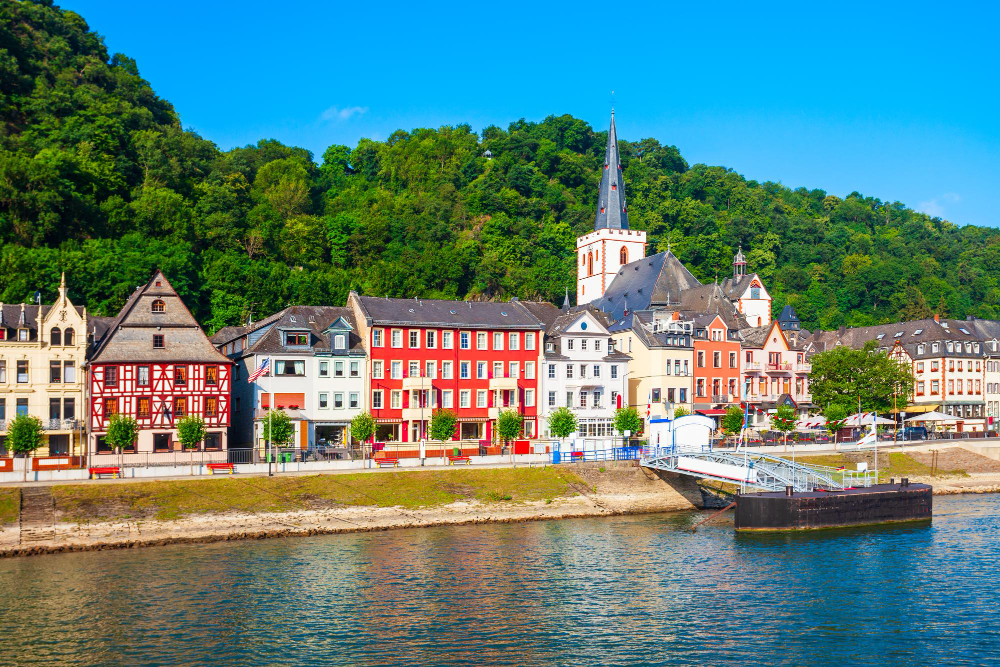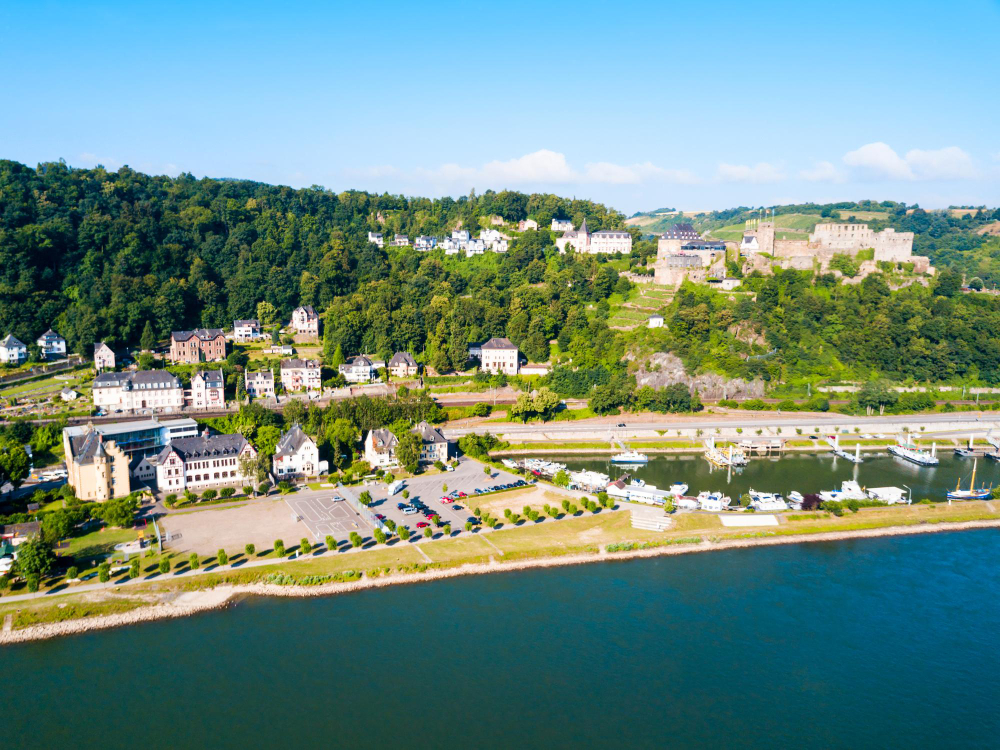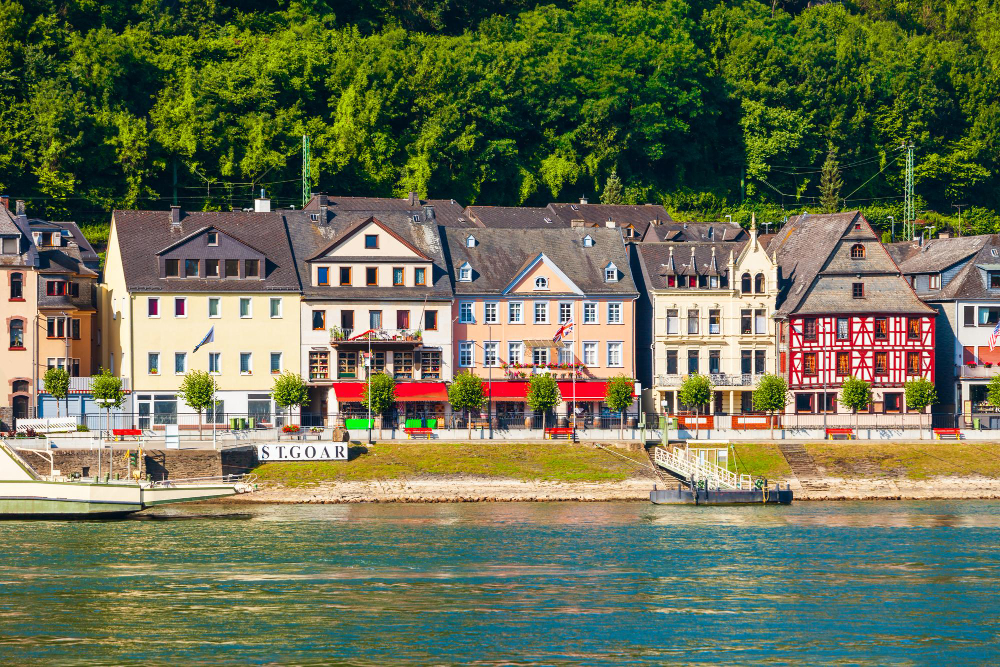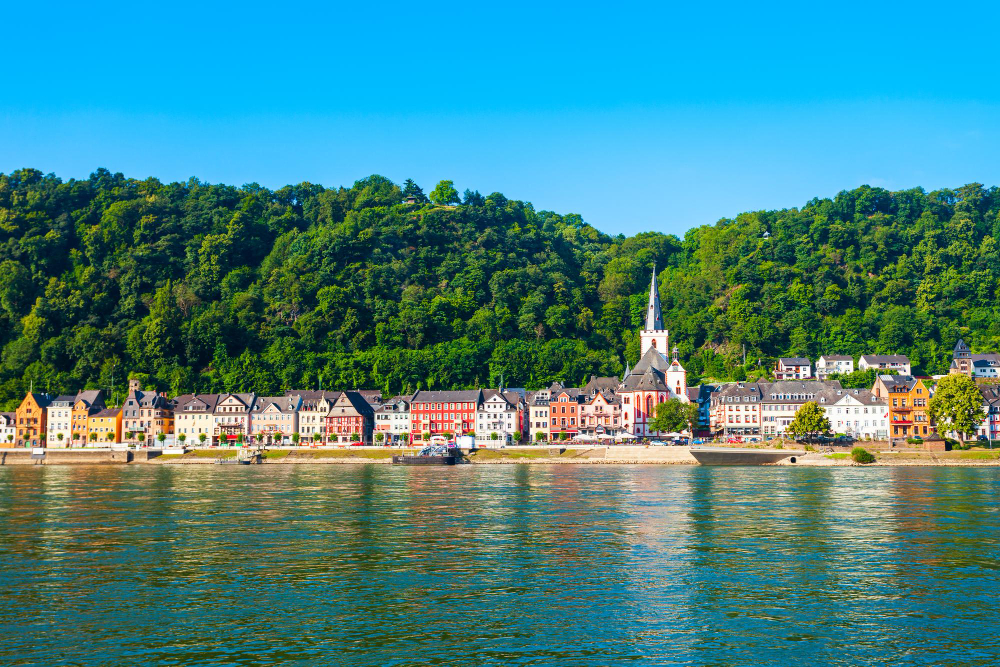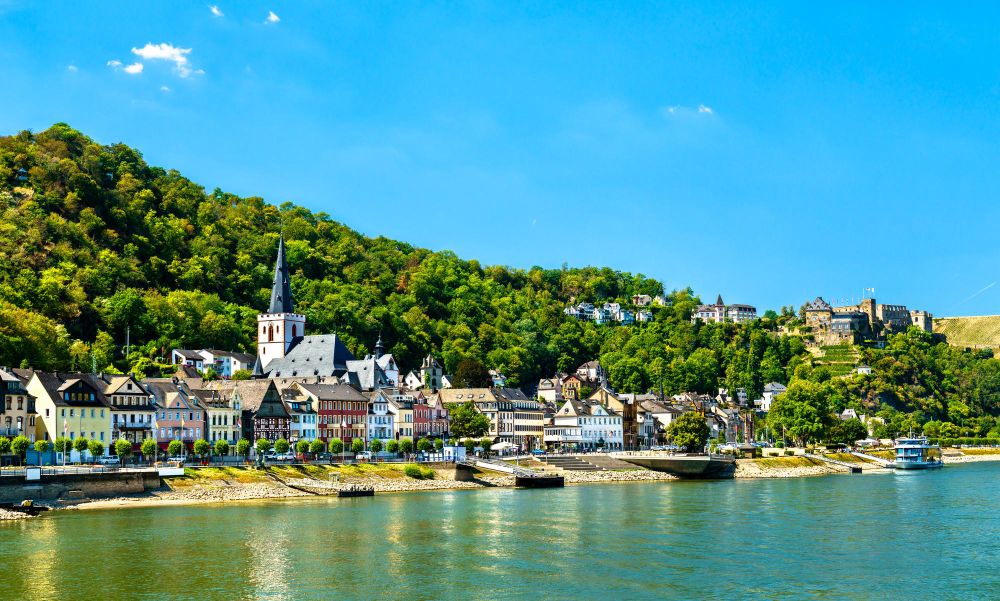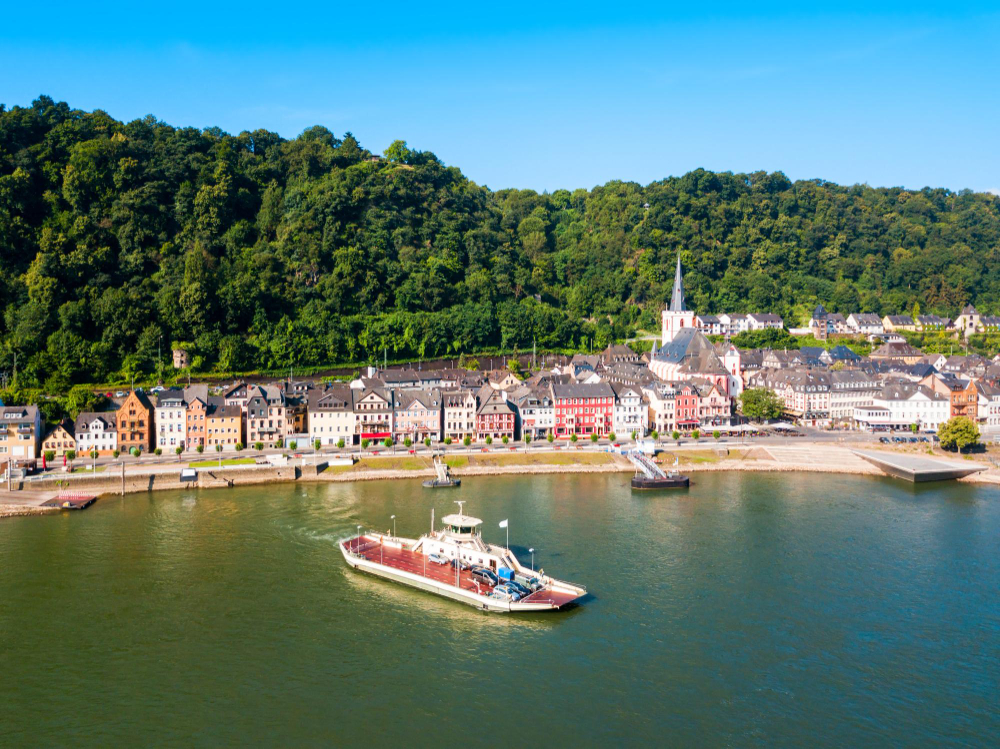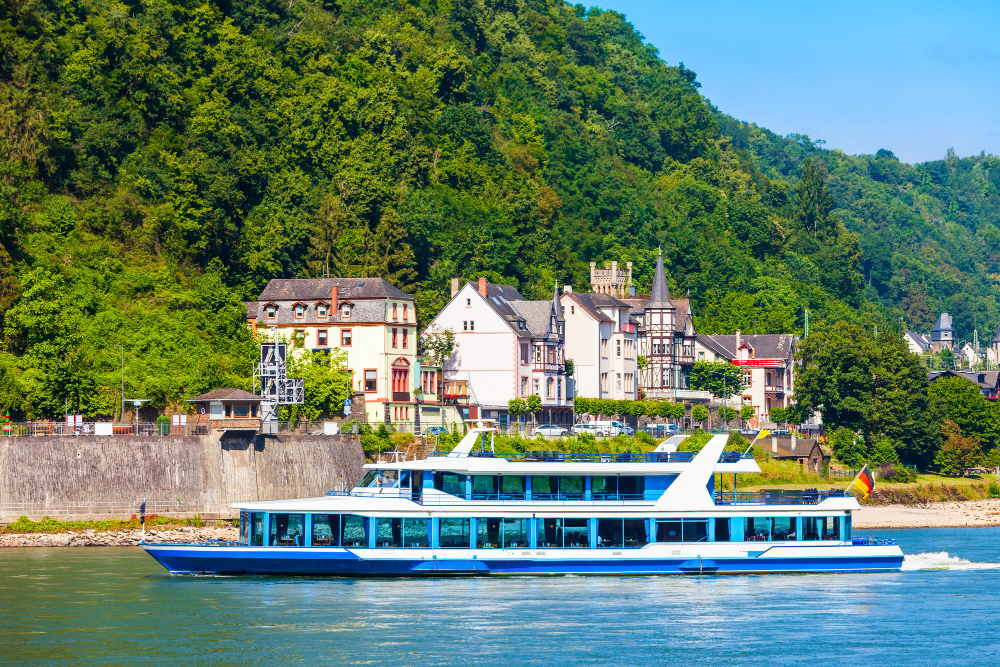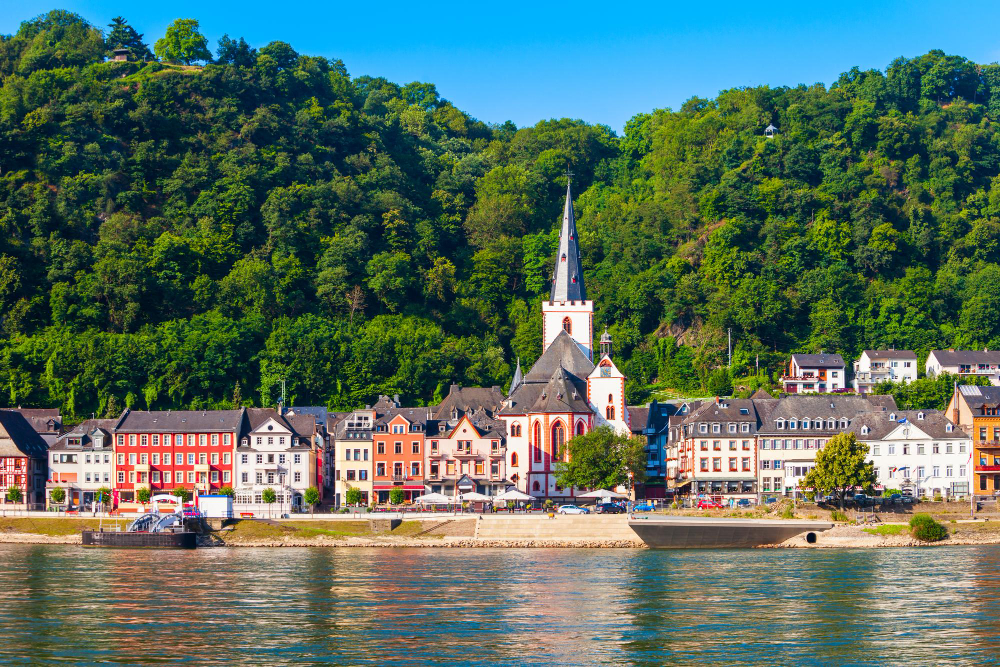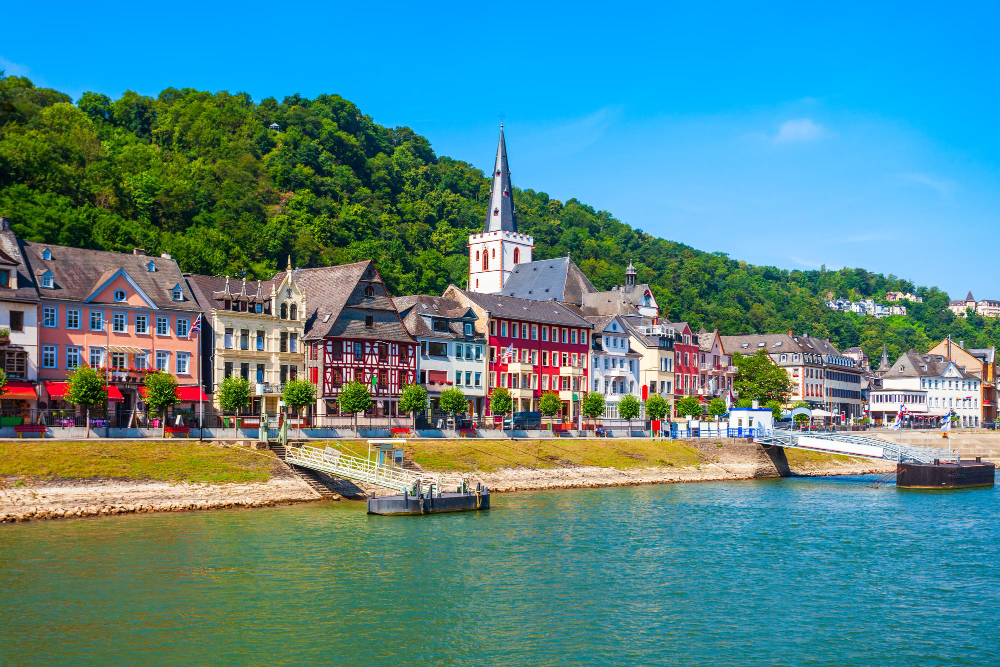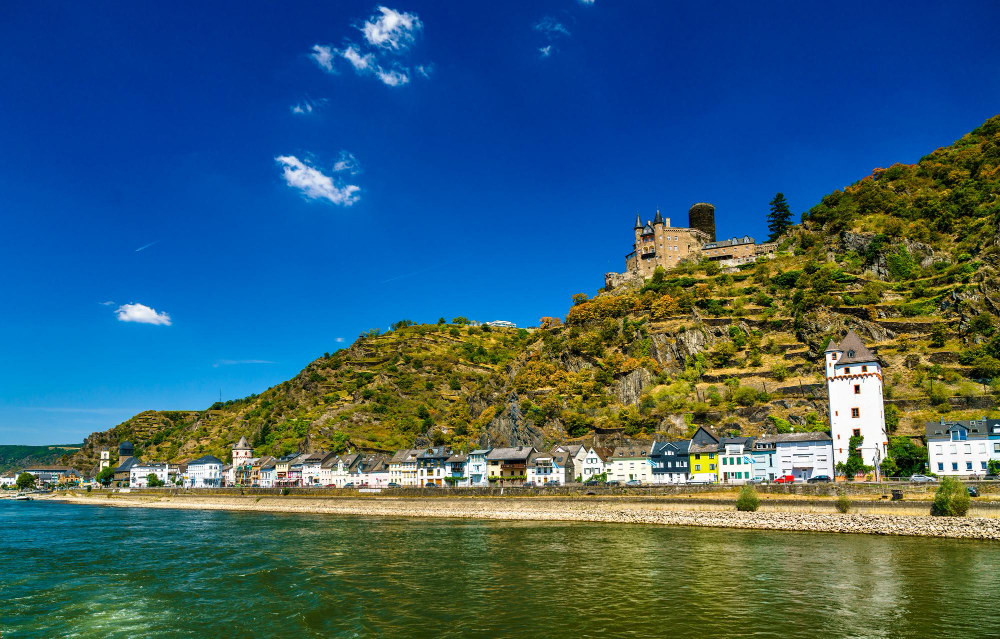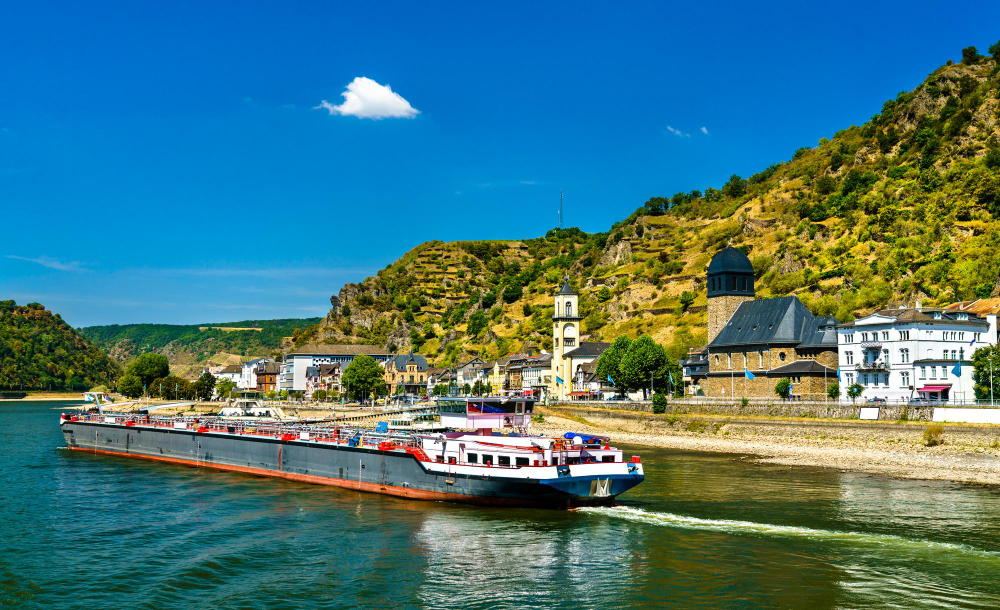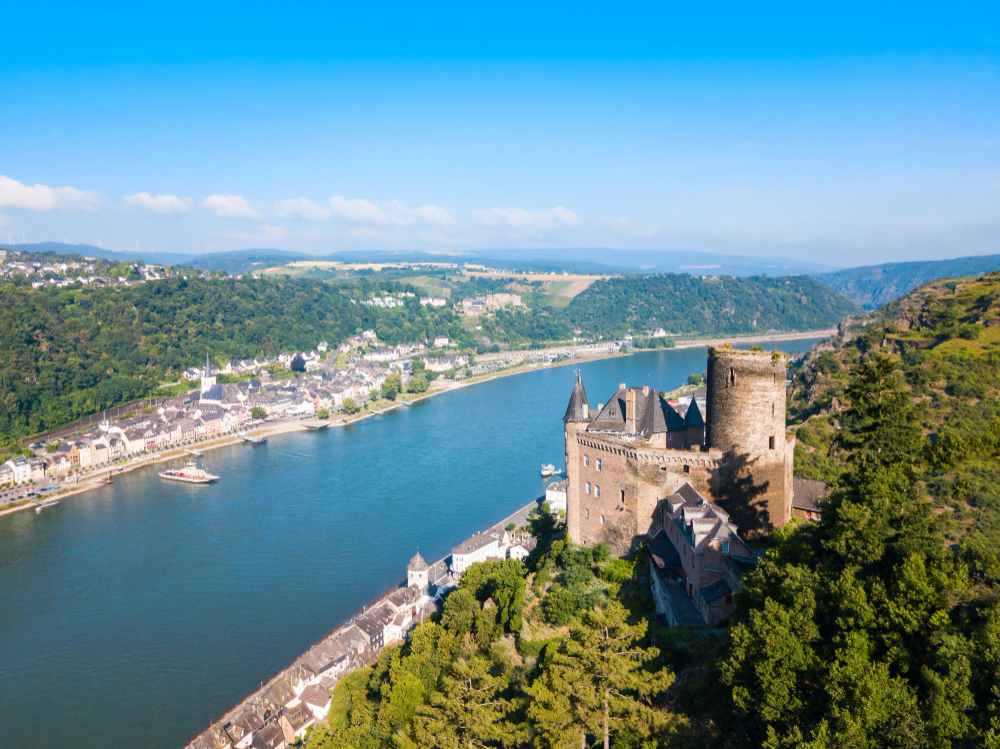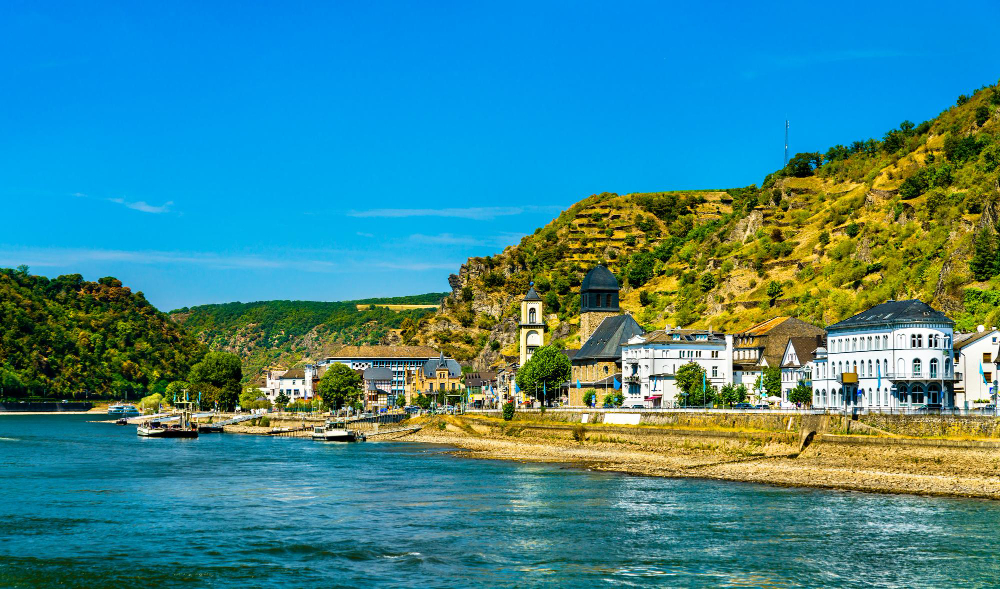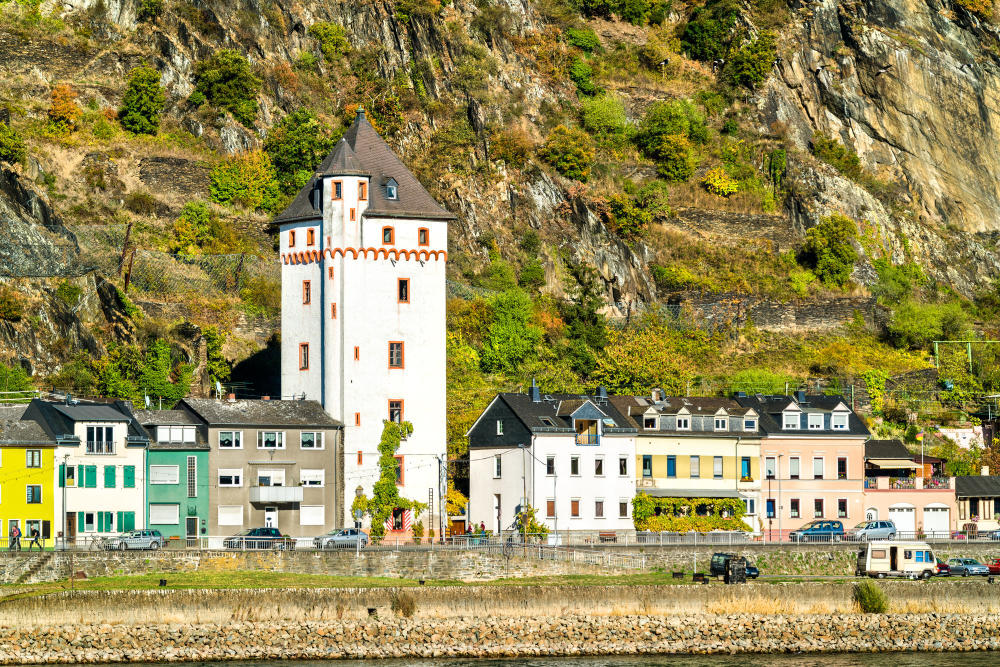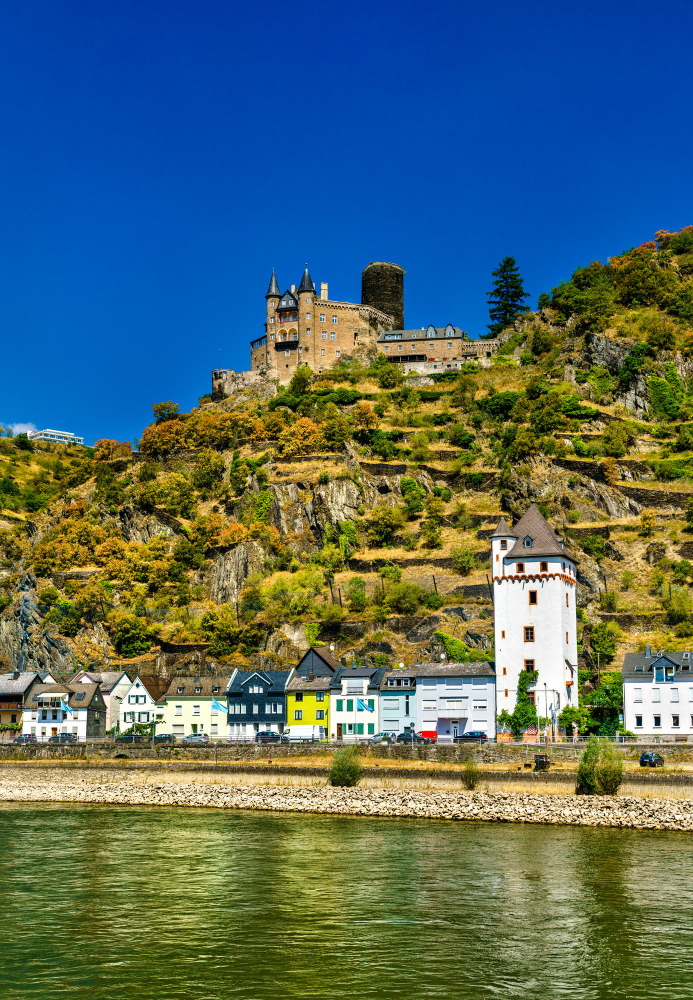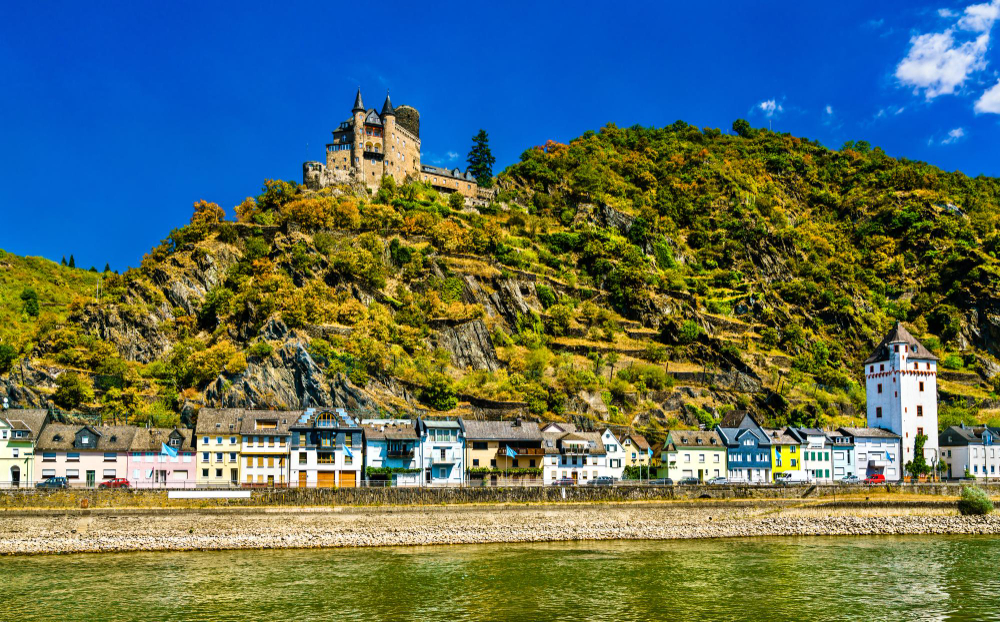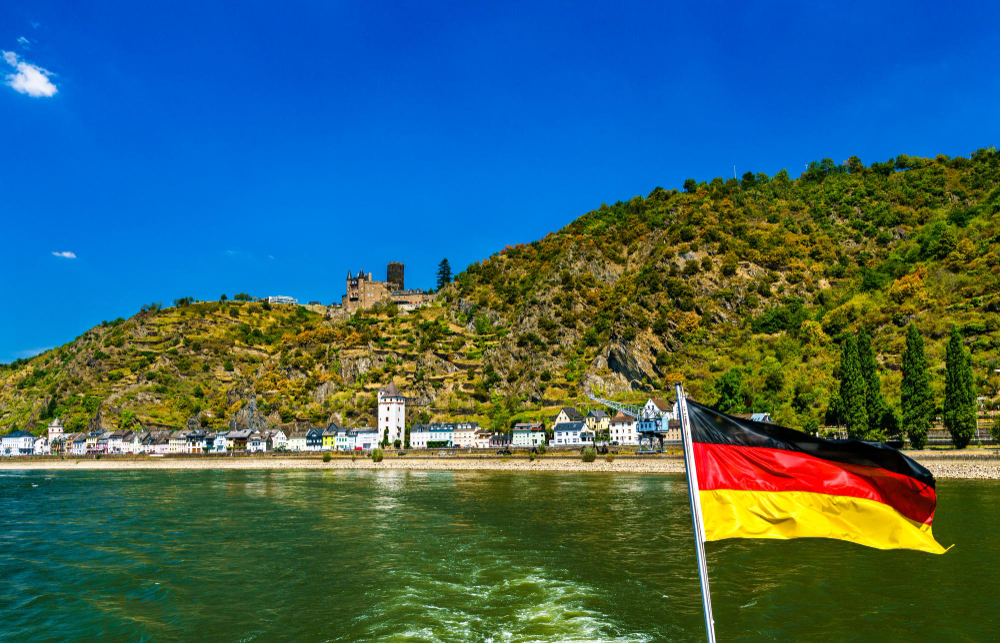
Like an invisible line, the Rhine separates the sister towns of Sankt Goar and Sankt Goarshausen – for centuries the setting for stories, myths and historical significance. Both towns, which face each other like mirror images, are known not only for their breathtaking setting but also for their deep-rooted connections to legends and German history. In this article, you will learn more about the origins of these places, their legendary tales and the fascinating features that still make them popular tourist destinations today.
Of Saints and Naming: The Origins of the Towns – The name ‘Sankt Goar’ derives from Saint Goar, a Frankish priest from the 6th century. It is said that he lived as a hermit in a cave near the Rhine and quickly gained fame through his selfless help for pilgrims and travellers, as well as his healing powers. His charity and faith eventually won over the Bishop of Trier, who granted him permission to build a church. This church became the nucleus of what would later become the town of Sankt Goar, which today proudly bears his name. On the opposite bank of the Rhine, Sankt Goarshausen developed, a town which also owes its name to Saint Goar. Although the two towns appear to be geographically separate, they are linked by a shared history that is inextricably tied to the veneration of this saint. To this day, both Sankt Goar and Sankt Goarshausen are home to religious buildings and monuments that commemorate the legends of Saint Goar.
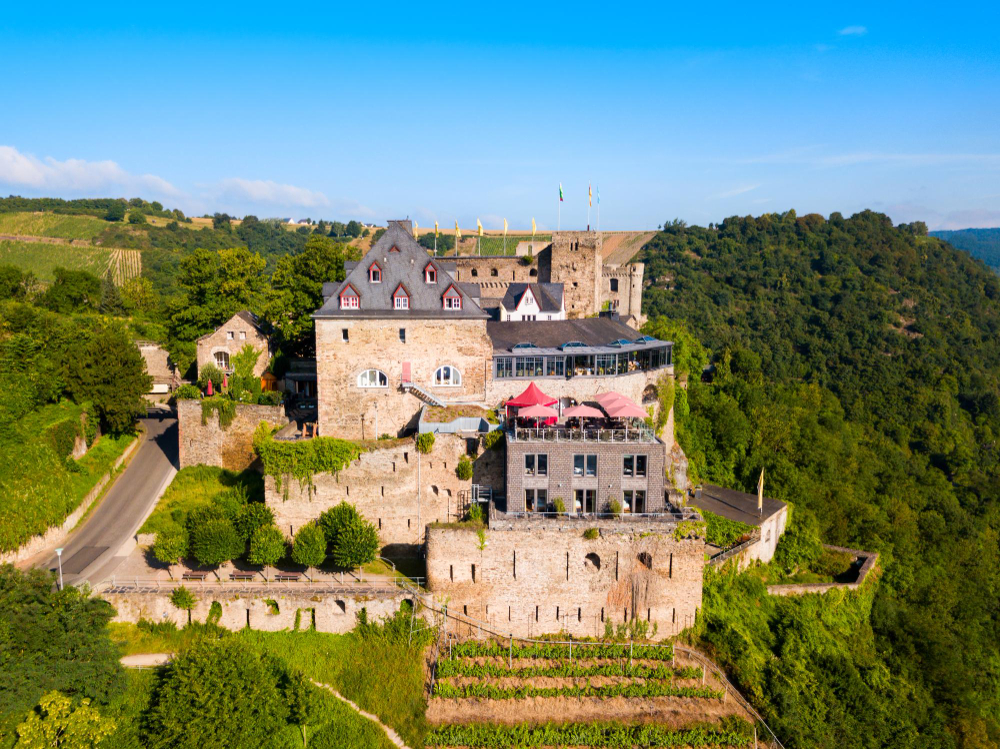
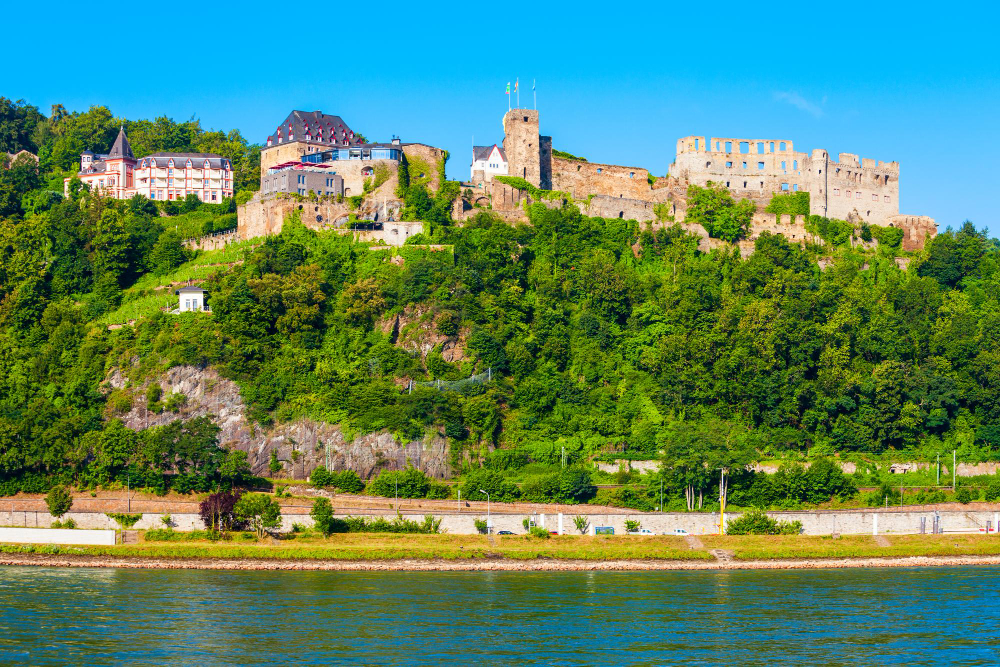
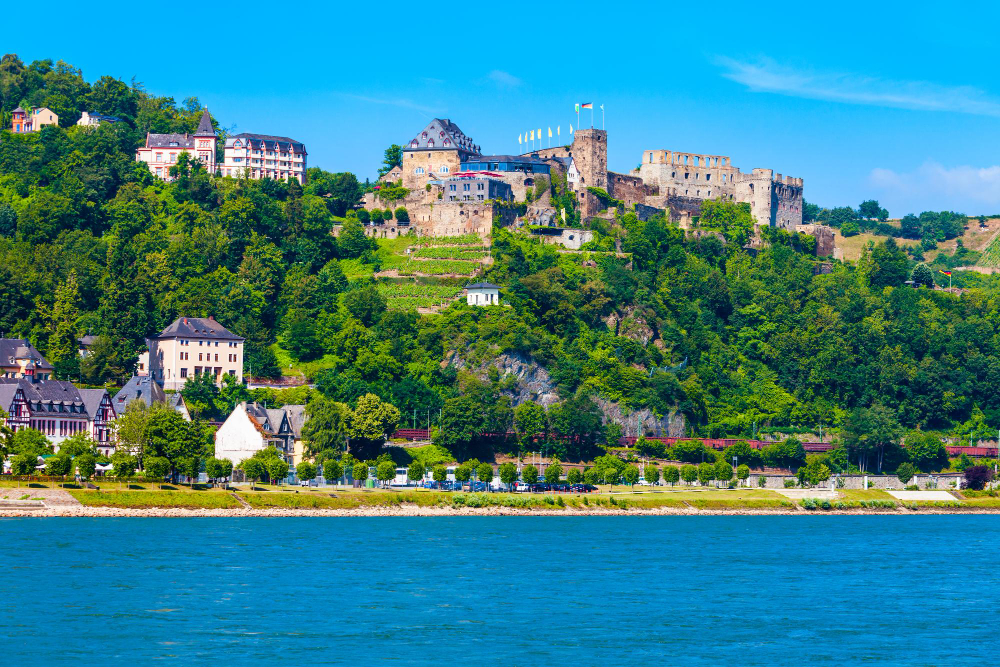
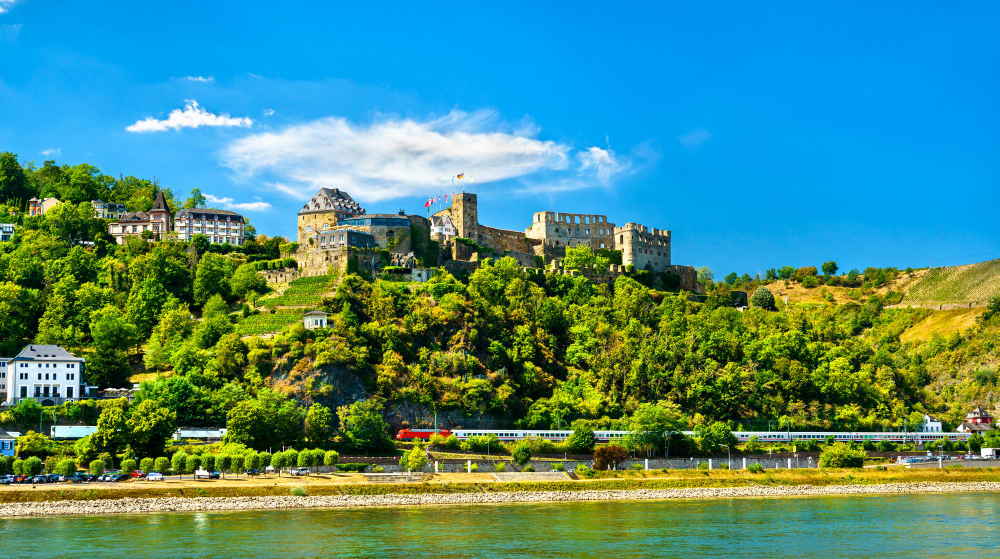
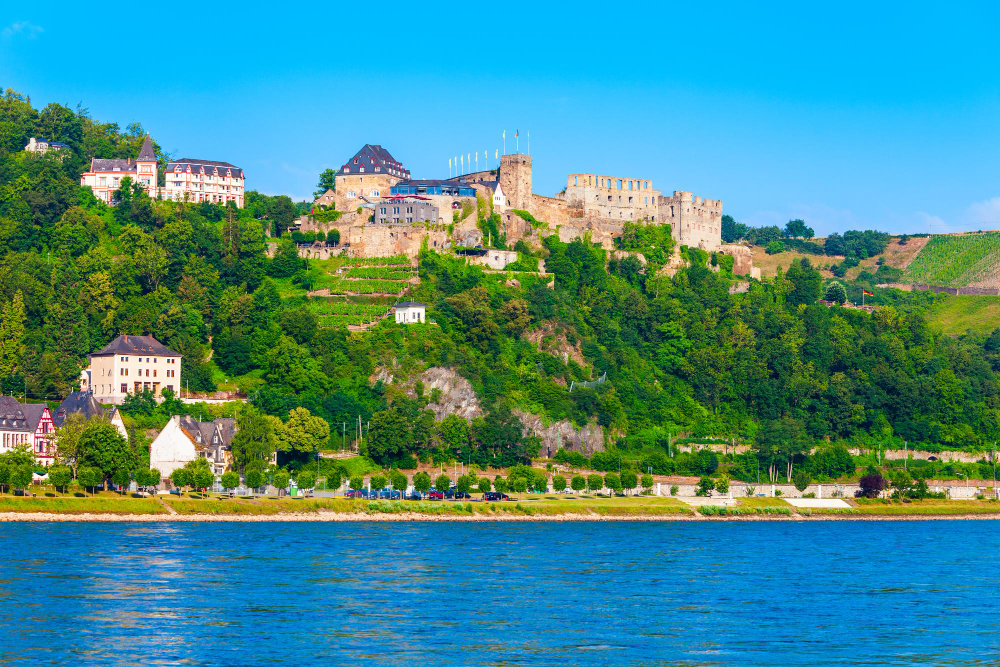
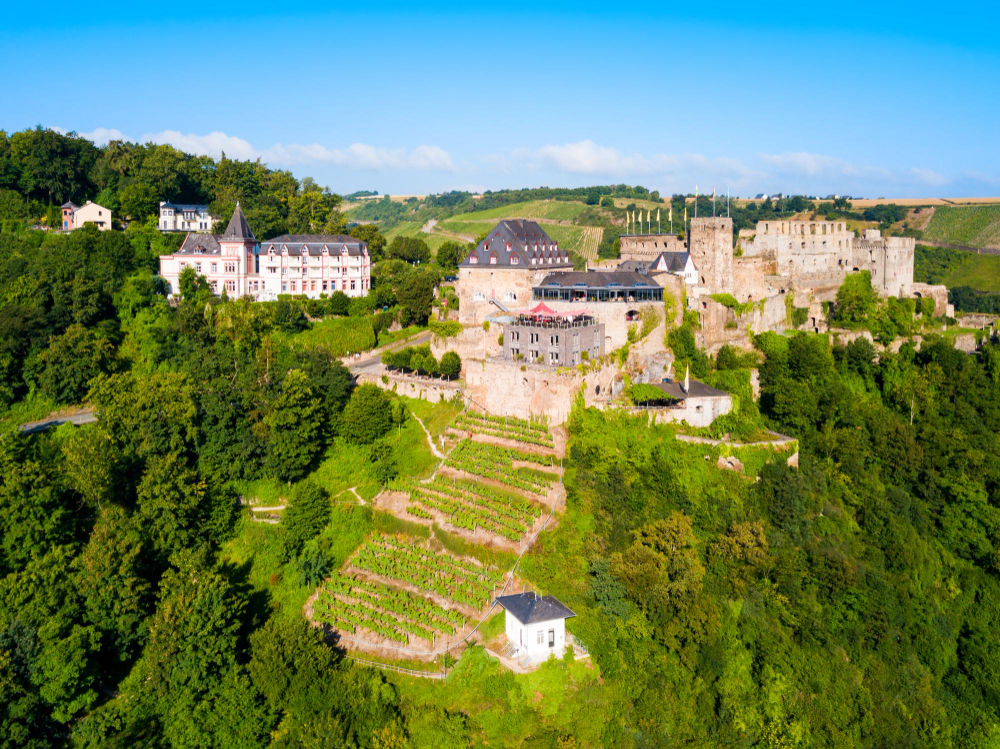
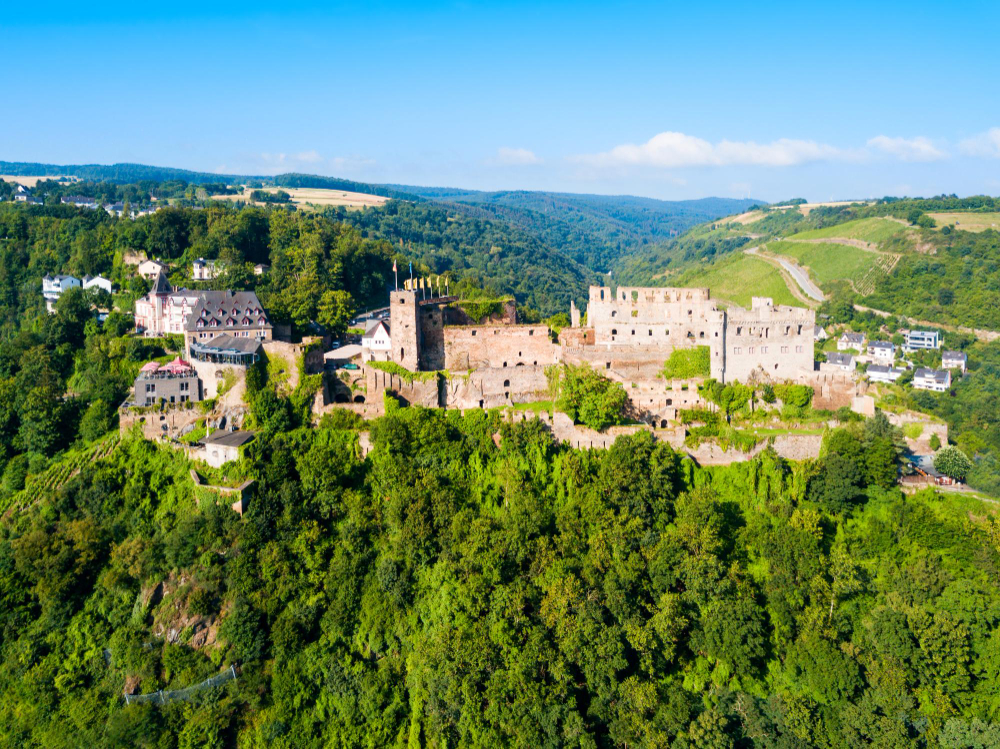
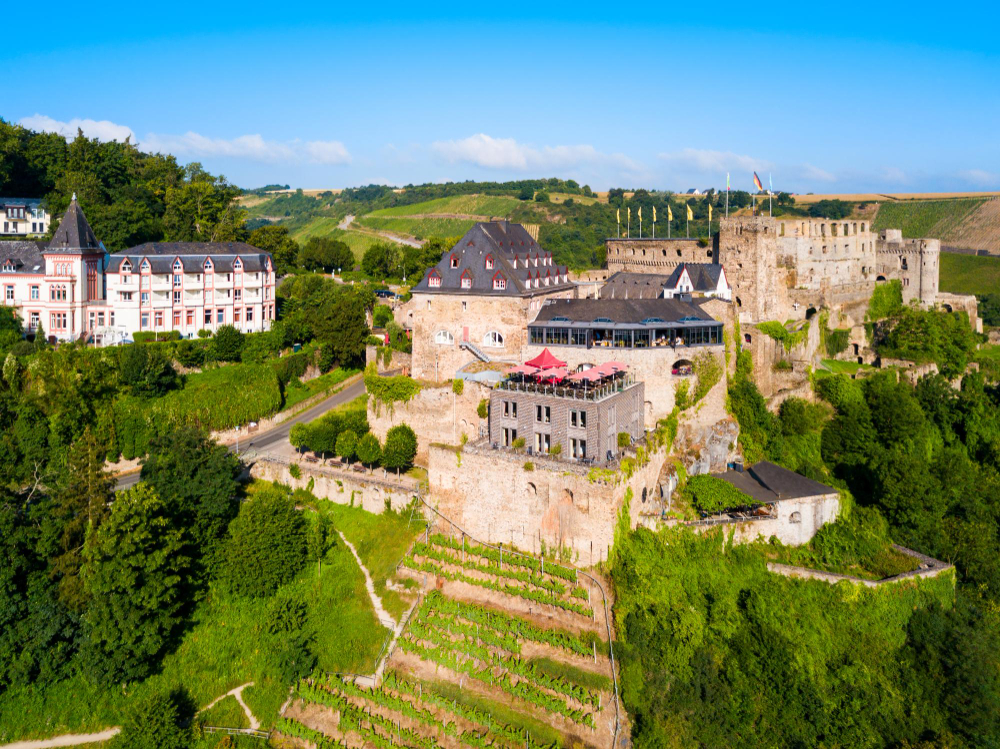
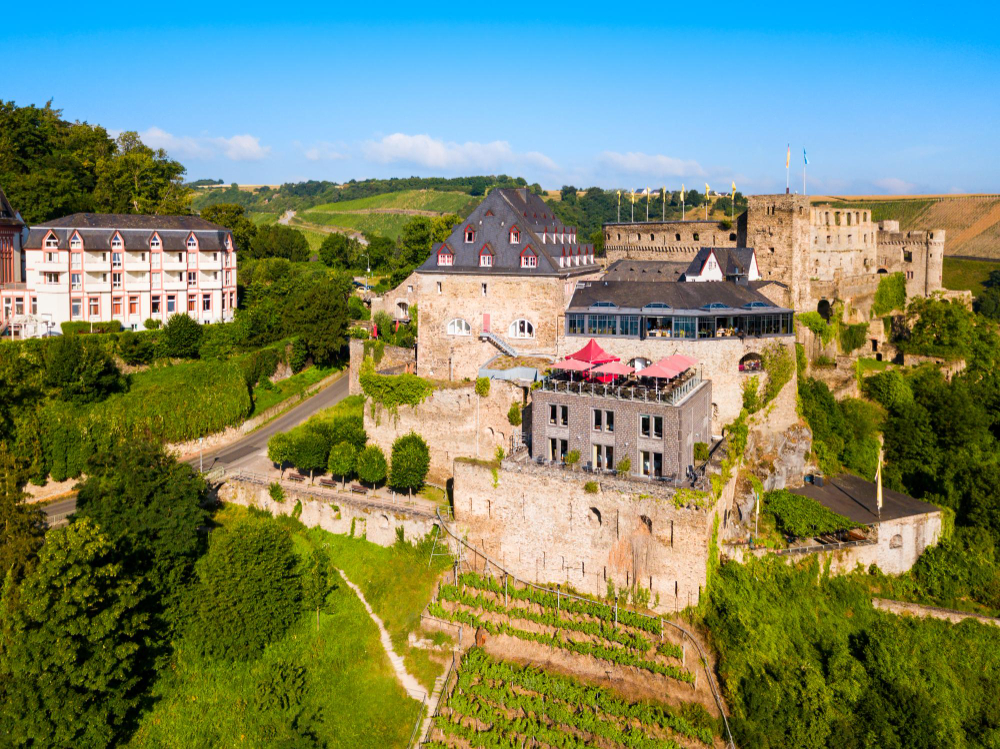
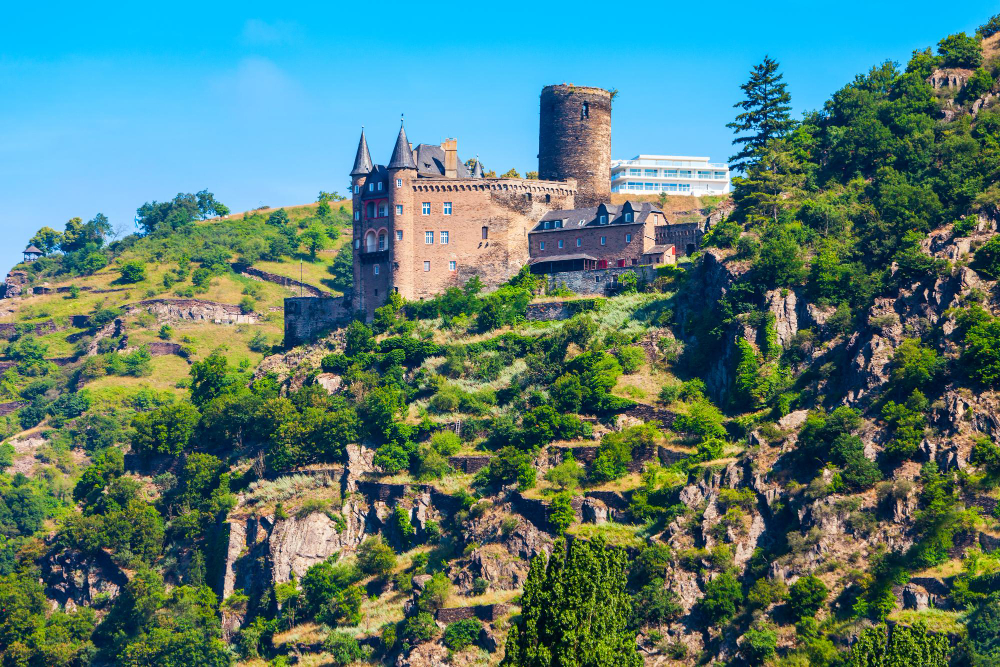
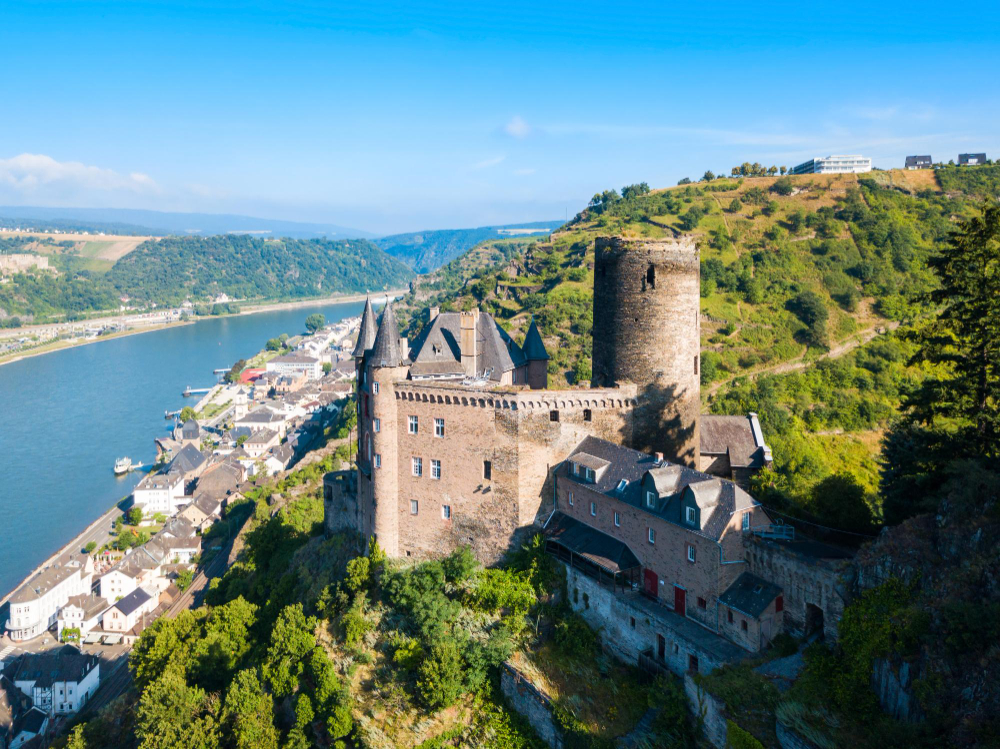
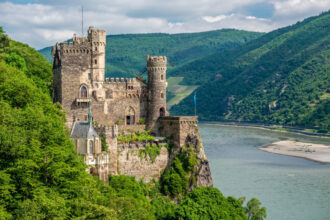
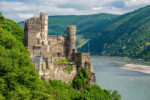
Rheinfels and Katz Castles: Guardians of the Rhine – Another striking feature of the region is the impressive castles that tower high above the towns. Rheinfels Castle, which overlooks Sankt Goar, is regarded as one of the largest and most impressive fortress ruins on the Middle Rhine. It was built in 1245 by Diether V of Katzenelnbogen to protect the Rhine customs post. Thanks to its strategic location, the castle was able to successfully repel attacks for a long time and, over the centuries, developed into a centre of trade and power. On the other side of the river stands Katz Castle, which watches over Sankt Goarshausen like a silent sentinel. Originally built in the 14th century as a defensive structure, it served to safeguard the interests of the House of Katzenelnbogen and control access to the Rhine. Today, the castle – which is now privately owned – offers a spectacular view over the Rhine Valley and attracts numerous tourists every year. Rheinfels and Katz Castles are not only important examples of medieval architecture, but also symbols of the rivalries and power struggles that once raged along the Rhine. Together with the picturesque landscape and the vibrant towns, they tell the stories of a region that has been both a home and a stage for centuries.
The Loreley: Myth, Melody and Magic – Anyone who hears the name Sankt Goarshausen inevitably thinks of the Loreley, that rock which rises majestically above the Rhine. Yet the Loreley is far more than just a geological feature – she is one of the most famous figures in German poetry and mythology. According to legend, the Loreley was a beautiful maiden whose singing captivated the attention of passing boatmen. Enchanted by her beauty and the plaintive melodies, the men steered their boats into dangerous currents and often met their end in the wild waters of the Rhine. The myth of the Loreley became world-famous through the works of poets such as Clemens Brentano and Heinrich Heine. In particular, Heine’s poem ‘Die Lore-Ley’, set to music by Friedrich Silcher, has firmly anchored the figure of the seductive nymph in the cultural consciousness. Even today, the Loreley Rock attracts numerous visitors who wish to follow in the footsteps of this mystical tale and enjoy the spectacular views.
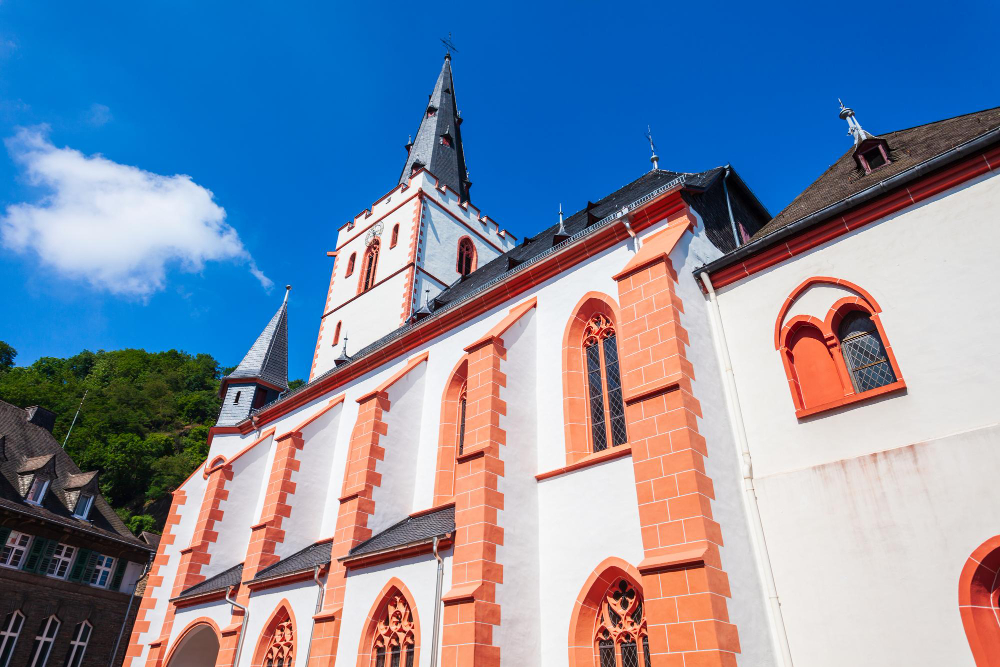
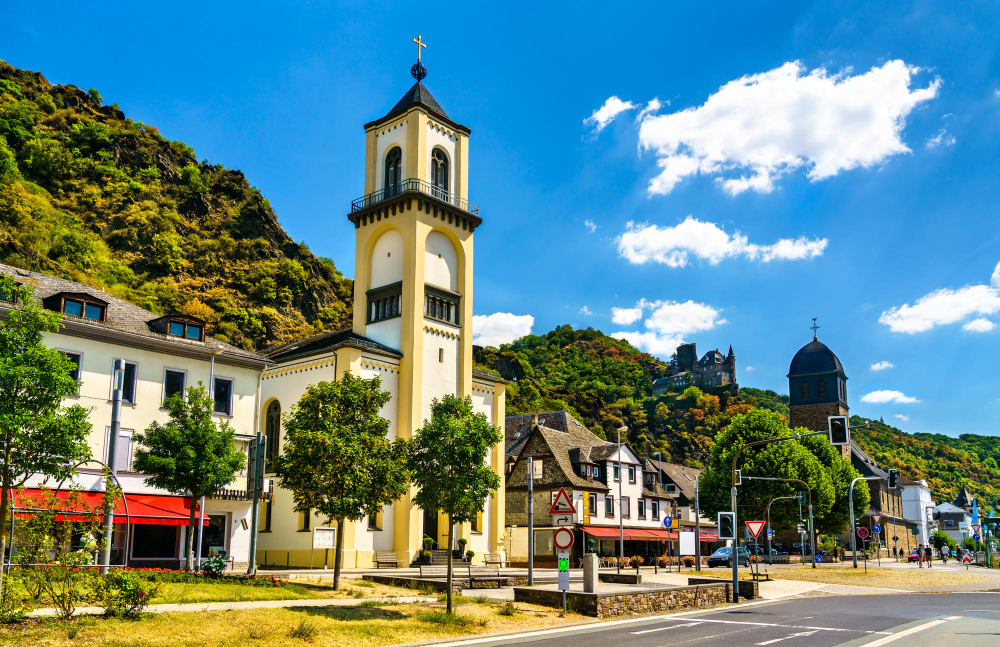
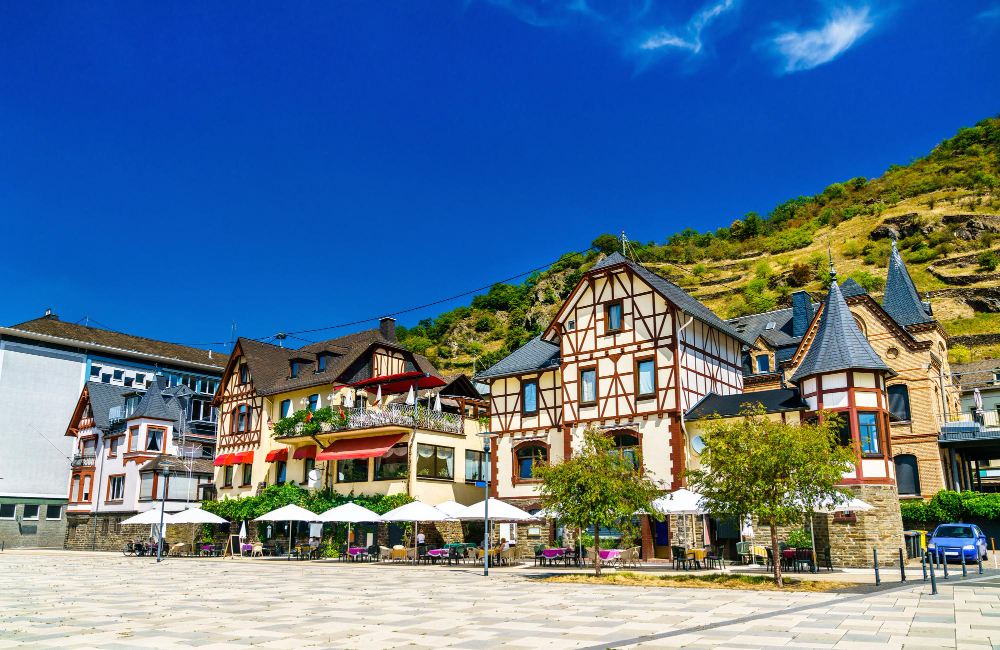
Living history and cultural heritage – As far back as the Middle Ages, Sankt Goar and Sankt Goarshausen were important stopping points for pilgrims, traders and travellers. Their location in the narrowest section of the Middle Rhine made them key hubs for the movement of goods and communication between regions. Furthermore, both towns played a central role in the customs system, as tolls were levied here for passage – a lucrative business for the respective local rulers. Alongside their economic significance, the towns have always preserved their cultural heritage. Historic buildings such as the Protestant collegiate church in Sankt Goar or the old town of Sankt Goarshausen bear witness to an eventful past stretching back to Roman times. As you stroll through the narrow streets, you can almost feel the history that was written here.
Nature, hiking and enjoyment: a modern paradise – As well as their historical and cultural significance, Sankt Goar and Sankt Goarshausen are also a true dream come true for nature lovers. The region lies at the heart of the UNESCO World Heritage Site ‘Upper Middle Rhine Valley’ and offers numerous hiking trails that wind through picturesque valleys and vineyards. One of the best-known trails is the Rheinsteig, which takes hikers from Bonn to Wiesbaden, offering some of the most beautiful views of the Rhine along the way. The region also has plenty to offer in terms of cuisine. Whether it’s a glass of the famous Riesling from the surrounding vineyards or regional specialities such as ‘Rheingauer Spundekäs’ – a visit to one of the small traditional inns is a must for every traveller.
Sankt Goar and Sankt Goarshausen: Two towns, one heart – Despite the natural barrier of the Rhine, Sankt Goar and Sankt Goarshausen are closely linked – through history, culture and a love of tradition. Today, both towns are not only popular destinations for day trips, but also places that impressively embody German history and identity. Although the Rhine physically separates the two towns, they are united by a shared passion for keeping their stories alive and offering visitors an unforgettable experience. Anyone travelling here is immersed in a world of myths, nature and living history – a place where you can feel the soul of the Middle Rhine Valley.
Sankt Goar and Sankt Goarshausen are landmarks of the Middle Rhine and captivate visitors in equal measure with their historical depth and natural beauty. With their impressive castles, the world-famous Loreley and their rich cultural history, they invite visitors to discover the secrets of this special region. Their legends live on – in the stories that are told, in the songs that are sung, and in the hearts of all those who are fortunate enough to experience this enchanting corner of the world.