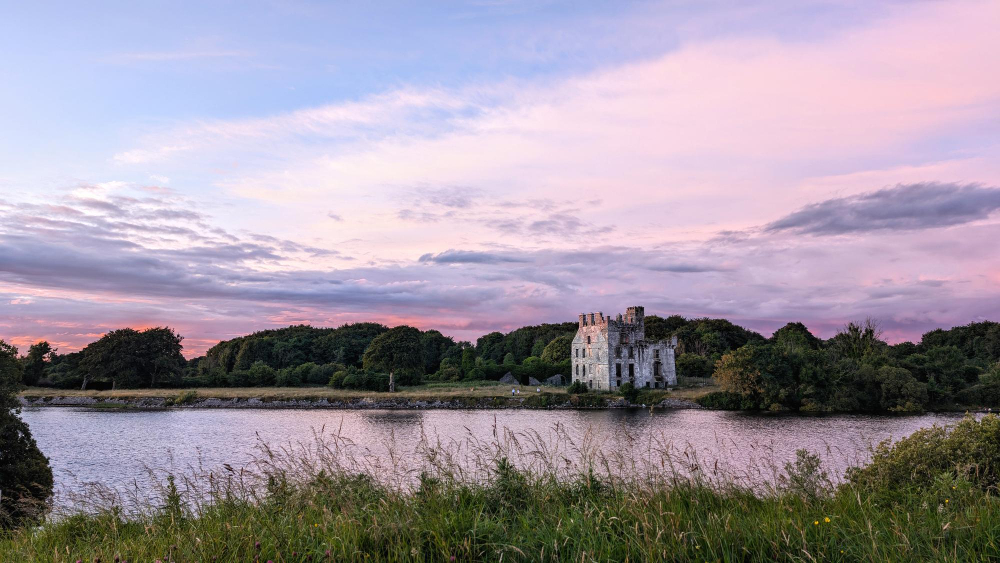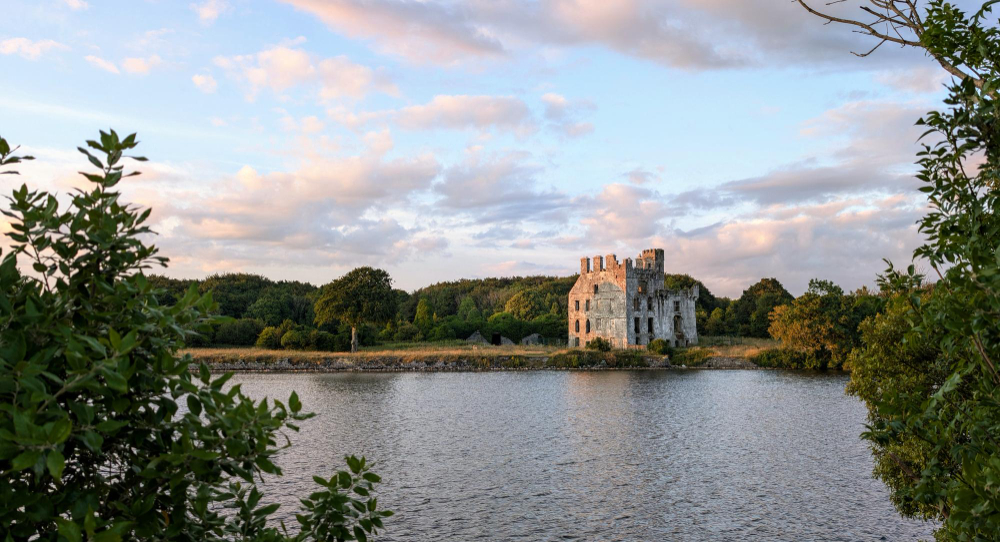
On the tranquil banks of the River Corrib, near the picturesque village of Menlo in County Galway, Ireland, Menlo Castle (known in Irish as “Caisleán Mhionlaigh”) stands as a silent testament to centuries of history, legends, and tragedies. Also known as “Blake’s Castle,” this 16th-century structure harbors secrets behind its ivy-covered walls—stories of resilience, grief, and mystery that continue to captivate visitors and locals alike. Although its imposing structure has since fallen into disrepair, Menlo Castle remains a symbol of Ireland’s rich heritage and enduring charm.
The Origins of Menlo Castle – The origins of Menlo Castle date back to the mid-16th century, a time when the Irish countryside was dotted with fortified tower houses built to protect noble families from territorial conflicts. Historical records suggest that the castle was originally inhabited in 1574 by Thomas Colman—a time when raids by rival clans were commonplace throughout the Galway region. As early as 1569, the sturdy stone walls of this tower house had already stood for years, providing refuge and commanding a dominant position over the surrounding countryside. The Blake family, one of the prominent “Tribes of Galway”—a group of influential merchant families in the region—later acquired the estate and made it their ancestral seat. Over the generations, the castle underwent extensive renovations and, by the 18th century, had been expanded from its humble origins as a tower house into a sprawling, four-story complex with two wings. This expansion symbolized the wealth and influence the Blakes wielded in Galway society. A picturesque tower was added at the eastern end, lending Menlo Castle a fairy-tale charm that contrasted with its otherwise imposing architecture.
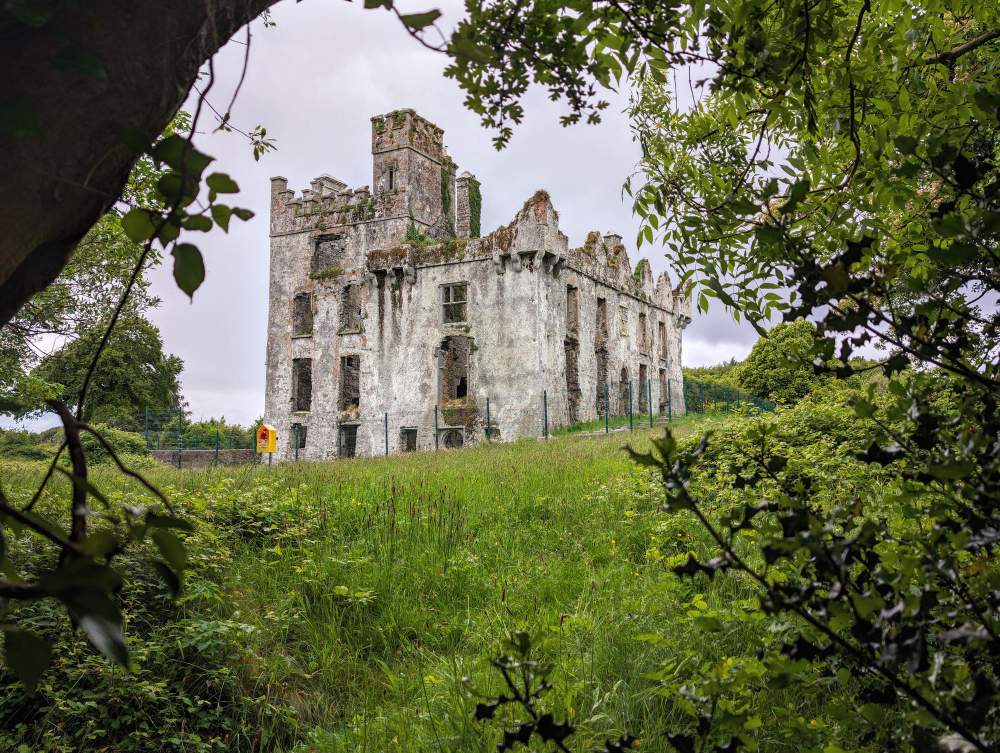
A Tragic Inferno: The Fire of 1910 – While Menlo Castle had flourished for centuries as the Blake family’s residence, its splendor came to an abrupt end on the night of July 26, 1910. Sir Valentine Blake, the 14th Baronet of Menlo, and his wife, Lady Blake, were in Dublin when disaster struck. A fire engulfed the castle and reduced much of the building to ashes. Tragically, their disabled daughter Eleanor was unable to escape the inferno. Her body was never recovered, and it is believed she perished in the flames. The cause of the fire remains a subject of speculation. Some reports suggest that servants accidentally set fire to hay stored on the lower floors of the castle, thereby triggering the devastating blaze. Others point to more mysterious circumstances, fueling the folklore surrounding the event. To this day, Eleanor’s untimely death casts a melancholic shadow over Menlo Castle, and locals tell stories of her ghost wandering among the ruins—as a solemn guardian of what remains of her childhood home.
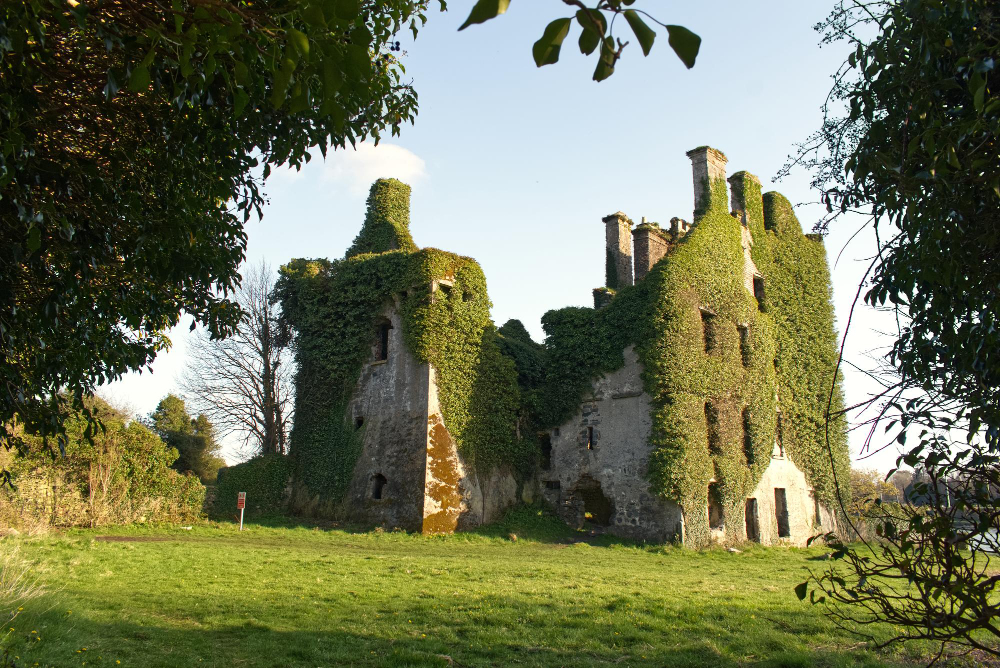
Decay and Division: A Landscape in the Wake of Tragedy – After the devastating fire, the once-proud Menlo Castle was abandoned and left to the ravages of time. Its skeletal remains were reclaimed by nature; ivy climbed up the walls, turning it into both a ruin and a mirror of its past. The Blake family, unable to revive their ancestral seat, was forced to witness the partition of their estate in 1923 under the auspices of the Land Commission. Amid the turbulent Irish struggle for independence, land redistribution was a common measure to eliminate inequalities, and the Blakes’ lands were no exception. For decades, Menlo Castle stood abandoned yet majestic, attracting artists, romantics, and hikers seeking inspiration amid its hauntingly beautiful ruins. In an effort to preserve this historic treasure, the Galway City Council acquired the site in July 2000 through a compulsory purchase. While the castle itself remains a ruin, efforts have been made to preserve its surroundings as a public space to ensure that its legacy endures for future generations.
Legends and Tales Surrounding Menlo Castle – Like many ancient sites, Menlo Castle is shrouded in folklore and supernatural tales. The longest-standing story revolves around Eleanor Blake, whose tragic death sparked rumors that her restless spirit lingers by the riverbank. Visitors often report sensing an eerie presence or hearing soft whispers within the castle ruins. Some even claim to have glimpsed a shadowy figure in the ivy on moonlit nights—one that watches, waits, and mourns in silence. Another legend tells of a hidden treasure said to be buried somewhere on the castle grounds. According to local lore, the Blakes hid valuable heirlooms during times of upheaval, fearing that their rivals might seize them. Treasure hunters have occasionally combed the area in search of these lost riches, but so far nothing conclusive has been unearthed. Beyond individual myths, Menlo Castle embodies the general mystique of Ireland’s medieval castles, which were often shrouded in a blend of romance and tragedy. The interplay between history and legend keeps Menlo alive in the hearts and imaginations of those who visit it.
A Place in Galway’s Cultural Fabric – Today, Menlo Castle holds a cherished place in Galway’s cultural landscape and in Ireland’s cultural heritage as a whole. Its location on the banks of the River Corrib adds to its mystique, with the flowing water serving as a poetic backdrop to its silent testimony. Although the castle may lack the restoration efforts afforded to other historic sites, its wild and untamed beauty offers something unique—a glimpse into history frozen in time and untouched by the modern world. The castle’s silhouette against the setting sun is a popular subject for photographers and artists, while its storied past continues to inspire writers and historians. Local guided tours often include a stop near the castle, where guides recount its captivating history and share the eerie legends that surround it. For those who wish to experience Galway’s lesser-known but equally fascinating treasures, Menlo Castle offers a magical journey into the past.
Preservation versus Decay: The Future of Menlo Castle – Currently, Menlo Castle remains in a state of disrepair, and its future is uncertain. Its acquisition by the Galway City Council raised hopes for restoration or preservation efforts, but the ruins have remained largely unchanged. Galway residents have expressed concerns about the castle’s preservation, citing its historical significance and its potential as a tourist attraction. There is debate over whether Menlo should be rebuilt or simply preserved in its current state as a “romantic ruin.” Proponents of reconstruction argue that restoring parts of the castle could create a tangible connection to the visual splendor of Galway’s aristocratic past. Others, however, believe that it is precisely its natural decay that gives it its charm—the way ivy winds its way over weathered stones, telling a story of loss and resilience. Regardless of which path is taken, Menlo Castle undeniably represents an important part of Galway’s identity. Its history is closely intertwined with the broader narrative of Ireland’s medieval and modern history, reminding us of the transience of life and legacy.
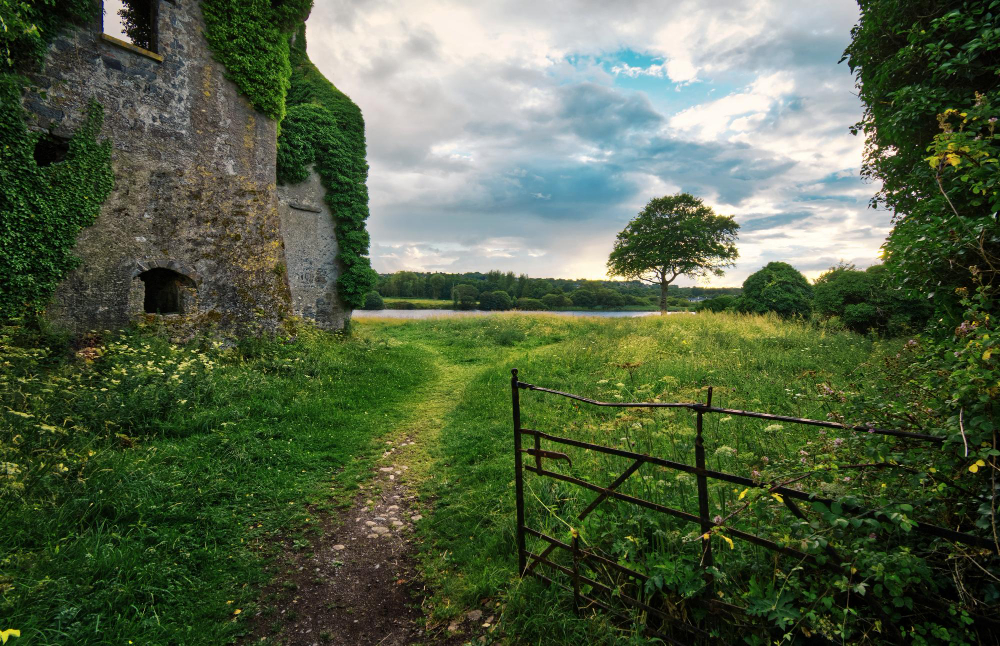
A Visit to Menlo Castle Today – For today’s visitors, Menlo Castle is a peaceful place, ideal for self-reflection and exploration. Nestled amid greenery and overlooking the meandering River Corrib, the site invites quiet reflection away from the hustle and bustle of Galway City. Even as its walls crumble, its beauty endures, attracting photographers, painters, and history buffs alike. Access to the castle is relatively easy, though caution is advised when walking through the ruins. While there are no official guided tours or visitor facilities, its charm lies precisely in its raw authenticity—a work of art shaped by both human hands and the forces of nature.
A Legacy of Resilience and Mystery – Menlo Castle is more than just a ruin; it is a gateway to the stories of Ireland’s past, a canvas for the imagination, and a reminder of the transience of human achievements. From the splendor of its heyday under the Blake family to the devastation caused by the fire that claimed Eleanor’s life, the castle reflects the complex tapestry of history—a tapestry of triumphs, tragedies, and legends. As ivy continues to creep over its weathered stones and the whispers of ghosts echo through its halls, Menlo Castle stands majestically on the banks of the River Corrib. It invites us all to reflect on its secrets and to cherish the fragments of history it represents—a cornerstone of Galway’s soul, frozen in time.