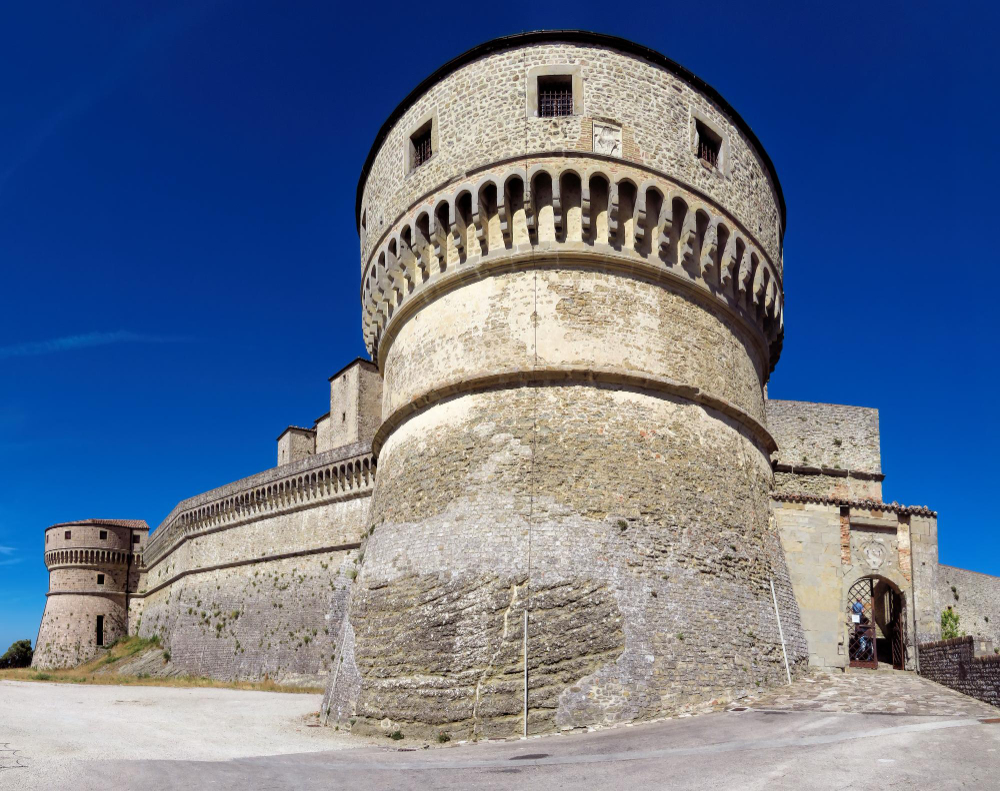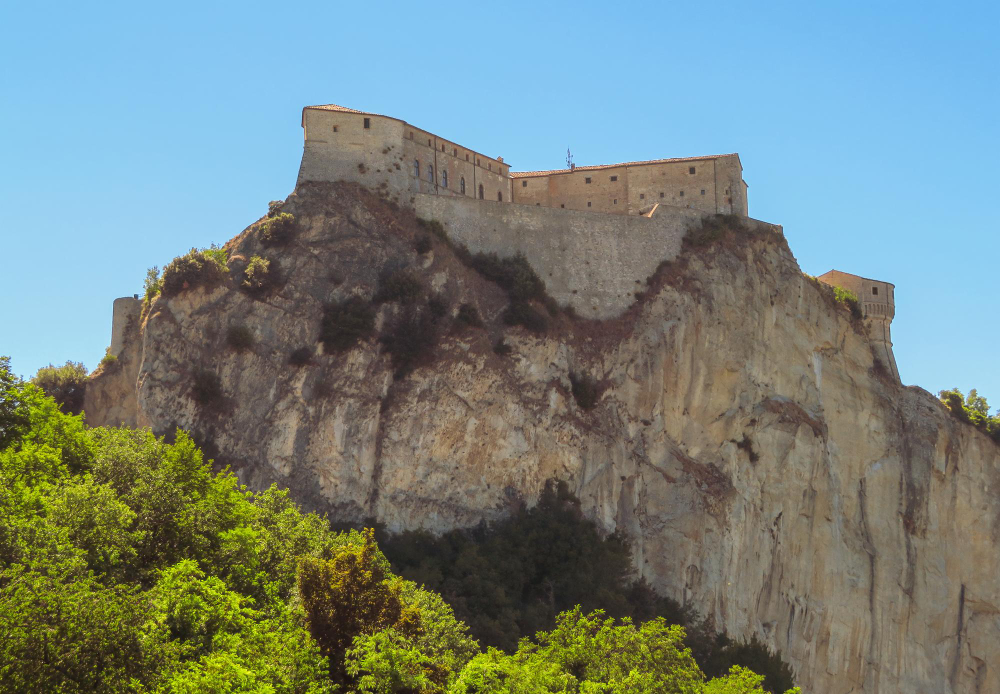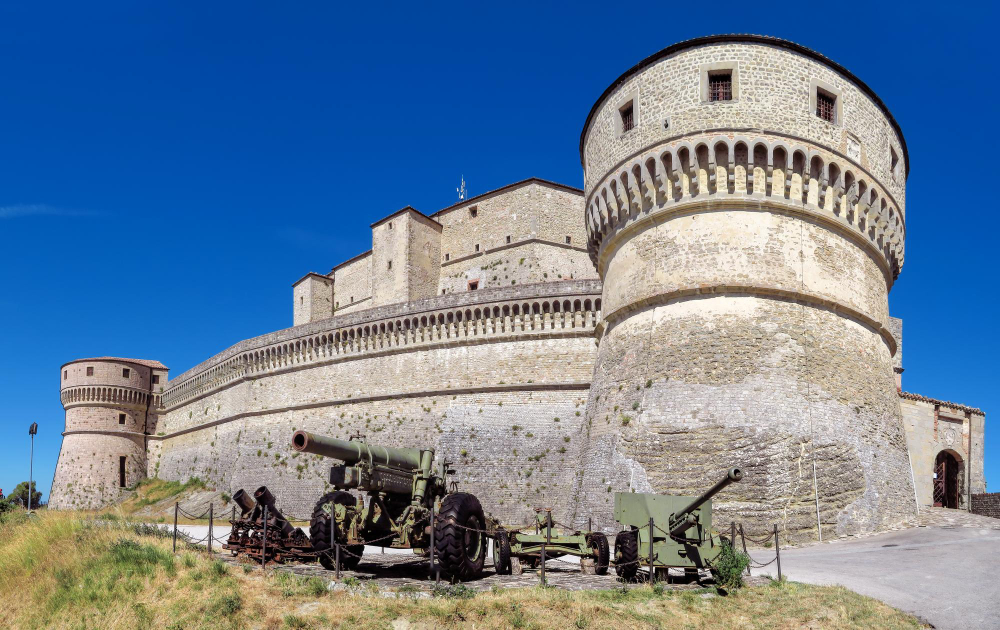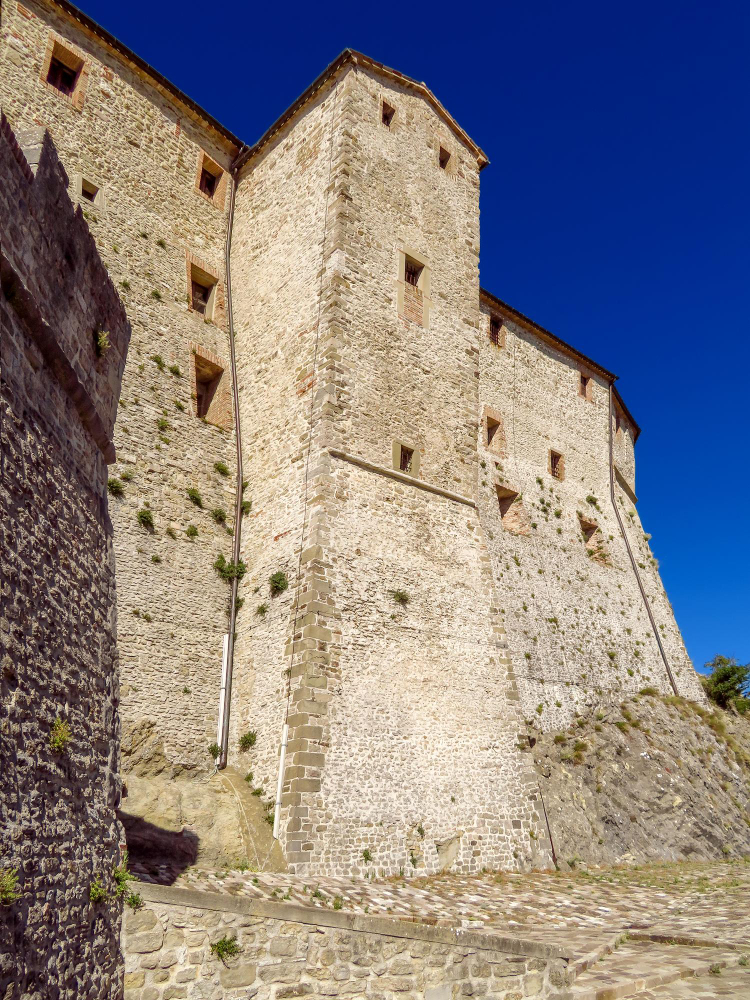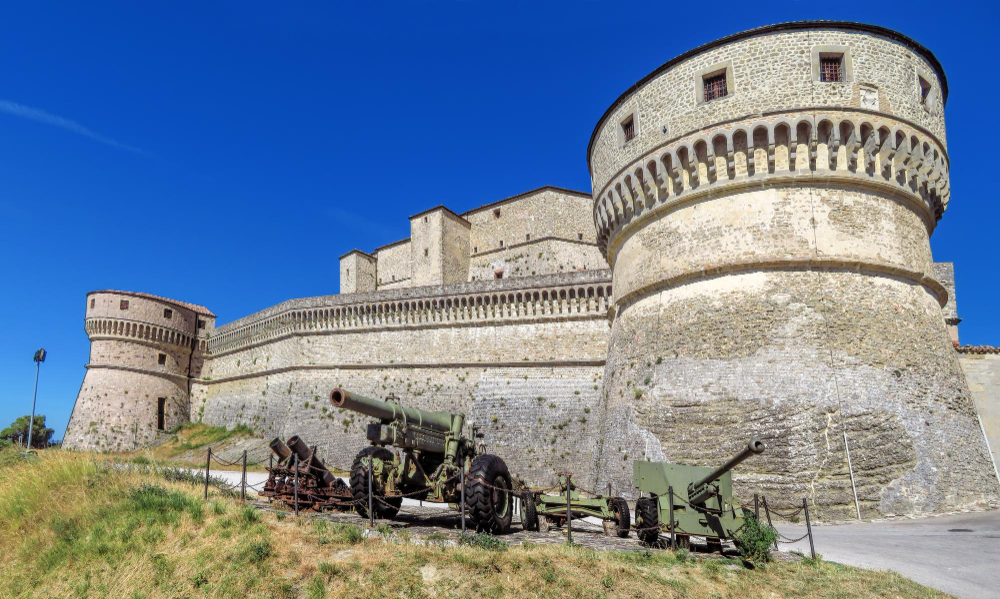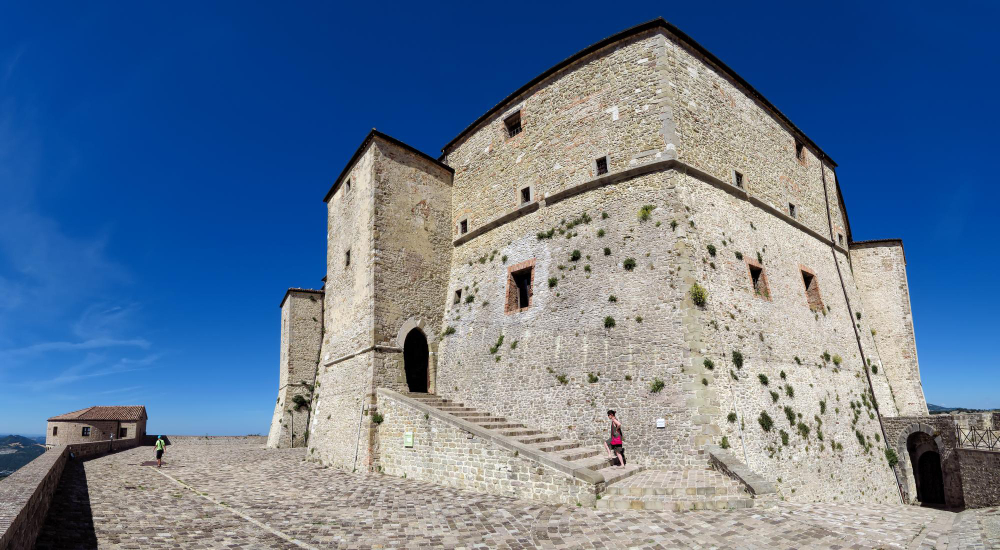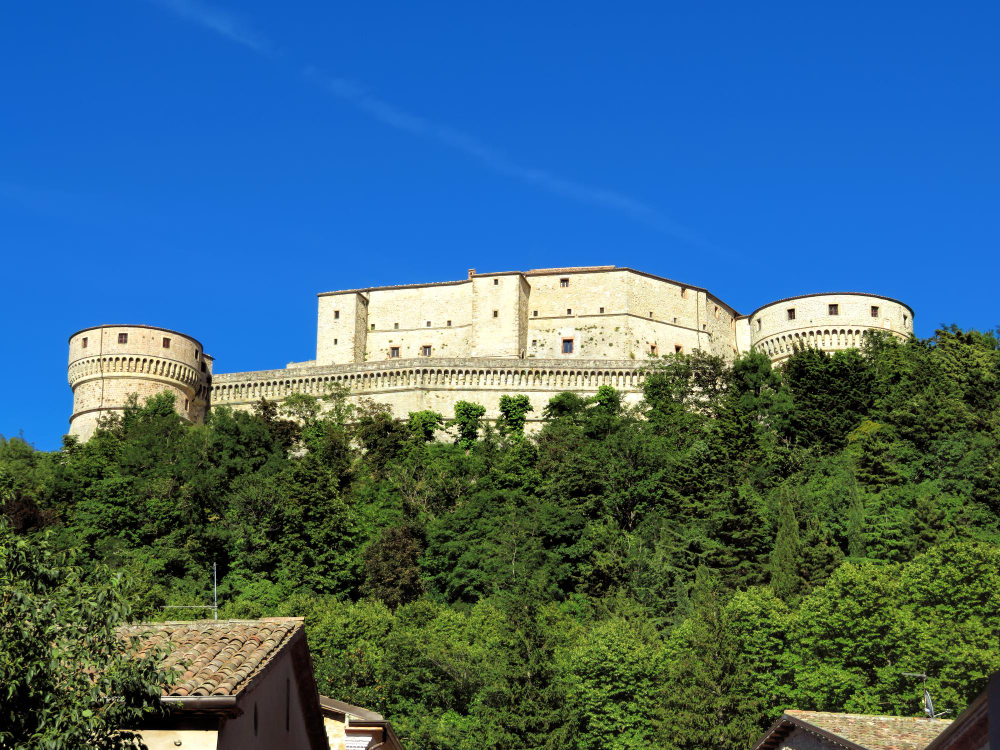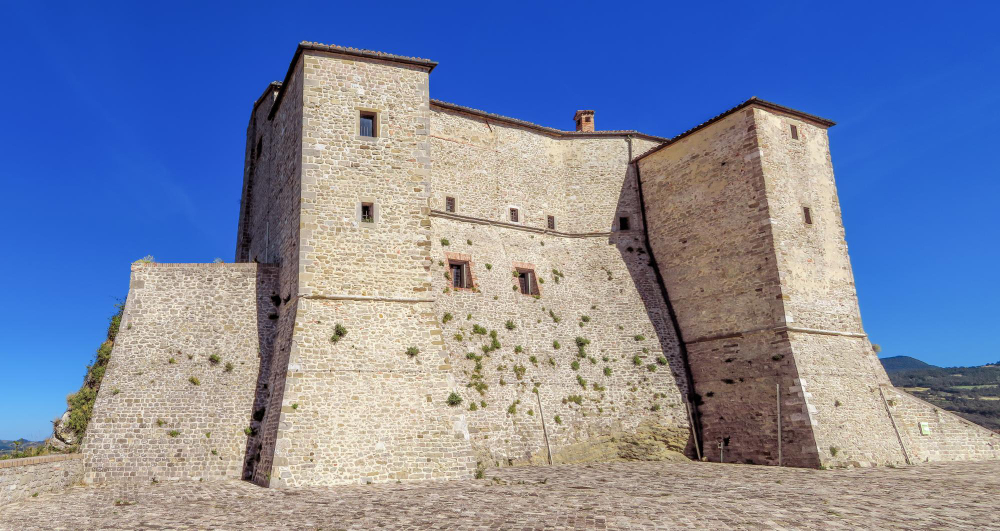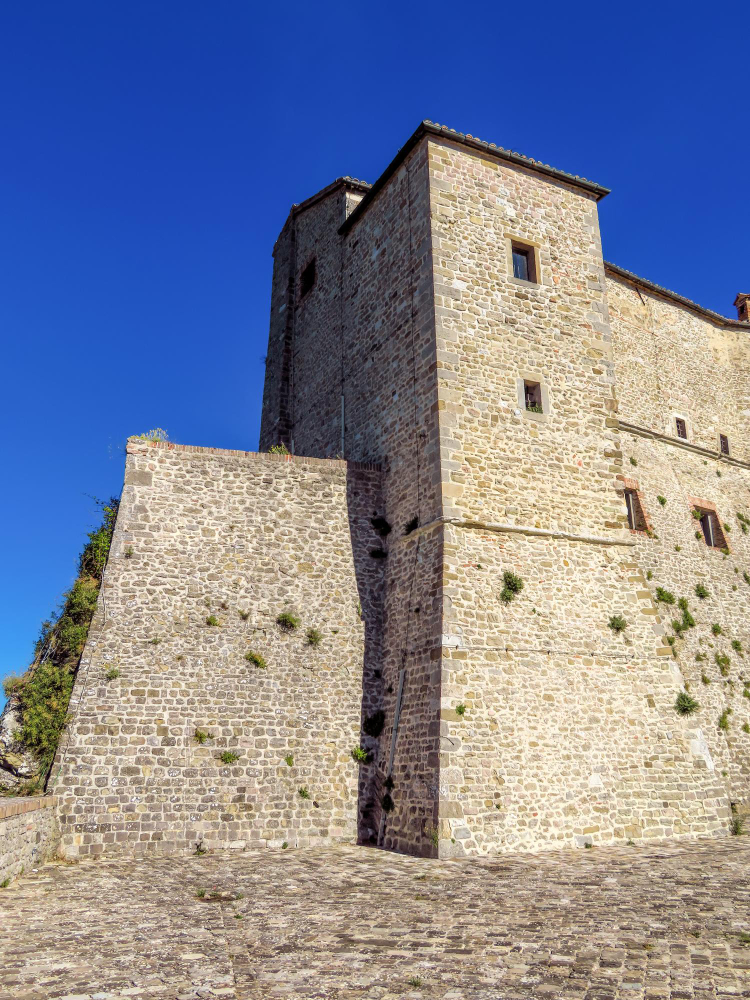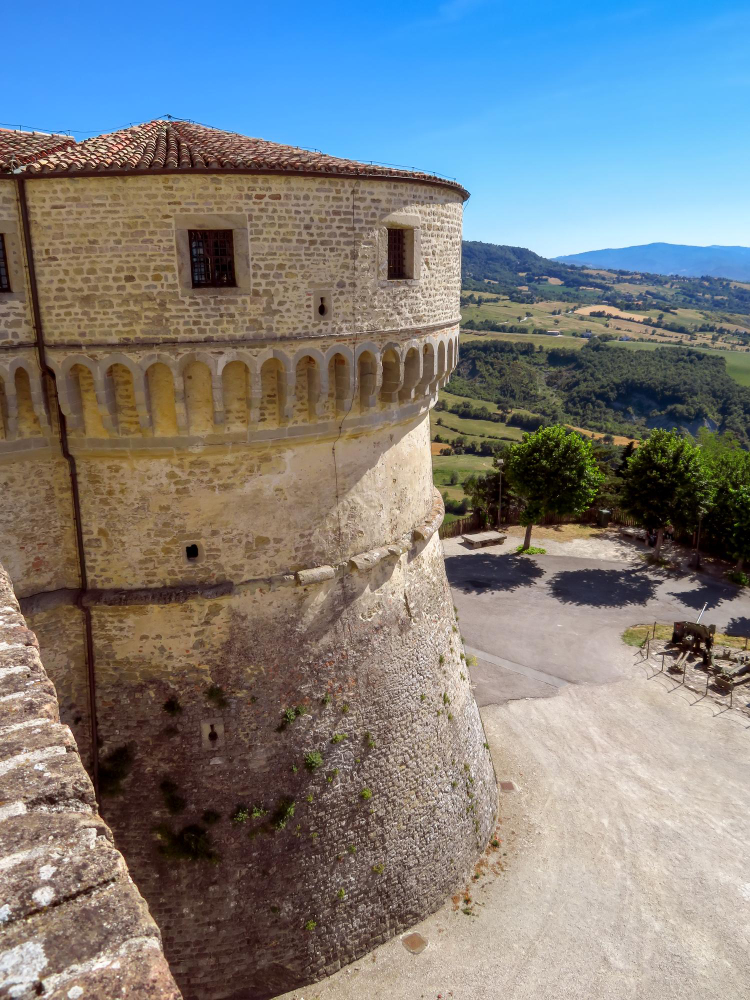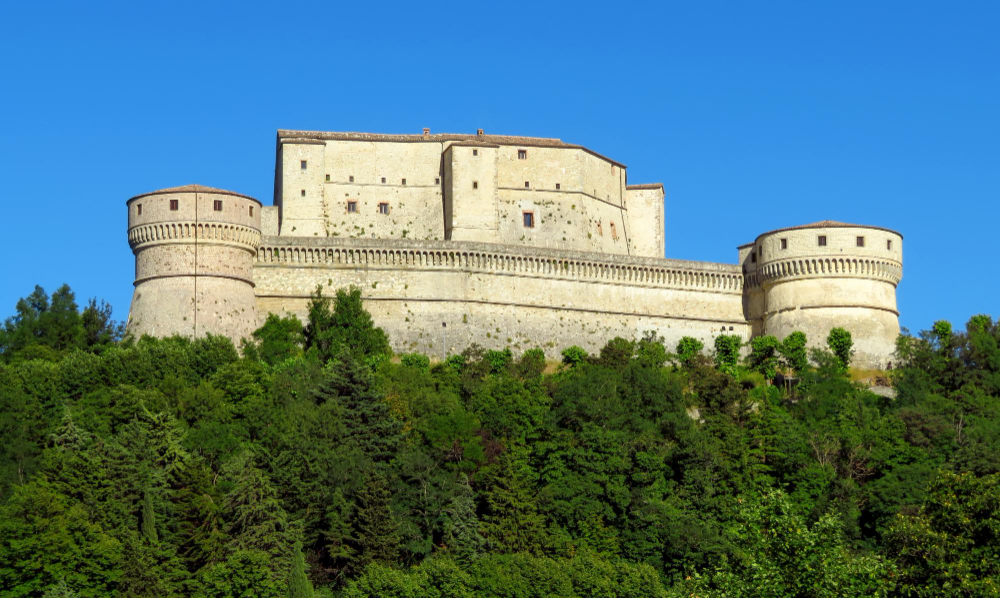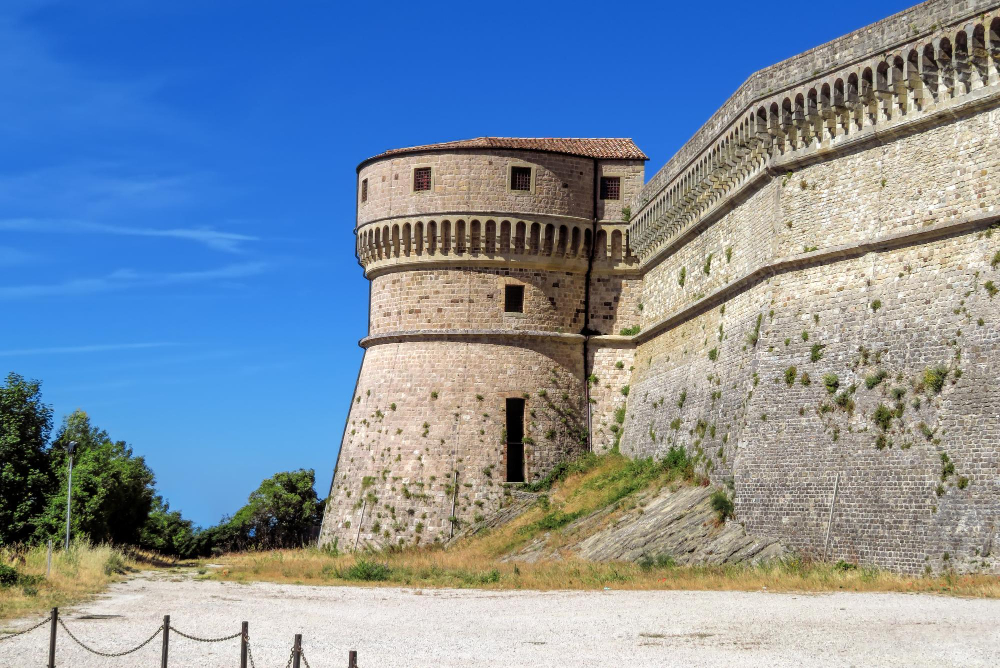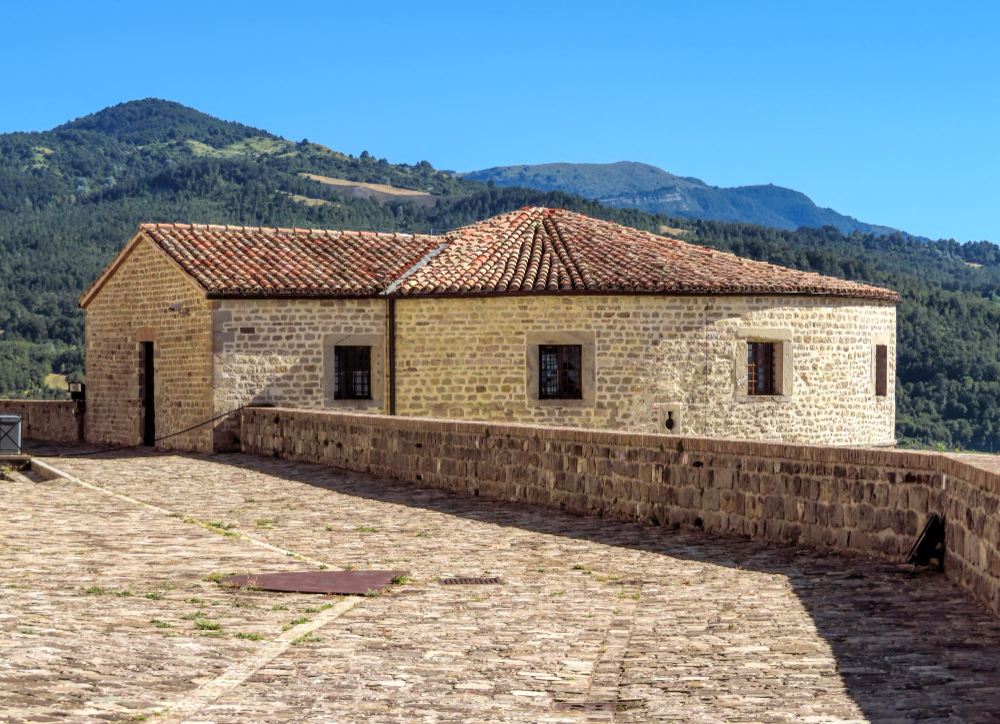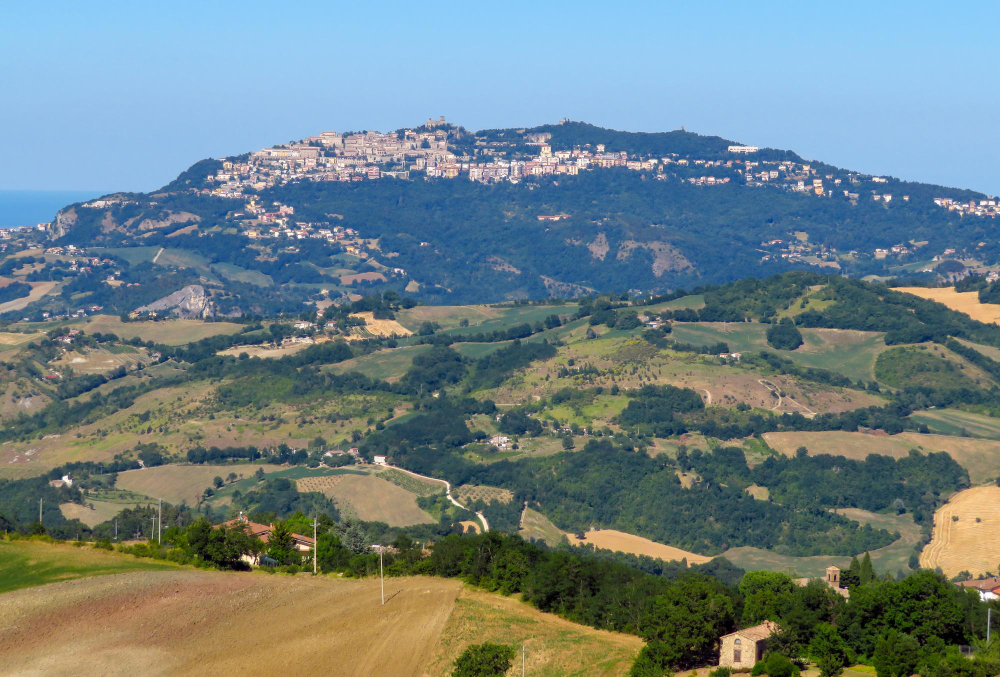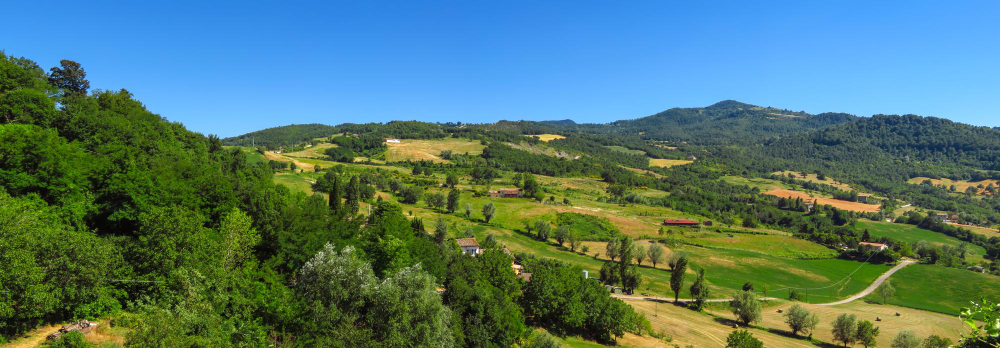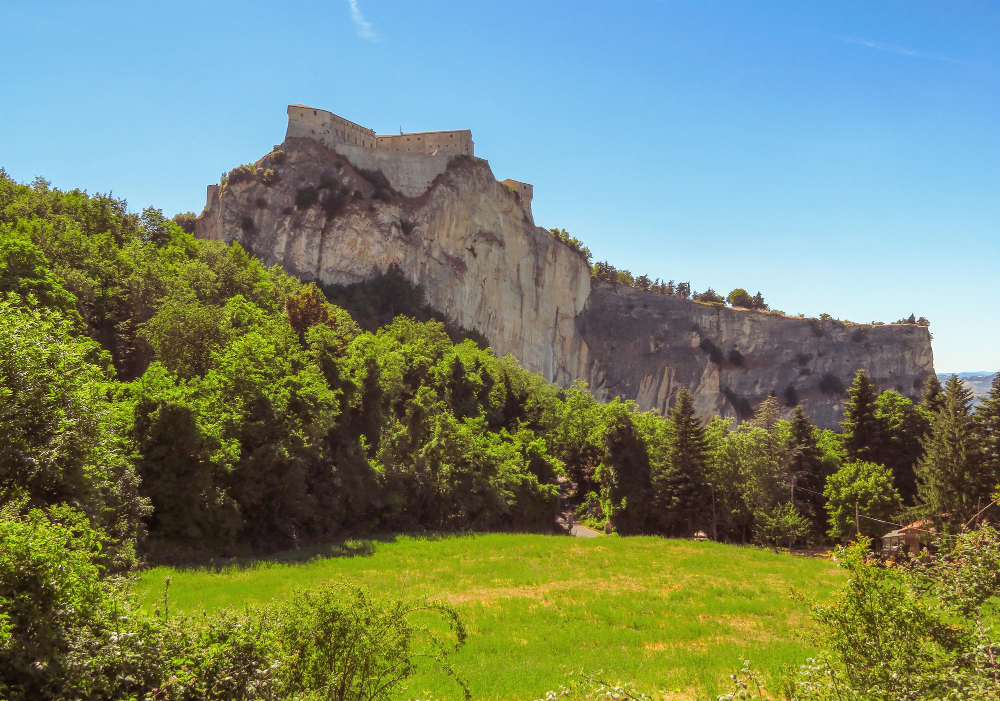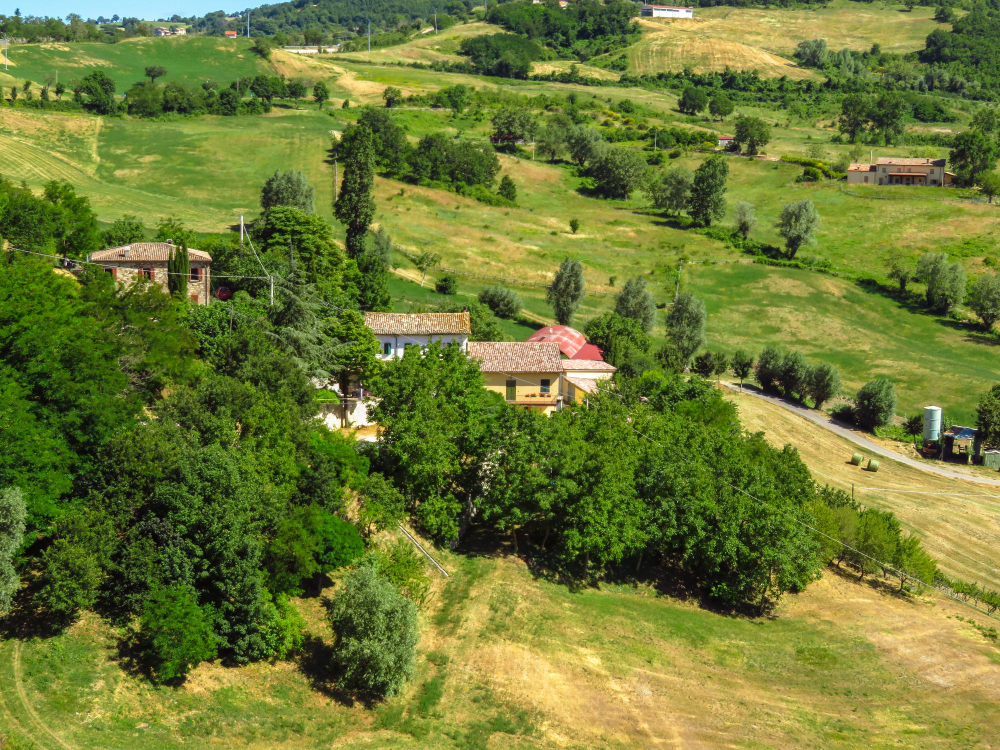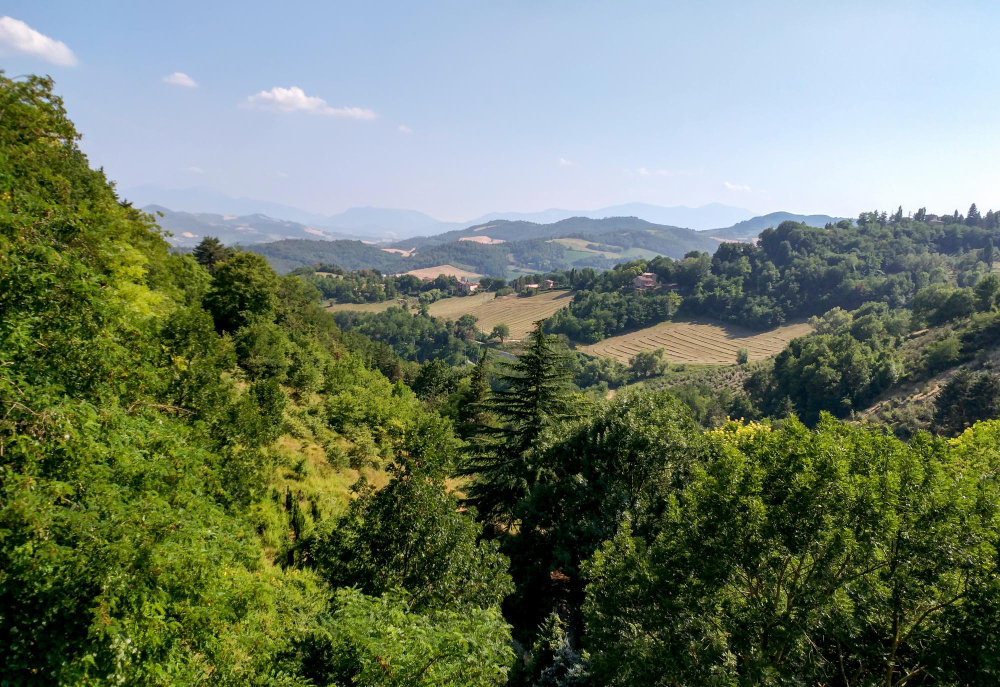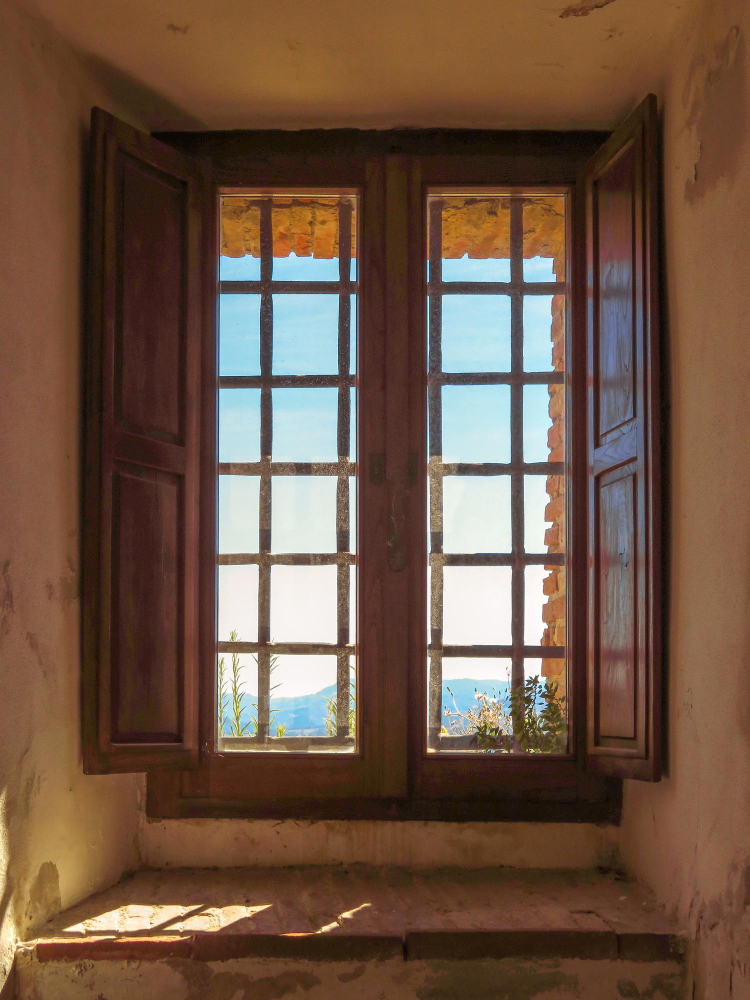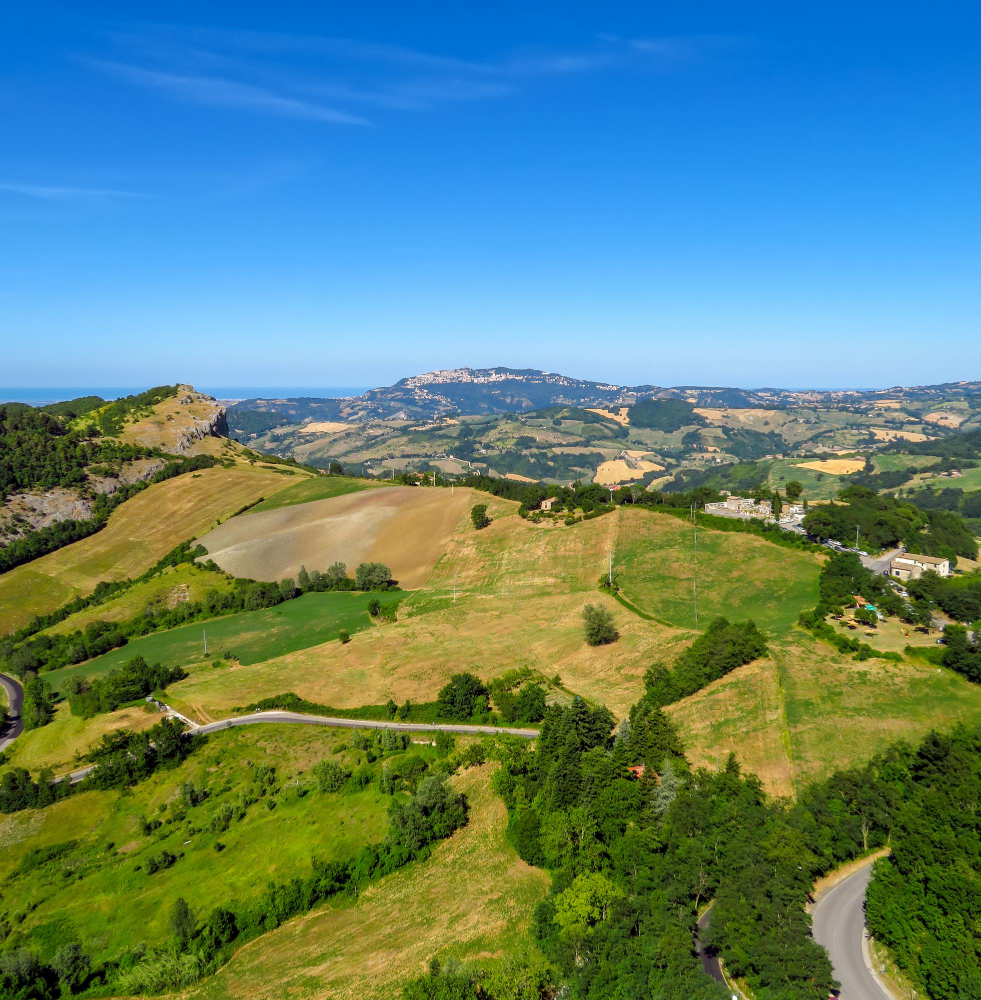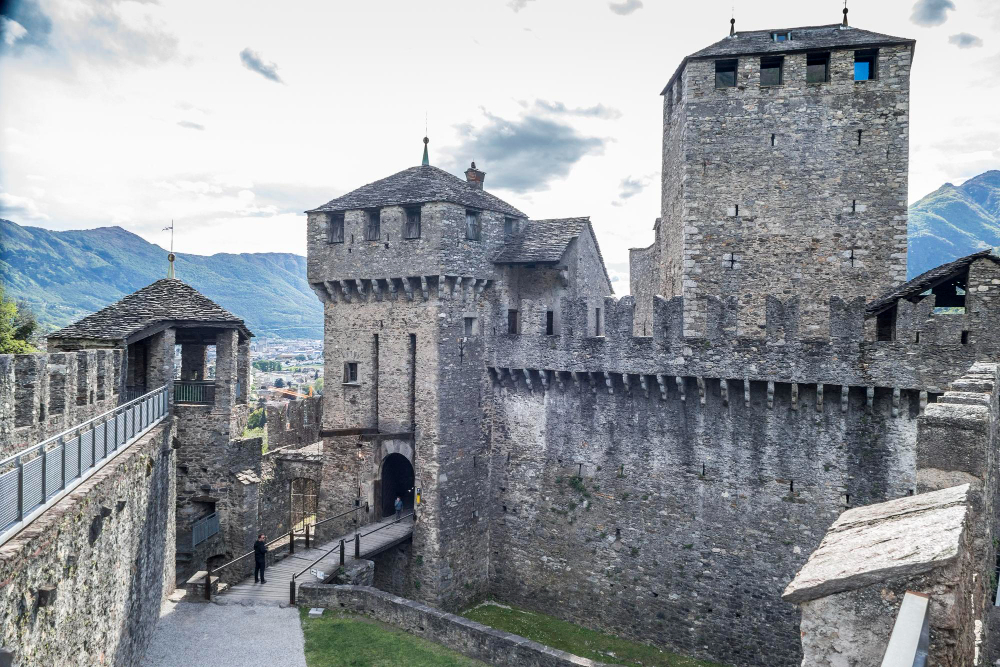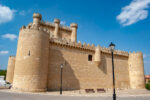
Perched high upon a majestic rocky outcrop, the Forte di San Leo – also known as the Rocca di San Leo – is a masterpiece of medieval architecture in the Italian region of Emilia-Romagna. With its breathtaking views over the Marecchia Valley, this historic fortress attracts thousands of visitors year after year. Yet behind its thick stone walls and winding corridors lies a history full of drama, sieges, prominent prisoners and military ingenuity. Its eventful past reflects the shifting power struggles of the Middle Ages and offers us a fascinating insight into times gone by.
The origins of the fortress: from the Romans to the Lombards – The history of the Forte di San Leo dates back to antiquity. As early as Roman times, the first fortifications stood on the summit of what is now Monte Feliciano – as the rock was known back then. With its strategically almost impregnable position, the castle was the scene of numerous conflicts between rival powers. Particularly during the Middle Ages, the Byzantines, Goths, Franks and Lombards vied for supremacy over this region, which served as a crossroads between northern and central Italy. A milestone in the fortress’s history was the siege by Emperor Otto I between 961 and 963. At that time, Berengar II, King of Italy, had entrenched himself in San Leo following his defeat at the Battle of Pavia. The siege and, ultimately, Berengar’s defeat marked the end of so-called Imperial Italy and consolidated Otto’s position as Emperor of the Holy Roman Empire. Yet the conflicts over San Leo were far from over. Over the centuries, the fortress changed hands countless times, with control often being seized by force of arms.
The Montefeltros and the Malatestas: Rivalry for Power and Prestige – At the heart of many of these conflicts lay the bitter power struggle between two of Italy’s most prominent noble families, the Montefeltros and the Malatestas. These two dynasties vied for decades for control of San Leo and the surrounding areas. A turning point came in 1441, when the young Federico da Montefeltro – later Duke of Urbino and one of the most important princes of the Italian Renaissance – captured the fortress. Federico recognised both the strategic and symbolic importance of the Rocca di San Leo and commissioned the famous military engineer Francesco di Giorgio Martini to carry out a comprehensive refurbishment. The aim was to adapt the fortress to the new challenges of artillery warfare. The new defence system made the fortress virtually impregnable: thick walls, carefully planned crossfire lines and artillery positions ensured that attackers had no chance of scaling the mountain. Furthermore, the access routes were laid out in such a way that they were constantly under fire. Francesco di Giorgio Martini created one of the most modern military structures of his time here, one that withstood even the dreaded cannons of Cesare Borgia.
From fortress to prison: a grim transformation – With the decline of the great noble families and the region’s incorporation into the Papal States in 1631, San Leo slowly lost its military significance. The mighty stone walls, once built to repel attackers, were now put to a different use: as a prison. This marked the beginning of a dark chapter in the fortress’s history. The cells, set up in the former soldiers’ quarters, were used to imprison political prisoners, free-thinkers and revolutionaries. Among them were prominent figures such as the Italian nobleman and revolutionary Felice Orsini, as well as the legendary alchemist and healer Alessandro Cagliostro. Cagliostro, whose true life remains shrouded in myth and legend to this day, was imprisoned in San Leo after being accused of heresy by the Inquisition. The charismatic but controversial adventurer attracted the attention of Europe’s most powerful courts before ultimately losing his life in the bleak isolation of the fortress. His cell, known as the ‘Cagliostro Cell’, is now a major attraction for visitors.
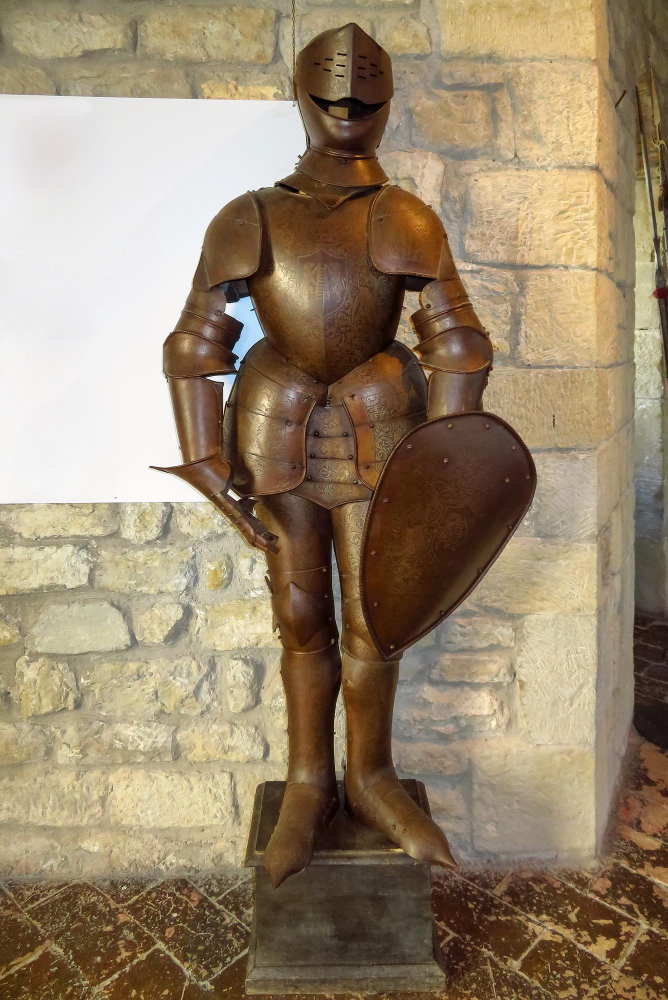
Rebirth as a Museum and Cultural Heritage Site – After serving for centuries as a military base and prison, the fortress entered a new phase in its history. In 1906, prison operations ceased, and since then the Forte di San Leo has served as a cultural and tourist attraction. A decisive step towards promoting its historical heritage was taken in 2014, when the fortress became part of the ‘Polo museale dell’Emilia-Romagna’, an organisation dedicated to the promotion and management of cultural sites in the region. Since then, it has not only been a popular destination for tourists but also the venue for numerous cultural events, including art exhibitions, concerts and historical re-enactments. Today, the fortress houses an army museum as well as an art gallery dedicated to the art and history of the region. Particularly impressive is the exhibition of historical weapons and armour, which documents military developments from the Middle Ages to modern times. The legacy of the Montefeltro family and other noble families is also honoured here.
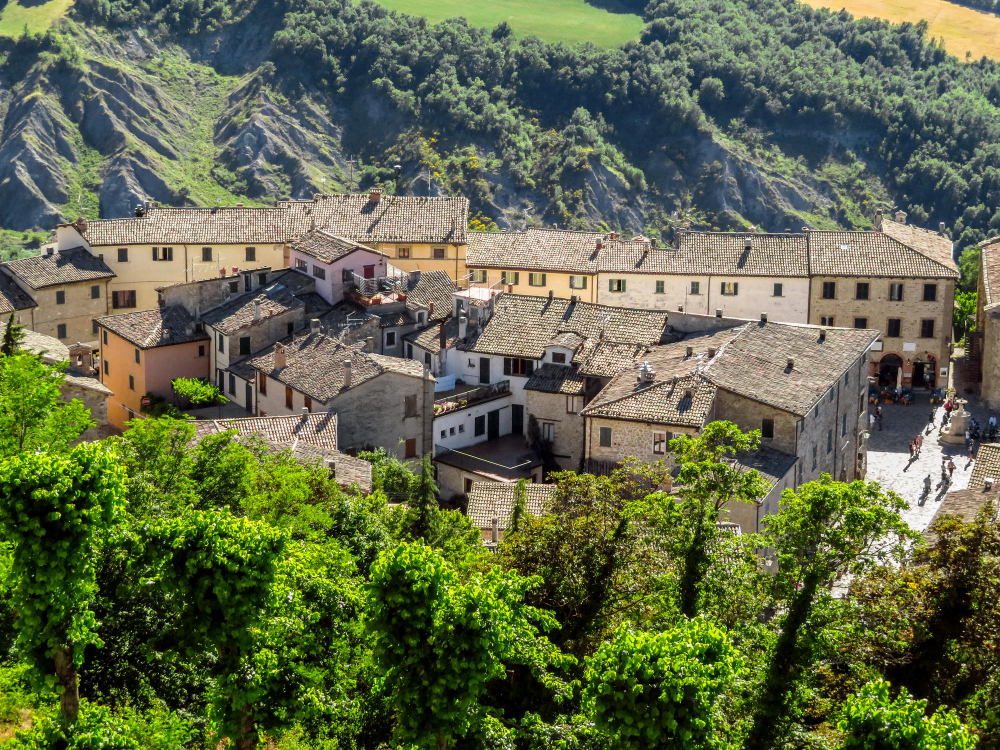
Tourism and the Magic of San Leo – It is not only the fortress itself, but also the surroundings of San Leo that act as a magnet for history lovers and nature enthusiasts. The small town of San Leo, nestled as if forgotten in the hills of Emilia-Romagna, enchants visitors with its charming alleyways, Romanesque churches and a unique atmosphere. Here, time seems to have stood still, and visitors can experience the traces of the past at first hand. Its extraordinary location on an almost vertical cliff, surrounded by lush valleys and forests, makes San Leo one of the most beautiful villages in Italy.
A monument to eternity – The Forte di San Leo is far more than just a historic fortress. It tells the story of Italy, shaped by rulers, wars and upheavals. It is a place where the past comes to life – whether through its impressive architecture, the stories of famous prisoners or the breathtaking panoramic view over one of Italy’s most beautiful landscapes. Whether you’re a lover of medieval history, an admirer of impressive engineering, or simply a traveller in search of magical places – San Leo will enchant you. The fortress, which once served as a symbol of power and security, is today a living monument to culture and history that is unrivalled. A visit to the Forte di San Leo is like a journey back in time – and an unforgettable experience at the same time.