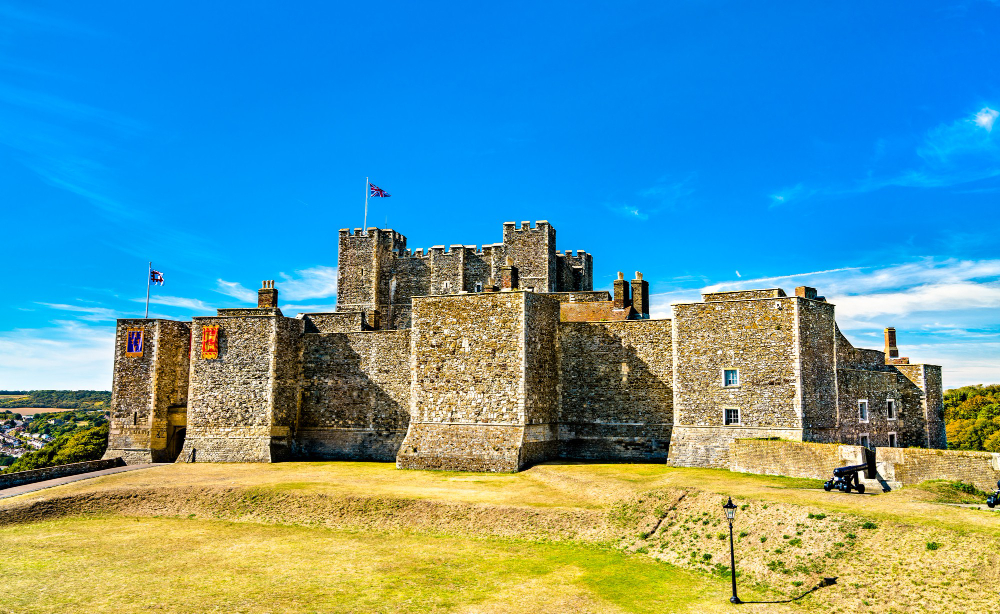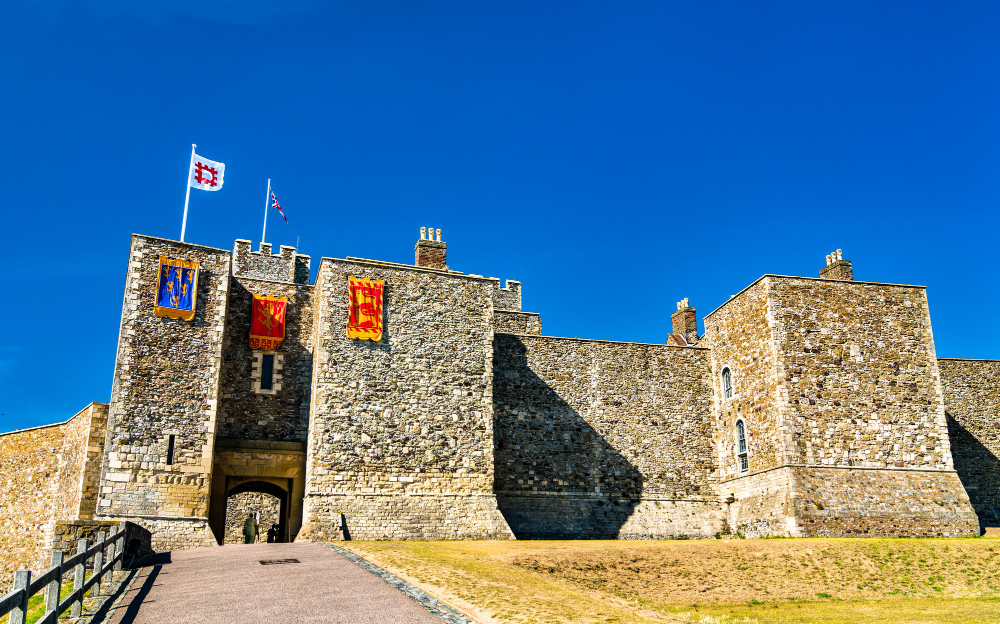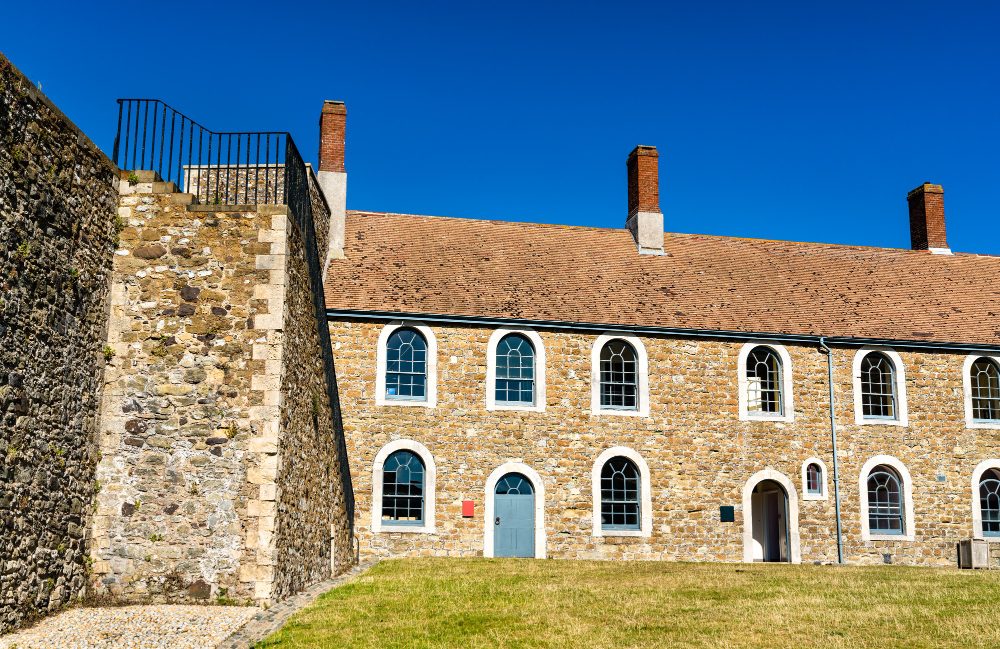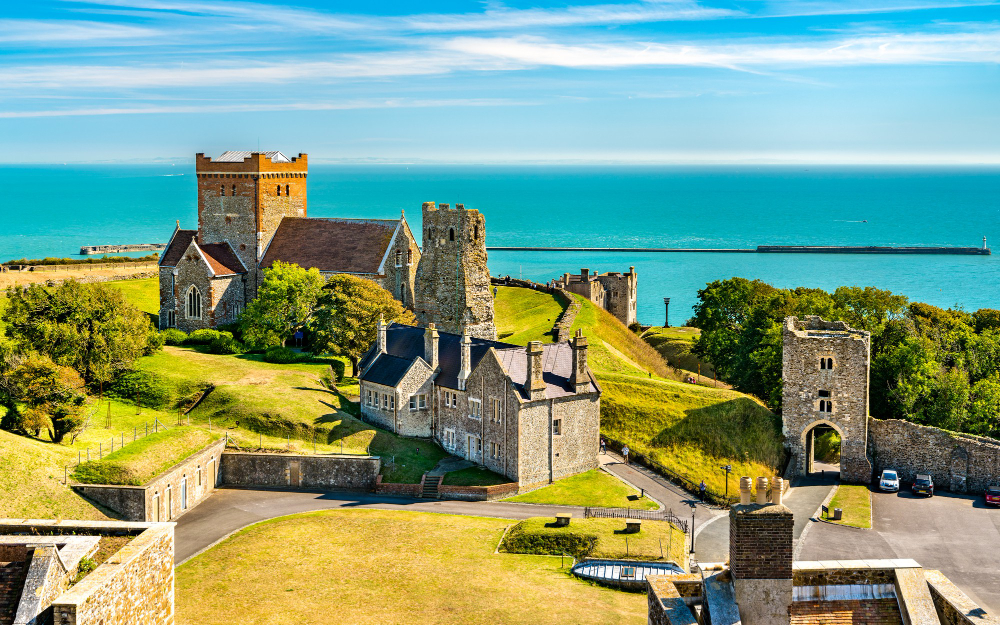
Dover Castle stands majestically atop the famous White Cliffs of Dover, overlooking the coast of Kent, England. As a Grade I listed historic building, it is one of the country’s most significant castles and, for centuries, has been referred to as the ‘Key to England’ due to its strategic location. Yet the history of this imposing structure stretches back much further than the Middle Ages. Even before the Norman Conquest, this site was an important centre for defence, trade and culture.
An Iron Age fortress? – The origins of Dover Castle are disputed, but they stretch far back into the past. Archaeological excavations have uncovered evidence of Iron Age settlement, and some historians suggest that some form of fortification may have existed even then. The unusual earthworks surrounding the castle could indicate that it was originally part of a prehistoric hillfort. These early structures presumably laid the foundations for the site’s later strategic importance, as it was used during the Roman era to monitor and defend the coastline.
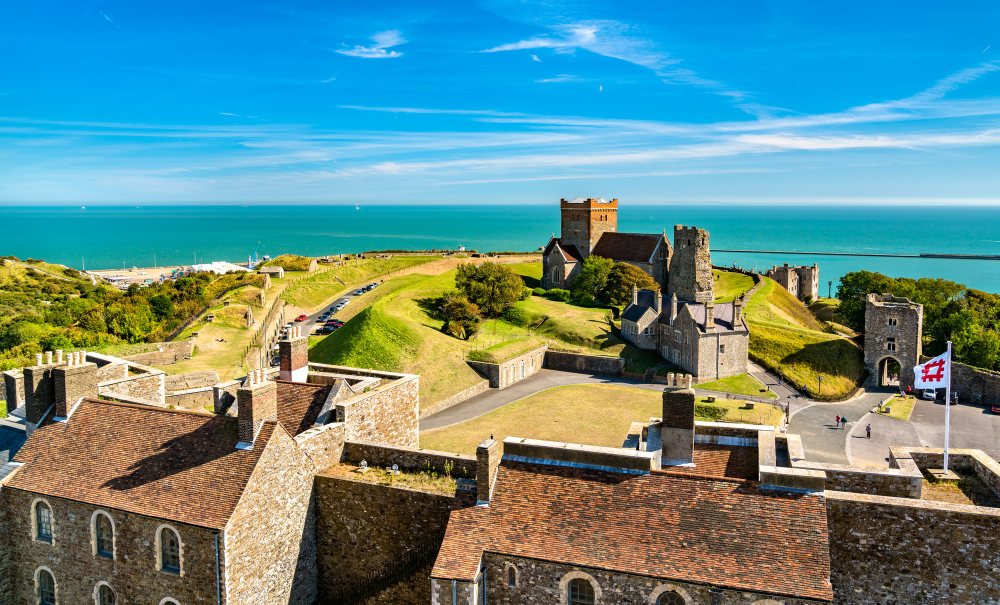
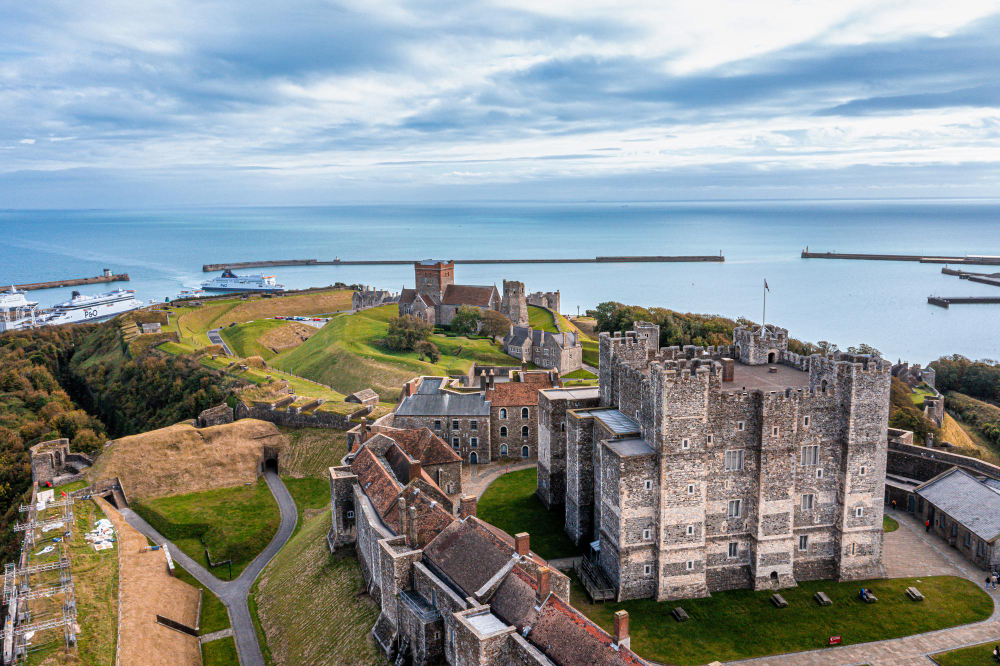
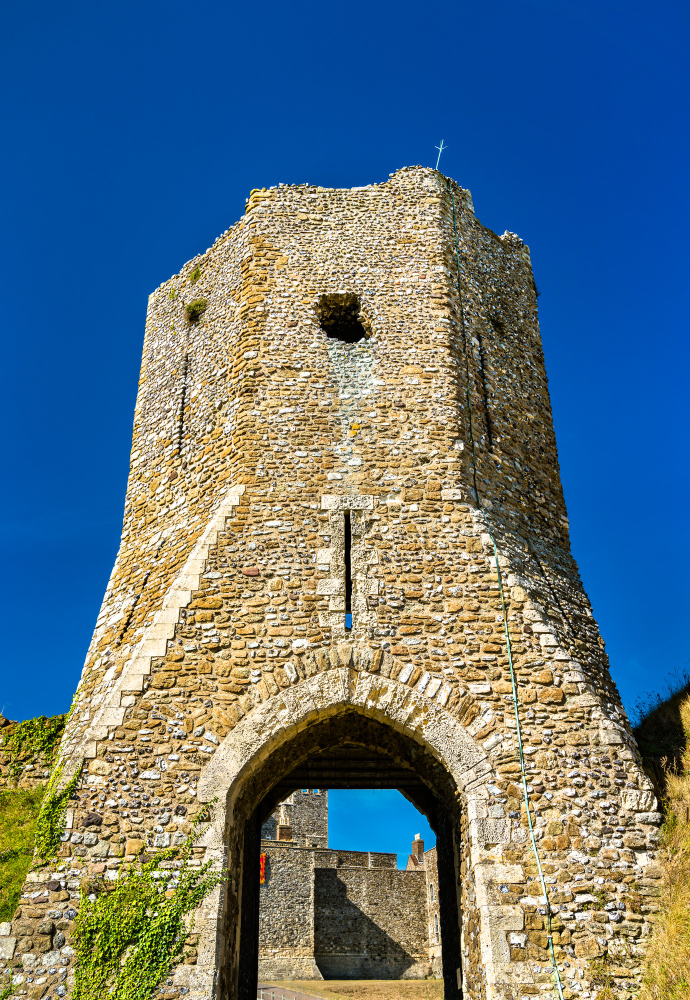
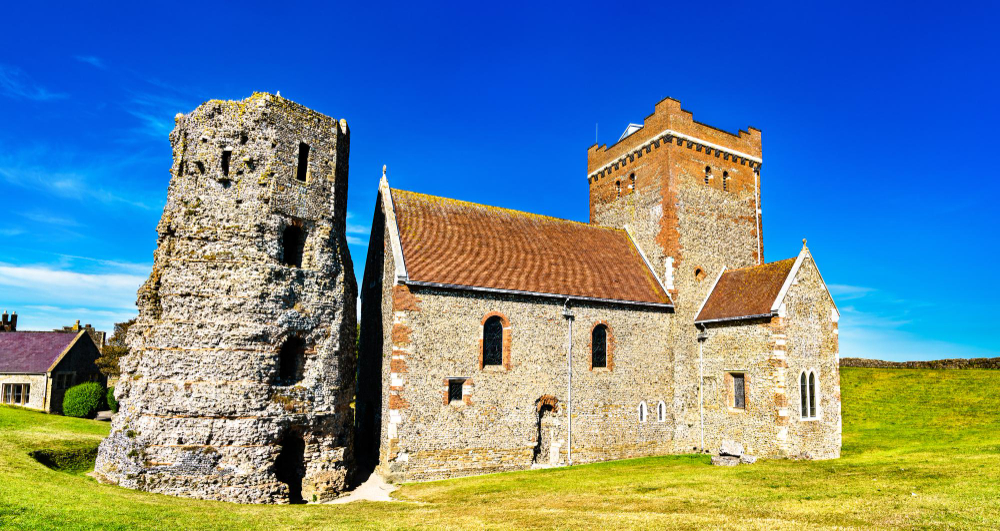
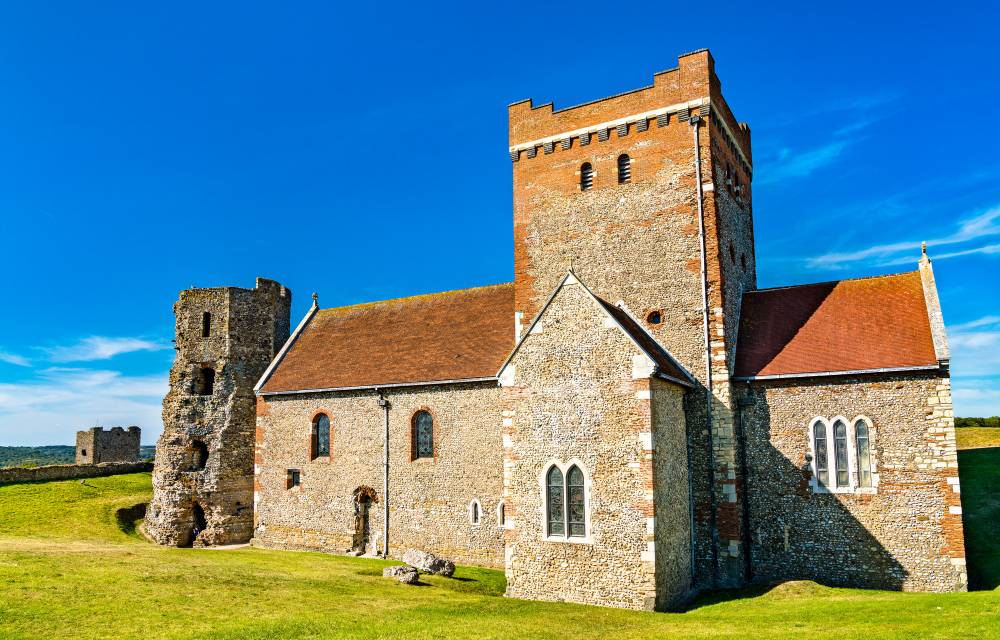
The Romans and their lighthouse – A window into the past – One of the most fascinating historical artefacts preserved on the site is Dover’s Roman lighthouse. Built in the 2nd century, it is now the most complete surviving Roman-era building in England and possibly even the oldest standing structure in the country. The octagonal tower, constructed from tuff, Kentish limestone and red bricks, was once used to guide ships safely through the treacherous waters of the English Channel. Later, the Saxons converted it into a bell tower for the neighbouring Church of St Mary in Castro, which is also part of the castle complex. Another Roman lighthouse, known as the ‘Bredenstein’ or ‘Devil’s Drop of Mortar’, stood on the West Heights opposite the present-day castle. Unfortunately, only scant remains of this structure are left. Interestingly, the Dover lighthouse may have had a visual link to its counterpart on the French side of the English Channel: the Tour d’Ordre in Boulogne-sur-Mer. This was built by the Roman Emperor Caligula and remained in operation until 1644, before it collapsed into the sea due to coastal erosion.
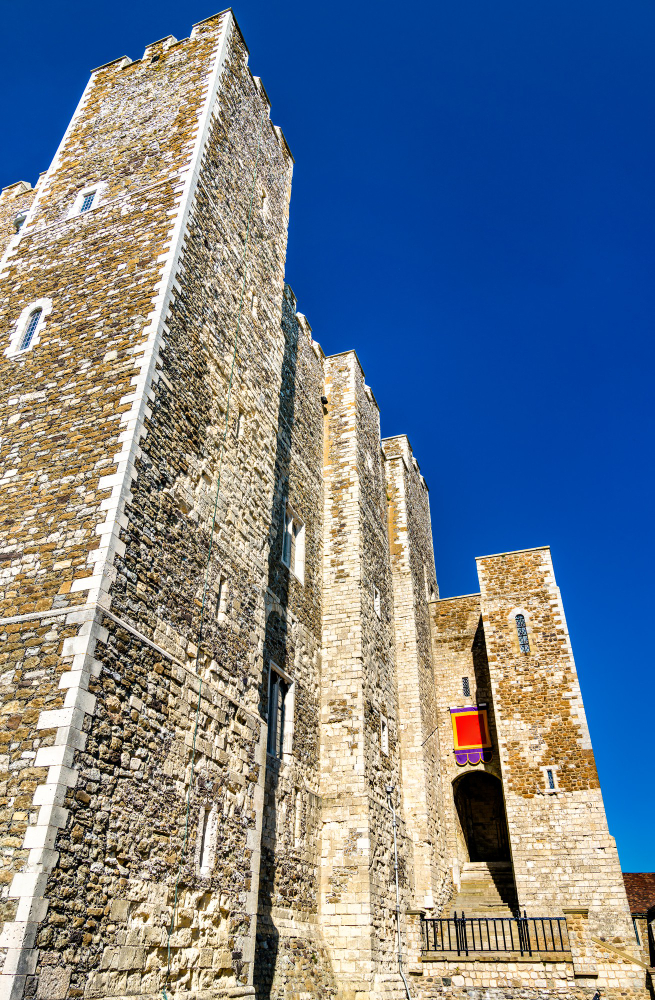
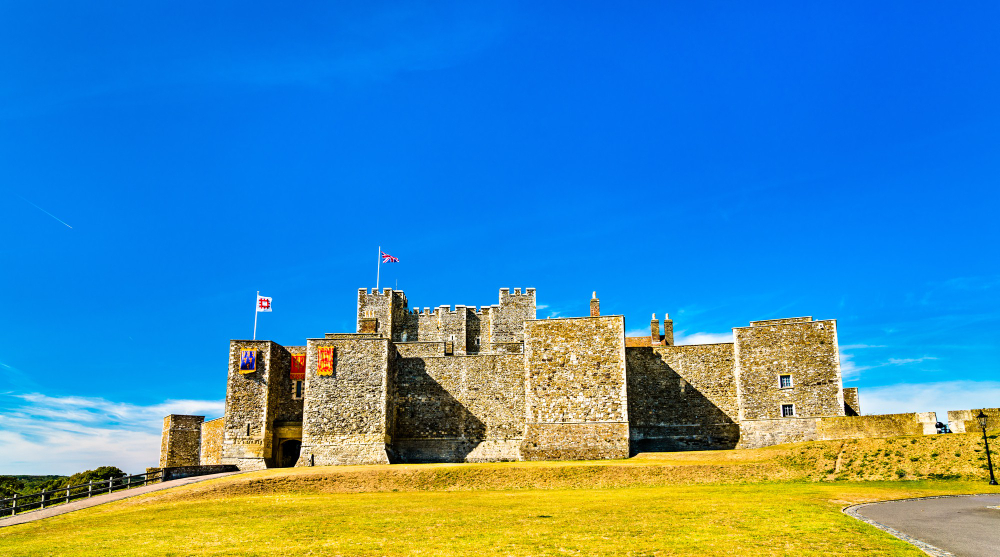
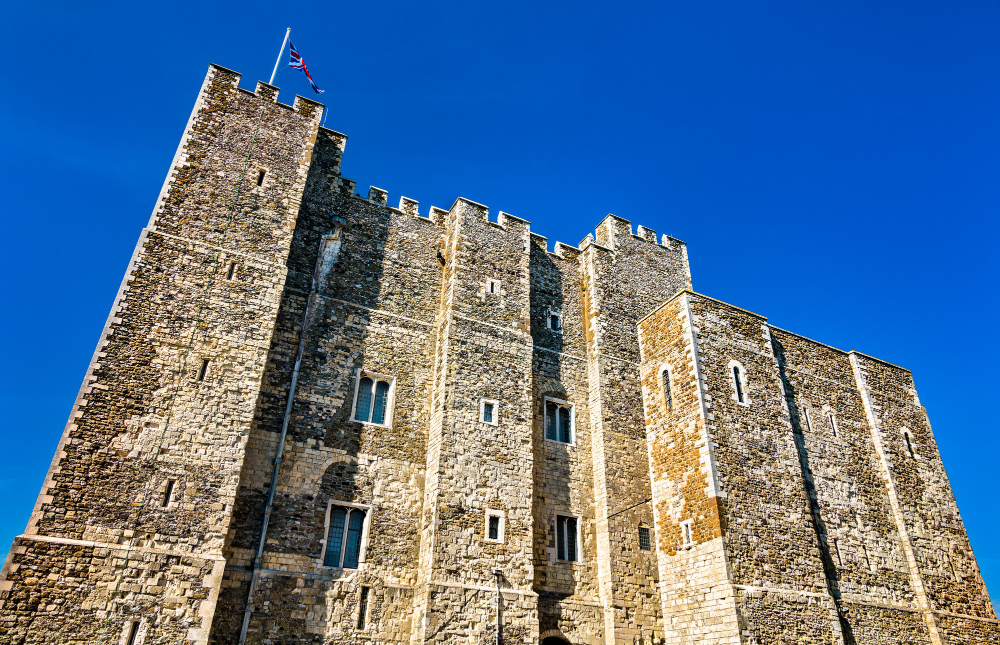
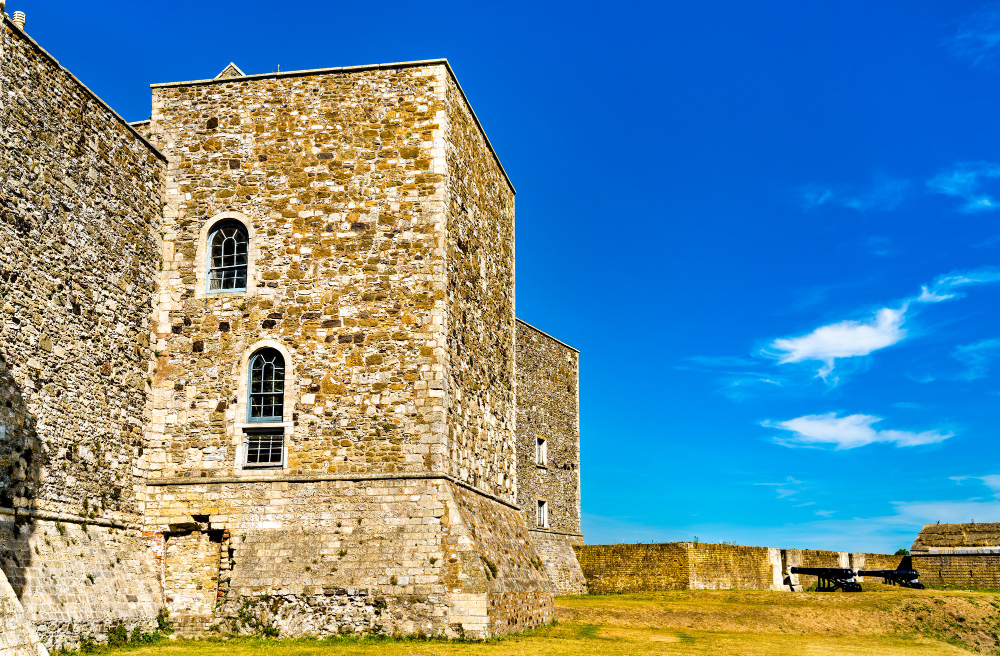
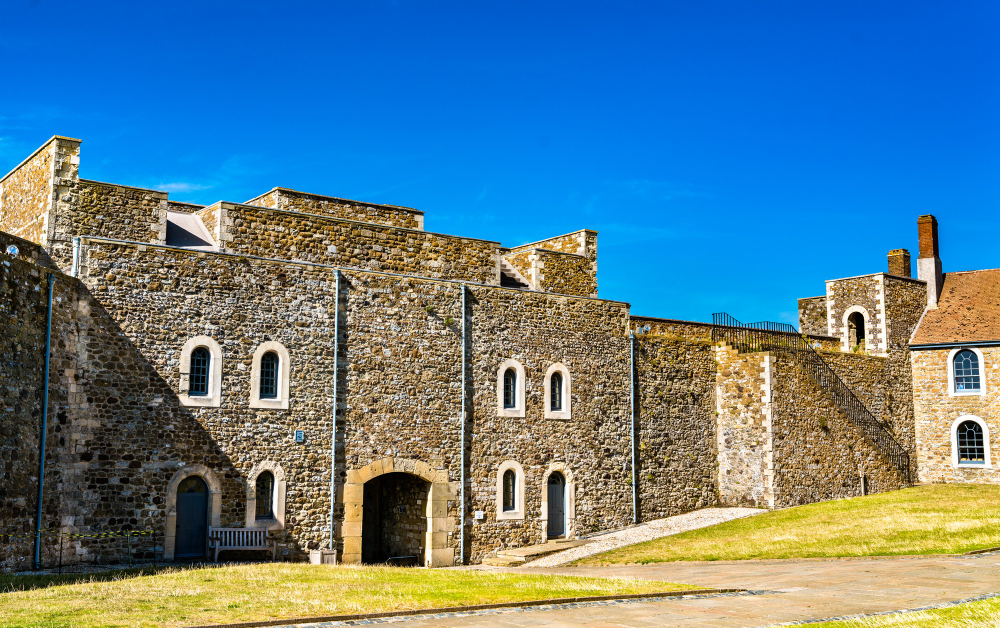
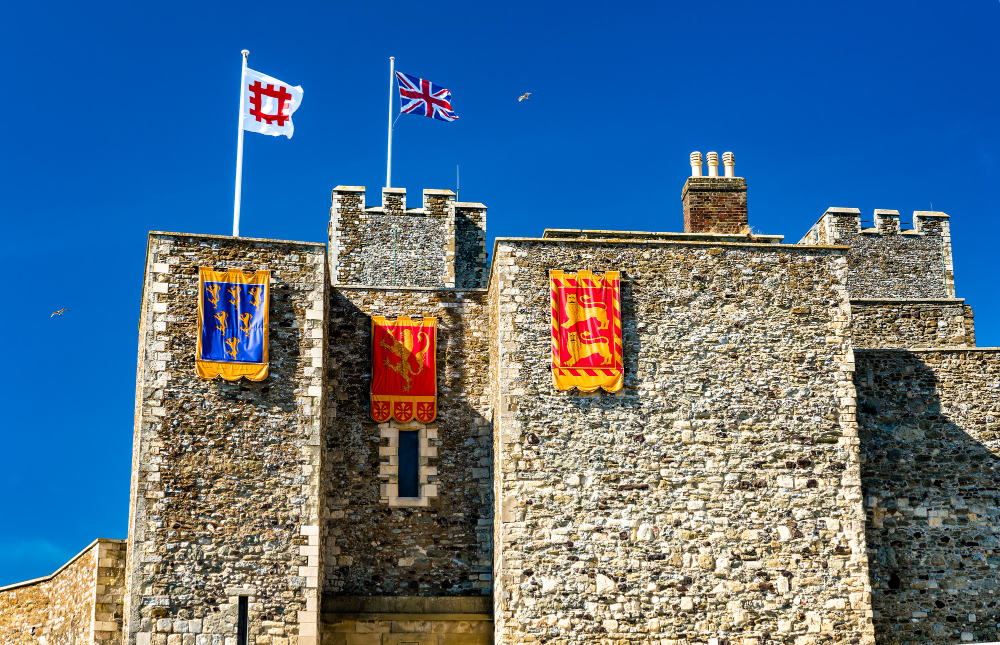
From Norman Conqueror to Royal Fortress – Dover Castle began to take on its present form following the Norman Conquest of England in 1066. William the Conqueror immediately recognised the strategic importance of the site and had the first defensive works erected. According to the chronicler William of Poitiers, the fortress was considered impregnable at that time. Nevertheless, the Normans succeeded in capturing Dover Castle after the English defenders surrendered, fearing their superior strength. During the reign of Henry II in the 12th century, the castle took on its present form. The king invested immense sums in the expansion of the fortress, with particular emphasis on the large tower known as the ‘Great Tower’. Henry’s building projects were intended not only to provide protection but also to demonstrate royal influence. With expenditure totalling over 6,500 pounds – equivalent to a large proportion of his annual income – he created a masterpiece of medieval architecture.
Sieges and Innovations – Dover Castle has been the scene of numerous sieges throughout its history. One of the most famous was the siege of 1216 during the First Barons’ War, when French troops led by Prince Louis – later Louis VIII – attempted to seize the English crown. Although the attackers managed to breach parts of the walls, they were unable to take the castle completely. These events led to improvements in the defences, including the construction of underground defence complexes and new gates. The Tudor period brought further changes, as the development of firearms placed new demands on defences. Henry VIII, known for his military foresight, visited the castle in person and ordered further improvements, including the construction of a so-called ‘moat bulwark’, a defensive structure designed to secure the castle’s moat.
Social and Military Change – With the introduction of modern weapon systems, medieval castles increasingly lost their strategic importance. The 18th and 19th centuries, however, marked a period of intensive reconstruction and fortification, particularly during the Napoleonic Wars. Under the direction of engineer William Twiss, new bastions and gun emplacements were added, and even the Great Tower was rebuilt to accommodate heavy artillery. It was during this period that an extensive network of tunnels was also created, which remains a fascinating part of the castle’s history to this day. During the Second World War, Dover Castle experienced a renewed revival as a military centre. The tunnels, originally built to house soldiers, were converted into air-raid shelters and a command centre. The castle is particularly famous for its role during the Dunkirk evacuation (Operation Dynamo), which was directed by Admiral Sir Bertram Ramsay from within the secret tunnel complex. Today, a statue of the admiral in front of the tunnels commemorates this historic moment.
Legends and Myths: The Unseen Chapters of History – Like any ancient fortress, Dover Castle is shrouded in myths and legends. One of the best-known stories concerns a ghost said to haunt the underground passages. Visitors and staff repeatedly report strange encounters and unexplained noises in the abandoned sections of the tunnels, which capture their imagination. Some believe the ghost is that of a French soldier who lost his life during the siege of 1216. Others tell of apparitions of a lady in white who roams the Great Tower. There are also tales of secret passages linking the castle to other parts of Dover, possibly even to the coast. Although many of these passages have never been found, the notion remains alive and well, making Dover Castle a magnet for history buffs and adventurers.
Modern Use and Cultural Heritage – Today, Dover Castle is one of England’s most popular tourist destinations, attracting hundreds of thousands of visitors each year. Thanks to extensive restoration work and investment from English Heritage, the castle’s interior has been meticulously reconstructed to give visitors an authentic glimpse of what life was like in a medieval fortress. Furthermore, Dover Castle regularly serves as a filming location for film and television productions. From blockbuster films such as Avengers: Age of Ultron to historical dramas such as Wolf Hall, the castle provides a picturesque backdrop that delights both filmmakers and audiences alike.
A Living Monument – The history of Dover Castle reflects England’s eventful past. From its origins as an Iron Age hillfort, through the heyday of Norman and medieval rule, to its modern use as a museum and cultural heritage site – the ‘Key Castle of England’ has witnessed countless historical and social transformations. Its diversity and rich history make it a unique symbol of British heritage. Anyone who has the opportunity to step within the walls of this historic fortress will not only be transported back in time, but will also sense the stories and legends that surround it and keep it alive.