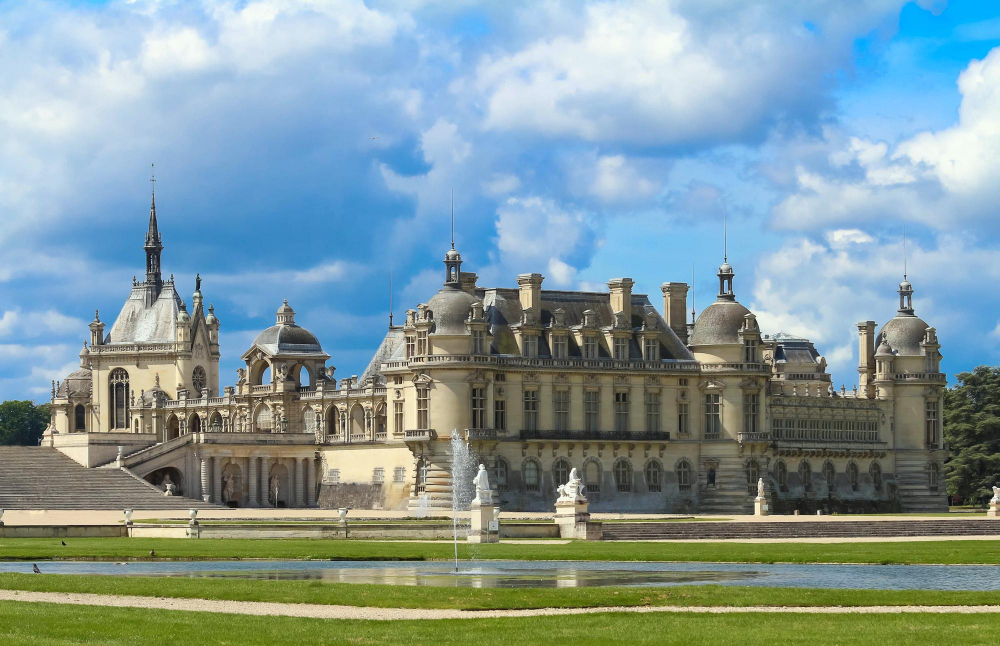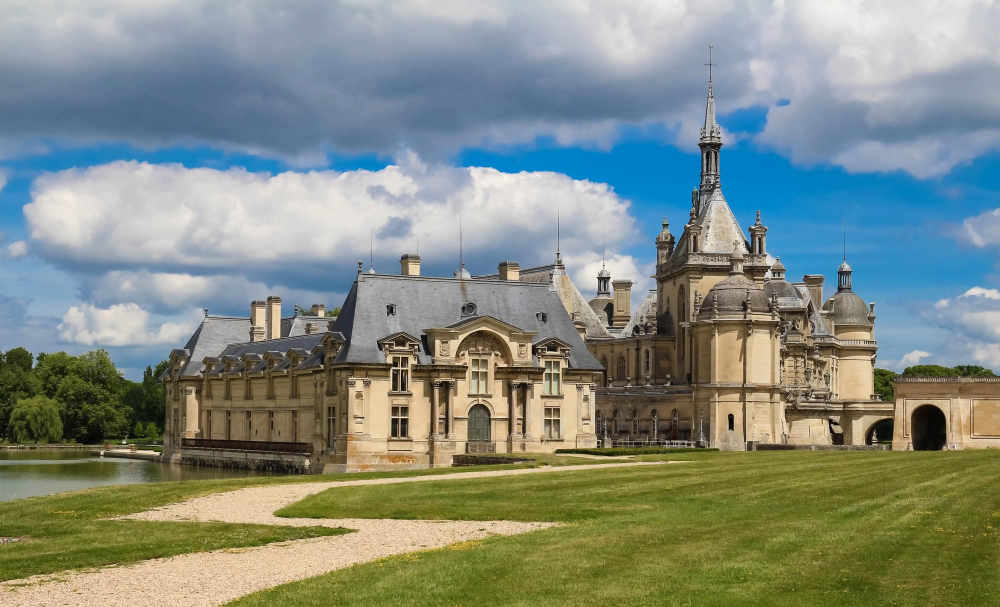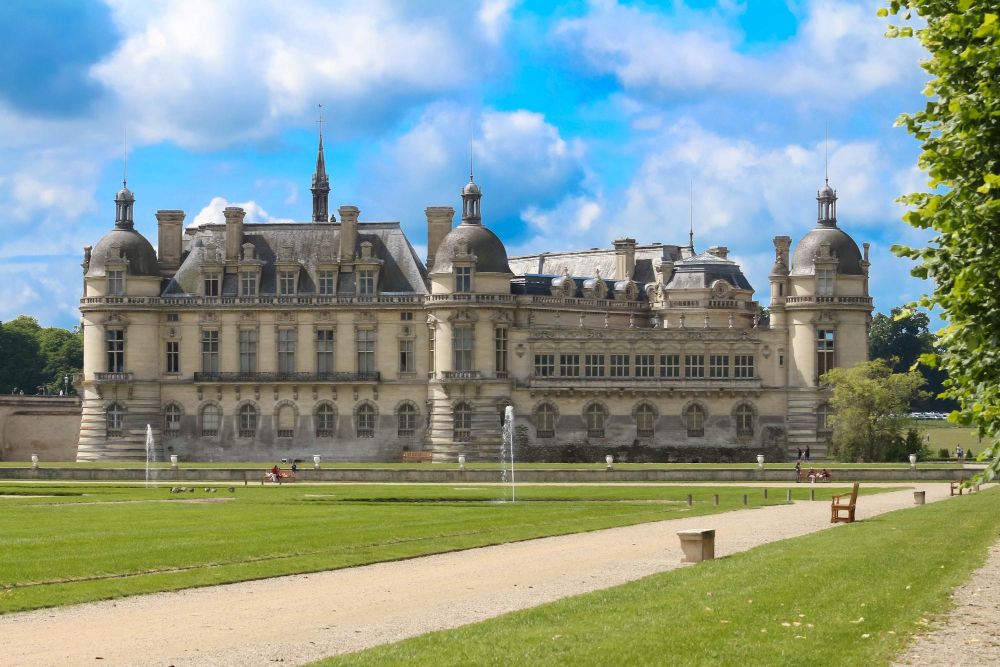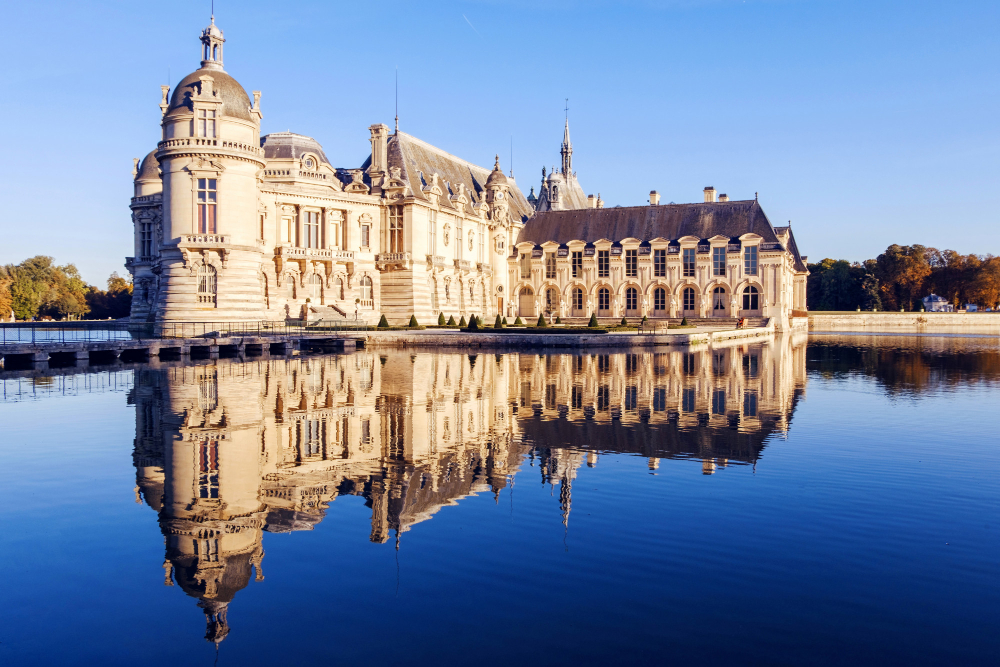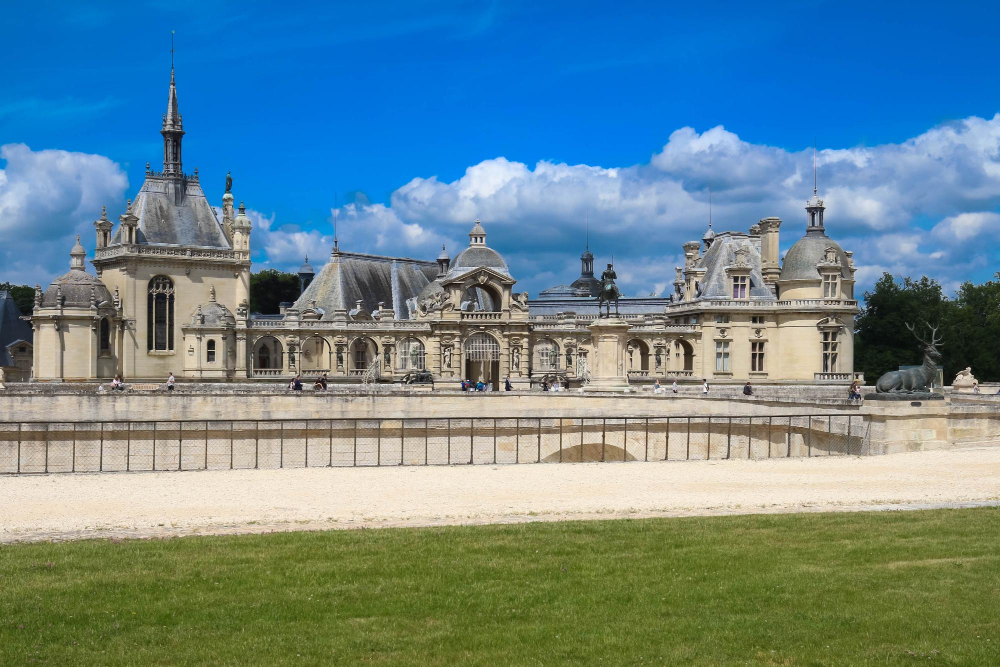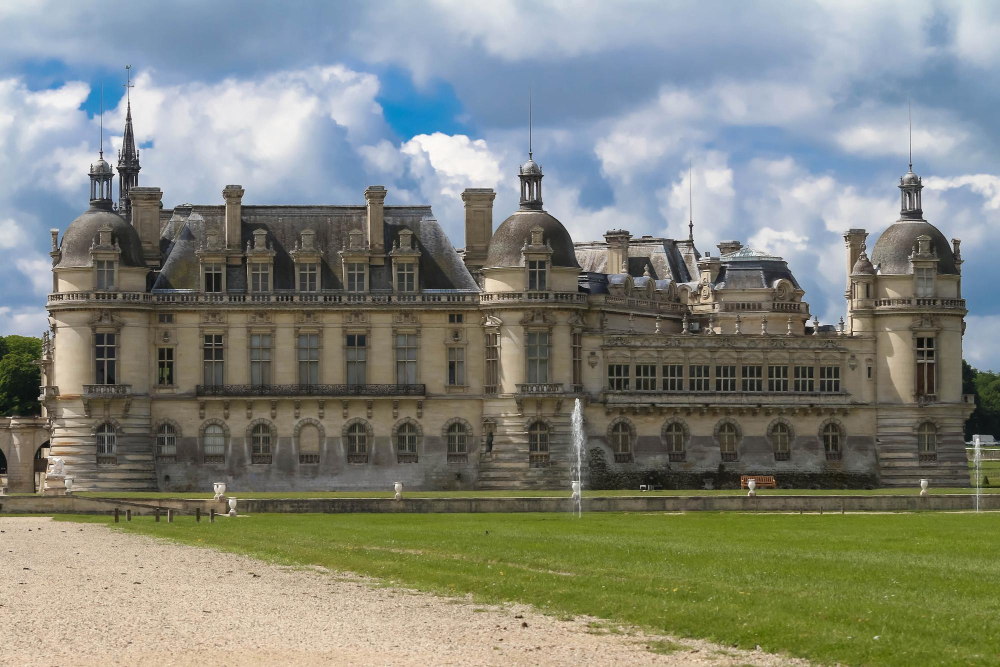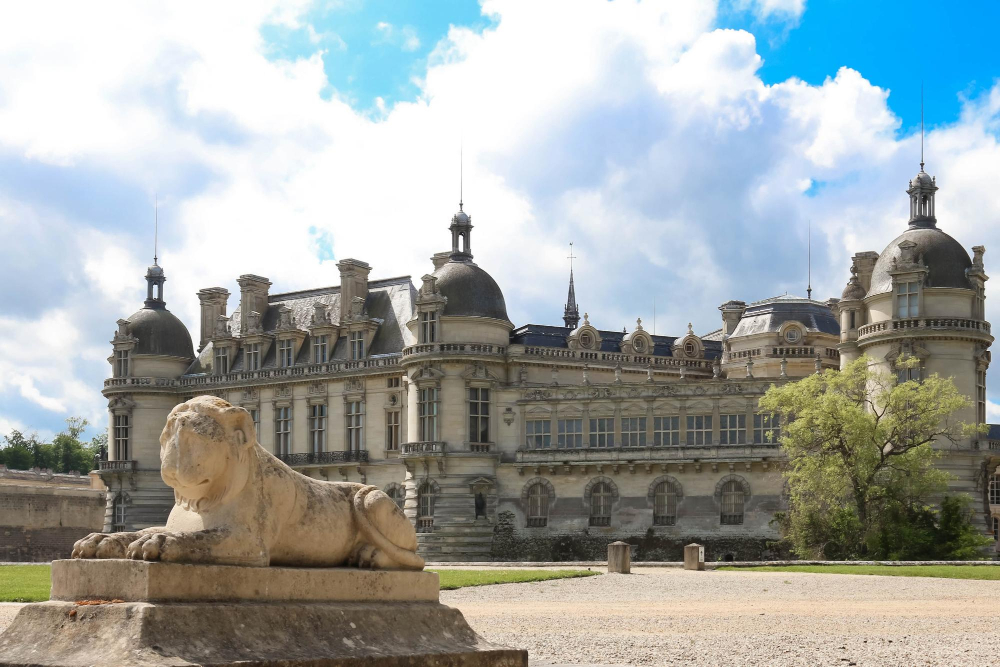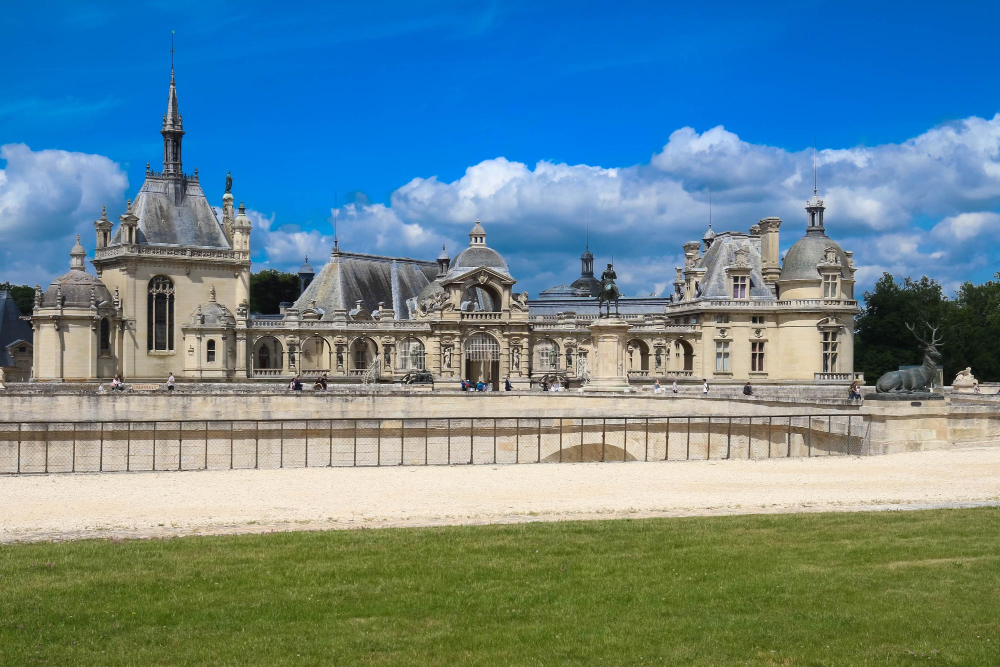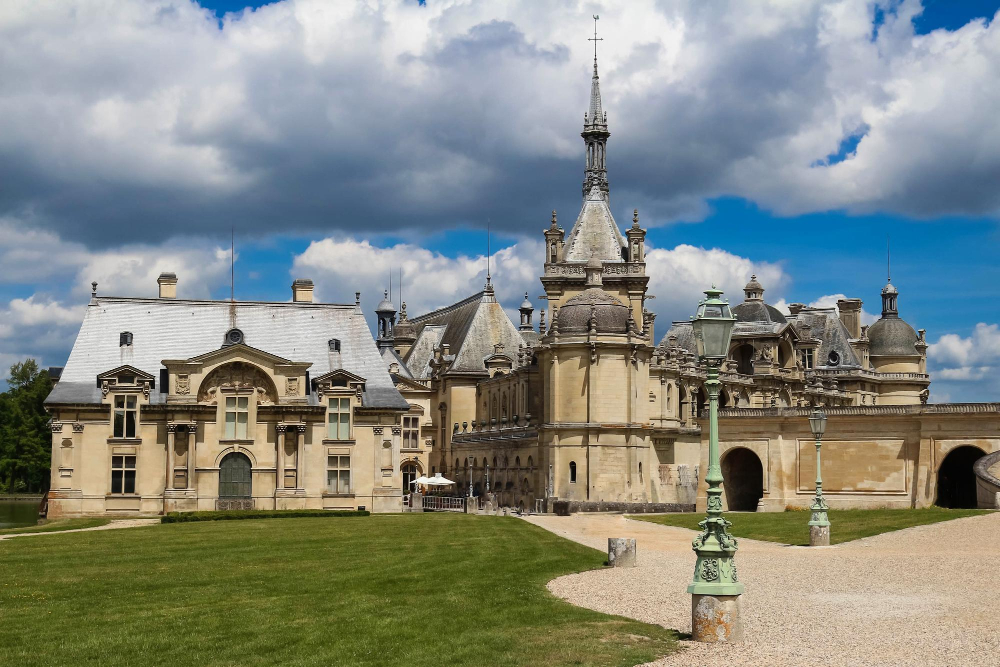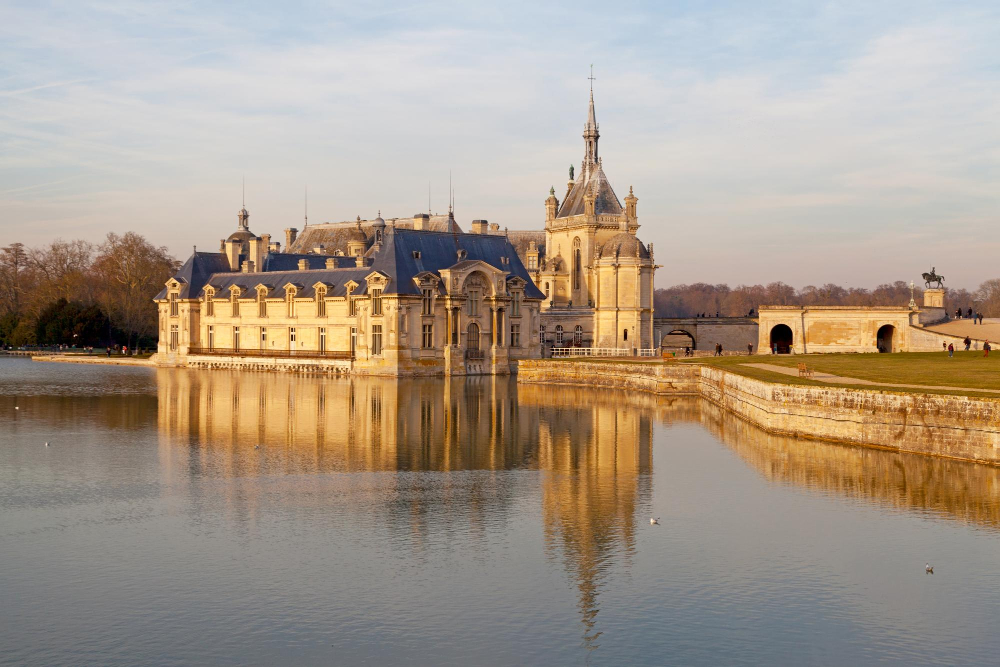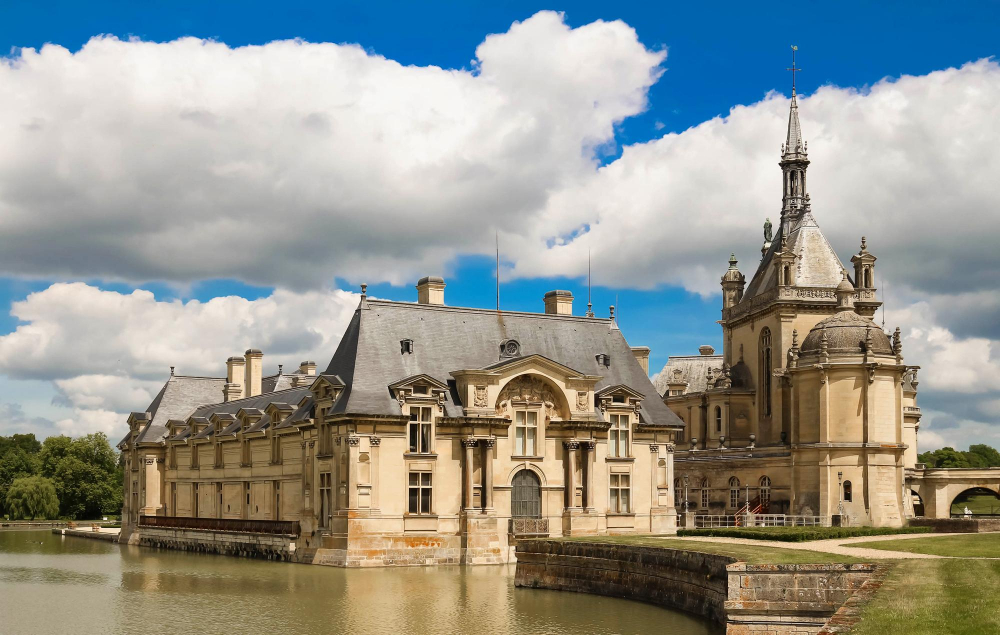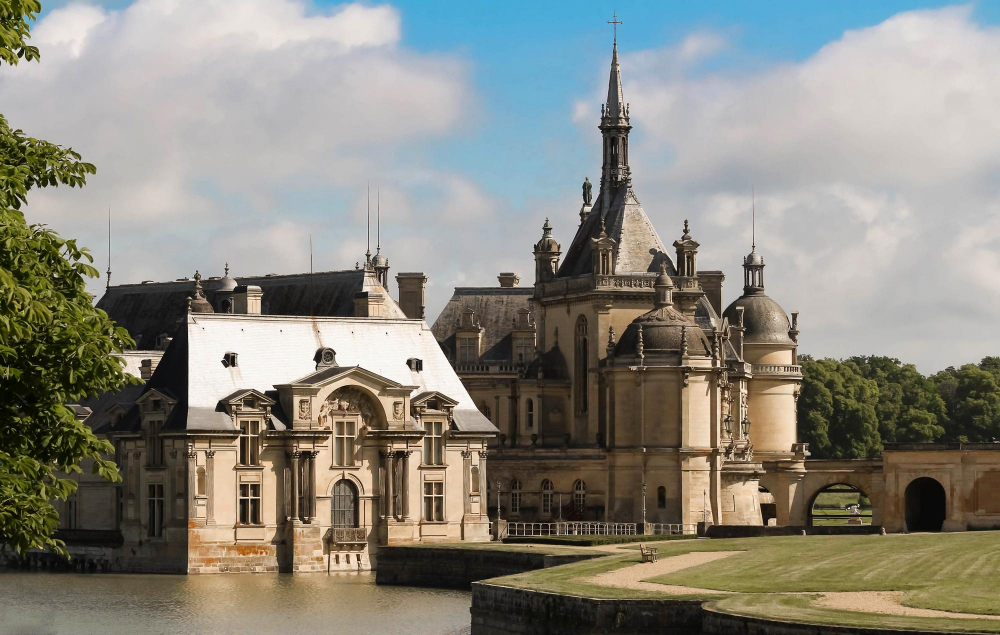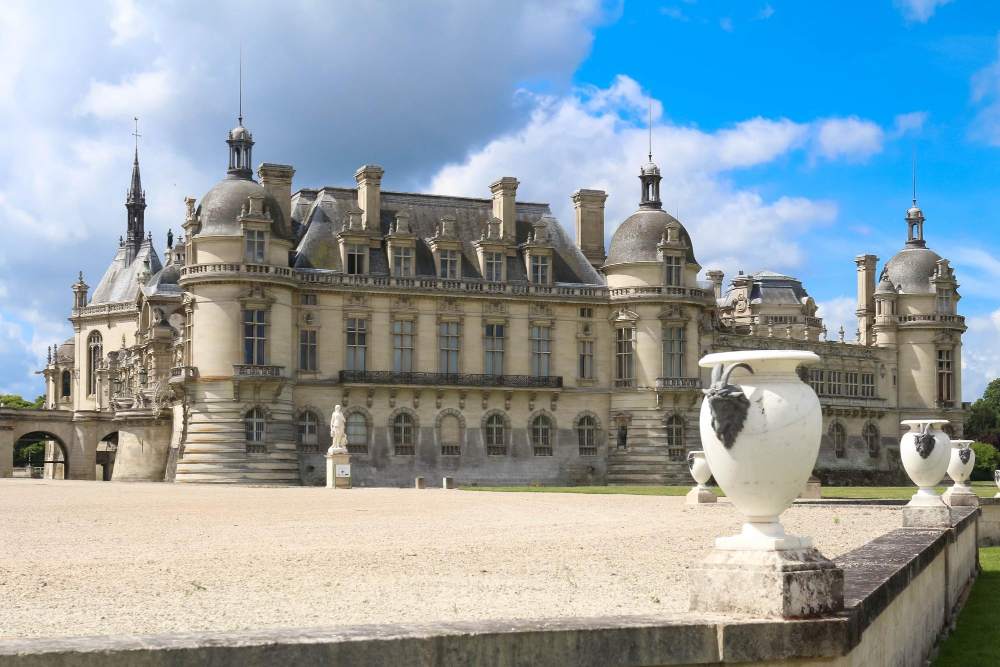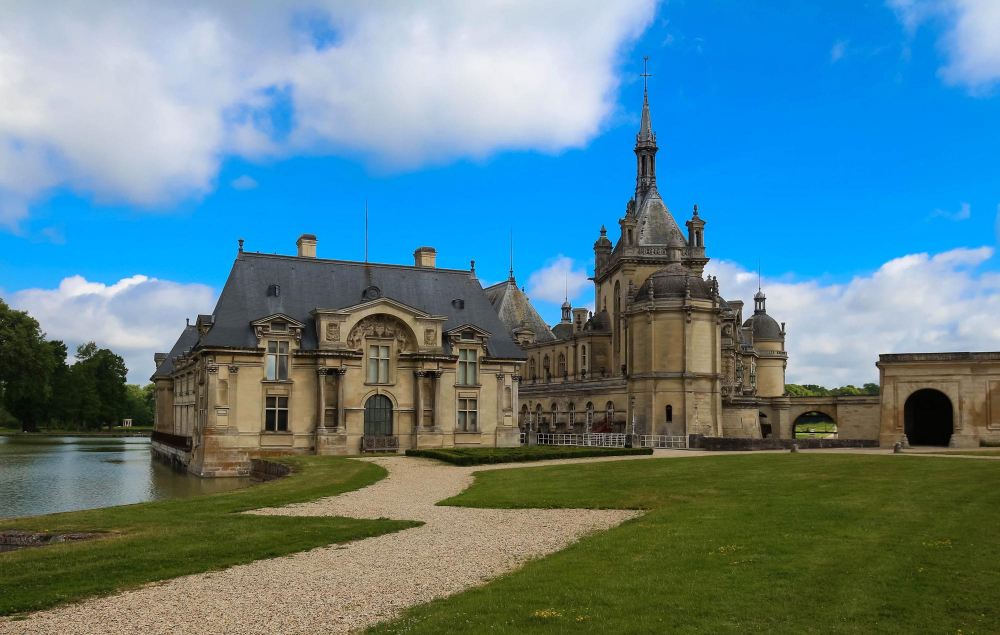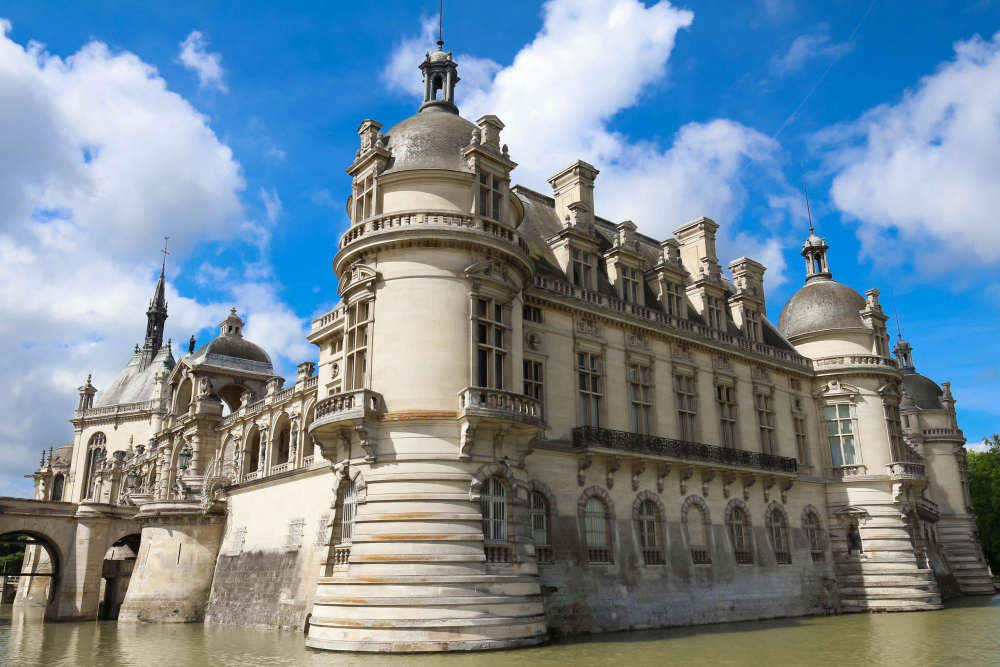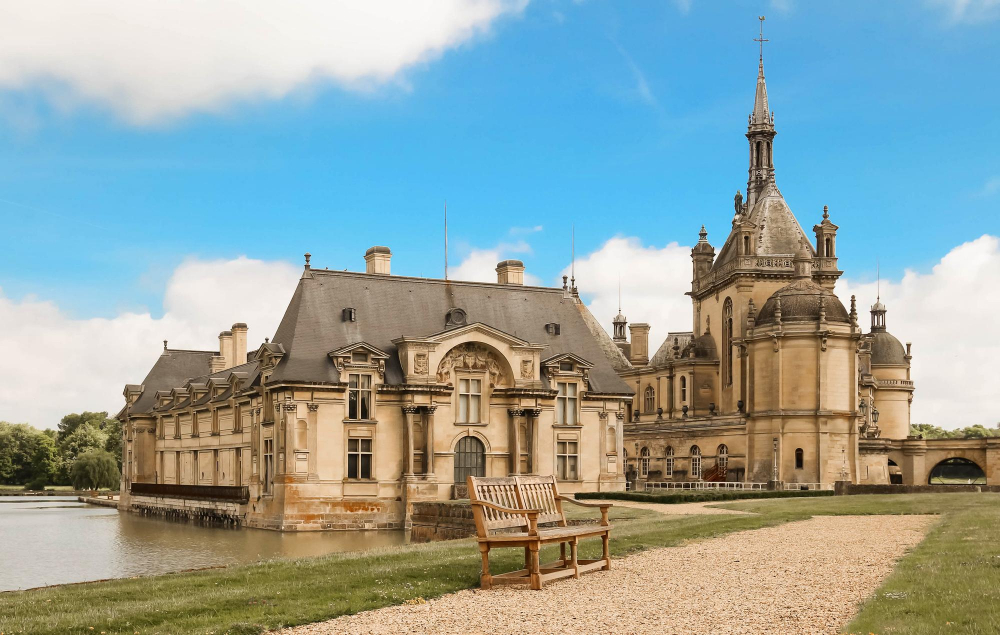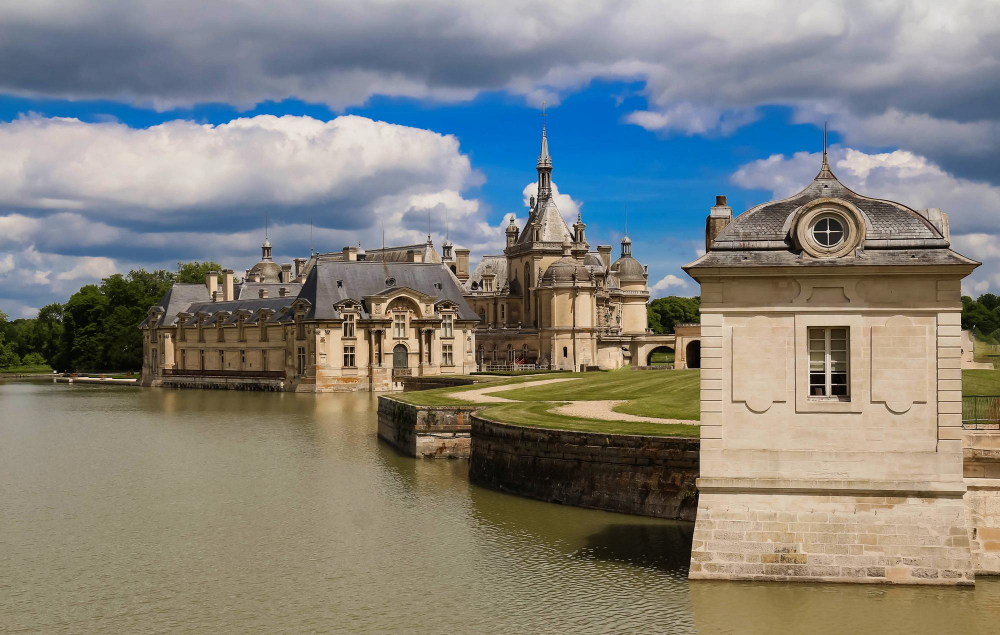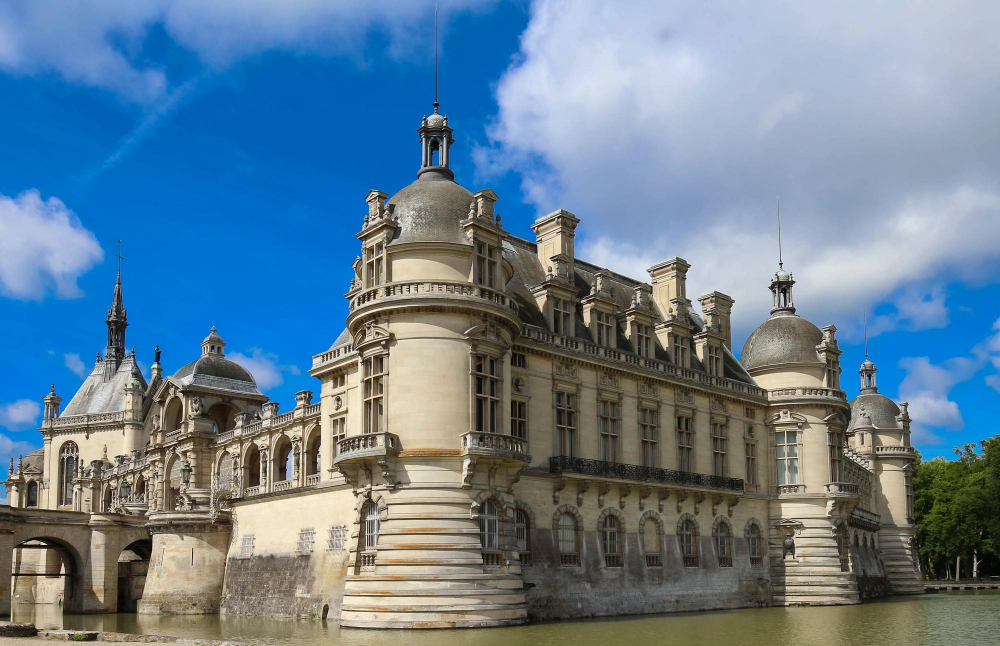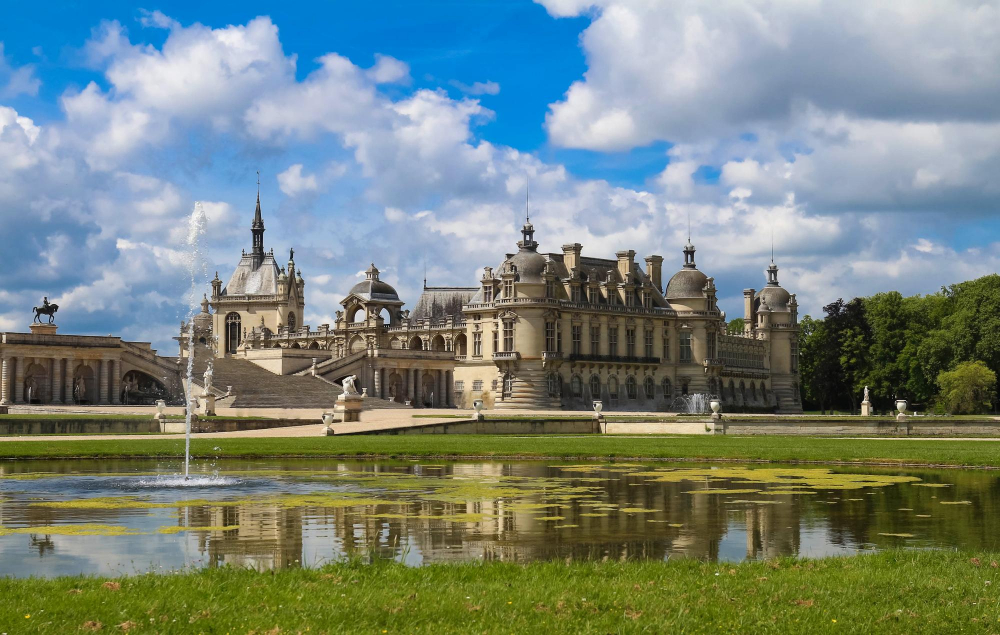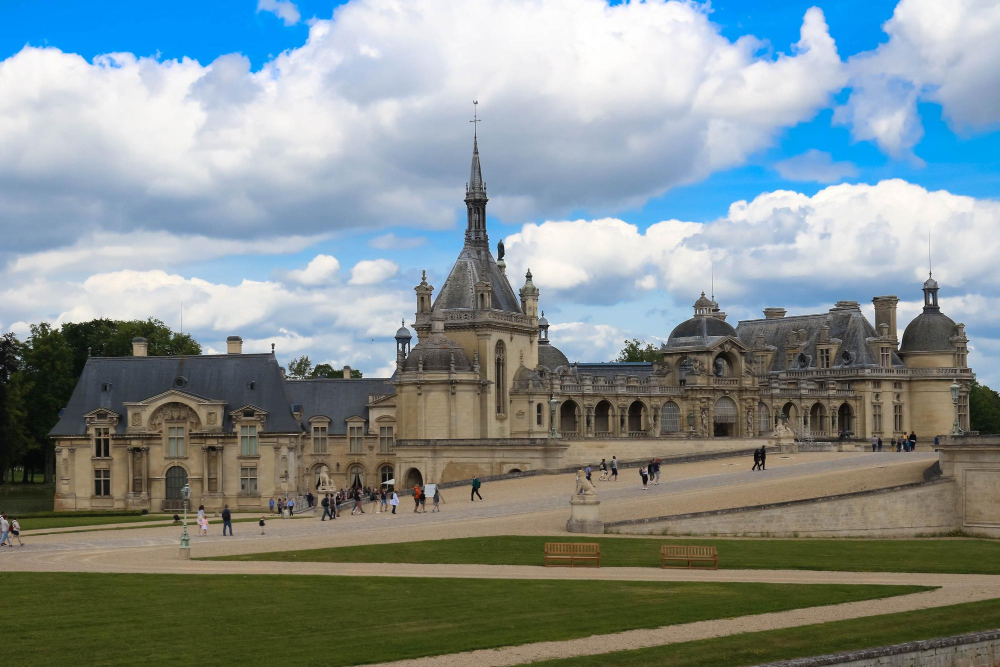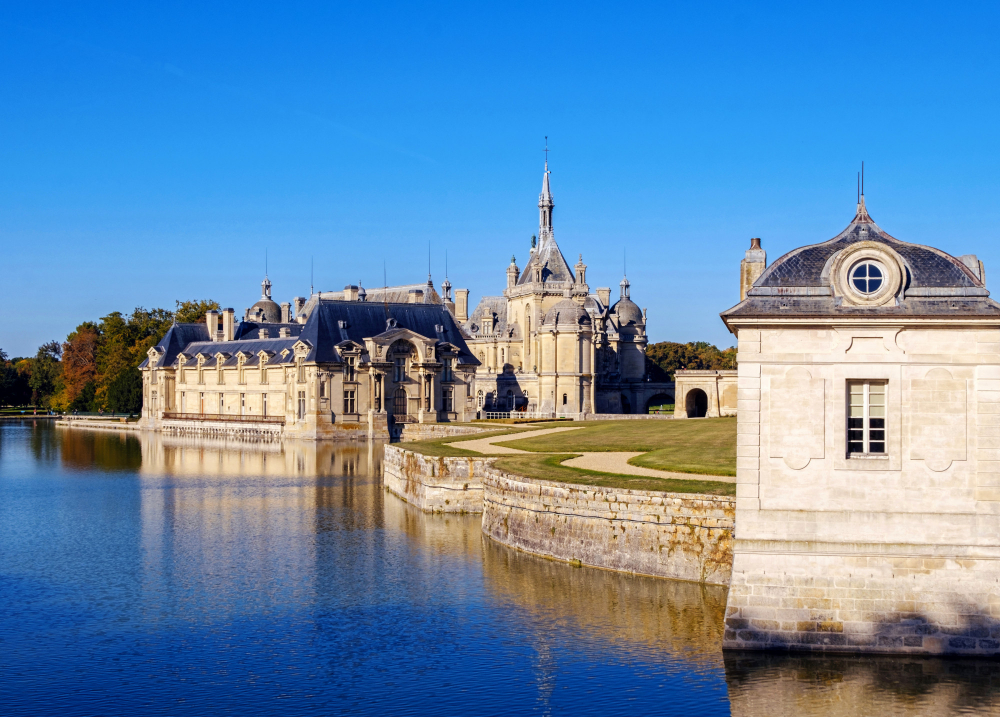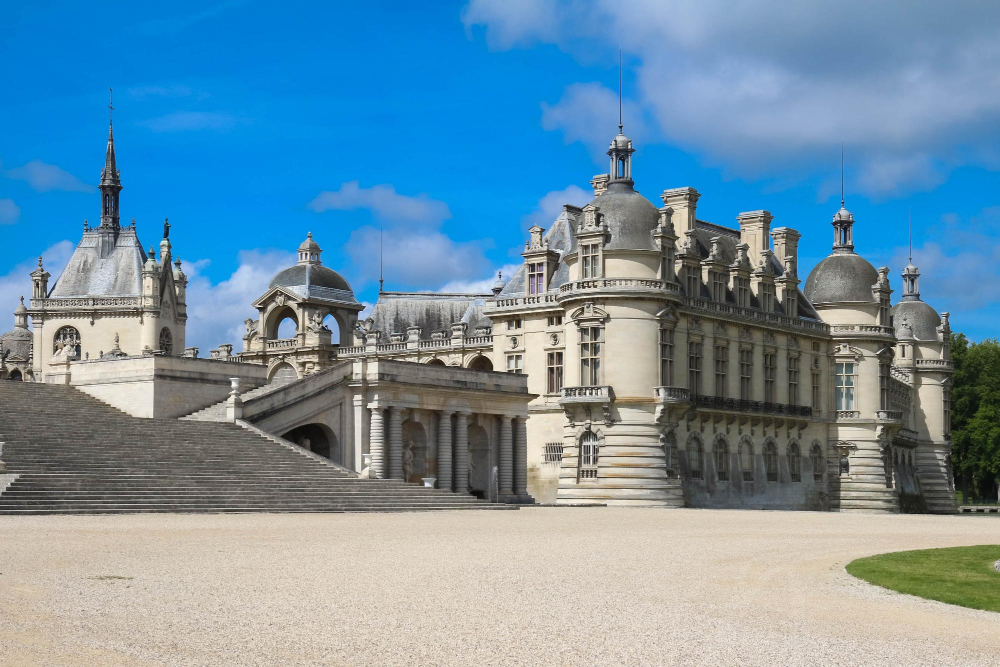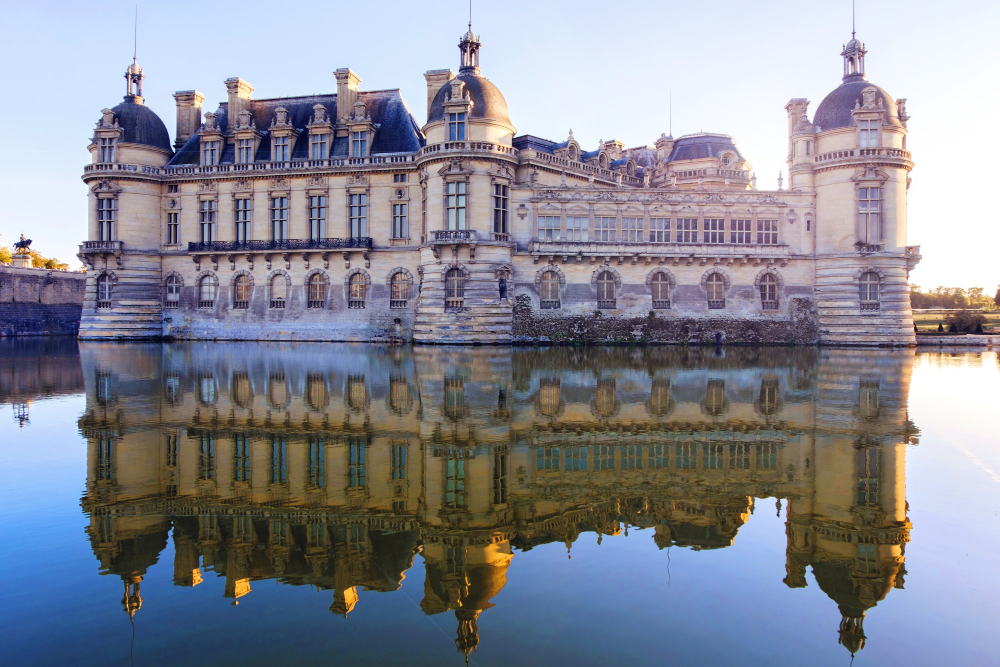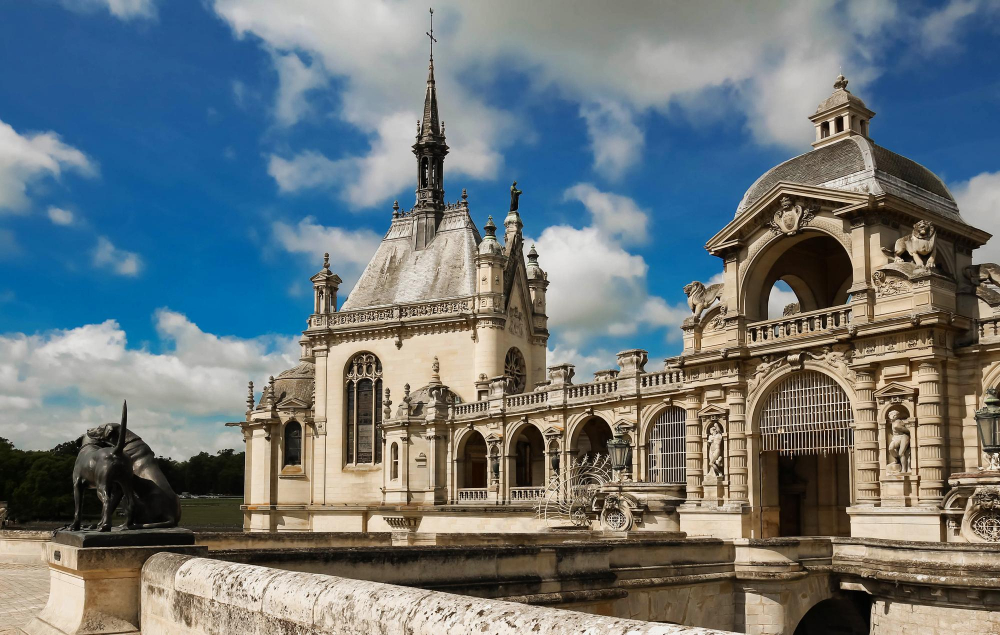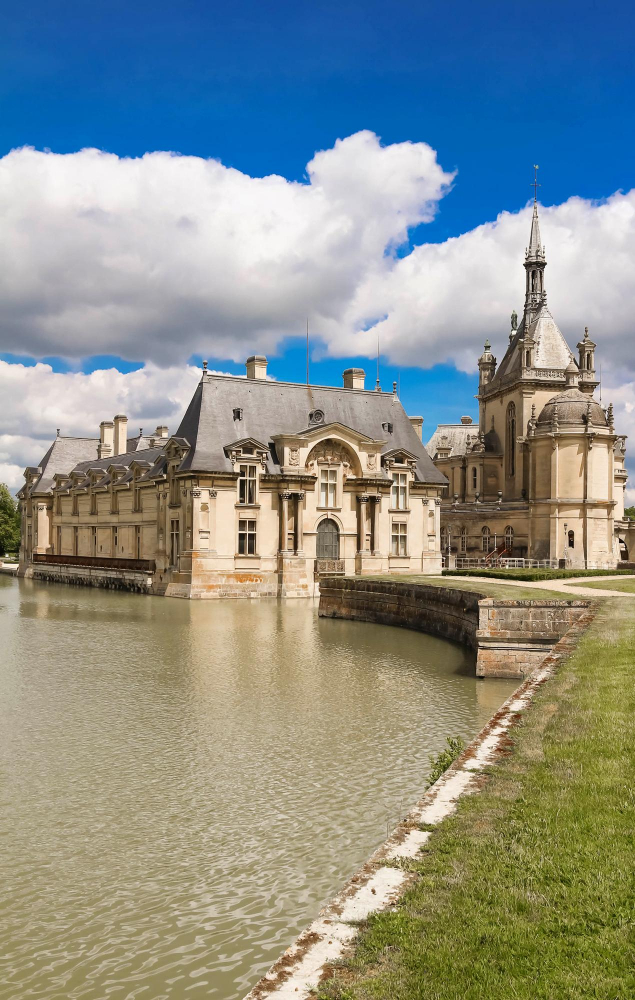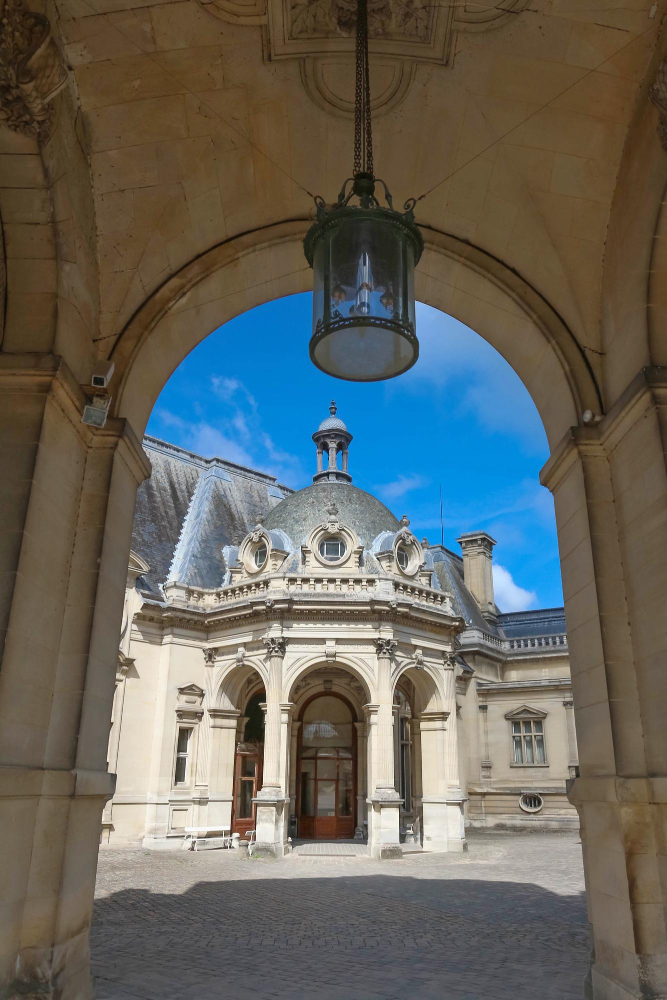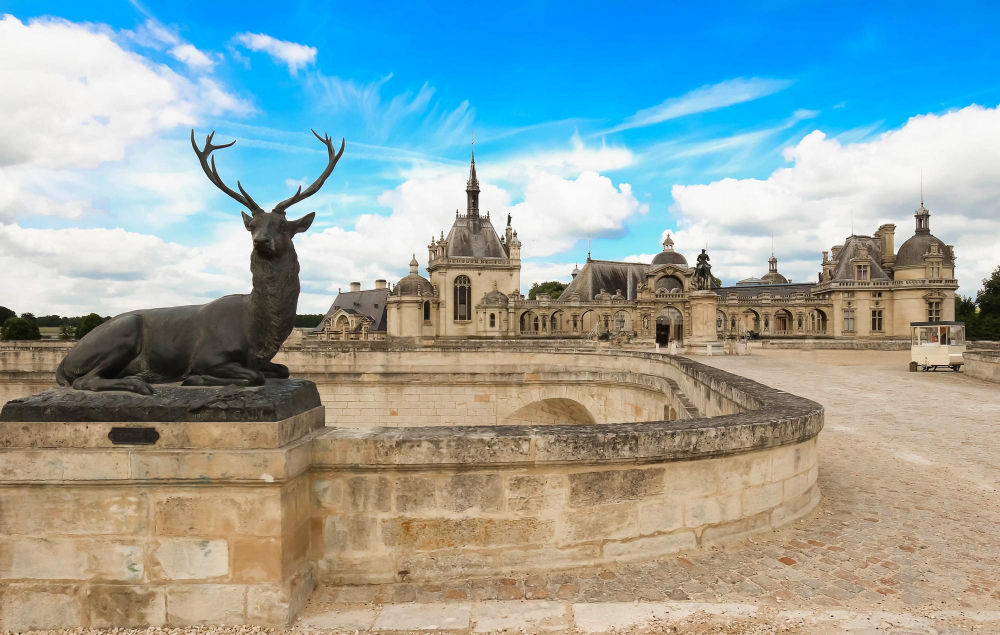
Just 50 kilometres north of Paris, nestled in the picturesque countryside of the Oise department, stands the impressive Chantilly Castle. Famous for its majestic park, its extensive art collection and the extraordinary horse museum housed in the magnificent stables, the estate attracts thousands of visitors from all over the world every year. Behind its magnificent walls lies an eventful and fascinating history, recounting tales of aristocratic intrigues, artistic masterpieces and architectural innovations – accompanied by myths that still capture the imagination today.
The origins of a château and its earliest traces – The historical journey of the Château de Chantilly begins with its first documented mention in 1358. Amidst the Jacquerie peasant revolt, the estate was destroyed and later rebuilt on the initiative of Pierre d’Orgemont. Until the work was completed in 1394, it stood as a symbol of reconstruction following a period of unrest. Yet the château was not to retain this stability for long. In 1421, during the Hundred Years’ War, Chantilly was besieged by English and Burgundian troops. Jacqueline de Paynel, a courageous lady of the château, was able to save the lives of the inhabitants through her quick wits and negotiating skills. The surrounding villages, however, were less fortunate – they were completely destroyed.
The Montmorencys and the Transition to the Renaissance – A turning point in the architecture and history of the château came in 1484, when it passed into the hands of the powerful Montmorency noble family. Anne de Montmorency, an influential military commander, transformed the medieval fortress into an impressive Renaissance château between 1528 and 1551. An irregular triangle with towers and a double-towered gatehouse characterised its appearance, which was continuously expanded and embellished over the course of three centuries. However, the history of the Montmorencys came to an abrupt end with the execution of Henri II de Montmorency in 1632. He had opposed the powerful minister Cardinal Richelieu – a decision that cost him his life and placed his estates temporarily under the control of King Louis XIII. Eventually, the estates were returned to Henri II’s sister Charlotte-Marguerite, who, through her marriage to Henri II de Bourbon, a cousin of the king, brought the estate into the House of Bourbon-Condé.
The Golden Age under the ‘Grand Condé’ – With Louis II de Bourbon, better known as the ‘Grand Condé’, a glorious era began for the Château de Chantilly. Following the unrest of the Fronde – a series of civil wars between the nobility and the royal family – the château was temporarily seized and returned in 1659. As Louis XIV did not welcome him at Versailles, the Grand Condé devoted himself to the embellishment of Chantilly. Under his patronage, precious works of art and furniture were created, transforming the château into a cultural centre. In 1671, he received Louis XIV and commissioned André Le Nôtre, the famous landscape architect, to design the park. Le Nôtre, who would later become famous for the gardens of Versailles, created here a Baroque symbiosis of water features, expansive lawns and sightlines stretching to the horizon. The Grand Canal and the parterre gardens remain to this day examples of masterful French garden art. The axis of the park also led to a central bastion, which was once intended as the site for another Baroque main building, though this was never realised. Culturally, Chantilly flourished during this period. Writers such as Jean de La Fontaine and Madame de Sévigné found inspiration here, and Molière completed works such as ‘Tartuffe’ and ‘The Ridiculous Affectations’. The Avenue of the Philosophers, lined with rows of double-trunked trees, was also created during this period as a symbol of the château’s intellectual flourishing.
Baroque splendour and British influence – Under Henri Jules de Bourbon, son of the Grand Condé, the château underwent further architectural transformation. The ‘Mad Condé’, as he was later known, had the château’s triangular structure converted into a pentagonal courtyard and invested enormous sums to perfect the building in the Baroque style. Influenced by English landscape architecture, the park’s grounds were redesigned as an English garden in the 18th century. Particularly noteworthy is the idealised peasant village, which reflected the tastes of the time. It later served as inspiration for Marie-Antoinette’s own Hameau in the park at Versailles.
Revolution and Rebirth – The turbulent French Revolution plunged Chantilly into chaos once again. Louis VI de Condé fled abroad and fought Napoleon from there. In the meantime, the château was looted and its art treasures were lost. It was only with the return of the Duke of Aumale, the last owner from the House of Bourbon-Condé, that a rebirth began. Between 1876 and 1882, he had the present-day château built on the foundations of the destroyed building. The architect Honoré Daumet designed it in a historicist style intended to evoke the château’s heyday. Henri d’Orléans significantly expanded the art collections and bequeathed the entire estate to the Institut de France in 1886. The stables, which are among the largest and most magnificent in the world, also gained international fame – particularly following the opening of the Chantilly racecourse in 1834.
Legends and Legacy – Alongside historical facts, numerous legends surround Chantilly Castle. One of the best-known stories is that of Charlotte-Marguerite, who is said to have left her royal lover, Henry IV, not only her heart but also mysterious writings that have not yet been deciphered. Equally fascinating are the myths surrounding the vanished hamlet of Quinquempoix, which was allegedly ruled by curses and magical powers.
Chantilly today – A living legacy – Today, Chantilly Castle houses the Musée Condé, one of the world’s largest private art collections, which also includes the famous ‘Très Riches Heures’. Visitors can explore the magnificent rooms, the historic library with over 12,000 valuable books, and the beautifully landscaped grounds. The racecourse and the Musée du Cheval also help to keep the château’s heritage alive. ‘Of all the places the sun shines upon, there is none like this,’ wrote Marie-Madeleine de La Fayette in 1673 – and even today, Chantilly Castle exudes an irresistible magic. It is not only a masterpiece of architecture and garden design, but also a testament to history, power and passion, whose fascination extends right into our modern times.