The Scottish countryside is renowned for its rich history and breathtaking natural beauty, yet it is above all the mysterious relics from times gone by that captivate visitors and historians alike. One such historic site, which attracts both history buffs and romantics alike, is the Cairnholy tombs. These two Neolithic chamber tombs, which form part of the so-called Clyde Group, tell tales of rituals, legends and times long past. Located near the village of Carsluith in Dumfries and Galloway, they are not only archaeologically significant but also exude an air of myth.
Origin and Naming – The name ‘Cairnholy’ is derived from the Gaelic Càrn na h-ulaidhe, meaning ‘stone mound of the grave’. This poetic name reflects the cultural and symbolic significance of the burial sites, which were once revered as sacred places by the people of the Neolithic period. Today, the Cairnholy tombs are listed as a heritage site and are managed by Historic Scotland.
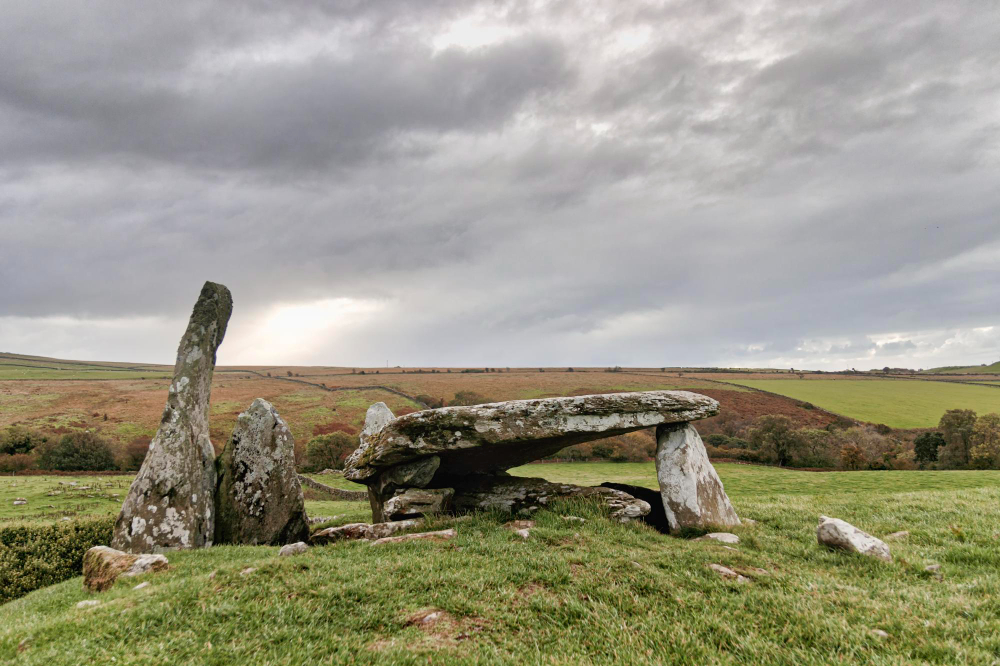
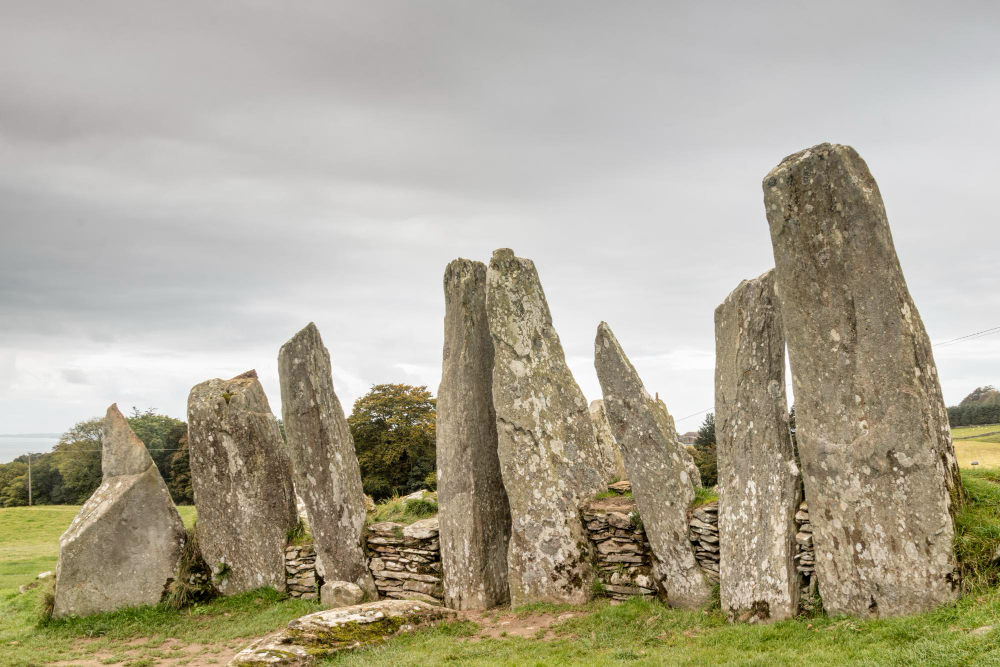
The Location: A Place Full of Views and Secrets – High hills and sweeping views of the picturesque Wigtown Bay characterise the surroundings of the Cairnholy tombs. They are situated near Cairnholy Farm and can be reached via a small road lying about one kilometre from the A75. The two tombs lie just 150 metres apart – a suggestion that this site may have served a communal or ceremonial purpose. An interesting aspect of the burial sites’ current appearance is their condition: both structures are open and roofless, as the original capstones have been stolen over time – often to build field walls. The history of their use and subsequent plundering lends a touch of tragedy to the burial sites’ mystical aura.
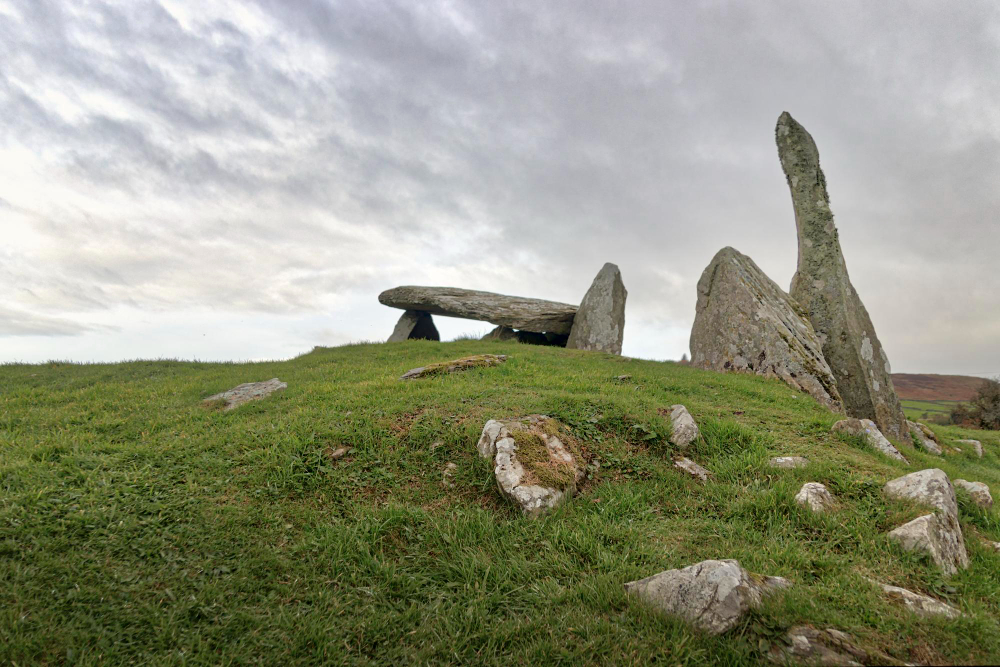
Cairnholy I: A Sense of the Monumental – The first and larger of the two tombs, Cairnholy I, captivates with its imposing architecture. Measuring 50 metres in length and 15 metres in width, it features a monumental, curved façade that was once part of the forecourt. Archaeological excavations carried out in 1949 by Stuart Piggott and Terence Powell provided fascinating insights into the use of this site. The excavations revealed that several hearths had been constructed in the forecourt area. It is possible that ritual ceremonies took place here, intended to establish a connection between the living and the dead. Artefacts found in the burial chamber provide insights into the cultures of that period. These included a fragment of a ceremonial jadeite axe, shards of pottery from the early Neolithic period and a leaf-shaped arrowhead. Later grave goods, such as Peterborough pottery, Becherware and a flint knife, suggest that the graves were used over various periods. Particularly noteworthy is the inner chamber of Cairnholy I, which was designed as a closed and isolated monument. It was probably originally covered by a large stone slab resting on two tall end slabs. Inside this chamber, a secondary burial niche was found containing the remains of clay pots and a stone engraved with circular lines – an art form frequently associated with Neolithic cultures.
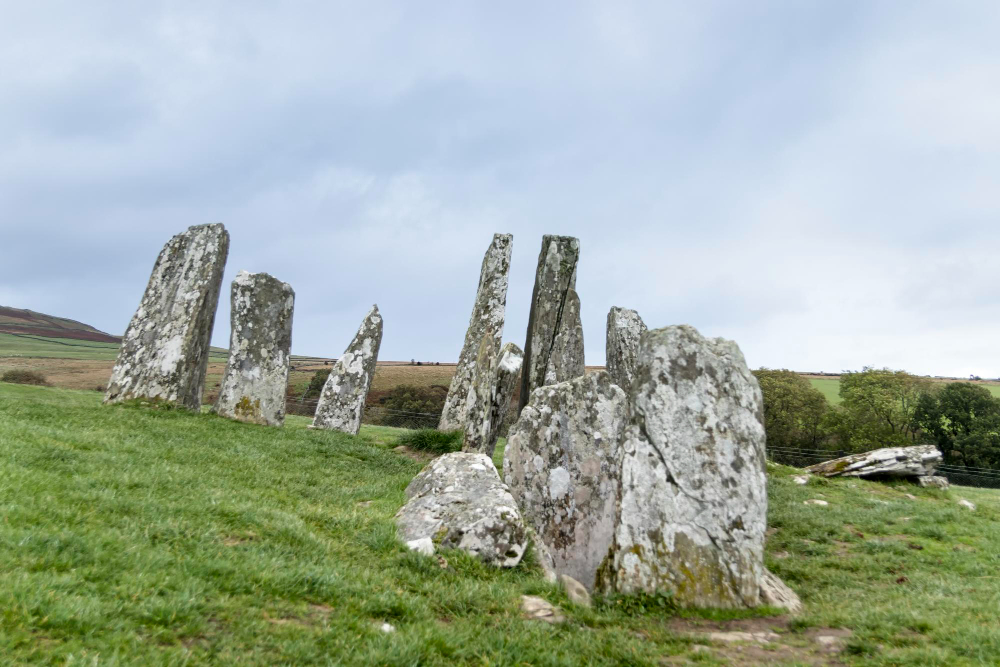
Cairnholy II: A Place of Legends – The smaller cairn, Cairnholy II, situated to the north-east of Cairnholy I, is equally fascinating, if not even more mysterious. Local legends claim that this was the final resting place of Galdus, a legendary Scottish king. Although this connection is purely speculative, it lends the site an additional layer of mythical depth. Measuring 20 metres in length and 12 metres in width, with a height of less than 60 centimetres, Cairnholy II is more modest in size than its neighbour. Nevertheless, it has a similar structure and consists of two chambers. Here, too, the stones have been looted on several occasions, though some portal stones have survived to this day. The V-shaped layout of the forecourt suggests that ceremonies similar to those at Cairnholy I took place here. Archaeological investigations revealed that the rear chamber had already been plundered previously and the front chamber had been disturbed. Nevertheless, interesting artefacts were found in the fill layer, including an arrowhead, a flint knife and pottery fragments from the Beaker Culture. These finds confirm once again that the tombs were in continuous use and served both early and later Neolithic communities.
Cultural Significance and Mysticism – What makes the Cairnholy tombs so special is not only their well-documented archaeological history, but also their connection to mythological tales. Although the legend of King Galdus may be purely fictional, it nevertheless underlines the symbolic significance of these places in people’s hearts. Such stories lend historical sites a living dimension and bridge the gap between sober science and the human need for romance and meaning. Furthermore, the Cairnholy graves offer an insight into the spiritual and social world of the Neolithic period. The careful planning of the structures, the selection of artefacts and the repeated use of the sites suggest that these people had a deep connection to their ancestors and a strong conception of the afterlife. The fact that fire pits have been discovered in the forecourts could indicate that these places were not only burial sites but also gathering places for communal rituals.
A visit to Cairnholy: A journey through time – For anyone interested in history, archaeology or simply mysterious places, a visit to the Cairnholy tombs is an unforgettable experience. Even today, the surroundings exude a special energy that serves as a reminder of this place’s long history. It is easy to imagine people standing here thousands of years ago, honouring their dead and telling stories that live on to this day. The Cairnholy tombs offer not only the opportunity to admire Neolithic architecture and artefacts, but also a moment of reflection on the unique connection between the past and the present. Through a blend of scientific documentation and local myths, the tombs remain a fascinating enigma that captures our imagination.
The Cairnholy tombs are more than just archaeological sites – they bear witness to a bygone era and are shrouded in a mystical aura. Protected by their geographical seclusion and the care of Historic Scotland, they still stand today as silent guardians of history and legend. Every stone slab, every chamber and every artefact tells a story about the people who lived here, their rituals and their beliefs. Whether you are a researcher, a history enthusiast or a dreamer – Cairnholy invites you to explore the secrets of the past whilst enjoying the beauty of the Scottish landscape.