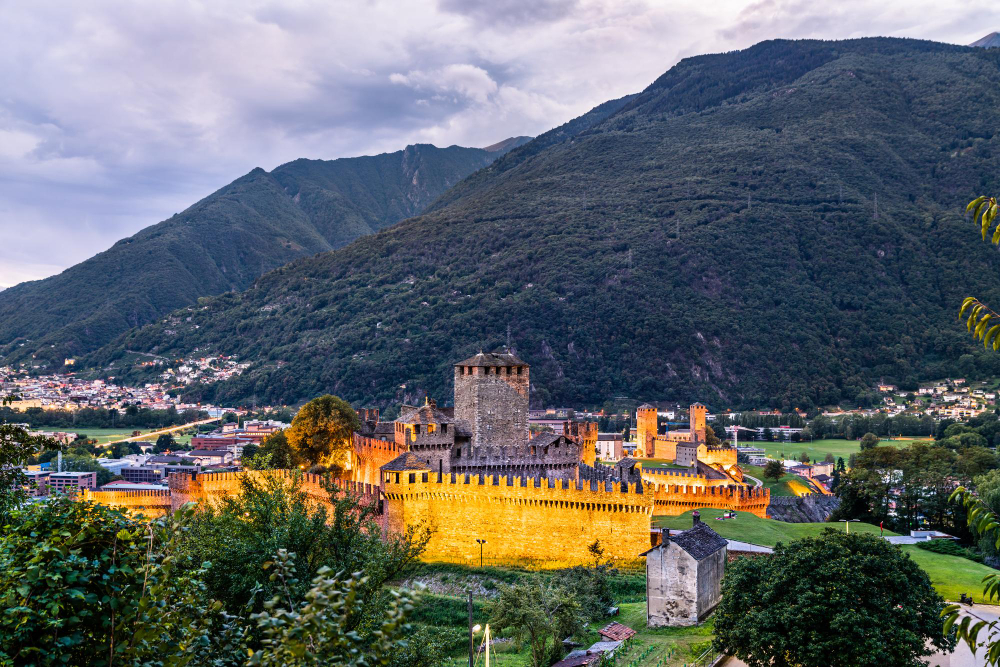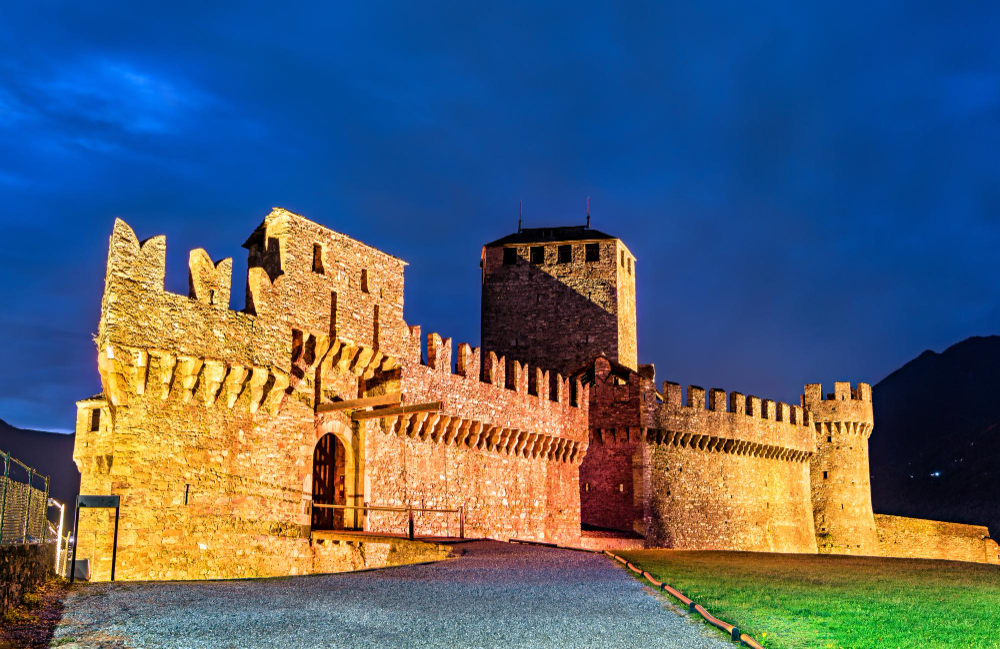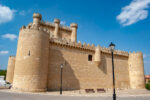
Switzerland is renowned for its picturesque Alpine landscapes, charming villages and impressive historic buildings. Among these, the town of Bellinzona stands out in particular with its legendary castles. Castello di Montebello is one of three magnificent fortresses that have been listed as a UNESCO World Heritage Site since 2000. This medieval rock-cut castle stands imposingly on a rocky outcrop to the east of Bellinzona’s old town in the canton of Ticino and captivates visitors not only with its architectural beauty but also with a fascinating history marked by power struggles, intrigue and cultural change.
The variety of names reflects its eventful history – Over the centuries, the Castello di Montebello has been known by various names. In the 14th and 15th centuries, depending on its role within Bellinzona’s defence system, it was referred to as ‘Castello piccolo’, ‘Castello nuovo’ or ‘Castello di mezzo’. After the castle came under the control of the Canton of Schwyz in 1506, it was given the name ‘Castello di Svitto’. In the 19th century, it eventually became known as ‘Castello San Martino’. This variety of names demonstrates how closely the castle’s history is intertwined with the changing power structures in the region.
The Beginnings: A Symbol of Lombard Power Struggles – The history of Castello di Montebello dates back to the early 13th century. At that time, the Lombard cities of Milan and Como were vying for control of Bellinzona, which played a key role due to its strategic location at the entrance to the Gotthard Pass. Before the year 1300, the noble Rusca family of Como decided to build a castle on the rocky outcrop to the east of the town. The complex was intended to complement the existing Castelgrande and secure the family’s power. The first documented mention of the castle dates from 1313. However, the Rusca family was soon defeated by the powerful Visconti of Milan. Although they had lost their home territory during the conquest of Como in 1335, the Rusca family were permitted to retain Montebello as private property. It is recorded that during this period they plotted a rebellion against the Visconti – a plan which, however, failed. The Rusca family’s estate was eventually brought entirely under Milanese control, and the castle’s importance as a military stronghold continued to grow.
Swiss Rule and Decline: A Chapter of Upheaval – In 1500, the political situation changed radically when Bellinzona came under the control of the Swiss Confederation. The Treaty of Arona, concluded in 1503, confirmed the Confederates’ rule over the region. The castles were divided amongst the cantons of Uri, Schwyz and Nidwalden, with the Castello di Montebello being assigned to the canton of Schwyz. From this point onwards, however, the castle lost its original function as a defensive structure. Instead, it served primarily as a base for small garrisons responsible for maintaining public order and carrying out police duties. With the founding of the canton of Ticino in 1803, the Castello di Montebello passed into its ownership. However, the ravages of time and a lack of maintenance took their toll on the complex. Over the course of the 19th century, it fell into increasing disrepair, and it was not until around 1900 that the first efforts were made to preserve the castle as a historic monument.
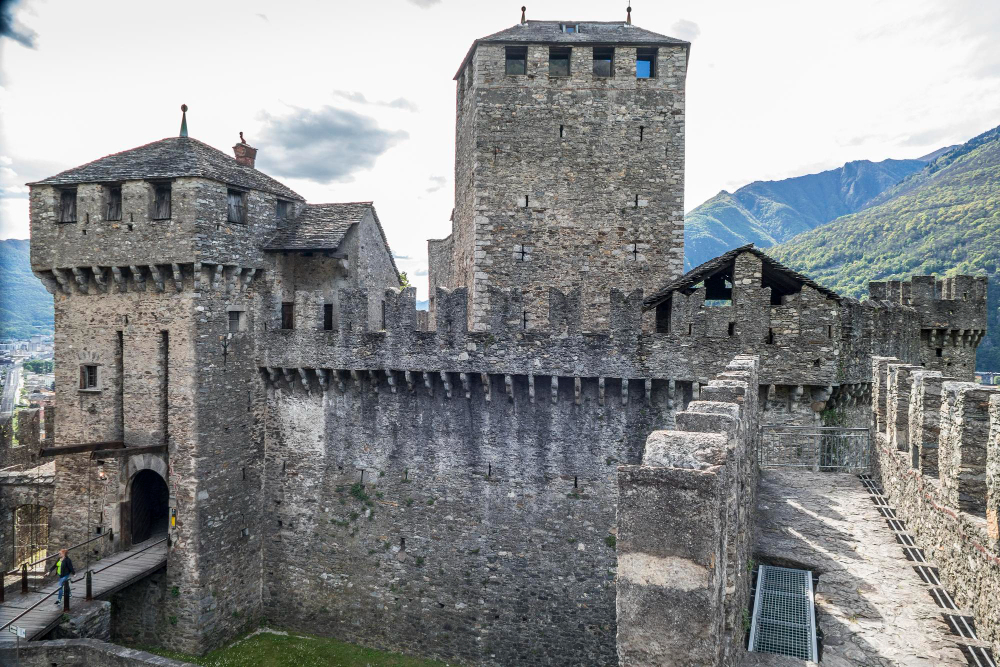
Conservation and Revitalisation: From Decay to Cultural Monument – The extensive restoration work carried out between 1920 and 1955 saved the castle from complete ruin. Great importance was attached to historical authenticity, although some reconstructions remain controversial to this day. For example, one tower of the inner keep, with its battlements and flat hipped roof, may not correspond to the complex’s original appearance, as historical records from the 17th century suggest a four-storey building with a monopitch roof. Between 1971 and 1974, the castle underwent a further renaissance under the architects Mario Campi, Franco Pessina and Niki Piazzoli. Through creative architectural additions that stand out clearly from the medieval structure, the complex was transformed into an archaeological museum. Today’s architectural details are guided by the principles of the Venice Charter, which advocates the preservation of historic buildings through a clear distinction from modern additions.
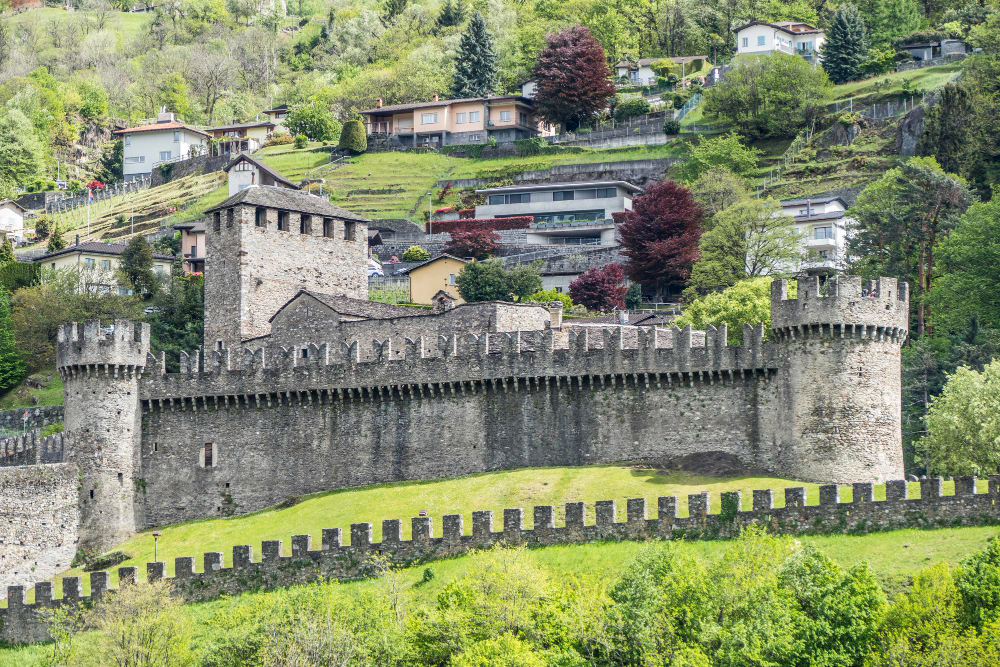
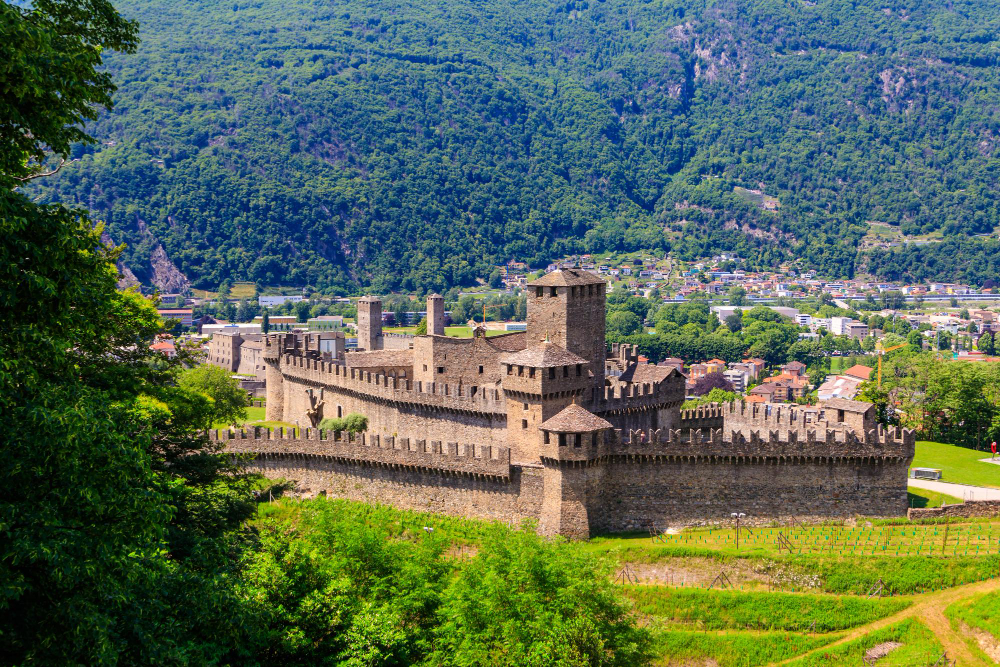
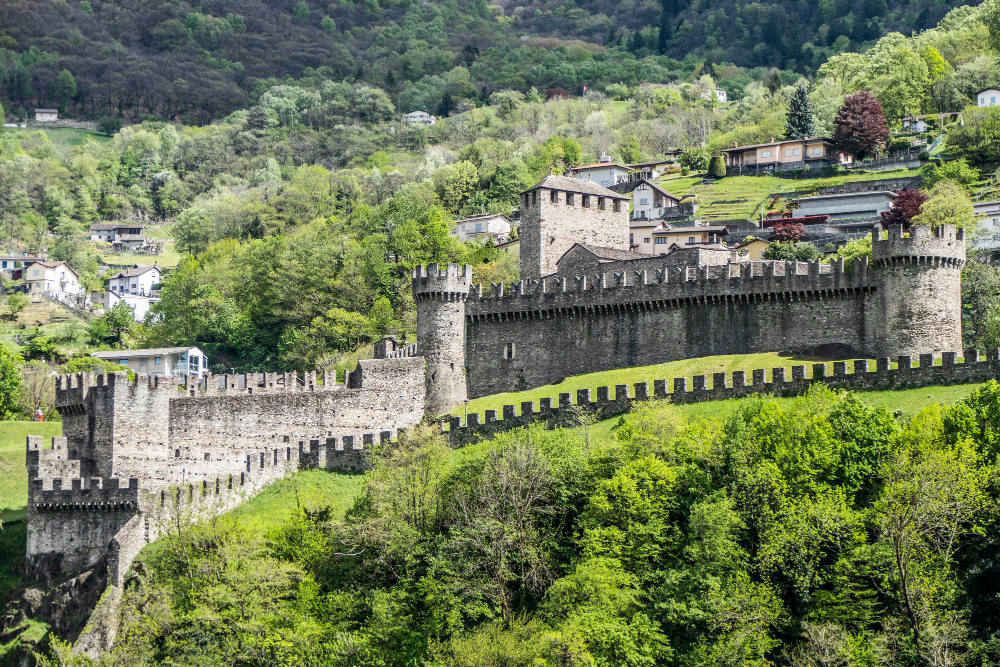
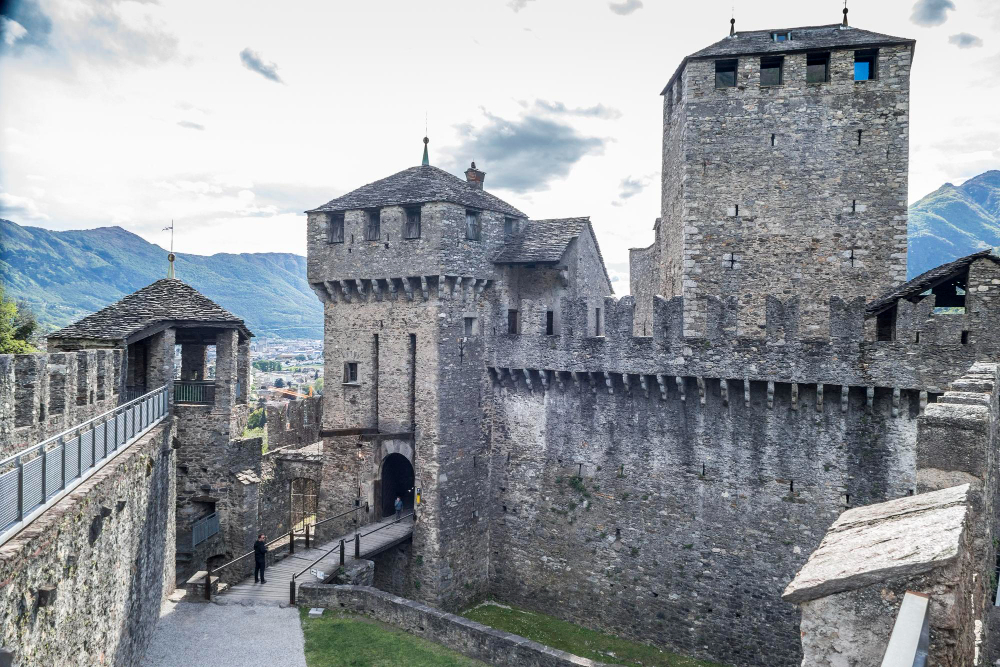
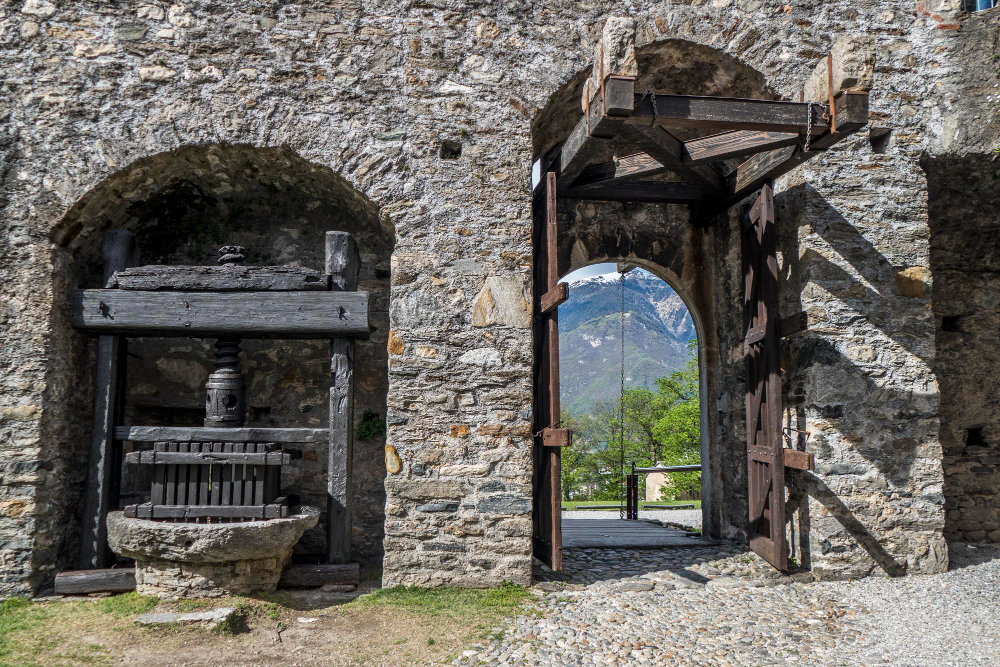
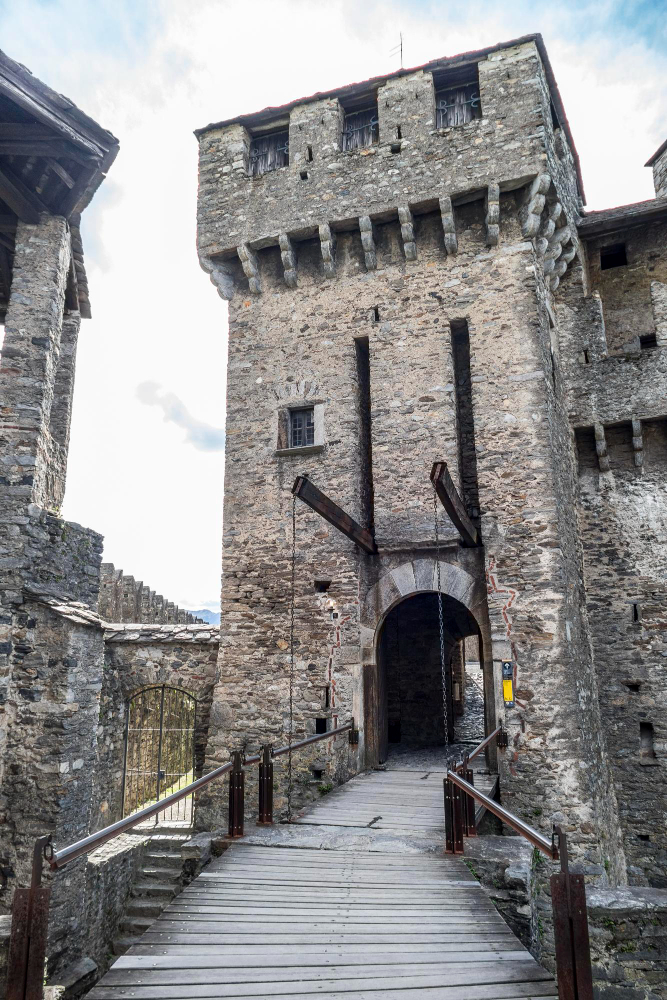
Architecture and Defence Strategies of the Castle – The castle’s asymmetrical shape, with its staggered, diamond-shaped layout, bears witness to the ingenious defensive mechanisms of medieval architecture. In particular, the sunken moats and flanking towers played a central role in protecting the castle from attack. Access is via a neck moat, which is protected by a crenellated parapet. Several gate complexes, including the outer and inner gates as well as flanking towers, made the fortress difficult to capture. Also of interest is the small chapel, built around 1600 inside the keep and dedicated to Saint Martin. It serves as a reminder that the castle was not only a place of military activity but also held spiritual significance.
Montebello Castle today: a window into the past – Today, the imposing complex houses the ‘Museo civico e archeologico’, a municipal museum exhibiting numerous archaeological finds from Bellinzona and the surrounding area. Visitors can admire artefacts dating from prehistory to the Middle Ages. The historical significance of Ticino, and Bellinzona in particular, as a link between northern and southern Europe is illustrated in an interactive way. Furthermore, the Castello di Montebello offers spectacular views of the old town and the surrounding mountains. Many visitors come not only for its cultural and historical significance, but also to enjoy the picturesque beauty of the location.
A journey through time and space – The Castello di Montebello is far more than just a castle. It tells stories of power struggles, strategic decisions and cultural change that have unfolded over the centuries. Its dramatic location on a rocky outcrop, its complex architecture and its eventful history make it a unique testament to the past, whilst also serving as a symbol of the preservation of cultural values. Anyone visiting Bellinzona should certainly not miss the opportunity to explore this impressive structure. It is a place where the past comes to life and the legends of a bygone era can be felt.