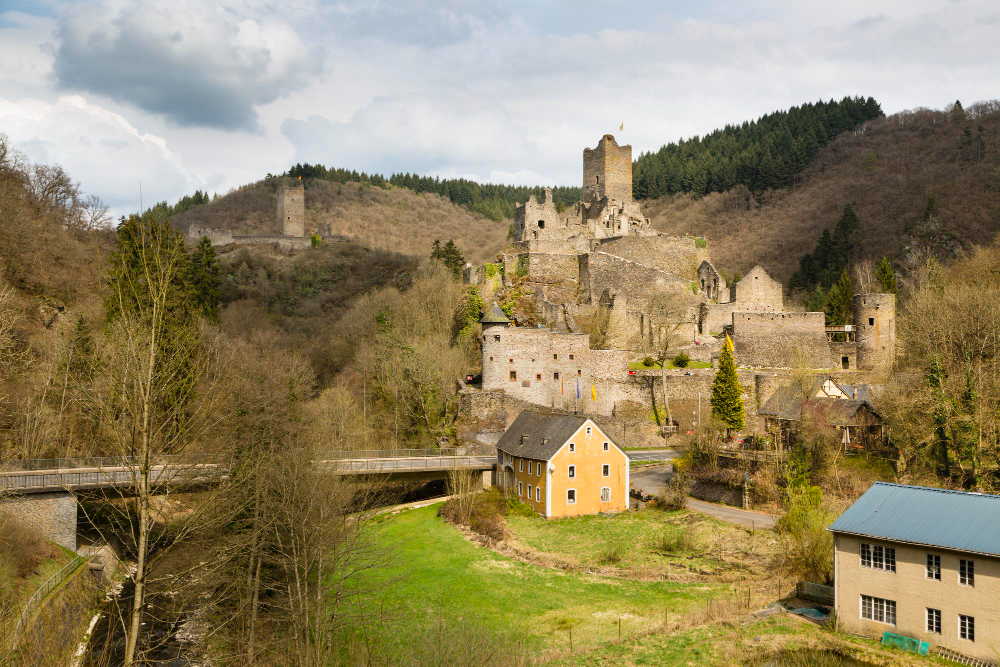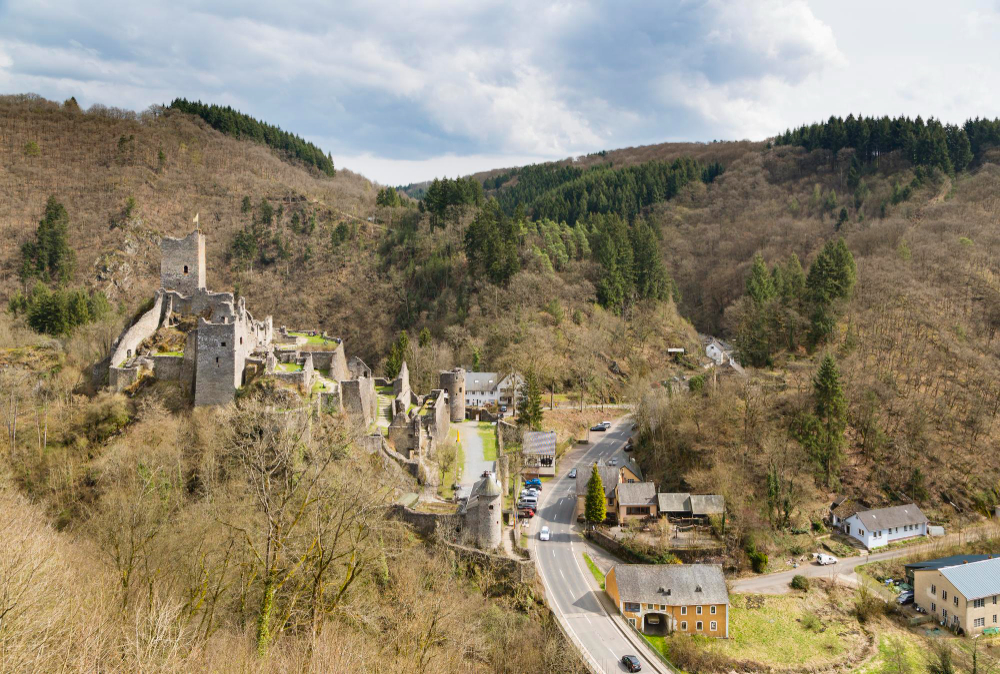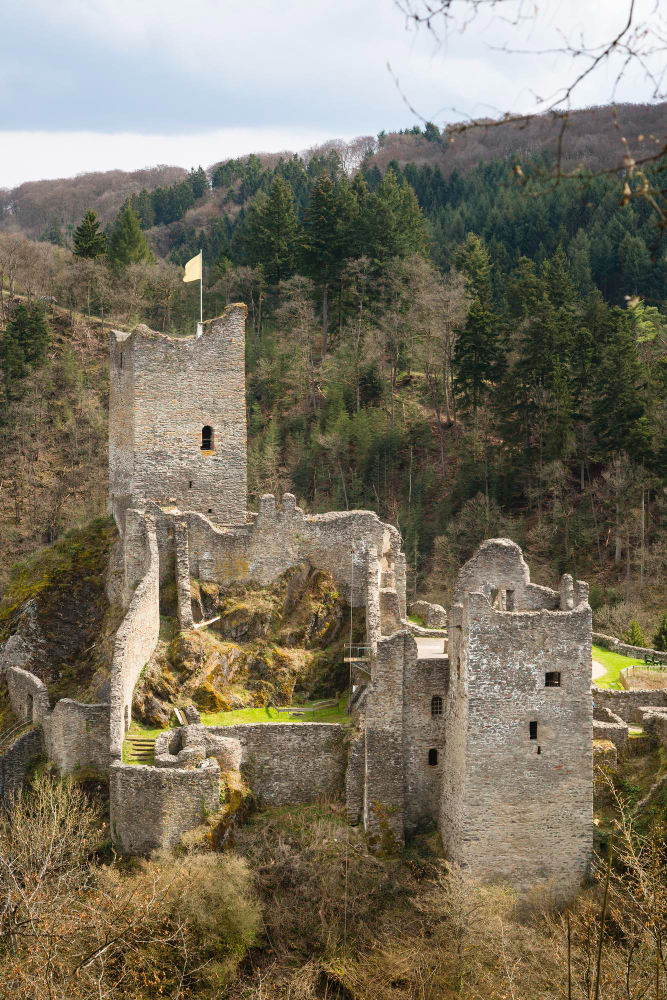
Near the Eifel town of Manderscheid stand two impressive castle ruins: the Oberburg and the Niederburg. These historic structures tell the fascinating story of a medieval conflict between the Electorate of Trier and the Duchy of Luxembourg. Both sites are not only architectural masterpieces of their time, but also symbols of the political and territorial disputes of the Middle Ages.
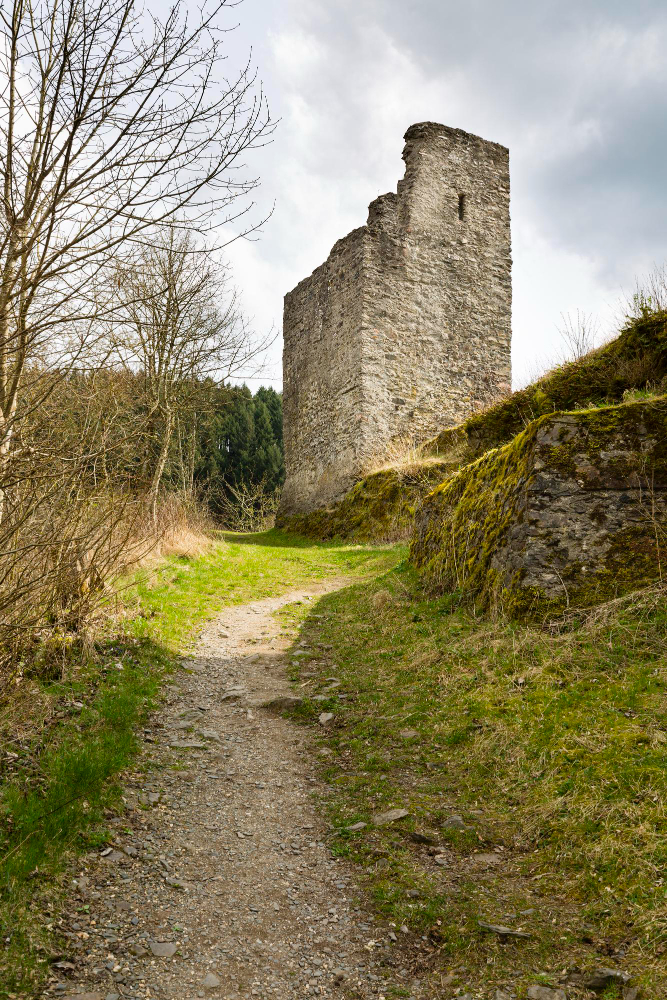
The Oberburg – Manderscheid’s upper stronghold – The Oberburg, or ‘Upper Castle’, is built on a strategically situated hill, the surface of which was deliberately levelled to make way for the fortifications. The castle featured an almost triangular curtain wall and boasted an imposing five-storey keep, which is now open to the public once again. From the top of the tower, there is a stunning view over the Niederburg, the small town of Manderscheid and the picturesque landscape of the Lieser Valley. The first documented references to the place name Manderscheid date back to the year 973. At that time, Emperor Otto II bestowed the area upon the Archbishop of Trier. It is often mistakenly claimed that the castle itself is also mentioned in this document. In fact, the first historical references to the castle appear only between 1141 and 1146, during a feud over St Maximin’s Abbey near Trier. This conflict pitted Henry the Blind, Count of Namur-Luxembourg, against Archbishop Albero of Trier. The free lords of Manderscheid first appeared in the records in 1142, when they were named as witnesses in a deed of donation. In the 14th century, the village of Obermanderscheid took its name from the Manderscheid district of the Electorate of Trier, which remained in existence until the late 18th century. Interestingly, the administrative centre of this district was not located directly within the castle, but in the so-called ‘Kellereihaus’ in the neighbouring village. In 1332, that village was granted town rights by Elector Balduin of Trier or, as other sources report, by King Louis the Bavarian. Politically, the possessions of the Elector of Trier in Manderscheid formed an important link between the surrounding territory of Luxembourg. However, this territorial proximity repeatedly led to tensions and power struggles between the two domains. In 1673, these conflicts came to a tragic end: French troops finally destroyed the Upper Castle during a military campaign. It was not until 1921 that the ruins were restored by the municipality of Manderscheid, on whose land they stand. Since then, they have been open to visitors and are very popular with tourists and history enthusiasts.
The Lower Castle – A view of the lower walls – The Lower Castle, or ‘Niederburg’, lies just a few hundred metres from the Upper Castle, though slightly further down the valley. Its location and architecture also reflect the strategic importance the castle once held. Originally, the Niederburg was an independent fortress, built and maintained by the free lords of Manderscheid from the 12th century onwards. Over the centuries, the complex developed into a centre of regional power, impressing with its extensive ramparts and towers. The Niederburg, too, was caught up in the maelstrom of conflicts between Trier and Luxembourg. It served as a defensive stronghold against the territorial claims of the Electorate of Trier and was the scene of military clashes on several occasions. Like the Oberburg, the Niederburg was also destroyed by French troops. Its current condition is likewise the result of extensive restoration work, which has made it possible to preserve this historic site as a tourist destination. Visitors to the Lower Castle can now marvel at its imposing walls and wander through the remains of the old residential and defensive areas. Particularly impressive is the view of the surrounding countryside, which has remained virtually unchanged in its natural state for centuries.
Historical Significance of the Castles – The castles of Manderscheid symbolise the political and territorial conflicts of the Middle Ages. Their history is closely intertwined with the rival interests of the Church and secular principalities. The Electorate of Trier was one of the most powerful ecclesiastical states in the Holy Roman Empire and constantly sought to consolidate and expand its power base. Opposing it was the Duchy of Luxembourg, which also harboured extensive territorial ambitions and strove for economic and political control over the region. Whilst the Electorate of Trier relied on strong ties to the Church and diplomatic manoeuvres, Luxembourg often favoured violent methods to resolve territorial disputes. The castles of Manderscheid were thus not only defensive structures but also a manifest expression of the power of the respective ruling houses.
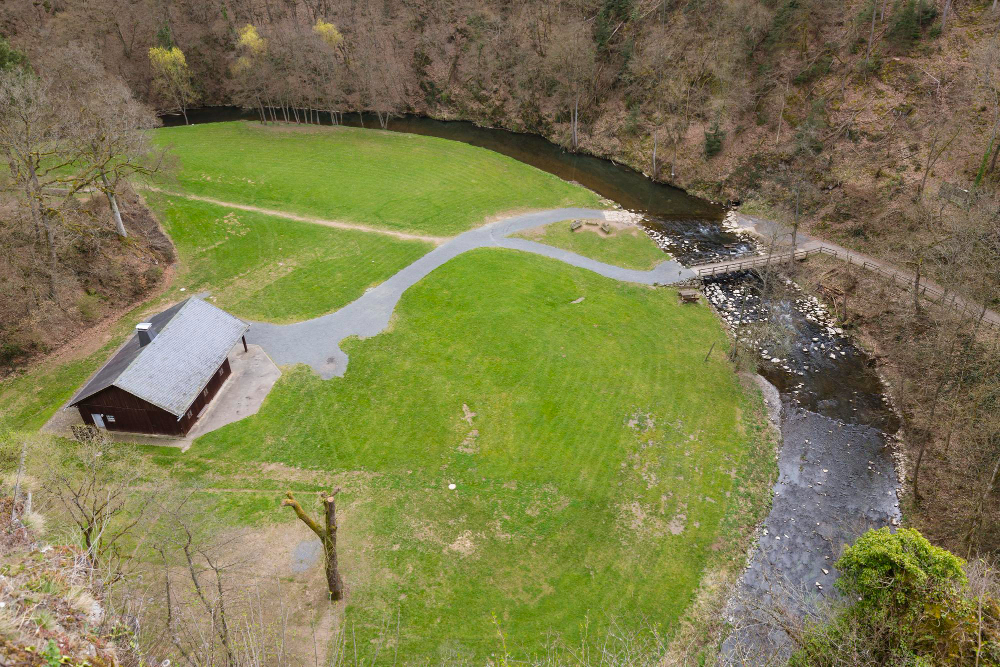
The castles in today’s context – Today, the castles of Manderscheid are popular destinations for walkers, historians and nature lovers alike. The picturesque backdrop of the Lieser Valley, combined with the impressive ruins, makes the area a unique place to encounter the past. Thanks to restoration work carried out in the early 20th century, the Oberburg and the Niederburg are once again accessible, allowing visitors to embark on a journey back in time to the medieval world. In addition, various events take place at the castles every year, including medieval festivals and markets. These events attract numerous visitors from the region and beyond, who are captivated by jousting tournaments, music and traditional crafts. As a result, the castles are regarded not only as historical monuments, but also as vibrant centres of culture and community.
The castle ruins of Manderscheid are far more than mere silent witnesses to a bygone era. They are a living reminder of a time when political conflicts and territorial power struggles shaped Europe. With their impressive architecture and fascinating history, the Upper Castle and the Lower Castle offer a captivating insight into life and strategies in the Middle Ages. A visit to these castles is not only a journey into the past, but also an opportunity to enjoy the beauty of the Eifel landscape and gain a better understanding of the historical context. Anyone visiting the castle ruins of Manderscheid experiences history first-hand – and the feeling of being immersed directly in the world of the Middle Ages.