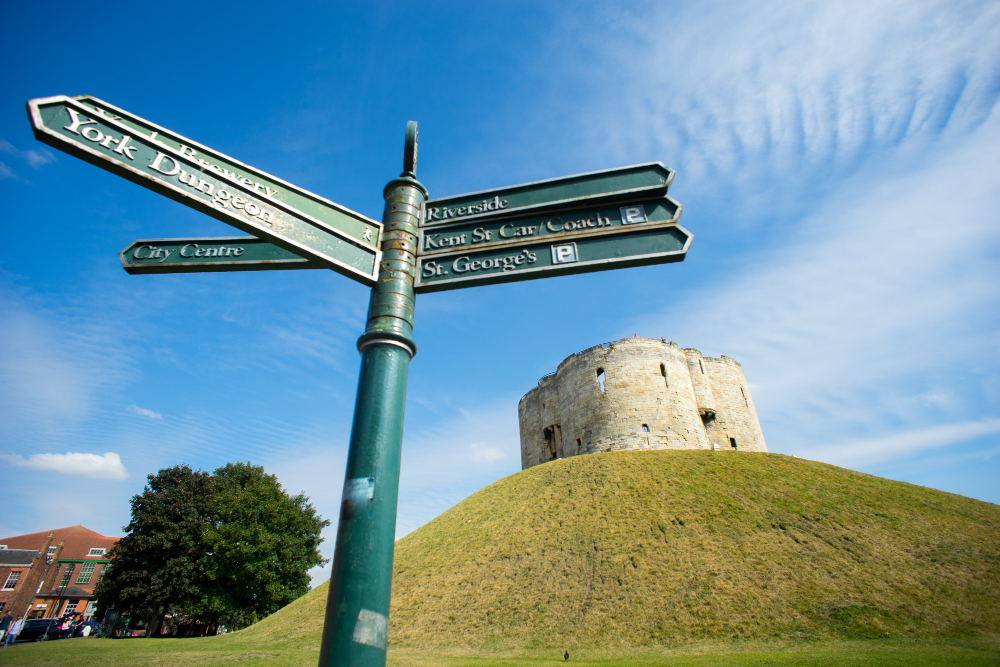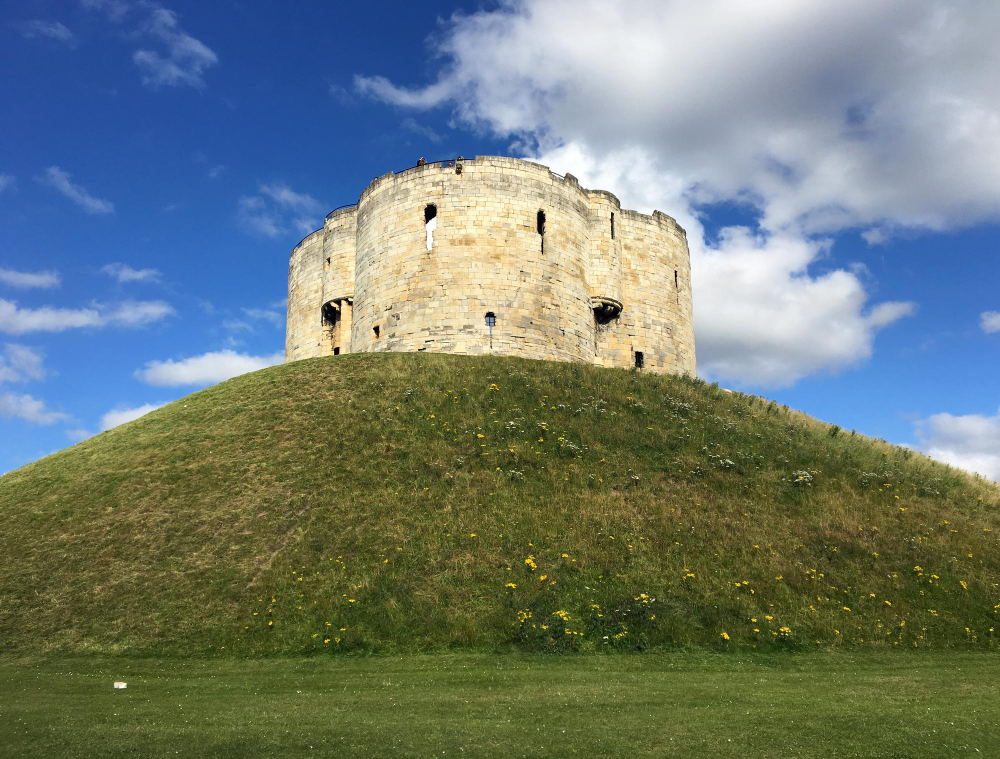
In the heart of the historic city of York stands Clifford’s Tower, a monumental structure deeply rooted in England’s history. Originally built as a central part of a medieval castle complex, the tower has played many roles over the centuries – from a royal fortress to a prison and a scene of tragic historical events. Today, it is regarded as a symbol of Britain’s complex history and attracts thousands of visitors every year. But what makes this tower so special, and what stories does it hold? Let’s delve into the history and legends of this impressive structure.
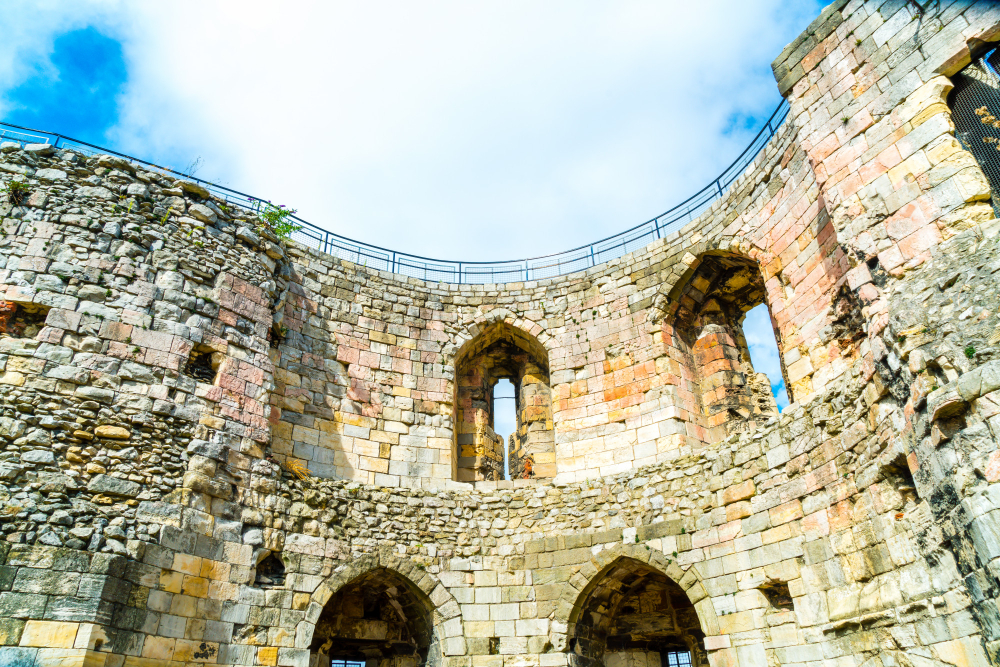
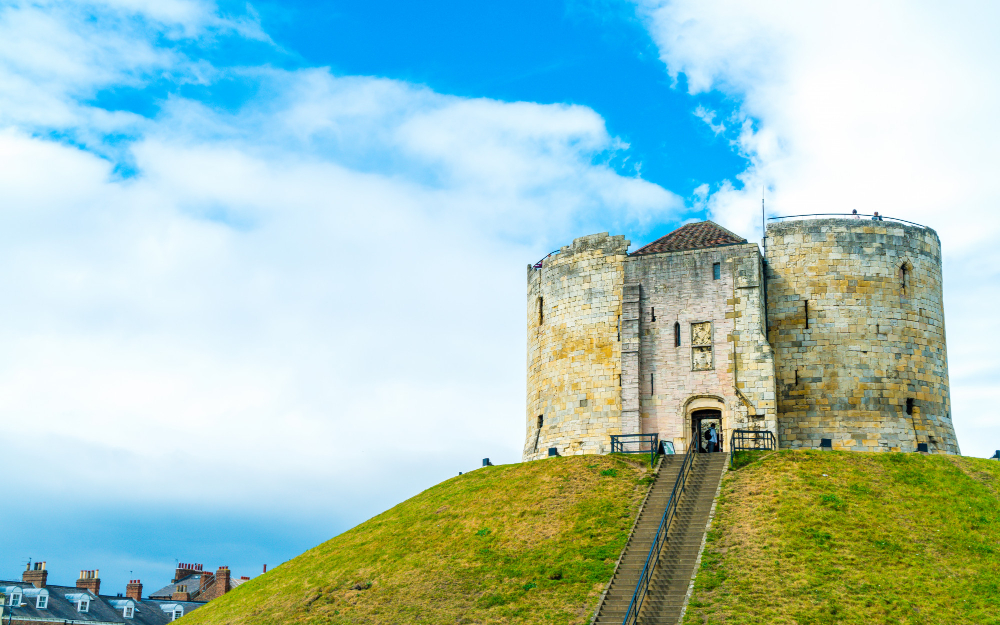
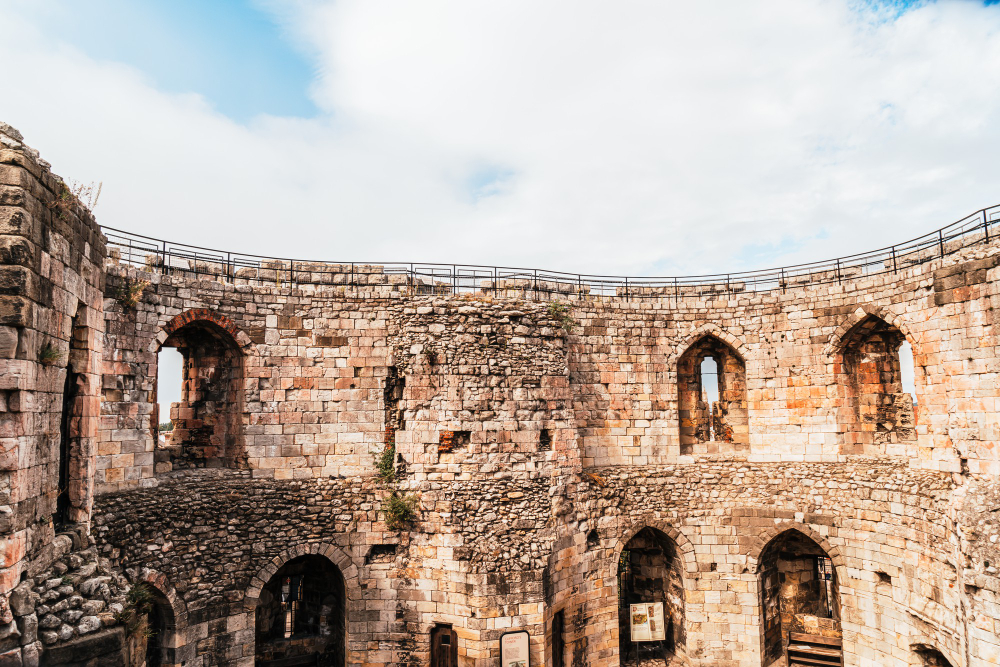
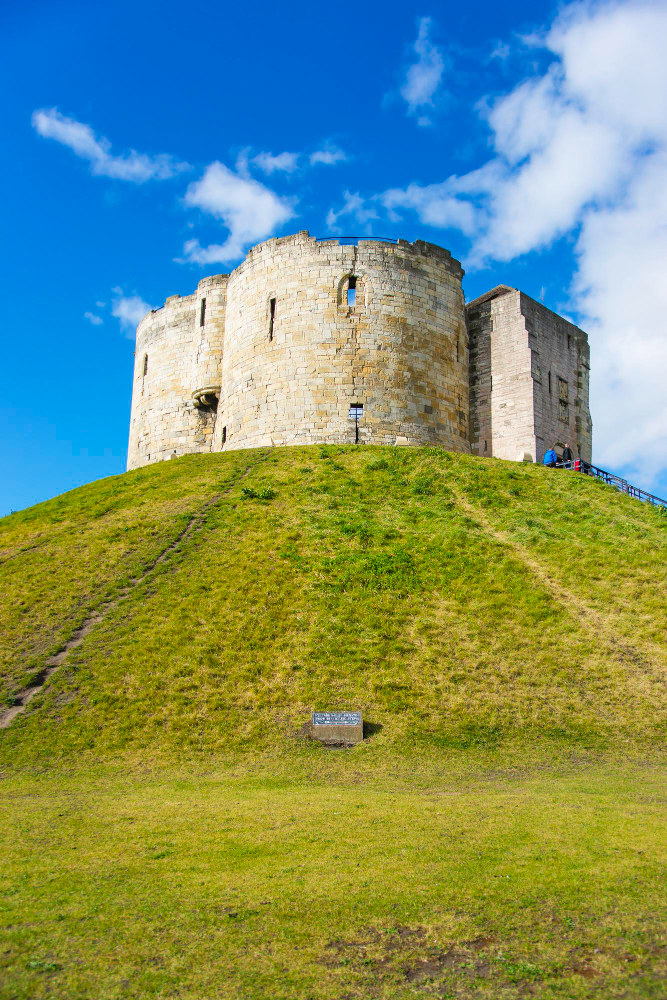
The Beginnings of York Castle and the Origins of Clifford’s Tower – The origins of Clifford’s Tower date back to 1068, when William the Conqueror began to consolidate his rule over England following his victory at the Battle of Hastings. To secure his power, he had castles built at strategically important locations – including a wooden fortress in York, which later became known as York Castle. This fortification served not only as a military stronghold but also as an administrative centre for the north. Like many castles of that era, York Castle was originally built of wood. It was not until the 13th century that it was replaced by solid stone structures. Today’s Clifford’s Tower, which stands atop an artificial mound, is one of the last remaining vestiges of this once-imposing fortress. The tower was built between around 1245 and 1272, probably during the reign of King Henry III, to strengthen the defences. The name ‘Clifford’s Tower’ was coined only later and presumably refers to Roger de Clifford, a 13th-century knight who was executed during the so-called Barons’ War against King Henry III. According to one theory, his body was hung from the tower as a deterrent, which led to the tower being given this name. However, there is no conclusive evidence to support this theory.
A gruesome episode: The Massacre of 1190 – One of the darkest chapters in the history of Clifford’s Tower is undoubtedly the Massacre of 1190. In March of that year, around 150 members of York’s Jewish community fled to the tower to seek refuge from an angry mob. At that time, the city’s Jewish population was the target of persecution fuelled by religious intolerance, economic tensions and anti-Semitic prejudice. The situation escalated when a group of debtors, seeking to evade repayment of their debts to Jewish moneylenders, singled out the Jewish community as a scapegoat. As the siege of the tower became increasingly unbearable, many of those trapped inside chose to take their own lives rather than be murdered. Those who survived and surrendered were killed by the mob. This tragic event marks one of the darkest moments in the history of English Jewry and is remembered to this day as a warning against intolerance and hatred. Today, a commemorative plaque in front of Clifford’s Tower honours the victims of this horrific incident.
From royal property to prison and beyond – Following the massacre, the tower was restored and continued to serve as a military base and royal property. Over the centuries, however, its use changed. During the English Civil War in the 17th century, Clifford’s Tower once again played a role in the conflicts between Royalists and Parliamentarians. Over time, however, the tower lost its military significance and was increasingly used as a prison. The rest of the castle complex fell into disrepair or was demolished, leaving Clifford’s Tower as one of the few surviving structures.
Restoration and modern-day significance – In the 19th century, Clifford’s Tower was increasingly used as a tourist attraction. To halt its deterioration, restoration work was carried out, meaning that the tower is now regarded as a significant example of medieval architecture. It is now part of English Heritage, an organisation that preserves and manages historic buildings in England. Visitors to the tower can not only admire its fascinating architecture but also enjoy a breathtaking view over the city of York. The view of the surrounding cityscape makes it clear why this site was once of such great strategic importance.
Legends and myths surrounding Clifford’s Tower – Like many historic sites, Clifford’s Tower is shrouded in legends and ghost stories. One particularly persistent myth claims that the ghost of a knight, presumably Roger de Clifford, still haunts the walls. Other accounts tell of screams and voices said to come from the innocent victims of the 1190 massacre. Although there is no scientific evidence for such phenomena, they do help to reinforce the site’s mystical aura and captivate visitors.
Discovering the Sources of History – Thanks to the efforts of historians and archaeologists, we now know a great deal about the eventful history of Clifford’s Tower. In addition to records dating from the time of William the Conqueror and Henry III, modern research – such as that documented by English Heritage – has also contributed significantly to a better understanding of this site’s past. The tower’s historical significance has been underpinned by archaeological excavations, which have unearthed the remains of the former castle complex as well as artefacts from various eras. These finds illustrate life in York over the centuries and shed light on the tower’s changing roles throughout history.
Clifford’s Tower as a monument to the past – Clifford’s Tower is more than just an architectural masterpiece – it is a place of remembrance and reflection. Its stone walls tell of conquests, tragedies and conflicts, but also of the resilience and determination of the people to confront their history. Particularly in times of growing social and political divisions, Clifford’s Tower remains a powerful symbol of how important it is to learn from the past.
A monument of global significance – Clifford’s Tower in York is far more than just a medieval tower. It is a living testament to England’s complex, often turbulent history – from the Norman Conquest through religious conflicts to social upheavals. At the same time, it offers a place where one can pause and reflect on the universal lessons that history can teach us. Whether you’re a history buff, an architecture enthusiast or simply a curious tourist – a visit to this unique site leaves no one unmoved. Anyone who steps inside Clifford’s Tower is immersed in a chapter of the past that is more vivid and instructive than any other.