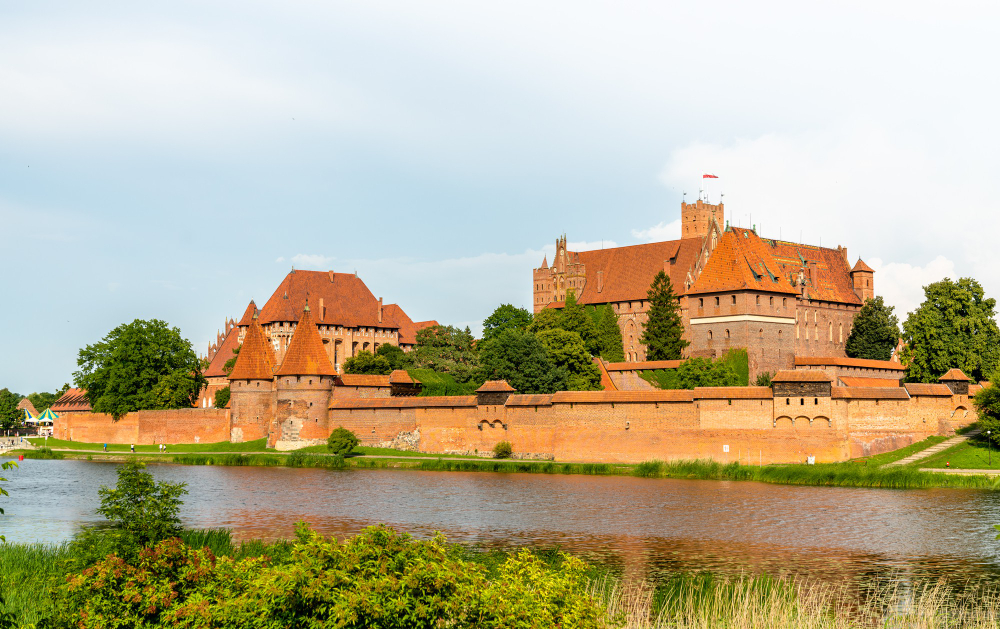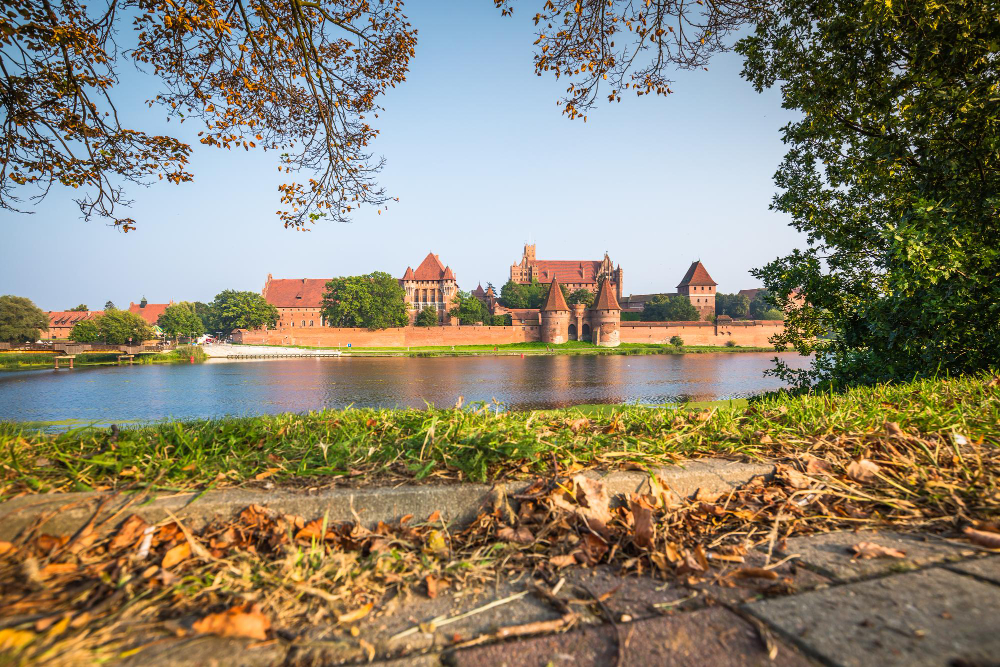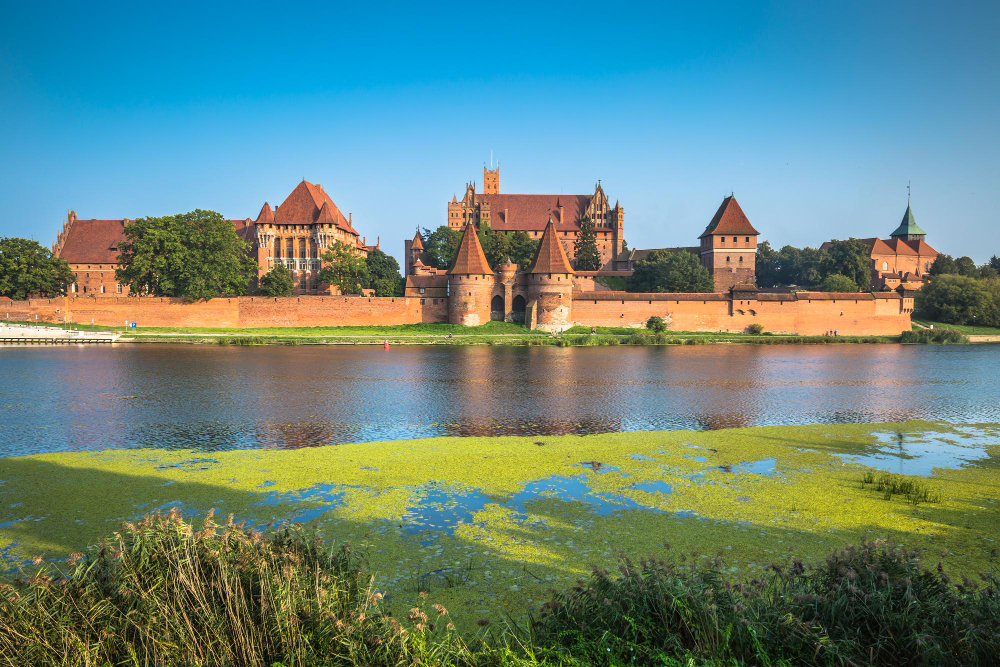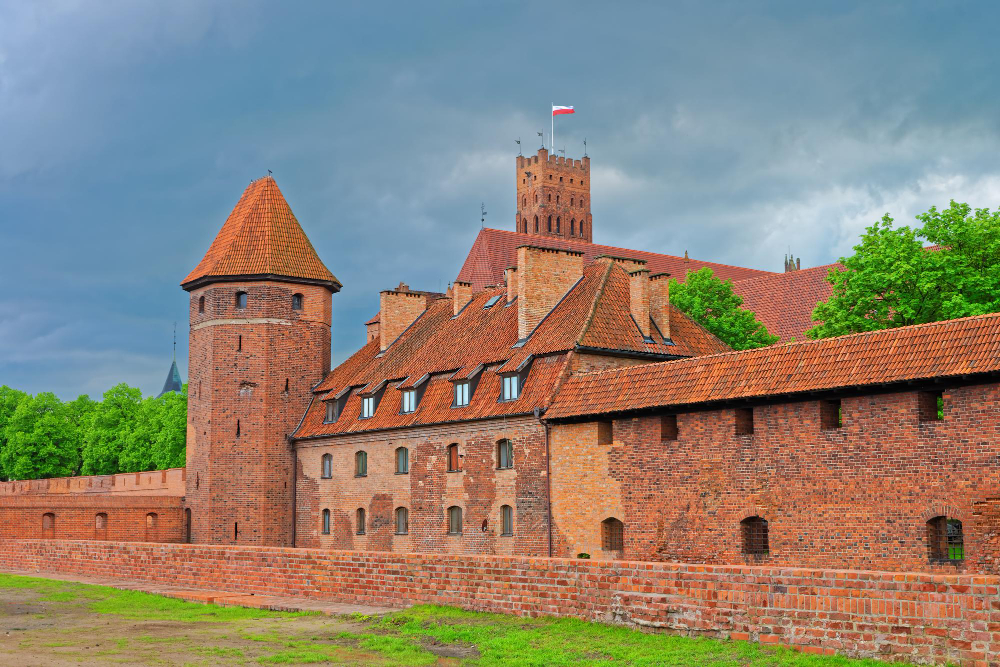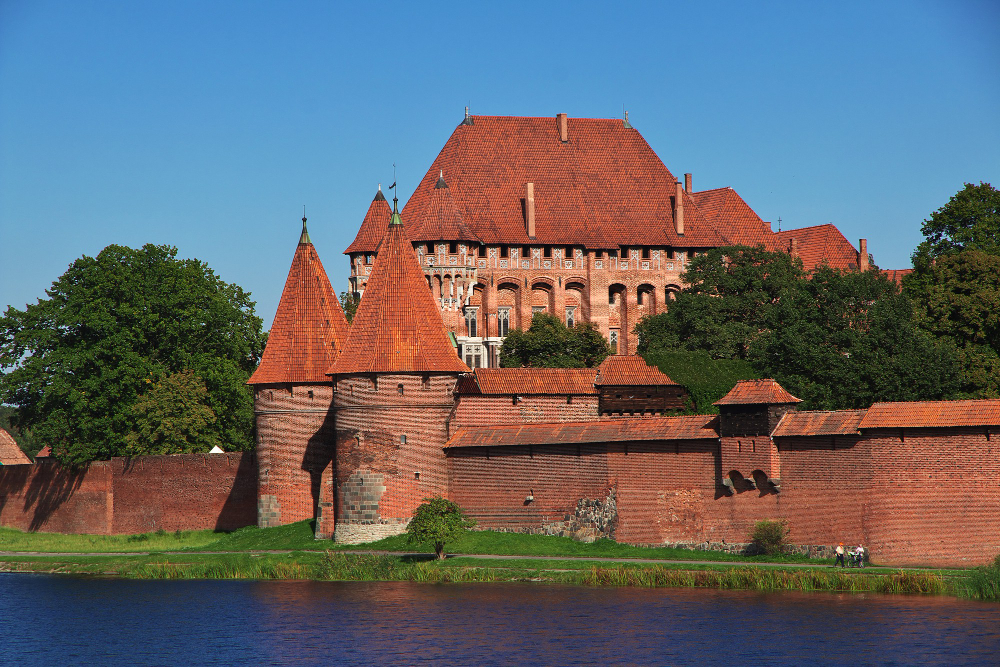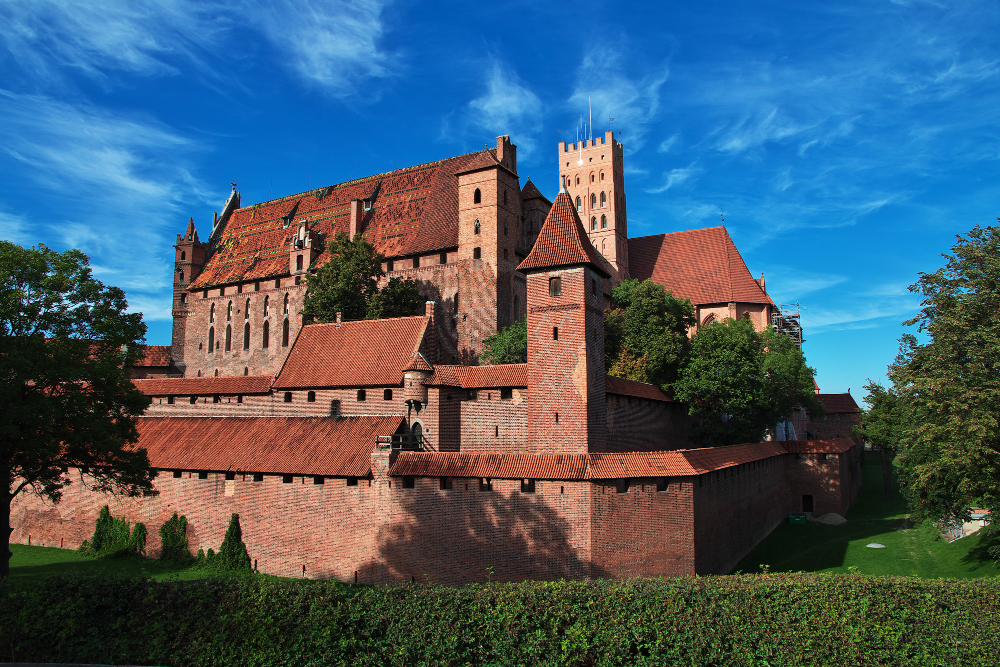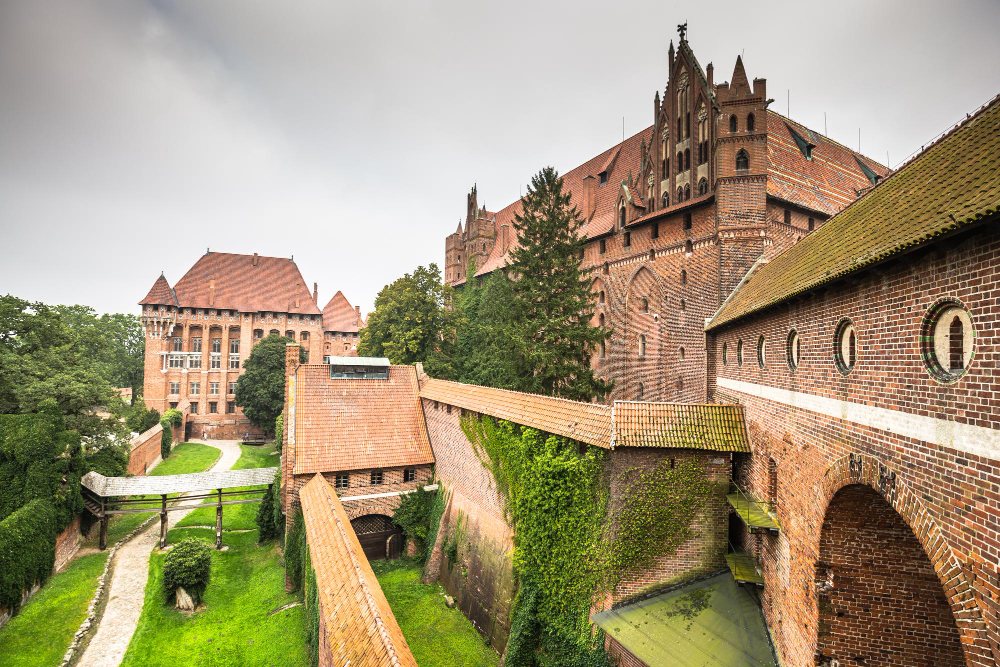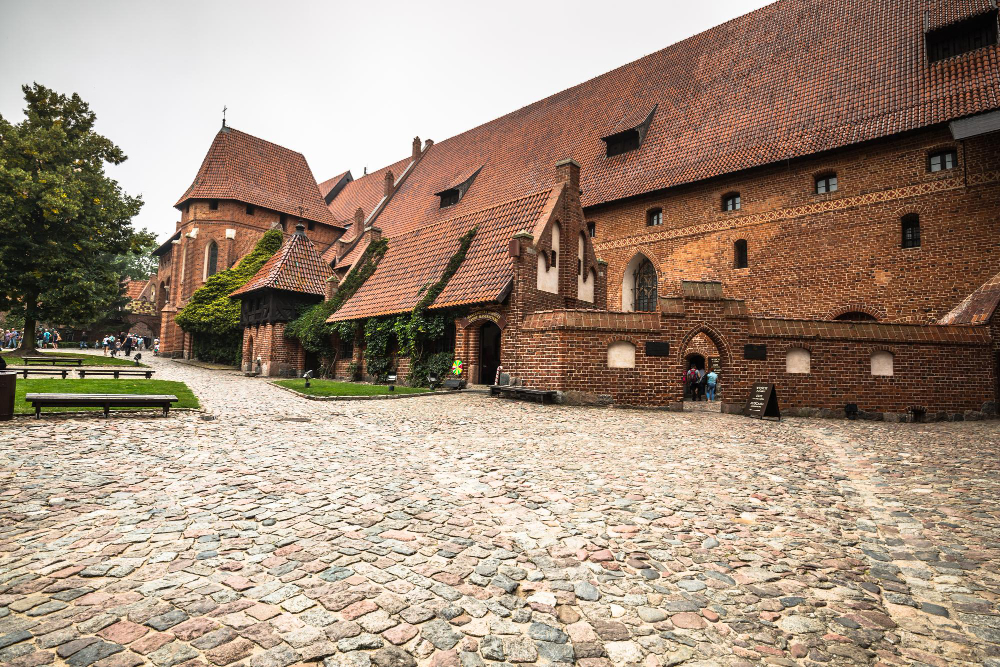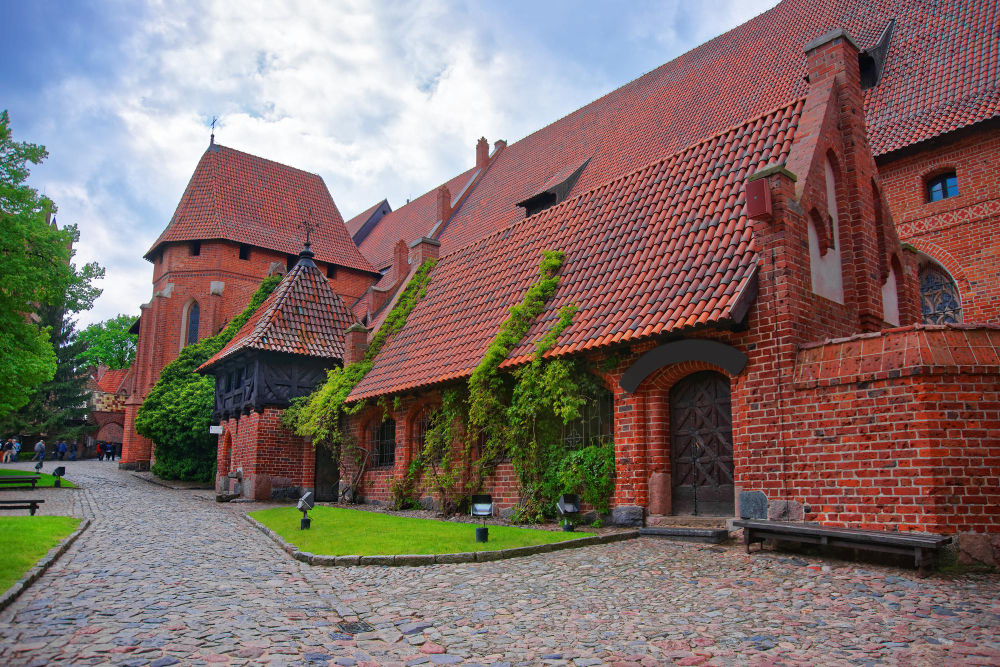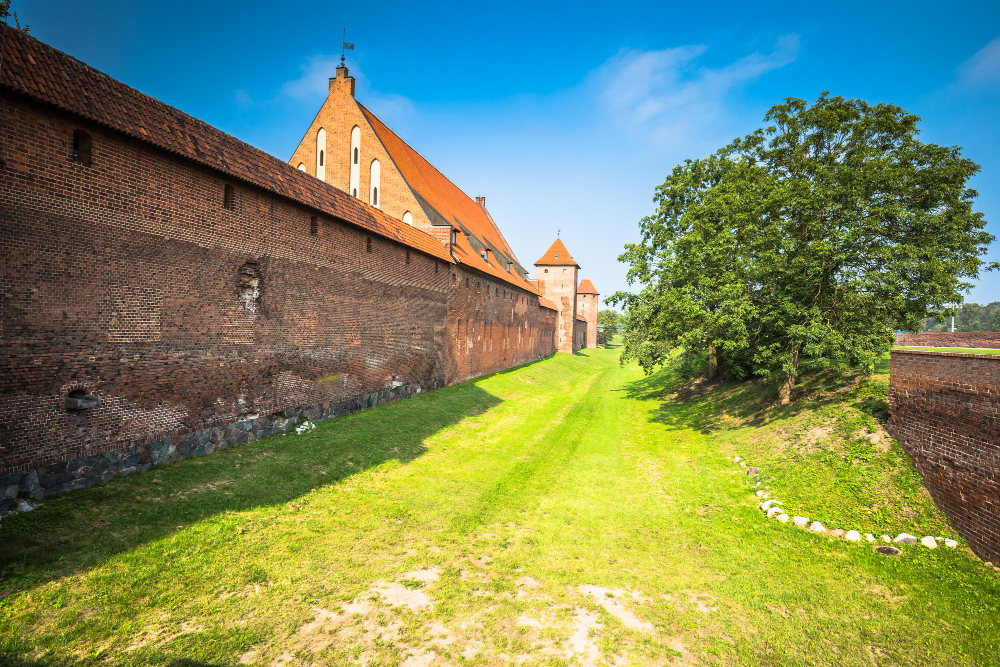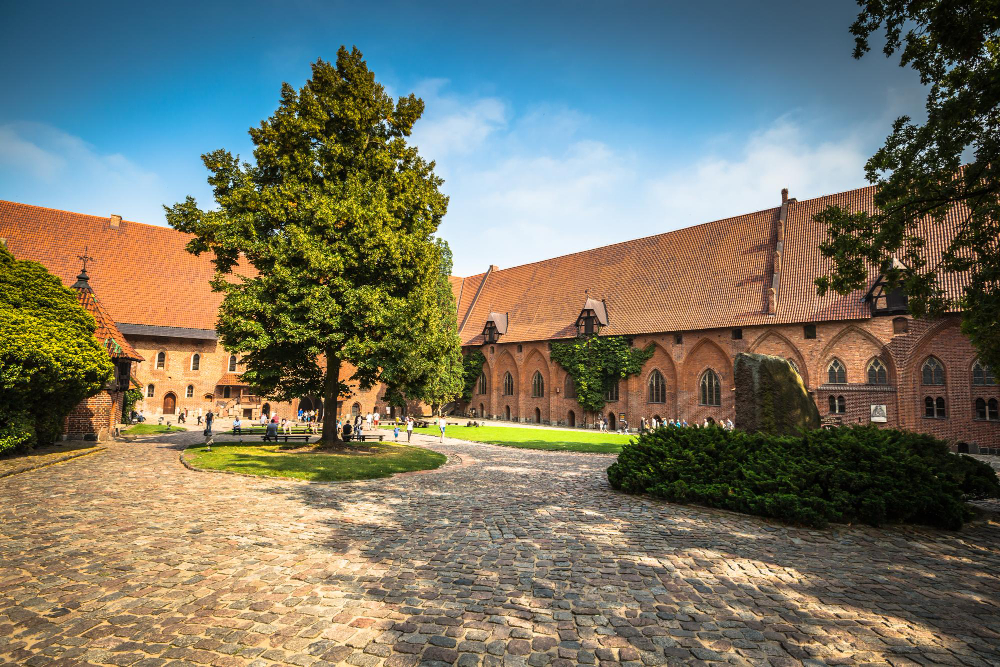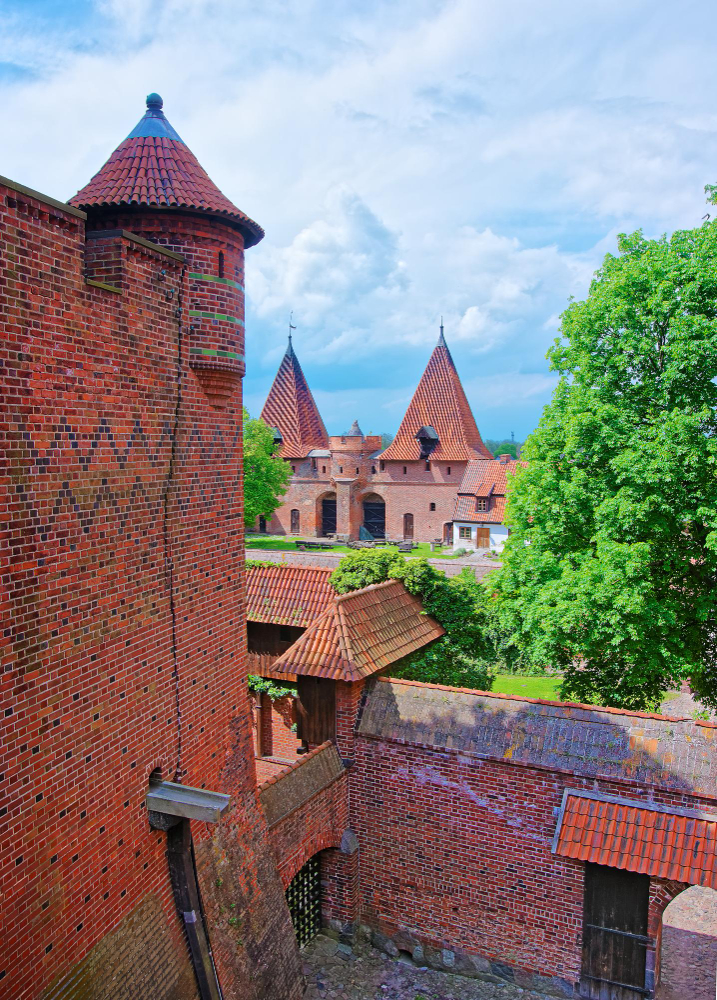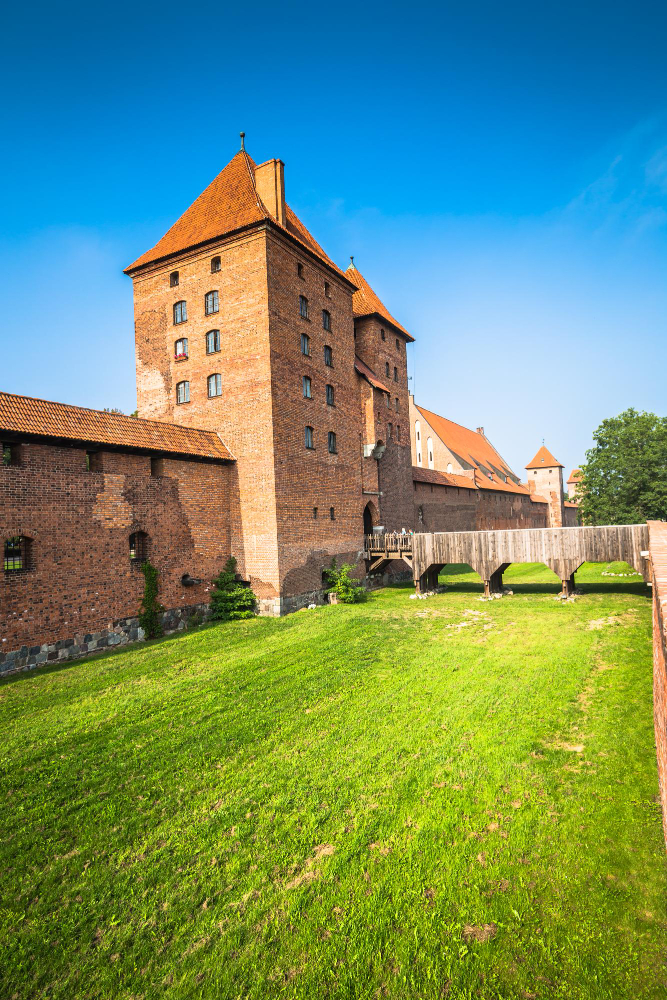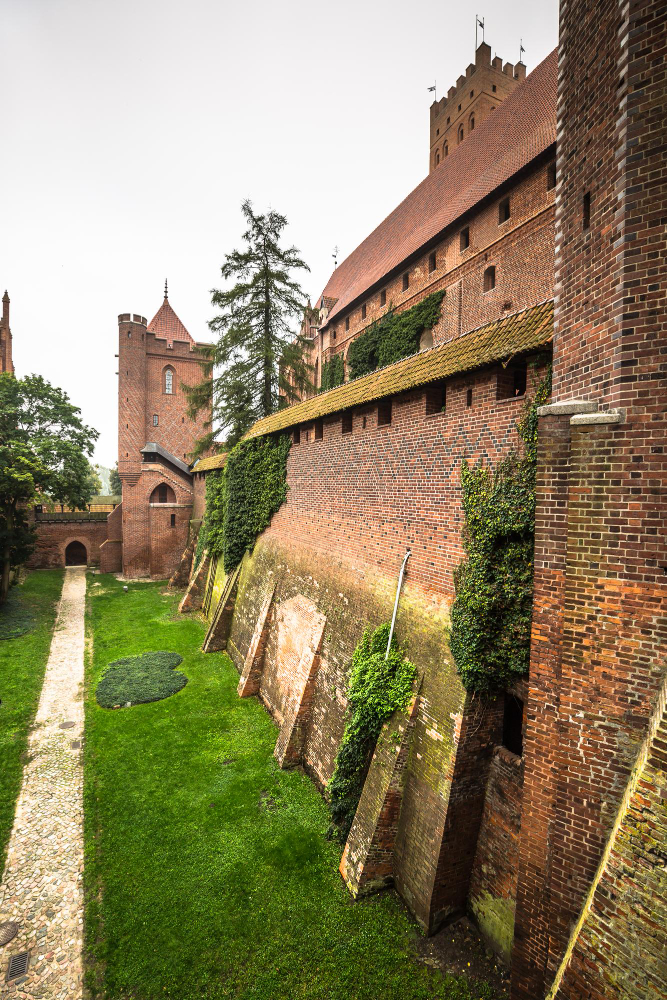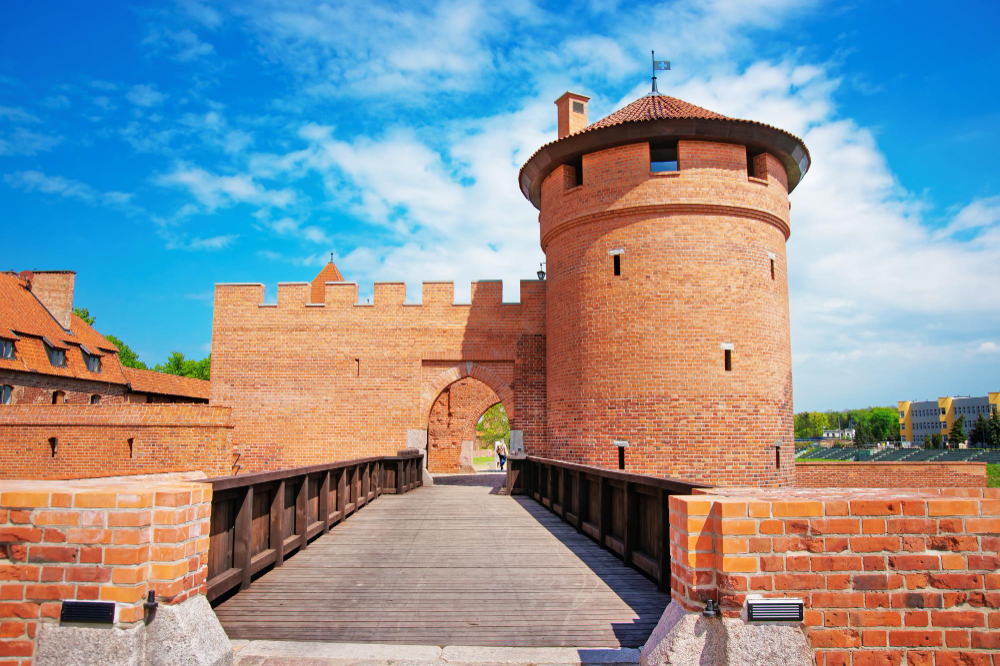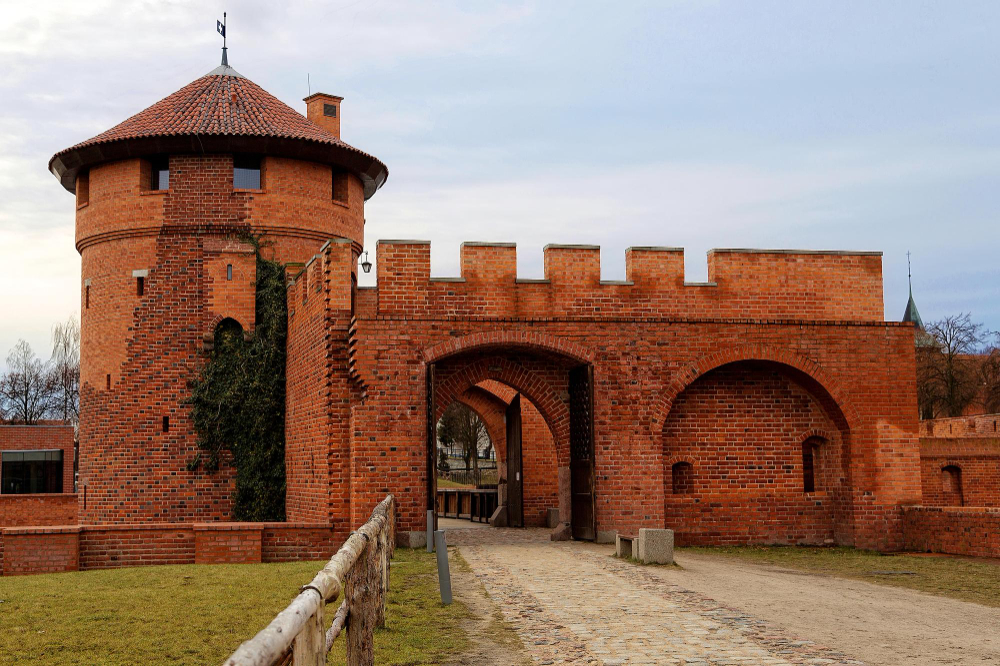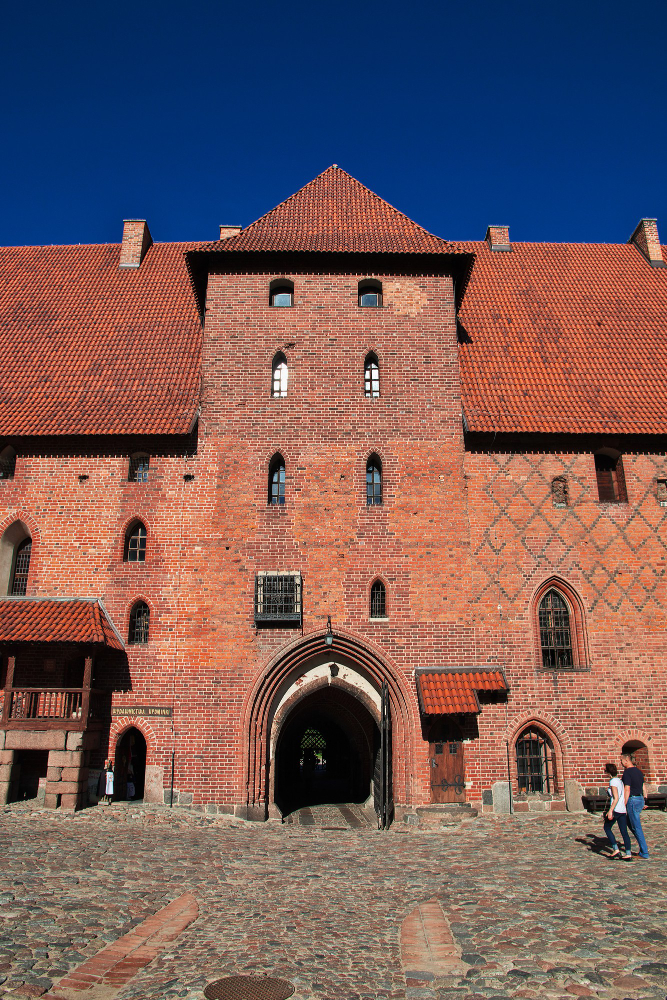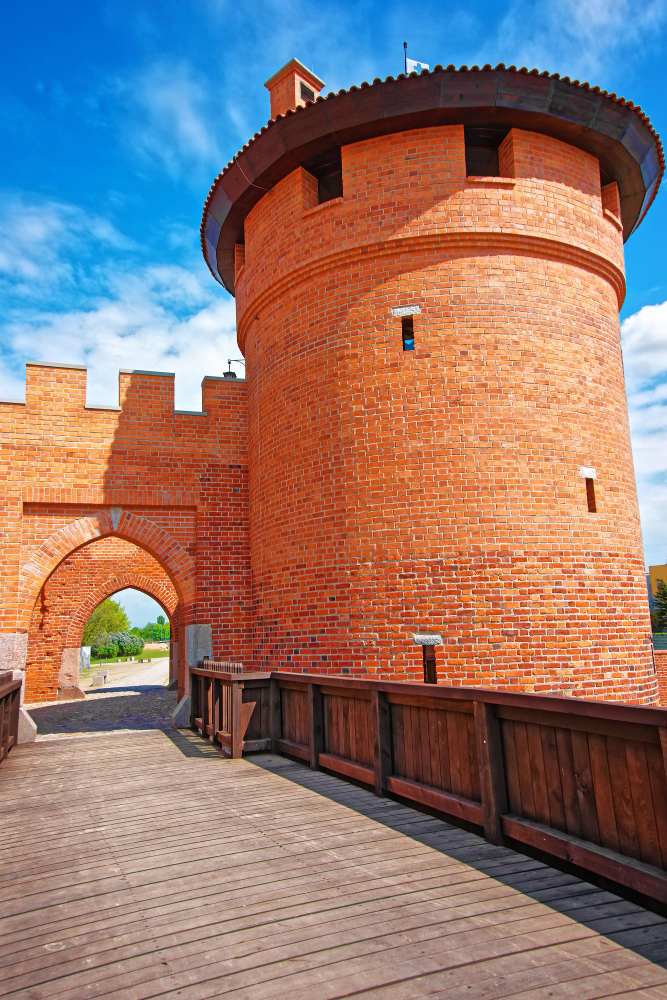
Malbork Castle, now known as ‘Zamek w Malborku’, stands in the Polish town of Malbork, not far from Gdańsk, and is an impressive testament to medieval architecture. Its history dates back to the 13th century, when it was built by the Teutonic Order. Originally constructed as the seat of the Landmaster, the castle later became the headquarters of the Grand Masters of the powerful Order’s state. Over the centuries, it has been the scene of numerous historical events, whilst legends and stories have become interwoven with its walls. This article explores the development and significance of Malbork Castle, its architectural features, and the fascinating legends surrounding this unique structure.
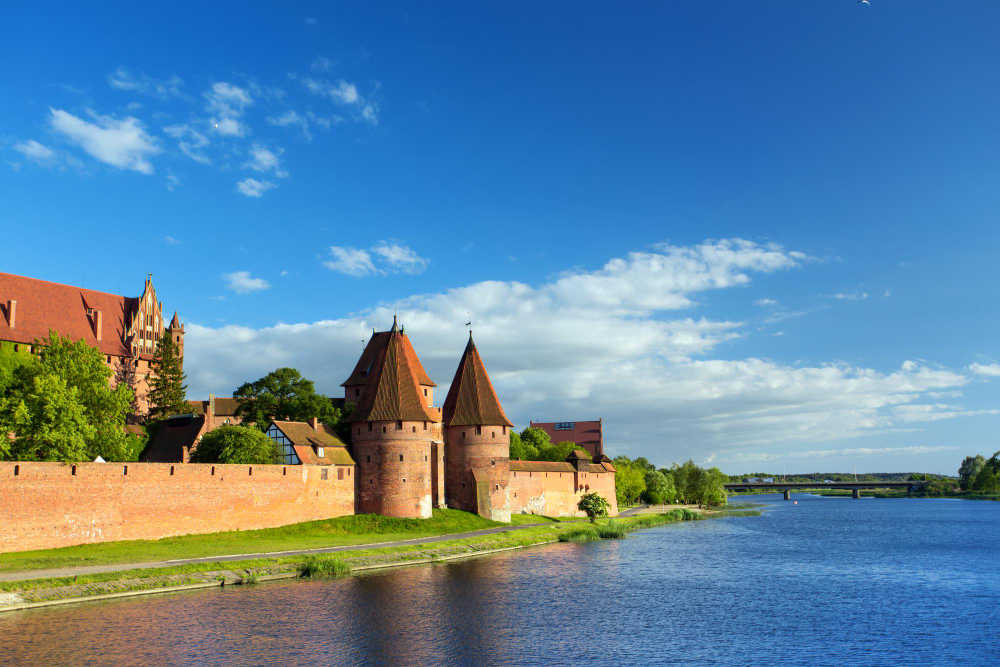
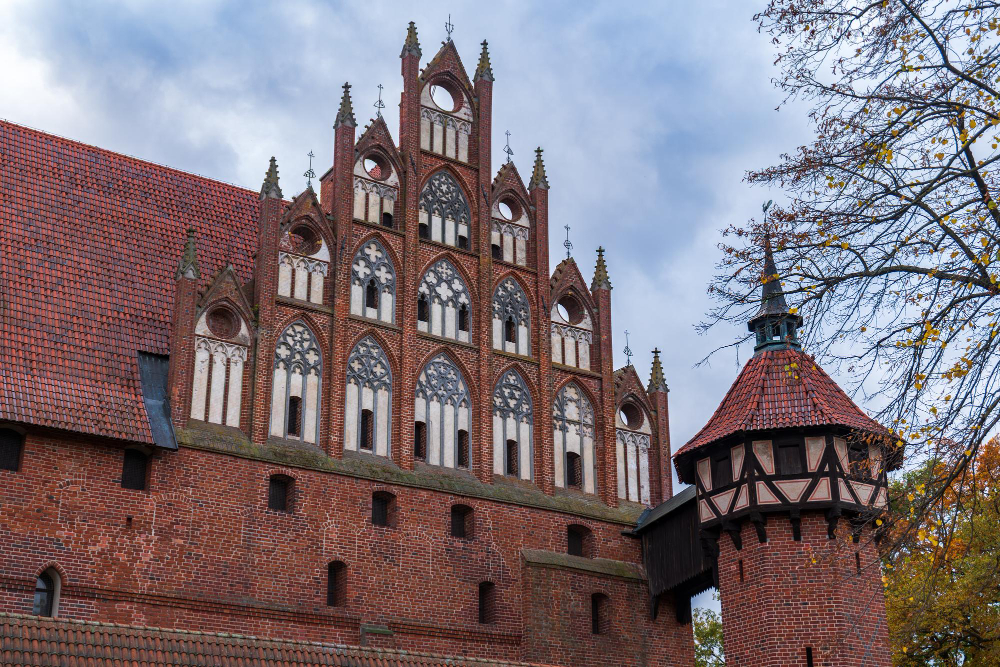
The origins of Marienburg – the patron saint Mary and a strategic stronghold – The founding of Marienburg coincided with the Teutonic Order’s expansion eastwards. As part of the Christianisation of the region, the Order had a fortress built between 1270 and 1300 on the banks of the Nogat, a tributary of the Vistula. The castle was named in honour of the Order’s patron saint, the Virgin Mary. After the Order had lost its main stronghold in the Holy Land and Acre, the last stronghold of the Crusaders, had finally fallen, Grand Master Siegfried von Feuchtwangen moved the Order’s headquarters from Venice to Marienburg in 1309. This marked a turning point in the castle’s history; from then on, it served as the political and religious centre of the Order’s state. Over the years, the fortress was expanded and adapted to the Order’s growing needs. The construction of St Mary’s Church, begun in 1344 under Grand Master Dietrich von Altenburg, lent the Upper Castle a representative and, at the same time, spiritual dimension. Particularly noteworthy is the colourful statue of the Virgin Mary, which once adorned the outer wall of the church. This statue, regarded as a symbol of Marienburg’s protection, was destroyed in 1945 and only rebuilt in 2016.
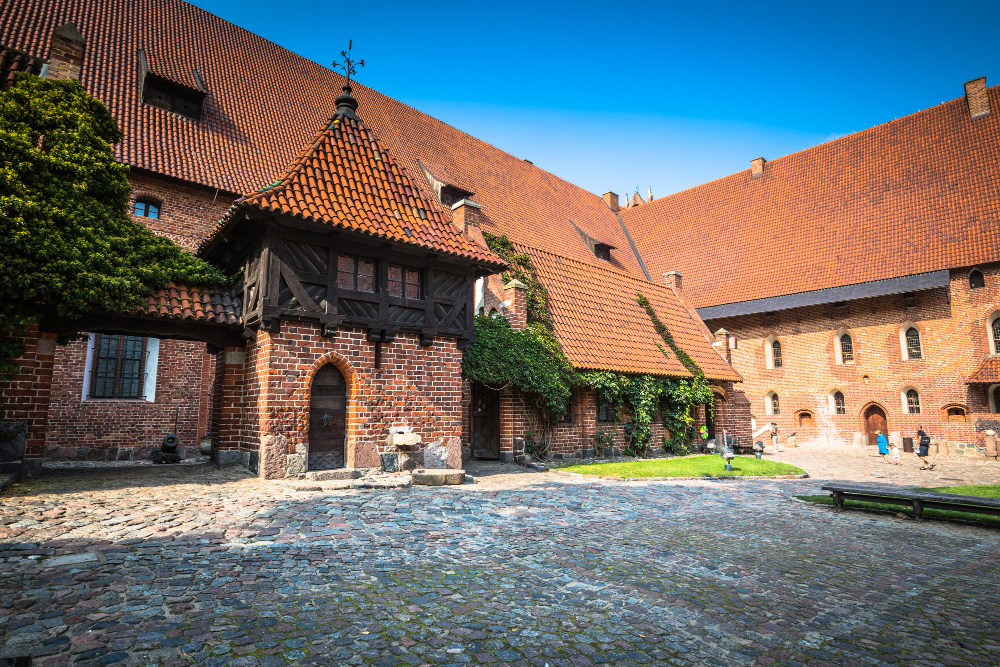
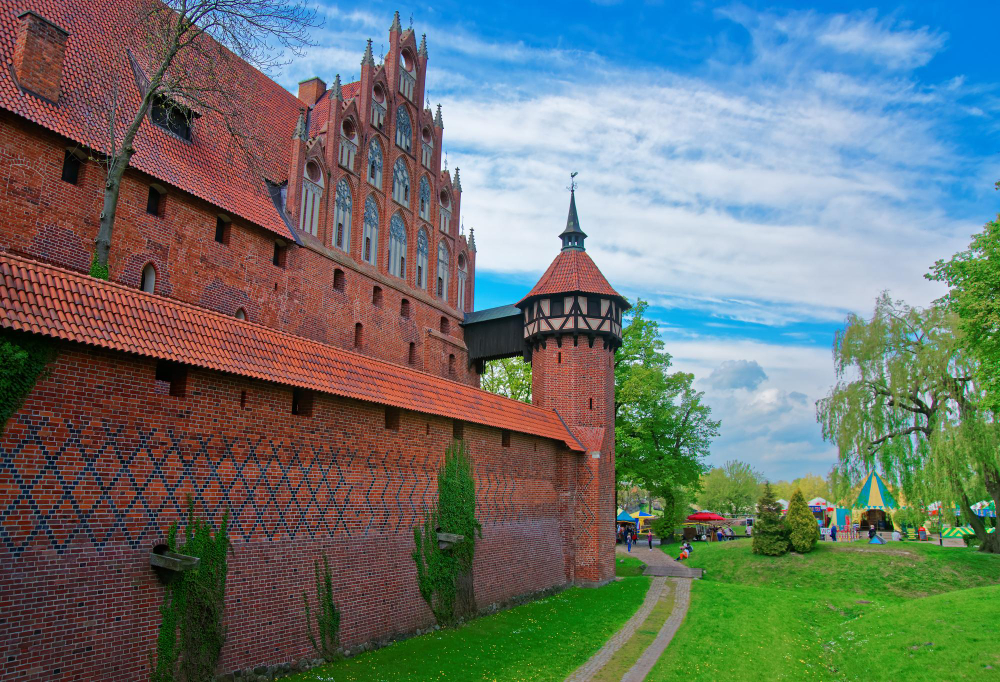
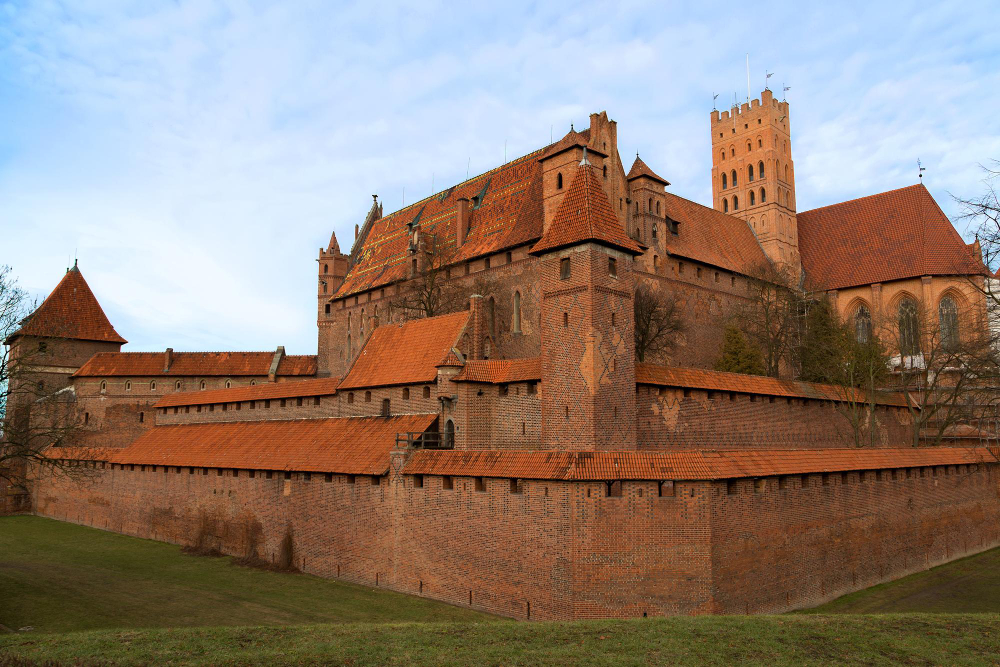
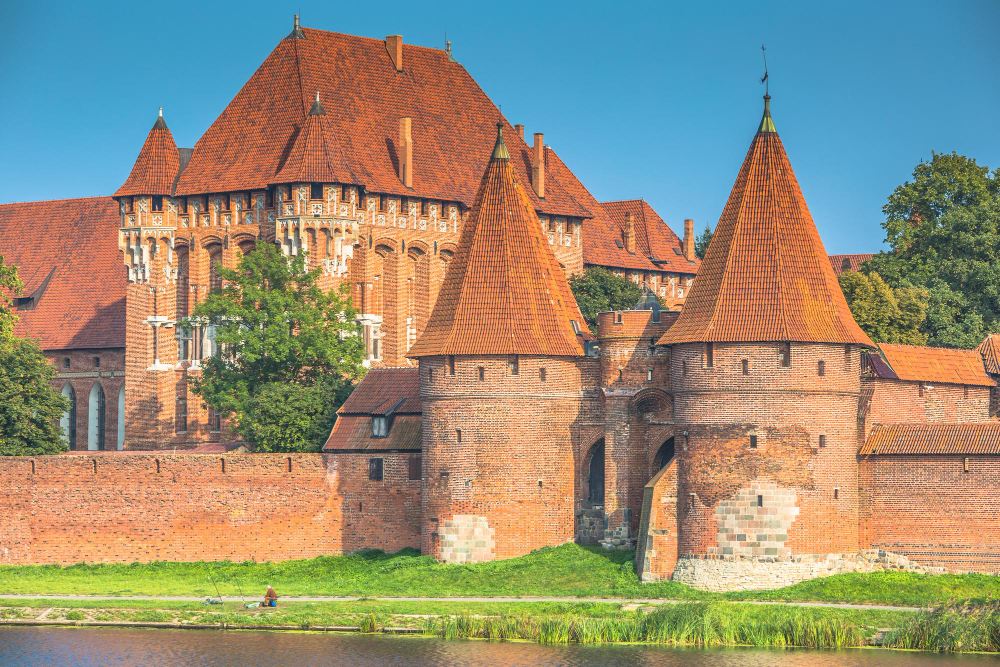
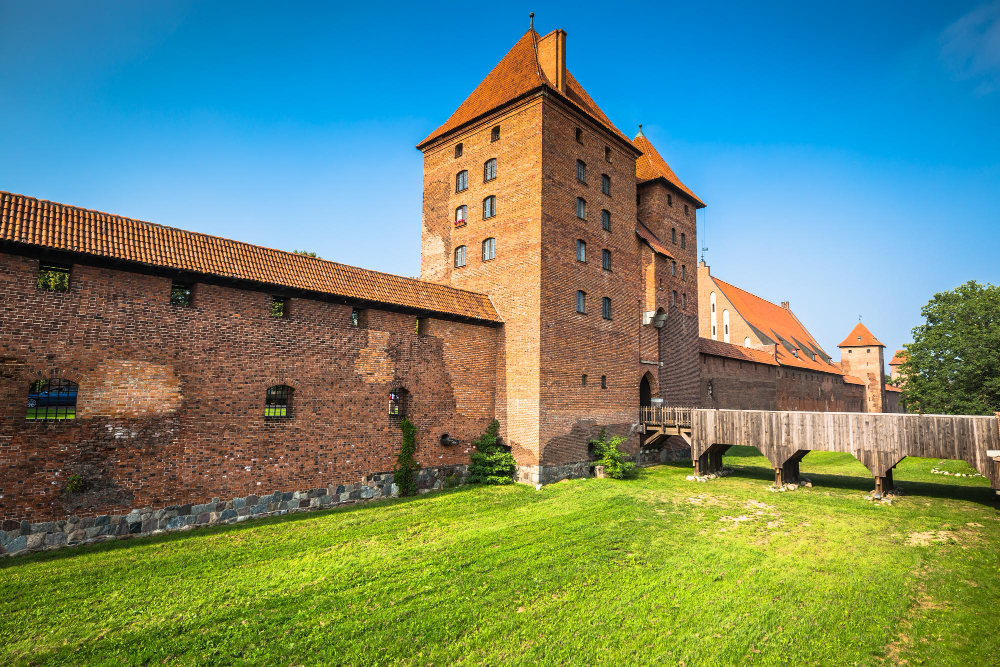
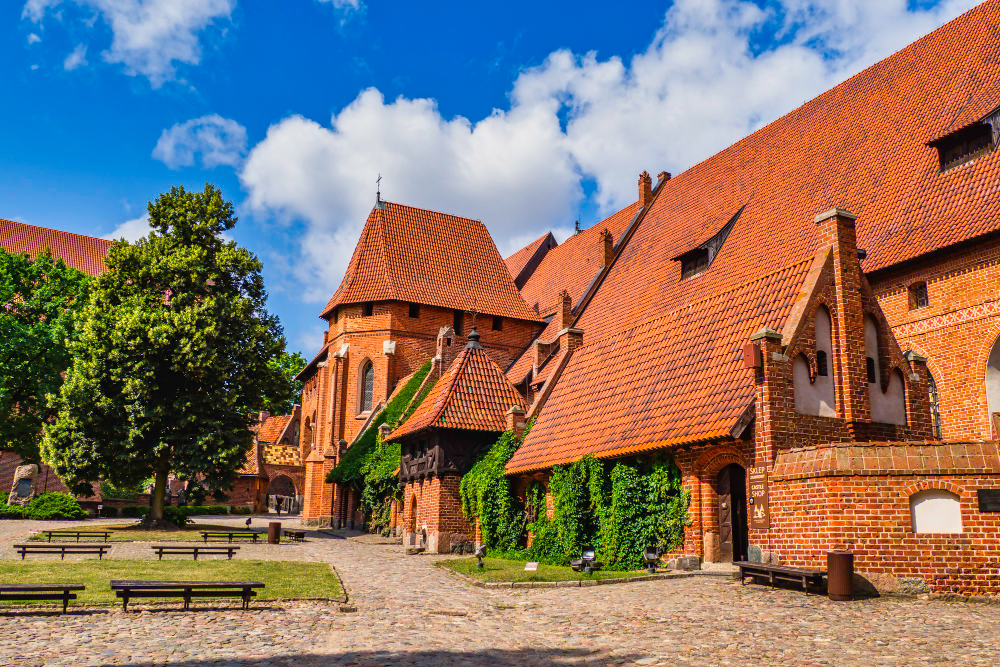
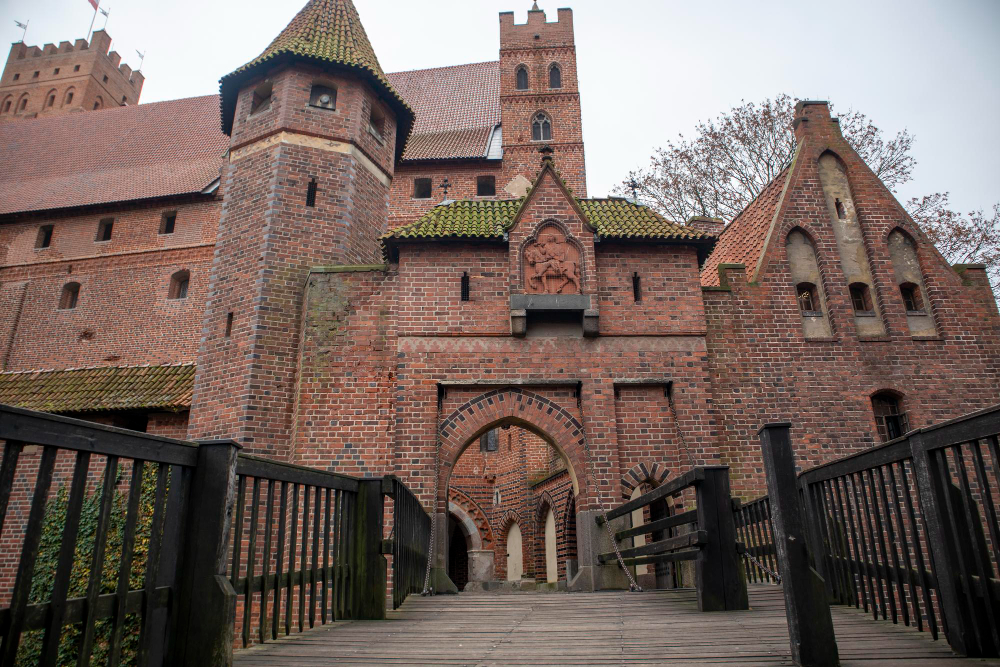
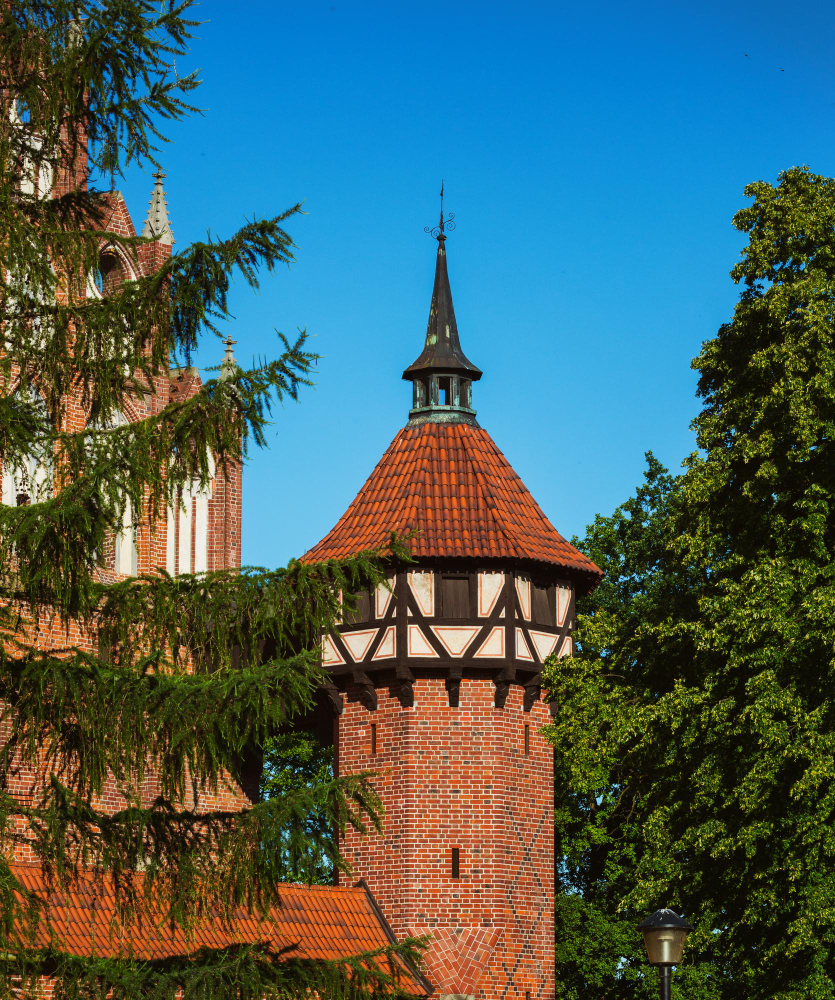
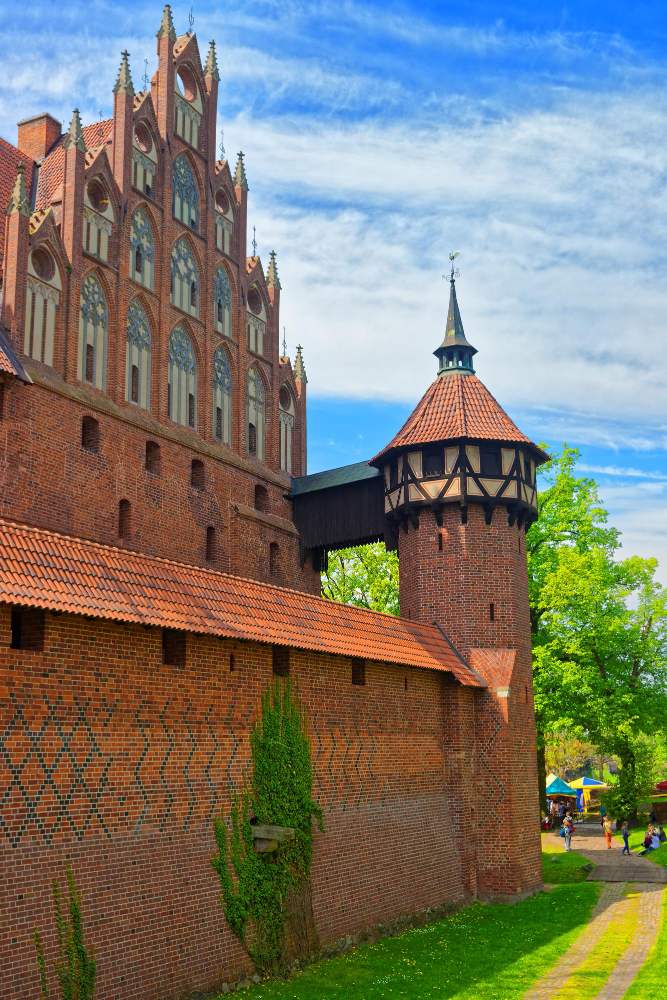
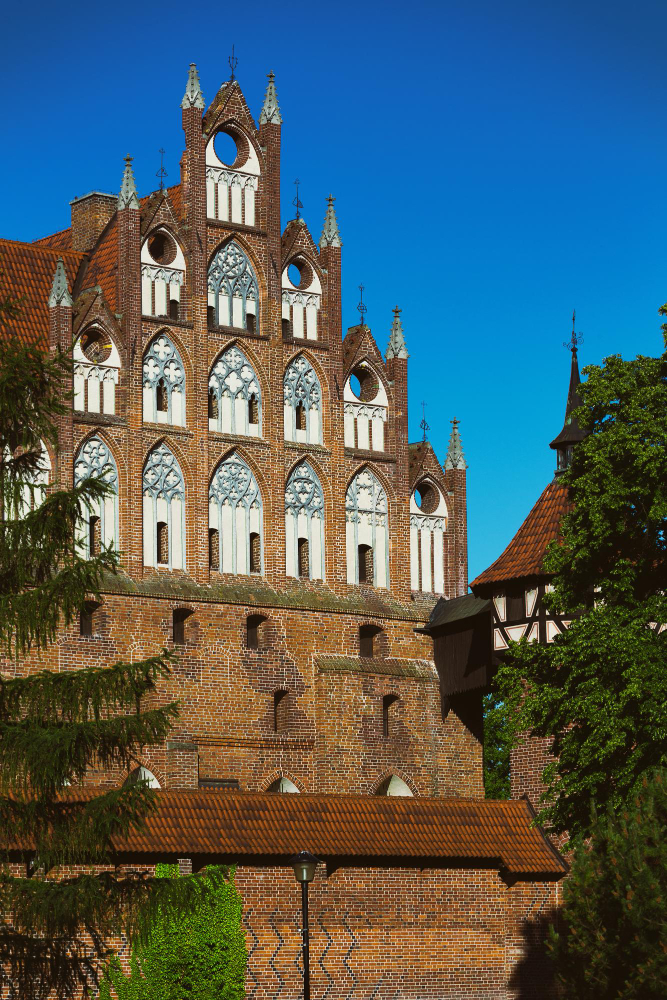
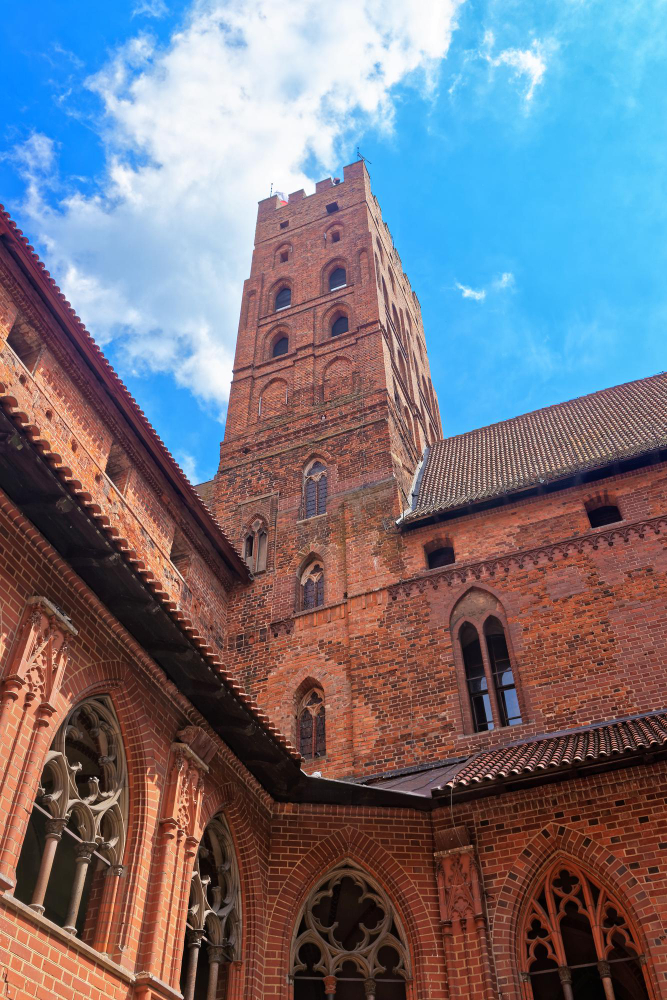
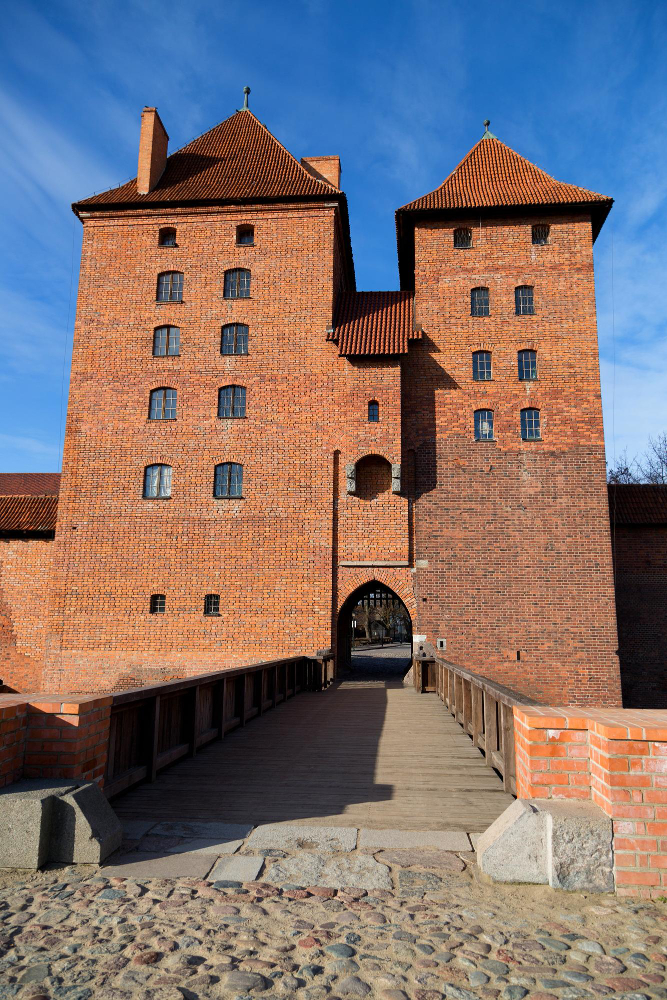
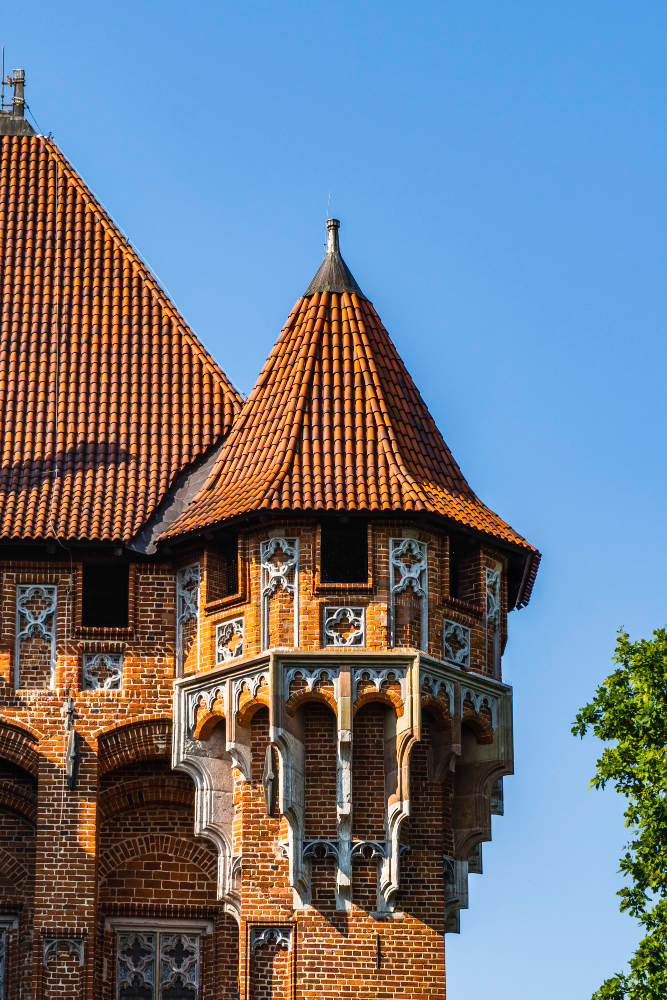
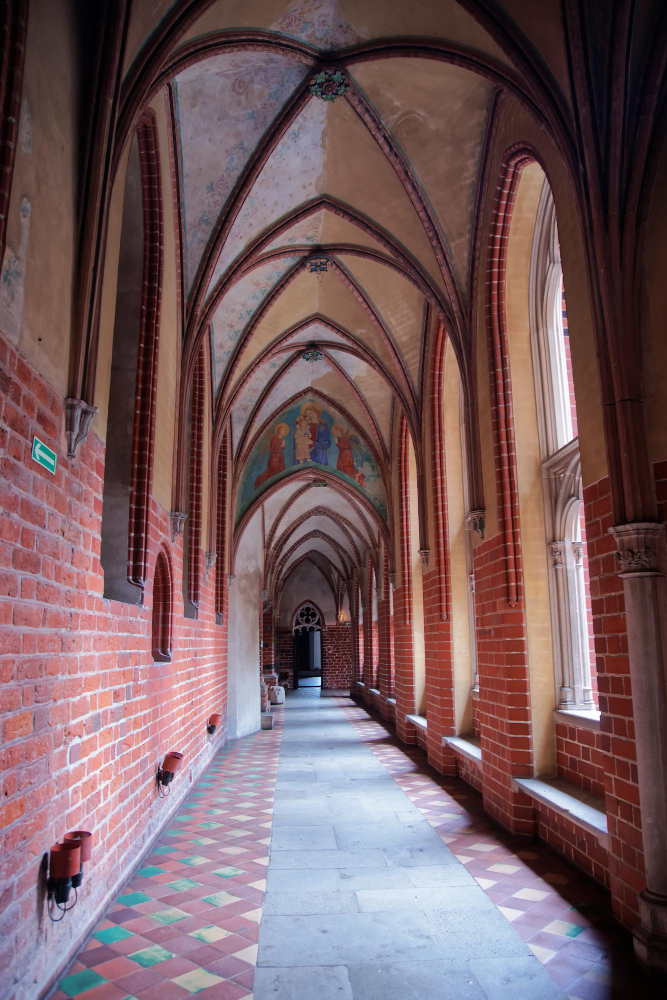
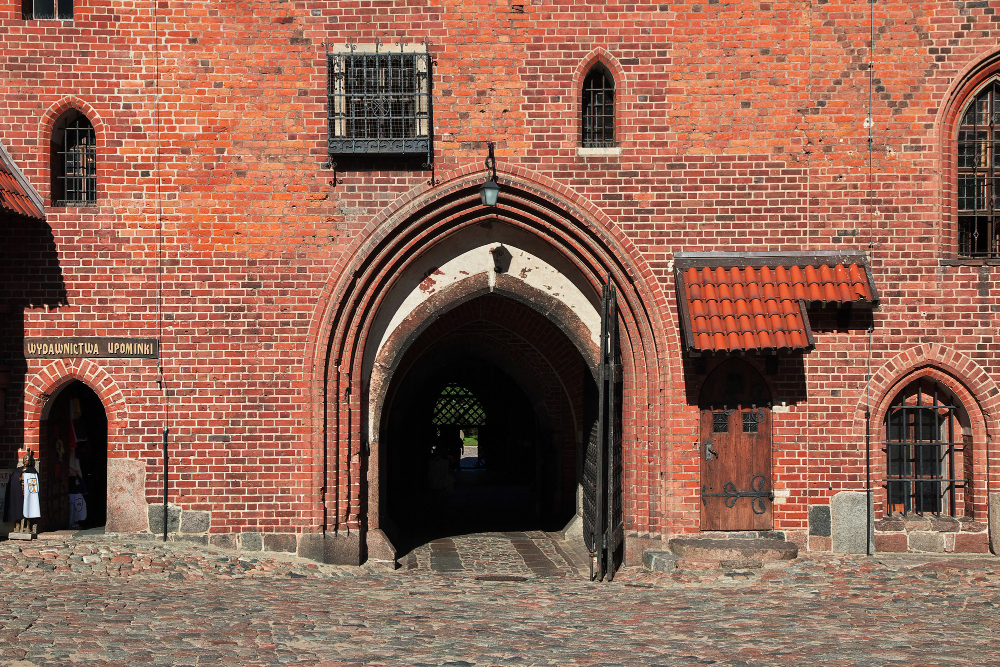
Architectural highlights: The Upper Castle and the Grand Master’s Palace – Marienburg Castle is a masterpiece of Brick Gothic architecture and consists of several parts – the Lower Castle, the Middle Castle and the Upper Castle. Each of these areas fulfils specific functions and is characterised by a unique architectural design. The Upper Castle, the oldest part of the fortress, served as accommodation for the Knights of the Order and was originally a simple four-winged building with a chapel and a chapter house. The star-shaped vaults of the summer and winter refectories bear witness to the architectural skill of that era; each is supported by a single delicate granite column, creating impressive interior spaces. Another architectural highlight is the Grand Master’s Palace in the Middle Castle. Completed around 1400, it combines Low German Gothic and Italian architectural styles with Flemish-Burgundian design traditions. This imposing secular building served as the Grand Master’s residence and, at the same time, embodied the Order’s international prestige. Particularly noteworthy are the large window fronts and the elegant granite columns, which made the building a model for later construction projects. An extraordinary architectural feature is the so-called ‘Dansker’, a toilet tower connected to the Upper Castle via a passageway. It also served as the western cornerstone of the fortifications and was indispensable for hygiene within the castle.
Storms of History – Conquests, Surrenders and Destruction – The history of Marienburg is marked by military conflicts. One of the most famous events is the siege of the castle in 1410 by the troops of the Polish King Władysław II Jagiełło, following the crushing defeat of the Teutonic Order at the Battle of Tannenberg. Although vastly outnumbered, the then Grand Master Heinrich von Plauen succeeded in defending the fortress against the attackers. However, Marienburg was unable to fulfil its role as the Grand Master’s seat in the long term. During the Thirteen Years’ War (1454–1466), the Order ran into financial difficulties, forcing Grand Master Ludwig von Erlichshausen to pledge the castle to his own mercenaries. They eventually sold the complex to the Polish King Casimir IV, who subsequently moved in. From 1457 to 1772, the castle remained under Polish rule before passing into Prussian hands following the First Partition of Poland. During the Second World War, Marienburg Castle suffered severe damage. In 1945, it was destroyed by around 60 per cent during the fighting between the Wehrmacht and the Red Army. Reconstruction began immediately after the end of the war and continues to this day. In the process, the Polish restorers made a conscious decision to design new structural elements in a lighter, more modern style, in order to distinguish the original parts of the building from the restored sections.
Myths and Legends – Miracles and Warnings – Malbork Castle is not only a place of historical significance, but also a treasure trove of fascinating myths. A well-known legend tells of a stone from Jerusalem that was laid as the castle’s foundation stone. This stone is said to have come from the house where Christ celebrated the Last Supper, which is said to have bestowed divine protection upon the castle. In particular, the iconic statue of the Madonna is the subject of many stories. According to legend, the artist who created the statue identified so strongly with his work that he found peace whilst praying before the image. Other legends tell of attackers who desecrated the image of the Madonna and subsequently suffered divine punishment: one was struck blind, the other was fatally struck by his own arrow. Another story tells of two lovers who were turned to stone forever because of their forbidden feelings. This sombre tale reflects the strict moral standards of the Order, for whom Marienburg was intended to be a bastion of abstinence and discipline.
The significance of Marienburg today – Today, Marienburg Castle is a true jewel in Poland’s cultural and tourist landscape. With over 500,000 visitors a year, it is one of the country’s most popular attractions. This imposing UNESCO World Heritage Site is not only an architectural icon but also a symbol of German-Polish history and the complexity of their relations. In addition to its historical value, the complex houses several museums, including the Amber Museum, which displays exhibits on local history. There are two routes to explore the castle – a shorter option offers a general overview, whilst the longer guided tour provides deeper insights into its architecture and history. The impressive size and design of Malbork Castle, which is built from more than 30 million bricks, make it one of the largest castles in the world.
A European cultural heritage site of global significance – Malbork Castle is far more than just a historical site or tourist attraction – it is a living testament to Europe’s past and a bridge between cultures. The castle has survived wars, destruction and political upheavals, and has been brought back to life through the efforts of numerous people involved, including German, Polish and international experts. Today, it stands as a memorial symbolising both the horrors and the hope of European history. The legends speak of divine protection and love, whilst the majestic architecture reflects the power of one of the most significant orders of knights of the Middle Ages.