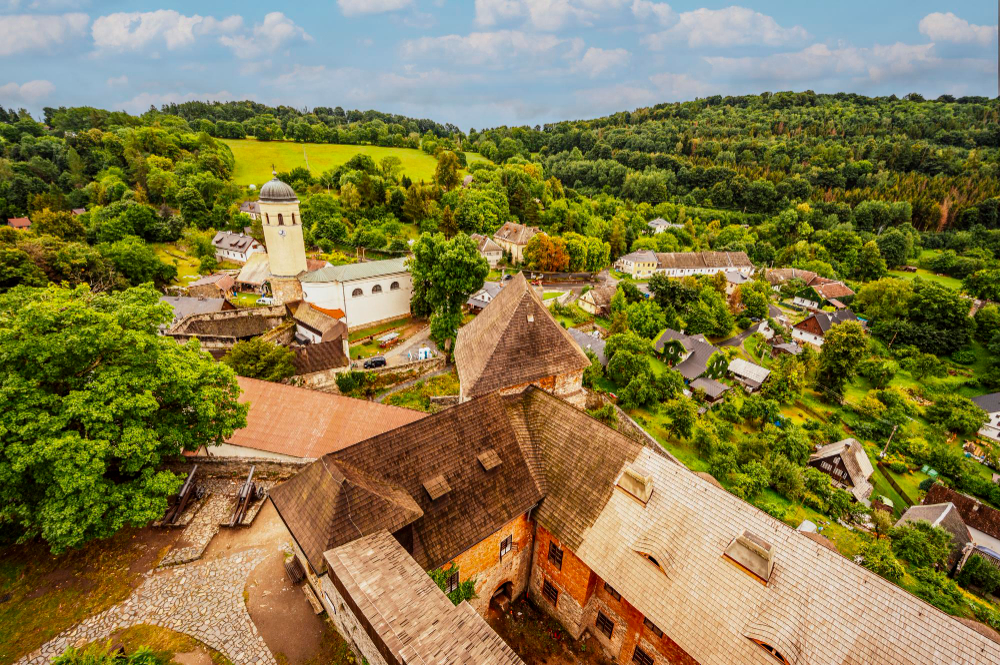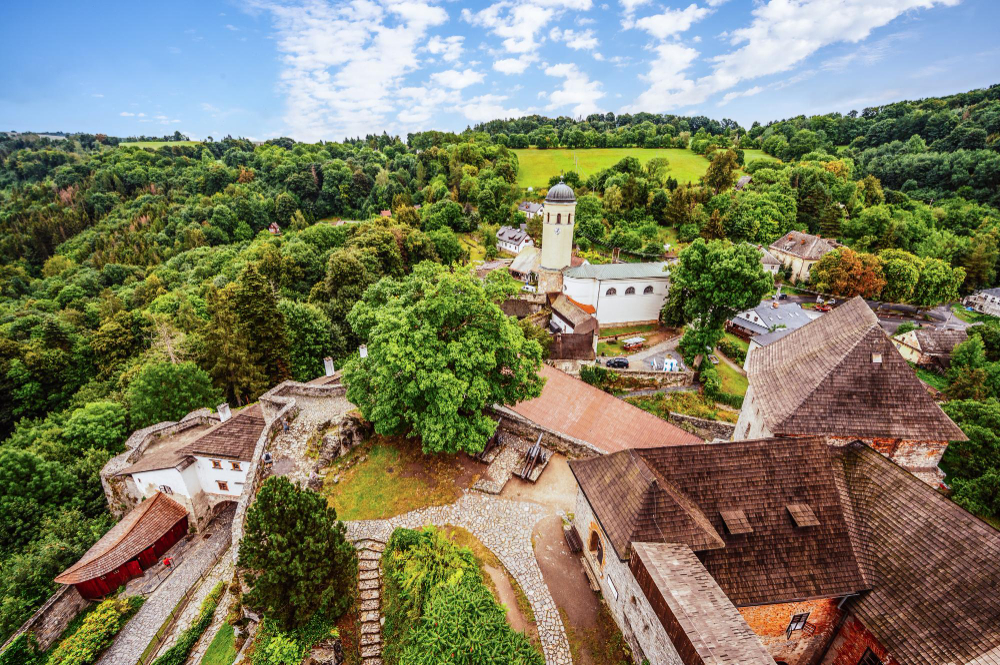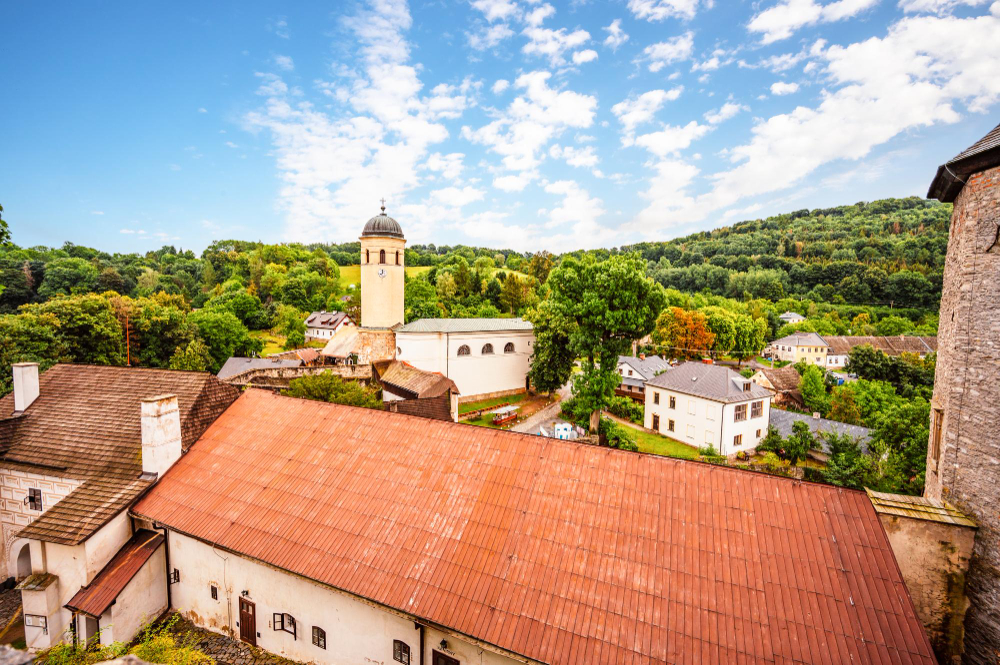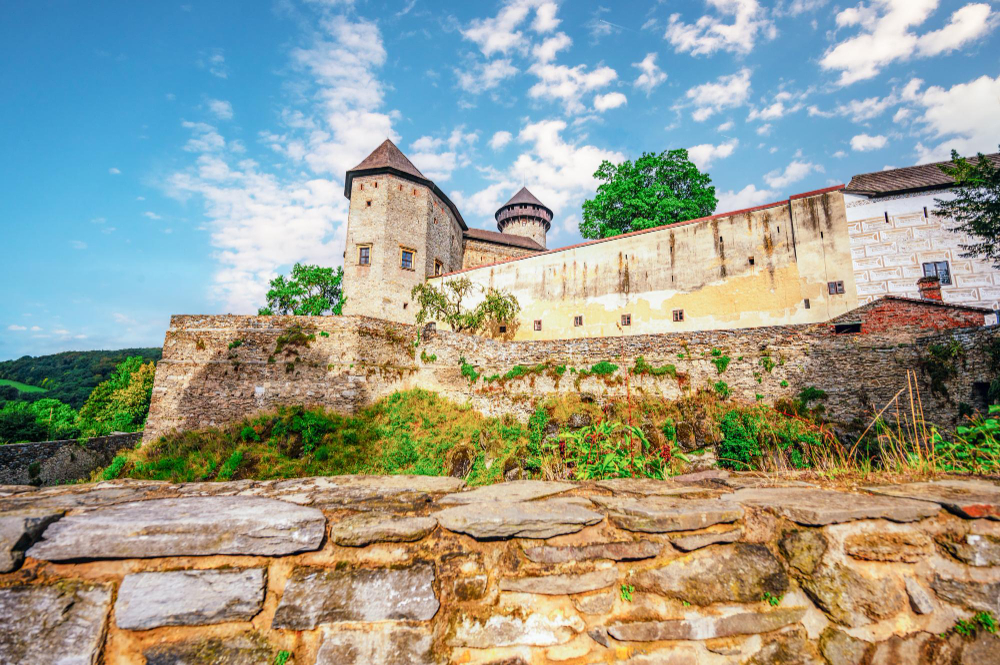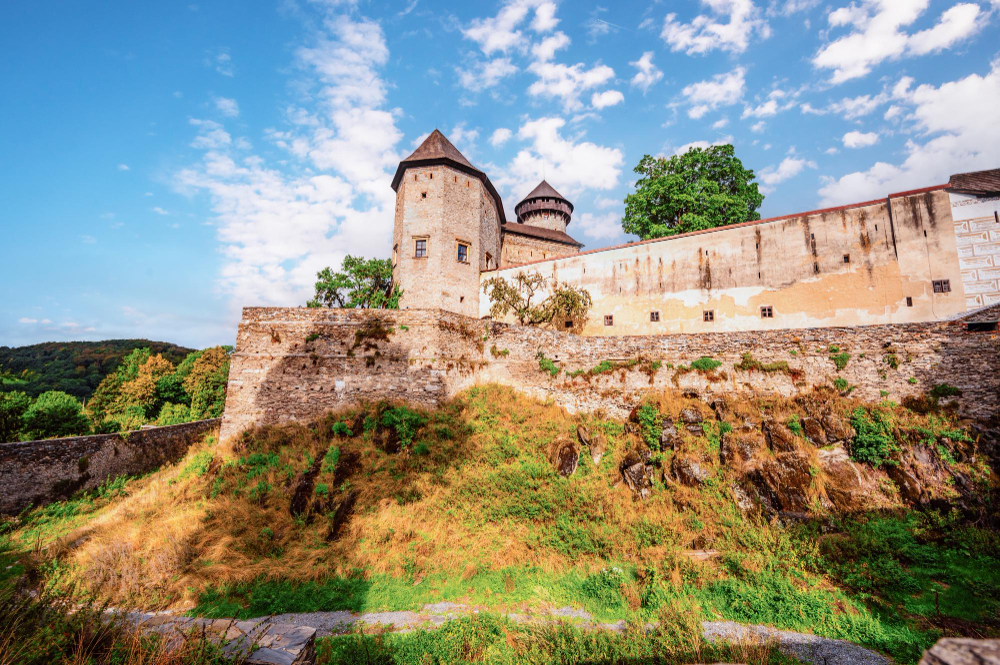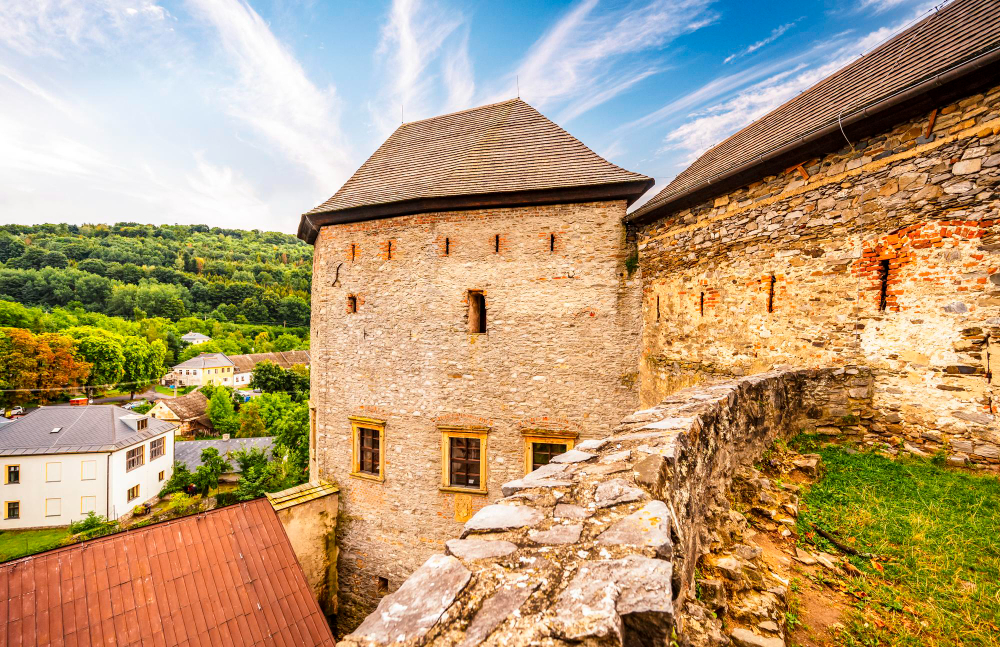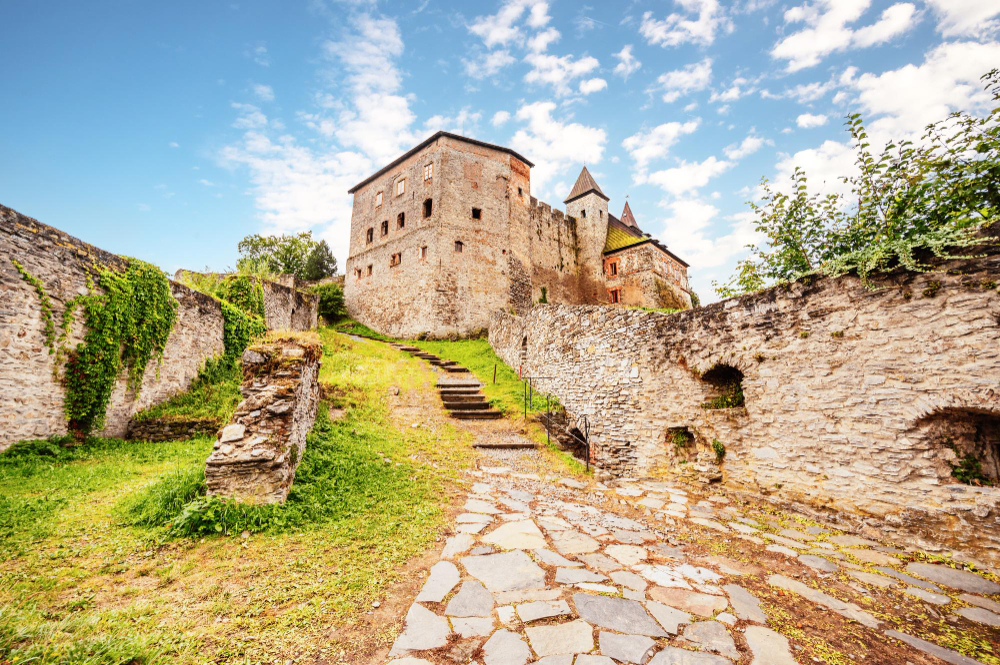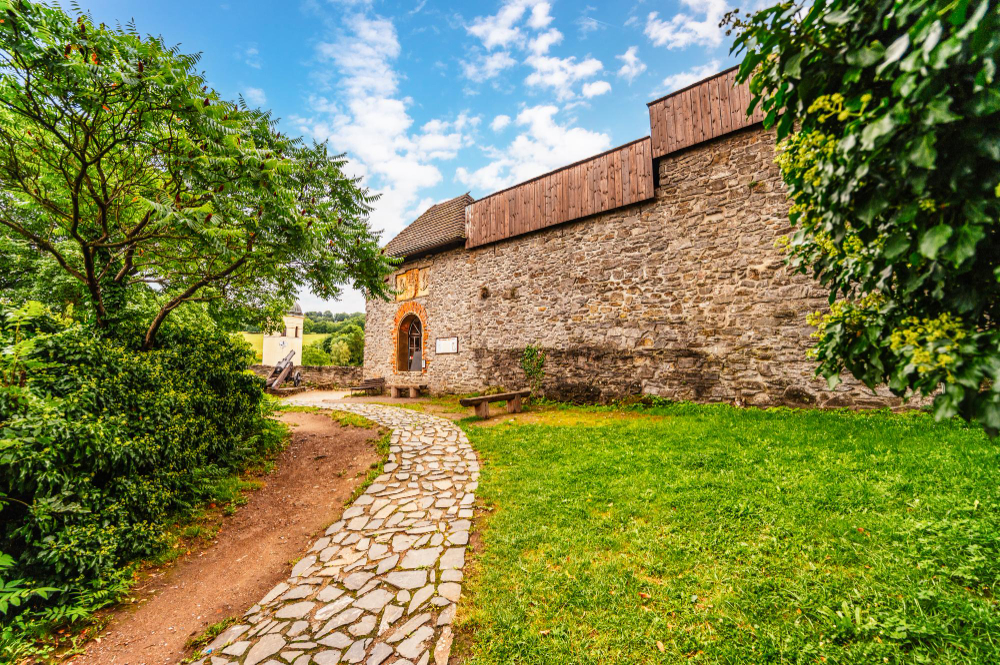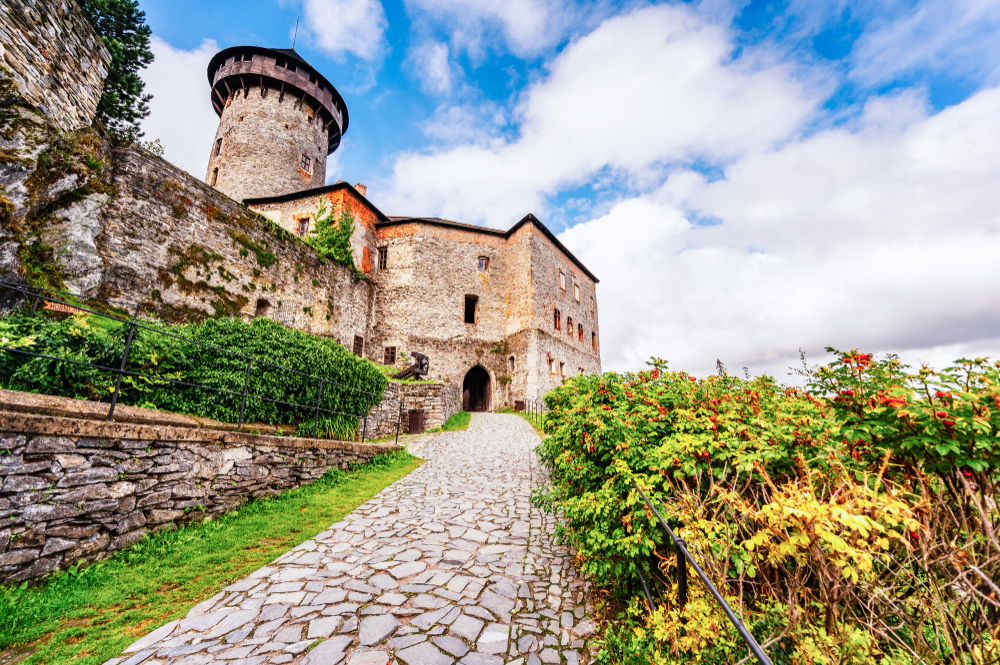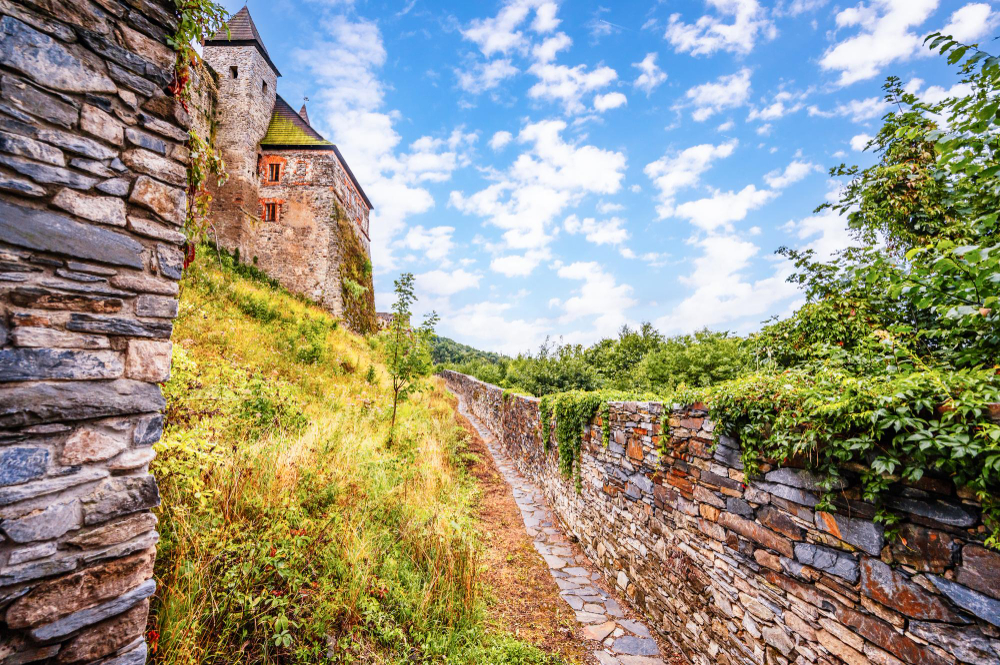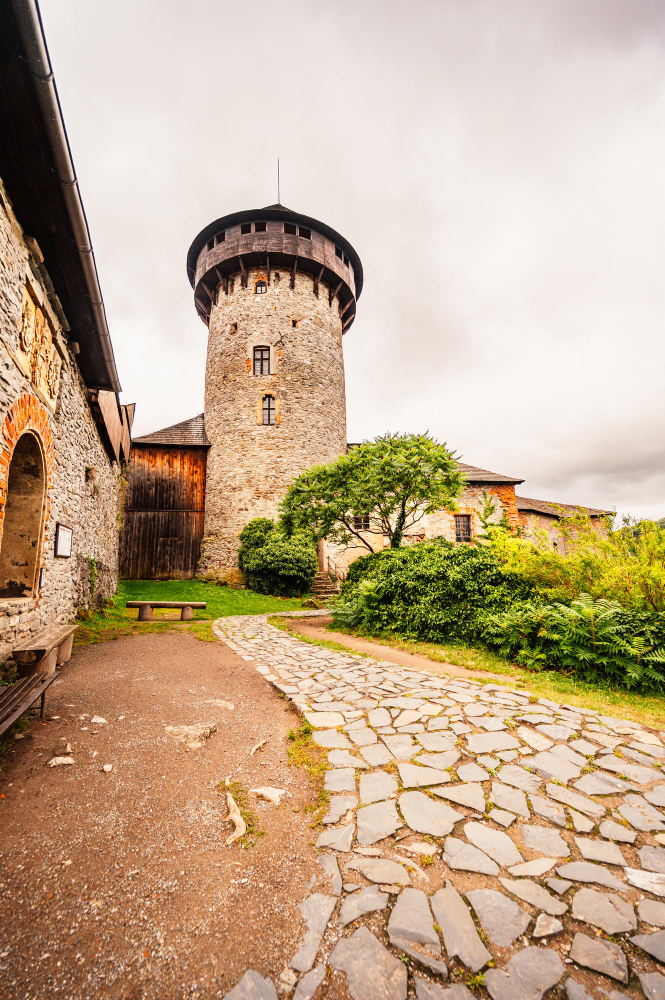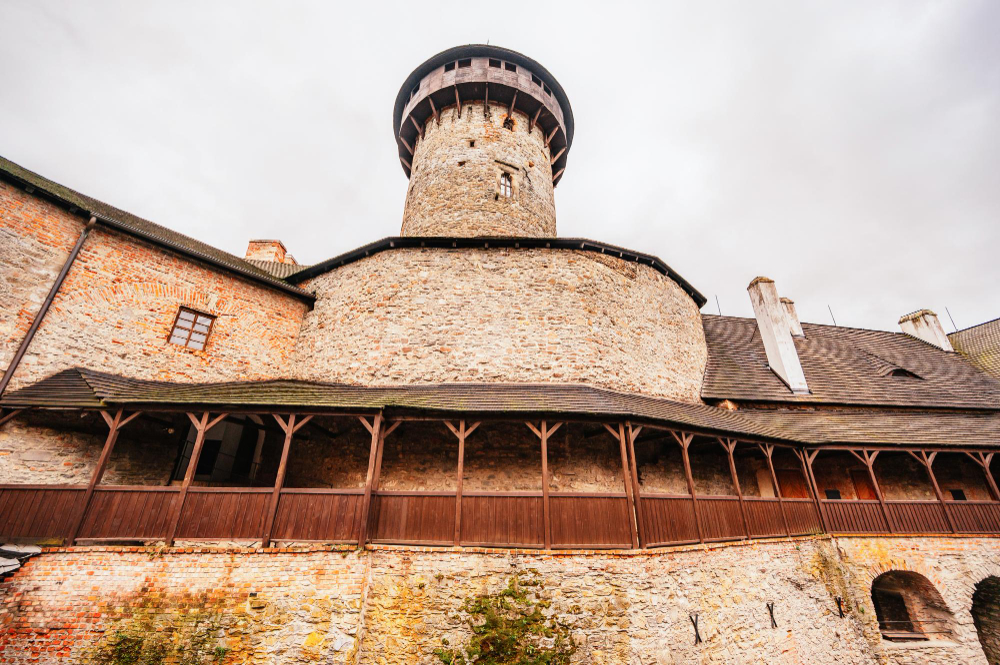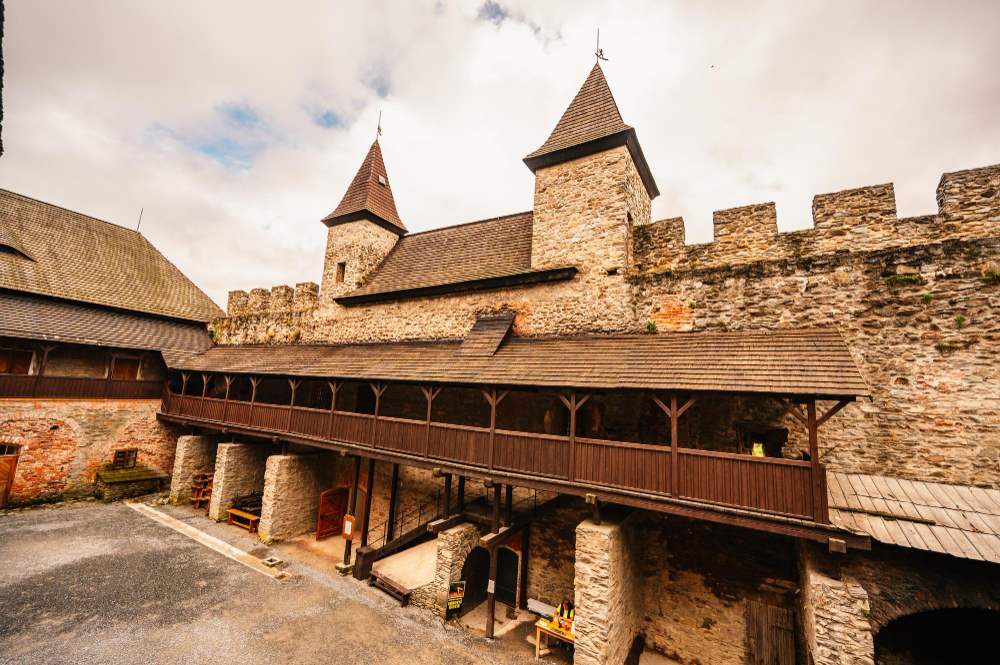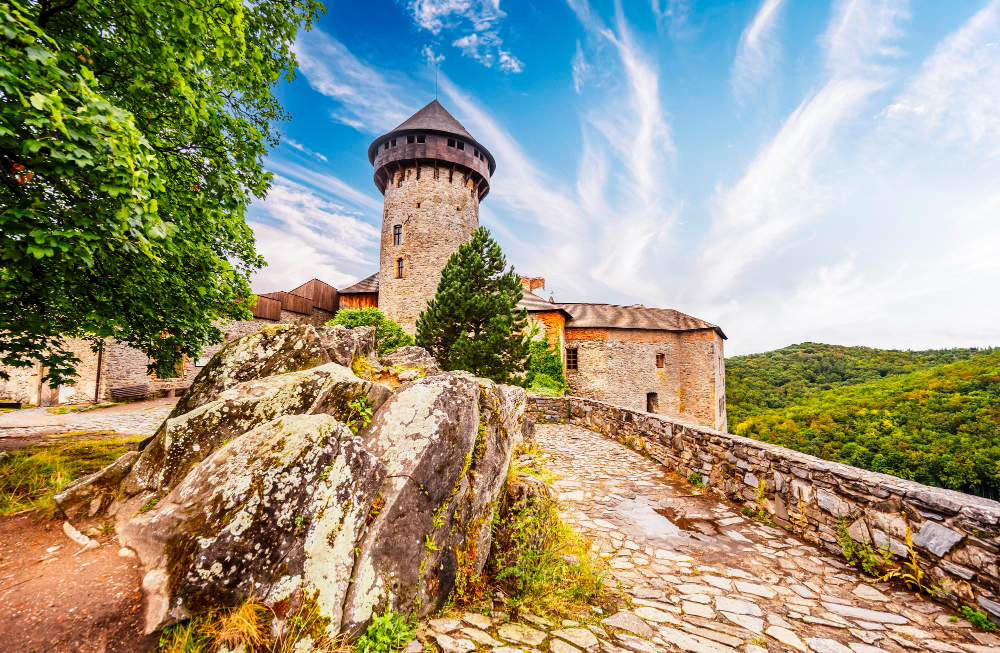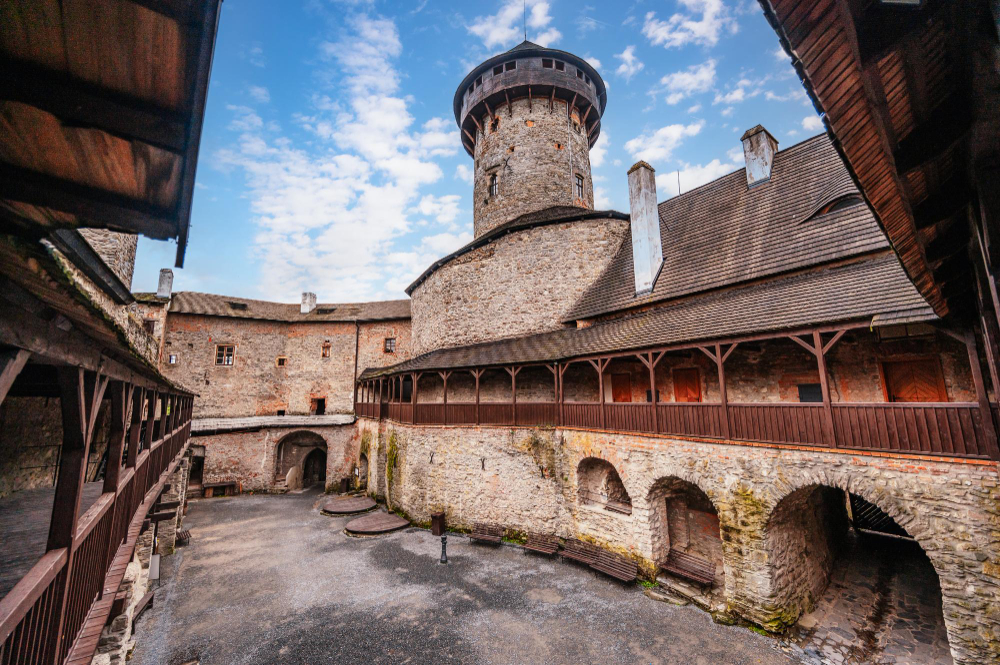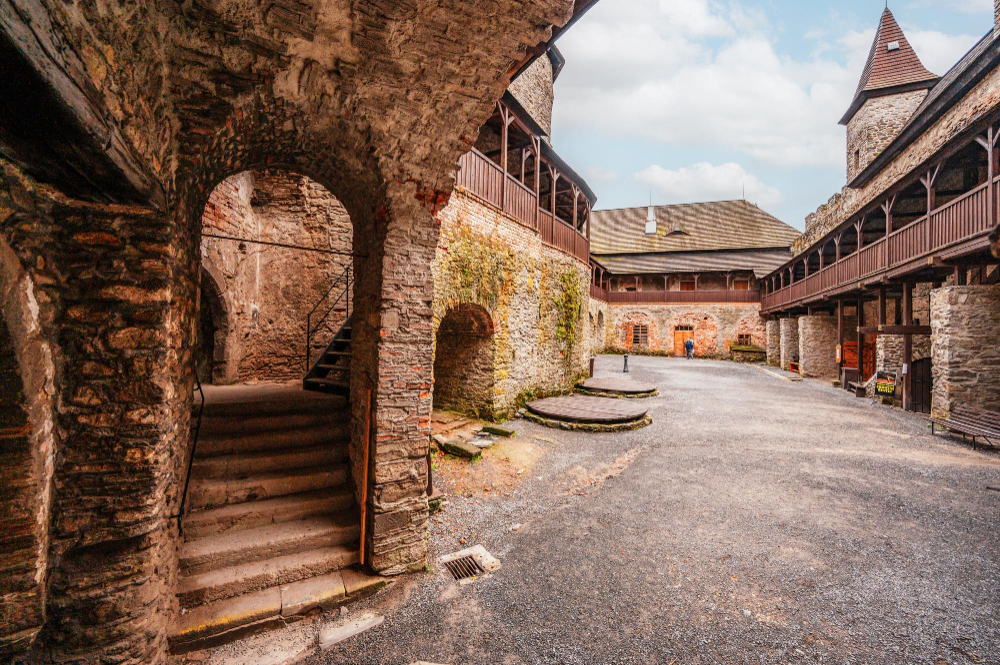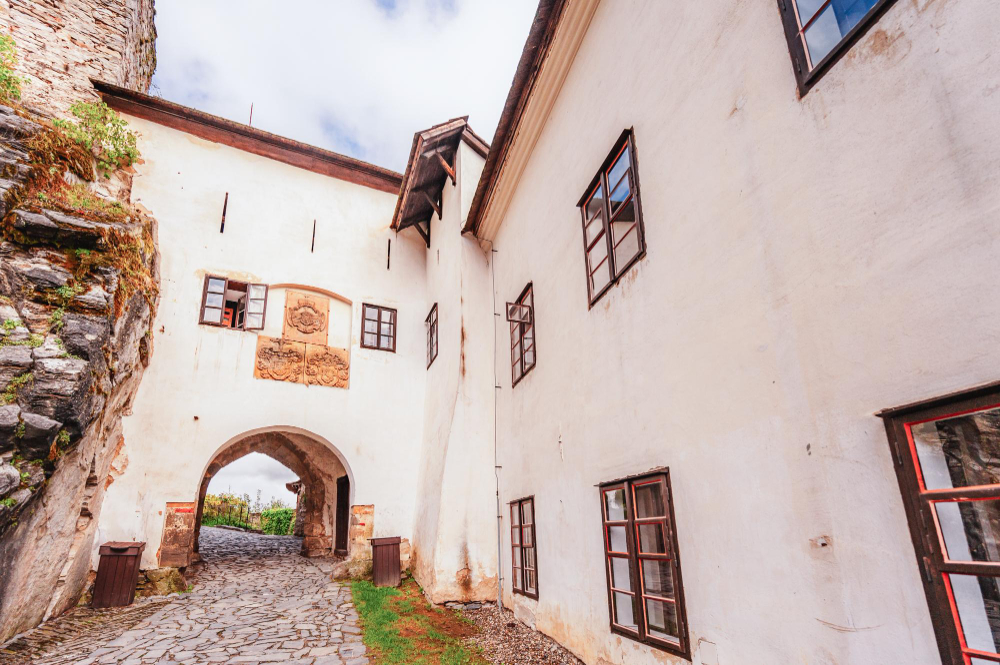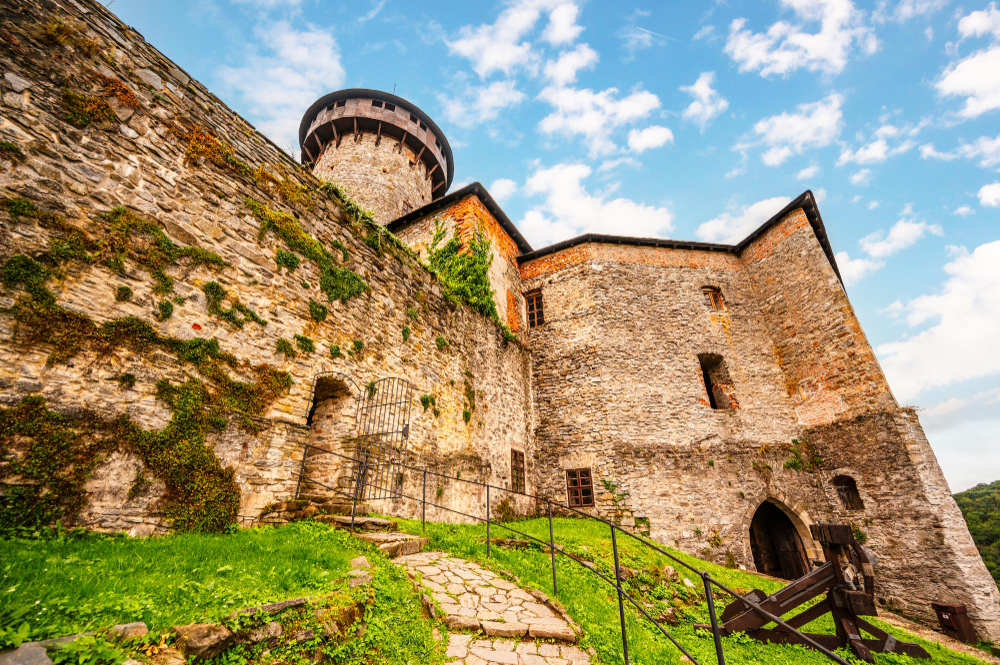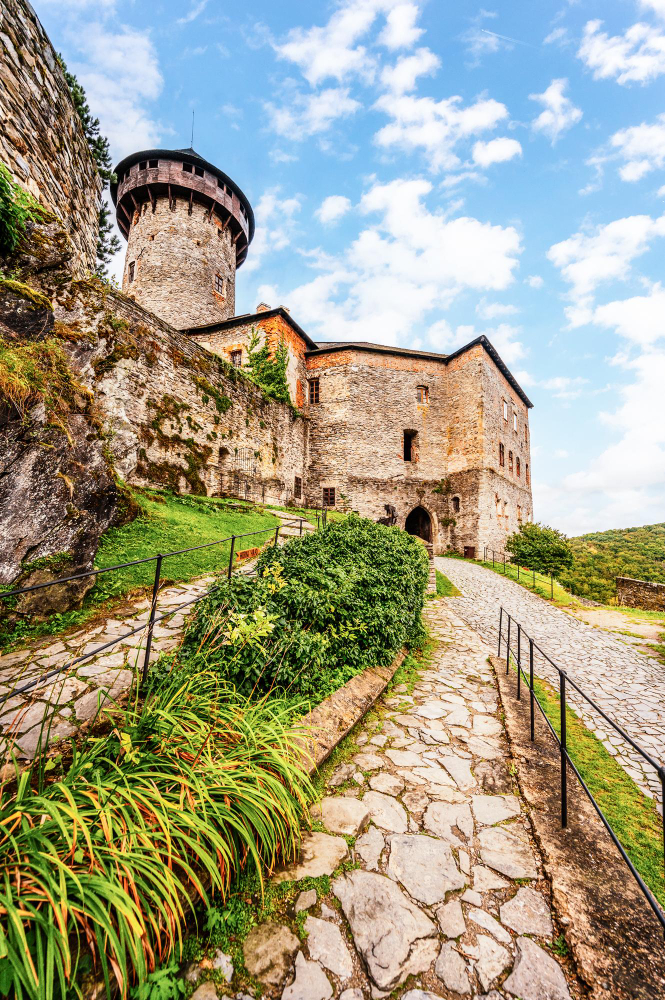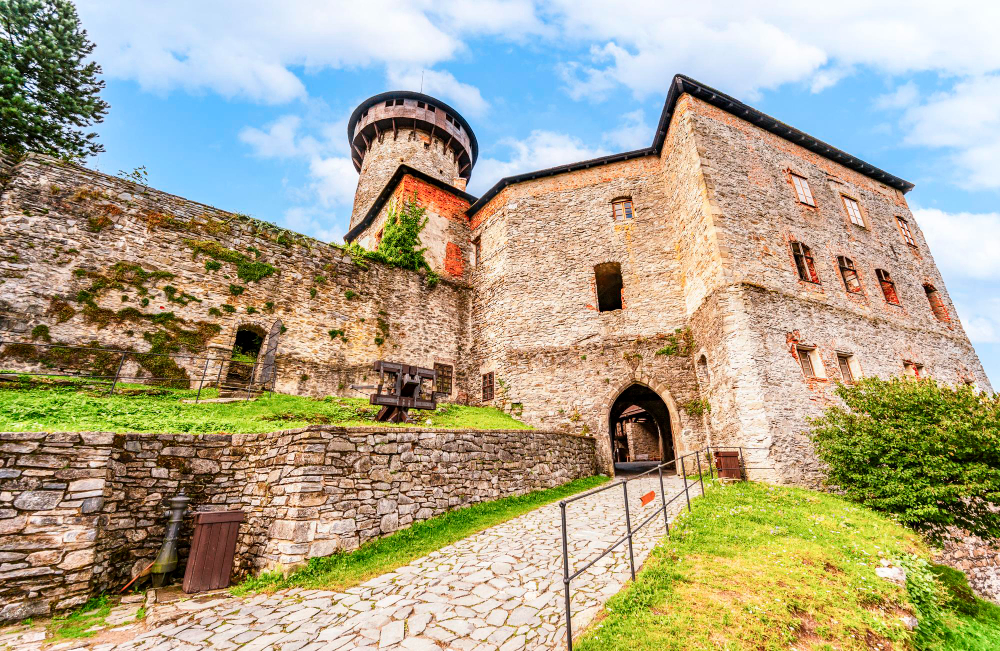
Sovinec Castle, also known as Eulenburg in German, stands majestically on a broad rocky outcrop in the foothills of the Lower Gesenke, some 13 kilometres south of Rýmařov in the Bruntál district of the Czech Republic. This impressive structure looks back on an eventful history that reaches deep into Moravia’s medieval past and is marked by wars, cultural upheavals and legends. This article recounts the castle’s fascinating history, sheds light on its historical background and, drawing on new sources, paints a comprehensive picture of this remarkable complex.
The Origins and First Documented Mention of Sovinec Castle – The roots of Sovinec Castle date back to the early 14th century. It was built around 1320 by the brothers Wok and Paul, who belonged to the Moravian noble family of Hrut. Originally, these knights resided at Waldhausen Fortress (Czech: Huzová), but with the construction of the castle near Eulenberg (Sovinec), they moved their seat and adopted the new name ‘de Aulnburk’ and later ‘von Sovinec’. The first written mention of the castle dates from 1333 in a document confirming its existence. In the Olomouc land register of 1353, it is recorded with the Slavic spelling ‘Sovinecz’, which underlines its regional significance.
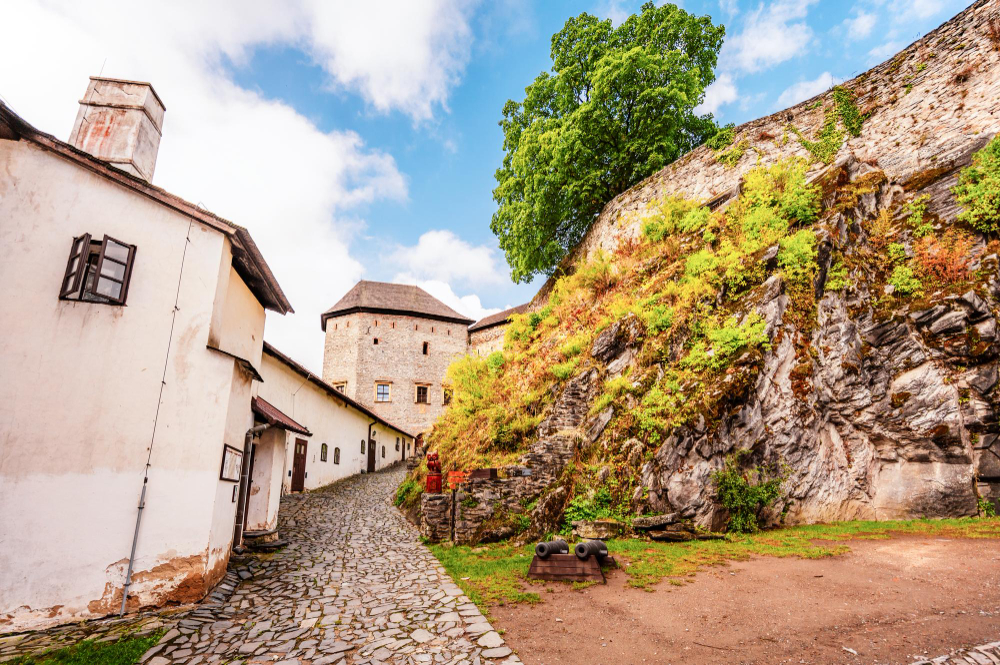
Strategic significance and role in the Hussite Wars – During the Hussite Wars (1419–1434), Eulenburg developed into a key stronghold of the Hussite movement. These religious and political conflicts profoundly shook the Kingdom of Bohemia and its neighbouring countries. Sovinec not only offered protection to supporters of the Reformation but also became a base for military operations. Its commanding position on a rocky outcrop made it difficult to attack and cemented its reputation as an impregnable bastion against external enemies.
Changes of Ownership and Renovation during the Renaissance – Following the Hussite Wars, the castle changed hands several times. In 1492, it passed to Wok Pniowsky von Eulenberg, who also took over the surrounding Eulenberg estate. In 1543, Christoph von Boskowitz acquired the castle and the estate. Under his rule, the Reformation was introduced, bringing about significant religious changes for the inhabitants. Christoph von Boskowitz had the castle renovated in the Renaissance style – this architectural redesign lent the fortress a contemporary elegance whilst also improving its defences. Between 1577 and 1583, Jáchym Pivce of Hradčany and Klimštejn served as castle captain. From 1578 to 1592, the mining entrepreneur Lorenz Eder of Sstiawnicz (Vavřinec Eder of Štiavnice) was the owner of the castle. He was lord of the neighbouring town of Rabenstein and made a significant contribution to the region’s economic development. His son-in-law, Jan the Elder Kobylka of Kobylí, inherited the castle but, due to his role in the Bohemian Estates’ Revolt following the Battle of White Mountain, was forced to sell his estates to Karl von Liechtenstein. In 1623, Liechtenstein transferred the castle to the Teutonic Order, heralding a new chapter in the history of Sovinec.
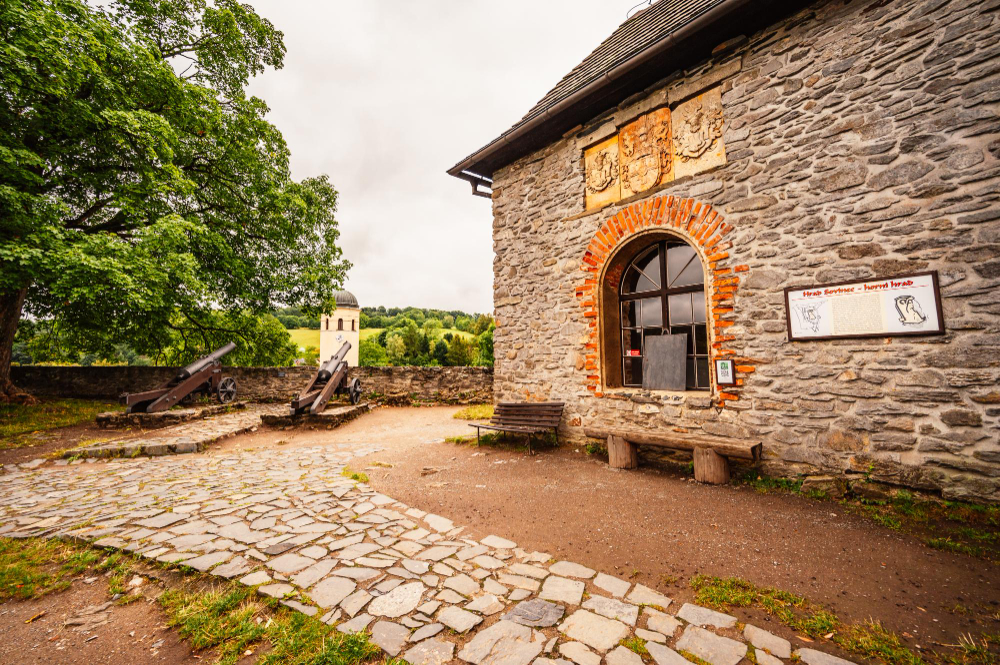
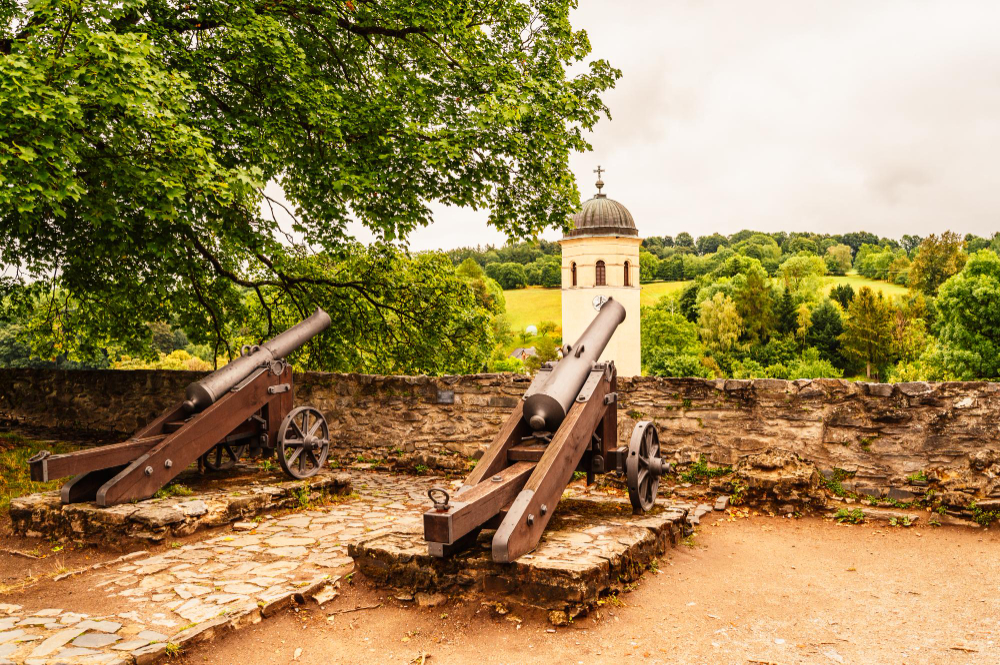
Conversion into a fortress and the turmoil of war in the 17th century – The Thirty Years’ War (1618–1648) brought further hard times for Sovinec Castle. Following the Danish–Saxon occupation between 1626 and 1627, the imperial governor Georg Wilhelm von Elkershausen ordered the conversion of Eulenburg into a more heavily fortified stronghold. Three further cannon bastions were erected, the defensive walls were reinforced and the moat was deepened. The defences were supplemented by an additional outer tower. Despite these measures, the castle fell in October 1643 after a siege lasting several weeks to Swedish troops under General Lennart Torstensson, one of the most prominent military commanders of the time. The Swedes held Sovinec until 1650 and exploited its strategic location to exert control over the region. After the war, there were clear signs of decay, as well as damage caused by fire and combat.
Decay, Repurchase and Use by the Teutonic Order – In 1784, a fire destroyed large parts of the castle. The Teutonic Order, which owned it at the time, carried out only the most essential repairs, which accelerated its further decay. In 1812, parts of the castle were even sold at auction, but in 1837 these were repurchased under the leadership of Grand Master Archduke Max Joseph, marking the beginning of a slow reconstruction. From 1840 onwards, the castle’s function changed fundamentally: from then on, it served as a boys’ boarding school for the Teutonic Order. A commemorative plaque affixed there honours Peter Rigler, a distinguished educator and member of the Order who had dedicated himself to the education of young people. Between 1867 and 1896, the castle served as the seat of the Silesian-Moravian Forestry College in Troppau, which gave the complex a more education-oriented character.
Wartime and Destruction in the 20th Century – The political upheavals of the 20th century did not leave Sovinec unscathed. Following the Nazis’ seizure of power in 1939, the Teutonic Order was expropriated, and the castle served as a prisoner-of-war camp for French officers until 1943. In the final days of the Second World War in 1945, the castle fell victim to a devastating fire and fell into increasing disrepair. It was not until 1951 that extensive restoration work began to save Sovinec Castle from complete ruin. Today, the castle is a popular tourist destination and cultural monument that keeps both history and legends alive.
Legends and cultural significance – Like many ancient castles, Sovinec is shrouded in legend. The German name ‘Eulenburg’ (Owl Castle) can be traced back to the many owls that once made their home on the castle grounds and in the surrounding woods. According to legend, the nocturnal calls of these mysterious birds helped the knights in their defence by warning them in good time of the enemy’s approach. Another legend tells of a hidden treasure said to lie deep within the castle walls. Despite numerous searches, nothing has been found to date – which only serves to heighten the mystique of Eulenburg. Furthermore, there are numerous tales of ghostly apparitions of former inhabitants, who are said to haunt the ancient walls, sparking the interest of historians and ghost hunters alike.
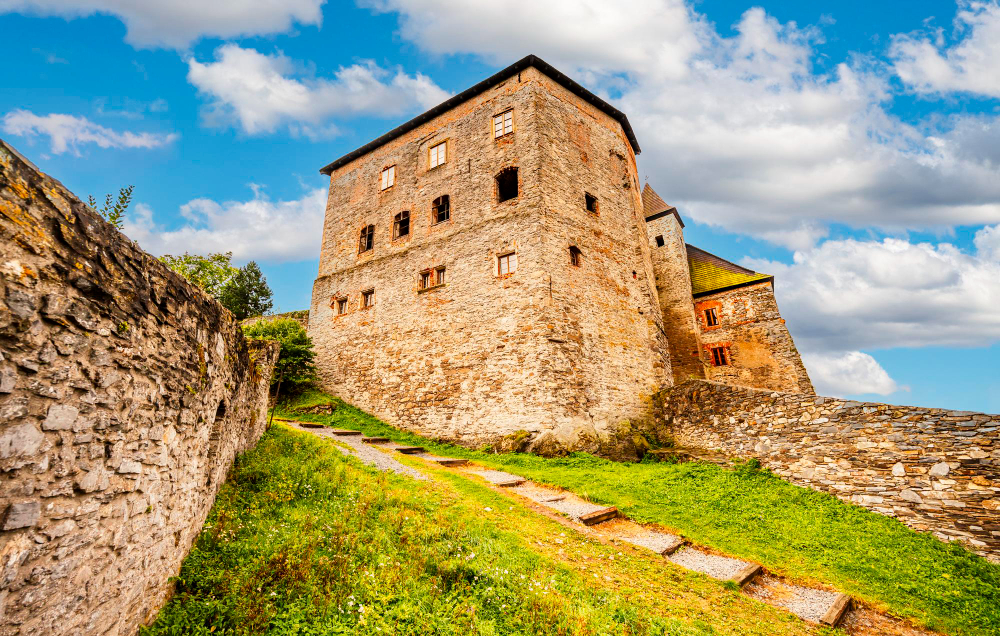
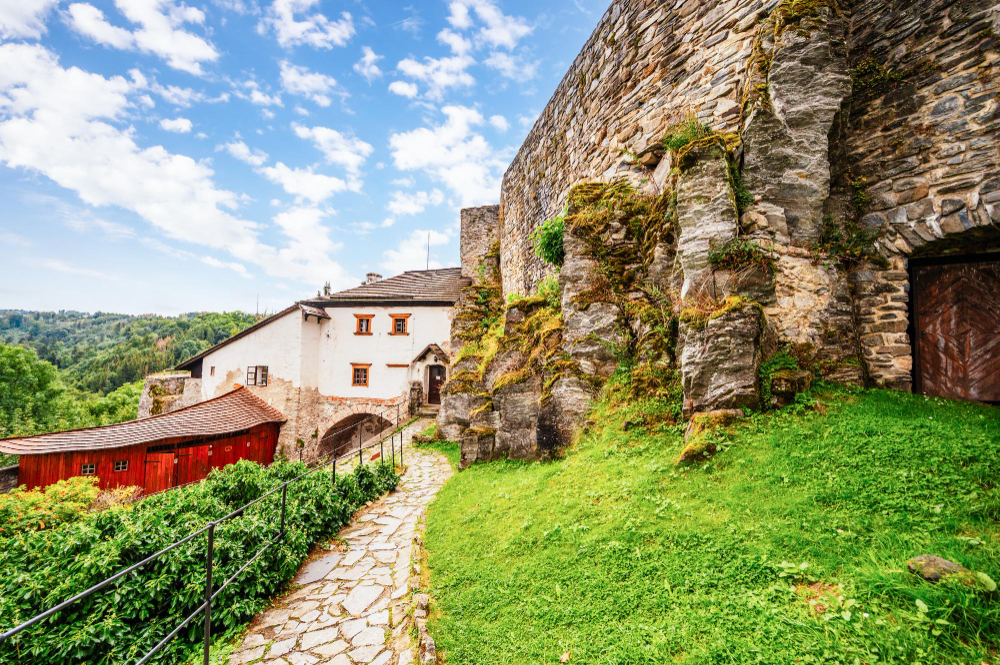
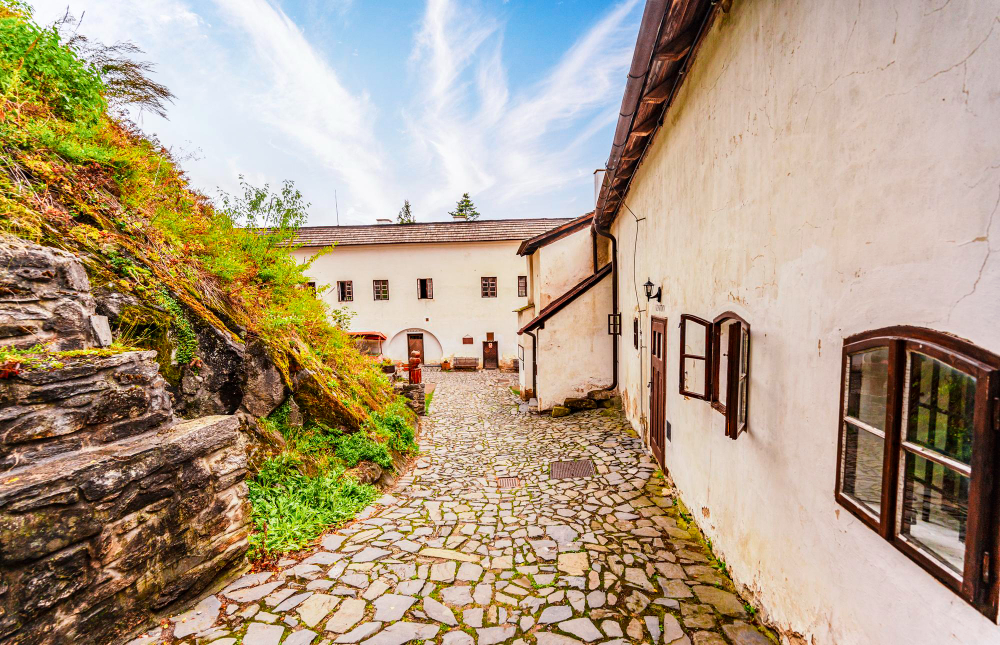
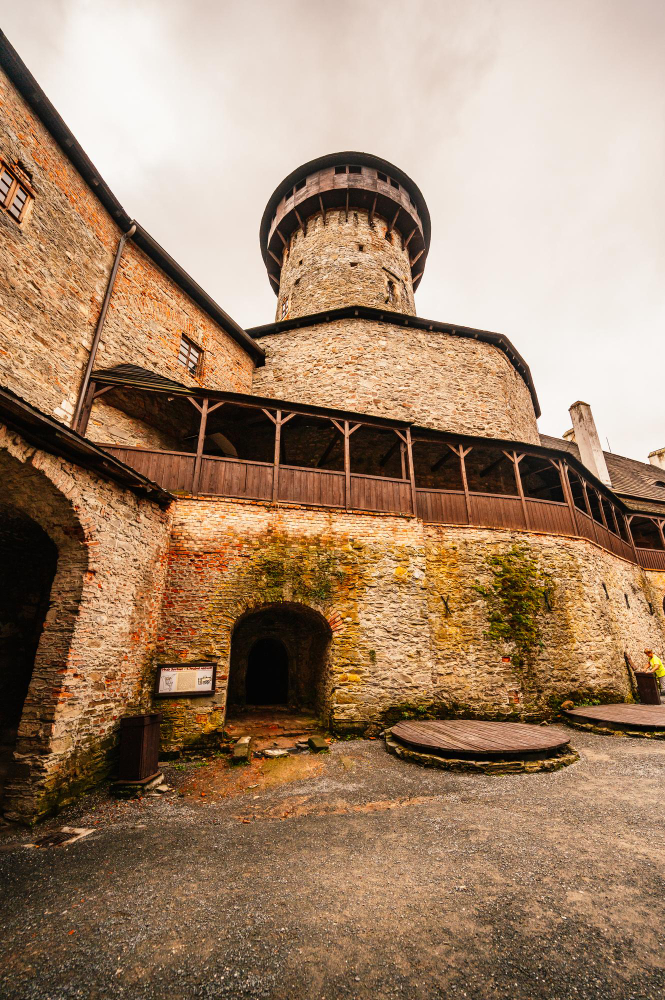
Architectural Features – Architecturally, Sovinec combines elements from Gothic, Renaissance and Baroque alterations. The original medieval fortress was repeatedly extended and modernised over the centuries. Particularly noteworthy are the three 17th-century cannon bastions, which are among the best-preserved of their kind in Central Europe. Its location on a rocky outcrop with steeply sloping flanks makes the castle an outstanding example of a natural and man-made defensive structure. Today, in addition to the defensive structures, the castle complex also comprises several residential buildings, a knights’ hall and a chapel. Some rooms feature original frescoes and decorations that reflect the cultural heritage of the Eulenburg family.
A monument to history and culture – Sovinec Castle is far more than just a ruin or a historical building. It stands as a symbol of the turbulent history of Central Silesia and Moravia, from the Middle Ages through the Reformation to the turmoil of the Thirty Years’ War and the dramatic events of the 20th century. Its walls tell stories of noble houses, wars, religious conflicts and education. Today, Sovinec is regarded as an important monument that brings history to life and attracts numerous visitors from all over the world. The combination of its picturesque setting, architectural diversity and legendary aura makes the castle a fascinating destination and preserves the memory of an era that has had a decisive influence on our understanding of Central Europe.