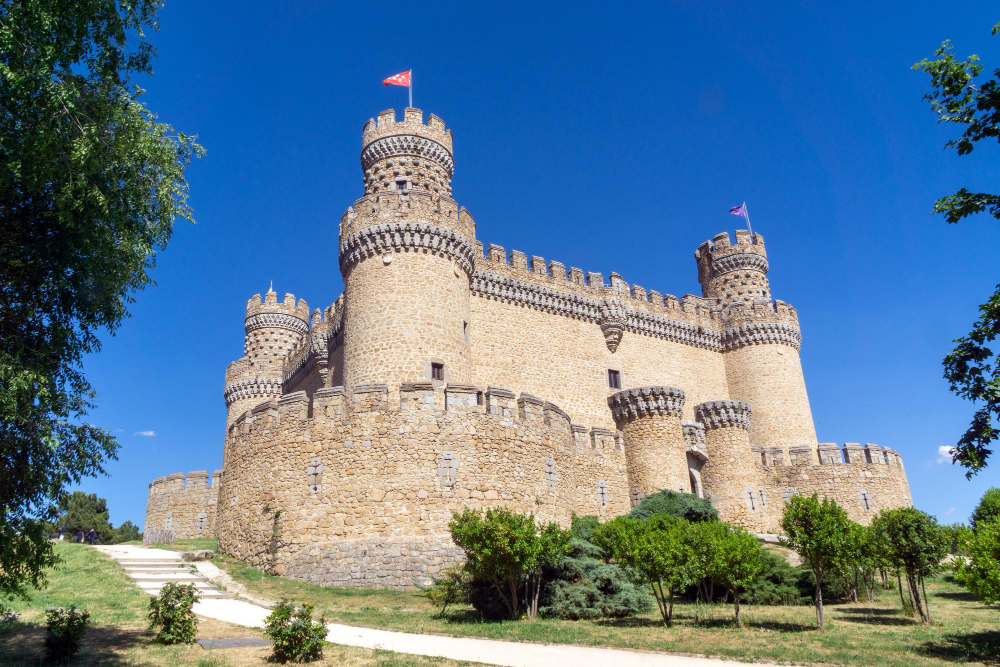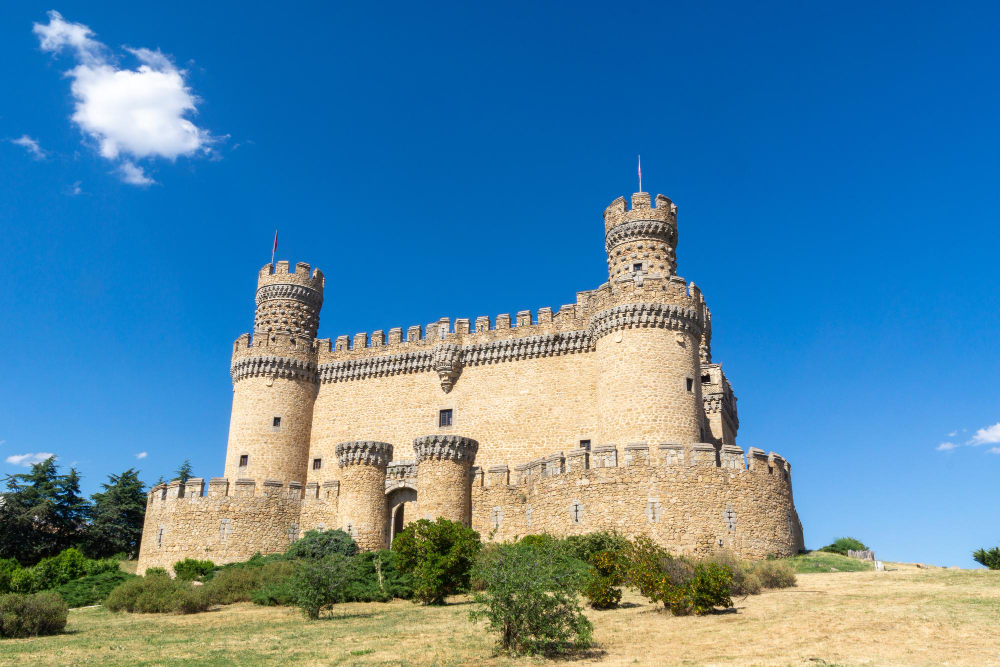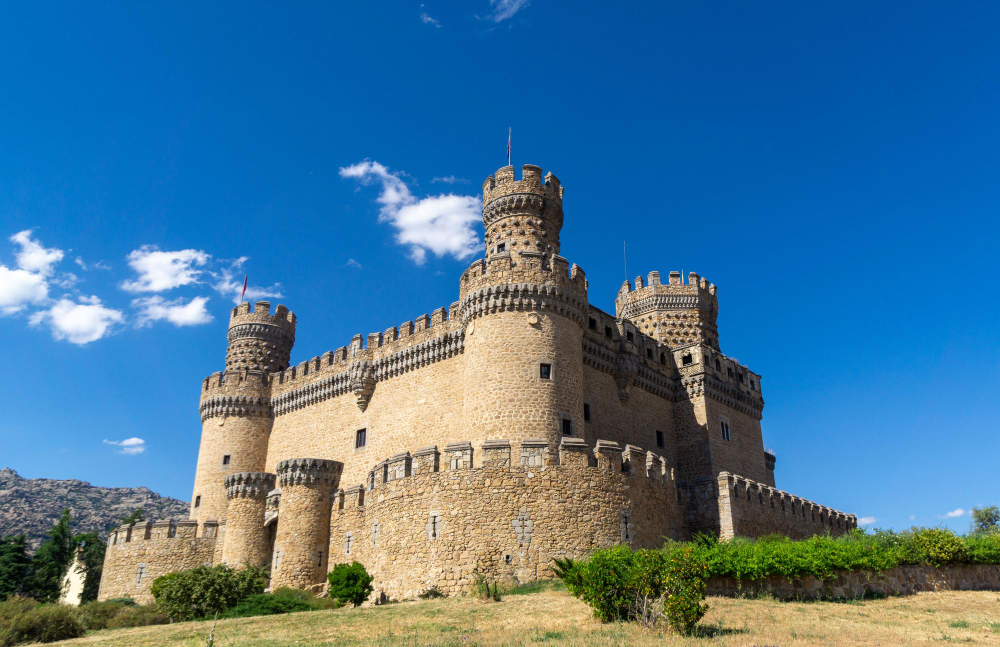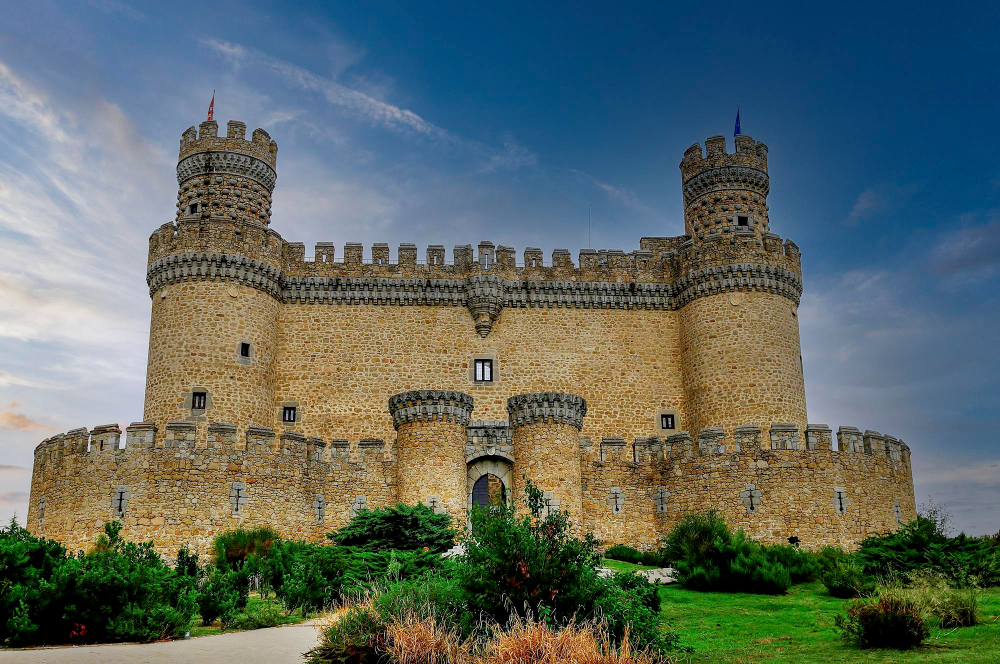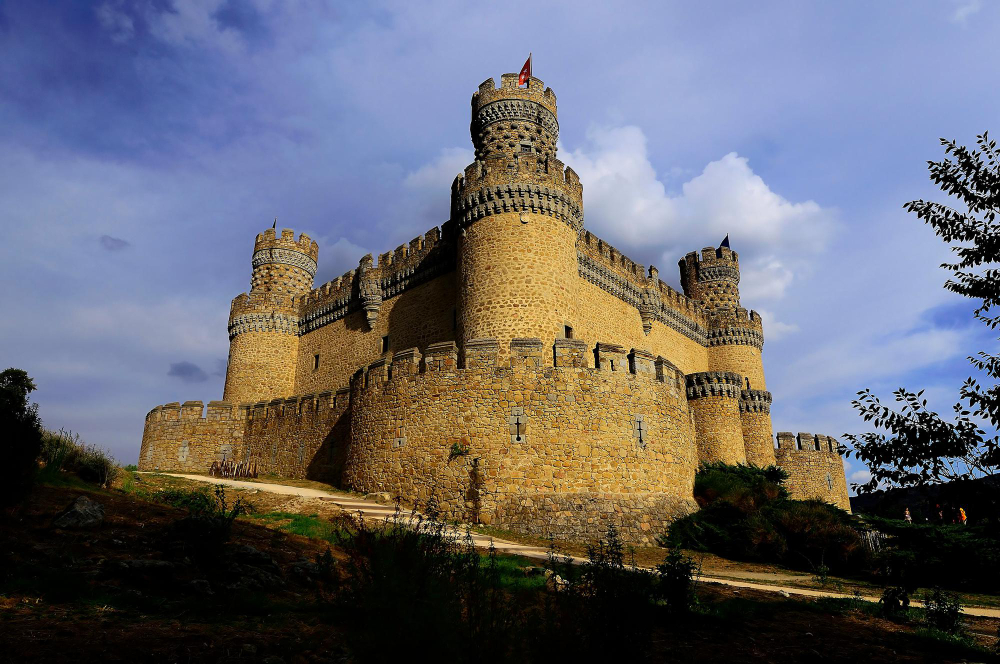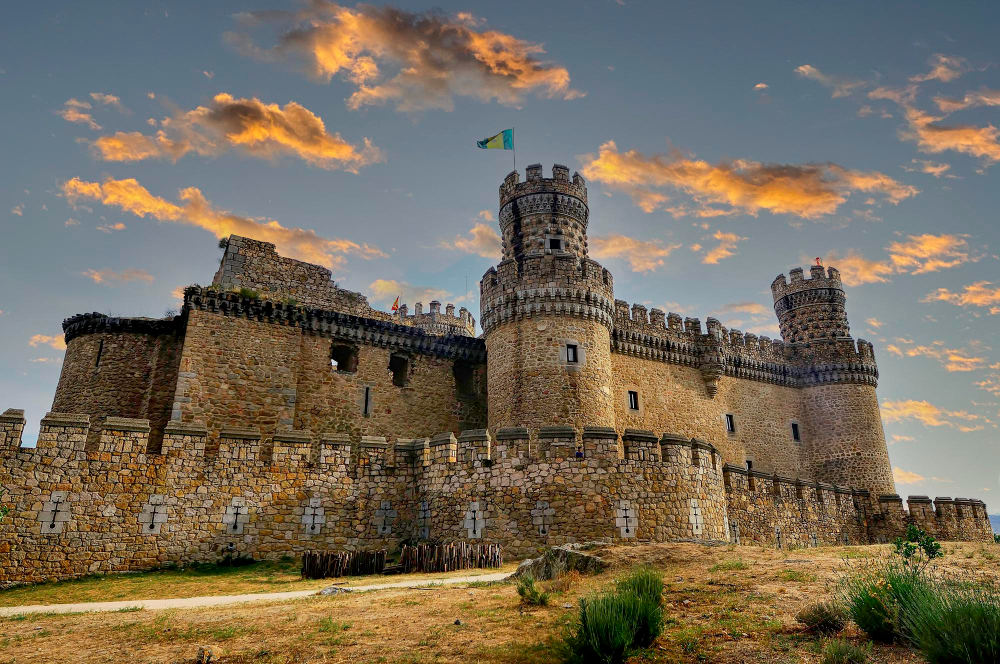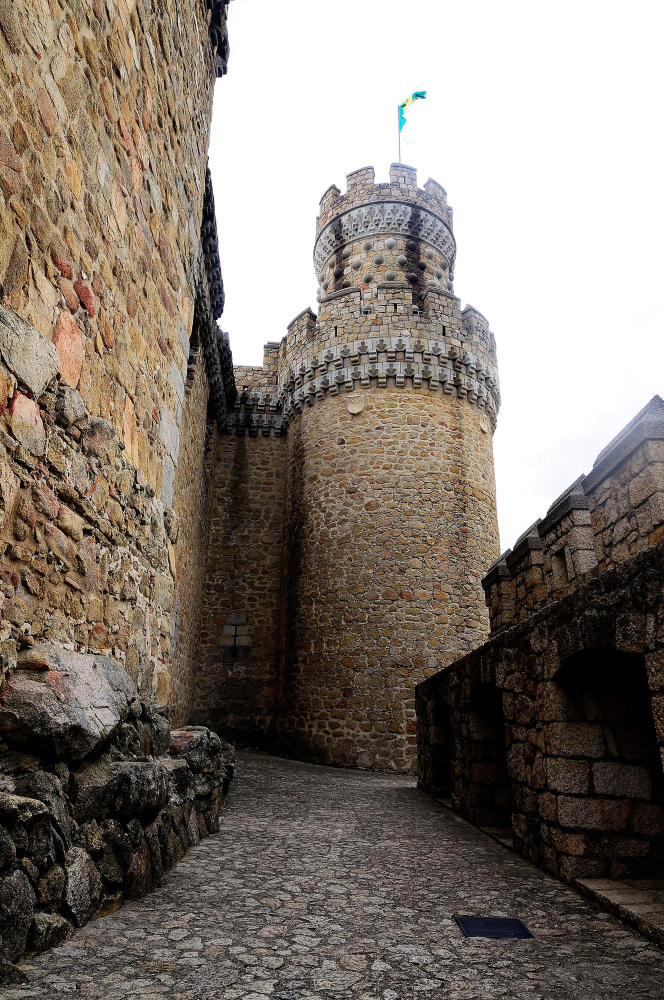
At the foot of the majestic Sierra de Guadarrama, right on the banks of the Santillana Reservoir, stands one of the most impressive structures in the Madrid region: the New Castle of Manzanares el Real, also known as the Castle of Mendoza. This magnificent 15th-century structure bears witness to Spain’s glorious past and is steeped in stories, legends and architectural masterpieces. Its timeless character and historical significance make it one of the region’s best-preserved cultural treasures.
The Castle’s Origins: The Transformation from a Hermitage to a Palace – The castle’s history began in 1475, when construction of the building commenced on the ruins of a Romanesque-Mudejar hermitage. Thanks to its strategic location on the River Manzanares, the fortress not only became the residence of the powerful House of Mendoza but also played a crucial role in securing the region. Previously, an older fortress had stood on the same site, which served defensive purposes but was abandoned following the completion of the new castle. Pedro González de Mendoza, royal administrator of Castile and a prominent member of the Mendoza family, received these lands as a gift from King John I of Castile in the 14th century. His eldest son, Diego Hurtado de Mendoza, an admiral of Castile, had the first fortress built. It was later decided to construct a larger and more magnificent castle to underline the family’s growing political and economic influence. Ultimately, it was Íñigo López de Mendoza who completed the construction work. Under the direction of the renowned architect Juan Guas, who also designed the Palace of the Infantado in Guadalajara, the castle was crafted with its unique details. However, despite its status as a residence, the castle’s heyday lasted only about a century. In 1566, following the death of the fourth Duke of Infantado, Íñigo López de Mendoza y Pimentel, the building began to fall into disrepair. Financial difficulties and family disputes led to the castle being abandoned and losing its original purpose.
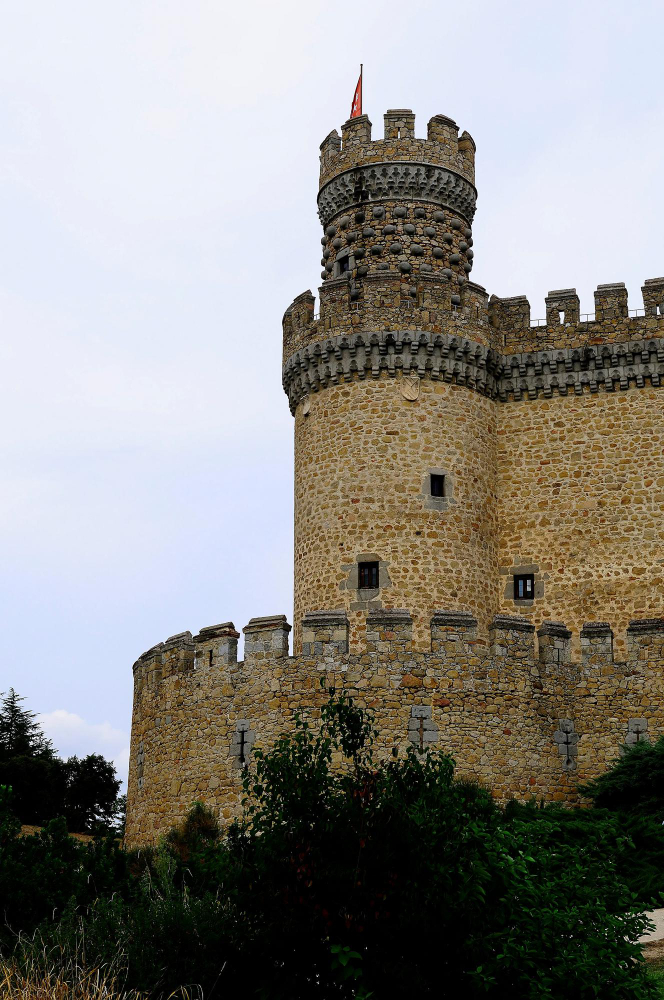
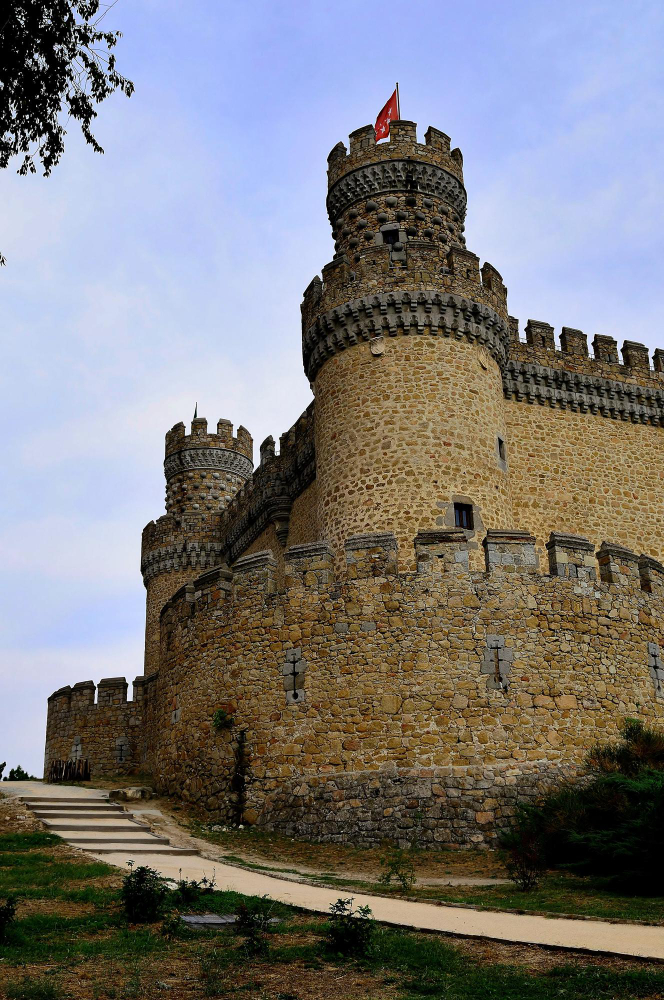
Architectural Masterpiece: A Look at the Details – With its four imposing round towers, adorned with decorative finials in the Gothic-Isabelline style, and a central hexagonal main tower, the castle is a striking example of late Gothic architecture. The entire structure was built from granite, a material that not only ensures stability but also emphasises the castle’s majestic character. Particularly noteworthy is the castle’s inner courtyard, which features two superimposed galleries. These are supported by octagonal columns – a design that ranks among the finest examples of Spanish military architecture. The upper gallery, often regarded as the most spectacular, features delicate Gothic patterns, whilst the lower sections are adorned with diamond patterns that further emphasise their elegance. The castle’s six storeys, including a cellar, are connected by intricately designed staircases. The main entrance, flanked by two towers, is adorned with an elegant arch and conveys an impression of strength and power. Furthermore, the building is protected by a defensive wall featuring loopholes and reliefs, including the Cross of the Holy Sepulchre in Jerusalem – a symbol closely associated with Pedro González de Mendoza and his religious influence.
The Castle’s Role in History and Culture – Over the centuries, the castle of Manzanares el Real has played a variety of roles. It served not only as the residence of the Mendoza family and as a defensive structure, but also became an important venue for political events in later times. For example, in 1982, the Madrid Parliamentary Assembly was founded here, whilst the region’s Statute of Autonomy was presented at the same time. This ceremony marked a milestone in Madrid’s modern history and underlined the castle’s cultural significance. The castle of Manzanares el Real has also found its place in the world of art. It served as a filming location for the 1961 film El Cid, which depicts the epic adventures of the Castilian knight Rodrigo Díaz de Vivar. The cinematic backdrop brought the building further fame and forged a link between its historic architecture and the world of cinema.
Myths and Legends of the Castle – Like many historic sites, the castle of Manzanares el Real is shrouded in legend. One of the best-known stories concerns a hidden treasure that the Mendoza family are said to have concealed somewhere within the castle. Although numerous treasure hunters have searched in vain for this golden legacy, the legend remains a fascinating element that captures the imagination of visitors. Another legend tells of the mysterious White Lady, who is said to wander through the castle’s dark halls. Some claim to have heard her soft footsteps or seen her white shadow flit across the walls. The apparition is said to be the ghost of a woman who was once unhappily in love with a member of the Mendoza family and met a tragic end.
Conservation and modern use – Since the castle was declared a ‘Monumento Histórico-Artístico’ in 1931, extensive measures have been taken to preserve the building. Thanks to these efforts, the castle is now regarded as one of the best-preserved fortresses in the Autonomous Community of Madrid. Its current condition allows visitors to immerse themselves in its rich history and experience its magnificent architecture at close quarters. The castle now houses a museum dedicated to Spanish castles, showcasing an impressive collection of tapestries, paintings and historical artefacts. This exhibition highlights the castle’s significance not only as a fortress but also as a cultural centre that has been a symbol of art and power for centuries. Furthermore, the castle is a popular venue for cultural events such as theatre performances, concerts and historical re-enactments. These activities help to keep history alive and raise awareness among younger generations of the building’s significance.
A magical place for history and architecture – Manzanares el Real Castle is far more than an architectural masterpiece; it is a living symbol of Spanish history and bears witness to power struggles, cultural richness and timelessness. With its fascinating architecture, moving stories and the legends that surround it, it attracts thousands of visitors from all over the world every year who wish to experience the atmosphere of times gone by. Whether as a backdrop to historical events, a film location or a destination for passionate history enthusiasts – the castle of Manzanares el Real remains an indispensable part of Spain’s cultural heritage and a place that, to this day, retains the magic of centuries past.