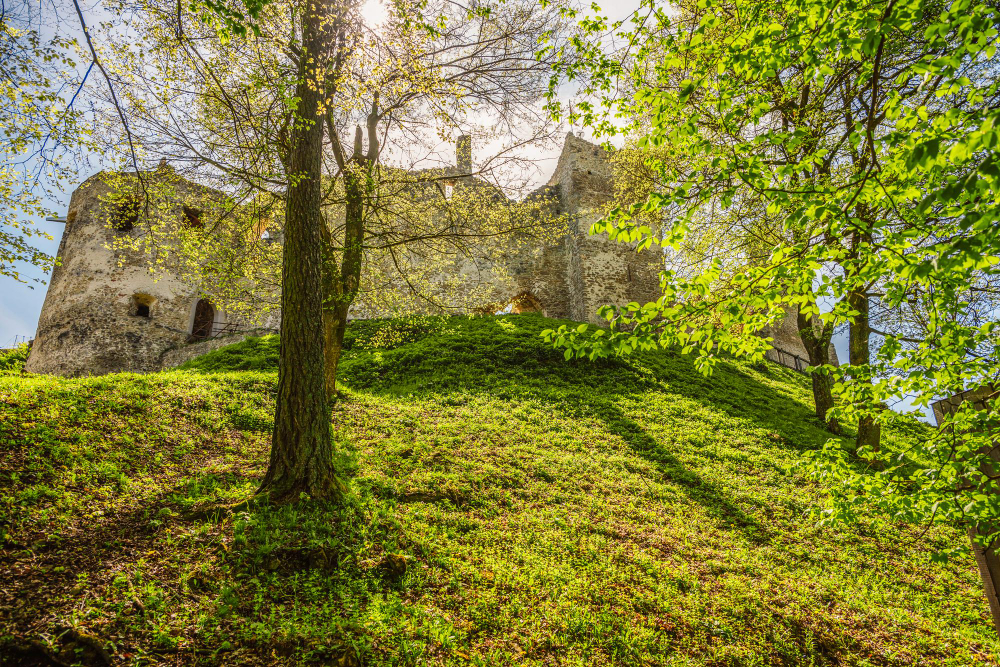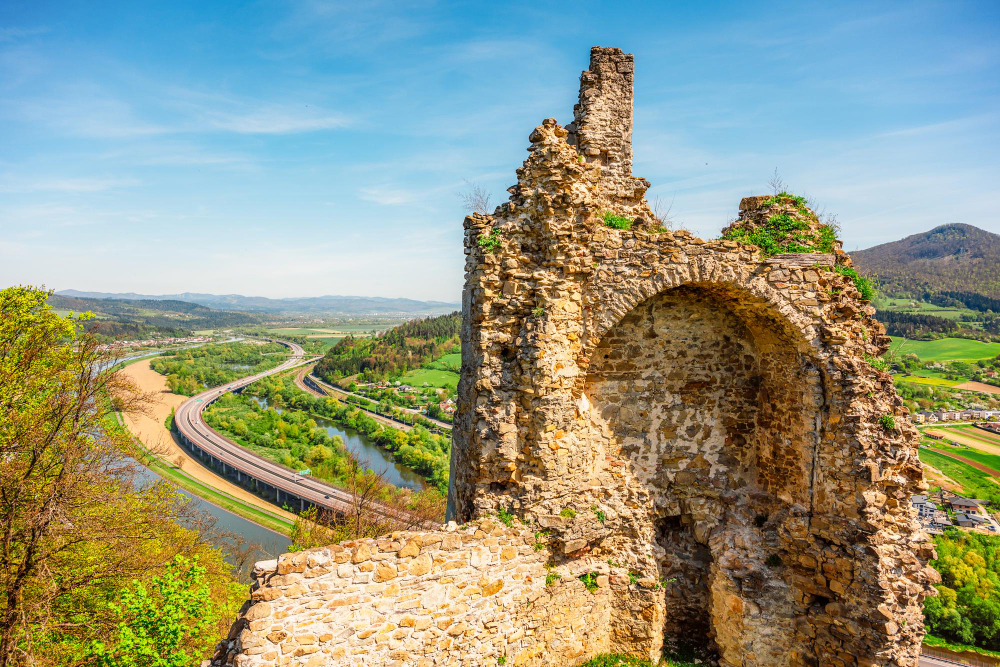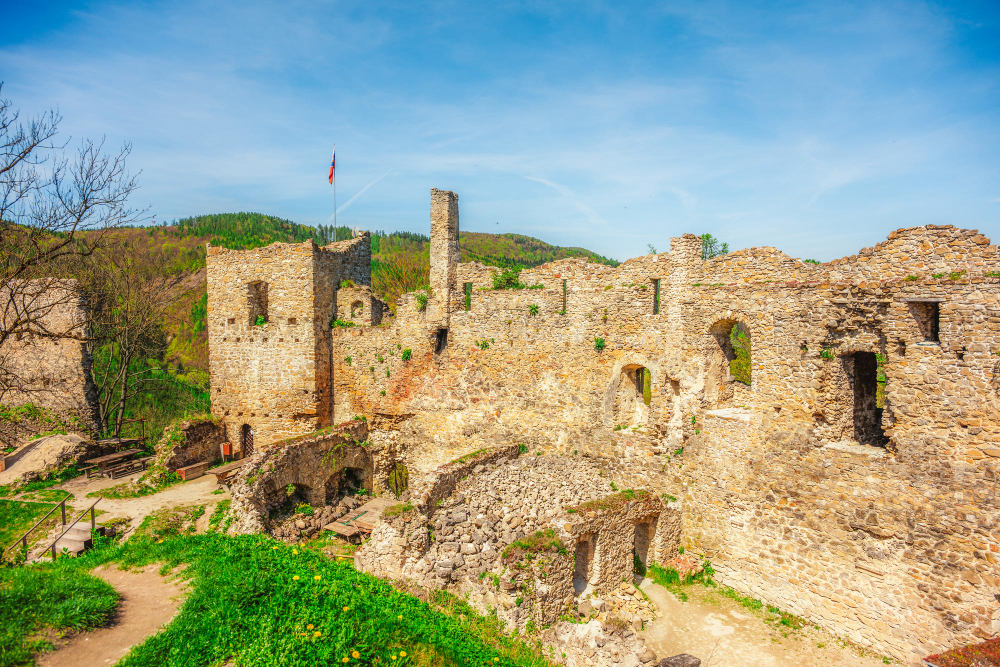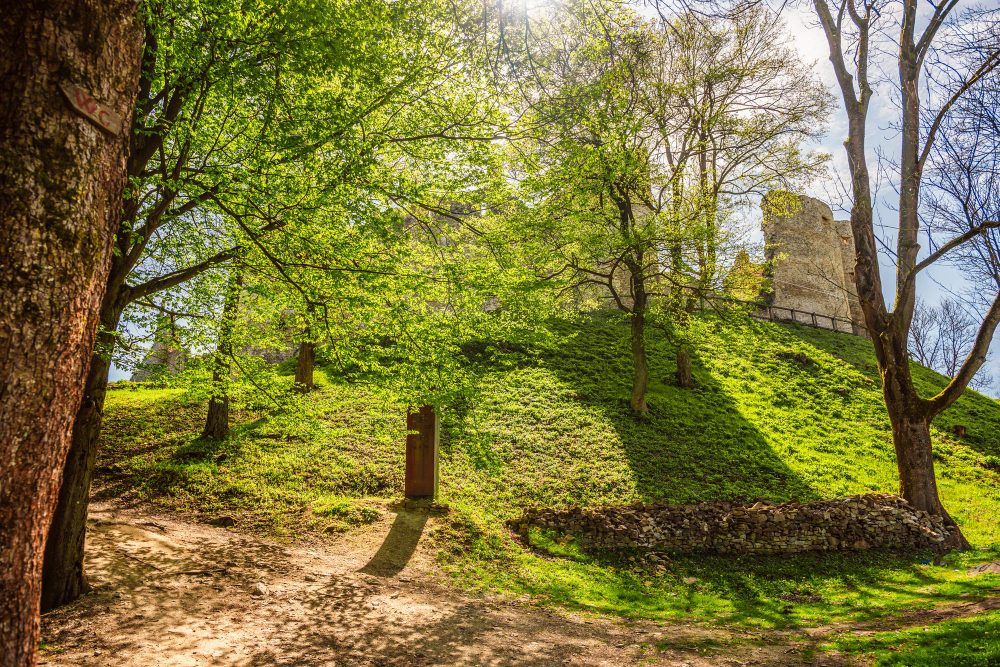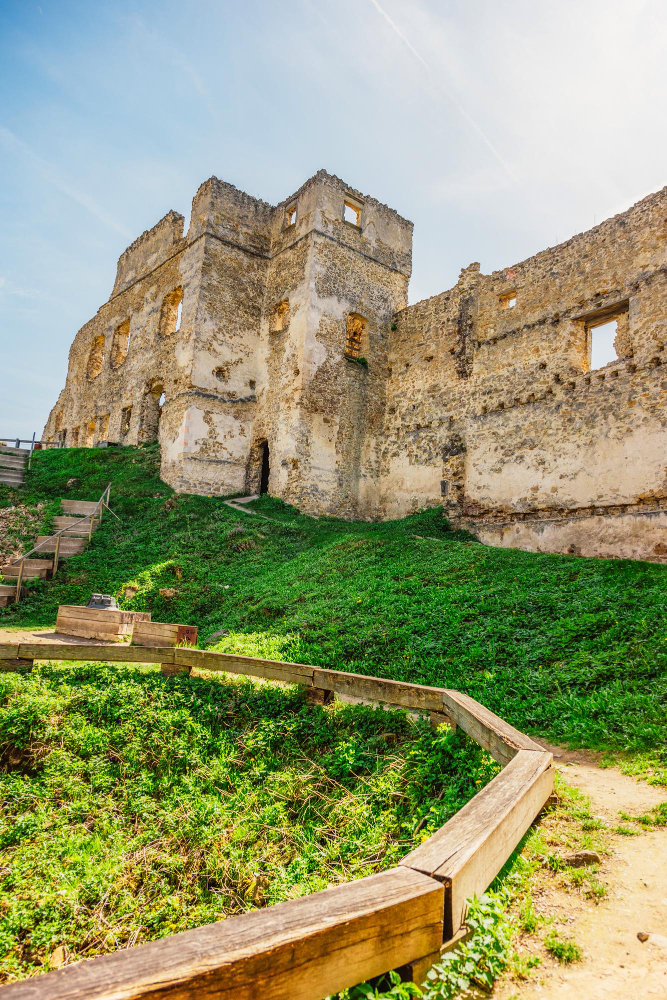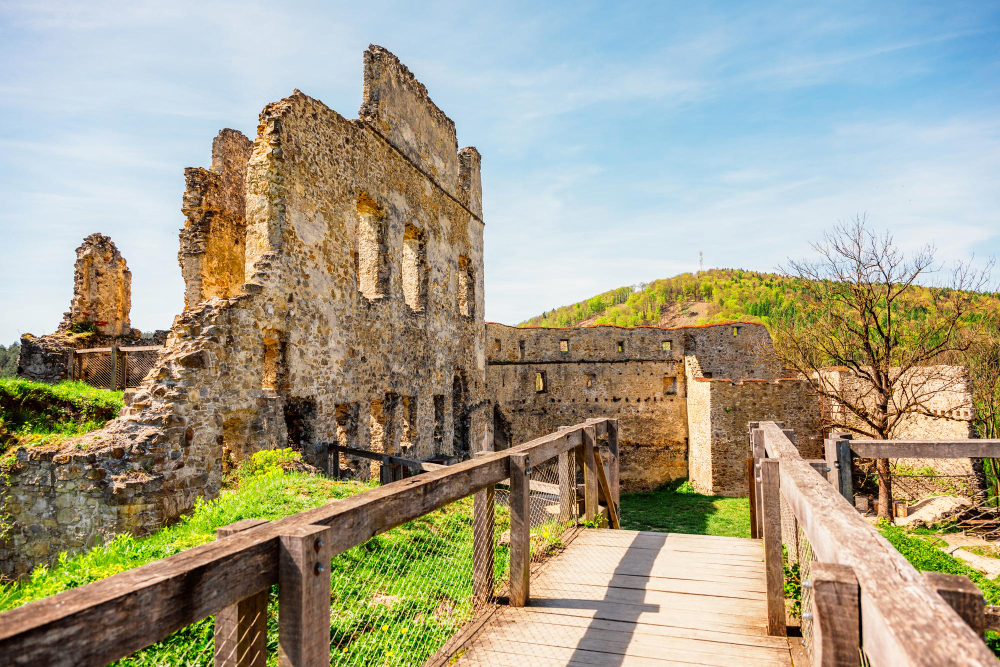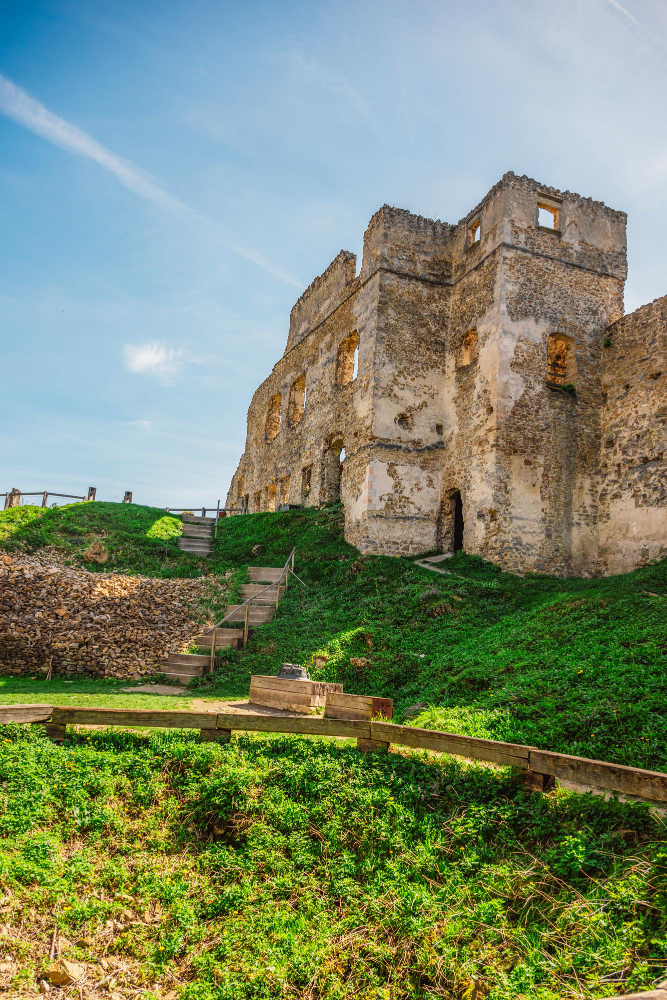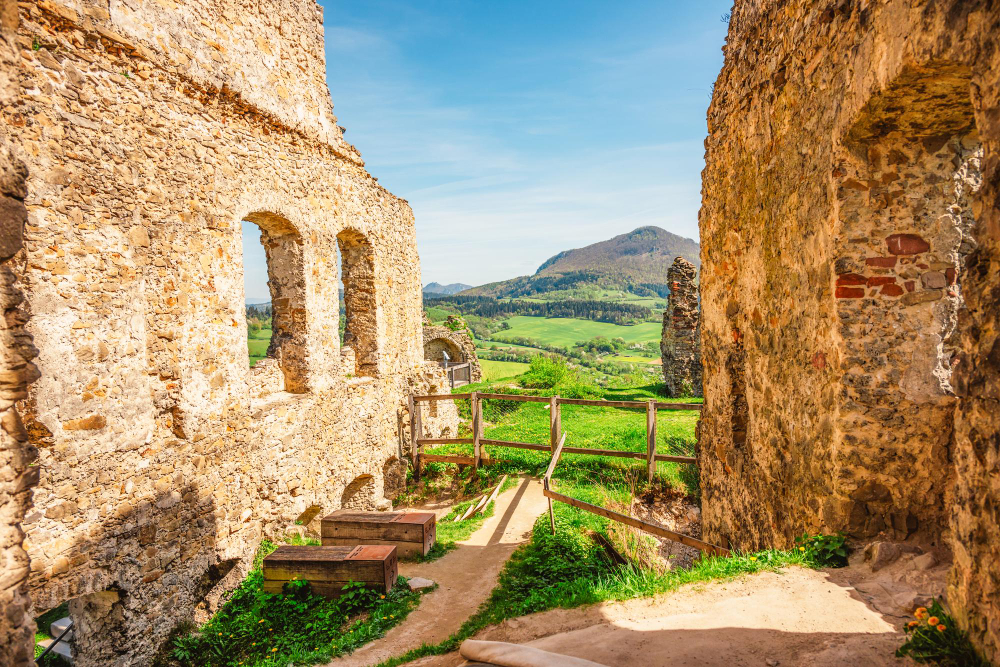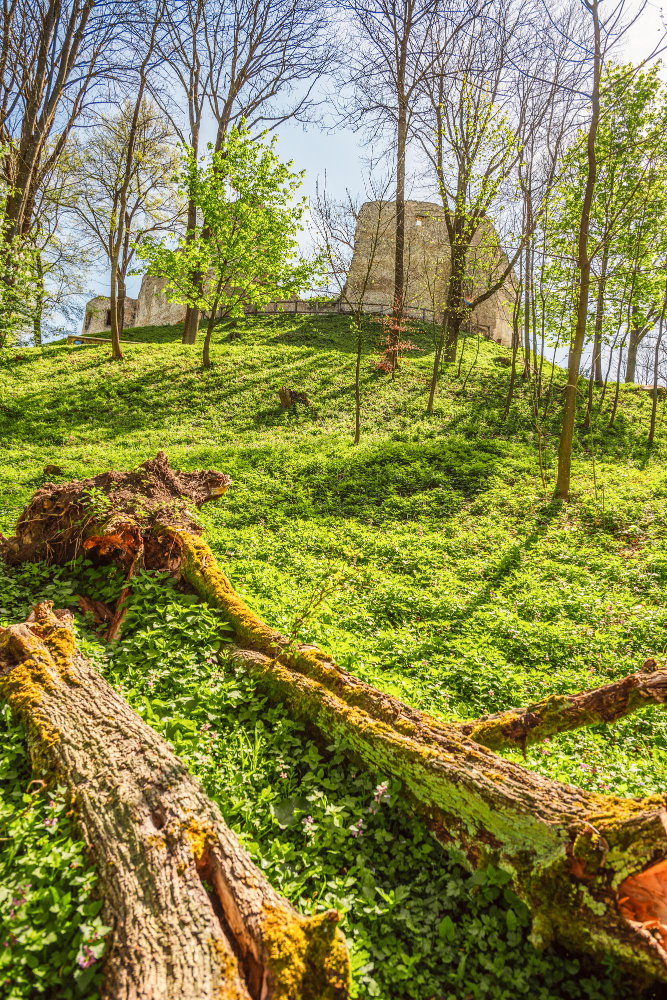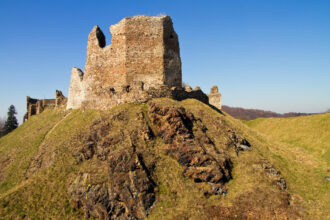
In the shadow of the majestic Považský hrad (also known as Hrad Bystrica, Waagburg or Bestruche castrum), the centuries tell tales of power, intrigue and legends. The ruins, perched high above the River Váh on a 497-metre-high rock, are silent witnesses to the eventful past of the Považie region and the Upper Váh area. This fortress was once one of the most important bastions protecting the valley and was home to more than 400 people, including members of the Hungarian noble family, the Podmanitzkys, whose name is inextricably linked with the castle.
Origins and Early History – The history of Považský hrad dates back to antiquity. Archaeological finds, including coins from the first century BC, suggest that the castle rock was already inhabited by the Puchov culture. However, exactly when the present-day castle was built remains a mystery. Some speculate that it was built around the year 1128 AD, possibly still of timber – a theory supported by the existence of similar timber structures from that period. It was only under Béla IV, who favoured stone castles following the devastation wrought by Batu Khan, that Považský hrad may have acquired its present fortified form. The first written mention of the castle dates from 1316, when it was associated with Matthäus Csák, a powerful Hungarian magnate and military commander. After that, the castle changed hands several times. One of its owners was Alexander Köcski, a district judge, whose family ruled the fortress for almost three decades. Over the course of the following centuries, the castle belonged to a number of influential figures, including King Sigismund and Matthias Corvinus, before it eventually passed into the possession of the Podmanitzky family.
The Podmanitzky Dynasty: Rise, Power and Influence – The Podmanitzkys played a central role in the history of Považský hrad and made the castle the focal point of their influence. László Podmanitzky, a loyal servant of Matthias Corvinus, was granted the castle and the surrounding villages as a token of the king’s gratitude. His descendants, in particular Jan, Stefan and Rafael, had a lasting impact on the history of Central Europe. Jan Podmanitzky became Archbishop of Zagreb and mentor to the future King Vladislav II. His brother Stefan, also an archbishop, crowned both János Szapolyai and Ferdinand I. The political tensions of that era, particularly the Reformation and the conflicts between the Habsburgs and the Szapolyais, had a profound influence on the family’s decisions. Stefan and his brother Mihály fought against the Ottomans in the famous Battle of Mohács. Whilst Stefan survived, Mihály never returned, leaving his brothers a region full of challenges and opportunities. Following the Battle of Mohács in 1526, the brothers Jan and Rafael exploited the political instability to expand their power. Their influence extended as far as the northern parts of the Trenčín region. Považský hrad served as the impregnable centre of their rule. Despite repeated attacks, the castle held firm, and the Podmanitzkys were notorious for their successful raids. Their power reached its peak in the 1530s, when they even clashed with Protestant noble families such as the Kostkas.
The Decline of Považský hrad – Following the death of Rafael Podmanitzky in 1558, the castle began its gradual decline. His successors were unable to maintain the estate’s power and significance. In 1560, the castle fell into the hands of Gáspár Szerédi, whose family passed it on to the Balassa family after his death. The Balassas used the castle as a refuge during the Rákóczi uprisings against the Habsburgs. Nevertheless, the castle’s importance began to wane as the Balassas moved to more comfortable manor houses in the surrounding area. In 1698, the fortress was demolished on the orders of Emperor Leopold I to prevent further uprisings. A severe earthquake in 1858 caused irreparable damage to parts of the castle, leaving it to fall into disrepair and fade into obscurity. It was not until 2007 that the town of Považská Bystrica acquired the site, and a voluntary organisation called Zdruzenie na zachranu Povazskeho hradu began restoration work to preserve the cultural heritage.
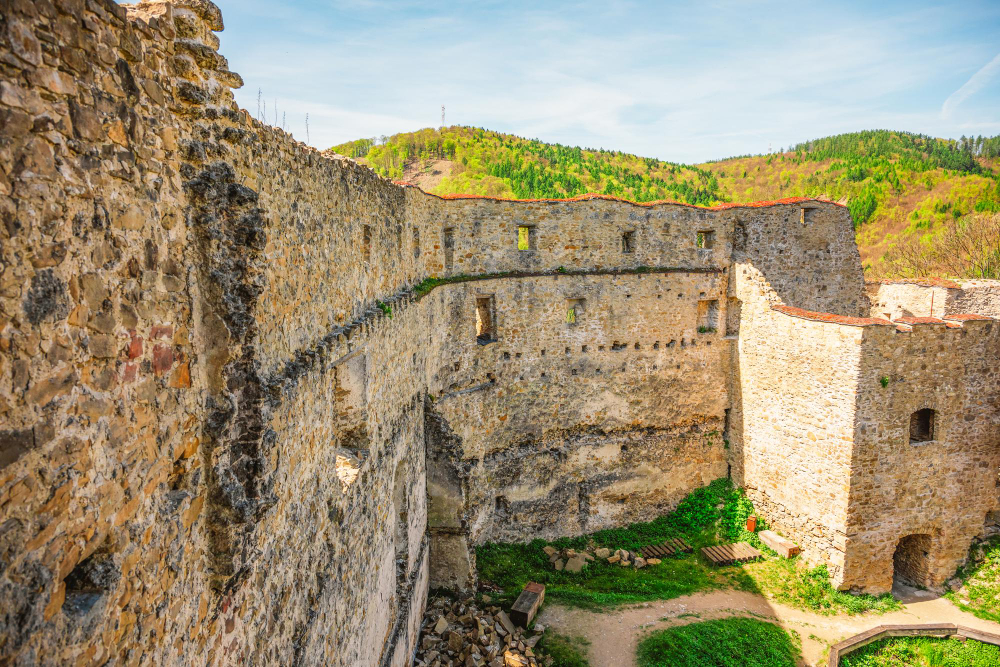
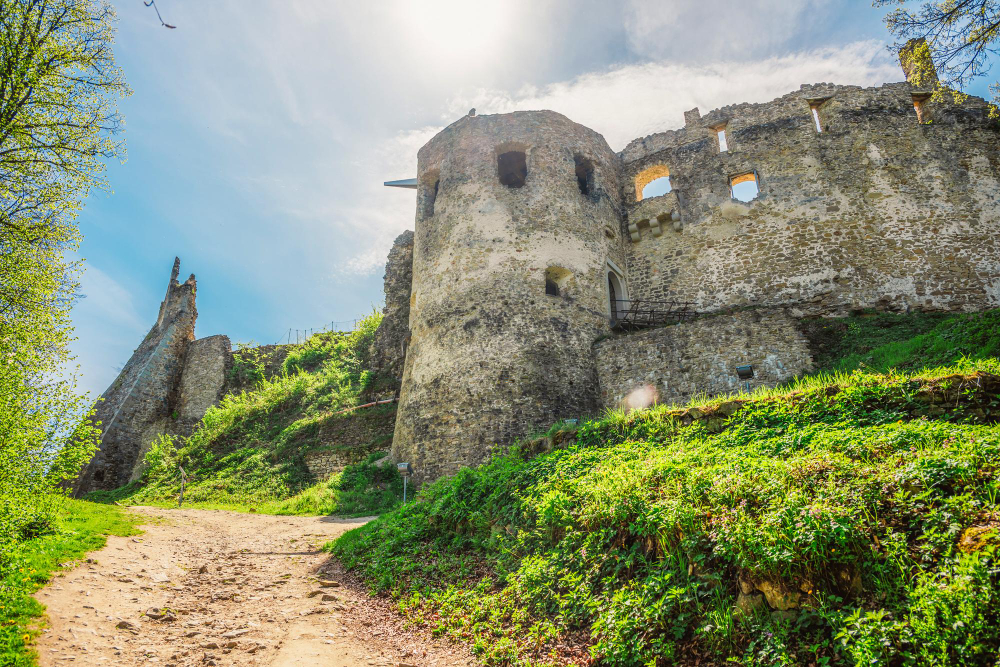
Architecture and Location – Považský hrad is impressive for its original architecture and its strategically favourable location on a steep rock face. The castle originally consisted of several towers and bastions connected by strong walls. A moat and secret underground wooden channels ensured the inhabitants’ supplies. Notable remains include the entrance tower, the former prison tower and the chapel. Although many parts are now in ruins, the castle’s remains bear witness to medieval engineering and military strategy. The castle’s location was crucial to its function: it protected the Váh Valley, an important trade route, and marked the north-western border of the Kingdom of Hungary.
The Surroundings: Manor Houses, Churches and Natural Wonders – Below the castle lie two manor houses – the Renaissance Burg Manor House and the Rococo Szapáry Castle – which once served as residences for the local elite. However, both buildings are now in varying states of disrepair. There are also several historic churches nearby, including St Ladislaus’s Church and the Church of the Visitation of the Virgin Mary. The latter was originally built in the 14th century and now houses ornate stained-glass windows by Vincent and Viera Hložník. Not far away lies the Manínska tiesňava, Slovakia’s narrowest gorge, which attracts nature lovers and walkers alike. This demonstrates that the region around Považský hrad is of outstanding importance not only historically but also in terms of its natural landscape.
Restoration and Challenges – The restoration of Považský hrad is a laborious and protracted process, hampered by financial difficulties. The association Zdruzenie na zachranu Povazskeho hradu is endeavouring to raise funds and recruit volunteers for the renovation work. Despite recurring problems and occasional acts of vandalism, enthusiasm for saving the castle remains undiminished.
A historic monument – Považský hrad is not only an architectural masterpiece of bygone times, but also a symbol of the eventful history of the region and its inhabitants. The stories of the Podmanitzky family, the legends surrounding their ‘robber barons’ and the castle’s transformations reflect the dynamics of medieval Europe. Despite its dilapidated state, the ruin remains a fascinating testament to this era – and a place that is being breathed new life into thanks to the dedication of committed individuals. Whether you’re a history buff, a nature lover or an adventurer – Považský hrad and its surroundings offer a captivating experience that bridges the past and the present.