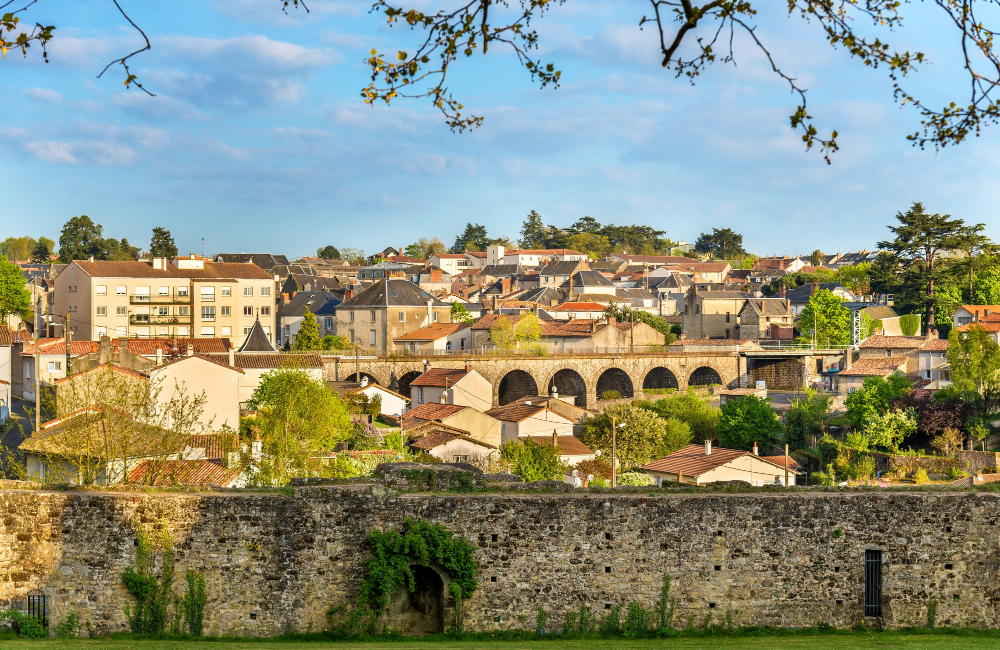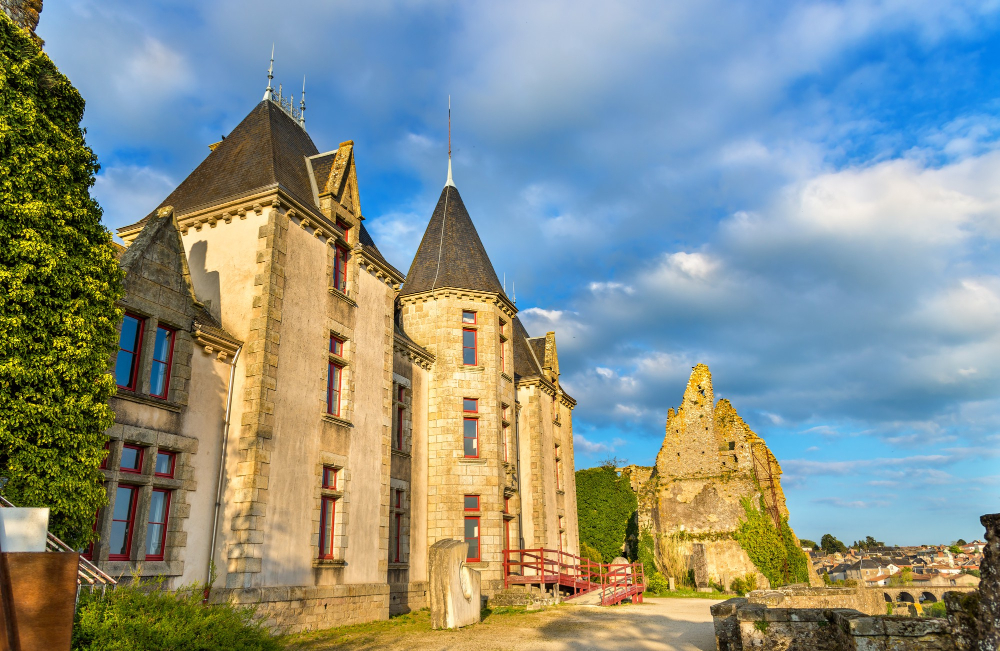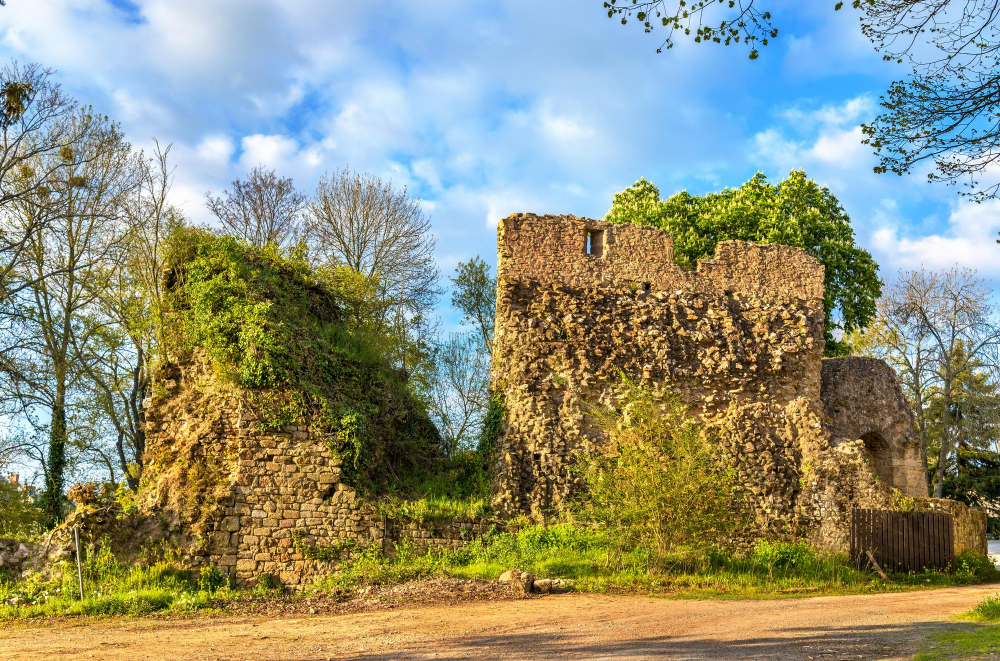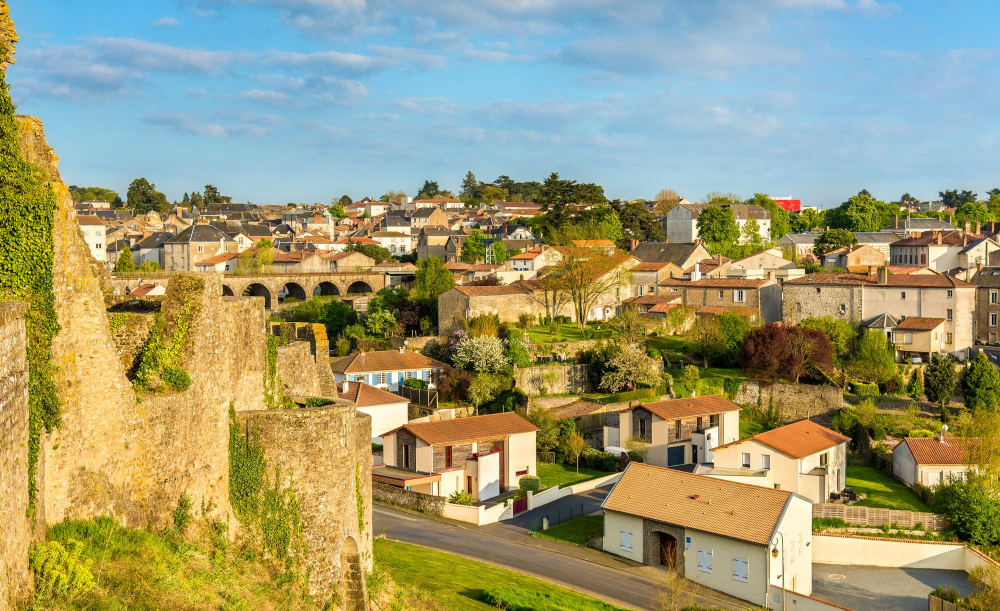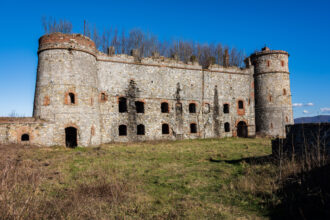
The Château de Bressuire, a majestic yet mysterious structure in the Deux-Sèvres department of the Nouvelle-Aquitaine region, is today an impressive ruin with a past steeped in history. Its countless legends, architectural features and its role in the historical conflicts between France and England make it a fascinating place that attracts not only historians but also lovers of legends and myths.
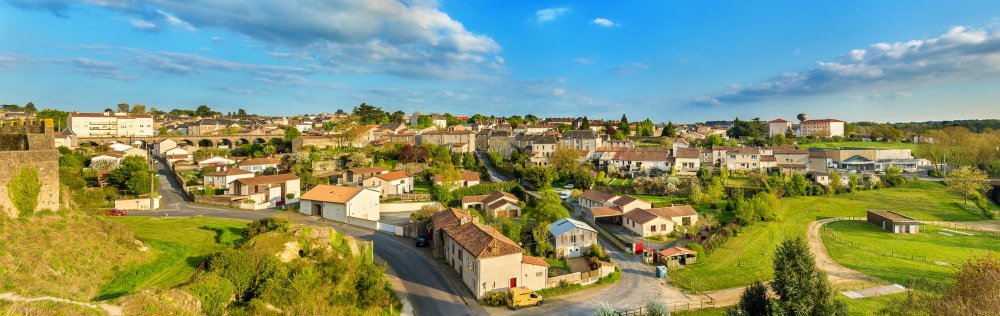
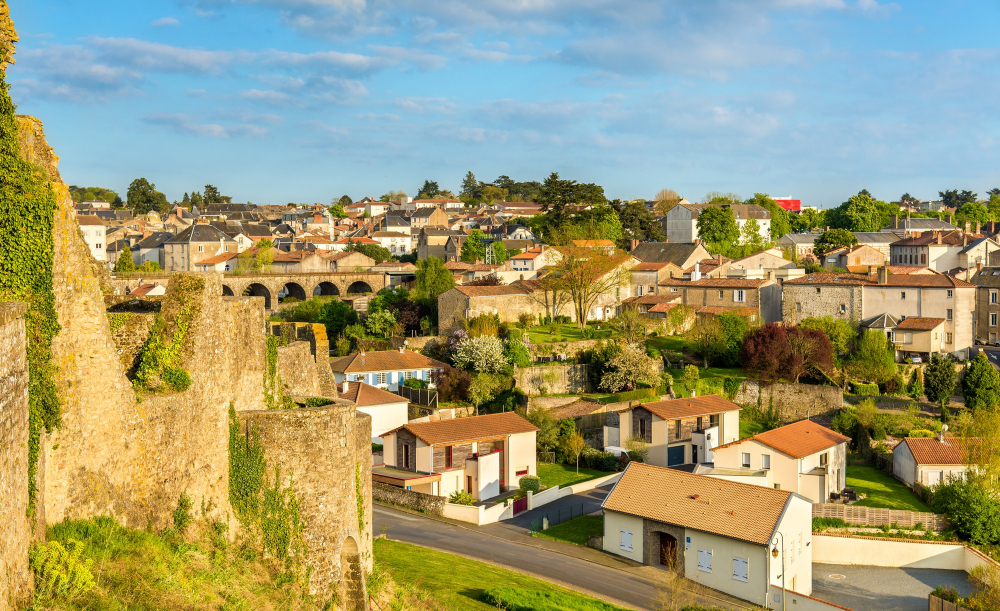
A strategic location of inestimable value – The castle’s location has always been of strategic importance. It was built on the edge of the Poitou Plateau, where the terrain slopes gently and rivers and ponds form a natural barrier. This location once afforded the fortress an excellent view of the surrounding countryside and made it particularly difficult for enemies to access. The small town of Bressuire, which stretches out around the castle, has established itself over the centuries as an important hub in western France. The town’s origins date back to Celtic times, and the site of the later castle was settled early on. There is evidence that a fortified settlement – a so-called ‘castrum’ – already existed here in 1029. However, the castle’s current structure was not built until the late 10th century by the Beaumont family, who remained the castle’s owners for centuries. The name Beaumont-Bressuire remains closely linked to its history to this day.
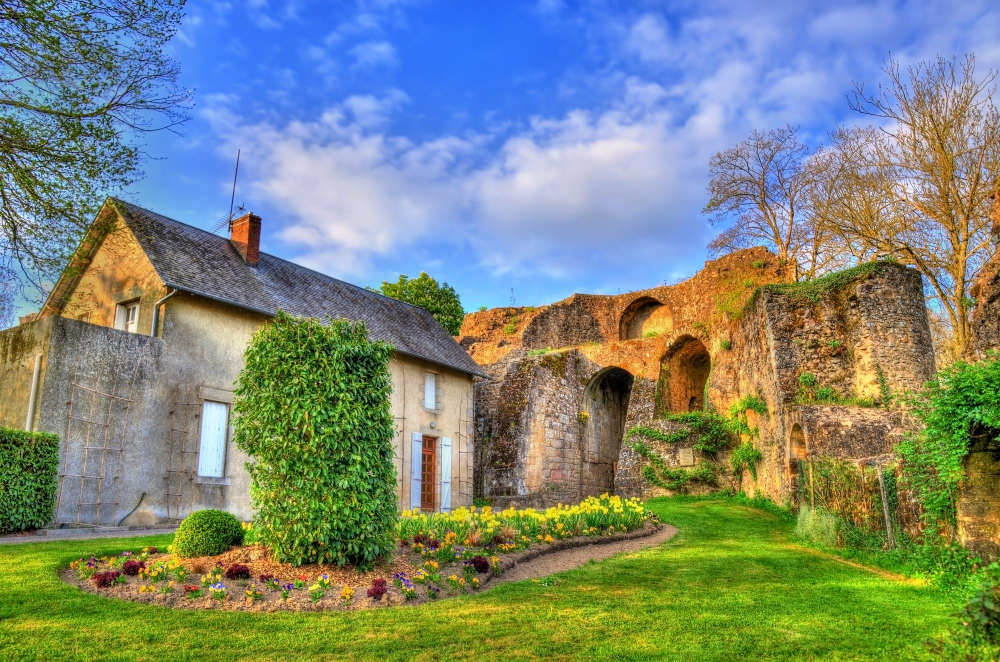
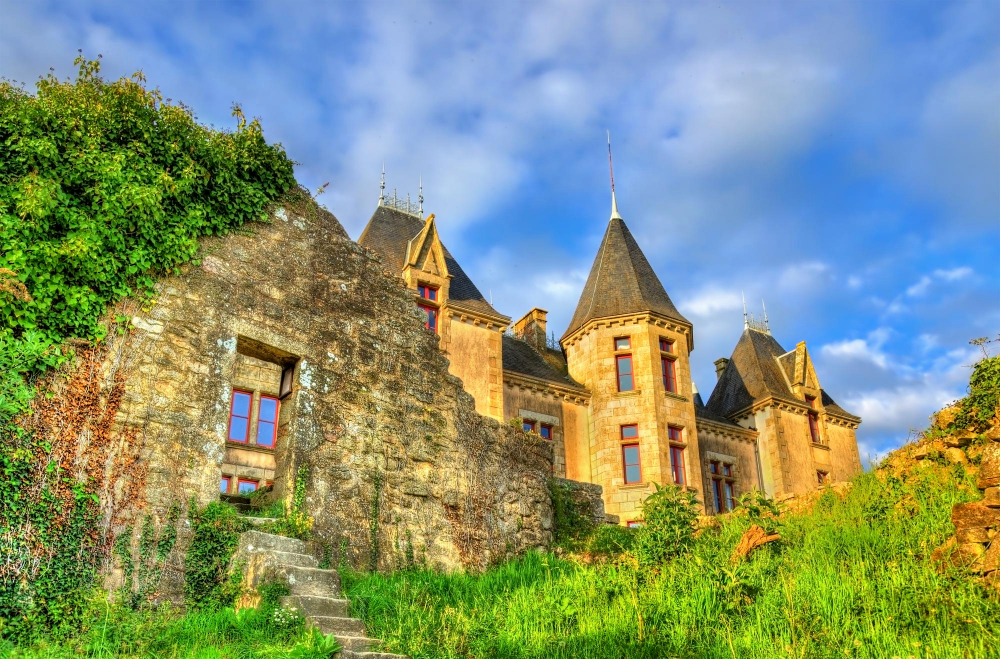
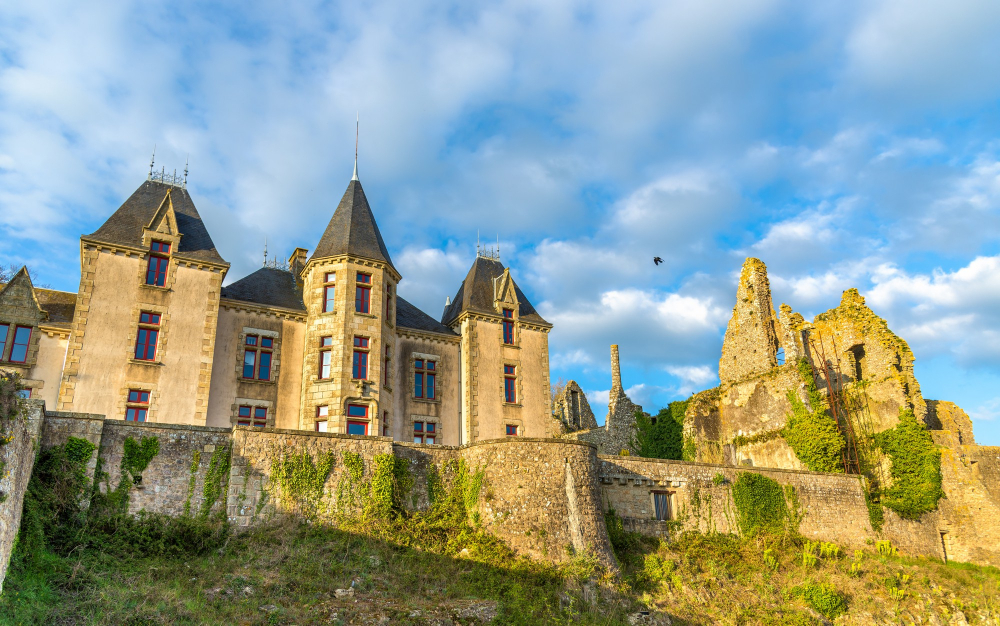
War, Power and Intrigue – For over three centuries, the castle played a significant role in the conflicts between the kings of France and England over supremacy in Poitou. The site is distinguished by a unique feature: despite its military importance, the castle was never directly besieged. This is exceptional for a castle of this size and strategic location, and demonstrates how well the castle’s defences were constructed. Nevertheless, the region was not spared the turmoil of war. One of the most famous moments in the castle’s history is its recapture by Bertrand du Guesclin during the Hundred Years’ War, when he succeeded in driving out the English troops. Over the centuries, however, the fortress lost its military significance, particularly following the more peaceful times of the 17th century. Violent storms and neglect led to parts of the complex being damaged in the 18th century. This marked the beginning of the building’s slow decline. In 1880, a new manor house was built, albeit some distance from the original walls.
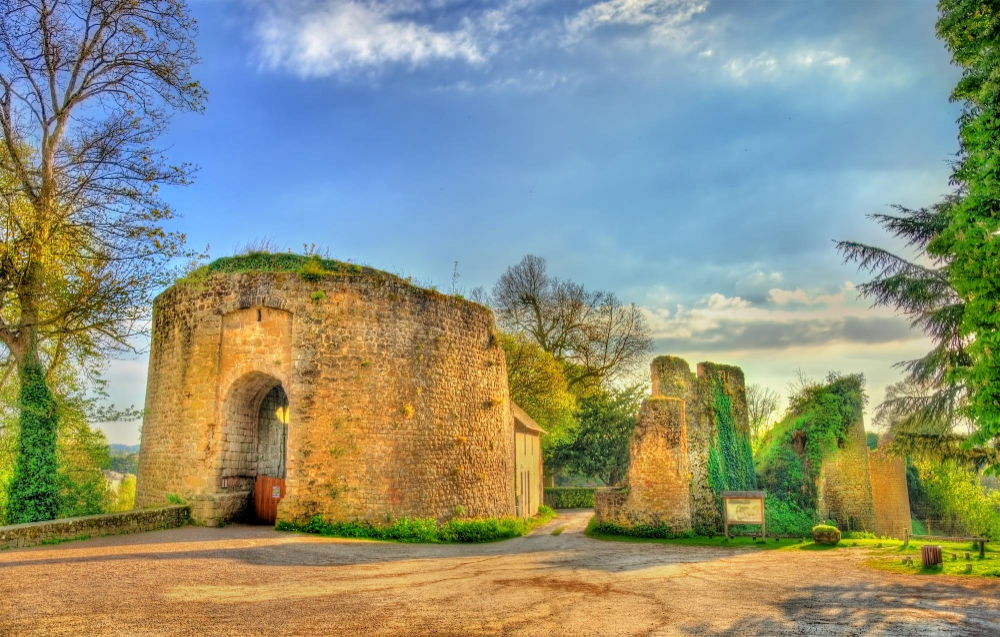
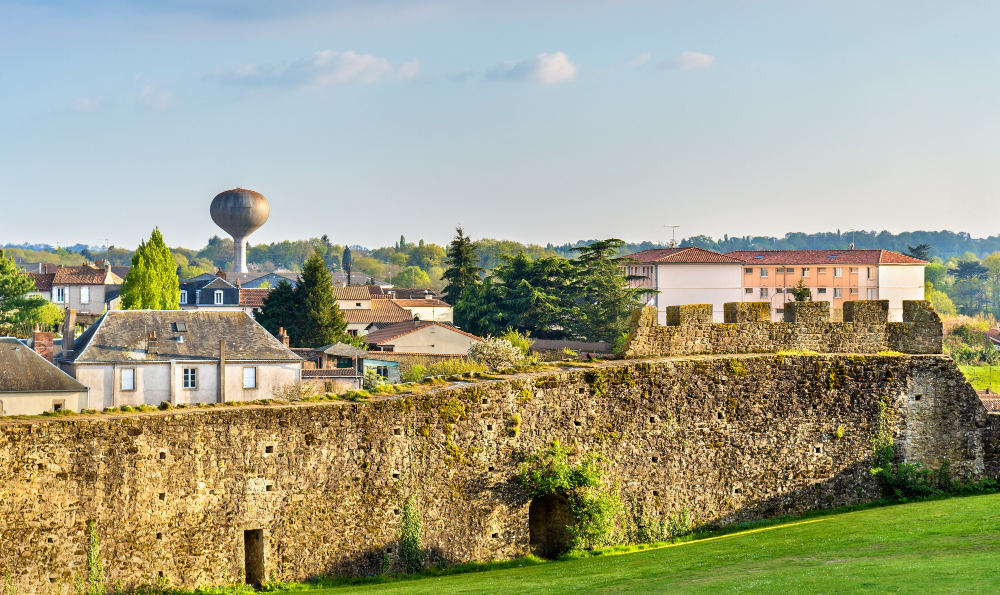
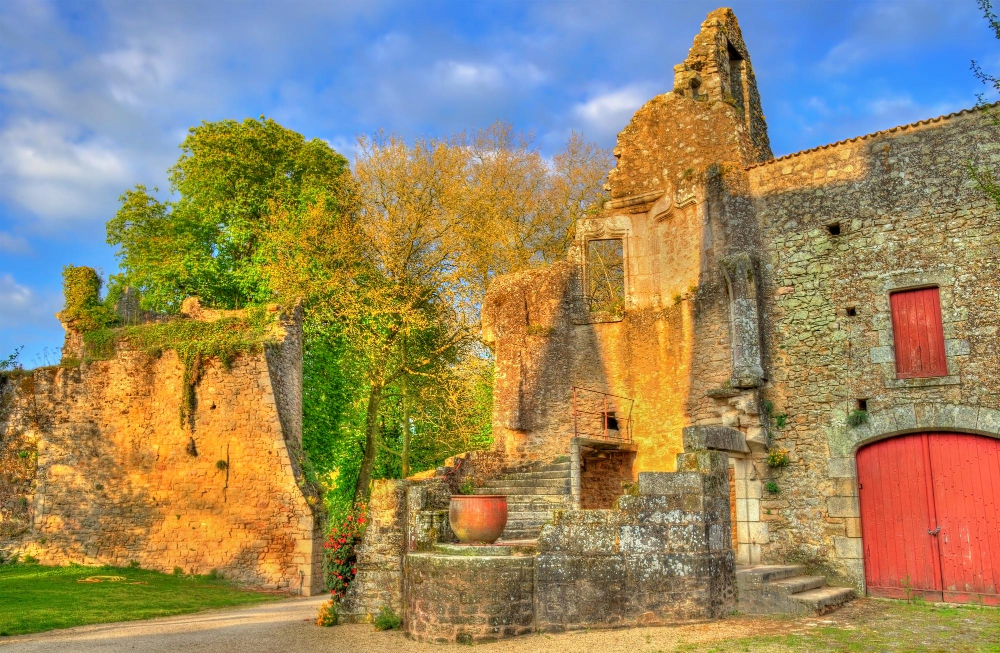
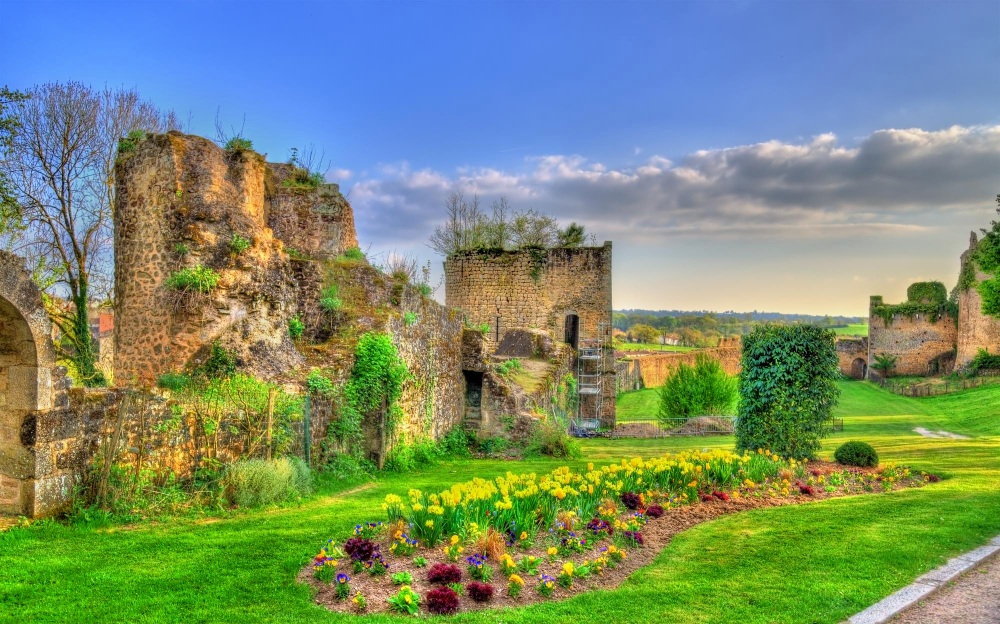
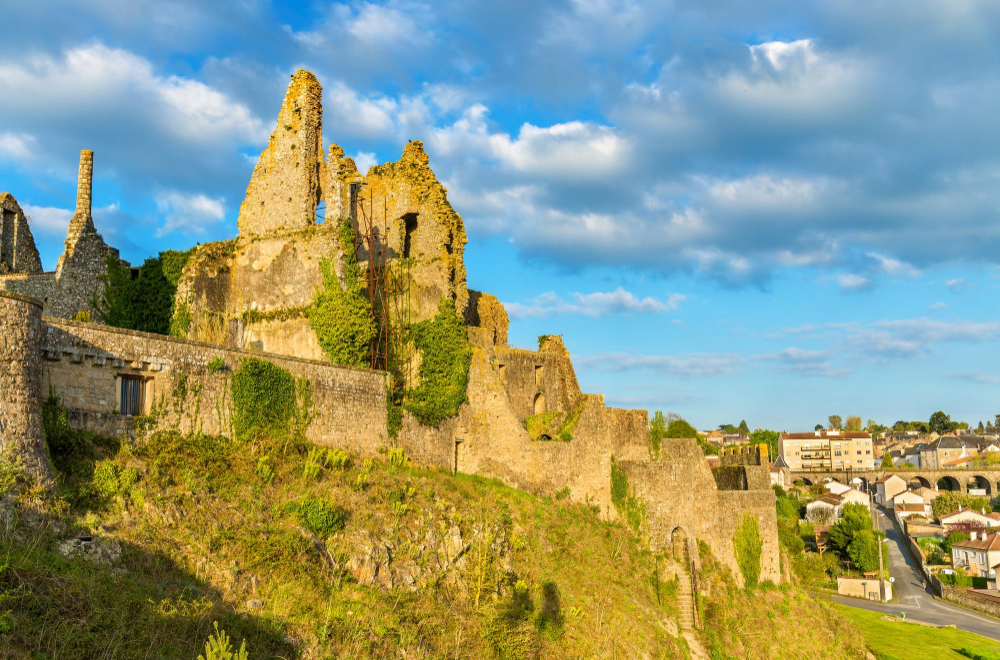
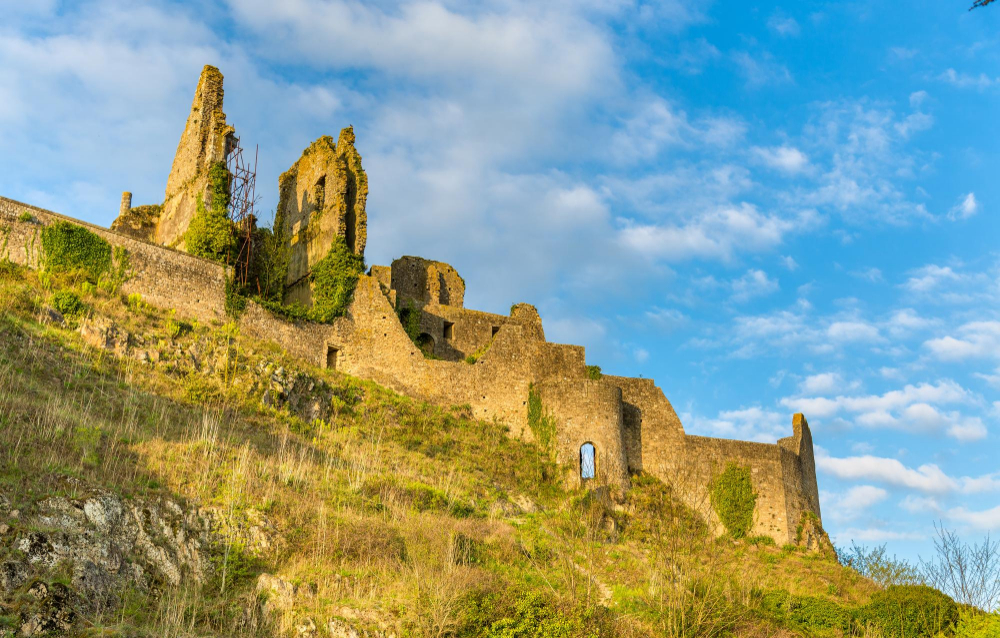
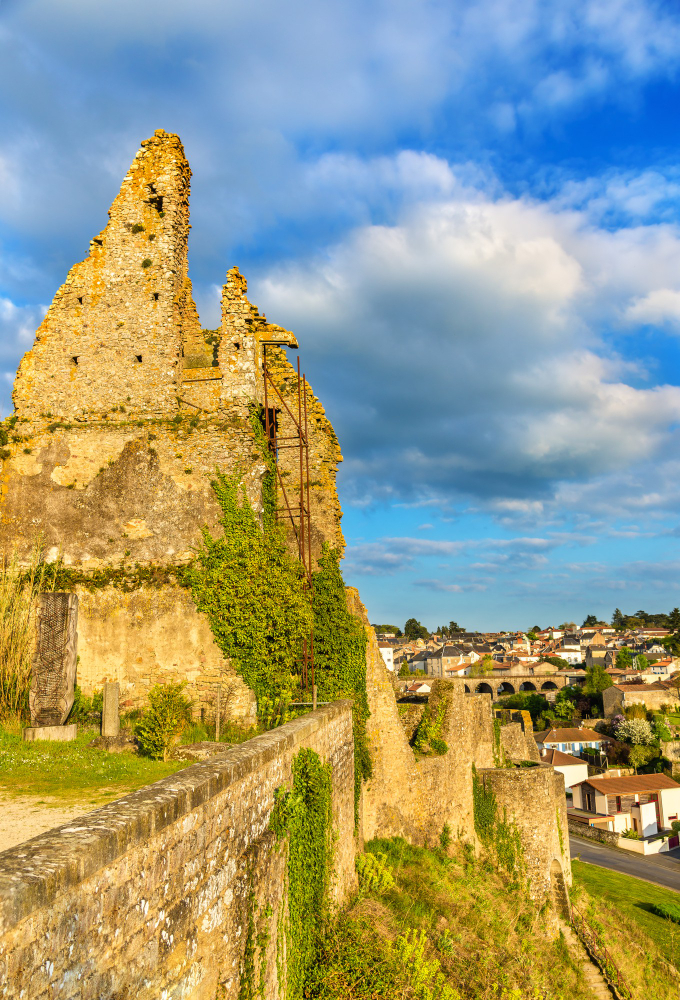
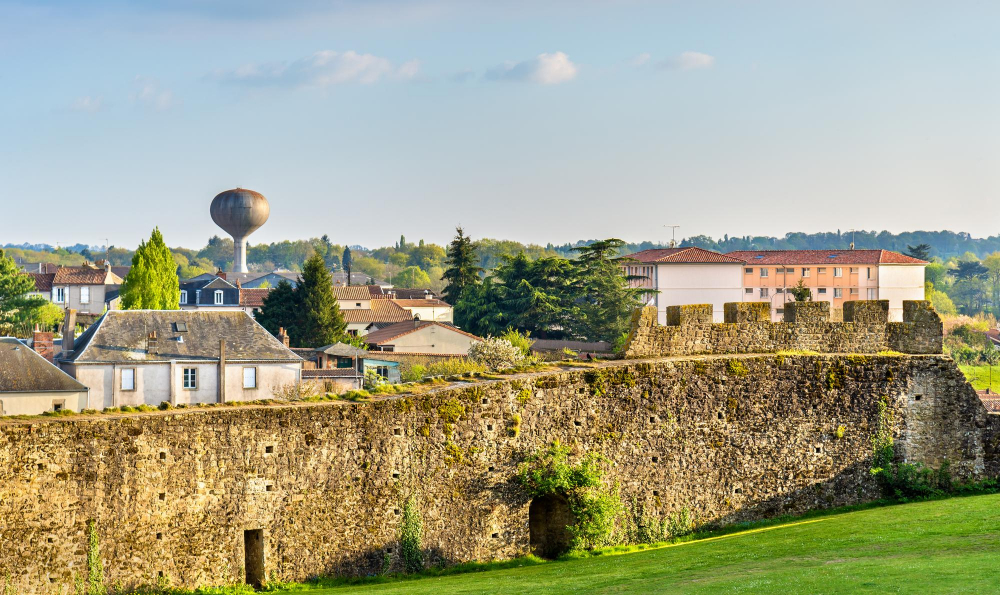
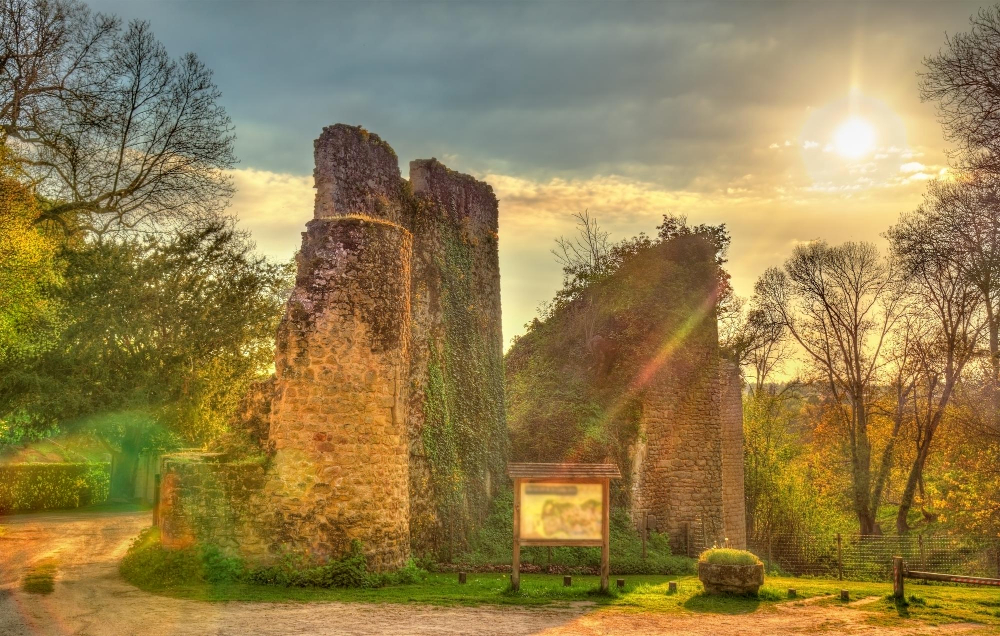
An architectural masterpiece of medieval art – The castle’s current appearance is characterised by its imposing ruins, which still convey a sense of the splendour of days gone by. Several elements of the original fortress have been preserved, including parts of the keep, sections of the walls and the entrance through the tower gates. Originally, the complex consisted of three fortified ring walls, of which, however, only the two inner ones remain partially intact today. The outer wall has completely disappeared. Particularly impressive is the castle’s layout, which blends harmoniously with the undulating terrain and combines both natural and man-made defensive features. Also noteworthy is the former chapel within the complex. Today, only the foundations of a crypt remain, lying about two metres below the surface. Although no extensive archaeological excavations have taken place to date, the chapel remains a symbol of the site’s religious significance. In the 12th century, the keep formed the heart of the fortress and offered a magnificent view of the nearby lakes and the surrounding plateau. With a horseshoe-shaped enclosure and massive towers, the castle demonstrated its defensive capabilities at the time. In the 13th century, the complex was expanded once again, including the addition of a second curtain wall that enclosed the chapel and the buildings of the lower courtyard.
Decline and Revival: The Castle’s Significance Today – Over the centuries, the castle underwent constant changes, extensions and eventually a decline, making it a living testament to France’s turbulent history. In 1975, the municipality of Bressuire acquired the castle’s remains in order to preserve and protect them. In 1996, it was finally granted full listed status. Since then, minor renovation work has been carried out on individual sections, particularly on the northern part of the tower. Despite its state of ruin, the castle has lost none of its fascination. Quite the contrary: the mysterious atmosphere emanating from the broken stones, the overgrown walls and the quiet paths attracts visitors from all over the world every year. Events such as medieval festivals, cultural tours and historical re-enactments bring the place to life and allow it to flourish once more, if only for a brief moment.
Myths and Legends: The Dark Secret of the Castle – Like any ancient building, the Château de Bressuire is shrouded in numerous legends that transform its walls into a place of fantasy. One of the best-known stories concerns a hidden treasure chamber said to lie deep beneath the chapel’s crypt. It is said that a knight of the Beaumont family once hid a valuable treasure there to protect it from the invading English. To this day, this chamber has never been found, which fuels the curiosity of adventurers and historians alike. Another legend tells of the ghost of an unfortunate nobleman who is said to be trapped within the castle’s halls as punishment for his betrayal of the French crown. On nights of the full moon, it is said, his wailing can still be heard, and he is regarded as a warning sign to all who approach the place with evil intentions.
A place of inspiration and wonder – The Château de Bressuire is much more than just a ruin – it is a living relic of the past, telling tales of wars, power struggles and human destinies. The combination of historic architecture, strategic location and mystical legends makes this place unique in the region. For history enthusiasts, it offers a rare opportunity to step straight back into the Middle Ages, whilst for dreamers and romantics it is the perfect destination to explore the mysteries of the past. Today, the castle stands not only as a testament to architectural and cultural heritage, but also as a symbol of how important the care and preservation of historic sites is for future generations. Anyone who walks through its weathered walls will realise just how closely history and legend can be intertwined – and what stories a single place can tell across the centuries.