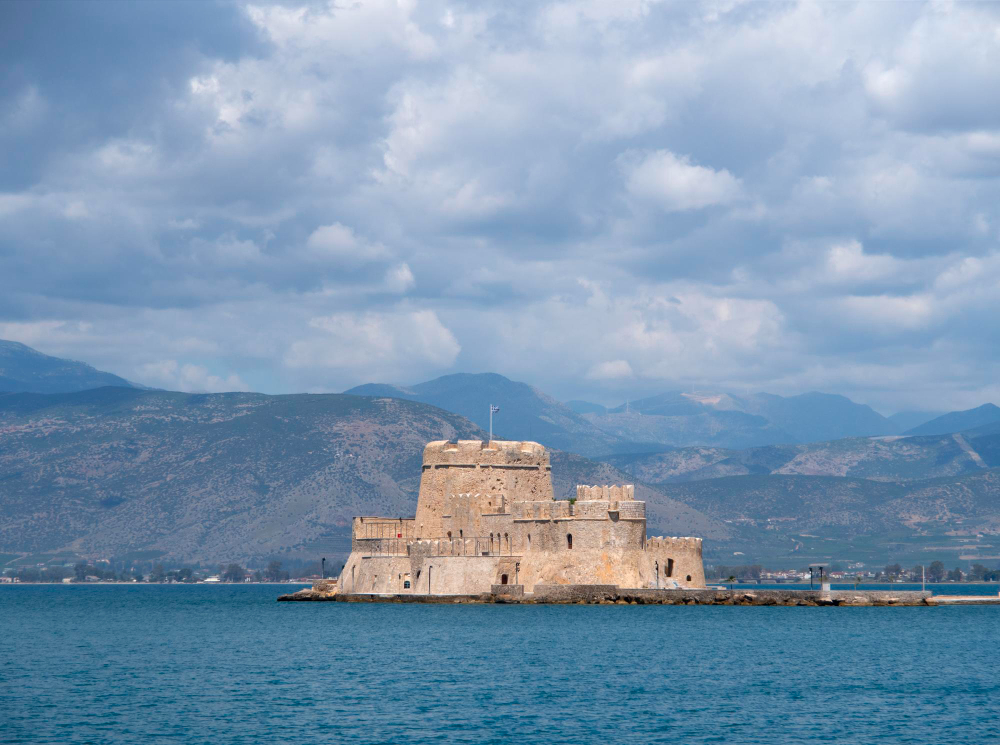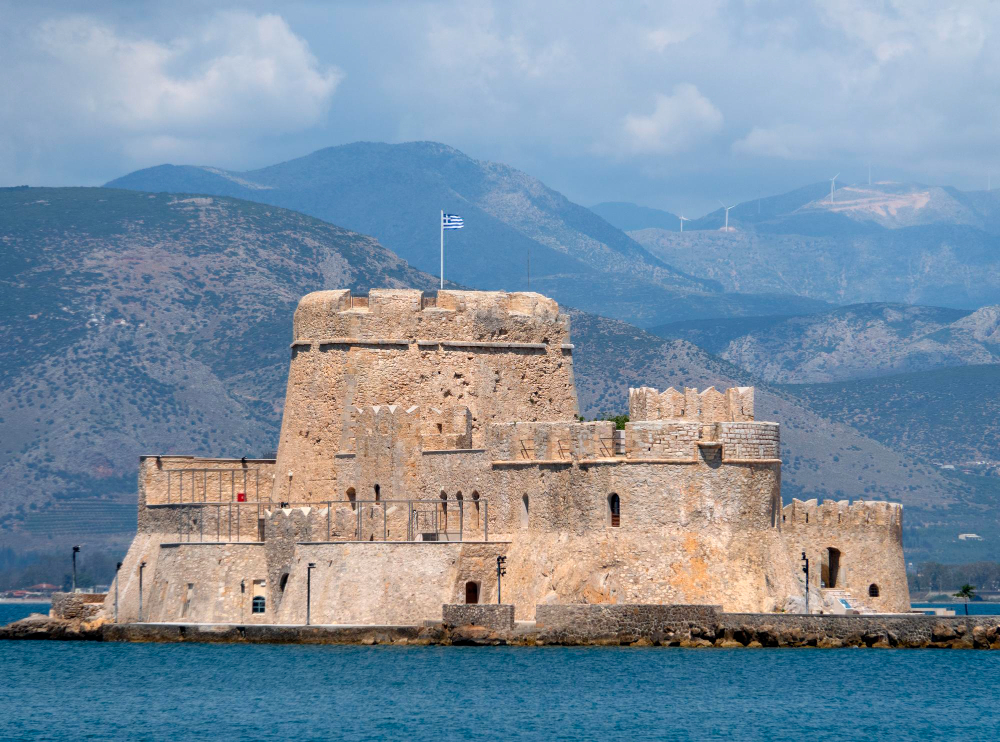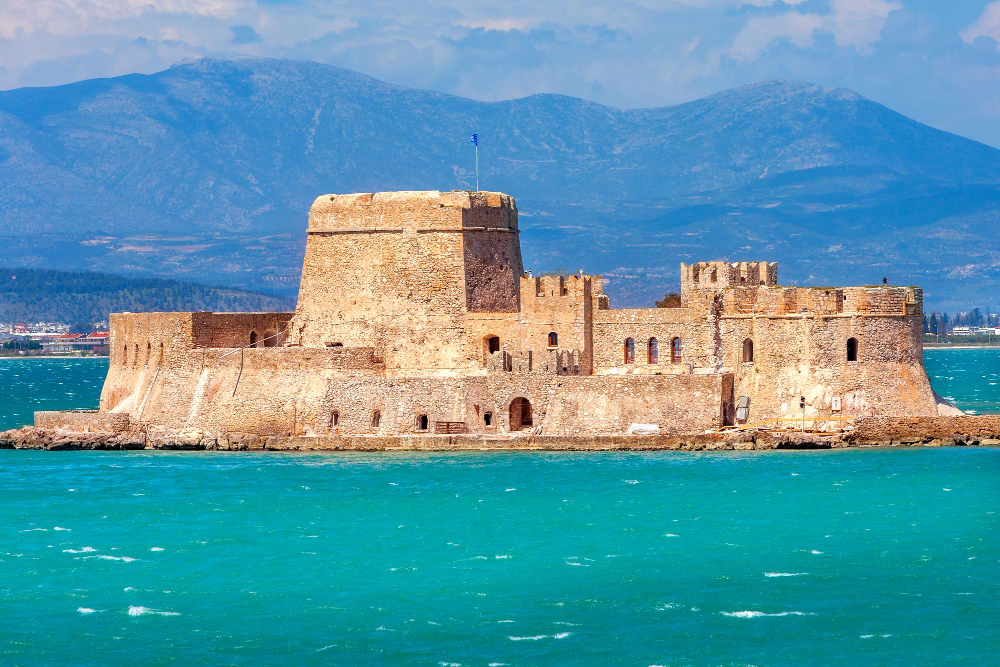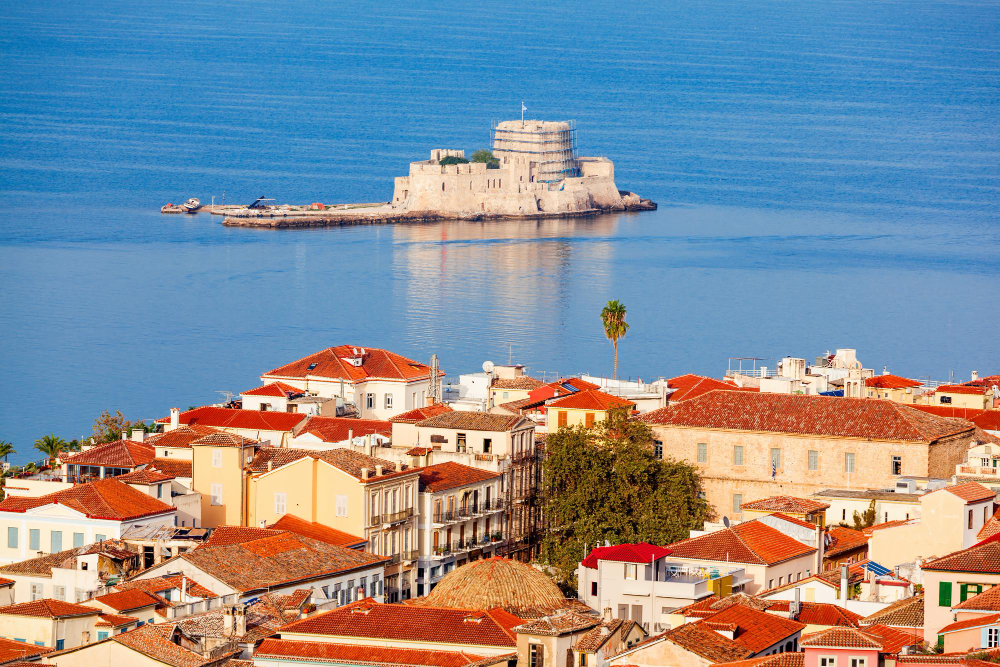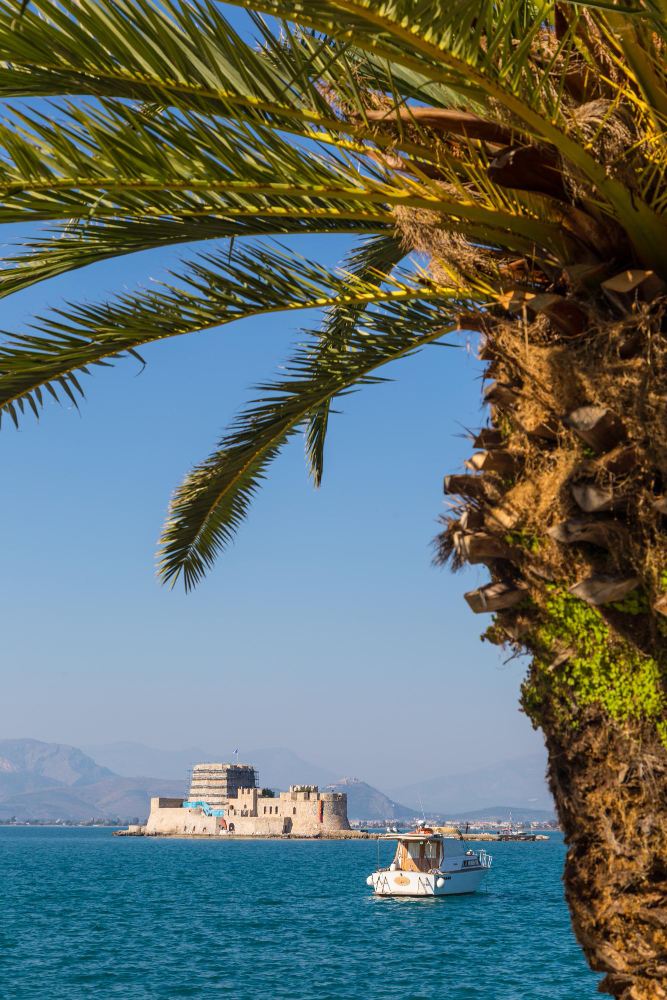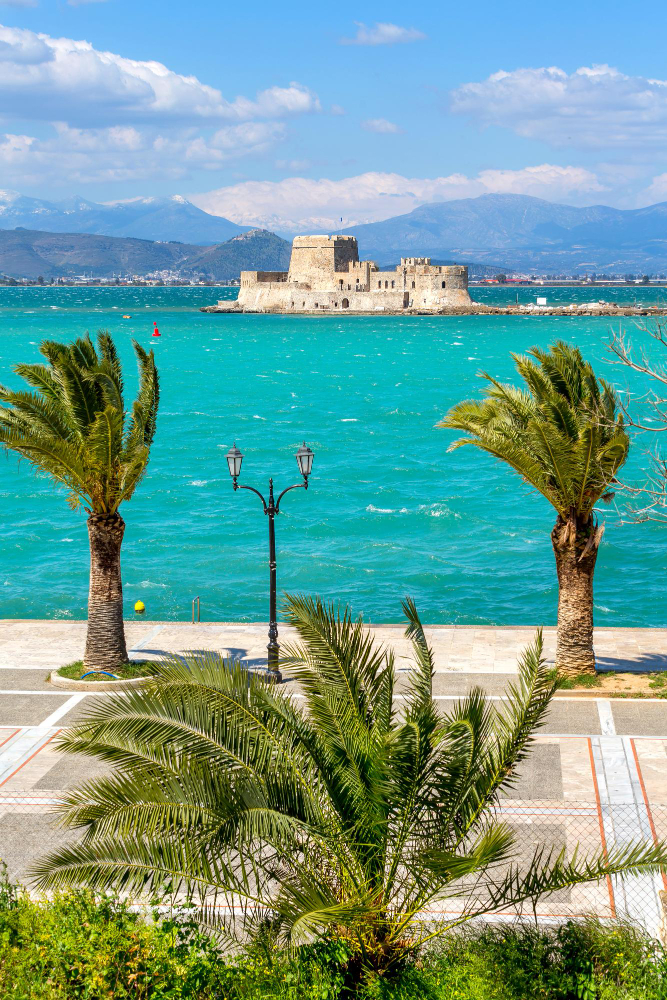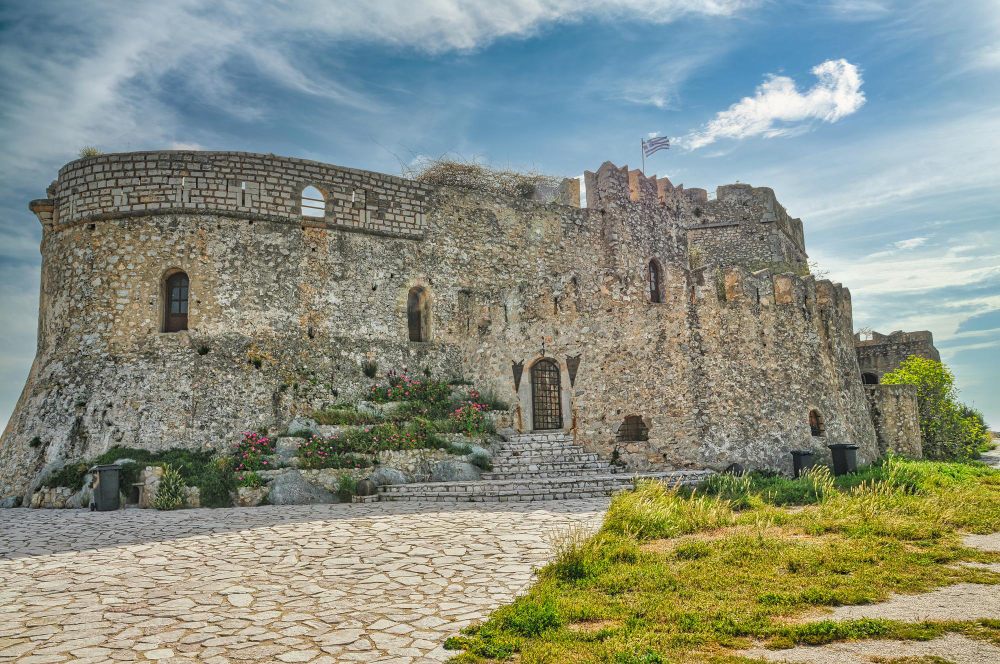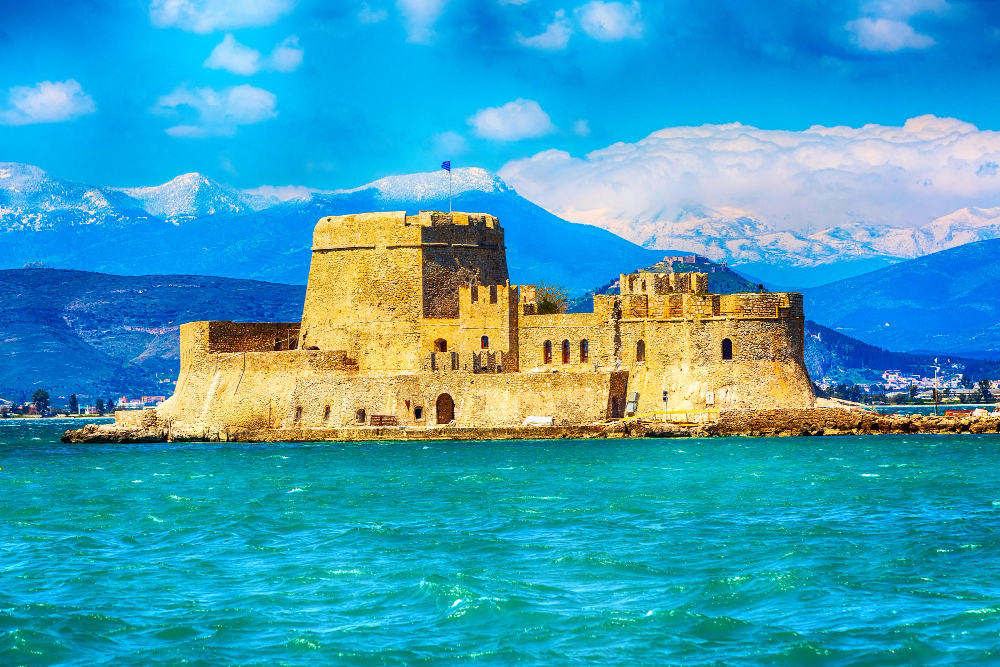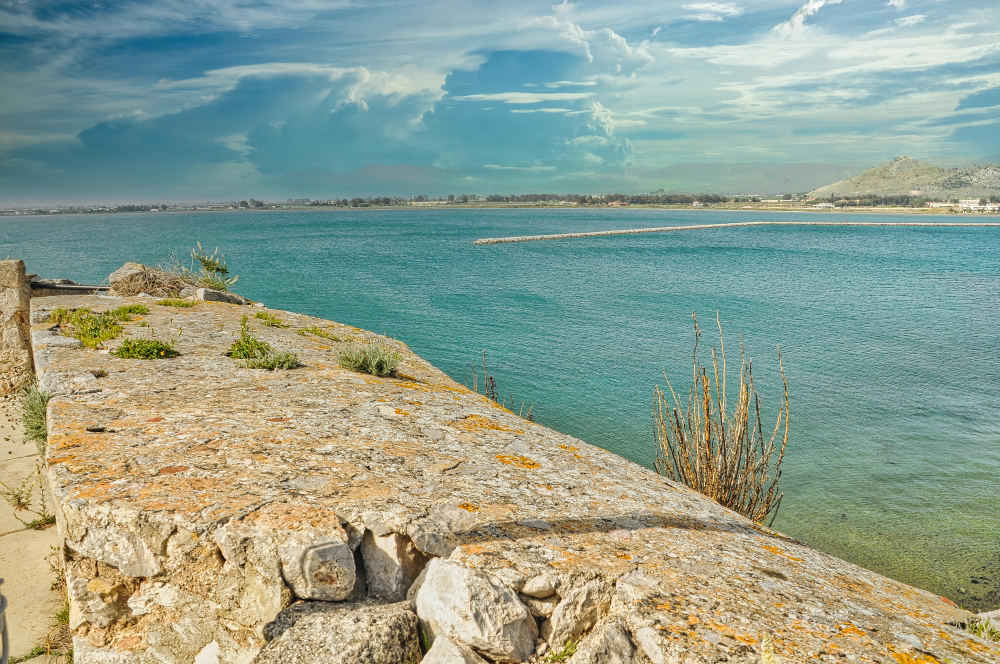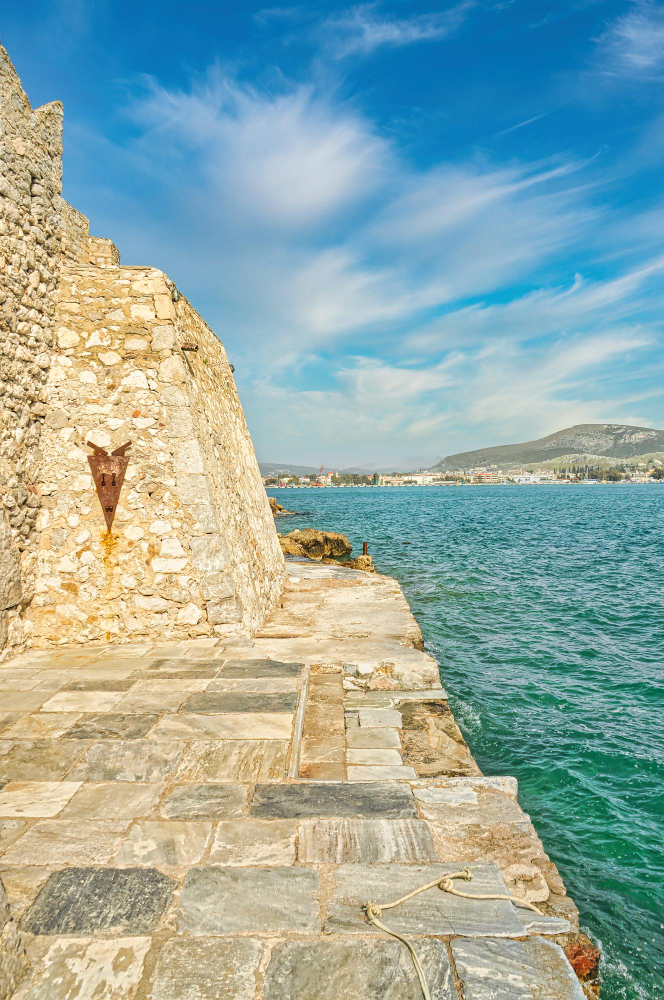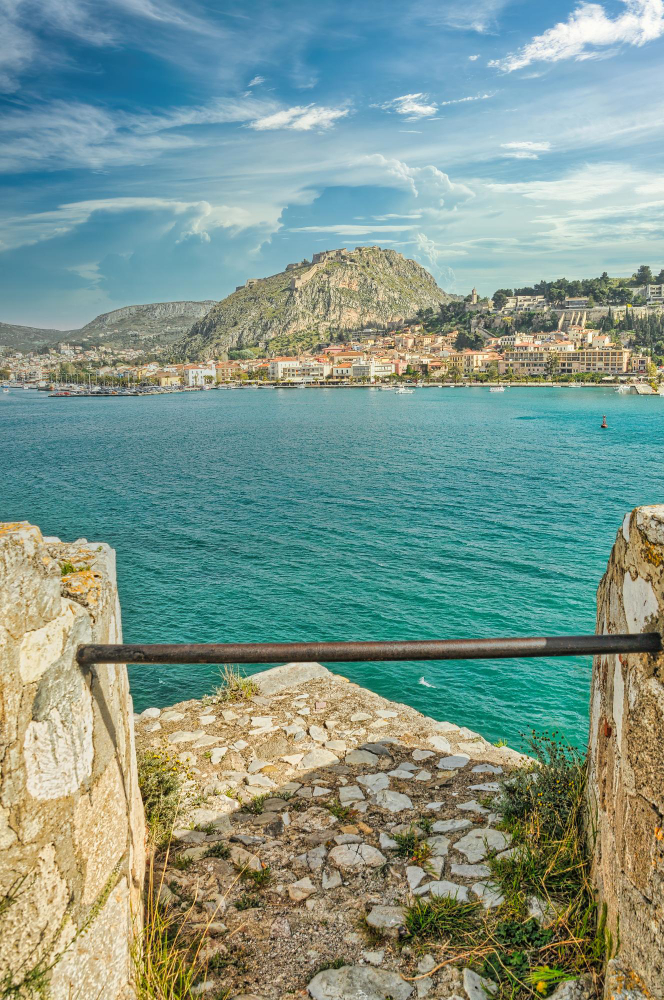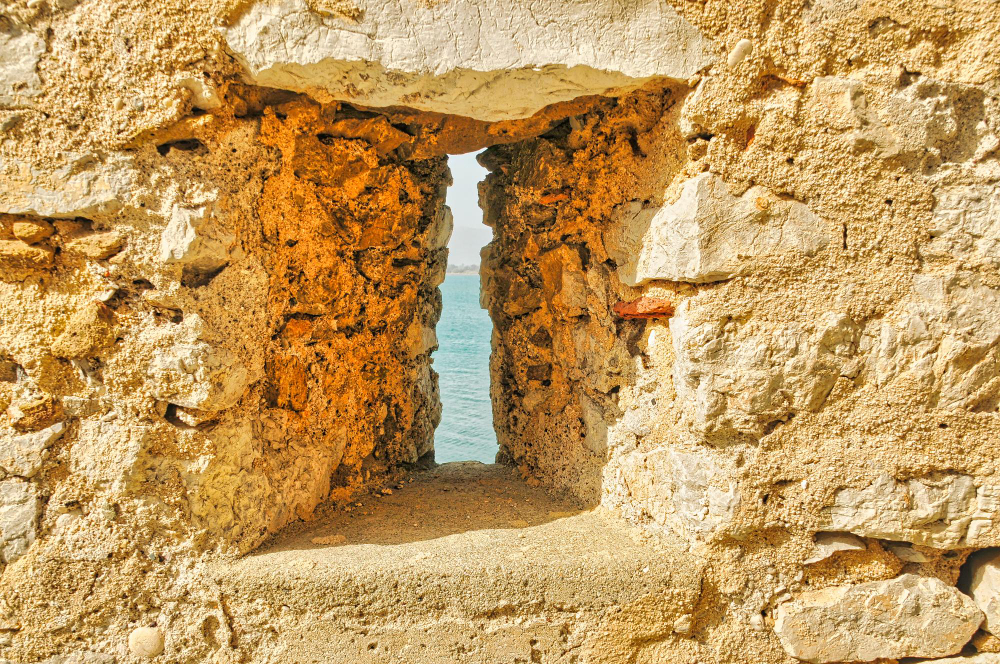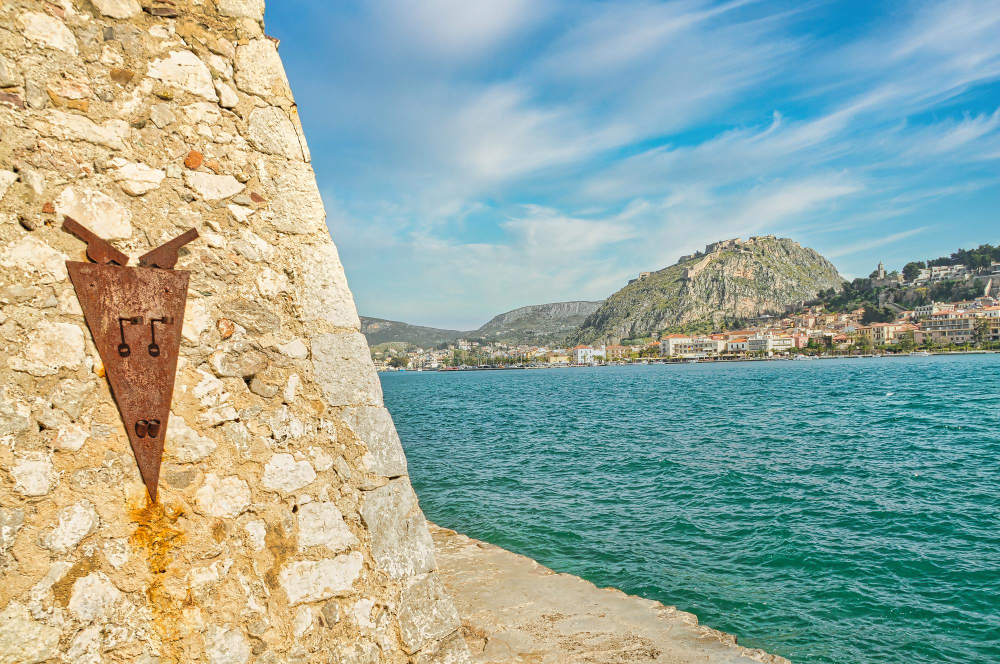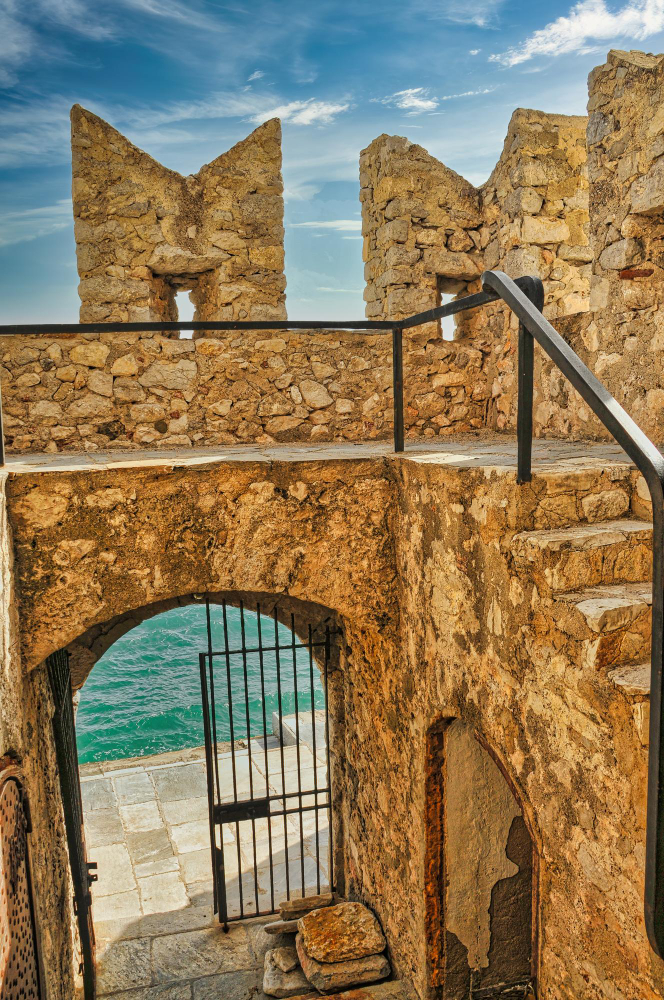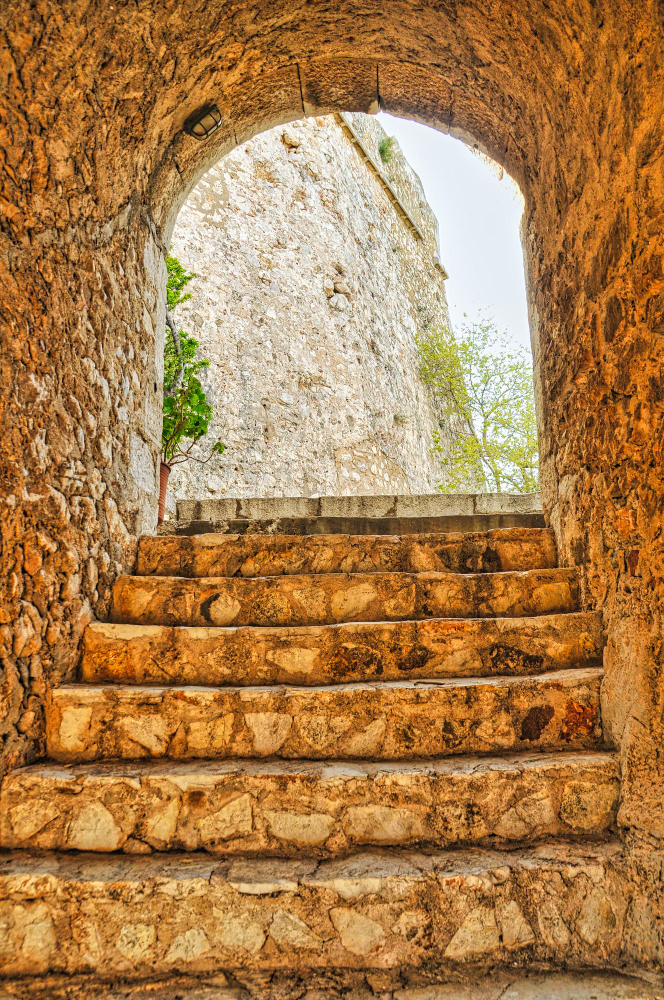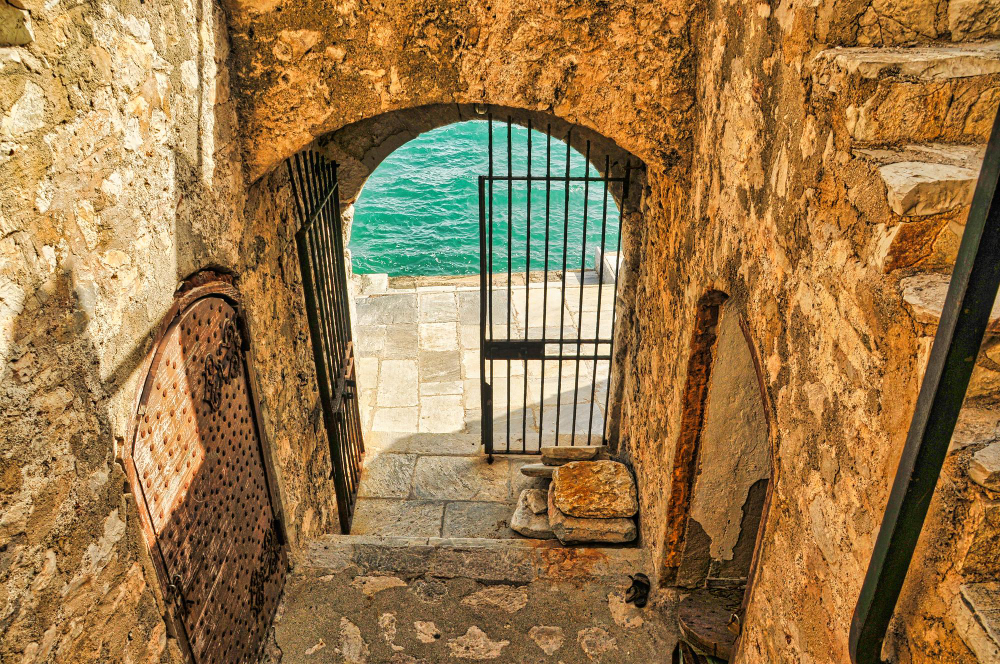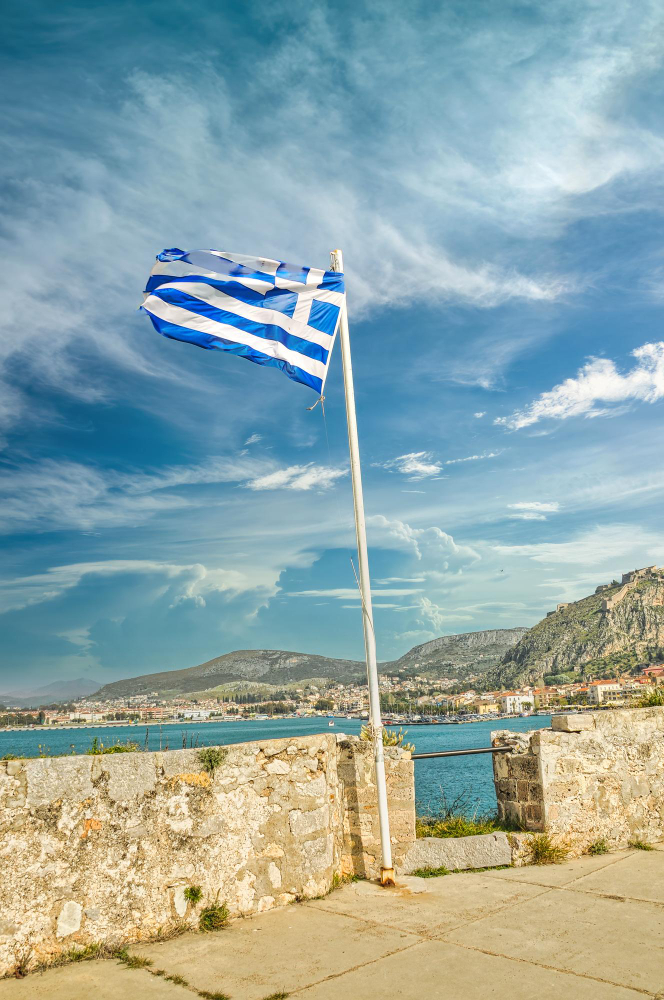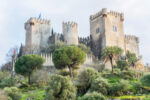
In the heart of the harbour of Nafplio, one of Greece’s most historic towns, stands the impressive Bourtzi Water Fortress – a landmark that has shaped the maritime history and legends of this region for centuries. The name ‘Bourtzi’ is derived from Ottoman Turkish (burc = tower), which in itself reflects the complex history of this small island fortress. Originally also known as ‘Kastelli’ or ‘Passaz’, this fortress was built by the Venetians and continues to play a central role today as a symbol of defence, power and cultural change at the crossroads between Europe and the eastern Mediterranean.
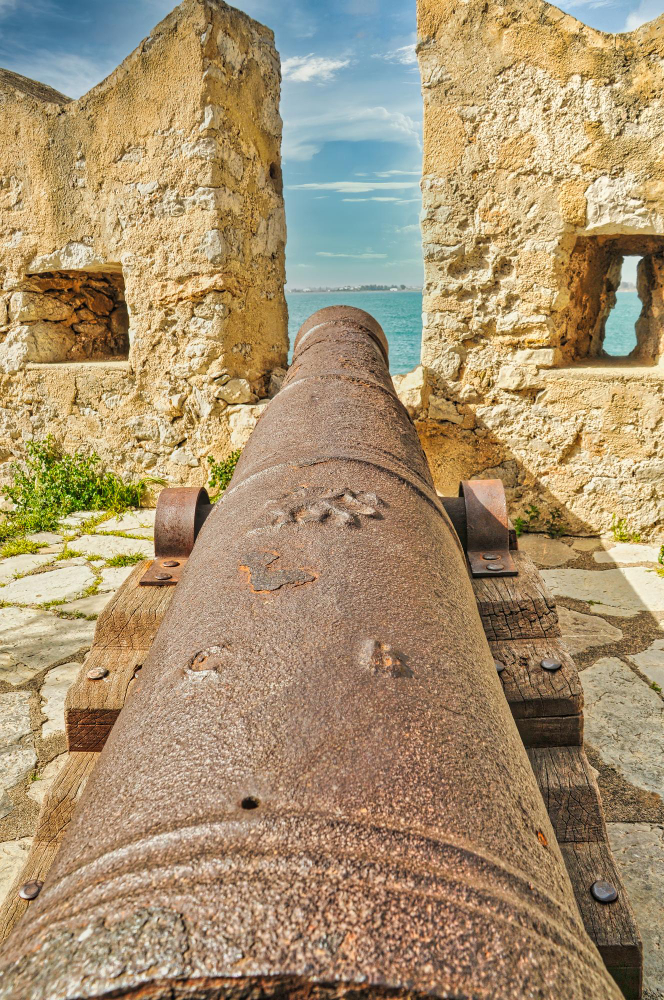
The origins of Bourtzi – 15th-century Venetian architecture – The history of Bourtzi begins in 1471, when Antonio Gambello, an architect from Bergamo in northern Italy, was commissioned to build the fortress. The work was eventually completed by the engineer Brancaleone. The fortress was erected on a small rocky island in the middle of the harbour of Nafplio, which was strategically perfectly situated to protect the harbour from enemy fleets. This location bears witness to a keen military understanding, typical of the Venetian naval power of that era. Construction took place immediately after the departure of the Ottoman governor Mahmut Pasha in 1473. The fortress was equipped with cannons, making it an effective bulwark against potential attacks. In 1502, the Venetians reinforced the defences by erecting a separate rampart on the south-western side and constructing an artificial embankment of boulders. A heavy chain was attached to this, stretching all the way to the mainland and serving to block the harbour entrance – a sophisticated system designed to secure the harbour against unwanted vessels.
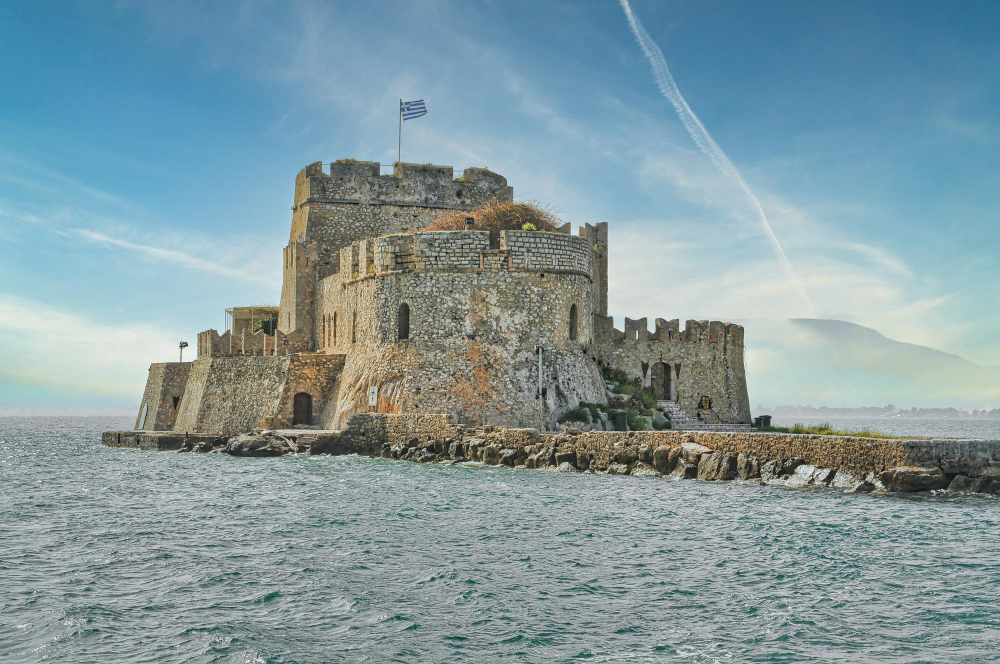
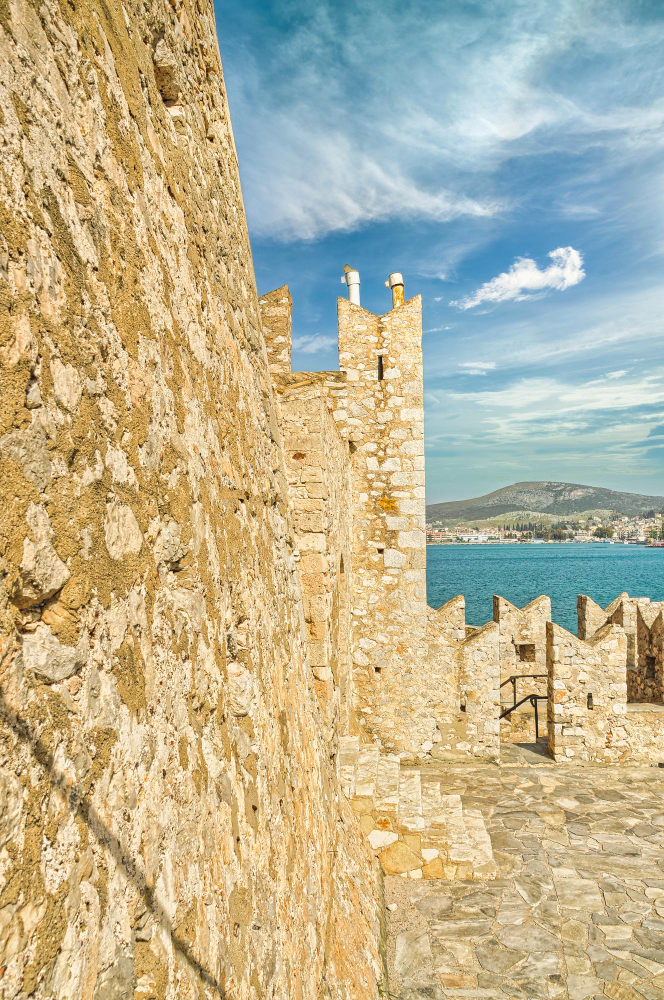
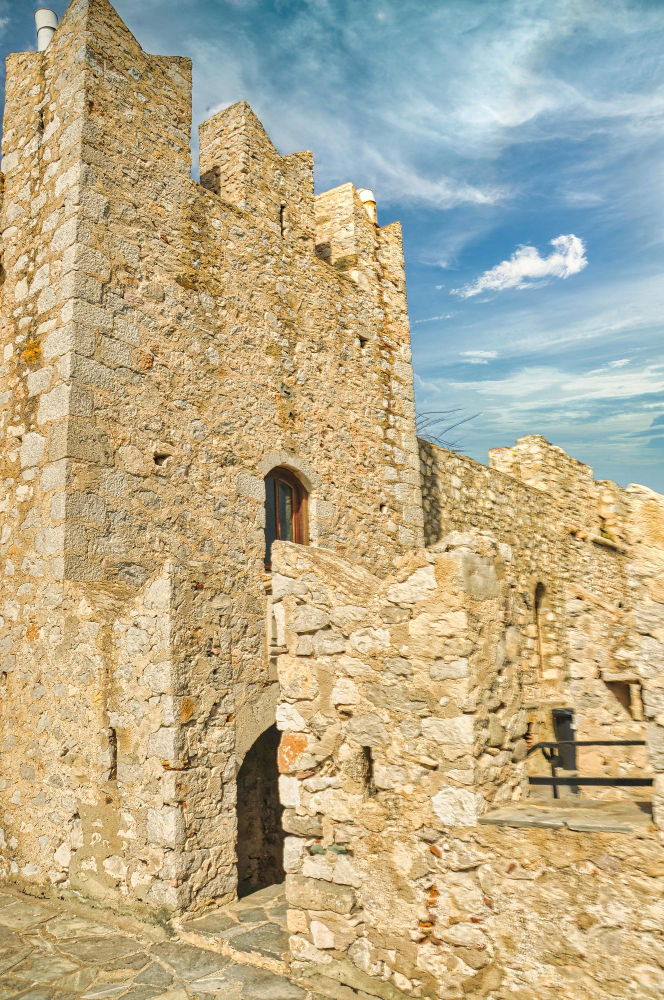
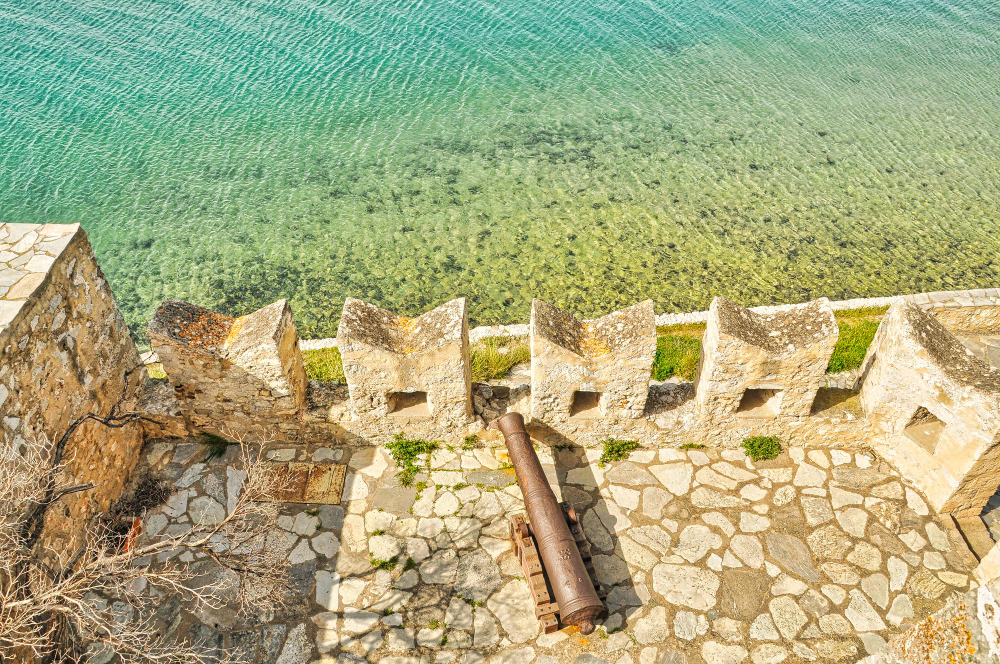
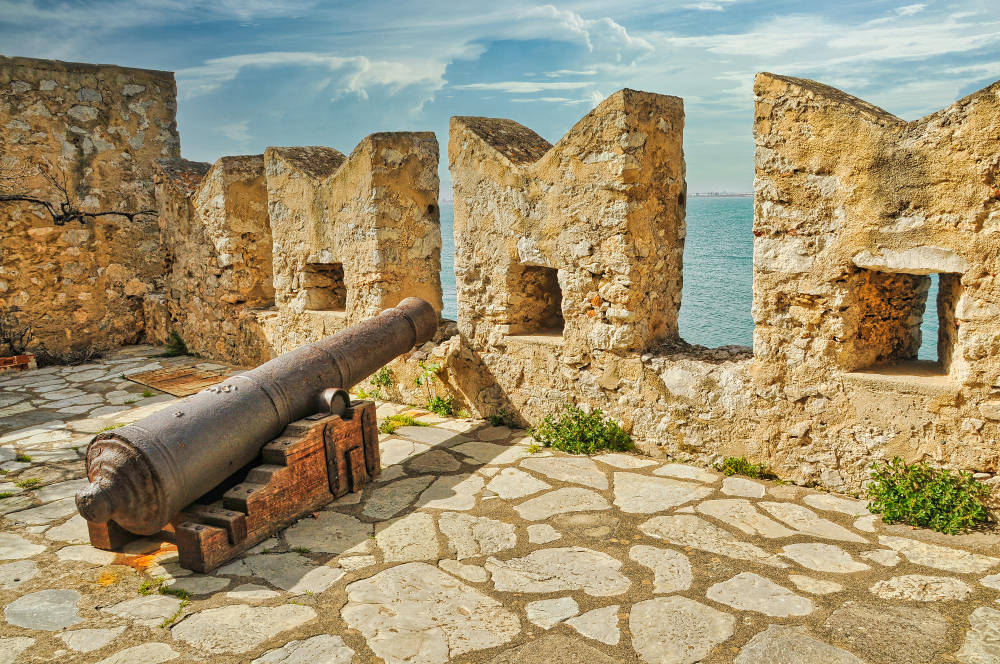
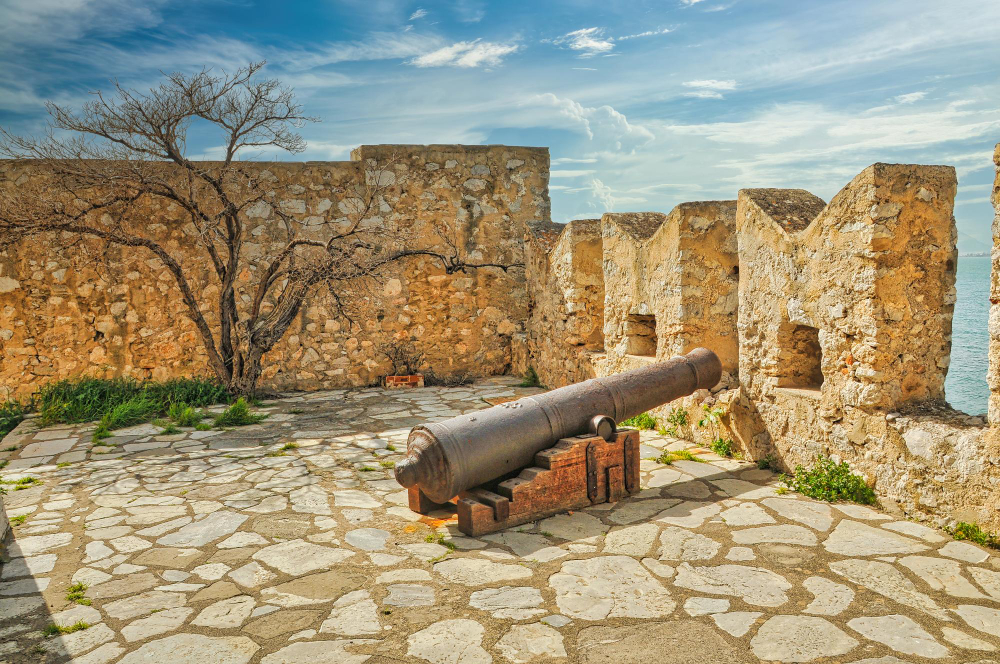
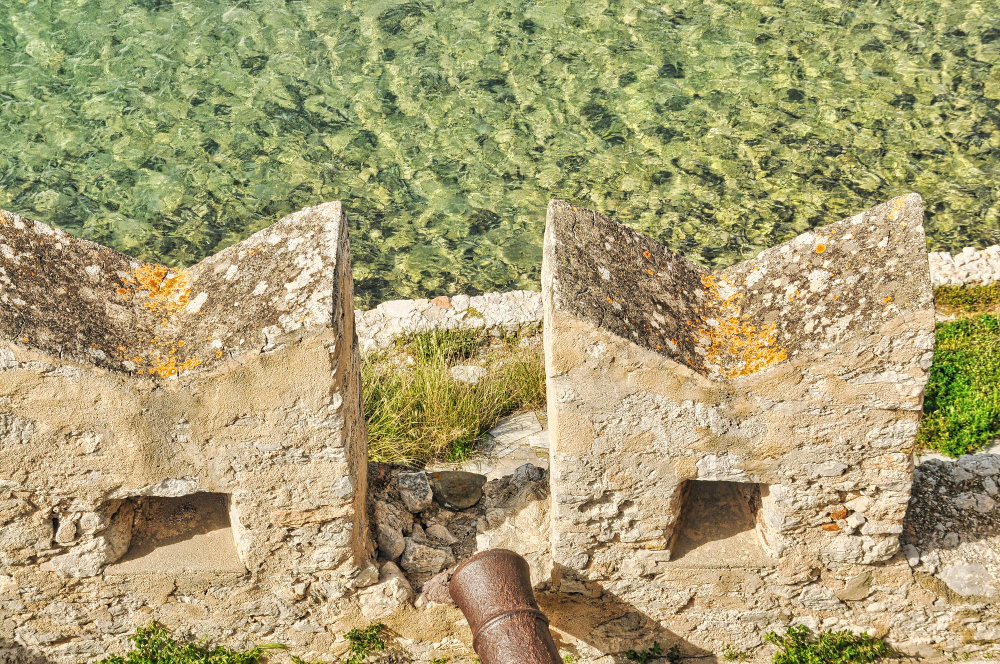
The Bourtzi through the ages – from a military fortress to a symbol of Greek independence – The significance of the Bourtzi changed repeatedly over the centuries, particularly following the Treaty of Karlowitz in 1699, which marked the end of numerous conflicts between the Ottoman Empire and the European powers. The Venetians expanded the fortress into a robust defensive tower with bastions and heavy cannons, which still characterise the castle’s appearance today. This artillery-based fortification strategy made the Bourtzi a virtually impregnable fortress that dominated the entrance to the harbour of Nafplio. The water fortress gained particular fame during the Greek Revolution of 1821. A force of 200 men captured the fortress and skilfully used it to launch artillery attacks on Nafplio. Thanks to its strategically favourable position, the revolutionaries succeeded in preventing the delivery of supplies to the Ottoman troops by an English ship. This contributed decisively to the success of the siege and cemented Bourtzi’s role as a centre of military operations. In the years that followed, during the Greek Civil War from 1823 to 1833, the fortress served on several occasions as a refuge for the Greek government – notably on 25 May 1824 and 2 July 1827. This chapter once again highlights the fortress’s political significance during turbulent times.
Dark Times: Bourtzi as a Place of Execution – Following the establishment of the monarchy under King George I, the fortress was disarmed in 1865. It lost its military function and henceforth served a grim purpose: it became the residence of the executioner of Nafplio. Bourtzi also served as the site of public executions by guillotine – an aspect of its history that is often overlooked, yet which highlights the fortress’s dark legacy. During this period, its image shifted from that of an impregnable fortress to that of a place of punishment and control.
From military fortress to tourist gem – The 20th century marked the beginning of a new era for Bourtzi: following the establishment of the Greek National Tourism Organisation, the castle was extensively restored in the 1930s and converted into one of Greece’s first tourist centres. A twelve-room hotel was built, along with an upmarket restaurant that was even mentioned in international travel guides. Thus, Bourtzi became a symbol of Greece’s transformation from a theatre of historic battles to a country that made its cultural treasures and sights accessible to visitors from all over the world. This use continued until the era of the military junta in the early 1970s, when the hotel and restaurant operations were discontinued. It is worth noting that scenes featuring the hotel appeared in the film The Man on the Train (1958) by Dinos Dimopoulos, thereby securing Bourtzi’s place in Greek film history.
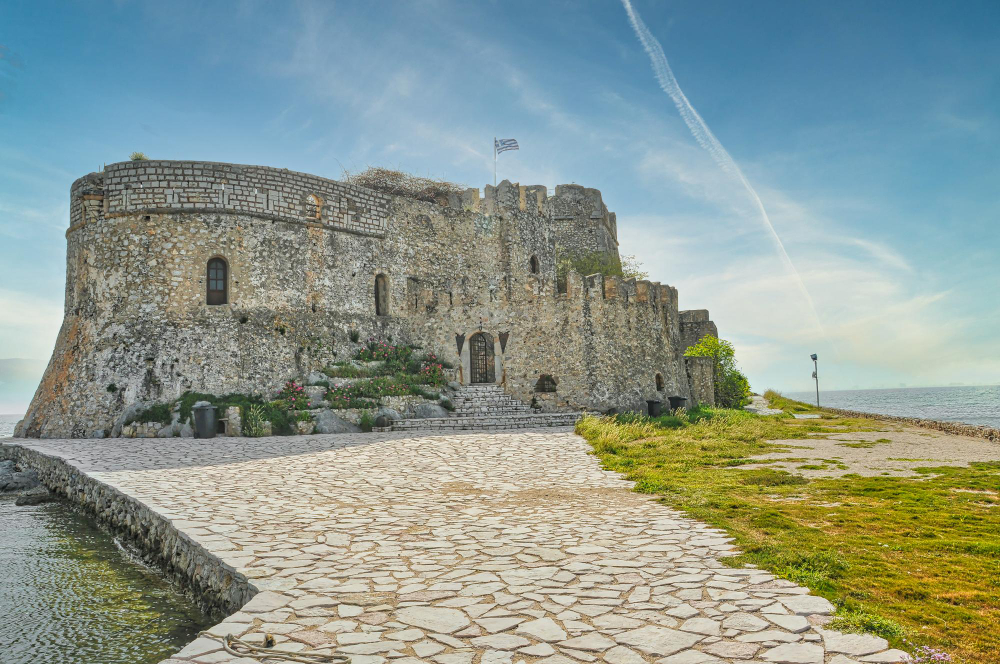
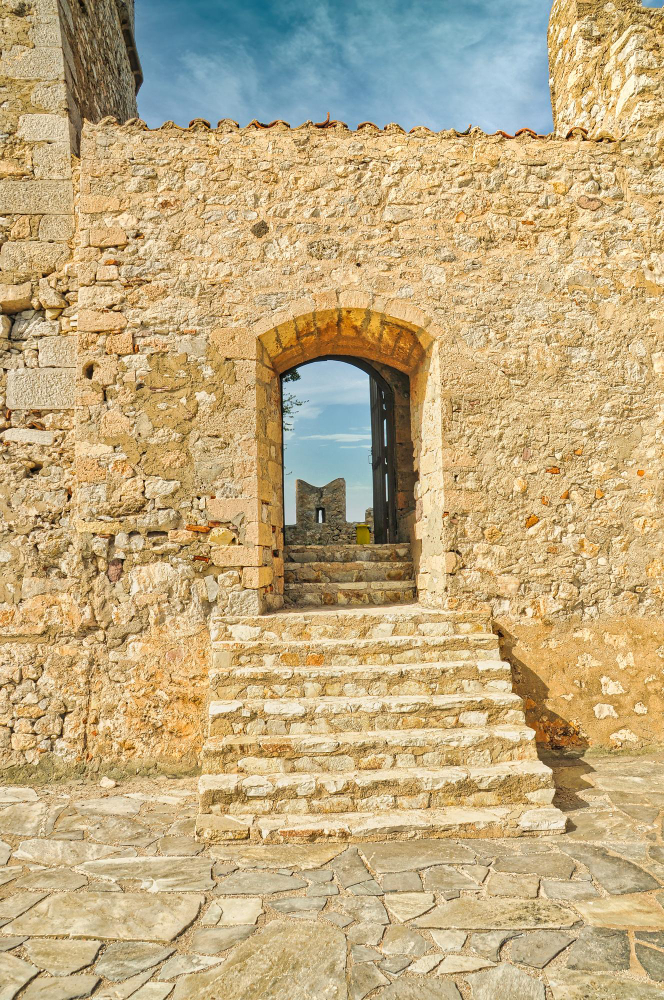
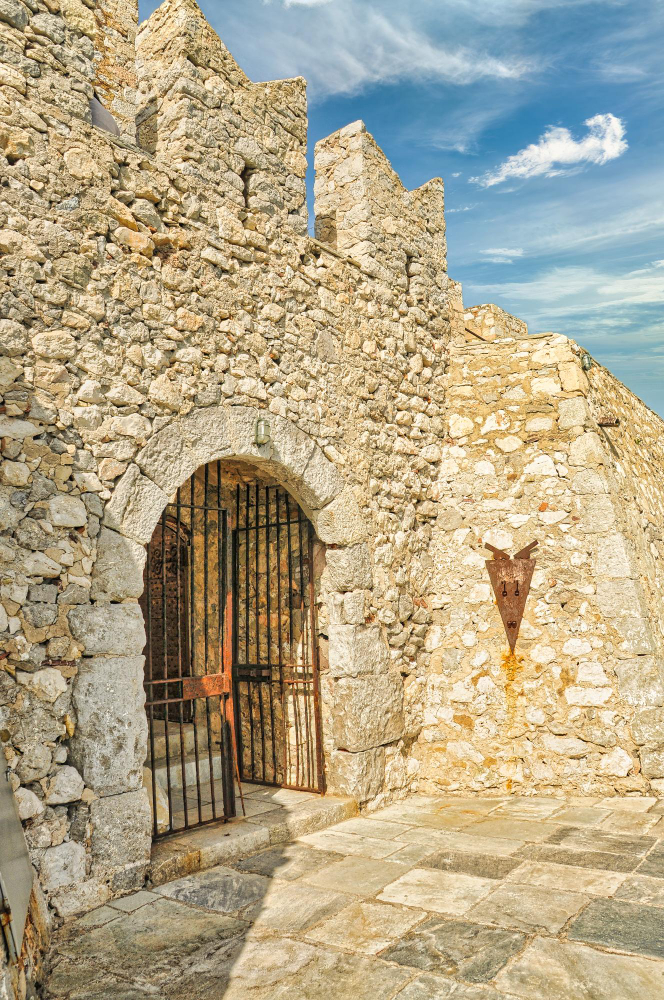
Architecture and Legends – What makes the Bourtzi so special? – The Bourtzi sea fortress is not only a military structure but also an architectural masterpiece of the Renaissance. The robust, massive structure, skilfully carved into the rock, has withstood wind, water and attacks for over 500 years. The combination of Venetian fortress architecture, the cannon bastions and the artificial causeway with its chain fortifications bears witness to engineering skill and strategic foresight. Over the centuries, numerous legends and stories have also grown up around the fortress. It is said, for example, that during the period of Ottoman occupation, dark shadows hung over the fortress – rumour has it that it remains haunted to this day, as the executions left behind many restless souls. It is also told that the chain, which once served to repel enemy ships, was magically repaired on several occasions, without the cause ever having been fully explained.
Bourtzi – A living monument to history and culture – The Bourtzi water fortress is far more than just an old fortress in the harbour of Nafplio. It is a living testament to Greece’s eventful history – from a Venetian pirate fortress, to a symbol of the struggle for independence, to a major tourist attraction today. Its architecture, its historical role in the conflict between East and West, and the numerous legends that surround it make Bourtzi a fascinating place that bridges the past and the present, offering visitors a truly unforgettable experience. Anyone visiting Nafplio should not miss this unique structure – for the Bourtzi sea fortress tells not only of war and peace, but also of human strength, ingenuity and the timeless beauty of a historic gem in the Mediterranean.